ROBERT HEINECKEN (POLAROID PROJECT III)

DSCN3412

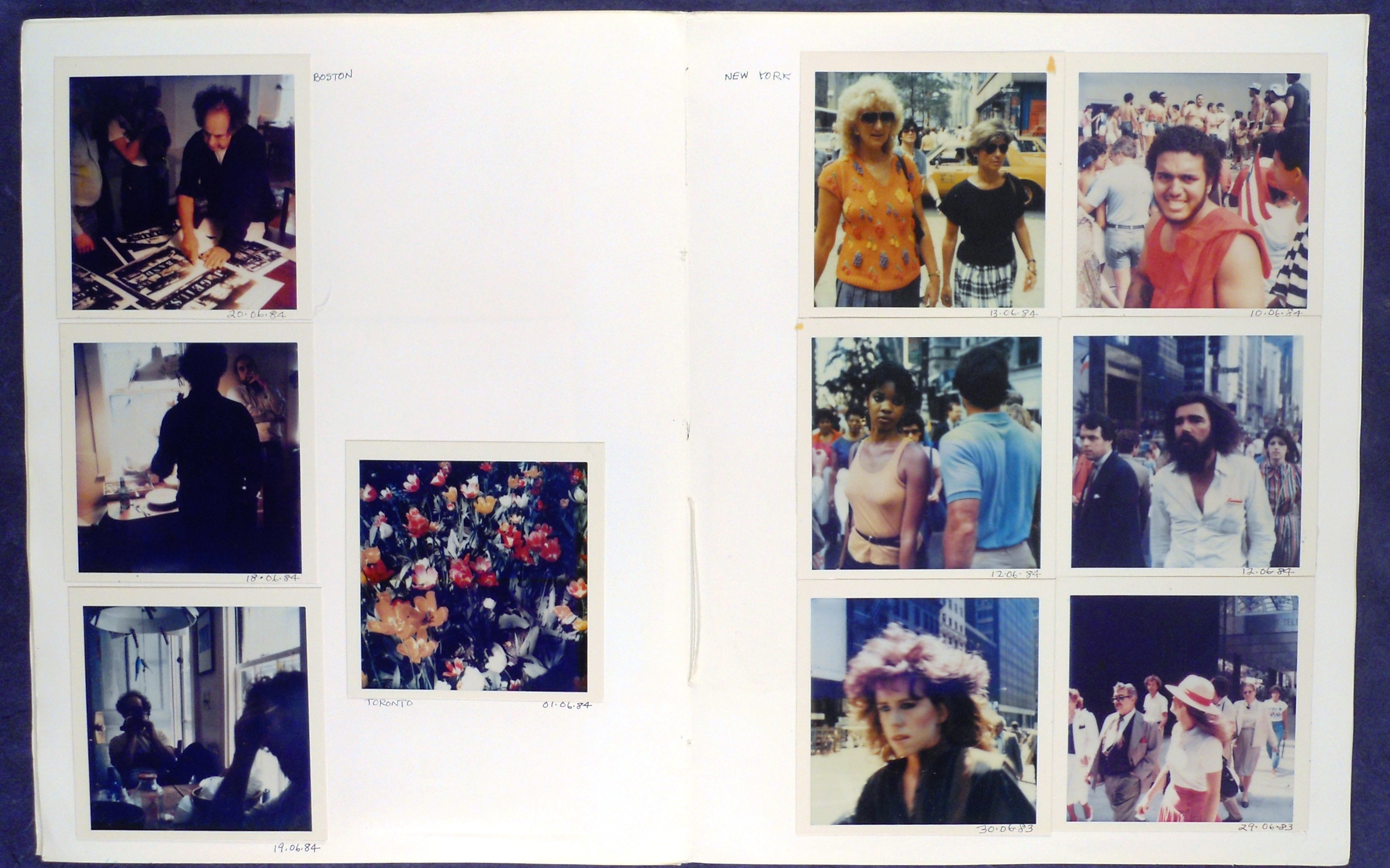
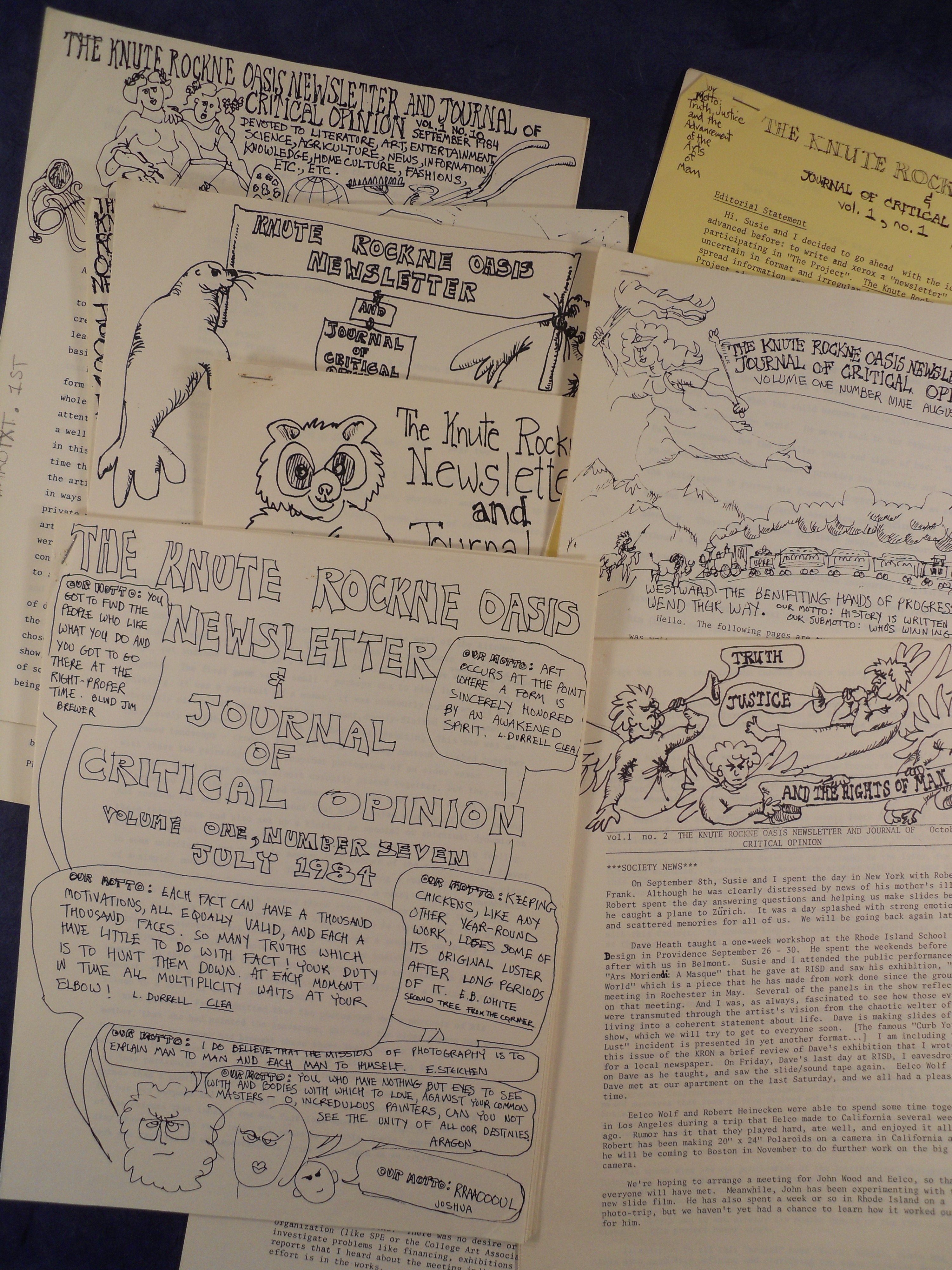
These texts are taken from the Knute Rockne Oasis Newsletter & Journal of Critical Opinion vol. 1, no. 3 (December 1983); which was an informal “newsletter” that Susie and I wrote to send to the “collaborators” during the course of this project (See the Robert Frank post for more information.)

Heinecken at the Museum School
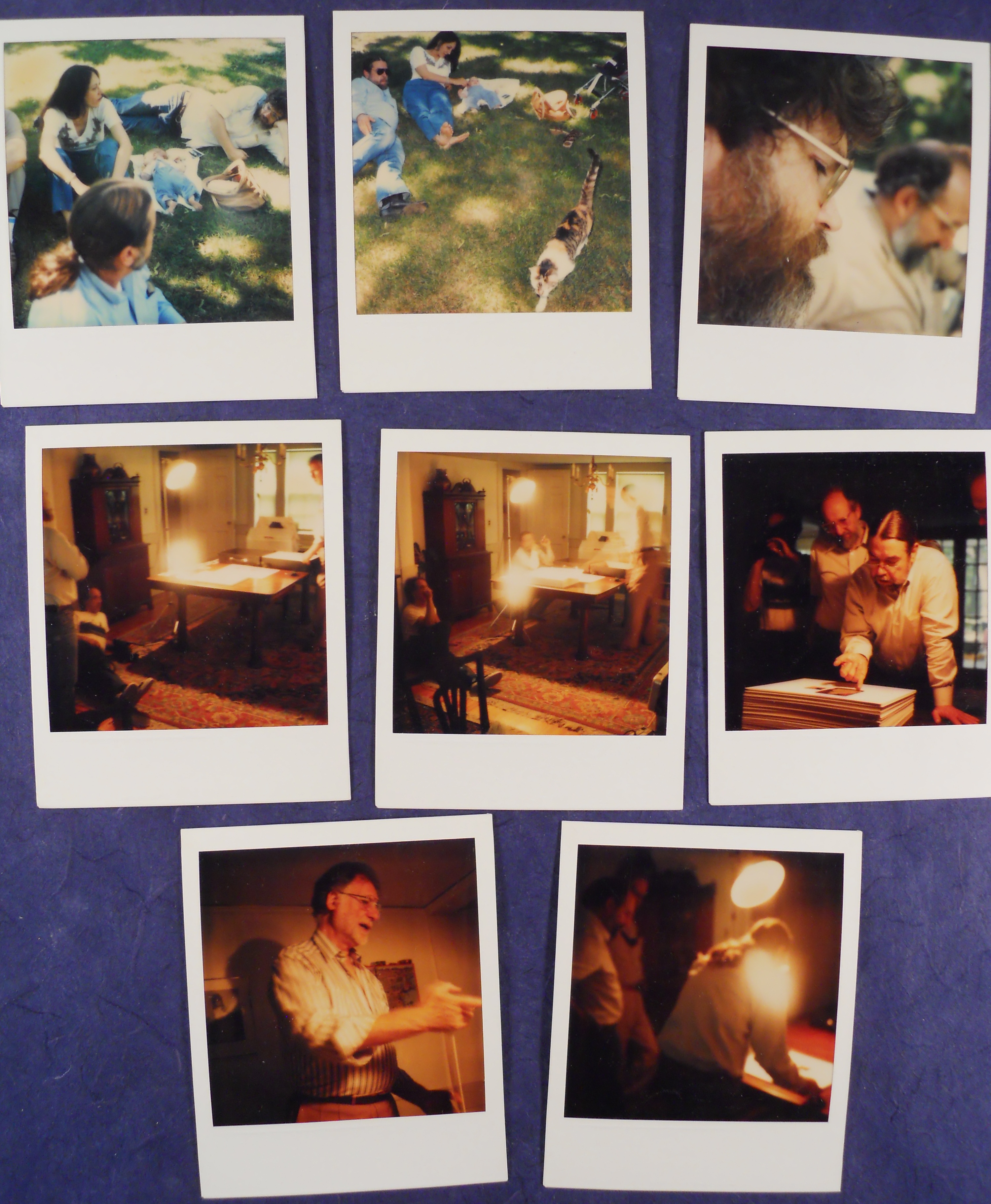
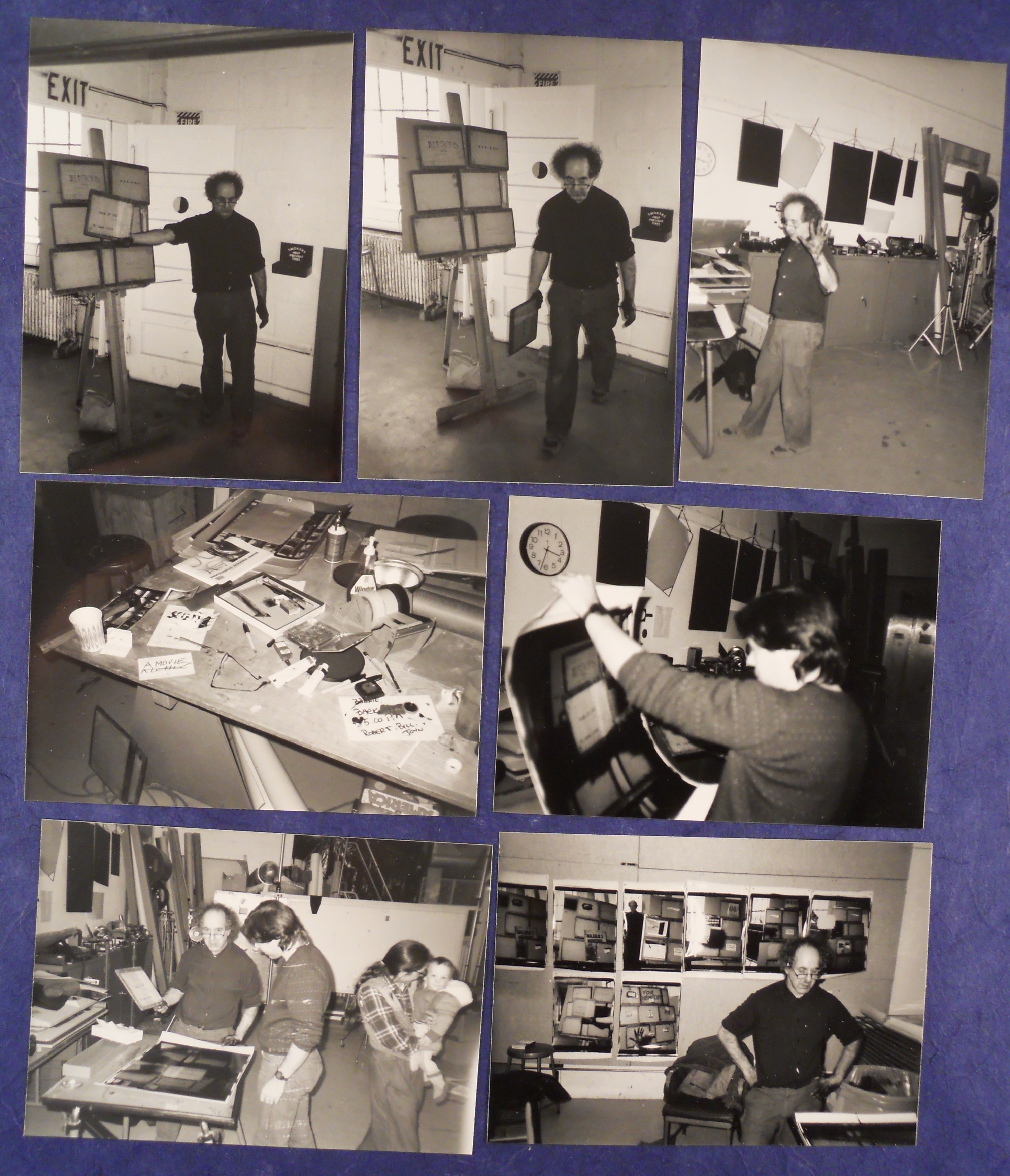
Robert flew into Boston on November 16th to give a lecture at the School of the Museum of Fine Arts. He had arranged to spend the 17th and 18th with John Reuter and the 20″X24″ Polaroid camera – now housed at the School – to complete or at least continue a project that he began when the camera was temporarily set up at the Center for Photographic Arts in San Diego last fall. Susie and I attended the lecture and then Robert spent the evening at our place. We talked about the Project and showed him the slides that we’d made of Frank’s work, John’s work, and Dave’s new series. We arranged to spend the 17th observing Robert at work as a preliminary to the larger event this summer. The next morning Robert and I arrived at the Museum School around 10:00 and we soon found John Reuter and the studio. Susie joined us a little later.
Heinecken hoped to complete three projects during the two day session. First he wanted to create a suite of eight to ten prints that I call the “Tuxedo Series”. Then he wanted to make a series of composit portraits of television newscasters. (Susie describes this effort more fully in her “Letter to Eelco”.) Finally, he wanted to create some “food photograms” after the manner of those that he made in the early 1970’s.
Robert never got to the food photograms during that two day session; but one of my fondest memories of the day was watching the delicate negotiations that Robert undertook with the faintly incredulous food vendor at the school for the delivery of a dozen or so additional sandwiches for the next day. Careful consideration was given by both parties to the available menu: “ham and cheese on white”, “pastrami on dark or light rye, hold the pickle…”and so forth. The vendor was dubious but blasé to the bizarre requests of his art school clientele. Robert seemed earnest but abstracted, as if he could not quite previsualize the effects of mustard on the subsequent photogram. This gentle imbroglio of art and commerce held, for me, both risible and metaphoric overtones.
The “Tuxedo Series” is a group of portraits of models dressed in variations of the traditional male formal tuxedo ranging from a high-fashion evening outfit to bikini underpants. As in previous work, Robert has drawn his images from a wide variety of mail-order clothing and underwear catalogues – where the reproductions are usually published about 2″X3″ in size. He then paints out distracting lettering or backgrounds or enhances small details such as more clearly defining the edges of bowties, etc. These pages were then brought to the 20″X24″; which is being used in this case as a large copy camera. The force of the idea in this piece resides in the original selection of the images and the idea of representing them in this very large format. So there is little manipulation of the imagery necessary or available in the process of this work other than the slight adjustments of camera position to bring the images to the same scale and slight adjustments of exposure to alter the color balance of the Polaroid prints.
So, in this instance, the completion of this project simply requires care and patience. The process reminded me of the British Household Guard’s formal marching step: step – pause – drag – step – pause – drag – step -, and so on. The tension of force against restraint was constant throughout the day and, for me, wearing on the nerves.
I was impressed by the careful, courteous and patient manner in which Robert developed the working day in partnership with John Reuter. They had already spent two days working together with the 20″X24″ in California and Heinecken had come away with a sense of respect for Reuter’s skill at handling the machinery of the camera and his ability to help realize and further an idea. On this day the partnership was again successful and the day proceeded with a smooth efficiency that was pleasant to see. In attempting to present the feel of this day’s efforts I want to choose adjectives that convey a sense of purpose and order and even of the mundane for the day was dominated by the qualities of hard work, balance and efficiency. There were a series of muted emotional surges as each print was pulled from the camera and added to the suite and as one saw the gradual completion of the effort extend across the wall of the studio. But these excitements were constrained and restricted to the greater need to complete the project in good time. Any sense of a roiling, driving creative energy was contained and structured to the needs of this project and it’s machinery. This energy surfaced only in small but significant fragments. As far as I could tell Robert ate nothing during the entire day; even when everyone else would drop out briefly for a sandwich. Instead, he fueled himself with countless cups of coffee. Even more interesting, on this day Robert, a chain smoker, almost stopped smoking during long stretches of the day.
However, I felt the entire day crystallized during a brief period after the first print was pulled from the camera and placed on the viewing easel. Robert settled into a fierce concentrated regard of that first print. Thirty seconds, a minute went by as he looked at the print. That tense angle of his head never appeared during the remainder of the day. Finally, after this long appraisal, satisfied that the idea might work, Robert turned away and began the long day’s labor.
As Susie and I had to leave for Arizona the next day, we did not follow that day’s events or see all of the finished work. However we felt that the day that we spent there was a valuable experience.
* * *Addendum* * *
Robert returned to Boston again at the end of December and he and John met on the 29th to complete the projected suite of composit portraits of TV newscasters and to try again to make some food photograms, They had run into a series of technical and administrative difficulties with the school’s TV monitor on the 18th and run out of time before they could complete all that they had hoped to. Susie and I again spent the day observing these efforts. We picked up Robert and Carl’s television set and met John at the Museum School at 9:00 A.M. The School was closed for the winter vacation and, except for an occasional distant, figure in the hallway; we had the building to ourselves.
On this day the pace was different – quicker and more resolved than before. The morning was given over to finishing the composit portraits. By now Robert, knew exactly which split-second of each portion of the video tape that he wanted to use; the routine was perfected, the equipment functioned with few problems and Robert and John smoothly finished the desired number of prints. In this case, a group of three individual portraits of blonde female newscasters and a composit of the three superimposed together. I was struck again at Robert’s perceptiveness as I watched him speed up and slow down the videotapes to get to the exact image he wanted. He just seems to see faster than the rest of us. At normal speed the tape shows a segment   of an attractive woman reading some news bulletin; slowed down, suddenly every nuance and moue of facial expression is apparent. These ladies are definitely selling – at a level just slightly below our conscious perceptions (and to be fair to them, probably slightly below their own).But it is really there. Since there is a certain element of chance in the overlapping process, made three composit portraits before they achieved one that Robert felt would work. This all took until about 11:30. Then they turned to the new project.
Robert decided that the food photograms should consist of a series of two “meals” presented side by side on each 20″X24″ print. One half of the image would consist of the documentary trace, (Or the shadow or whatever it is that a photogram is.) of a meal available at the cafeteria located in the Boston Museum of Fine Arts across the street)and one half of the image would have the documentary record of the food available from the vendor at the Museum School, Thus each image would contain a typical lunch available to the artist side by side with the lunch available to the art patron.
At this point some background helps… The Museum School, as do most artist’s schools, has a small group of crotchety vending machines in the basement which dispense coffee, soft drinks or candy. In addition, during the school sessions, a food vendor, (The sort that drives those silver-paneled trucks up to construction sites.) brings in a selection of sandwiches, snacks, and drinks and sets up in a room in the school each day for lunch. The arrangement is actually rather luxurious by my own experience with art school food facilities, but naturally the selection is limited. On the other hand, the Boston Museum of Fine Arts has recently added a multimillion dollar wing to it’s building and a significant portion of that space is given over to an elegant(and very good) restaurant, a slightly less formal coffee and desert area, and a basement cafeteria that serves hot lunches, wine, and so on. This arrangement seems to provide an additional measure of pleasure to the museum’s visitors and apparently a good source of income for the museum.
So, to implement Robert’s idea we all went over to the Museum where Robert selected a lunch from the menu – linguini, green peas and rice, a quiche, the salad bar and a selection from the dessert cart of a whipped cream and chocolate roll, a moca-almond cake, and a glacé fruit tart. Then we were able to convince the staff to saran-wrap the lot and, under the watchful eyes of the museum guards, we ferried the lot out of the Museum, across the street and into the Museum School. (Where Robert became positively dictatorial about nibbles and snacks.) Then Robert was fortunate, (Because of the intersession.) to just catch the Museum School’s food vendor. He acquired a typical, if diminished, selection of sandwiches, peanuts, chips, and a lethal looking jelly donut.
Then we had lunch. (From, I must report, the vendor’s selections. And Robert was again, in my opinion, pretty hard-nosed about the Fritos). After lunch we moved ourselves, the food, and the Polaroid camera (which stands, when folded closed, about seven feet tall, four feet wide and three feet deep on its wire and metal wheels) down four floors into the basement darkroom. Unanticipated problems that one runs into in this sort of project include things like standing in a freight elevator that refuses to run in a deserted building until a certain amount of desperate banging somehow activates the circuit.
The darkroom – following a logic common to all art schools – is reached by going through the ceramics studio’s storeroom which is piled high with 100 pound bags of dirt that are destined to be mixed into potter’s clay. The camera was placed with its back to the open darkroom door amid these piles of bags;   the food was perched precariously on a small table-saw (the only available horizontal surface) and while John began looking for the enlarger’s lens and flipping switches to see what turned what on, Robert began to unwrap the food and to arrange it on the plexiglass sheets he had brought; along.
The photograms are created by removing the roll of negative material (a thin, tough plastic-based material about 22″ wide) from the camera, then placing this film (still rolled, of course) under the enlarger.    By now, Robert has arranged the food on the plexiglass, and brought it into the darkroom. The lights are turned out, John unrolls the film across the baseboard of the enlarger, Robert by feel places the tray of food onto the negative material, and the enlarger is turned on. After the exposure, Robert removes the tray of food and John rerolls the film. Then John replaces the film into the camera in the next room, and processes it in the conventional manner.
After a few trials to determine the proper exposure and to determine the final arrangement of the food on the plexi (which Robert accomplishes with deft jabs of a plastic fork, or too impatient for that, with his fingers) the final version of the image is achieved.   Once again Robert and John work together easily to produce an “edition” of prints. This time the run was three sets of three prints each. It is not the least accomplishment of the day –given the dark and crowded conditions– that Robert did not once drop the plexi or even spill any food.
Two more observations, and a final statement:
…the tiny, almost imperceptible but violent tremor in Robert’s hands as he began to distribute the food on the plexiglass… that disappeared as Robert found the composition and pushed the materials into the right order…
…Robert would swing back and forth between the darkroom and the adjoining storeroom, honoring the restriction on smoking:   a cigarette constantly burning in the storeroom, stubbed out against the concrete block as he reentered the darkroom, alight again on the return.
The final statement is a confession:   I seriously underestimated the day’s project.   When Robert described what he intended to do I felt that it was an amusing and not terribly serious extension of his already established body of commentary on the nature of human appetites and the curious ways they are played out within the social order. I underestimated the sheer beauty that infuses so much of Robert’s work which for me extends it beyond the realm of so much of what many others working with the same subjects manage to produce.   These food photograms are simply lovely. The Polaroid paper base is a clear white that provides a luminescent space for the crystalline colors that float on its face like shards from a mosaic. In a way that I still don’t understand, the shadow (or is it the substance?) of the food that is photogrammed is the same color as the original food: beets are maroon, lettuce is pale green, Fritos are yellow.   The shapes of the images distinctly allude to the original food (one recognizes a tomato, a bun, even the grim outline of that deadly jelly cruller) but the colors are clear and modulated with an almost ethereal quality. The almost programmatic arrangement of the subject, presented flat across the plane of the image, called up for me comparisons with medieval herbals, and even more strongly, the “quick brush” techniques of Japanese watercolors and ink drawings.    The Fritos retained their identity as crisp, curly shapes and yet they irresistibly infer Japanese calligraphy, with all the grace, power and energy of that wonderful alphabet.   The linguini, floating on its lucent ground, swirled into configurations that must be what linguini dreams of becoming in its afterlife.
So, once again, in that dingy, underground cave, surrounded by bags of cl piled to the ceiling, I was forcefully reminded of the transformative quality of good art — which is, I guess, what its all about anyway.
The end of the day was hurried. Rushing because we were late, cleaning up, wrestling the camera into that cranky elevator and back into the studio, wrapping up the prints, negotiating the extremely complex exit from the closed building with the janitor, saying goodbye to John, and later to Robert, and then home for us to an exhausted sleep.

Letter to Eelco
Dear Eelco,
Bill and I have known Robert Heinecken for several years, in a variety of circumstances ranging from the lecture hall to the poker table, but we have never had the opportunity to see him work. Even in the several lengthy interviews we’ve had with him in his house in Los Angeles, and last winter in Chicago, the studio was an area that we sat in, looking at work in progress perhaps, but not penetrating its active spirit. So watching Heinecken work on the 20 x 24 camera at the Museum School was a new insight. I know him too well to have expected a performance á la beret and smock, but having pierced what I had imagined as a private realm, a reserve for intense preoccupation, I saw Heinecken address his task with business-like determination and orderly procedure.
No interaction with Heinecken is ordinary. The beat of the drummer to which he marches is not only different, but double-time. Seeing him in the roles of teacher, conversationalist, curator, I have watched, and distinctly felt, his decisive pace of judgment/act/judgement/act. But on this occasion of his responding to materials and equipment as well as to people; of making judgement calls about color, form and texture as well as subject, there were extra beats: syncopations, Chaplin-like pauses. I don’t imply the comic or frenetic by this reference to silent film. Rather, Heinecken demonstrated the temporal distinction between human act and machine act in a way that reinvested the human with reality in a culture, and in a specific situation, that proposes, supposes the machine to be the more dominant. And here is the crux: Heinecken has a special relationship with the; machines he uses.
Let me describe the scene for you. Heinecken’s project was to produce a picture of an “ideal, non-white, female TV newscaster.” He had previously taped and edited about 30 separate spots of oriental, Hispanic and black women delivering the news. The “ideal” would result from the superimposition of the features of three close-ups, each paused on the TV monitor, multiply-exposed within the 20 x 24 camera.
Simple in conception, the idea follows from Heinecken’s Magazines of the 60s and 70s, which proposed that sequential images superimpose (and interact) in the mind. In those pieces, the superimposition was still imaginary, however much assisted by Heinecken’s rearrangement of pictures. To achieve an actual fusion of images (sort of Are You Rea with control) required a lot more “business.”
A TV monitor, turned 90° so that its screen was in proportion to the vertical 20 x 24 ground glass, was positioned facing the big camera apparatus. For each exposure, the two larger than human structures of angular glass, metal and wood were slowly raised and lowered, cranked forward and away from each other until the monitor’s image was correctly aligned on the ground glass. In the darkened room, it looked and felt like a machine cabala, a conspiracy of electrical and light sensitive pulses whose intentions were served by docile, fidgety human servants. Like Erich Solomon’s heads of state in conference, the cubicles were aloof, imposing, but here: adjusting their postures with grave electronic diplomacy.
As potentially frightening as this scenario can be (and as easily turned to farce) it is a cliche, as insufficient an engagement with technology as the film War Games. Like the movie, my description too readily gives power to anthropomorphized, intentioned machines, and too easily heroicizes the eccentric who can harness them. The loss of individual and human identity to technology is obviously an expressed fear, but seems to me no more and no less than an update of the tension of the “social contract”: the extent to which the individual gives over his selfhood to society.
But since Heinecken’s art had dealt consistently with the social contract (society expressed as its media images; the individual as the responsive viewer) it is in this instance only the newness, grandeur and complexity of the tools, and the size of the picture, that leads me to tilt the power toward the machine. In truth, Heinecken is not intimidated by machines. Neither has he chosen, as some artists of the past two decades have, to bypass the machine in favor of the “natural” processes and materials (the photographer’s version of clay and fiber being the lensless camera, hand-sensitized paper, sun-developed prints). For Heinecken, advanced reproductive technologies are challenging jousting partners.
Heinecken’s willingness to engage the newest machines insures that consistent themes in his work (such as the “intercourse” between sexuality and persuasion) are always current. And, of course, bending the manufacturer’s specifications to extend the codes and purposes of materials is another of his aesthetic products. But watching him work that day, I realized that however successful (or not) his product might be, the engagement itself was a necessary, vitalizing experience for him.
A brief digression: Heinecken used to be a Marine Corps fighter pilot, and an instructor of pilots. He has come close to death on several occasions, due sometimes to machine failure, sometimes to human frailty. The anecdotes he lives to tell have this in common: in each brush with death Heinecken had to decide very quickly how much of the failing Other could be used to save his life. These are instances when abandoning the Other was also certain death. Self-reliance, yes; but also a necessary and thrilling interdependence.
Physical and emotional survival of intimacy with death requires (or perhaps endows) a strength of personal identity. As in the best of sexual intimacies, the individual aware of his/her own capabilities and boundaries can permit of the greatest contact without the threat of being dependent or overwhelmed. Heinecken knows who he is, and where he ends; he knows where the machine begins, but not always what it can do. But the distinction between himself and it allows him to accept the machine’s potential, and to push for it. He can claim the success as his own, the result of his initiation; but the machine’s failure is not his failure.
In a society as complex as ours, the privileged among us (the adequately fed and educated) get to pick the arena in which we negotiate our social contract. Artists, who in myth flaunt and ignore social conventions, are in fact among the ablest of the “loyal opposition,” returning to the society the evidence of their sessions at the bargaining table. Heinecken’s arena is the technology threat to identity. But unlike the cliche which offers only an either/or, Heinecken’s art re-assures us all about a doubt expressed by E.B White:
   We have tended to assume that the machine and the human are in conflict.
   Now the fear is that they are indistinguishable.
Heinecken suggests that neither has to be true. Both conflict and oblivion can be avoided by acknowledging the machine image as the product of interdependence.
P.S. December 29. Food and Appetites.
Throughout the afternoon of watching Heinecken make photograms of food, I was compelled to over-serious metaphor and nervous laughter. I wanted to transform these very literal pictures of food stuffs into something more “meaningful” than bread, beets and salami. The flowing linguini, for instance, I compared to the sinuous tresses of Alphonse Mucha’s Job Cigarette Girl. I described Robert’s pushing the linguini around on the plexiglass as heavy impasta, pun intended. Bill’s references include allusion to medieval herbals, to ideograms.
Part of the compulsion had to do with the “observing” itself, which is an awkward business. Bill and I were neither part of the ongoing conception or procedure (though we tried to be useful) nor were we a good audience (though we could make suggestions without offending either Robert or John). The space was small and the time was limited. We were in no way indispensible, but we’d been invited, and our presence was not in dispute. Still, our role was undefined and perhaps the need to speak, to comment, was a justification for being there.
But there is more to this, and best said straight: I was more embarrassed by the handling and picturing of food than I have ever been by the most explicit of Robert’s personal/sexual images. Given the structure provided by sex books and sexy movies, even observing the making of Robert’ images of sexual contact (from life) would have been easier than this hands-on maneuvering of lettuce, jelly and cheese.
I don’t know why this is, and I’m nervous about saying it here in case I’m making a too personal confession. But I think its harder to tell an adult he has spinach between his teeth than that his fly is unzipped.
And parents are easier at explaining a child’s sexual preoccupations than they are  with that same child’s inability to keep his fingers out of the mashed potatoes.
I can only guess that the “sexual revolution” has been won, (Or at least its battlegrounds defined and coded.) but that the equally basic drive to satisfy the appetite is still bound in intellectual, dissimulating metaphor. Robert’s food-o-grams simultaneously call up the taboos with each exposure, and disarm them with each delicately colored composition.
Susie.

 

JOHN JABEZ EDWIN MAYALL BIBLIOGRAPHY

MAYALL, JOHN JABEZ EDWIN. (1810-1901) BIBLIOGRAPHY (in progress)
Copyright by William S. Johnson

This unedited draft is drawn from a bibliography of articles about photography, with excerpts and annotations, published in America and in England from 1839 to 1869; describing its practitioners and practices, and displaying the impacts of those activities and events upon the general culture of that time. More than 800 magazines and newspapers published in the United States and in Great Britain from January 1839 through December 1869 were reviewed for articles in which photography was featured, discussed or mentioned in some illuminating manner, or which acknowledged the use of the medium in the creation of at least some of their illustrations.

As of December 2012, this project, organized (for now) alphabetically by magazine title, then chronologically, has reached 10,080 pp. in length. Its strengths are that it does what it was designed to do; which is to complement the work Nineteenth Century Photography: An Annotated Bibliography, 1839 1879, by William S. Johnson. Boston: G. K. Hall & Co., 1990. Its weaknesses are that the earlier published work which has been incorporated into the project does not contain the detailed information available in the latter effort. The earlier work was also not complete in its coverage of early British journals devoted to photography – which is the very place where many references to Mayall would be found. I am in the process of cleaning up and strengthening the files for some of the earlier titles, but to redo them all would add another five years to the project – something I am not considering favorably at this time.
Another problem is that the photographic journals did not begin until the 1850’s, nearly a dozen years after Mayall began his career, and, of course, this project ends in 1869, well before Mayall ended his career. Nevertheless, if one looks through these references as they are, I suspect that they will find that a more complete picture of the career of John Mayall than has been previously available will be found here and that a more detailed picture of the background in which Mayall practiced his art will be displayed as well.
Please feel free to use this in any manner helpful to you except to publish it completely as your own work, and I would appreciate a credit should you use it extensively.
William Johnson.

HIGHSCHOOL, PROFESSOR see MAYALL.

[Mayall used the name Professor Highschool in the early 1840s.]
“…To those who honestly desire to understand art-principles and their applications, as I have reason to believe the larger number of photographers now do, I fearlessly address myself; and taking first that class of picture which, by virtue of what it aims at, should rank highest, I commence my task with what I may call Subject Photographs. Amongst painters the class of pictures I am about to speak of are commonly termed genre, and the accepted meaning of this term, so applied, is subjects of real or ordinary life, as distinguished from the ideal or the historical….” “…Some-of the earliest attempts in this direction were made, in the days of the daguerreotype, by Mr. Mayall; and I remember very well the anxiety with which I—then a boy—posted off to the Strand to see them, after reading a very glowing account of their beauty in a morning paper. That I was sadly disappointed may have been the fault of the writer rather than that of Professor Highschool, the name by which Mr. Mayall then sought to be known….”
Wall, A. H. “The Late Conduit-Street Photographic Exhibition.” ILLUSTRATED PHOTOGRAPHER 1:43 (Nov. 27, 1868): 513.

PROFESSOR HIGHSCHOOL
KILBURN, WILLIAM EDWARD. (GREAT BRITAIN
“Daguerreotype Studies: Messrs. Kilburn and Highschool.” ATHENAEUM no. 1016 (Apr. 17, 1847): 416. [“Amongst the many candidates for fame who are practicing the heliographic art-as M. N. Niepce calls it-two are conspicuous as having carried it to the highest perfection of which it has hitherto been deemed susceptible; and these two have done so much in a short time, and are both so fertile in resource and enterprising in character, that in their hands it will probably be proved that this art is as…”]

HUNT, ROBERT. (1807-1887) (GREAT BRITAIN
Hunt, Robert. “Photographic Colouration.” ATHENAEUM no. 1017 (Apr. 24, 1847): 440. [“The interest that I feel in the beautiful art of Photography-which appears to be steadily advancing towards perfection-induces me to offer a few remarks on your notice last week of the Daguerreotypes of Mr. Kilburn and Prof. Highschool….”]

HIGHSCHOOL, PROFESSOR. (LONDON, ENGLAND)
“Metropolitan News. Institute of Civil Engineers.” ILLUSTRATED LONDON NEWS 12:319 (Sat., June 3, 1848): 361. [“  On Tuesday, Mr. field, the President of the Institution, gave a grand soiree at the Society’s House on Great George –street… The drawing rooms and theatre were were crowded throughout the evening; and the exhibition of models, &c. novel and attractive… Metal pipe-Making machine… Glass-Making machines… a marble therm of Tragedy, sculptured by Mr. Thomas,…paintings by Lance; daguerreotypes by Professor Highschool, &c. Refreshments were served…”]

BY COUNTRY. 1847.
“Photography.” NORTH BRITISH REVIEW 7:14 (Aug. 1847): 465-504. [(Review of eight books extends into a report on the state of the art. Sir David Brewster is not named as the author, but his authorship has been cited elsewhere. Pagination for the American edition is pp. 248-269.) (Dr. Adamson of St. Andrews, Edmund Becquerel, Dr. Berres (Vienna, Austria), Bingham, Blanquart-Evrard, Sir David Brewster, Brooke, Channing (Boston, Ma), Charles Chevalier, Antoine Claudet, Henry Collen, Daguerre, Sir Humphry Davy, Donne, John William Draper, Dumas, Fitzeau, Chevalier Frederichstal, Furlong, W., Dr. Fyfe, (Aberdeen, Scotland), Gaudin, Goddard, Prof. Grove, Guerin, Sir John Herschel, Prof. Highschool (London, England), Hill & Adamson, Robert Hunt, Johnson (New York, NY), Prof. Karsten (Berlin, Germany), Dr. George Keith, Kilburn (London, England), Knorr, Lassaigne (Paris, France), N. P. Lerebours, Mapes (New York, NY?), Martens, Ludwig Moser (Berlin, Germany), Joseph Isidore Niepce, Nicephorus Niepce (Chalons sur Saone, France), Ronalds, Dr. Ryan, Rev. J. B. Reade, William Henry Fox Talbot, Dr. Waller, Thomas Wedgewood, Prof. Wheatstone, Wolcott (New York, NY) Dr. Woods (Parsonstown, GB), Prof. Zantedeschi (Venice, Italy) discussed or mentioned in this article.) Book review. 1. Researches on Light; An Examination of all the Phenomena connected with the Chemical and Molecular Changes produced by the Influence of the Solar Rays, embracing all the known Photographic Processes, and new Discoveries in the Art, By Robert Hunt, Secretary to the Royal Cornwall Polytechnic Society. Pp. 304. London, 1844. 2. A Treatise on the Forces which produce the Organization of Plants; with an Appendix containing several Memoirs of Capillary Attraction, Electricity, and the Chemical Action of Light. By John William Draper, M.D., Professor of Chemistry in the University of New York. Royal 4to, pp. 324. New York, 1844. 3. Nouvelles Instructions sur l’usage du Daguerreotype. Par Charles Chevalier. Paris, 1841. 4. Melanges Photographiques. Complement des nouvelles Instructions sur l’usage du Daguerreotype. Pp. 128. Paris, 1844. 5. The Pencil of Nature. By Henry Fox Talbot, Esq., F.R.S., &c., &c. Nos. I., II., III., IV., V. London, 1844. 6. Traite de Photographie, contenant tous les perfectionnements trouvees jusqu’a ce jour, appareil panoramique, differences des foyers, gravure Fizeau, &c. Par Lerebours et Secretans, Opticiens de l’Observatoire, et de la Marine. 5me Edit. Pp. 268. Paris, Octobre 1846. 7. Des Papiers Photographiques, Precedes de M. Blanquart-Evrard et autres, avec Notes de N. P. Lerebours. Pp. 31. Paris, Mar. 1847. 8. Excursions Daguerriennes. Collection de 114 Planches, representant les vues et les monumens les plus remarquables du Globe. 2 Vols. “The history of science presents us with very few instances in which great inventions or discoveries have burst upon the public view like meteors, or startled the public mind by their novelty and grandeur. The greatest feats of intellect have, like the intellect itself, been of tardy growth. A suggestion from one mind and in one age, has become a fact in another; and some sickly embryo of thought, which has preserved its vitality for a century, has often assumed the form and beauty of a living truth, when the public taste or the wants of society have stimulated research, or created a demand for the productions of genius. So slow, indeed, has been the march of great ideas, and so obscure the path by which they reached their gigantic consummation, that the historian of science has often been unable to trace their steps, and the arbiter of genius to discover the brow upon which he might plant the laurel which they deserved. The astronomy which in one century gave immortality to a priest, in the next immured a philosopher in prison; and geological truth passed through the phases of a presumptuous speculation, and of an atheistical dogma, before it became the handmaid of piety and the creed of the Church. It is with much difficulty and some uncertainty that we can trace even the telescope and the microscope to their humble origin. The steam-engine has not yet owned its obligations to a single mind, and little more than half a century has elapsed since an English court of law came to the decision that James Watt had made no improvement on this mighty instrument of civilization. The steam-ship and the railway-chariot—the locomotives on water and on iron—at once the benefactors and the wonders of the age, will continue to be disputed or unclaimed inventions till society has forgotten the prediction of the poet, or lamented its fulfilment:—
“Soon shall thine arm, unconquer’d Steam! afar
Drag the slow barge, or drive the rapid car.”
There are other inventions and discoveries, on the contrary, on which are stamped imperishable names, or with which these names are inseparably associated. Kepler’s laws are engraven on the planetary heavens. Newton will never cease to be named, while satellites revolve and terrestrial bodies fall; and while Neptune bears his trident across the firmament, the fame of Adams and Le Verrier will endure. The electro-magnetic power which speeds over the globe the telegraphic message, will carry the name of Wheatstone to its most distant terminus whether in space or time; and the thunderbolt which Franklin drew from heaven, and which, when untaught and untamed, shattered in its course the structures of organic and inorganic life, will acknowledge its apprenticeship to Faraday, while it is imparting new organizations to matter, playing round the solar ray, and guiding even the particles of light in their fantastic gyrations. Other discoveries have associated themselves, even in their nomenclature, with individual names; and in the very terminology of the two great arts which we are about to expound—the Daguerreotype and Talbotype—a grateful age has already embalmed the names of their distinguished inventors. The two inventions which we have just mentioned possess a character, and occupy a place, essentially different from that of any of the sister arts. While the painter delineates on canvass, or the sculptor embodies in marble those images in their eye to which the law of vision gives an external place, the photographer presents to Nature an artificial eye, more powerful than his own, which receives the images of external objects, and imprints on its sensitive tablet, and with indelible lines their precise forms, and the lights and shadows by which these forms are modified. He thus gives permanency to details which the eye itself is too dull to appreciate, and he represents Nature as she is—neither pruned by his taste, nor decked by his imagination. From among the countless images of surrounding objects which are actually accumulated in every part of space, he excludes, by means of his darkened chamber, all but the one he wishes to perpetuate, and he can thus exhibit and fix in succession all those floating images and subtile forms which Epicurus fancied, and Lucretius sung.*
(* Dico igitur, rerum effigias, tenuisque figuras
Mittier ab rebus summo de corpore earum;
Quae quasi membrana, vel cortex nominitanda’st
Quod speciem, ac formam similem gerit ejus Imago,
Quojuscunque cluet de corpore fusa vagari.
Next, for ’tis time, my muse declares and sings
What those are we call images of things,
Which like thin films from bodies rise in streams,
Play in the air and dance upon the beams.—
A stream of forms from every surface flows,
Which may be called the film or shell of those,
Because they bear the shape, they show the frame.
And figure of the bodies whence they came.—Creech.)
The art of photography, or that of delineating objects by the agency of the light which they radiate or reflect, is substantially a new invention, which we owe to two individuals, Mr. Talbot and M. Daguerre, although, like all other arts, some approximation had been made to it by previous inquirers. So early as 1802, Mr. Thomas Wedgewood, the celebrated porcelain manufacturer, published in the Journals of the Royal Institution, A method of copying paintings upon glass, and of making profiles by the agency of light upon nitrate of silver, which was accompanied with some observations by Sir Humphry Davy. Having ascertained “that white paper or white leather, moistened with a solution of nitrate of silver, undergoes no change when kept in a dark place,” but “speedily changes colour” when “exposed to the daylight,” Mr. Wedgewood found “that the alterations of colour took place more speedily in proportion as the light was more intense;” that the full effect was produced by the sun’s light in two or three minutes, whereas two or three hours were required in the shade; that the red rays have little action upon it, the yellow and green more, and the blue and violet most of all. “Hence,” says Mr. Wedgewood, ” when a white surface covered with a solution of nitrate of silver, is placed behind a painting on glass exposed to the solar light, the rays transmitted through the differently painted surfaces, produce distinct tints of brown or black, sensibly differing in intensity, according to the shades of the picture, and where the light is unaltered the colour of the nitrate becomes deepest. When the shadow of any figure is thrown upon the prepared surface, the part concealed by it remains white, and the other parts speedily become dark. For copying paintings on glass, the solution should be applied on leather, and in this case it is more readily acted upon than when paper is used. After the colour has been once fixed upon the leather or paper, it cannot be removed by the application of water, or water and soap, and it is in a high degree permanent.” Mr. Wedgewood endeavoured by repeated washings, and by thin coatings of fine varnish, to prevent the white parts of his pictures from becoming dark when exposed to light; but all his attempts were fruitless, and he was obliged therefore cither to exhibit them in candle-light, or for a short time in the shade. This process was applied by its author to taking profiles, and “making delineations of all such objects as are possessed of a texture partly opaque and partly transparent, such as the woody fibres of leaves and the wings of insects.” He tried also, but without much success, to copy prints; and he failed still more signally in what was his leading object, to copy the images in the camera-obscura. In following these processes, Sir H. Davy found ” that, the images of small objects produced by means of the solar microscope, may be copied without difficulty on prepared paper—the paper being placed at but a small distance from the lens;” and he ascertained that about 1 part of nitrate to about 10 of water, gave the best solution. Mr. Wedgewood likewise ascertained that the muriate was more susceptible than the nitrate of silver, and that both were most readily acted upon while wet. He impregnated his paper with the muriate, either by diffusing it through water, and applying it in this form, “or by immersing paper moistened with the solution of the nitrate in very diluted muriatic acid.” The impossibility of removing the colouring from the white parts of the pictures, suggested to Mr. Wedgewood the idea that “a portion of the metallic oxide abandons its acid to enter into union with the animal or vegetable substance, so as to form with it an insoluble compound,” and he had experiments in view to discover some substance that could destroy this compound either by simple or complicated affinities. “Nothing,” he adds, “but a method of preventing the unshaded parts of the delineation from being coloured by exposure to the day, is wanted to render the process as useful as it is elegant.” This beautiful process, which notwithstanding its defects, it required neither science nor skill to repeat, seems to have excited no interest whatever. The writer of this Article gave a notice of it in a Scottish Journal, so early as 1803, but he has not been able to learn that the experiment of Mr. Wedgewood was repeated. Without knowing what had been done by Mr. Wedgewood, Mr. Henry Fox Talbot, of Lacock Abbey, was led by accidental circumstances to turn his attention to the subject of giving a permanent existence to those beautiful but evanescent pictures, which the camera-obscura presents to our view. Recollecting that nitrate of silver was changed or decomposed by light, he began, early in 1834, that series of experiments which led him to the beautiful art which now bears his name. Anxious to perfect the new art which he had discovered, Mr. Talbot continued his experiments till the year 1839, when he communicated to the Royal Society Some Account of the Art of Photogenic Drawing, or the process by which natural objects may be made to delineate themselves without the aid of the artist’s pencil. In this paper, which was read to the Society on the 31st January 1839, several months before M. Daguerre had published his photogenic processes, Mr. Talbot enumerates the various purposes to which the new art could be applied; but it was not till the 21st February that he communicated to the Society his process for preparing the paper, and his method of fixing the images. A sheet of superfine writing paper (of a good firm quality and smooth surface) is dipped into a weak solution of common salt (muriate of soda) and wiped dry. A solution of nitrate of silver, namely, a saturated solution six or eight times diluted with water, is spread with a brush over one surface only, and the paper when dry is fit for use. When leaves of flowers, lace, engravings, &c., are laid upon the nitrated surface of the paper and exposed to the sun, very perfect images of them are obtained, the lights and shades being reversed, or, what is the same thing, the pictures are delineated by white in place of black lines, or are negative pictures. In like manner, the pictures thrown upon the nitrated paper placed in the focus of a camera-obscura are negatively delineated. In order to fix these pictures, or prevent the white lines and portions from being blackened by exposure to light, Mr. Talbot first washed them with iodide of potassium greatly diluted with water; but the method which he proposed, as being safer and simpler, was to immerse the picture in a strong solution of common salt, and then to dry it after wiping off the superfluous moisture. At this period Mr. Talbot’s pictures were negative, like those of Mr. Wedgewood, but yet he has distinctly shown how positive pictures, or those in which the lights and shades are given as in nature, may be obtained. “In copying engravings,” says Mr. Talbot, “by this method, the lights and shadows are reversed, consequently the effect is wholly natural…..* (*London and Edin. Phil. Mag. March 1839. No. 88, vol. xiv. p. 208.) The communications of Mr. Talbot to the Royal Society could not fail to draw the attention of connoisseurs to so curious an art, and we accordingly find that the Rev. J. B. Reade. F.R.S- a gentleman to whom the sciences owe valuable obligations, had made important additions to the photogenic processes, and had himself applied them to the delineation of objects of natural history, of which he took pictures by the solar microscope. The following process was communicated by Mr. Reade, on the 9th of March 1839, to E. W. Brayley. Esq- who explained the process and exhibited the drawings referred to at one of the soirees of the London Institution on the 10th April 1839. “The more important process, and one probably different from any hitherto employed, consists in washing good writing paper with a strong solution of nitrate of silver, containing not less than 8 grs. to every drachm of distilled water. The paper thus prepared is placed in the dark, and allowed to dry gradually. When perfectly dry, and just before it is used. I wash it with an infusion of galls prepared according to the Pharmacopeia, and immediately, even while it is yet wet, throw upon it the image of microscopic objects by means of the solar microscope. It will be unnecessary for me to describe the effect, as I am able to illustrate it by drawings thus produced. I will only add, with respect to the time, that the drawing of the flea was perfected in less than five minutes, and the section of cane, and the spiral vessels of the stalk of common rhubarb, in about eight or ten minutes. These drawings were fixed by hyposulphite of soda. They may also be fixed by immersing them for a few minutes in weak salt and water, and then, for the same time, in a weak solution of hydriodate of potash. The drawing of the Trientalis Europea was fixed by the latter method: it was procured in half a minute, and the difference in the colour of the ground is due to this rapid and more powerful action of the solar rays This paper may be successfully used in the camera-obscura. Farther experiments must determine the nature of this very sensitive argentine preparation. I presume that it is a gallate or tannate of silver, and, if so, it will be interesting to you to know that what has hitherto been looked upon as a common chemical compound is produced or suspended at pleasure by our command over the rays of light.” This process cannot fail to be considered as highly honourable to the ingenuity of Mr. Reade. The first public use of the infusion of nut-galls, which, as we shall see, is an essential element in Mr. Talbot’s patented process, appears to be due to Mr. Reade, and his process of fixing his pictures by hyposulphite of soda, which has since been universally used as the best, and was afterwards suggested in 1840 by Sir John Herschel, must be regarded as an invaluable addition to the photographic art. Notwithstanding the great beauty of the drawings which Mr. Talbot obtained by the process which he published, the art was still far from being perfect. The discovery of a paper highly sensitive to light was essentially necessary to the production of portraits from the life, and even of accurate pictures of buildings and landscapes, in which the lights and shadows are constantly changing both from the motion of the sun and of the clouds. Mr. Talbot accordingly directed himself anew to this part of his subject, and he succeeded beyond his most sanguine expectations. He discovered a process by which paper could be made so sensitive that it was darkened in five or six seconds when held close to a wax candle, and gave impressions of leaves by the light of the moon. To this most important invention Mr. Talbot gave the name of Calotype, which his friends have now changed into the more appropriate name of Talbotype, and he secured the exclusive privilege of using it by a patent for England, which was sealed on the 8th February 1841. The following is the patent process for obtaining the negative picture:—… (formulae and process given) …By this process we get a negative picture, and from it any number of positive pictures may be obtained in the following manner-… (process given) …As all the inequalities and imperfections of the paper on which a negative picture is formed, are copied on the positive picture which it yields, attempts have been made to obtain positive pictures by a single process. This was first effected by Dr. Fyfe, of King’s College, Aberdeen, and M. Lassaigne of Paris; and Mr. Talbot has included a process of this kind in his specification. We have in our possession one of the pictures taken by Mr. Talbot by this process; but though it has the advantage of giving sharper lines than the double process, it is greatly inferior to it, and is not likely ever to come into general use. All the copies of pictures which it yields are reversed, and all its portraits and landscapes reversed; but the principal objections to its use are two: It requires such a length of time that portraits could not easily be taken by it, and even when we do obtain a good picture, we cannot multiply it as in the double process. The following is the single process, as contained in Mr. Talbot’s specification:—”A sheet of calotype paper is exposed to the daylight for a few seconds, … (process follows)…. An image of a positive kind is thereby produced, and represents the lights of objects by lights, and the shades by shades, as required.” The property of hydriodate of potash, to whiten paper that has been darkened by exposure to light, was observed about the same time by Mr. Hunt, Dr. Fyfe, Sir J. Herschel, Mr. Talbot, and M. Lassaigne. Mr. Hunt, in particular, has paid much attention to the photographic processes founded upon this peculiarity of the hydriodate, and has published the results of his inquiries in a very interesting paper which appeared in the Philosophical Magazine for September 1840… (process described)… This branch of photography is more curious than useful… (Faded in light.) …Varous photographic processes, under various names, such as the Cyanotype, the Sidderotype, the Chrysotype, the Energiatype, the Platinotype. the Aurotype. the Chromatype, the Catalysotype, have been described by different authors: but notwithstanding the ingenuity which they display, and the beauty of the results which some of them yield, they are all of inferior value to the Talbotype, which, though, it has been rendered more perfect since its first publication, by Mr. Talbot himself, and by other philosophers — and is doubtless still susceptible of further improvement—will, we are persuaded, continue to be the favourite photographic process, when the sun-pictures are to be received on paper. We shall therefore confine ourselves to this valuable form of the art, and give our readers some account of the improvements which it has received since Mr. Talbot’s first specification appeared. The earliest improvements upon the Calotype process, as given in Mr. Talbot’s first patent, were made by Mr. Talbot himself, who secured his exclusive use of them by a second patent, which was sealed on the 1st June, 1843. In order to remove the yellow tint from the negative picture. Mr. Talbot plunges it for ten minutes in an almost boiling solution of hyposulphite of soda in ten times its weight of water. When washed in warm water and dried, the picture is placed upon a hot iron, and wax melted into the pores of the paper, to increase its transparency. Mr. Talbot also recommends that a warm iron be placed behind the calotvpe paper while in the camera, to increase its sensibility. In order to simplify the process by dispensing with the second wash, Mr. Talbot washes the iodized paper with gallic acid and thus obtains io-gallic paper, which requires only to be washed with the solution of nitrate of silver, before it is put into the camera. The picture, though generally invisible, rapidly develops itself when removed from the camera, requiring no farther care than ultimately to fix it. “Instead of gallic acid,” Mr. Talbot observes, “sulphate of iron answers the same purpose perfectly.” He mentions, also, that Tannin, and other substances, such as tea, may be substituted for gallic acid, and he defines the Calotype and Talbotype process as depending on a combination of iodine, silver, and a deoxydizing agent. As a still farther simplification of his process, Sir. Talbot washes iodized paper with a mixture of 26 parts of a saturated solution of gallic acid, and one part of the ordinary solution of nitrate of silver. It may then be dried without the fear of spoiling, may be kept a little time, and used without further preparation. In order to improve photographic drawings, Mr. Talbot keeps them twice the usual time in the sun, so that the shadows are too dark, and the lights not white. The drawing is then washed, and plunged for one or two minutes in a solution of iodide of potassium, of the strength of 500 grains to a pint of water.* (*Mr. Talbot has included in his second patent, a method of Photographic printing, and of Photographic publication. Letters are cut out of a transparent page and sorted, they are then put up in words, cemented and copied photographically; and in Photographic publication he makes good negative drawings on papers prepared with Kilt (3 or 4 oz. to 1 gallon of water) and the ammonia nitrate of silver, (50 grains of nitrate to 1 oz. of water, ammonia being added to form a precipitate, and redissolving the same, leaving the solution clear), and having fixed them he takes positive drawings from the negative copies as usual.) It is then washed, and plunged into a hot bath of hyposulphite of soda, till the proper tints are obtained. Mr. Talbot also improves his positive pictures by waxing them, and placing white or coloured paper behind them. Various changes, and some improvements have been made upon the processes adopted by Mr. Talbot. Mr. Hunt has given us the following account of some of these:— “Mr. Channing of Boston appears to have been the first to publish any method by which the calotype process could be simplified. This gentleman directs that the paper be washed over with sixty grains of crystallized nitrate of silver in one ounce of water, and when dry, with a solution of ten grains of the iodide of potassium in one ounce of water. It is then to be washed with water, and dried between blotting papers. It is now fit for use…. (Additional processes described.) …Dr. Ryan has shown the necessity of some care in the use of the iodide of potassium, into a solution of which Mr. Talbot recommends the nitrated paper to be placed for a few minutes. If the paper is left too long in such a solution, the iodide of silver will be dissolved, that salt being soluble in an excess of iodide of potassium. Simply passing the paper through the solution appears to answer every purpose effectually. Mr. Collen has modified Mr. Talbot’s process, by brushing over the paper with a weak solution of the ammonio-nitrate of silver, and in using the same solution in combination with the gallic acid, instead of the nitrate of silver. It does not, however, appear to me that any advantage is gained by this mode of proceeding. A careful adjustment of the best proportions of the ingredients recommended by Mr. Fox Talbot, will be found to afford better results in a shorter time.”—Researches, &c., pp. 66-68. Instead of dipping the sensitive paper in distilled water, after it has been washed with the strong solution, No. 1, Dr. Adamson of St. Andrews has avoided this by weakening that solution with four times its bulk of distilled water, and taking off the superfluous moisture by blotting paper.* (*Mr. W. Furlong prepared his iodized paper by simply washing the paper in a solution of iodide of silver, in a strong solution of iodide of potassium, and thus produced very fine Talbotypes.) Among the improvements of the Talbotype we may enumerate the introduction of sulphate of iron in place of gallic acid. This improvement we owe to Mr. Hunt, who published an account of his process in the Athenaeum for June and July 1844, under the name of the Energiatype, which consisted in using nitrate of silver and succinic acid, and in developing the picture by protosulphate of iron. At the meeting of the British Association at York in 1845, Mr. Hunt exhibited, under the name of Ferrotypes, pictures produced by using every salt of silver, and developed by iron. At the same meeting Dr. Woods of Parsonstown communicated another photographic process, under the name of Electrolysotype, (afterwards changed to Catalysotype,) in which ioduret of iron was substituted for iodide of potassium, and which he states to have all the beauty and quickness of the Calotype, without a tenth of its trouble and very little of its uncertainty. In this process the paper is steeped in water to which hydrochloric acid has been added, in the proportion of two drops to three ounces….. (Further processes.) …Dr. Woods found the following proportions to give very fine negative pictures…. A new photographic process of very high pretensions has been recently submitted to the Academy of Sciences at Paris, and published in the Comptes Rendus for July 1847. It has since been reprinted in a separate pamphlet, with notes by M. Lerebours, and has thus apparently received the approbation of the Academy, and of its eminent annotator, as a new art. The author of the process, M. Blanquart-Evrard, places a sheet of fine letter paper on the surface of a solution of 1 grain of nitrate of silver to 30 grains of distilled water…. (Process follows.) …Mr. Evrard’s process for taking positive portraits from this negative picture differs in no respect from that of Mr. Talbot, excepting that in salting the paper for two or three minutes in a mixture of 3 parts of a saturated solution of salt, with 10 parts of distilled water, (which we think too strong,) he places merely the surface upon the mixture. After being well dried by blotting paper, the same surface is to be Immediately placed upon a solution of 1 part of nitrate of silver and 5 parts of distilled water. It is then dried and ready for use. We have thus given minutely the process of M. Blanquart-Evrard, which we are persuaded all our readers will regard as an indefensible plagiarism of Mr. Talbot’s process. The solutions are all the same, with the trifling variation in the proportions of the ingredients, if we except the one part of bromide of potassium used in the negative process. The methods, too, are the same, with this difference merely, that the paper is laid upon the solutions, in place of being brushed over with them, and the completion of the negative by waxing it, and the interposition of a plate of glass in front of the paper in the camera, are also Mr. Talbot’s inventions. Mr. Talbot’s name is never once mentioned, and the unlearned reader would doubtless suppose, that M. Blanquart-Evrard was the discoverer of the Talbotype! He speaks, indeed, of the multiplication of processes to infinity, by a great number of savans, but he mentions no individual, and affirms that, owing to the absence of principle in the preparation of the paper, all their attempts have been fruitless!! Such is a brief account of the various processes which have been regarded as improvements on the Talbotype. We cannot, from our own experience, venture to say that they are all inferior to the original process of Mr. Talbot, or that they contain no important additions to the chemical agents which he employs, or to the methods of manipulation which he used; but we can positively affirm, without the fear of contradiction, that the fine pictures executed by Mr. Talbot himself, which have been chiefly taken from works of art, public buildings, and landscape scenes, and the portraits executed in Scotland, by Messrs. Adamson and Hill, and several private individuals, and in London by Mr. Collen, have not been surpassed, and we believe scarcely equalled, by those of any other persons who have employed processes different from that of Mr. Talbot. In referring for a proof of this to the different numbers of the Pencil of Nature, published by Mr. Talbot, in which the plates are impressed by the agency of light alone, without any aid whatever from the artist’s pencil, we cannot withhold our admiration of the genius and patience with which he has overcome difficulties which many of his friends thought to be unsurmountable in the production of such a work. The large volumes of Talbotypes published by Messrs. Adamson and Hill, at the price of £40 or £50 each, and now in the possession of one or two of the most distinguished artists in London, evince also the perfection of Mr. Talbot’s process, while the beautiful Talbotype miniatures of Mr. Henry Collen, touched up and improved by that eminent artist, show how much is yet to be accomplished by the application of artistic skill to the original productions of the solar pencil. In treating of an art so beautiful and enchanting as the Talbotype undoubtedly is, we are unwilling to speak of its defects. In the delineation of fixed objects we consider it as nearly perfect—and it is to such objects that Mr. Talbot himself has applied it; but when it is employed to take portraits, particularly those of children and females, it invariably presents us with unsatisfactory results. Even if the sitter were motionless, the picture, though perfect in its outlines, would still fail to represent the delicate lines and shades of the human countenance. This defect is so great, as to deter many persons from sitting for their portraits; for when the other defects, arising from the unsteadiness of the sitter, and the painful expression which arises from exposure to strong light, are added to the picture, it is often a hideous likeness, even when female beauty has submitted to its martyrdom. This defect arises, to a certain extent, from the rough grain, so to speak, of the paper, and also to its imperfect transparency—for in the positive picture every imperfection of the paper is copied, and every luminous point re-appears as a black one—so that the positive picture has the appearance of being stippled, as it were, with grains of sand, which give a painful coarseness to the human face. Some attempts have been made, and not without success, to remedy these imperfections. Mr. Talbot himself, in his second patent, proposes to improve the positive photographs by waxing them, and placing white or coloured paper behind them. Sir David Brewster, who has made many experiments on this branch of the art, recommends soaking them with varnish or oils; but in order to bring out the full effect of this application, he places the negative picture on the wrong or unnitrated side of the paper which is to receive the positive, and he exposes it twice or thrice the usual time to the sun’s light. When the negative is removed, the positive picture, seen by reflected light, is of an unsatisfactory grey colour; but when looked at by transmitted light, it is a strong and powerful picture, the silver having been drawn by the action of light from the nitrated side into the interior or substance of the paper, in which the picture is actually formed. After being fixed, and well dried, the picture is now to be made transparent with certain varnishes or oils; and when it has imbibed these varnishes or oils equally, the grey colour of the surface disappears, and the interior picture is seen as if it were on the surface, with its natural harshness singularly softened. When the picture is placed upon a sheet of white paper, its softened tints appear to great advantage, and it loses all resemblance to an ordinary sun-picture. It is, as it were, a solid picture; each atom of silver with which it is depicted being seen through a certain thickness of the translucent paper, and therefore, from that cause, greatly softened.* (*Thick paper, or thin Bristol board, may be advantageously used, and soaked in the solution of the nitrate, or ammonia-nitrate of silver. If, instead of immersing the |.:i|.c! in the solution, we first nitrate one side, A, of the paper, and afterwards the other side, B, the nitrate of silver passes from B to A in drying, so that a picture taken on the side!’. is grey, exactly like one taken on the wrong side I), when A alone is nitrated. When the paper has been soaked in the nitrate solution, it is almost impossible to get an equally strong picture on both sides of it. The action of the light on t r.e Hi!p draws the nitrate from the other.) Pictures thus formed, may, like the waxed positives of Mr. Talbot, be improved, or rather varied, in their character, by placing coloured paper behind them; but the transparent condition of the paper has enabled Sir David Brewster to give to these pictures all the effect of colouring without touching the picture itself. To do this accurately, it was necessary to place behind the principal picture a very faint copy of the same picture so as to coincide with it with mathematical accuracy. An accomplished photographer had, for a different purpose, endeavoured, without success, to obtain on the same folded sheet of paper two perfectly coincident negatives, and it was after learning from him his failure that Sir David Brewster was led to the following method of effecting it:—Take a quarto sheet of paper, … The process above described, admits of several useful variations… (Process detailed.) …Another method, which may be combined with the preceding, of producing very soft and agreeable positive pictures, has been successfully used by Sir David Brewster. He places between the negative and the nitrated paper one, two, or even three sheets of fine letter paper, and he sometimes places the back of the negative upon the nitrated paper, which gives a reverse portrait. In all these cases, the light which passes through the white portions or through bright specks in the negative has diffused itself before it reaches the nitrated paper; and in place of producing sharp black points and lines, it gives a penumbral shading of great softness and beauty. If a thin sheet of glass is interposed between the negative and the nitrated paper, a picture is obtained, which, like the oil paintings of some good masters, produces its effect only at a distance, the lines of the picture being ill- defined and shadowy, when we view the picture closely. This method of interposing sheets of paper, &c., between the negative and the nitrated surface, protects the negatives from injury, and prevents the positives from being entirely blackened or over-sunned by too long exposure. It is of special advantage when we use waxed negatives. Having thus given our readers some account of the Talbotype, and of the art of taking sun pictures upon paper, an invention wholly English, and wholly due to the genius of Mr. Talbot, we shall now proceed to give a similar account of the Daguerreotype, an invention wholly French, and the most important improvements upon which we owe to French artists and French philosophers. In the year 1814, M. Nicephorus Niepce of Chalons sur Saone, had directed his attention to Heliography, as he called it, or to the subject of fixing the pictures in the camera-obscura by the agency of light. He had discovered the remarkable property which light possesses of either solidifying, or of diminishing the solubility of certain resinous substances, according to the duration or intensity of its action, and he was thus led to the following heliographic process: — “I fill a wine-glass half full with pulverized asphaltum. I pour upon it, drop by drop, the essential oil of lavender, till the bitumen can absorb no more. I afterwards add as much more of the essential oil as will can.se the whole to stand about three lines above the mixture, which is then covered and submitted to a gentle heat, until the essential oil is fully impregnated with the colouring matter of the bitumen. If this varnish is not of the required consistency, it is to be allowed to evaporate slowly, without heat, in a shallow dish, care being taken to protect it from moisture, by which it is injured, and at last decomposed. A tablet of plated silver is to be highly polished, on which a thin coating of the varnish id to be applied cold, with a light roll of very soft skin; this will impart to it a fine vermillion colour, and cover it with a very thin and equal coating. The plate is then placed upon heated iron, which is wrapped round with several folds of paper, from which, by this means, all moisture has been previously expelled. When the varnish has ceased to simmer, the plate is withdrawn from the heat, and left to cool and dry in a gentle temperature, and protected from a damp atmosphere. “The plate thus prepared may be immediately submitted to the action of the luminous fluid, in the focus of the camera. But evert after having been thus exposed a length of time sufficient for receiving the impressions of external objects, nothing is apparent to show that these impressions exist. The forms of the future picture remain still invisible. The next operation, then, is to disengage the shrouded imagery, and this is accomplished by a solvent.” This solvent consists of a mixture of one part by volume of the essential oil of lavender, and ten of oil of white petroleum. A vessel being procured of a sufficient size, enough of this solvent to cover the plate is poured into it. “Into this liquid the tablet is plunged, and the operator, observing it by reflected light, begins to perceive the images of the objects to which it had been exposed gradually unfolding their forms, though still veiled by the supernatant fluid, continually becoming darker from saturation with varnish. The plate is then lifted out, and held in a vertical position till as much as possible of the solvent has been allowed to drop away.” The silver plate is now carefully washed, by being placed upon an inclined plane, over which a stream of water is made to run, in order to clear away the remaining solvent that may adhere to the varnish. In this process the light has solidified the varnish, and the parts upon which the shadows fell being more soluble, will be more acted upon by the solvent. On the recommendation of Daguerre, Niepce substituted Iodine for his varnish, and Daguerre improved the process by using the resin of the essential oil of lavender, dissolved in alcohol, and by exposing the silver plate to the vapour of petroleum instead of washing it with the oil of lavender and petroleum solvent. The substitution of a film of iodine for a varnish, which failed in the hands of Niepce, became the foundation of Daguerre’s success, and having once obtained a material so sensitive to the action of light, the French artist overcame all the other difficulties with which he had been surrounded. While occupied with these interesting researches, M. Niepce died in 1833, and on the 14th June 1837 his son, M. Joseph Isidore Niepce, entered into a new agreement with M. Daguerre, that they should carry on their heliographic inquiries for their mutual benefit, and that the process should bear the name of Daguerre as its sole inventor. M. Niepce pursued his father’s process without making any essential improvement upon it, while Daguerre brought his own to such perfection that the old process was entirely abandoned. The discovery of Daguerre was announced in 1839, and the extreme beauty of the pictures he exhibited at once surprised and delighted the scientific world. M. Arago, whose great discoveries on light entitled him to the confidence of the inventor, was intrusted with Daguerre’s secret, and with that devotion to science, and to the interests of its cultivators, which we desire to see more frequent among philosophers, he resolved that while France had the honour of so great a discovery, it should also have the higher glory of rewarding and honouring the discoverer, and of making it a present to the whole civilized world. With these objects in view he persuaded the French Government to give Daguerre an annual pension of 6000 francs, (£500,) and Niepce “a pension of 4000 francs, (£333.).* (*Daguerre himself proposed a reward of 8000 francs, to be equally divided between him and Niepce. The Government assented; but on the ground of Daguerre’s having agreed also to publish his secret of Dioramic painting, his pension was rated to 6000 francs.) The bill received the unanimous assent of both Chambers, and was signed by the King on the 15th June 1839. While science continues to interest and confer benefits on our species, the noble liberality of the French Government will never be forgotten; but though a grateful posterity may feel and express its gratitude, it will launch it fiercest invectives against the laws and legislature of England, for having wrested from its subjects the high privilege purchased for them by France, and will reprobate the conduct of those interested men who have bartered for gold the rights and immunities of British genius. When the Daguerrian bill received the Royal signature, Daguerre and Niepce were the sole possessors of the secret which they had sold for the benefit of the whole world. The artists and men of science in England anticipated with delight the disclosure of the new art, but what was their surprise to find that MM. Daguerre and Niepce had actually disposed of their invention to parties in England, just in time to enable these parties to secure by patent the exclusive privilege of using it. Mr. Pye, a well- known English artist, had the manliness to remonstrate with M. Daguerre, who, with an effrontery unparalleled, did not scruple to repudiate the declaration made by his friend and benefactor M. Arago, that “France had adopted the discovery, and that from the first moment she had cherished a pride in liberally bestowing it a gift to The Whole World.” “If you will take the trouble,” replies Daguerre, “to read attentively the articles of agreement between me and the French Government, you will see that the process has been sold, not to the civilized world, but to the Government of France, for the benefit of My Fellow-Countrymen!” “From the first,” says M. Arago, “Daguerre perceived that the payment of a stipulated sum might give to the transaction the base character of a sale;” and yet, after receiving £500 per annum, and the reversion of one-half of this sum to his widow, he does sell, for some paltry equivalent, the right which France had given to every British subject;—and that right has been for eight years protected by the Great Seal of England. Some public-spirited individuals opposed the issue of letters patent before Sir Thomas Wilde, then Her Majesty’s Solicitor-General; but their opposition was in vain. The scientific arts of England found no sympathy among the Officers of the Crown, and a patent was granted to Mr. Miles Berry for a communication from a certain foreigner residing abroad. That communication was the Daguerreotype process, and that foreigner—we blush to record it—was Daguerre! It is with peculiar satisfaction, however, that we inform our readers that the same Sir Thomas Wilde, in the capacity of a Judge, has within these few days concurred in the decision of a Jury to set aside the patent. The specification declared it to be indispensable that, just before the moment of using the plate in the camera, the silver plate should be rubbed lightly with pumice and some nitric acid, whereas, as sworn by the witnesses for the defendant, and as well known to every Daguerreotypist, the operation, lasting from ten to thirty minutes, of putting the coating of iodine on the plate, must follow the application of the acid, and precede the introduction of the plates into the camera. Having thus submitted to our readers these historical details, we shall now endeavour to give a very abridged account of the process of the Daguerreotype, as practised and published by its inventor. A plate of silvered copper about the thickness of a shilling, having been well cleaned and polished by rubbing it with a pledget of cotton, fine pumice powder, and dilute nitric acid, is then exposed to the heat of a spirit-lamp placed below it till a strong white coating is formed on the polished surface of the silver. When the plate has been cooled suddenly on a cold slab of metal or of stone, the white coating must be removed by again polishing it several times with dry pumice and cotton, and also three times more with the dilute nitric acid and pumice powder. The silver plate being thus carefully cleaned, is now placed in a box containing iodine, till it is seen, by the light of a candle, to be covered with a golden yellow film of that volatile body. The colour of the plate must neither be pale yellow nor purple yellow, but of an intermediate tint of a gold colour. It is then placed in the camera, care being taken to keep it from light, till a distinct picture of the landscape is formed upon the iodized surface. After remaining in the camera from five minutes to balf-an-hour, a period depending on the intensity of the light, the plate is removed from the camera to a metallic box containing in a cup at least 3 oz. of mercury. A spirit-lamp placed below the cup of mercury throws off the mercurial vapour, and in proportion as this vapour deposits itself on the parts of the plate which have been acted upon by the light, in the same proportion is the picture disengaged, as it were, or developed on the surface of the plate by the adhesion of the white mercurial vapour to the different parts which had been impressed with the light, the lights of the picture being drawn or put in, as it were, by the vapour. As soon as the picture appears complete, the plate is placed in a vessel or square trough of sheet copper, containing either a saturated solution of common salt, or a weak solution of hyposulphite of soda. The coating of iodine will thus be dissolved, a result which will be obtained when the yellow colour has quite disappeared, and we have only to pour over it distilled water, hot but not boiling. The drops of water which remain on the plate must be removed by blowing upon them. The picture thus finished is then preserved from dust by placing it in a square of strong pasteboard and covering it with glass; and if the operation has been successfully performed, we shall have a picture almost as perfect in its details as that in the camera-obscura itself, though without any of the colours of nature. The palette of the sun contains only a single colour, and that is white. The shades in its picture are supplied by the black polish of the metallic surface. When this specular surface reflects a luminous object, the white vapour of the mercury appears in shade, and we thus obtain from the Daguerreotype plate either a positive or a negative picture, according to the light in which it is viewed. If we judge of an art by the beauty of its productions, we can scarcely deny that the Daguerreotype, as applied to landscapes and inanimate objects, came almost perfect from the hands of its inventor. The time of exposure in the camera was too long to make it applicable to the delineation of living objects; and though M. Arago remarked, ” that a very slight advance beyond his present progress will enable M. Daguerre to apply his processes to the execution of portraits from life,” yet the acceleration of the process, and the successful delineation of the human form, were effected by the genius of other artists. The first portrait from life taken by the Daguerreotype was taken on the 6th October 1839, by Mr. Walcott [sic Wolcott] of New York, upon a plate about the size of a sixpence, now in the possession of Mr. Johnson of that city, and portraits were afterwards taken by Messrs. Draper, Mapes, Johnson, and others. The art of taking portraits has been particularly studied, and brought to a high degree of perfection, by M. A. Claudet, who was the first person who discovered, in the beginning of May 1841, an easy and sure method of accelerating the action of light upon the film of iodine, and thus greatly shortening the process. M. Edmund Becquerel had, indeed, shown that one-hall of the spectrum, viz., the blue and violet half, had alone the power of exciting the iodine, in forming the picture, and that the other half, though destitute of the power of excitation, had the property of continuing the action of the blue and violet rays after they had produced a slight effect. Hence he shortened the time of sitting for a portrait, by keeping it in the camera for a very short time, and completing the action by making the sun’s light pass through a red glass, and shine upon the plate for a few minutes. This process, however, was not suited to the professional artist, and we believe is not now practised. M. Claudet’s invention could not fail to supersede it. He discovered that the sensitiveness of the iodized plate was increased in a very remarkable degree by the action of the chloride of iodine or bromine, and when the plate, before it had acquired the appearance of a yellow tint, was held, for about two seconds, over the mouth of a bottle containing either of these chlorides, the vapour spread itself over the iodine film, which soon acquired the proper yellow colour when placed in the iodine box. Various methods of applying these accelerating substances, have been employed. M. Fizeau exposes the iodized plate for a few seconds to a very dilute solution of bromine in water, while others fill a vase with the vapour of bromine and chlorine by means of a syringe, which shall just contain as much vapour as will coat the plate. The accelerating mixer of the Iodine or Bromine vapour was so great, that M. Claudet obtained with it pictures in ten seconds, which would have required four or five minutes by the original preparation of Daguerre. A new and very ingenious method of giving sensibility to the iodized plate, has been recently proposed by Mr. Bingham. In order to avoid the use of water for dissolving the bromine, he combines bromine with hydrate of lime, and forms a sort of bromide of lime. This may be done by allowing bromine vapour to act upon hydrate of lime for some hours, or more conveniently by placing some of the hydrate at the bottom of a flask, and then putting some of the bromine into a glass capsule, supported a little above the lime, the lower part of the flask being placed in water of the temperature of about 50°. The lime gradually becomes scarlet, like the red iodide of mercury. By slightly colouring the silver plate with the chloro-iodide, and then exposing it for a proper time over the bromide of lime, Mr. Bingham says that pictures may be obtained in a fraction of a second, even late in the afternoon! The accelerating American mixture, prepared by Mr. Wolcott, viz., chlorine combined with bromine, and the Hungarian mixture of M. Guerin, which is a compound of bromine, chlorine, and iodine may be obtained in the solid state by a combination with lime, like the bromine colour; but Mr. Bingham greatly prefers the pure bromide of lime as the quickest accelerator yet known.* (*See London and Edinburgh Philosophical Magazine, October 1846, vol. xxix., p. 287.) Soon after M. Claudet’s discovery of the accelerating property of the chlorides of iodine and bromine, M. Gaudin of Paris tried the bromide of iodine without chlorine, and this compound is now generally employed by photographers as highly sensitive, and producing the very best results. When this compound of iodine and bromine is correctly prepared, it is of little consequence whether the plate be exposed a shorter or a longer time to its vapour, which is not the case when they are applied separately. With the bromide of iodine the two ingredients evaporate in due proportion, and provided neither of them be in excess on the plate, the coating will possess its highest degree of sensibility. The following accelerating solution, which has been kindly communicated to us by its author, Dr. Karsten of Berlin, not only imparts a high degree of sensitiveness to the iodine film, but gives a fine colour to the picture. Make a saturated solution of bromine, on equal parts of fuming nitric and muriatic acids, and then add as much iodine as the solution will dissolve. As the iodine enables the liquid to dissolve more bromine, add as much more as it will dissolve. After this addition it will dissolve more iodine, and so on, till the solution is completely saturated with both these bodies. In this concentrated solution the bromine and iodine are so combined, as to be nearly without smell. To one part of this solution, add one-hundred parts, or thereabouts, of distilled water, till the liquid has the colour of rum, when it will be ready for use. Having iodized the plate to a rose colour, expose it to the vapours of the above liquid, till it assumes a violet colour, and it will be ready to be placed in the camera. Notwithstanding the great degree of sensitiveness to light, which the iodized plate receives from these accelerating substances, they have not yet enabled the photographer to carry on his pursuits with artificial light. Dr. Draper indeed obtained an imperfect picture of the moon by the aid of a lens and a heliostate in half-an-hour, upon an iodized plate. In fifteen seconds the flame of a gas-light gave a distinct stain to his plate, when held close to it, and in one minute the impression was strong. A gas-lamp gave a good representation of a figure on a magic lantern’s slide, and with Drummond’s light, and the Pea light of the oxyhydrogen blow-pipe, he obtained the same result. Mr. Talbot has found that his sensitive paper darkened when held for five or six seconds close to a wax candle, and it was so distinctly acted upon by the light of the moon, that he took impressions of leaves upon it by moonlight. In 1841, Mr. Goddard, obtained images of busts by gas-light, and by the oxyhydrogen light. Mr. Hunt made similar experiments, and M. Claudet took portraits from nature by the oxyhydrogen light in fifteen or twenty seconds, with an object-glass of short focus; and his own portrait thus taken, was publicly exhibited. He obtained also impressions of black lace by the light of the full moon in two minutes, and even by the light of the stars in fifteen minutes. He likewise obtained an image of the moon in his camera in four seconds, in which the shadowed parts of the disc were visible, and in about the same time the image of an alabaster figure by the light of a candle in fifteen minutes, and a similar image by an Argand lamp in five minutes. Mr. Kilburn has more recently obtained well-defined photographic impressions by the light of a common dip candle in ten minutes, by the smallest fish-tail burner of coal gas in three minutes, and by an oil lamp (a solar one,) in the same time. Next in importance to the acceleration of the photographic process is the perfection of the image which is thrown upon the iodized plate—not of the visible image which is received and seen on the ground glass, but of the invisible image formed by the photogenic rays. M. Claudet has paid much attention to this subject, and has placed it beyond a doubt that the non- coincidence of the luminous and the photogenic focus, was the cause of the many failures which take place. With cameras of single lenses, the photogenic focus is always more distant than the luminous focus; but M. Claudet found, that with some achromatic cameras, in which the coincidence should have been nearly effected, the photogenic focus was nearer the lens than the luminous focus. This unlooked-for result he ascertained to be owing to an overcorrection of the chromatic aberration of the less refrangible rays, and he found this “to be generally the case with object-glasses in which, by the excess of the dispersive power of the concave glass, or the irrationality of that dispersion, the extreme rays of the most refrangible part of the spectrum are, during the second refraction, diverged in a greater proportion than they have been converged by the refraction of the convex lens; and these rays being nearly invisible, do not affect the achromatism of the luminous rays.” M. Claudet, therefore, recommends that the rays of the photogenic spectrum should be united in one focus, even at the sacrifice of the achromatism of the more refrangible rays. As the photogenic focus, however, will change its place with the colour and intensity of the light, and with the distance of the object, the photographer should determine experimentally its position in relation to these varying influences. In many of the early Daguerreotypes the pictures were reversed—that is, the right side of the picture was the left side of the landscape; but this intolerable evil, which does not take place in the Talbotype, was soon corrected—in some cases by reflexion from a glass or metallic mirror, and in others by a prism, which is decidedly the best. As much light, however, is lost by these reflexions, and the time of sitting prolonged, artists have scrupled to correct the reversion of the picture. M. Claudet, indeed, is, so far as we know, the only person who makes a point of correcting the reversion of the picture; and he has placed it beyond a doubt that a picture not reverted, is a more artistic and truthful representation of the individual than a reverted one. We have long been convinced of this truth; and if any person doubts it let him look at the two sides of a Calotype made transparent by the process which we have already described, and though the two portraits are mathematically the same, he will see that in the air and even in the likeness, they are essentially different. By means of these processes, portraits of a very superior character are now taken professionally by several distinguished artists in the metropolis, by M. Claudet, Mr. Kilburn and Professor Highschool, each of whom have distinguishing excellences of their own. M. Claudet’s long experience in the art of Daguerreotyping has enabled him to produce portraits of great beauty and force. The portraits taken by Mr. Kilburn, and coloured by a celebrated Parisian artist, M. Mansion, are exceedingly attractive, while those of Professor Highschool, from America, executed by new processes, and some of them tinted by peculiar methods, exhibit great chemical knowledge, and evince much experience in the practice of his art. He has employed with much success the vapours of cadmium, antimony, arsenic, and also of several metallic alloys, and from his devotion to the subject we have no doubt that he will make still greater additions to the resources of photography. His very interesting series of panoramic views of the Falls of Niagara, were, we believe, the first ever taken by the Daguerreotype. The Daguerreotype pictures produced by the methods which we have now described, being caused by a slight deposit of mercury, resembling the bloom upon a plum, which is effaced by the slightest touch, could scarcely be regarded as durable or permanent works. In order to remedy this evil, M. Dumas proposed to protect them with some transparent vegetable varnish; but as this coating was not proof against damp and atmospheric influences, it has never been satisfactorily applied. The object, however, which Dumas contemplated has been effected by M. Fizeau, by a very beautiful and simple process. Having covered the silver plate containing the picture with a solution of chloride of gold, mixed with a solution of hyposulphite of soda, in certain proportions, and then exposing the plate to the gentle heat of a spirit-lamp, the metallic gold is precipitated upon the plate, and forms a thin transparent coating, which gives a rich tone to the picture. The gold precipitated on the plate forms an amalgam with the molecules or crystals of mercury, and by adding to their size increases the brilliancy and force of the picture. Other metals have been precipitated by the electrotype process, but the precipitates are less transparent and adhesive. The process of M. Fizeau, besides fixing the picture, enables the artist to colour his portraits—a most desirable result, which could not have been otherwise effected. To the same ingenious author, M. Fizeau, we owe the beautiful art of reproducing the Daguerreotype pictures by the electrotype process, which was discovered in the same year with the Daguerreotype.* (*The process of M. Fizeau was communicated to the Academy of Science! on the 15th and 24th May, 1841.) In this new process metals are precipitated from their solution by the action of electricity, the precipitate being deposited on every part of the picture, so that when the metallic film, or plate thus formed, is removed from the surface of the Daguerreotype, it resembles it so exactly that it would be impossible to decide which was the original and which the copy, did we not know previously of what metals they were respectively composed. This perfect resemblance between the original and its impression shows that the Daguerreotype image consists of minute crystals, produced on the surface of the plate by the combined action of the mercury and the iodide of silver, that the lights arise from these reflexions, and that similar reflecting faces are produced on the electrotyped plate. As the Daguerreotype pictures cannot be multiplied like the Talbotype ones, it became desirable to discover some method of fixing them on the plate by a more permanent tracing than mercurial lines, and to make this plate the means of their reproduction. The first person who partially succeeded in this attempt was M. Donne, who, after covering the edges of the plate with a protecting varnish, poured upon its surface a weak solution of nitric acid. While the pure silver was bitten in by the action of the acid, the other parts, protected by the mercury, remained untouched, provided the action was not long continued. As the impressions given by these etchings were very faint, Dr. Berres of Vienna used the vapour of dilute nitric acid, and applied a varnish to the parts of the plate which required to be protected; but this method, requiring the skill of an artist in laying on the varnish, has been as unsuccessful as that of M. Donne. The process of etching Daguerreotypes, though considered, after these failures, as beyond the reach of art, has been greatly improved by the agency of electricity. Professor Grove, availing himself of the property of the Voltaic battery to precipitate at the positive pole metals placed at the negative pole, places the Daguerreotype plate at the negative pole, and by the use of solutions which attack the pure silver surface in preference to the amalgamated metal, the biting of the silver is effected after it has been immersed only a few seconds in the battery when put in action. This elegant process, however, owing to the breaking of the delicate coating which protects the silver, is still susceptible of farther improvement. M. Fizeau, to whom the photographic art is so much indebted, has given us another method of etching the plate. He employs a mixture of nitric acid, nitrous acid, and chlorohydrid acid, which attacks the silver and not the mercury. The chloride of silver is formed by the action of the acid upon the silver, and stops its action, but the coating of chloride is removed by a solution of ammonia, and the biting continued by fresh acid. This operation is repeated till the plate is etched. In order to increase the depth of the etching, M. Fizeau, gilds the white parts, which he does by filling the bitten parts of the silver with a siccative ink. By wiping the surface slightly, the ink fills up only the hollow parts, and the mercury remains perfectly unprotected. He then immerses the plate in an electrotype battery, charged with a solution of gold, and as soon as the contact is established, the gold is precipitated on the white parts only, the greasy ink preventing the precipitation upon the silver. When the gilding is completed, the ink is removed by caustic potash, and the plate again submitted to the action of nitric acid. The etching commenced by the first operation is now continued, the part which is to remain in relief being protected by the gilding. A plate thus etched, will give a great number of very good impressions; but as it would soon be worn by the printing, M. Fizeau, recommends, in order to protect the original, and insure a greater number of copies, that it should be electro- typed, so that from one matrix any number of copper-plates may be produced, and from them any number of copies printed for publication. We have already seen that the sun carries upon his palette only one colour. He paints but with china ink, or with bistre. From the pure white of his virgin beam, he refuses to disenchain the mystic hues which it embosoms and combines. The gay colours of the natural world, whether they sparkle in leaf or in flower, on the insect wing or on the virgin cheek, appeal to him in vain. Even his own setting glories he refuses to fix. He lights up indeed with new brightness the azure vault, as if to entice to the upward but difficult ascent. But the gold of Croesus shines dim on his canvass, and he refuses to give expression to the scarlet vestments of power, and the red banners of war. To speak more plainly, the tints of the water-colour painter, which correspond to the solar red, orange, yellow and green, and all their mixtures, appear black upon the Daguerreotype plate, while the blue, indigo and violet colours, are more or less white. According to M. Claudet, who made these experiments with his usual accuracy, and who has kindly communicated to us the result of them, “Blue appears the whitest, indigo the next, and then violet. Light yellow and green appear the darkest, although but little difference can be distinguished between them and red and orange colours.” According to Sir John Herschel, the condensed colours of the spectrum give the following tints on prepared paper:—Red, no tint; orange, a faint brick red; orange-yellow, a glaring brick red; yellow, red passing into green; yellow-green, a dull bottle-green; green, the same, but bluish: blue-green, a sombre blue, almost black: blue and violet, black. Hence it is obvious that coloured paintings and drawings cannot be successfully copied by the photographer. If the lights are yellow, they become shadows in the photograph, or if the shadows are blue, they become lights! In order to show this curious effect, M. Claudet exhibited at one of the Marquis of Northampton’s soirees, the head of a female figure, the hair of which was painted yellow, the eyes red, the lips blue, and the face of various tints of indigo and violet, with the shades yellow. When a copy of this ludicrous figure was taken in Daguerreotype, the picture was perfect with all the effects of a correct chalk-drawing. M. Claudet had another female head executed, in which the colouring was apparently correct, but in which the artist had on purpose employed yellow, green and their mixtures to produce the lights, and blue, indigo and violet with their mixtures to produce the shades. The Daguerreotype copy of this picture was as ridiculous in appearance as the party-coloured female head which gave a correct picture. Some enthusiastic photographers consider if as possible, and even probable, that the gay colours of the natural world may yet be brought out by the agency of light. We have no such expectation; and we consider it to be infinitely improbable with the sensitive materials now used in photography. New materials may doubtless be discovered, which shall receive from the photogenic rays the colour of the bodies from which they emanate, but even this will appear to be all but impossible, when we consider that the photogenic rays which form the pictures in the Talbotype and Daguerreotype, are not rays of light, nor rays of heat, but are actually invisible radiations, with which colour has no connexion whatever. In the valuable work of Professor Draper of New York, which we have placed in our list of photographic publications, there are many important observations, relative both to the theory and practice of photography. We believe that he was the first person who discovered what he calls, “the antagonizing action of the two halves of the spectrum?’ the blue or more refrangible half having a decomposing agency on iodide of silver, and the red or less refrangible half a protecting agency. He states that there is a certain condition of the sky, namely, when it has such a degree of brightness that the sensitive surface is slightly stained by it, under which the decomposing effect of its light is exactly balanced by the protecting agency of the other rays—80 exactly balanced that it is immaterial whether the exposure be for one minute or an hour, for the resulting action is the same.” An equilibrium in these two opposite actions, to a greater or less extent, seems to take place even with the solar rays in tropical regions, as if the sun’s light there was intrinsically different from what it is here. “There are strong reasons,” says Dr. Draper, “to believe it so. The Chevalier Frederichstal, who travelled in Central America for the Prussian Government, found very long exposures in the camera needful to procure impressions of the ruined monuments of the deserted cities existing there. This was not due to any defect in his lens. It was a French achromatic, and I tried it in this city before his departure. The proofs which he obtained, and which he did me the favour to show me on his return, had a very remarkable aspect. More recently in the same country, other competent travellers have experienced like difficulties, and as I am informed, failed to get any impressions whatever. Are these difficulties clue to the antagonizing action of the negative rays upon the positive?”* (*A Treatise, &c. Chap. xii. pp. 197, 198.) In opposition, however, to the idea of such an antagonizing action, Dr. Draper himself afterwards affirms, that the red, orange, and yellow rays which protect the plate from the ordinary photogenic action, were themselves capable, when insulated, of producing a. peculiar photogenic effect; while Mr. E. Becquerel maintains, as we have seen, that they have the property of continuing the action of the ordinary photogenic rays, when once commenced. In this state of the subject M. Claudet began a series of experiments which lead to valuable results, and of which he has enabled us to give the following abstract…. (Describes results of experiments.) Several curious phenomena connected with photography have been recently observed and studied by different philosophers. It had -been long t»go noticed, that if we write upon a piece of glass with a pencil of soapstone, the words, though perfectly invisible, may be read by simply breathing upon the glass, and the experiment will succeed even if the surface is rubbed with chamois leather after the words are written. Dr. Draper has often noticed that if a coin or a wafer is laid upon a piece of cool glass, or metal, and the surface be breathed upon once, and if, as soon as the moisture has disappeared, the surface is again breathed on, a spectral image of the coin or wafer will be seen, the vapour being deposited in a different manner upon the part protected by the coin or wafer. The impression thus communicated to the surface, under certain conditions, remains there for a long time. “During the cold weather,” says Dr. Draper, ”last winter, (1840-1841,) I produced such an image on the mirror of my heliostate: It could be revived by breathing on the metal many weeks afterwards, nor did it finally disappear until the end of several months. Dr. Draper has also shown that a series of spectra may co-exist on a phosphorescent surface (sulphuret of lime,) and after remaining latent for a length of time, will come forth in their proper order on raising the temperature of the surface. Place a key, for ex- ample, on a phosphorescent surface, and make that surface glow by a galvanic discharge between charcoal points for two or three minutes—the image of the key will of course be seen after removing it. If the surface, kept in the dark for a day or two, be now inspected, no image will be visible, but when laid upon a piece of warm iron a spectral image of the key will be seen. Take a similar plate similarly impressed by a key, but whose image has not been evolved, and having set before the surface another object, such as a metallic ring, discharge at a short distance a Leyden jar. The phosphorus will shine all over except on the portion shaded by the ring. This image of the ring soon disappears totally; but if the plate is set upon a piece of warm iron it will speedily begin to glow, the image of the ring will be first reproduced, and as it fades away the spectral form of the key will gradually unfold itself, and then vanish. Invisible traces of written words have been rendered visible in several curious phenomena of crystallization. Dr. Draper observed, that if we draw a line on the interior of a glass-receiver containing camphor, and if we expose the receiver to the sun after it is exhausted of its air, the line described will be stellated with crystals of camphor. If we make a solution of a few grains of sulphate of magnesia, and three of carbonate of ammonia, in an ounce and a half of water—or, what Dr. Waller prefers, of ten grains of phosphate of soda instead of the sulphate of magnesia—and spreading this solution upon a plate of glass (or upon quartz or agate), write with a pen upon the glass, the words will become visible (by the deposition of crystals,) both on the glass and on the surface of the fluid! Dr. Waller, to whose interesting paper we refer our readers—(Phil. Mag. Feb. 1846, vol. xxviii. p. 94)—has shown that similar images may be formed upon the traces of words by gaseous bodies—the letters being written as it were in bubbles of gas. Hence, as he shows, we have the cause of the effervescence produced by the immersion of a piece of bread in champagne. This curious subject has been recently studied by M. Ludwig Moser of Berlin, who has arrived at several very important conclusions, which our limits prevent us from giving, otherwise than in the following abbreviated form: — If the surface of a solid body has been touched in any particular part by another body, it acquires the property of precipitating on the touched part all vapours which adhere to it, or which combine chemically with it, differently from what it does on the untouched part. This result was obtained with all bodies—such as glass, metals, resins, wood, pasteboard, &c., and in order to produce the effect * absolute contact was not necessary; a shilling held above mercury and then breathed upon gave the image of the shilling, as when it was laid upon a plate of glass and subsequently breathed upon. Mercurial vapour, and that of iodine, acted exactly like the vapour of water. Hence the phenomenon of the Daguerreotype was produced without the intervention of light, for the experiments were equally successful by night as by day, and consequently “contact is capable of imitating the action of light.” After showing, by experiment, that “the violet rays continue the action commenced by contact,” he examines the action of light upon plates of silver, copper, and glass…. (Experiment described.) …M. Moser has endeavoured to explain these, and various other phenomena, on the hypothesis “that every body is self-luminous, and emits invisible rays of light,” and that when two bodies are sufficiently approximated, they reciprocally depict each other by means of the invisible rays which they emit. Mr. Hunt, who dissents from this hypothesis, has described several experiments in which the phenomena are produced by heat, and he has given the name of Thermography to this process of copying engravings on metallic plates,* (*See Transactions of the Cornwall Polytechnic Society, 1842. London and Edinburgh Philosophical Magazine October 1840 and December 1842, vol. xxi, p. 462, and Researches &c., p. 228.) regarding the phenomena, “if not directly the effect of a disturbance of the latent caloric, as at least materially influenced by the action of heat.” Mr. Hunt placed on a well-polished copper-plate a sovereign, a shilling, a large silver medal, and a penny, and when the plate had been gently warmed by a spirit-lamp, cooled, and exposed to the vapour of mercury, each piece left its impression, the sovereign and the silver medal being most distinct, and the lettering in each copied. A bronze medal gave its picture, though placed 1/8th of an inch above the plate. When the copper-plate was made too hot to be handled, it gave impressions in the following order of intensity, gold, silver, bronze, copper, the mass of the metal materially influencing the result, and the impressions from the gold and silver being permanent. The heat of the sun’s rays produced analogous effects, the calorific rays alone influencing the result. In this way Mr. Hunt copied printed pages and engravings on iodized paper, by mere contact and exposure to heat, and he found that this could be done even at considerable distances between the object and its copy. By amalgamating the surface of the paper according to the following process, he was at length enabled to copy from paper line-engravings, wood-cuts, and lithographs, with surprising accuracy. “A well-polished plate of copper is rubbed over with the nitrate of mercury, and then well washed, to remove any nitrate of copper which may be formed; when quite dry, a little mercury, taken upon soft leather or linen, is well rubbed over it, and the surface washed to a perfect mirror. The sheet to be copied is placed smoothly over the mercurial surface, and a sheet or two of soft clean paper being placed upon it, it is pressed into equal contact with the metal by a piece of glass or flat board. In this state it is allowed to remain for an hour or two. The time may be considerably shortened by applying a very gentle heat for u few minutes to the under surface of the plate. The heat must on no account be so great an to volatilize the mercury,”— Phil. Mag., vol. xxi., p. 467.—Researches, p. 237. The plate is then placed in a mercury box, the vapour of which attacks the white parts of the copy, and gives a faithful but indistinct image. It is then exposed to the vapour of iodine, which attacks the parts free from mercury, and by blackening them gives a perfectly black picture. M. Knorr has shown that these images may be produced without any condensation of vapour, and simply by the action of heat. The copper-plate is heated to the degree at which it begins to change colour, and when the spirit-lamp is extinguished and the plates and medals withdrawn, distinct impressions of them are found penetrating, to a considerable depth into the surface of the metal. Dr. Karsten of Berlin has obtained still more interesting results by the agency of common electricity. If a medal is placed upon a glass-plate, and this plate upon a metallic one, and if the medal is subjected to discharges of electricity, a perfect image of the medal, capable of being developed by mercury or iodine, will be received upon the glass; and if several glass-plates are interposed between the medal and the metallic-plate, an image of the medal will be formed on the upper surface of each of the plates of class. M. Fizeau is of opinion that the images which we have been considering arise from a slight layer of organic matter, volatile, or at least capable of being carried off by aqueous vapour. Professor Grove has adopted the same general view, and Sir David Brewster, having succeeded in forming very fine pictures upon glass, by the entrance of nitrate of silver into its pores, regards all these images as the result of the absorption of matter, emanating from one body and received into the pores of another. Hence he has been led to the following general conclusions: — “That all bodies throw off emanations in greater or less abundance, in particles of greater or less size, and with greater or less velocities—that these particles enter more or less into the pores of solid and fluid bodies, sometimes resting near their surface, sometimes effecting a deeper entrance, and sometimes permeating them altogether—that the projection of these emanations is aided by differences of temperature—by great heat* (*The coloured films produced upon steel and other metals by heat are obviously the material radiations from the metal uniting with the oxygen of the atmosphere.) —-‘by vibratory action—-by friction—by electricity,—in short, by every cause which affects the forces of aggregation, by which the particles of bodies are held together; and that these emanations, when feeble, show themselves in the images of Fusinieri, Draper, Hunt, Moser, Fizeau, Knorr, Karsten, and Zantedeschi* (*Professor Zantedeschi, of Venice, has shown that metals pass into a radiant state—are reflected like light and heat, and return into a concrete state in virtue of chemical affinity.— Ricerche Fiscio-chimico Fisiologiche sulla Luce, chap. iv. Venezia. 1846. Folio.) — when stronger, in certain chemical changes which they produce — when stronger still, in their action on the olfactory nerves, causing smell, and when thrown off most copiously and rapidly, in heat, affecting the nerves of touch—in photogenic action, dissevering and re-combining the elements of matter, and in phosphorescent and luminous emanations, exciting the retina and producing vision.” Before we conclude this part of our subject we must give a brief notice of a very remarkable invention of M. Martens, by which an extensive panoramic view, amounting even to an angle of 150°, may be taken by the Daguerreotype. The object-glass is fixed upon a pivot, and put in motion by an endless screw, so as to present a narrow aperture in front of it, in succession, to the landscape or group of figures to be copied. When the long iodized plate, curved cylindrically, is placed in the apparatus, the cover is taken from the object-glass, and the handle, is turned slowly and steadily round, slowly when a dark object is in the field, and quickly when a luminous object is there. By means of a common achromatic object-glass, one inch and four-tenths in, diameter, views have been produced thirty-eight centimetres long and twelve wide; and these views, one of which, we have seen, are as perfect as if they had been taken by the common camera. Having thus given our readers a brief account of the history and processes of the two sister arts which constitute photography, we must now endeavour to estimate the advantages which they have conferred upon society, and which may yet be expected from their future progress. The arts of architecture, sculpture, and painting, have in every age called into exercise the loftiest genius and the deepest reason of man. Fostered by power, consecrated by piety, and hallowed by affection, their choicest productions have been preserved by the liberality of individuals, and the munificence of kings—while the palaces of sovereigns, the edifices of social life, the temples of religion, the watch-towers of war, the obelisks of fame, and the mausolea of domestic grief, remain under the blue cupola of nature’s museum, to attest by their modern beauty, or their ruined grandeur, the genius and taste of their founders. To the cultivation and patronage of such noble arts, the vanity, the hopes, and the holiest affections of man stand irrevocably pledged; and we should deeply deplore any invention or discovery, or any tide in the nation’s taste, which should paralyze the artist’s pencil, or stay the sculptor’s chisel, or divert into new channels the genius which wields them. Instead of superseding the arts of design, as some have feared, photography will but supply them with new ideas—with collections of costume, with studies of drapery and of figures, and with scenes in life and nature, which, if they possess at all, they possess imperfectly, and without which art must be stationary, if she does not languish and decline. Sentiments analogous to these have been more professionally expressed by M. Delaroche, a distinguished French artist, and we believe also by Mr. Eastlake, the highest authority in England; and if a new era be now seen in our horizon, with all the promise of an auroral dawn, in which the three sister arts shall simultaneously advance to perfection, it will be by the agency of photography—importing nature herself Into the artist’s studio, and furnishing to his imagination an exuberance of her riches. In sculpture, advantage has not yet been taken of the peculiar help which is offered to her by photography. All the elements of statuary, and all the forms and proportions of a living figure, may be obtained from a number of azimuthal representations, or sectional outlines, taken photographically; and by means of a binocular camera, founded on the principle of Mr. Wheatstone’s beautiful stereoscope, two of these azimuthal sections may be combined into a solid, with all the lights and shadows of the original figure from which they are taken. Superficial forms will thus, at his command, stand before the sculptor in three dimensions, and he may thus virtually carry in his portfolio the Apollo Belvidere and the gigantic Sphynx, and all the statuary of the Louvre and the British Museum. But while the artist is thus supplied with every material for his creative genius, the public will derive a new and immediate advantage from the productions of the solar pencil. The home-faring man, whom fate or duty chains to his birth-place, or imprisons in his fatherland, will, without the fatigues and dangers of travel, scan the beauties and wonders of the globe, not in the fantastic or deceitful images of a hurried pencil, but in the very picture which would have been painted on his own retina, were he magically transported to the scene. The gigantic outline of the Himalaya and the Andes will stand self-depicted upon his borrowed retina—the Niagara will pour out before him, in panoramic grandeur, her mighty cataract of waters—while the flaming volcano will toss into the air her clouds of dust and her blazing fragments.* (*An accomplished traveller who ascended Mount Etna in order to take Talbotype drawings of its scenery, placed his camera on the edge of the crater, in order to get a representation of that interesting spot. No sooner was the camera fixed, and the sensitive paper introduced, than a partial eruption took place, which drove the traveller from his camera in order to save his life. When the eruption ceased, he returned to collect the fragments of his instrument, when, to his great surprise and delight, he found that his camera was not only uninjured, but contained an excellent picture of the crater and the eruption!) The scene will change, and there will rise before him Egypt’s colossal pyramids, the temples of Greece and Rome, and the gilded mosques and towering minarets of Eastern magnificence. (The drawings in the Excursions Daguerriennes, taken from the sun-pictures in the splendid gallery of M. Lerebours, contain 114 plates, representing scenes and public buildings in America, Algeria, England, Egypt, France, Spain, Italy, Greece, Russia, Sardinia, Sweden, Switzerland, Savoy, Nubia, Syria, and Palestine.) But with not less wonder, and with a more eager and affectionate gaze, will he survey those hallowed scenes which faith has consecrated and love endeared. Painted in its cheerless tints Mount Zion will stand before him “as a field that is ploughed,”—-Tyre as a rock on which the fishermen dry their nets—Gaza in her prophetic “baldness,”—Lebanon with her cedars prostrate among “the howling firs;”—Nineveh “made as a grave,” and seen only in the turf that covers it;—and Babylon the Great, the Golden City, with its impregnable walls, its hundred gates of brass, now “sitting in the dust,” “cast up as an heap,” covered with “pools of water,” and without even the “Arab’s tent” or the “shepherd’s fold.”* (*Dr. Keith has brought home with him from the Holy Land, about thirty Daguerreotypes of its most interesting scenery, executed by his son, Dr. George Keith, and which are now engraving for publication. Since this note was printed, we have received, and now have before u», fourteen of these beautiful engravings, representing Mount Zion, Tyre, Petra, Hebron, Askelon, licrash, Cesanca, Ashdod, and other interesting places.) But though it is only Palestine in desolation that a modern sun can delineate, yet the seas which bore on their breast the divine Redeemer, and the everlasting hills which bounded his view, stand unchanged by time and the elements, and, delineated on the faithful tablet, still appeal to us with an immortal interest.* (*See Lond. and Edin. Phil. Magazine, Feb. 1846, vol. xxviii. p. 73; and Phil. Trans., 1847,pt. I., pp. 59, 69, and 111.) But the scenes which are thus presented to us by the photographer have not merely the interest of being truthful representations: they form, as it were, a record of every visible event that takes place while the picture is delineating. The dial-plate of the clock tells the hour and minute when it was drawn, and with the day of the month, which we know, and the sun’s altitude, which the shadows on the picture often supply, we may find the very latitude of the place which is represented. All stationary- life stands self-delineated on the photograph: The wind if it blows will exhibit its disturbing influence—the rain if it falls will glisten on the housetop—the still clouds will exhibit their ever- changing forms—and even the lightning’s flash will imprint its fire-streak on the sensitive tablet. To the physical sciences Photography has already made valuable contributions. Mr. Ronalds, Mr. Collen, and Mr. Brooke have, with much ingenuity, employed it at Kew and at Greenwich to record the variations of meteorological and magnetical instruments in the absence of the observer, and Mr. Brunel has Daguerreotype pictures taken of the public works which he is carrying on at stated times, so as to exhibit their progress, and give him as it were a power of superintendence without being personally present. Sir John Herschel and other philosophers have obtained from photography much important information respecting the properties of the solar spectrum, and Dr. Carpenter has applied it with singular success in executing beautiful drawings of objects of natural history, as exhibited in the solar microscope. If the solar pencil fails in its delineations of female beauty, or of the human countenance when lighted up with joy and gladness, or beaming with the expression of feeling or intelligence, it yet furnishes to the domestic circle one of its most -valued acquisitions. The flattering representations of the portrait-painter, which delight us for a while, lose year after year their likeness to the living original, till time has obliterated the last fading trace of the resemblance. The actual view of the time-worn reality overbears the recollection of early beauty, and the work of the painter, though it may be a valuable production of art, has lost its domestic charm. In the faithful picture by the sun, on the contrary, time adds but to the resemblance. The hue of its cheek never grows pale. Its unerring outline changes neither with age nor with grief, and the grave and sombre, and perchance ungainly, picture grows even into a flattering likeness, which to the filial and parental heart must become a precious possession. These observations, which apply principally to the Talbotype, were at one time especially applicable to the Daguerreotype portraits, when the sitter sat long, and when a pallid whiteness characterized all its productions. The improvement of the art, however, in the shortness of the sitting, in the tone of light and shadow, and the process of colouring the picture, has been so great that the Daguerreotype portraits have all the beauty of the finest miniatures, and are at least faithful if not flattering representations of female beauty.* (*As examples of the perfection of Engravings from Daguerreotype portraits, we may mention those of the Duke of Wellington and Dr. Chalmers, from Daguerreotypes executed by M. Claudet.) The Talbotype will, we doubt not, make the same start towards perfection; and when a fine grained paper shall be made, and a more sensitive process discovered, we shall have Talbotype portraits the size of life, embodying the intellectual expression as well as the physical form of the human countenance.”]

MAYALL, J. E.
“Curiosities of Science. Daguerreotyping the Falls of Niagara.” SHARPE’S LONDON JOURNAL vol. 9 (Mar. 1849): 50. [“Sir C. Lyell, in his recently published Travels, observes : “The Falls of Niagara, though continually in motion, have all the effects of a fixed and unvarying feature in the landscape; and, however strange it may seem, some Daguerreotype representations have been executed with no small success. They not only record the form of the rocks and the islands, but even the leading features of the cataract, and the shape of the rising clouds of spray. I have often wished that Father Hennessin could have taken one of these portraits, and bequeathed it to the geologists of our times. It would have afforded us no slight aid in our speculations respecting the comparative states of the ravine in the seventeenth and nineteenth centuries.” The first series of Views of the Falls taken by the Daguerreotype, was executed by J. E. Mayall, (Prof. High School,) in September, 1846.”]

MAYALL, JOHN JABEZ EDWIN. (1810-1901) (USA, GREAT BRITAIN).

EXHIBITION CATALOGS
EXHIBITIONS. 1851. LONDON. GREAT EXHIBITION OF THE WORKS OF INDUSTRY OF ALL NATIONS.
Official Catalogue of the Great Exhibition of the Works of Industry of All Nations. Second Corrected and Improved Edition. London: Spicer Brothers, Wholesale Stationers; W. Clowes & Sons, Printers; Contractors to the Royal Commission. 320 pp. + 34 pp. advertising. [“Arrangement of the Catalogue.—The British productions are entered in the Catalogue in the order of the classes, and the Foreign in alphabetical order of the countries; the title and number of the class, and the name of each colony and foreign country, are printed conspicuously at the top of the page. Exhibitors’ Numbers.—Each class as well as each foreign collection has its own distinct set of numbers; and labels are appended to the various articles, showing where the descriptions are to be found in the Catalogue.”
(The British portion of the catalog was divided into 30 Classes, from “Class 1. Mining and Mineral Products.” to “Class 30. Fine Arts, Sculpture, Models, & Plastic Arts, &c.” (pp. 1 – 155) Materials relating to photography were most often placed in “Class 10. Philosophical, Musical, Horological, and Surgical Instruments.” or in “Class 30. Fine Arts, Sculpture, Models, & Plastic Arts, &c.” The remainder of the catalog is organized by country, first those of the British Colonial possessions (India, Australia, etc.) (pp. 156 – 183) then the Foreign States, from “America, United States of” to “Tuscany.” (pp. 184-320.) The system of arrangement by classes was not followed in the displays of the foreign countries, and all items seem to have simply bundled together in little order, if any. The USA had 586 items on display listed, France had 1740, etc.
Apparently only the most rudimentary sort of grouping of like items was accomplished throughout the exhibition, at least for the photographs. They seem to have been stuck in wherever they could be fit, and, if grouped together at all, only because their makers shared the same city of origin. I have included a random sample of the some other items listed, as an indication of what a jumble sale the exhibition must have resembled. Almost all of the photographs on display seem to have been there as examples of photographic practice, rather than in the exhibition for their content or subject matter. By 1869 the use of photographs to document and illustrate the works or activities of a distant country or even of a specific company or product had become commonplace practice in international fairs, but in the 1851 exhibition it seems to have been so used very sparingly.
The following is a listing of exhibitors, following the order of presentation in the catalog.)]
291 Mayall, J. E. 433 West Strand, Prod.—Daguerreotype panorama….
491 Mayall, J. E. Philadelphia.—Daguerreotypes….

PERIODICALS
MAYALL.
“English Copyright of Photographs.” ALBION, A JOURNAL OF NEWS, POLITICS AND LITERATURE 40:11 (Mar. 15, 1862): 130. [From the Athenaeum. “A case in which the question of copyright in photographs was raised came in for trial, before the Lord Chief Baron and a special jury, in London, on the 18th inst. The plaintiff was Mr. Mayall. It appeared from his evidence that he had, upon his own account, and at his own expense, taken a considerable number of portraits of celebrated persons, which portraits he had not published, the negatives always remaining in his own possession…” (Mayall lent prints of these negatives to Mr. Tallis,) “… for the purpose of being engraved as a series of portraits in connection with the Illustrated News of the World.” Tallis went bankrupt, someone bought Mayall’s prints from the bankruptcy proceedings, made smaller copy negatives from the prints and began selling the portraits. The jury found for Mayall, but awarded him what seems a very small settlement.)]

MAYALL, J. E.
Mayall, J. E. “Factitious Ivory for Photography.” AMERICAN JOURNAL OF PHARMANY 3rd s. 6:1 (Jan. 1858): 84-85. [“This invention, by the well known photographer of Regent Street, relates to the use of artificial ivory for receiving photographic pictures instead of glass or paper. This artificial material, which possesses all the properties and beautiful finish of ivory, and allows of any subsequent tinting of the image, and the obtainment of superior softness in the semi-tints, is what is known in France as Pinson’s artificial ivory, consisting of a compound of gelatine and alumina….” From London Pharmaceutical Journal, Oct. 1, 1857, in turn from London Practical Mechanics’ Journal.]

BY COUNTRY. GREAT BRITAIN. 1860.
“Report of the Collodion Committee.” AMERICAN JOURNAL OF PHOTOGRAPHY AND THE ALLIED ARTS & SCIENCES n. s. 2:21 (Apr. 1, 1860): 322-330. [Twelve person committee in the British Photographic Society tested Mayall’s, Sutton’s and Hardwich’s collodion formulas. Results.]

MAYALL, JOHN JABEZ EDWIN. (1810-1901) (USA, GREAT BRITAIN).
“Note.” AMERICAN JOURNAL OF PHOTOGRAPHY AND THE ALLIED ARTS & SCIENCES n. s. 3:8 (Sept. 15, 1860): 123-124. [Portraits of the British Royal Family by Mayall discussed.]

BY COUNTRY. GREAT BRITAIN. 1862.
“Photographic Aids to Physiognomy.” AMERICAN JOURNAL OF PHOTOGRAPHY AND THE ALLIED ARTS & SCIENCES n. s. 4:16 (Jan. 15, 1862): 382-383. [Argument that photographic “truth” in portraits valuable. Mentions Mayall, Dickensen, Silvy and Watkin.]

MAYALL, JOHN JABEZ EDWIN. (1810-1901) (USA, GREAT BRITAIN).
“Photographic Piracy.” AMERICAN JOURNAL OF PHOTOGRAPHY AND THE ALLIED ARTS & SCIENCES n. s. 4:21 (Apr. 1, 1862): 490-492. [From Photographic News. Trial of Mayall vs. Higby. Higby had acquired several of Mayall’s portraits, was issuing them as his own.]

MAYALL, JOHN JABEZ EDWIN. (1810-1901) (USA, GREAT BRITAIN).
“Copyright in Photographs.” AMERICAN JOURNAL OF PHOTOGRAPHY AND THE ALLIED ARTS & SCIENCES n. s. 5:1 (July 1, 1862): 10-11. [From the Athenaeum.]

MAYALL, JOHN JABEZ EDWIN. (1810-1901) (USA, GREAT BRITAIN).
“Useful Facts, Receipts, Etc. The American Fashion in London.” AMERICAN JOURNAL OF PHOTOGRAPHY AND THE ALLIED ARTS & SCIENCES n. s. 5:7 (Oct. 1, 1862): 165. [Mayall (of London) threw a very large party for his employees.]

BOOKS. 1856.
[Advertisement.] “Standard Illustrated Books, Suitable for Presents.” AMERICAN PUBLISHERS’ CIRCULAR AND LITERARY GAZETTE 2:51 (Dec. 20, 1856): 813. [Book notice. The Complete Works of Shakspere; Revised from the Original Editions; with Historical Introductions, Notes Explanatory and Critical, with a Life of the Poet. Embellished with Eighty magnificent Steel Engravings, being Portraits of all the celebrated living American and British Artists in character, taken by the Daguerreotype, by Gurney, Meade, Root, Beard, Mayall, &c. Complete in Three Vols. Imperial 8vo. price, superbly bound in extra Turkey morocco, $21; fine calf extra, $18; morocco cloth, elegant, $14.50…. Complete Catalogues of the illustrated publications of The London Printing and Publishing Company, may be had on application to S. D. Brain, 55, Dey-St., New York.” (Advertisement repeated in 1856.)]

BOOKS. 1858.
[Advertisement.] “English Publishers’ Depot. Scribner & Co., Commission Booksellers and Importers.“ AMERICAN PUBLISHERS’ CIRCULAR AND LITERARY GAZETTE 4:40 (Oct. 2, 1858): 484. [Book notice. The Illustrated News of the World and National Portrait Gallery of Eminent Personages, chiefly from Photographs by Mayall, engraved on Steel. With Original Memoirs. January to June, 1858. 1 volume. Folio. With 21 splendid Steel Portraits, including Dr. Livingstone, Lord Palmerston, Professor Faraday, Albert Smith, Sir Colin Campbell, the Princess Royal of Prussia, &c., and many hundred Woodcuts. Scarlet cloth, richly gilt. $5.50. (This work was advertised several times through 1858, with, in later issues, this addition: “Ditto Ditto. Nos. 11 to 17 (October 1st). each number containing 2 Steel Portraits. Per number,…$0.50.” This work, first issued as a serial weekly journal, failed; and it seems to have been also been published as a combined single volume. The publishing venture went into receivership, was sold, and Mayall would have to sue the new owners to get the rights to his own photographs back.)]

BOOKS. 1859.
[Advertisement.] “English Publishers’ Depot. Charles Scribner. Charles Welford. Scribner & Co., Commission Booksellers and Importers.” AMERICAN PUBLISHERS’ CIRCULAR AND LITERARY GAZETTE 5:3 (Jan. 15, 1859): 36. [Book notice. the Drawing Room Portrait Gallery of Eminent Personages, from Photographs by Mayall, etc., and Memoirs by the most able authors. Folio. Forty splendid Engravings on Steel. Cloth, gilt edges, . . . . $6.50.
Three Visits to the Island of Madagascar during the Years 1853, ‘54, ’56, including a Journey to the Capital. With Notices of the Natural History of the Country, and of the Present Civilization of the People. By the Rev. William Ellis, author of Polynesian Researches. Illustrated by Woodcuts from Photographs, &c. 8vo….$4.50.”]

BOOKS. 1864.
“Notes on Books and Booksellers. Photographic Portraits.” AMERICAN LITERARY GAZETTE AND PUBLISHERS’ CIRCULAR ns 3:7 (Aug. 1, 1864): 200. [“Mr. Mayall, one of the most successful photographers in London, is bringing out, to be completed in twenty monthly parts, a new series of portraits of eminent and illustrious persons. Each part contains two portraits, handsomely mounted on India paper, 17 by 11 inches, and memoirs. The portraits are 6 inches by 4. The three parts published contain the Prince of Wales, Prince Alfred, the Prince and Princess of Hess (a group), the Maharajah Dhuleep Singh, Mr. Tennyson the poet, and Lord Stanley. We have not ascertained what is the price of this publication.”]

MAYALL. (LONDON, ENGLAND)
“Crayon Daguerreotypes.” ANNUAL OF SCIENTIFIC DISCOVERY, OR YEAR-BOOK OF FACTS IN SCIENCE AND ART FOR 1851 (1851): 152. [“A Very beautiful process for obtaining crayon Daguerreotypes has recently been discovered by Mr. Maya], of London, formerly of Philadelphia. This gentleman, refusing to take out a patent, has published the process in the London Athenaeum. It is as follows : — Take a Daguerreotype image on a prepared plate as usual, taking care to mark the end of the plate on which the head is produced. When taken, and before mercurializing, remove the plate from the holder, and place it on a plate of glass prepared as follows. Cut a piece of thin plate glass of the same size as the Daguerreotype plate, glue upon one side of it a thin oval piece of blackened zinc, the centre of the oval to coincide with that of the image upon the plate. Having carefully placed the glass thus prepared, expose the whole to daylight, for twenty seconds. The action of the light will obliterate all traces of the image from every part of the plate, except that covered with the blackened zinc, and also, from the thickness of the glass, the action will be refracted under the edges of the zinc disk, and will soften into the dark parts. Mercurialize the plate as usual; the image will be found with a halo of light around it gradually softening into the background, that will at once add a new charm to these interesting productions. By grinding the glass on which the disk is fixed, and by altering the shape and size of the disk, a variety of effects may be produced which every ingenious operator can suggest for himself.”]

EXHIBITIONS. 1851. LONDON. EXHIBITION OF ALL THE NATIONS.
“The Great Industrial Exhibition of 1851.” ANNUAL OF SCIENTIFIC DISCOVERY, OR YEAR-BOOK OF FACTS IN SCIENCE AND ART FOR 1852 (1852): 1-15. [“Prominent among the events which have signalized the progress of Science and Art in the course of the nineteenth century, has been the “Great Industrial Exhibition of all Nations,” during the year 1851. The conception of the scheme might have originated in any age ; its realization could have belonged only to our own. The time, the location selected, the condition of the civilized world, all were propitious to the undertaking; and its results have surpassed the expectations of its designers. A friendly confidence among rival States, a feeling of perfect security, a freedom of commercial intercourse among all nations, facility and cheapness of transportation, the perfection of inventions, and the multiplication of practical applications — all these conditions, as they exist now, were requisite for the success of the Exhibition. That its results have been in the highest degree beneficial, in the diffusion of intelligence, promotion of good taste, and the cultivation of friendly intercourse among different people, none can doubt. The Exhibition has existed and passed away, but it will remain in history as an exposition and true exponent of the progress and degree of development to which the civilized world had attained, in all branches of science and art, at the close of the first half of the nineteenth century. In the following pages we propose to present a succinct and intelligible account of the origin, plan, and construction of the Crystal Palace, with the general history and details of the Exhibition….” p. 1. “…Continuance and Close of the Exhibition.—The arrangement for the exhibition of articles was effected by the division of the building into courts, or areas, of 24 feet square, included between four columns, which were appropriated to the different countries contributing productions, or to particular classes of materials. Any attempt at description of the various wonderful and curious objects exhibited, would be impossible in the space allotted to the present work. Many, which were of unusual novelty, or which displayed remarkable ingenuity, we have described elsewhere under appropriate heads. An examination, however, of the catalogue of articles exhibited, will show, that comparatively few inventions or discoveries, originating and belonging to the history of the progress of science in the years 1850 and 1851, were brought forward or illustrated at the Great Exhibition. Many of the most striking objects displayed were of a class which might have been produced equally well centuries ago, as at the present time ; for example, the statuary, wood carving, ornamental work in gold and silver, etc. Other articles were the result of patient industry only, or of processes which, although not old, are yet generally familiar. All these illustrate the general progress of the race up to the present epoch, but have little pertaining to the history of advancement during the past year. The exhibition, which opened on the 1st of May, continued until the 11th of October, when the final closing took place, accompanied with the awards of the jurors, and the distribution of medals. The number of prize medals awarded was 2918 ; the number of council medals, 170 ; of others, honorable mention was made. The prize medals were awarded for the attainment of a certain standard of excellence ; utility, beauty, &c., being taken into consideration. The council medals were given for such articles as might be expected, from their originality and ingenuity, to exercise a more important influence upon industry than could be produced by mere excellence in manufacture. The whole number of exhibitors was 17,000….” p. 9. “…The following are the awards made to exhibitors from the United States….” p. 9. “…Class X. Philosophical and Surgical Instruments and the like.
Council Medal. William Bond & Son, for the invention of a new mode of observing astronomical phenomena, &c.
Prize Medals. A. D. Bache, balance; M. B. Brady, daguerreotypes ; W. A. Burt, solar compass, surveying instruments; J. Ericsson, sea lead, pyrometer, kc. ; M. M. Lawrence, daguerreotype ; John R. St. John, detector compass ; J. A. Whipple, daguerreotype of the moon ; B. F. Palmer, artificial leg.
Honorable Mention. J. E. Mayall, photographs….” p. 11.]

MAYALL.
“Improvements in Photography. Mayall’s Improvements in Crayon Daguerreotypes.” ANNUAL OF SCIENTIFIC DISCOVERY, OR YEAR-BOOK OF FACTS IN SCIENCE AND ART FOR 1854 (1854): 188. [“The London Athenaeum gives a description of a beautiful recent invention of Mr. Mayall, of London, by which he is enabled to produce an effect of arrangement similar to that which the crayon painter imparts to his portraits. By its means a more truthful gradation is obtained, — and the force in the features of the face is freed from that exaggeration hitherto inseparable from the process. The result is, a far more agreeable version of the human face than has been hitherto obtained by this instrument. Some specimens which have come under our notice are much distinguished also for the beauty of their execution, — the tint being harmonious and neutral, the various textures of flesh, hair, drapery, &c., discriminated with a painter’s taste, and an entire absence of a certain commonness of aspect which has tended hitherto to disparage this art. The mechanical arrangement of this invention consists, we are informed, of a slowly revolving disc, arranged on a support somewhat like a fire-screen, and having a central opening in the form of a large star. This disc is carried between the forks of a framepiece, the stem of which is adjustable as to height in the pedestal. To keep the disc in motion, an arrangement of clockwork is attached to the framing, — the actuating spring being contained in a box, driving a spur-wheel in gear with a pinion on the spindle of the fly. The screw for setting the disc up or down is at a certain point. This apparatus is interposed between the object, or sitter, and the camera; and the central portion of the star is made large enough to admit the rays from that part of the object which is to be shown in strong light, whilst the rays from those parts which are to be gradually shaded off to a dark background are partially intercepted by the points of the star. In this way the intensity of the light is gradually destroyed, and the softened-off “crayon” effect is produced. The apparatus is applicable to every description of camera, — and by placing it nearer to or further from the lens, any portions of the image may be so softened off.”]

MAYALL, E. (LONDON, ENGLAND)
“Improvements in Photography: Mayall’s Photographic Ivory.” ANNUAL OF SCIENTIFIC DISCOVERY, OR YEAR-BOOK OF FACTS IN SCIENCE AND ART FOR 1857 (1857): 207. [“E. Mayall, of London, has obtained a patent for the application and use of a new material in photography, known by the name of “artificial ivory.” This substance is formed of small tablets of gelatine or glue immersed in a bath of sulphate of alumina (alum) or the acetate of alumina. A combination takes place between the alumina and glue, and forms the substance for receiving the photographic pictures, as a substitute for the common metal plates and prepared paper. It is stated that it receives a polish equal to ivory, and the tints of the pictures have an exquisite softness, far surpassing these of the daguerreotype. The process for obtaining pictures is the same as that commonly pursued in photography.”]

MAYALL, J. E.
“Photographs in Factitious Ivory.” ANNUAL OF SCIENTIFIC DISCOVERY, OR YEAR-BOOK OF FACTS IN SCIENCE AND ART FOR 1858 (1858): 230-231. [“An invention by Mr. J. E. Mayall, the well-known London photographer, relates to the use of artificial ivory for receiving photographic pictures instead of glass or paper. This artificial material, which possesses all the properties and beautiful finish of ivory, and allows of any subsequent tinting of the image, and the obtainment of superior softness in the semitints, is what is known in France as Pinson’s artificial ivory, consisting of a compound of gelatine and alumina. This material is prepared in the form of slabs, for the photographer’s use, in this way: The tablets or slabs are composed of gelatine or glue in its natural state, and are immersed in a bath of alumina, which is held in solution by sulphuric or acetic acid; by this means a complete combination takes place between the alumina and the gelatine or glue. The tablets or slabs should remain in the bath a sufficient time to become thick enough for the purpose for which they are required, and to allow the alumina to entirely penetrate them and incorporate itself therewith ; they are then removed and allowed to dry or harden, when they may be dressed and polished by any of the ordinary and well-known processes for polishing ivory. Artificial ivory tablets, capable of bearing a fine polish, may also be made by mixing alumina directly with gelatine or glue; but this process is not so satisfactory as the process hereinbefore described, since the thickening produced by the admixture of the alumina with the gelatine, renders the manufacture of the sheets both difficult and expensive. Another composition of artificial ivory which is employed, consists of equal portions of bone or ivory dust, used either separately or combined, and albumen or gelatine, the whole being worked into a paste, and afterwards rolled out into sheets by suitable rolling or flattening mechanism. The sheets are then allowed to harden by exposure to the atmosphere, and are cut into slabs or tablets of the required size. But it is preferred to use two parts of fine powdered baryta, and one part of albumen, well worked together, and rolled out into slabs. The best plan hitherto discovered for working the materials together, is that commonly used in the manufacture of Parian marble; this composition may also be used spread upon paper, if desired. These slabs or tablets are then carefully scraped, to give them a perfectly even surface. They are then washed with alcohol, to remove any impurity therefrom, and are prepared in the ordinary manner to receive positive pictures. The pictures having been printed, the entire slab or tablet may be immersed for a few minutes in a weak solution of nitro-sulphuric acid or nitro-hydrochloric acid, for the purpose of rendering the picture more clear and brilliant. It is then fixed in the usual manner with hypo-sulphite of soda, and is washed, and then dried on a marble or other slab, or under pressure, to prevent it from warping.”]

MAYALL, J. E. (LONDON, ENGLAND)
“Miscellaneous Improvements in Photography. Crayon Photographs.” ANNUAL OF SCIENTIFIC DISCOVERY, OR YEAR-BOOK OF FACTS IN SCIENCE AND ART FOR 1858 (1858): 234. [“The shading of the so-called Crayon photographs, invented by Mr. Mayall of London, and called Crayon, from their close resemblance to crayon drawings, is effected by means of a revolving disc in which the opening is in the form of a small star. This is interposed between the object, or sitter, and the camera; and the central portion of the star is made large enough to admit the rays from that part of the object which is to be shown in strong light, whilst the rays from those parts which are to be gradually shaded off to a dark background, are partially intercepted by the points of the star.”]

BY COUNTRY. 1848.
Hunt, Robert. “On the Application of Science to the Fine and Useful Arts: Photography.” ART-UNION: MONTHLY JOURNAL OF the FINE ARTS AND the ARTS DECORATIVE, ORNAMENTAL 10:119 (May 1, 1848): 133-136. 8 illus. [(Illustrations are diagrams of cameras, etc., the spectrum, a negative image and its reverse, the positive print, etc. The article is a survey of past discoveries and a survey of the present state of the art.). “Great results often arise out of trivial causes. When Baptista Porta saw for the first time, on the wall of his dark chamber, the images of external nature, and traced them to the lenticular character of the small hole through which a beam of light found its way, he little thought of the interesting uses to which the instrument, he was from this led to invent, would be applied, and still less did he imagine that the subtle sunbeam would ever be made to draw upon solid tablets the objects which it illuminates. The Camera Obscura of the Italian philosopher, although highly appreciated, on account of the magical character of the pictures which it produced, remained little other than a scientific toy, until the discovery of the Daguerreotype process. The value of the instrument is now so great, and the interest of the process which it essentially aids so universally admitted, that it forms a very apt illustration of the importance of seizing every new idea and giving it, if possible, a permanent form, with entire independence from any feeling of its value, or its apparent merits. The cui bono cry has too frequently crushed the germ of important truths, which would eventually nave ministered to the service of mankind. All the beautiful processes of Photography, in a similar manner, sprung from the simple fact, observed by the alchemists of the sixteenth century, that horn silver blackened when exposed to sunshine. The history of the gradual development of this discovery is curious and instructive, but want of space compels us to avoid it in our columns.* (*See “Researches on Light.” and “A Popular Treatise on the Art of Photography,” by Robert Hunt.) We cannot, however, avoid stating, with much satisfaction, the circumstance that the very first photographic drawings of which we have any account, were the production of Wedgwood,* (*See Journal of the Royal Institution for a paper on “An Account of a Method of Copying Paintings upon Glass, and of making Profiles by the Agency of Light upon Nitrate of Silver, with Observations, by H. Davy.”) to whom our country is so eminently indebted for improvements in the fictile manufactures, which at once advanced our British pottery to a level with the best continental specimens. Daguerre, the celebrated dioramic painter, was desirous of employing some of the singularly changeable salts of silver to produce a peculiar class of effects in those charming productions of his pencil, and the results thus obtained led him with his associate, M. Niepce.* (*Photographs on Metal Plates were produced In this country, by M Niepce, in 1814. These remained in the hands of Mr. Bauer, the celebrated microscopic observer, until his death, after which they became, and are now, the property of Mr. Brown, of the British Museum.) to pursue an investigation which led eventually to the discovery of the Daguerreotype. Regarding the photographic processes as most valuable aids to mimetic Art, particularly those in which paper is the material employed for receiving the sensitive surface, we purpose devoting a few columns to such a description of the practice of Sun-painting, as will enable travellers, whether artists or not, to avail themselves of the favourable season now advancing, to procure with facility pictures of nature, drawn by the unerring pencil of the sunbeam. When it is remembered that Photography enables us to copy, in a few seconds, the most extensive architectural pile, with all the details of elaborate tracery and highly ornamented columns; to preserve faithful pictures of those “English Shrines” made holy ground to us by the sacred memories which cling to their crumbling walls; to possess ourselves of most truth-telling representations of those tombs of Egypt which, even in their endurance, bear melancholy testimony to the vanity of man—of those temples of Greece which impress us still with the consciousness of the workings of a highly intellectual people, imbued with a soul love for the beautiful—of those arches, fanes, and arenas of Rome, which equally speak of mental greatness, and of the triumph of principles which even. when spreading civilization, were written in blood and tears upon their mighty portals—and of those medieval relics, fast mouldering ‘neath the rough touches of modern vandalism and slow-wasting time, which stand in their desolation, like the embodied Past eager to instruct the Present and guide to a brighter Future—when, in addition, Photography is found to furnish the best studies of perspective, and preserve gradations of light and shadow in their natural beauty and consistency, it will require no argument to convince our readers of the real value of this beautiful Art. Before proceeding to describe the manipulatory details of any of the processes, it will be found advantageous to consider briefly the principles of action involved in the curious phenomena with which we have to deal. Photography, the name applied to the processes of Sun-painting, implies that the delineations are due to the agency of Light. There are many reasons for doubting the correctness of this somewhat hasty deduction. That the results are effected by a principle associated with light is the most probable conclusion, and not by the luminous principle itself. The importance of a knowledge of this fact becomes most essential in practice, as will be presently seen. If a pencil of the sun’s rays fall upon a prism, it is bent in passing through the transparent medium; and some rays being more refracted than others, we procure an elongated image of the luminous beam exhibiting three distinct colours—red, yellow, and blue, which are to be regarded as primitives—and from their interblending, seven, as reckoned by Newton, and shown in the accompanying woodcut. (Illustration of sunlight passing through a prism, spreading into the color spectrum.) Those rays being reflected or absorbed differently by various bodies, give to Nature the charm of colour. If we allow this prismatic or Newtonian spectrum to fall upon any surface prepared with a sensitive photographic compound, we shall find that the chemical effect produced bears no relation to the intensity of the light of any particular coloured ray, but that, on the contrary, it is dispersed over the largest portion of the spectrum, being most energetic in the least luminous rays, and ever active over an extensive space, where no trace of light can be detected. This will be understood more perfectly by reference to the woodcut, which is a copy of the kind of impression which the spectrum, previously explained, would make on a piece of paper covered with any very sensitive photographic preparation. (Illustration of a spectrum.) the white space (a) corresponds with the yellow or most luminous ray, over the limits of which all chemical change is prevented. A similar action is also produced by the lower end of the red ray(c); the upper portion, however, producing a very decided change. The most active chemical alteration is, however, produced by the rays above the yellow; the green being the least active, and the blue and violet rays the most so, the action still continuing far beyond the point (A), which is the end of the luminous image. Without entering into any examination of the philosophical questions which are involved in these phenomena, it will be important to show the practical value of these facts in the prosecution of the art of Photography. Some preparation, say for example, the chloride or iodide of silver, is spread over a uniform surface; and these chemical compounds being under the influence of solar radiations, rapidly change in colour and composition; and as this change is always in agreement with the quantitly and character of the rays reflected from the surface being copied, it is important to know the relative effects of radiations from a group of coloured bodies. Let us suppose it is desired to copy by the Daguerreotype or Calotype process, any objects brightly coloured,—blue, red, and yellow; the last or course reflects the most light, the first the least; but the rays from the blue surface will make a most intense impression, whilst the red radiations are working very slowly, and the yellow remain totally inactive. It is on this account that considerable difficulty is experienced in copying bright green foliage, a large quantity of the yellow and red rays being combined with the blue to make up the colour of leaves; and the imperfections of a Daguerreotype portrait of any person having a freckled face, depends on the same cause. A yellow hazy atmosphere, even when the light is very bright, will effectually prevent any good photographic results; and in the height of summer, with the most sensitive processes, it not unfrequently happens that the most annoying failures arise from this agency of a yellow medium. In the selection of subjects, all striking contrasts in colour of this kind, should be most scrupulously avoided, and experiments should not be attempted under such atmospheric influences as those described. The first photographic process which claims our attention is the Daguerreotype. It is not intended to enter minutely into all the manipulatory details of each process, but simply to give some account of the most easy method of operating, leaving the more technical description to those text-books which have been published on this subject. As the Camera Obscura is an instrument essentially necessary to all the photographic processes, it will be the best course to give some description of it first. The Camera is a dark box, having a lens placed in one end of it, through which the radiations from external objects pass, and form a diminutive picture upon any screen placed at the proper distance from it. [Illustration is of camera obscura depicting a view on its screen.) Thus a being the lens, and 6 the object of which a picture is desired, the rays (c—cc) proceeding from it fall upon the lens, and are transmitted to a point, which varies with the curvature of the glass, where an inverted image (rf) of b is very accurately formed. At this point the sensitive photographic material is placed for the purpose of obtaining the required picture. The great desideratum in a photographic Camera is a very perfect lens. The utmost transparency should be obtained, and under the closest inspection of the gloss no stria should be detected. Beyond this, a curvature which as much as possible prevents spherical aberration, should be secured, and by an achromatic arrangement, chromatic aberration prevented. From the first defect we are annoyed by converging perpendiculars; two towers of any building, for instance, would be represented as leaning towards each other, and by the last we get great confusion around the edges of the picture, arising from the blending of the rays. These defects are rarely entirely overcome, but a careful optician reduces them within very small limits. There is but little doubt that a more effective plan than any vet adopted would be the use of lenses of large diameter, the edges being rendered opaque by black paint, so that only the most perfect centre should admit any rays. It is true that screens in front of the lens are very commonly, almost constantly, employed in the best Cameras; but this is not sufficient. It will, however, be seen by figures a and 6, (sec engraving on the second column) that by using glasses of a much larger size than usual, and obstructing the passage of the light over one-half or two-thirds of their surface, we procure the most perfect form possible; the better the glass, as a whole, the more perfect will it be found in part. For Photography it is necessary that the Camera Obscura should be fitted up with screw adjustments for regulating the distance of the lens from the screen, and with some means of removing the plates or paper from the Camera, or of placing others within it, without any exposure to daylight, except that which passes from the object to be copied through the lens. Many very ingenious contrivances have been applied to these ends, and nearly all the Cameras now made by philosophical instrument-makers are very effectively fitted up in these respects.
The Daguerreotype.—Plates of copper covered with silver—the best Sheffield plate indeed—form the tablets upon which the sensitive coating is to be produced. A plate of this silvered copper is to be brought to the highest state of polish of which the metal is capable. This is effected by hand polishing, in the first instance, with finely levigated polishing powders, such as rotten-stone, and lastly, with lamp-black spread upon buffers of black velvet. There must not be any scratches upon the surface, nor must it be touched with the moist finger or, indeed, any organic body. The plate must now be exposed to the vapour of iodine, as it is slowly liberated from that curious substance, at the ordinary temperature of the atmosphere. This is best effected by placing the plates, face downwards, over a box, at the bottom of which some iodine is spread. In a few minutes the silver will be found to have acquired a golden yellow colour, which rapidly passes onward to blue and red. The iodising must be stopped as soon as the plate is uniformly yellow. Of course, as the iodide of silver thus formed is very sensitive to solar radiations, it can only be examined by some faint light, such as that of a taper, or by the light which is admitted through a yellow or a red glass. Although the plate thus iodised is sufficiently sensitive for all the purposes of the Art, except that of portraiture, an infinitely higher degree of sensibility may be produced by exposing the iodised surface to the vapour of bromine, by which it immediately acquires a I rose hue. This body, bromine, is by far more volatile than iodine, and can only be safely used in a diluted state, as by putting a drop into a tolerably large vessel of air, or by mixing it with some water, from which it is freely liberated. Mr. Bingham, of the London Institution, has recently introduced some compounds of iodine and bromine with lime, similar to the well-known chloride of lime, which answer exceedingly well for both iodising and bromidising the silver plates. This process being completed, the plate is placed in the Camera Obscura to receive the required image, and allowed to remain, according to the sensibility of the plate and the degree of light, for a period varying from a second to many minutes, when it is fitted for the next stage of the process—mercurialisation. One point connected with the use of the Camera it is important to attend to, that is, that the best visual picture is not the one best fitted for producing a good chemical impression. This arises from the fact, that the actinic rays (the name given to the solar chemical principle) have a different focal length from the luminous rays; consequently a little adjustment is required. Having observed the point at which the most perfect picture is visible, it is necessary to slide in the lens and shorten the focus very slightly to bring the tablet to the actinic focus.* (*Further information on this point will he found in a Paper by Mr. Towson, Phil. Mag., vol. xv,, page 381, and in another by Mr. Cundell, Phil. Mag., vol. xxiv., page 352. See also “Researches on Light.”) (Illustration depicts varied focus in a convex lens.) Upon the most sensitive coatings of the silver tablets the effect may be regarded as instantaneous; and even upon the merely iodised plate, in good sunshine, a few seconds are sufficient to produce the required change. It is not necessary that a visible image should be produced in the Camera; indeed, it is preferable to have only a dormant one, which we have the power of evoking by subsequent manipulation. The picture is developed by exposing the plate to the vapour of mercury. The best arrangement for effecting this is a box with a metallic bottom into which some mercury is placed, and being fixed upon a stand, heat is applied by means of a spirit-lamp. The plate is placed a few inches above the mercury, and the vapour slowly rising by a temperature which should not much exceed 100″ Fahrenheit, is deposited in a most curious manner over every portion of the plate that has been exposed to solar influence. The deposit of mercury bears a direct relation to the amount of radiation. Thus all the strong lights, as the sky and white objects, are represented by a very thick coating of mercury, the middle tints by a diminished quantity, and the shadows, as they pass into darkness, by the most delicate gradations of the vaporised metal. Notwithstanding all the attention that has been paid to the phenomena of the Daguerreotype, we have no satisfactory explanation of the causes which determine this very remarkable result. The picture produced upon the metallic surface is pure black and white, the polished silver representing the blacks, and the finely divided mercury the whites, and these correspond most perfectly with the lights and shades of nature: the picture however being, unless the object has been reflected from a mirror, the reverse of the true arrangement as it regards right and left. To render these pictures permanent, the first process is to remove the sensitive coating by the use of a solution of the hyposulphite of soda, and then washing with pure warm water; and secondly, to render the mercury more coherent by giving the plate a coating of gold. This is effected by placing the tablet in a perfectly horizontal position on a stand, and pouring over it a weak solution of the chloride of gold. This being done, it is to be gently warmed by a spirit-lamp, by which a deposit of gold takes place over the whole surface, and much greater permanency ensured, but still the Daguerreotype requires the protection of a glass. Such are the chief manipulatory details, but the whole process is of such exceeding delicacy, that much practice is required before portraits or landscapes can be obtained in a satisfactory manner. The attention of experimentalists on the Continent has been directed, almost exclusively, to the Daguerreotype process, whereas in England the use of paper has been regarded with much higher interest. The result of this has been the discovery of a variety of very curious and most interesting processes of greater or less sensibility to solar influences, but all of them valuable, and, for the purposes to which they are applicable, exceedingly beautiful. The most sensitive of these are the Calotvpe of Mr. Fox Talbot, the Catalysotype of Dr. Woods, and the Ferrocyanotype and Ferrotypes of the author. The Cyanotype, the Chrysotype, and Amphytype of Sir John Herschel and the Chromatype of the author are amongst the most interesting of the less sensitive processes. It was long thought that this peculiar property of changing colour and character, under the influence of the solar radiations, belonged to a few salts of silver and gold only, but the researches of modern experimentalists have proved that every substance is liable to change when exposed to this influence. Not merely the salts of the metals, but the brightly polished surfaces of the metals themselves, and even the superficial coats of wood, glass, and stone, can be shown to change in molecular character when these bodies have been exposed to sunshine. It was first announced by M. Niepce in 1814, that sunshine had a destructive influence on all solid bodies, but that they had the power in the period of darkness, when this influence was removed, of restoring themselves to their original states. The truth of this is now rendered certain by the researches of Sir John Herschel, Professor Moser, and others; to whose papers, published in the Philosophical Transactions and in the Scientific Memoirs, we must refer those who may desire detailed information on this subject. The Calotype process, which has been more extensively employed in this country than any other, consists, essentially, in taking advantage of the deoxidising power of gallic acid, at the same time that the salts of silver are influenced by the solar rays. (Two illustrations of a woodland trail depicted in both positive and negative.) Paper is first covered with iodide of silver, by washing it with iodide of potassium and then with nitrate of silver, in which state it keeps without injury. The proportions in which these salts are employed, is materially varied by different operators. The most sensitive preparation, however, appears to be the following:—Twenty grains of iodide of potassium, and five grains of the bromide of potassium, are dissolved in four ounces of distilled water; and with this solution the paper is first washed over, on one side only. Nitrate of silver, in the proportion of sixty grains dissolved in one ounce of distilled water, is applied on the same side of the paper, as soon as the first wash has dried. We thus produce a primrose-coloured paper, which should be very uniform in tint. Previously to using this paper in the camera, it must be washed over with a mixture of a few drops of the solution of nitrate of silver, with a little solution of gallic acid. This combination forms, what the patentee calls, the gallo-nitrate of silver; it is an exceedingly unstable compound; and although in the dark it may be preserved some hours unchanged, the moment it is exposed to even diffused daylight, it suffers decomposition. It is a curious fact, not uncommon in chemistry, that the process of change in one body communicates a similar action to another in contact with it, and thus the iodide of silver on the paper, being influenced by this change of the gallo-nitrate, rapidly darkens over all those parts which are exposed to lenticular radiation. It is not always that a visible change of colour takes place during the brief exposure of the paper in the Camera, varying from a few seconds to a few minutes, according to the intensity of light; but on removing it from the Camera in the dark, and rewashing it with the gallo-nitrate of silver, a picture gradually develops itself in a magical and beautiful manner. The Photograph thus produced, differs very materially from that which we procure by the Daguerreotype process. It is wrong as regards both light and shade, and right and left. In the first picture obtained all the lights are shadows, and the shadows lights. This will be readily understood by recollecting that the operation of the sun’s rays is to blacken the prepared paper according to the intensity with which they are reflected from external objects. But it is perfectly easy to procure from this first negative proof, any number of positive copies, which shall be in every respect correct. The first woodcut represents the character of a negative Photograph, in which it will be seen, when compared with the second positive impression, that all the parts which should be white are black, and the reverse. If we take the negative Photograph, and place it, face to face with another piece of prepared paper, it is evident that the sun’s rays passing more freely through the white than the dark parts of the paper, will produce a second picture the reverse of the first, and correct as in Nature. The contrast between the two woodcuts is exactly of the same character as that which exists between the Photographic proof, and the copies from it. Before this copy can be produced, it is necessary to render the proof insensible to any expose to sunshine, and to preserve the white parts as transparent as possible. This is effected in the following manner. The paper when taken from the Camera, and the picture fully brought out, is placed in a vessel containing a good deal of clean water and allowed to soak for half an hour. It is then placed on a porcelain or glass slab, and rinsed with clean water, until it passes off quite colourless and free from taste. A solution of the hyposulphite of soda (about one ounce of the salt “dissolved in a pint of water) is now to be brushed over both sides of the paper, by which operation a considerable portion of the iodide of silver is washed out of it, and what remains rendered insensible to any amount of solar exposure. The paper is again subjected to washing, by pouring clean water carefully over it, and by dapping it with a sponge until the water which flows off has no taste of the salt employed, which leaves a peculiar sensation of sweetness on the palate. It is then to be dried. To render the paper still more transparent it is advisable to wax it: this is done by placing it on a warm metal plate, and rubbing some white wax upon the face of the picture until it is equally absorbed over every part. It is unnecessary to use so sensitive a paper for receiving the copies as we employ in the Camera. The following paper answers remarkably well. Good letter paper is soaked in a solution of about thirty grains of salt in a pint of water; it is to be taken out of the solution, carefully wiped with a clean cloth, and dried; when dry, it should be washed over, on one side only, with a solution of two drachms of the nitrate of silver to the ounce of distilled water, and dried and preserved in the dark. For copying these proofs from the Camera pictures or, indeed, for obtaining copies of engravings, of botanical specimens, or any objects of that kind, a copying frame is necessary. (Illustration is of the front and back of a copying frame.) This consists simply of a frame as for a picture, with a stout and clear glass fitted into it, a soft cushion of some sort, and a strong back with the means of pressing these close to the glass. . I represents such a frame, and II a simple means of effecting this end by a brass bar, a, which passes into angular grooves on the inside of the frame. It is essential that the most perfect contact of every part of the two sheets of paper should be secured, as the interposition of a film of air, by dispersing the rays of light, produces an indistinctness in the copy. Of course this method of copying applies equally to all the photographic process in which it is required. The Catalysotype of Dr. Woods is, in many respects, similar to the Calotype of Mr. Fox Talbot. The process, as described by Dr. Woods himself, in the journal of the Irish Academy, is as follows:— “Take of syrup of ioduret of iron, distilled water, each two drachms; tincture of iodine ten to twelve drops. Mix. First brush this over the paper, and, after a few minutes, having dried it with blotting-paper, wash it over in the dark (before exposure in the Camera) with the following solution, by means of a camel hair pencil:—Take of nitrate of silver one drachm; pure water one ounce. Mix. This gives a darker picture than the original preparation, and, consequently, one better adapted for obtaining positive ones; it also requires no previous steeping in an acid solution. To fix the picture, let it be washed, first in water, then allowed to remain for a few minutes in a solution of hydriodate of potassa (five grains to the ounce of water), and washed in water again. The paper I use is the common unglazcd copy-paper, but such as has a good body. When it blackens in the dark there is too much caustic used; when it remains yellow, or that it is studded with yellow spots, too much iodine; when marked with black spots, too much iron. It is necessary to mention these on account of the varying strength of the materials employed.” the sugar in the syrup here plays as important a part as docs the gallic acid in the Calotype process. The sensibility of the Catalysotype to solar influences is remarkably great, but owing to the delicate nature of the materials employed it is somewhat uncertain. There is, however, no doubt but a little care in experimenting, added to a slight knowledge of chemical science, would most materially tend to the improvement of a process which appears to have all the elements necessary for the most perfect results. A process to which, in the first instance, the name of the “Energiatype ” was given, but towhich that of the ” Ferrotype is far more applicable, was discovered by the author, and published at the meeting of the British Association at York in 1843. Its sensibility is in every respect equal to that of the Calotype, and might, there is no doubt, be rendered superior to it, and its facilities are far greater. It consists in the discovery that the sulphate of iron has the property of developing, in the dark, the faintest trace of actino-chemical action upon any of the photographic preparations with which we are acquainted. The patentee of the Calotype process claims the use of iodide of silver, but this is not a salt essential to the success of this process, although it may be employed, and the protosulphate of iron is indeed used in the patentee’s own establishment with the iodide of silver. an the combinations of silver with organic acids are exceedingly sensitive, and with this salt of iron give beautiful pictures. But perhaps the most easy and effective process is the following:—A solution consisting of ten grains of bromide of potassium and five grains of common salt (muriate of soda) in an ounce of water, is applied in the first instance to the paper. When dry, a solution of 100 grains of nitrate of silver to the ounce of water is spread uniformly over one surface, and the paper dried in the dark. It must be carefully kept in a portfolio until required for use. Previously to being placed in the Camera, it is to be washed over with a solution of the iron salt in the proportion of sixty grains of the protosulphate to four ounces of distilled water, to which about two drachms of good mucilage of gum arabic has been added. On being removed from the Camera, the picture may be allowed to develope itself in the dark, which it will do slowly, or, it may be accelerated by the application of another portion of the ferruginous wash. Two precautions are necessary to prevent failure in the use of the iron salt; one is, to be sure of having pure protosulphate of iron, as the admixture of any persulphate destroys the resulting picture; and the other is, that the iron solution must be very carefully screened from all daylight. It being a remarkable fact that the sun’s rays appear to impart some peculiar property to the iron salt which it does not possess when preserved in darkness. These Ferrotypes are rendered permanent in precisely the manner we have described as most effective for the other processes. It should be enforced that it is essential in all photographic processes to use the utmost precaution in spreading the washes, from the combination of which the sensitive surfaces result. The same brush should always be kept for the same solution, and never used for any other, and always washed in clean water after having been employed. The use of any metallic mounting for the brushes must be avoided, as the metal precipitates the silver from its solutions. The four processes which have been, somewhat briefly, described, are the most sensitive that have been hitherto employed. Although there are some others, as the Ferrocyanotype, which are as sensitive as any of them, but which are set aside owing to some little difficulties of manipulation. Of these and the less sensitive but equally beautiful processes, it is our intention to treat in a subsequent article. We cannot allow the opportunity to pass without a few words on the advantages which Photography presents to the student of Nature. It is true that the pictures which we obtain are either the mere contrast of black or brown and white—the charm of colour is wanting—but the delicate gradations of light and shade almost supply this want, and the linear perspective is so perfect, that they are amongst the most perfect studies the artist can obtain. Many of the physical phenomena of light, which shed a beauty over Nature, are lost by the landscape-painter in transferring the outward form to his canvas. The cause of this is not at first apparent; some trifling point only has been omitted which lends to the whole its enchantment. This Photography preserves on its pictures. As a remarkable instance of the perfection of the Art, we might state that the cloud of vapour curling over the great falls of Niagara, is preserved with the utmost fidelity; and although the rush of moving waters would appear to promise only confusion, in the Daguerreotypes in the views taken on the spot by Mr. Mayall of the Daguerreotype Institution in the Strand, every curve of the falling fluid mass is most curiously preserved. Although the details of foliage is rarely, from the causes already explained, copied with much advantage, yet the natural arrangements of forest masses, with the strangely beautiful play of sunshine through the boughs, is preserved in a marvellous manner. The disposition of drapery is also most effectively given by any of the sensitive photographic processes. Photography has not yet been taken up by an artist with a view to its improvement, except by Mr. Hill, of Edinburgh, whose groups of the Newhaven fishermen, executed by the Calotype process, have been universally admired. We are confident that by the combined exertion of the artist and the man of science, effects far superior to anything yet obtained would be the result. It should be borne in mind, that the Photographs on paper admit of being coloured; therefore it is easy to copy the general aspect of any scene, and add the native colour to the photographic drawing.* (* Some very interesting specimens of this kind have been produced by Mr. Calvert Jones of South Wales.) Some advances have been made towards securing photographic impressions in colour; the coloured image of the spectrum has been faithfully copied, ray for ray, on papers spread with the juice of the Corchonus japonica and with the fluoride of silver; and more recently on silver plates covered with a thin film of the chloride. Many are most sanguine that this problem of natural colouration will be speedily solved; it appears however to us, upon an attentive consideration of all the phenomena of light, colour, and actinic effects, that, although within the limits of possibility, the probability of arriving at this great desideratum, is somewhat remote. There is, however, in the art of Photography as it now stands, so much that deserves attention, that we look to it as an important aid towards that advancing improvement of taste, which, abandoning what has been called “artistic effect,” looks for the beautiful in the stern simplicity of Nature in her ever-varying moods. Robert Hunt.”]

BY COUNTRY. GREAT BRITAIN. 1848.
Hunt, Robert. “The Applications of Science to the Fine and Useful Arts: Photography. Second Part.” ART-UNION: MONTHLY JOURNAL OF the FINE ARTS AND the ARTS DECORATIVE, ORNAMENTAL 10:122 (Aug. 1848): 237-238. [“Light, or some subtle agency associated with it, we have shown in our former paper, is capable of producing remarkable chemical changes, almost instantaneously, upon some compounds of silver and peculiarly constituted agents, which are singularly distinguished from most other bodies by striking physical and chemical properties. To insure a high degree of sensitiveness to the solar influences, it is necessary that the balance of chemical affinity should be nicely suspended between two dissimilar actions, so that any external excitement, whether of light, or heat, or electricity, should directly determine towards one of them. Upon this principle depends the high sensibility of the Daguerreotype plates, and of those preparations which we have already described. As far as our experience at present goes, there are but one or two processes, beyond those already mentioned, which possess the required delicacy for the Camera Obscura. Of these, the most interesting is the Ferrocyanotype. This process consists in washing paper, upon which, in the manner already pointed out, iodide of silver has been spread, with a moderately strong solution of the ferrocyanate of potassium—the yellow prussiate of potash of commerce. The paper is placed in the Camera in a moist state, and, in a very short space of time, a well-defined image is developed, which, when the paper is carefully prepared, exhibits strong contrasts in the lights and shadows. The method which has been found most effective for securing this variety of sun-pictures from alteration by subsequent exposure, is to wash them with moderately strong ammonia, and then with pure water. The uncertainty, however, which has attended the fixation of this very charming class of Photographs, has prevented this process from being so generally employed, as it would otherwise be, from its high sensibility. There can be little doubt, but an industrious experimentalist, possessing an ordinary amount of chemical knowledge, would in a short time discover some method by which all uncertainty in this respect might be removed. In a communication made to the Royal Society, and printed in their Transactions, in 1840,* (*On the Influence of Iodine in rendering several Argentine Compounds spread on Paper sensitive to Light, &c., by Robert Hunt.—Phil. Trans, for 1840.)
the author pointed out the curious, and until that time, unobserved fact, that the vapour of mercury, which acts so peculiarly upon an iodised silver plate, was condensed in a similar manner upon a variety of argentiferous preparations spread over paper, and that, in some instances, the results were very beautiful, particularly when bromide of silver was employed. As the process is an easy one, and capable of being considerably improved, we shall presently describe it. It is at the same time highly instructive, as illustrating the very curious pnenomena which dimly indicate the exertion of some force, or principle, which is in its action different from any of the modes of physical power with which we are acquainted—a property of determining the deposition of ponderable matter upon a surface which has previously been exposed to radiant influences, in such an order that each thickness of deposit bears an exact relation to the heliographic power which has been exercised upon each part. The action appears to be rather mechanical than chemical, and is in Borne unknown way connected with those radiations from the surfaces of material bodies, which have particularly claimed our attention in the article on Thermography.* (*Art Union Journal for March.) To the general reader, these minute phenomena may not appear to possess much interest, but, upon consideration, it will be found that they involve some of the most important questions in physics, and the reflective will at once discover that our future advances in the development of Nature’s secrets, and in the application of her truths, depend almost entirely upon a searching scrutiny into the operation of powers which, in the present state of science, we are compelled to regard as occult. A peculiar power of radiation belongs to every variety’ of colour, and in the disposition of the rays which gladden the eye in the lustre and beauty of the flowers of the field, and the ever-changing hues of the forest tree, an order of arrangement is evident, which regulates the powers of those solar influences, changing with each change of season, and thus aiding most materially the growth of the plant, and the production of its fruit and seed. In like manner, every body in nature is under the influence of those mysterious radiations, and are themselves centres of actinic action. The process to which we have referred is as follows:—paper is, in the first place, washed over with a solution of 20 grains of the bromide of potassium, dissolved in one fluid ounce of distilled water; and secondly, when dry, a wash of a solution of nitrate of silver, in the proportion of 100 grains to the ounce of water. It is necessary that the papers should be prepared but a short time previously to their use. Having placed one of these papers in the focus of the Camera, with the ordinary precautions of manipulation, it should be exposed to the solar influences, as radiated from the object we desire to copy, for a few seconds onlv, the time, of course, varying with the quantity of light. The screen being closed, the paper, with its dormant image, is to be removed in the dark, and placed in the mercurial box employed for the Daguerreotype, and the mercury must be slowly volatilised, at a temperature not exceeding 90 deg. Fahr. After a few minutes, a faint image will be seen to show itself: the source of heat must now be removed, and the picture carefully watched. The impression gradually deepens from the increased accumulation of mercury, and when a good and decided effect is produced, it must be instantly removed from the vapour box. This is necessary, as by a prolonged exposure to the volatilising metal the whole surface is liable to darken. The best mode of securing this kind of Photograph, is to plunge the paper into a weak solution of the hyposulphite of soda, and after it has remained in it for ten or fifteen minutes, to remove it to a vessel containing plenty of clean water, to which a small quantity of the mucilage of gum-arabic has been added. When dried, these pictures are very permanent. It has long been desired that some process should be discovered, by which pictures with correct lights and shadows should be produced by one operation. In all the processes which we have described, the first impressions are of a negative character (as those Photographs in which the lights are represented by shadows and the contrary, have been called), and it is necessary to take a copy from this negative one to produce a positive, as has been already described and illustrated in the former article. Although no process has been discovered which proves sufficiently sensitive for any of those purposes requiring rapid action, we are in possession of one or more whereby beautiful pictures of any architectural details may be produced, and which give copies of botanical specimens, or of engravings, with a magical beauty and fidelity. Several modifications of this process have been introduced, but we must confine our attention to that which gives the best results. Good letter-paper is washed over, on one side only, with water slightly acidulated with nitric acid, 6 drops of acid to 2 ounces, or a wine-glass full of water. This wash is to be allowed to dry, and then a solution of the muriate of barytes, 20 grains of the salt to an ounce of water, applied equally on the same side. This second application being dry, the surface is to be very evenly washed over with a silver solution, of 80 grains of nitrate of silver to one ounce of water, and immediately exposed to bright sunshine. By this exposure, the surface is rapidly darkened, but it frequently happens, from causes over which the best manipulator has bat little control, that the darkening does not, in the first instance, produce uniformity. When the paper is nearly dry, it is to be washed with the silver solution a second time, and again exposed to solar action. In a short period the whole surface exhibits a coating which is uniformly of a chocolatebrown colour. When this condition is produced, the paper should be placed between folds of blotting paper and preserved in the dark, and as much as possible from the action of the air, for use. Papers thus prepared, if kept with care, do not lose their sensibility to the exciting agents for several weeks. To use this darkened paper, we must have a solution of the iodide of potassium in the proportion of 40 grains of the salt to one ounce of water, or, still better, of 60 grains of the iodide of barytes, to which, previously to use, a drop of diluted sulphuric acid has been added. This solution is to be applied plentifully upon the prepared paper, which being spread out smoothly on a plate of glass, is to be placed in the Camera Obscura. The time required to produce a well-defined picture, varies with the intensity of radiation, from fifteen to thirty minutes. The ordinary copies of leaves by juxtaposition is effected in good sunshine in a few minutes. These pictures are fixed by first well washing them in water, and then with a solution of hyposulphite of soda, or of ammonia. There is a peculiar charm about these directly positive pictures which none of those produced by the secondary process possess; they are free from those imperfections which arise from the fact, that in copying from the negative picture we actually copy the texture of the paper, and they have greater sharpness of outline. Could a higher degree of sensibility be secured, an important and valuable addition would be made to our Photographic knowledge. Sir John Herschel, to whom we are indebted for scientific researches of the most refined character and of the highest value, took up the subject of the chemical influences of the sun’s rays, and he has added to our knowledge of sensitive agents, and of the peculiar mode of action of the solar rays, by the publication of a series of most ingenious experiments and philosophical deductions therefrom. Among the processes discovered by this most talented investigator, we must particularly notice the Chrysotype and the Cyanotype. The Chrysotype consists in washing paper with a solution of the ammonia-citrate of iron, which should be about the colour of ordinary sherry wine. The paper, when dry, is of a yellow colour, having a slight tendency to brown. It will keep well in a portfolio, and is alwaj’3 ready for use. It should be explained, that the ammonia-citrate of iron is a salt of the peroxide of iron, and that these peroxides, when exposed to sunshine in contact with organic matter, are rapidly reduced to a lower degree of oxidation, becoming, in fact, protoxides. The salts of the peroxides of iron produce no immediate effect upon any of the solutions of gold or silver, but those of the protoxides directly precipitate these metals. Consequently, if a piece of this Chrysotype paper is exposed, partly covered, to sunshine, this conversion of the peroxide into the protoxide takes place, and the paper changes slightly in colour, becoming rather paler over the exposed parts. If we now wash it with a solution of chloride of gold, we have an immediate revival of gold, and a picture of a rich purple colour is the result, which is readily rendered permanent by being washed with a weak solution of the iodide of potassium, and then in clean water. The Cyanotype, which includes a great number of very interesting varieties, differs from the Chrysotype only in the application of the prussiate of potash instead of the solution of gold, by which an intensely blue picture is produced. Either of these processes may be employed to procure pictures of any objects which are capable of being superposed in the Photographic copying frame. They are so exceedingly simple, the results are so certain, the delineations so perfect, and the general character so interesting, that they recommend themselves, particularly to ladies, and to those travellers who, although not able to bestow much attention or time on the subject, desire to obtain accurate representations of the botany of a district. We have seen specimens of the British Algae executed by a lady, by the Cyanotype process, that are remarkable for the extreme fidelity with which even the most attenuated tendrils of the marine plants are copied. The Cyanotype process may be varied by using the red prussiate of potash on the paper in the first place, and a protosalt of iron, as the sulphate, after exposure. The Chrysotype also admits of several modifications. Indeed, the salts of gold possess several remarkable properties in connection with the solar influences, which are well deserving of a closer examination than they hare yet received. If we wash paper with a neutral solution of the chloride of gold, and expose it to sunshine for a very short time, no change will be visible to the eye at first, but if put aside in the dark, the action which the solar rays have begun, goes on, and if any object has been superposed during the exposure, a picture of it will be eventually developed. This process may be quickened by holding the paper in steam, or by placing it in cold water. If we combine with the chloride of gold a portion of bichromate of potash in solution, the resulting picture is of the most intense purple colour. We must refer all desirous of further information on these curious subjects to the original papers of Sir John Herschel,* (*On the Chemical Action of the Rays of the Solar Spectrum, Sm., by Sir John Herschel, Bart, Phil. Tran, for 1840.) or to the “Researches on Light'” in which all these phenomena are particularly described. Sir John Herschel was the first to show that the juices of flowers might be used as Photographic agents, all of them being liable to change with greater or less rapidity, under the influence of sunshine. It is not necessary, in this place, to detail these very novel processes. It will be sufficient to state, that the coloured juices are obtained by bruising the petals in a mortar with a little water, and then squeezing them strongly in a muslin bag; that previous to their being applied to paper, the expressed juice is allowed to rest for a short time, to admit of the settlement of any feculent matter which may be mixed with it. For our knowledge of the Photographic use of the salts of mercury, we are also indebted to Sir John Herschel; and many most remarkable phenomena result from the use of them. If a nitrate of mercury is combined with one of the persalts of iron, and the combination be applied to paper, a picture results, which is, in the first place, in no respect different from the ordinary negative Photographs. If, however, this picture is obliterated by the use of an additional dose of the mercurial salt, and, when the paper is dry, it is exposed to the action of a hot iron, a Positive image is reproduced with great intensity. One remarkable feature about these mercurial pictures is, that they fade out in the course of time, and again restore themselves to their original condition. In connexion with this fading of the mercurial Photographs, we may mention a very curious process by which the ordinary kinds may be rendered invisible, kept in that state for any length of time, and brought out with all their original intensity at pleasure. If we take any of the Photographs prepared with the salts of silver and wash them with a solution of corrosive sublimate, they very rapidly fade out, and no trace of any picture can be detected. If a chloride or white salt of silver had been employed in the production of the original, the paper becomes quite white; but if an iodide of silver had been employed, it becomes yellow. No degree of exposure to light or to the atmospheric innuenco produces any change upon these dormant pictures. At any time they are instantly rendered visible by merely washing the paper with hyposulphite of soda. In the whole range of natural magic, a more striking effect than this is not to be found; and it is in the hands of the ingenious capable of being employed in the production of results, which must appear to the uninitiated marvellous in a high degree. That common yellow salt, the bichromate of potash, is an interesting Photographic agent. If a solution of it is spread upon paper it becomes of a fine yellow colour; by placing an engraving or leaves, or lace-work over it, and exposing it to sunshine, all the uncovered parte and those which correspond with the whites of the engraving, become brown, the other parts remaining yellow. If upon removing the paper from the light it is placed in a basin of water, all the yellow parts are dissolved out and a negative picture—white in contrast with brown—is the result. In this process, which was discovered by Mr. Ponton, we have a result analogous to that explained in the Chrysotype; a portion of chromic acid is liberated from the salt, which combines firmly with the organic matter of the paper, so that it cannot be dissolved out, whilst the other parts are exceedingly soluble. These pictures, though very pleasing as a variety, are too faint to be of much value. The Chromatype, which was a discovery of the author, gives very beautiful positive pictures by one process. It is simple in manipulation and very constant in its results; the Photograph being a rich red chromate of silver upon a pale buff ground. A solution of ten grains of bichromate of potash and twenty grains of sulphate of copper, and a solution of nitrate of silver, is all that is required. The first solution is washed over the paper, on one side only, and it is used, when dry, as any other Photographic paper may be; and when removed from the sunshine, the paper, upon which but a faint image is visible, is washed with the solution of silver, and, at once, an intense positive image is developed. To fix these Chromatypes, nothing more is required than to wash them with pure clean water, care being taken that it does not contain any muriate of soda, which salt is liable to act upon the chromate of silver. If by immersing the Chromatype picture in a weak solution of common salt we obliterate the impression and then expose it to sunshine, the picture revives, but instead of being red it is now of a violet colour. Those pictures afford another instance of the curious changes which, after the first excitement is produced by solarisation, go on, slowly but constantly, even in the dark. If one of those Chromatypes is set apart without having been submitted to the washing process, it will be found, after a few months, that the picture is nearly obliterated by the revival of a film of metallic silver over the face of it; whilst the image is gradually developing itself upon the back of the paper, which goes on until a very distinct picture presents itself. Since the first introduction to this country of the Daguerreotype process it has been wonderfully improved, notwithstanding it was most injudiciously and unfortunately hampered with a patent. Our reflection applies only to that “foreigner residing abroad,” upon whose “communication” the patent was originally founded, and does not include the present proprietor, who fairly purchased it as a promising commercial speculation. In the hands of Mr. Claudet, of Mr. Beard, of Mr. Kilburn, in England, and in those of Mr. Mayall of America, the amount of perfection which has been obtained in Daguerreotype portraiture is great; yet, still, it is desired that more harmony, if possible, should be produced in those shades which represent the coloured radiations. To avoid the want of truth which to a certain extent presents itself in all these Daguerreotype portraits, they are, in most cases submitted to the artist, who, by a judicious application of colour, removes many of the objections; but owing to the want of transparency in the colours, a defect due entirely to the material upon which the artist has to work, the tinted Daguerreotypes are seldom pleasing to the artistic eye. The problem of natural coloration is one which has constantly, since the publication of the discovery of Photography, presented itself to each inquirer. In the last number of the Art Journal we noticed the fact that M. Edmund Becquerel had announced the discovery of a process by which pictures could be taken in colours. As far as the prismatic spectrum is concerned this is perfectly correct: the young French savan, even in the midst of revolutionary tumult, has been pursuing his well-directed inquiries with the utmost industry and undisturbed attention; and not only has he obtained a coloured impression of the spectrum, but he has indicated the most probable method by which coloured Photographs may be naturally obtained. It must be stated that M. Becquerel is by no means the first experimentalist who has obtained colour by the action of natural radiation. Sir John Herschel procured impressions of the spectrum in colour, each ray being faithfully represented in its natural tint; and the author, some years since, pointed out a peculiar colorific property belonging to the Barytic salts, which Sir John Herschel did him the honour to publish in his paper in the Philosophical Transactions on this subject, and a few years since he discovered and published the fact, that fluoride of silver was susceptible of receiving a coloured impression of the solar rays. The beautiful theory of Sir Isaac Newton has most satisfactorily shown to us, that colour depends entirely upon the mechanical arrangement of the particles of matter which constitute the reflecting surface, and that as we vary the thickness of superficial films, so we vary the colorific reflection. M. Edmund Becquerel, following upon the mere indication of a fact first pointed out by M. Moser, has shown that vapour acting upon a metallic surface, whilst it is under the influence of the prismatic rays, attacks it in different degrees, according to the dissimilar influences of these rays, and that hence, films of varying thicknesses are produced, each one possessing the property of reflecting to the eye the colour under the influence of which it was formed. This is a most important step in the science of actino-chemistry, and it promises much for the Art of Photography. Great attention has been paid to processes on paper in this country, and but for the imperfections which arise from the uncertain manufacture of the paper itself, the result has been most satisfactory. Many of the productions by the patentee of the Calotype process—Mr. Fox Talbot,—involving the use of the gallonitrate of silver, may be seen at his place of business in Regent Street: they are exceedingly beautiful, but inferior, on the whole, to the artistic photography of Messrs. Hill and Adamson, of Edinburgh, or those of several members of the Photographic club. With an improved paper, (and we understand means are being taken to procure such), we have no doubt but very superior Photographs will be produced to any we have yet seen. It must be recollected that it is but a few years since the discovery broke upon the world, like a thing of magic. A picture, drawn by the solar rays, seemed but another version of the monkish legend, which tells us of a saintly pilgrim who arrived at a shrine, and hung his cloak upon a sunbeam previously to his kneeling for prayer. But the reality was soon shown, and by this discovery, not only has Art obtained a new minister, but Science has been enabled to advanco her search into a realm of mysterious agencies which were unknown before, but which are ever active in the great physical phenomena of the universe. Robert Hunt.”]

EXHIBITIONS. 1849. BIRMINGHAM, ENGLAND. BIRMINGHAM EXHIBITION OF MANUFACTURES AND ART.
“The Birmingham Exhibition of Manufactures and Art.” ART-JOURNAL 1:10 (Oct. 1, 1849): 293-321. 100 plus illus. [(Illustrations are of the products exhibited.) “This is the second Exhibition that has taken place, in Birmingham, of manufactured articles in a degree peculiar to the Locality. The first was held in 1839, during a visit of the British Association for the advancement of Science; this learned body has revisited the Town, and the event has been commemorated by another Exposition of the Industrial Arts:… (Long and detailed description of the articles and spaces of the exhibition.) “…The astonishing extent and interest of the present Exhibition, the descriptive catalogue of which occupies 96 closely printed 8vo. pages, contrasts very forcibly with that got up in 1830 in this town, on the previous visit of the British Association, On that occasion a couple of dozen pages sufficed to contain a rather widely printed list of contributions, the greater number of which were models, philosophic machinery, &c, sixty-nine articles only being devoted to the manufactures of the place, and most of those consisting of such illustrations of the various stages of their varied processes as we should expect to find at the Polytechnic Institution, London, or similar places. Altogether, the contrast is very striking, and exhibits forcibly the awakened sense of the value of such exhibitions now felt in this important manufacturing district….” “…If we turn to the Porcelain manufactures, and, commencing our examination with the specimens of early pottery contributed to this Exhibition by Mr. Richard Prosser, continue it onward till we arrive at the works in which Wedgwood, the scientific potter, was aided by the genius of England’s greatest sculptor, Flaxman, and then inspect the productions of Copeland, of Minton, of Rose and others, in which we hare examples of the most perfect material ornamented by the finest colours—we shall discover that Physical Science has aided to produce the result by its development of the laws of molecular arrangement; and of the great Physical Forces that Geology has brought its examinations amid the hills and vallies of our land to bear in the discover}- of aluminous and silicious formations suited to the purposes of the potter; that Chemistry has assisted in determining the best composition for the mass and in the actual discovery of colours for its ornamentation. Equally, if not indeed to a greater extent, is the glass-blower indebted to all these branches of science; and every production of the loom which is seen in this large Exhibition also shows the dependence of the advance of manufacture upon its assistance. More strikingly still is this exemplified by the numerous beautiful productions of the electrotype process, so purely a boon of science to mankind; and again by the exhibition of the photographic works of M. Claudet and Mayall, the latter exhibiting a portrait of the life size executed by the daguerreotype process with considerable success, which is beyond a doubt the largest picture which the pure pencil of the sunbeam has ever painted. From these considerations we cannot but rejoice that Birmingham has availed itself of the opportunities afforded by the meeting of the World of Science to bring together such an Exhibition of Manufactures as that which is now open. It must be remembered that the Art-Journal has for years insisted on the advantages to be derived from such an Exhibition; and it is not without some feelings of pride that we witness the peculiar and striking benefits derived from the actual experiment. Art, Manufacture, and Science are linked together in this Exhibition, and we view it as a pleasing evidence, that our great practical workmen acknowledge the value of Art in its instructions in the path of beauty of form and purity of decoration; and the assistance of Science in teaching those secrets by which the character of the material employed, and the permanence of all its parts, may be effectively secured….” p. 294.]

MAYALL.
“Minor Topics of the Month. Photographies [sic] of the Crystal Palace.” ART JOURNAL 3:11 (Nov. 1, 1851): 299. [“Mr. Mayall, the American photographist has taken a series of photographs, on an unusually large scale, of various points in the Great Exhibition, which are remarkable for their extreme accuracy and power. Transcripts from the sculpture (the most difficult of all the objects therein assembled in the ordinary way) have thus been rendered perfect. It is we are told the intention of the artist to reproduce these photographs on paper, in which form they will rank among the most valuable recollections of the Exhibition.”]

MAYALL, JOHN JABEZ EDWIN. (1810-1901) (USA, GREAT BRITAIN)
“Minor Topics of the Month. Mayall’s Crayon Daguerreotype Portraits.” ART JOURNAL 5:10 (Oct. 1853): 267. [“An apparatus, which, in its application to photographic portraiture seems to us of the very highest importance, has recently been invented and patented by Mr. Mayall, one of the most successful practitioners of this Art. It may briefly be described as similar in appearance to a fire-screen, in the centre of which is a slowly revolving disc or plate of iron, having an opening in the form of a large star. This is placed between the camera and the sitter, so that a view of the face and bust is obtained through the opening. As the disc is turned, the points keep intervening, and effectually stop out the light from the lower part of the figure, thereby excluding the part most liable to exaggeration. The result of this operation is, that the head and bust of the sitter, which, of course, are the most important parts, and which he desires to have the most faithfully rendered, come out with remarkable clearness and delicacy, the background, if so it may be called, being shaded down to a degree of softness that is scarcely perceptible. We must admit that we have never seen anything in photographic portraits so truly artistic as these; they have all the force and beauty of an exquisite mezzotinto engraving, hence the appropriate name of “crayon portraits,” by which Mr. Mayall designates them. We saw, in his gallery, a score or two of portraits of men whom we know personally; each one was the man himself-a living likeness, such as the most skilful painter could never set before us: they are as far superior to the multitude of photographic caricatures one sees in every great thoroughfare, as a coarse woodcut is to a delicate engraving on steel or copper. It is quite evident the inventor of this apparatus knows as much of the science of his Art, and of its capabilities, as he does of its practice.”]

MAYALL, JOHN JABEZ EDWIN. (1810-1901) (USA, GREAT BRITAIN)
“Minor Topics of the Month. Mr. Mayall’s Daguerreotypes.” ART JOURNAL 5:11 (Nov. 1853): 299. [“In the Art Journal for October we had occasion to speak in terms of praise respecting Mr. Mayall’s Crayon Daguerreotype Portraits. The paragraph states his pictures were “as superior to the general run of daguerreotypes as a coarse wood-cut is to a delicate engraving on steel or copper.” The mistake in arranging the sentence is obvious. We should certainly be the last to prefer a coarse wood-cut to a more perfect specimen of engraving, and it is evident from the context that we meant– Mr. Mayall’s pictures represent the high art of the daguerreotype, while the majority of such productions can only be compared to the coarsest wood-cut. The compliment we intended to pay him was thus unfortunately, we may add, absurdly, turned into a remark for which, doubtless, he little thanks us.”]

EXHIBITIONS. 1854. LONDON. PHOTOGRAPHIC SOCIETY.
“The Exhibition of the Photographic Society.” ART JOURNAL 6:2 (Feb. 1854): 48-50. [(First exhibition of the Photographic Society, with 1500 photographs on display.) “At the rooms of the Society of British Artists in Suffolk Street, there was opened on Tuesday the 3rd of January, a novel exhibition. In many respects it was worthy of especial note; it was a fine example of the value of every abstract discovery in science: it was singular, as it exhibited remarkable progress, made in an art by non-scientific men, every stage of which involved the most refined physical and chemical principles. It was of great interest, as showing the value of photography to the artist, to the traveller, the historian, the antiquarian, and the naturalist: to all, indeed, the exhibition appears to display points of the utmost importance. We purpose, therefore, to devote an article to the consideration of this, the first exhibition of the Photographic Society. It is pleasing to commence our task by recording the interest taken by our Most Gracious Queen in the progress of everything which has any tendency to exalt the character of the people over whom she reigns. Upon the formation of the Photographic Society, her Majesty and Prince Albert became its patrons; and on the morning previously to the opening of the Exhibition, these illustrious personages paid a visit to the Gallery, and spent a considerable time in examining the numerous specimens exhibited. The Queen and Prince were received by Sir Charles Eastlake, President; Professor Wheatstone, VicePresident; Mr. Roger Fenton, the Honorary Secretary; and Mr. Fry, Mr, Berger, Mr. Rosling, Dr. Diamond, and Professor Robert Hunt, members of council, with Mr. Henfrey, the editor of the Journal, and Mr. Williams, the Assistant-Secretary. Both her Majesty and the Prince have for a long period taken the utmost interest in the Art; and their expressions of delight at the productions now brought together, cannot but have the most important influence on the yet greater advance of photography. Nearly 1,500 pictures, illustrating, with a few unimportant exceptions, every variety of the photographic Art, are now exhibited. It is, of course, impossible, and if practicable, it would be useless to examine so many productions in detail. To the inexperienced, it may also appear that, since every picture is drawn by the same agent— the sunbeam, in the same instrument—the camera obscura, they must have the same general character, and therefore admit not of any critical remarks as to their artistic value. Such is not, however, the case. The productions of the painter are not more varied than those of the photographer; and it is a curious and interesting study to examine the subjects selected for photographic view, and to trace in these, as we would in an artist’s picture, the peculiar bent of the mind. To select a few examples: —Sir William Newton delights in the picturesque features of the Burnham beeches, and studies to produce a general harmony and breadth of effect, rather than to secure the minute details in which many of his photographic brethren delight. The Count de Montizon is a student of natural history; and in some fifty pictures which he exhibits, we have examples of the zoological collection in the Regent’s Park. These are curious evidences of the sensibility of the collodion process which the count employs: lions, tigers, bears, birds, and fish are caught, as it were, in their most familiar moods, and are here represented with a truthfulness which but few artists could approach with the pencil. The Viscount Vigier delights in nature’s grander moods,—the mountain gorge, the foaming torrents, the beetling rocks, and the everlasting snows, are the subjects which he labours to secure upon his photographic tablets. The views in the Pyrenees, now exhibited, prove how completely he has succeeded in securing the bold features of alpine scenery, with all its depths of shadow and its savage grandeur. Nothing more successful than these photographs of the Viscount Vigier have yet been produced. Mr. Turner leads us amidst the ruins of the English abbeys; he delights in ivy-clad walls, broken arches, or mouldering columns; his pictures are purely, essentially English; when he leaves the ruined fanes hallowed by ancient memories, he wanders into the quiet nooks of our island, and with a poet’s eye selects such scenes as “wavering woods, and villages, and streams.” Mr. Delamotte displays a natural feeling somewhat akin to this; his quiet pictures of the “Old Well,” “Alnwick Castle,” “Brinkburn Priory,” and the ” River Coquet,” show him to be one of those
“who lonely loves To seek the distant hills, and there converse With Nature.”
Exquisitely curious as are the details in the views of the Crystal Palace at Sydenham, and in Mr. Delamotte’s copies of Irish Antiquities, they bear no comparison as pictures with those little scraps from nature which he exhibits. Mr. Hugh Owen, with the eye of an artist, selects bits out of the tangled forest, the “Path of the Torrent,” or the depths of the glen, which must prove treasures to a landscape-painter. Mr. Rosling is amongst Photographers what Crabbe was amongst poets, one who delights, in all the minute details of the most homely scenes, who, if he ventures far from home, seeks
“villages embosom’d soft in trees. And spiry towns by surging columns mark’d Of household smoke.’
The delight in details is shown by the really wonderful microscopic reproductions of the Illustrated London News which this gentleman exhibits. It has been, from time to time, said that in all Photographic productions the veil of air through which all nature is seen, is wanting. In most of them this is the case, but there are two striking exceptions in this collection; a view of St. Paul’s by Mr. Rosling, and “The Garden Terrace,” by Mr. Roger Fenton. In these little pictures the gradation of tone is as perfect as in any sun pictures which we have seen, and the gradual fading off of the outlines of the objects as they are respectively more and more distant from the eye, yet still retaining their distinctness, is beautifully artistic and at the same time natural. The productions of Mr. Fenton are more varied than those of any other exhibitor. His pictures of the works at the suspension bridge at Kief, now in the process of construction by Mr. Vignolles, for the Emperor of Russia, mark the stages of progress, and thus the camera of the photographer is made to act the part of a clerk of works and record the mechanical achievements of every day. This is by no means an unimportant application of Photography; the engineer or the architect can receive from day to day, the most accurate information respecting works which he may have in the process of construction hundreds of miles apart, and thus be saved the labour of constant personal inspection. Mr. Fenton’s Russian tour has enabled him to enrich his portfolio with numerous views of the monasteries, churches, &c, of the Russian capitals. Many of these are exhibited, and then he gives us homely views, selected with an artist’s eye, and manipulated with great skill, together with portraits of considerable merit. Although some of Mr. Fenton’s productions are obtained by the collodion process, the greater number are the result of wax paper, in which process this gentleman, the secretary of the society, is one of the most successful operators in this country. Messrs. Ross and Thomson continue to familiarise us with Scotch scenery. There is
“the copse-wood gray That waved and wept on Loch Acliray, And ruiugled with the pine-trees blue Ou the bold cliffs of Ben-venue.”
We have on former occasions had to commend the productions of these artists, and the fine character of the specimens on the walls of the gallery in Suffolk Street causes us to regret that there are not a larger number of such scenes, as their Loch Acliray, and Loch Katrine, so nearly realising Sir W. Scott’s description of those lakes and their enclosing
“mountains, which like giants stand, To sentinel enchanted land.”
We might in this manner gather into groups the especial subjects now exhibited, each group bearing the well-marked impress of the mind of the photograper. The art is purely mechanical, and the results are obtained by means of a philosophical instrument, which has no power to alter its conditions. That which external nature presents the camera-obscura represents, therefore the varied character to which we allude is dependent, mainly, on the selection made. We say mainly dependent, because the photographic manipulator has it in his power, in the process of printing his pictures, to secure certain effects, which add more or less of the pictorial character to the result. A few years since, and a period of twenty minutes was required to obtain upon the most sensitive tablet then known a view of a building. How greatly does the sensibility of our preparations now exceed this. Here we have Mr. Dillwyn Llewellyn presenting us with a view of a Welsh sea-coast, and the waves of the restless ocean have been caught ere yet the crest could fall, the hollow ascend to become the crest, or the breaker cast its foam upon the shore. Dr. Becker, librarian to the Prince Albert, has also, since the opening of the exhibition, contributed a picture in which the fleeting, and ever-varying clouds are painted, by their own radiations, in singular truth. The improvement in sensibility is particularly shown however in the portraits of the insane by Dr. Diamond. The rapidity of operation is shown by the life which is in every countenance. The physiognomy of the affliction is truthfully preserved, and all the phases of excitement or melancholy rigidly preserved. High medical testimony assures us that these portraits are of the highest value in the study of that most severe of human afflictions, the deprivation of reason. The portraits by Mr. Berger are equally remarkable for the evident rapidity with which they have been taken, and for the artistic tone which is given to many of them. Two of these portraits, in particular, struck us as proving the correctness of Raffaelle, and his boldness. It is not possible that we can particularise the respective excellences of the numerous exhibitors. The portraits by Mr. Hennah, by Mr. Home, and Mr. James Tunny are especially deserving of notice. To the daguerreotype productions of Mr. Claudet, Mr. Beard, and Mr. Mayall we need scarcely devote a line; their various excellences are already too well known to the public. There are many pictures, subsequently coloured by the artists’ hand, of great merit, but as being coloured they are removed, as it were, from the domain of the photographer. Yet, not entirely so, since we have here examples of colouring upon photographic portraits by the artists already named, and also by Mr. Laroche, equal in nearly all respects to the first class ivory miniatures, but which are produced at about one-tenth their cost. The value of photography to the traveller who desires to secure faithful resemblances of the lands he may visit, and to the “Home-keeping Wit,” who still wishes to know something of the aspects of other climes, is here most strikingly shown. We have an extensive series of views from Egypt—the Vocal Memnon, the Sphinx, the Pyramids, the temples of Isis and Dendera, and numerous other photographs by Mr. Bird, make us acquainted with all the peculiarities of the architecture of the land of the Pharaohs. Mr. Tenison brings us acquainted with Seville and Toledo, while Mr. Clifford shows us Segovia, with its modern houses and its ancient aqueduct, Salamanca, and other Spanish scenes. M. Baldus exhibits several most interesting photographs of scenes hallowed by historical associations, amongst others the amphitheatre at Nimes, is on many accounts a remarkable production. This picture is by far the largest in the room, and certainly one of the largest photographs which has yet been executed. The positive now exhibited is copied from three negatives ; that is, three views have been taken in the first place, by moving the camera-obscura round as it were upon a centre, so as to embrace a fresh portion of the ruins each time. These three negatives being fixed are united with much care, and the positive taken by one exposure. In this case the joining has been so skilfully contrived, that it is scarcely possible to detect the points of union. The study of natural history cannot but be greatly aided by the publication of such photographic copies of objects as those produced by the MM Bisson. We learn that in the production of these, every assistance is rendered by the French government, and in this way it is contemplated bopublish all the choice specimens of the Museum of the Jardin des Plantes, and other Parisian collections. Since this was written, a set of prints from steel plates, etched by Niepce’s bituminous process, have been received, and show still an extension of photography in the aid of art and science. The portraits of the Zulu Kaffirs, by Mr. Henneman, prove the value of the art to the ethnologist, since the physiognomy of races may be in this way most faithfully preserved. Under this section, the microscopic objects photographed by the Rev. W. I. Kingsley, and those by Mr. F. Delves require notice; those by the latter gentlemen are, as it appears to us, the most remarkable productions of this class which have yet obtained. Mr. Kingsley’s pictures are the largest in point of size, but they want that clearness and definition, that evidence of space penetration which strikingly distinguishes the works of Mr. Delves. Amongst the objects of purely scientific interest, the i impressions of the spectrum by Mr. Crooke, showing the Fraunhofer lines, and some j copies of the images produced in crystals by polarised light will attract most attention. The practical value of these is to j show the advantages of the bromide of silver over the iodide in all cases where we desire to copy objects, such as foliage, in which green and yellow surfaces .prevail. These are not new facts, as they were pointed out by Sir John Herschel in 1840, and particularly examined by Mr. Robert Hunt in his “Researches on Light,” in which volume is also given a drawing of the fixed lines of the chemical spectrum. The photograplis of Mr. Stokes’ charming little bits of nature, those of Mr. Waring, of Sir Thomas Wilson, and numerous others, as illustrating interesting photographic phenomena, would, did our space permit, claim some observations. Any one examining the collodion pictures executed by Mr. C. T. Thompson, and those by Mr. F. Bedford, cannot but be struck with the wonderful detail and correctness of every part. The finest chasings in silver, carvings in ivory, and copies of the antique furniture which was exhibited last year at Gore House show the variety of purposes to which the art can be, and is now being, applied. There are several specimens of much historical interest exhibited, such as the first collodion portrait by Mr. P. W. Fry, and the earliest application of the protonitrate of iron by Dr. Diamond. Of actual novelties in the Art, there are none ; the linotype, or pictures stained on linen, scarcely deserving the name, and its utility being very doubtful. The examples of photo-lithography, and of Mr. Talbot’s etchings on steel we have already given a full description in former numbers. Auguring from this, the first exhibition of the Photographic Society, which has only been in existence one year—and that a year remarkable for its paucity of sunshine— the very element upon which the success of photography depends; we may expect great advances in another year. As a word of advice to all who are interested in the art, we would say in conclusion, rest not satisfied with the agents you are now employing, or the mode of manipulation you follow, try other agents and new methods.”]

EXHIBITIONS. 1855. LONDON. PHOTOGRAPHIC SOCIETY.
“Photographic Society Exhibition.” ART JOURNAL ns 1:3 (Mar. 1855): 85. [(Second exhibition. Hugh Owen, Sedgfield, Fenton, Rev. Kingsley, B. B. Turner, Russell Sedgfield, Ponting, C. H. Waring, T. J. Backhouse, T. D. Llewelyn, Buckle, Stokes, Count de Montizon, Mayall, J. G. Tunney, Hennah mentioned.) “This, the second exhibition of the Photographic Society, presents the state of the art with great fidelity. We do not feel ourselves in a position lo say that we perceive any advance upon the specimens which were exhibited last year. Varieties there are,—and those of considerable interest. We perceive that some of the exhibitors have been zealously striving to overcome the defects of the art; here and there we see the difficulties successfully overcome, but we are not sure that many of the best effects are not accidental. This appears to us confirmed by the irregularity in the results obtained by even the most successful of the photographers exhibiting. Mr. Hugh Owen, Mr. Sedgfield, and Mr. Fenton may be named as most experienced, and certainly most zealous photographers; each of these gentlemen exhibited last year, pictures of equal beauty with any in the*1 present exhibition. These remarks must not be regarded as being in any way disparaging, —we do not intend them to be so; but we earnestly desire that all our photographers should attend to their science, at the same time that they study the art. The peculiar influences wilt which they work—subtitle powers of a mysterious character, influenced by the earth’s position relative to their source, the sun, changing with every variation of the earth’s atmosphere — and the still more peculiar variations in the chemical changes brought about by these radiations, which vary with every alteration in the colour of the medium through which they pass, and of the surfaces from which they are reflected, all show the extreme importance of a scrutinising search into the philosophy of this. We see in the exhibition many most charming effects produced. We scarcely think them reflexes of the natural conditions. To express clearly what we mean, we must refer to a striking picture exhibited by Mr. Rosling last year,—it was a View of St. Paul’s. The aerial effect was perfect,—it was St. Paul’s seen through the light veil of mist which grows over London on a bright summer morning. What was the fact’ The original negative picture was produced by long exposure on a very gloomy day. It would be a most instructive thing if our travelling photographers would note the exact conditions of the atmosphere, and of the light, under which pictures were taken, and append such notes to the pictures exhibited. The Photographic Society, if it is to effect any good, should especially urge upon its members labours of this kind. Photographic pictures are very beautiful, but a large collection of them—all bearing the same mark of uncertainty, a conventionalism of doubt and difficulty—will cease to please. This exhibition contains 664 frames of pictures. The marked advances are in the collodion pictures,—natural clouds and breaking waves being faithfully represented. Many of the large portraits are remarkable productions, though we believe they have been considerably indebted to the hand of the artist since the more delicate pencil of light has done its work. Considerable attention has been directed to a series of copies of drawings by Raphael, in the Royal Collection at Windsor Castle, photographed for his Royal Highness Prince Albert, by Mr. C. Thurston Thompson. The application of photography in this direction is of great importance. In these productions every peculiarity of the artist is preserved with far greater fidelity than could possibly be done by the most skilful engraver; hence, as studies, these photographs are invaluable. The French have been before us in this line, and have for some time past published similar copies, from the drawings of Raphael and other great masters, to those now exhibited. As usual, Mr. Hugh Owen’s works are of great beauty, representing natural objects under the most pleasing aspects of light and shadow. His “Studies in Portugal” are really valuable to the Art student. Few photographers have been more eminently successful than Mr. Rogers Fenton, and as usual he presents us in this exhibition with a considerable number of charming pictures. The Rev. Mr. Kingsley exhibits several of his wonderful microscopic objects, in which the minutest details developed by the microscope are most faithfully preserved. Amongst other successful exhibitors we must, however, name Mr. B. B. Turner, Mr. Russell Sedgfield, Mr. Pouting, Mr. C. H. Waring, Mr. T. J. Backhouse, Mr. T. D. Llewellyn, Mr. Buckle, Mr. Stokes, the Count de Montizon, &c, &c. Our professional photographers have not exhibited largely. Many of the productions of Mr. Mayall are very fine. Mr. Laroche exhibits several of his highly-finished portraits; and many of the works of Mr. Henneman are excellent. There are none, however, which please us more than those of Mr. J. G. Tunny of Edinburgh, whose portraits and landscapes are much to our taste. Mr. Hennah has also some very successful pictures. Photography is now free of all patent trammels, the professional artist may thus pursue his investigations without the fear of legal proceedings, and in the full certainty that any discoveries which he may make he may employ to his own benefit. With this stimulus we can but hope to witness many important results in the next exhibition. The amateur we also hope will cease to remain satisfied with the processes taught in the text-books, and by new combinations aim at new effects, calculated to meet the difficulties which surround this beautiful art.”]

MAYALL.
“Minor Topics of the Month.” ART JOURNAL ns 1:5 (May 1, 1855): 167. [“Mr. Mayall, the well-known photographer, has recently made a novel and interesting addition to his various methods of producing likenesses, by transferring to paper what has been taken by the daguerreotype. His mode of operation as described to us, is exceedingly simple, and the result is most effective. He tikes an enlarged negative copy, which, after undergoing some slight preparations to bring out any of the details that ore faintly delineated, will yield any number of positives. If the copy is to remain black and white, but few touches by the artist will be required; but if colour be desired, the paper surface may be worked upon to the finish of the most delicate miniature. Some of the examples submitted to us could not be distinguished from the work of the most skilful miniature painter. The result is obtained by a peculiar application of the collodion process to photography.”]

EXHIBITIONS. 1856. LONDON. PHOTOGRAPHIC SOCIETY.
Hunt, Robert. “Photographic Exhibitions.” ART JOURNAL ns 2:2 (Feb. 1856): 49-50. [“The Photographic Society has during the month opened its third Exhibition. Fenton’s Crimean photographs (noticed Art-Journal, October) are now exhibited in Pall-Mall; and Robertson’s photographs, taken after the fall of Sebastopol, are to be seen in Regent Street. The fact, that three exhibitions of sun-drawn pictures are open in the metropolis at the same time, sufficiently proves the growing interest in this beautiful art. The present appears a favourable opportunity for examining the state and prospects of photography—and, with these public exhibitions to refer to,we shall find no difficulty in directing attention to illustrative examples of each point with which we shall have to deal. During the last year or two, there have not been any considerable advances in the science of photography, but the art has been greatly improved. When the discoveries of Daguerre and Talbot were first published to the world, several experimental philosophers seized upon the subject, and their industrious researches were soon rewarded by the development of new and unexpected truths. These directed the way to secure improved sensibility in the photographic agents, and pictures were in a little time produced, in a few seconds, superior in all respects to those which formerly required, often, nearly an hour for their development. Herschel, for example, was the first to point attention to the importance of organic bodies in combination with the salts of silver. He showed that the equilibrium was more readily overturned, and the system of chemical decomposition more rapidly carried forward, when the metallic salt was associated with some of those carbon compounds, which especially possess the power of removing oxygen from substances with which it is associated. A knowledge of this fact led to the use of gallic acid as an accelerating agent, aud, although unfortunately the steps are wanting, and we are prevented from tracing the progress of the discovery, we find photographers advancing from the use of paper, to the employment of gelatine and albumen, and eventually to the introduction of that important agent, collodion. Collodion proved so distinguishingly an accelerating power in photography, that almost every other preparation has given way before it. In proof of this the present Photographic Exhibition numbers 606 frames of photographs of various kinds. Of these there are of pictures by the
Waxed paper process . . 64
The Calotype . .     . . 78
The Daguerreotype .   . 3
The Collodion . . . .    461
                  600
This large majority of collodion pictures is, we believe, mainly referrible to the remarkable facility of the process. The preparations required can be purchased ready for use—and it is almost impossible for the veriest amateur to fail of obtaining a picture. We are rather disposed to think that the discovery of the collodion process has had an injurious tendency in stopping enquiry. The pictures obtained are generally so excellent, that little is desired by the photographer beyond the means of ensuring the permanence of his productions. We have had numerous valuable suggestions for the improvement of the collodion process, many of which have been adopted, but no one appears to attempt an advance beyond this. There is no reason why other agents possessing all the advantages of collodion, and some which are yet a desideratum, should not be discovered. It is with some regret that we visited the three exhibitions of the Photographic Society, without discovering, with one exception, any evidence of the study of photography as a science. Amongst the members of the Photographic Society we see the names of men eminent in their especial departments of science; and there are others who, although young, have given evidence of their powers to carry forward original research. Why is it, then, that the exhibition is almost without examples of experimental enquiry? Why is it that the Photographic Journal gives no evidence of the progress of scientific investigation? To produce a picture, the process being given, is excessively easy; any one with industry may succeed in this and even excel; to enquire into the physical and chemical pheuomena concerned in the production, is a task demanding much higher powers. There are, however, two frames in the exhibition illustrating—one, the action of the hydrosulphide of ammonia, and the other of the permanganate of potash on finished photographs, which are excellent examples of one line of enquiry. These are by Mr. F. Hardwick, who has carefully investigated many points in the chemistry of photography, and he, in these examples, seeks an elucidation of the conditions under which photographs are found to give way j these demand a careful study. We have on a former occasion devoted an article to the subject of the fading of photographs, and we still hold to our opinion, that a sun-drawn picture may be rendered absolutely unfading under any of the ordinary atmospheric influences, proper care being taken in the manipulation. So much for the condition of photographic science. Now let us look at the art. The third exhibition of the Photographic Society is an exceedingly satisfactory one. We miss the productions of some wellknown photographers, but they are replaced by others, differing from the older hands in style, but in no respect inferior to them in general effect. We conceive there is more harmony—more delicacy—throughout the pictures than formerly. The printing processes have been more carefully attended to, and we have less of that hard contrast, of intense shadows with high lights, than formerly. We also see that the art of photography has had the advantage of leading its students to look at nature with a more careful eye than was their wont. The results of the camera obscura have not always been found to be quite agreeable; sometimes the sunshine, or rather the effects, upon the landscape, were offensively brought forward, and violent results not unfrequently marked the photographer’s studies. These defects, however, our more advanced photographic artists have learned to avoid. They now select natural objects under their more favourable aspects; they look at nature with an eye to the impression which her illuminated surface will make on the chemically prepared tablet; and they select those conditions of light and shadow which give a pleasing photographic result. Some of the landscapes, especially those by J. Knight (497, 502), several by J. D. Llewelyn (504, 511, 411, 443, &c.); T. W. Ramsden’s scenes in Yorkshire (533, 545); F. Scott Archer’s views (61, 62); those by W. Pumphrey (127, &c.); the delightful little bits of nature by G. Shadbolt (34, 57, and 58) will, upon careful examination fully confirm our remarks. “Inhaling the Breeze” (58)
“breathing from the meadows,
As the west wind bows down the long green grass,
And the light clouds pass as they were wont to pass,
Long time ago”-—
by Mr. Shadbolt, possesses to us an inexpressible charm; there is a quiet poetry, and a fulness of light about the picture which is magical; it is like a picture by Turner, we can almost feel the west wind soft and balmy. Pre-Raphaelites might study this and some other photographs, and learn how the sun paints, disclosing every minute line on trunk and leaf—yet blending all into one—light melting by undulations into shadow, and shade brightening into sunny glow, like the illumination on summer seas. For minute and yet distinct detail of a peculiar kind, charming in its general effect, we would name (557) Ferns and Brambles, by H. White. In one picture by Mr. Archer, and in Bantry Bay (14) by T. Cadby Ponting, we have natural clouds, but we think we have seen more delicate and beautiful copies of “Cloudland” than those. How valuable to the artist would a good series of photographic cloud.studies be, since few know how to paint them! There are many fine examples of “Ruined fanes, relics of hood and cowl devotion,” of crumbling castles and tottering mansions, which show the manner in which Time’s effacing fingers produce disintegration of the solid stone. The weather-worn fragment is depicted with every scar upon its face, every channel which the rain drops and the wind has worn. Scenes from Kenilworth (45, 46), Dolamor and Bullock; Ludlow Castle (10), Rev. H. Holder; several portions of Windsor Castle, by A. F. Melhuish; The Choir, Canterbury Cathedral (183), F. Bedford ; and some similar productions by V. A. Prout, are excellent studies. Few men could paint as the sun paints; it is not to be desired that they should do so, since the expenditure of time in producing all this wonderful detail would swallow up too much of a man’s life, and it would, we fear, as a final result, produce marvellous mechanism, to the sacrifice of mind. Photography has its uses,—we fear we see its evils, or abuses, in the way in which some of our artists employ the photographic copy of nature, instead of looking at nature with their own eyes, and , mentally fixing some of the ever-varying images which are drawn upon the tablets of those wonderful stereoscopic cameras, the human eyes. Yet many are the lessons, if read aright, which are taught by photography. O. G. Rejlander and Lake Price contribute several artistic studies of a far more ambitious kind than we have hitherto seen. They are all wonderfully clever, but after all they are but the images of actors posed for the occasion; they all want life, expression, passion. Passion they have none, and yet these pictures tell a pleasing tale. The three Subjects (4), by Rejlander, are exceedingly well treated. The Breakfast Table, by Lake Price, is a pretty comfortable English interior, in which all is happiness and peace; let us hope it is the artist’s home. The Wolsey—Charles Kean—(135), by the same photographer, is an exquisite portrait and a fine picture. The Monk (150), also by Mr. Lake Price, and its accompanying studies, are good in their way, but they are dramatic representations; and this applies yet more forcibly to the Scene in the Tower (139), in which the murder of the young princes is the subject. We doubt the propriety of attempting to rival the historical painter. We believe, indeed, that such pictures as those will have a tendency to lower the appreciation of Art in the eyes of the public, and unfit them for receiving the full impression intended by, or of seeing the beauties of, the artist’s production. We do not mean to disparage the works of Mr. Price or of Mr. Rejlander, they are excellent of their kind, but our love of High Art leads us to desire not to see too many of this class of subjects. J. Watson & Co. exhibit an Academic Study (227), and the Broken String (259), which must also be regarded as an artist’s study, and both possess very great merit as such. We have in this Exhibition numerous examples of the applications of the photographic art. A Frame containing four subjects of Cuneiform Inscriptions (201), by Roger Fenton, which are copies of the natural size of clay tablets brought from Nineveh, are wonderfully exact. It would be an almost endless labour to draw these relics of Assyrian story by hand—and here we have every character, by one impulse, faithfully depicted in a few seconds. We have Hindoo Antiquities and Egyptian Bas-relief (210) as other examples of the same class. One of the Engraved pages from the German Edition of the Ars Moriendi, Black Book, date about 1470 (198), Mrs. L. Leigh Sotheby, furnishes another example of important applications of the photographic art. There has been some discussion on the question of copying valuable records, manuscript and printed books. We have seen examples sufficiently numerous to convince us that any of those things cau, under almost any conditions, be faithfully copied by the collodion process. Dr. Diamond has shown the antiquary how excellently well coins can be copied, in the Tray of Admiral Smyth’s Roman Coins (434); and C.Thurston Thompson exhibits the application of the art in copying enamels (585, 594), Art-manufactures (597), and furniture (603). Portraits are numerous, and many of them excellent; we hesitate to particularise, but we must mention Mr. Fenton’s Prince Napoleon (213), and Sir Colin Campbell (195), and Mr. Mayall’s portraits of Sidney Herbert (337); Lord John Russell (338); the late Sir William Molesworth (339); Sir George Grey (371); the Earl of Aberdeen (372), and Sir Cornwall Lewis (373). Thus our heroes and statesmen, as they lived and looked, are preserved to us, and their lineaments handed down to future ages. We think we have said enough to prove that the present exhibition of the Photographic Society is well worthy of close examination. Of the Crimean photographs of Mr. Roger Fenton we have already spoken (Art Journal, October, 1855). Mr. Robertson, chief engraver to the Imperial Mint, Constantinople, has produced an interesting series of views taken in the Crimea after the fall of Sebastopol, which are exhibiting at Mr. Kilburn’s, 222, Regent Street, The sad tale of destruction is here told with strange exactness. The Redan with the breach where the great struggle took place; the Malakoff Tower and Battery, and other celebrated scenes of “bloody strife,” are brought home to us, with fascines and gabions, in confusion thrown, in a manner which no artist could realise. We were especially struck with the Barrack Battery, showing the mantelettes for protecting the Russian gunners. Here, we see the excellent engineering of the Russians; and we learn to appreciate the value of these rope protections {mantelettes) for the gunners from the rifle-balls: these we have heard a competent authority declare to be the crowning invention of the war. Sebastopol and Balaklava, with all the strange confusion which distinguishes both, are before the beholder. The curious may find everything here to gratify them. The locality of each heroic or sad event is chronicled. The geologist may study the rocks of the Crimea without crossing the sea; and the architect the buildings which decorated this fine city. The trenches, the tents, the huts, are respectively represented; and —” last scene of all this sad eventful tragedy”—we have the English Burial Ground on Cathcart Hill, with the monuments of the brave men who sleep in the embraces of death, but whose memoirs are dear to the country of their birth, where their names will live and kindle heroic life in the souls of those who must preserve the high character of the Briton for courage and honour. Photography has achieved wonders. Let any one visit each of the three exhibitions which we have named, and we feel conscious they will leave them with a full conviction that the Art which has achieved the end of the enchanter’s mirror, and preserved for us, and shown to us, shadows which cannot fade, of persons and of things which are lost us, or at a distance from us, must produce yet greater triumphs with each recurring year. The sun, which gives light and colour, has answered the call of the evocator, and become the painter of the objects which it illuminates. In obedience to the bidding of the philosopher it will give us yet more truthfulness, and show us still nearer approaches to life. R. H.”]

MAYALL, JOHN JABEZ EDWIN. (1810-1901) (USA, GREAT BRITAIN)
“Minor Topics of the Month. Mayall’s Ivory Photographs.” ART JOURNAL ns 3:2 (Feb. 1857): 66. [“The want of a tablet for photographic pictures, which should be, at least, equally as absorbent as paper, and free from those inequalities and impurities which are such constant sources of annoyance to the photographer, has long been felt. Mr. Mayall appears to have succeeded in producing a surface possessing all the required qualities—perfect whiteness, uniformity of absorption, and chemical purity. This well-known photographic nrtist has very properly used the term ivory to express the character of the surface upon which he now produces his pictures. Except ivory itself, we do not think a more beautiful medium could be produced. It appears to be composed of barytes and albumen; and this, when solid, is well rubbed dowu and polished. The photographic portraits which are printed upon this surface are in themselves remarkably fine productions. It is, however, the purpose of Mr. Mayall that all this class of picture should be finished by the hand of the artist. we have examined several portraits, which possess the highest degree of finish—being, indeed, in scarcely any respect inferior to ivory miniatures of the highest class. These are produced at one-fifth the cost of the work of the miniature-painter—the sun, by one impulse, works in all the beautiful and minute details, so that a wash of transparent colour from the artist’s hands is all that is required to produce these truly beautiful pictures. Beyond these points of excellence we were much pleased with the artistic and picturesque arrangement of Mr. Mayall’s figures, each one of which was evidently a careful study. In the place of the cold and formal daguerreotype portrait which used to perplex us, we may now possess portraits of our friends which are truly artistic productions, pleasing in whatever light they may be viewed, and truthful beyond the artist’s power.”]

MAYALL, JOHN JABEZ EDWIN. (1810-1901) (USA, GREAT BRITAIN)
“Minor Topics of the Month. Mr. Mayall.” ART JOURNAL ns 6:7 (July 1860): 222. [Mr. Mayall, the eminent professor of photography, has received a mark of high honour from Her Majesty, having been selected to produce a series of photographs of the Queen, the Prince Consort, the several members of the royal family, and of various personal friends. We find the following report in the Journal of Photography:— ” The series is a highly interesting one, embracing as it does the representations of so many illustrious personages; the photographer has not only been a very successful operator upon the occasion, but his artistic skill has been called fully into play, as evinced by the easy and graceful attitudes of his sitters, which add an additional charm to the productions, and testify that the ‘ sittings’ have been submitted to con amore in every instance.”]

EXHIBITIONS: 1861: LONDON: PHOTOGRAPHIC SOCIETY.
“Exhibition of the Photographic Society.” ART JOURNAL ns 7:2 (Feb. 1861): 47-48. [“The eighth exhibition of pictures by the members of the Photographic Society is now open, at the Gallery of the Society of Painters in Water Colours, Pall Mall East. There is a large collection of these sun-painted pictures; sufficiently large, indeed, to persuade the observer, that 1860 was not the year of gloom that most persons imagine it, to have been. Although luminous and calorific rays may have been absorbed by the vapoury clouds which hung over our islands, it is quite evident that a fair proportion of the actinic radiations must have readied the rain-soddened earth. There can be no Jack of enthusiasm amongst photographers. Notwithstanding the uncertainty of the past season, we perceive that the camera-obscura has penetrated the wildest moors, the most iron-bound coasts, the bleakest hills, and the recesses of the flooded valleys. The love of the art has carried the photographer onward through rains and storms. Indeed, we are disposed to believe that many of the most striking effects observable in the pictures exhibited, are due to that beautiful transparency of the atmosphere which follows a period of drenching rain. Our catalogue informs us that 622 pictures are exhibited; but there are more than this number of frames, and many frames contain four and six photographs. This is a proof of industry amongst the members of the society; but, when we ask ourselves if there is any distinguishable advance in the art, we are compelled to pause. For several years we have seen photographs which have possessed all the qualities that mark the best of these chemical pictures, in an eminent degree. Minuteness of detail, sharpness of outline, aerial perspective, freedom from the convergence of perpendicular lines, are merits with which we are familiar. The pictures which Mr. Roger Fenton exhibits this year—many of them very beautiful—are in no respect superior to photographs exhibited by that gentleman four or five years since. The Cheddar Cliffs and the views at Lynmouth are very charming,—perhaps Mr. Francis Bedford never produced more perfect works,—but we do not think them superior to many of the productions which Mr. Llewellyn, Mr. Sutton, and others have shown us. We were especially attracted by Mr. Bedford’s interiors. The views of parts of Canterbury Cathedral, of chosen bits of the Cathedrals of Wells and Exeter, together with portions of St. Mary Redcliffc Church, are all of them valuable studies to the artist, the architect, and the archaeologist; but we have now before us views of the interior of St. Mary Redcliffe, taken full ten years since by Mr. Owen of Bristol, which are in no respect inferior to them. So we might proceed from one class of subjects to another, showing, and we believe correctly, that there has not been any real advance in the photographic art for many years. The facilities for producing pictures, under all circumstances, are far greater than they were. Every mechanical arrangement has received, it would appear, the utmost amount of attention. The physical appliances have been improved, and the chemistry of the art, producing extreme sensibility to the solar influences, has been carefully studied. Yet we have not obtained pictures superior to those which marked the productions of the earlier exhibitions of the society. We cannot explain this. Has photography arrived at its maximum power? Can it not, by the aid of physical science—by the optician’s skill,—or the chemist’s experiments—be advanced higher? We believe much may yet be done; and we hope the society will interest itself in lifting the art beyond that dull level of excellence which has marked the exhibitions for several years. It is not possible for us, even were it desirable, to go through the long list of productions, so much like each other, and so nearly resembling the photographs which we have seen in former years. Fenton is good in his landscapes, but we venture to ask him if he has been quite so careful as usual; Bedford deserves praise; Cundall and Downes are in no respects behind; Caldesi has many beautiful studies; Maxwell Lyte has proved what can be done with metagelatine; Vernon Heath has wandered with advantage amidst the woods of Devonshire. James Mudd exhibits many pictures—all of them excellent—many of them may be classed with the best photographs ever produced. Maull and Polyblank require no advertisement for their portraits, nor do the London Stereoscopic Company for their stereoscopic views. There are, as might be expected, a crowd of “album portraits.” Those of Her Majesty the Queen and the Royal Family, by Mayall, are well-known, but we saw none superior to the chosen few exhibited by the London Stereoscopic Society. There are some successful attempts, not so ambitious as many which Lake Price and others have exhibited, in the direction of subject pictures. ‘The Holiday in the Wood,’ is the most successful of these, but the grouping indicates a deficiency of artistic feeling. Some of the small and so-called instantaneous pictures are good, but, with the extreme sensibility of the collodion process, when employed under the best possible conditions, we certainly fancy that better results are to be obtained. The Photographic Society directed especial attention some few years since to the fixing of photographs. This is a most important matter, demanding still the care of the society. We have now before us photographs which have been executed more than twelve years, in which there is not the slightest symptom of decay. We have others which have been produced within twelve months, which are fading rapidly. We have frequently expressed our opinion that there is no reason why a photograph should not be rendered as permanent as a water-colour drawing. These pictures need not necessarily fade. The experienced eye can almost always certainly tell whether a photograph is fixed or not. We do not intend to say that a man so judging may not besometimes deceived, although within our experience this is rarely the case. It is to the interest especially of the seller of a photograph, that it proves permauent. If his pictures fade it shows carelessness, and he loses his customers. If the buyer of those chemical pictures finds, by and by, that he has a portfolio of “vanishing scenes” or of “fleeling images” he will weary of collecting them, and return to less truthful, but to more enduring productions. Is it not possible for the society to give some guarantee, or to insist upon some guarantee, that the necessary amount of care has been taken in washing the pictures sold from its walls? We advise our readers to pay this exhibition a visit, they will be much gratified; there is a great variety of subjects, and many very beautiful works. The solar rays have produced pictures which must ever strike the reflecting mind with wonder. A power has been generated millions of miles beyond this earth, which flows, and gives life and beauty to it. That agency which combines and maintains a living organism, paints, by its occult power, a magic picture. Every picture now hanging on the walls of the Photographic Exhibition, the result of chemical change in the hands of the photographer, is directly due to a physical change occurring in the far distant Sun.”]

MAYALL, JOHN JABEZ EDWIN. (1810-1901) (USA, GREAT BRITAIN
“Reviews. The Earl of Derby.” ART JOURNAL ns 7:6 (June 1861): 192. [”…A Photograph by J. E. Mayall. Published by Marion and Co., London. “This is the first of a series of “portraits of eminent men” produced by Mr. Mayall’s photographic process, and an admirable likeness it is of the great Conservative leader. The expression of the face is not pleasing, is not even amiable; it is that of one to whom deep thought, much anxiety, and, perhaps, much political disquietude, have given no stinted measure of severity and sternness; still it is a noble, intellectual head, and, independent of the photograph being one of great pictorial beauty, it will be welcomed by the numerous admirers of the statesman, who, through good report and evil report, look to him as the champion of the highest interests of our country.”]

BY COUNTRY. GREAT BRITAIN. 1861.
“Cartes-de-Visite.” ART JOURNAL ns 7:10 (Oct. 1861): 308-309. [“Never was a nomenclature based upon the principle of lucus a non lucendo exemplified in a more characteristic manner, than in the instance of the delightful photographic miniatures that now are universally popular under the title of Cartes-deVisile. They are neither regarded nor used as visiting cards, nor does any one think of applying to them a plain English designation to that effect: and yet everybody understands a Carte-de-Visite to be a small photographic portrait, generally a full leugth, mounted on a card; and everybody is also equally anxious both to obtain his or her own miniature, executed in this style, and to form a collection of these Cartes-de-Visite—the portraits of everybody else. For the present, apparently, the most popular, the most deservedly popular also, and by far the most numerous class of English portraits must be content to be known by an inapplicable and indeed an unmeaning French name: perhaps, in due time, the carte-de-visite fashion of to-day may subside into what we certainly hope will prove to be an enduring admiration for sun-miniatures— portraits, that is, of precisely the same order, but hearing a simple and becoming English title. Meanwhile, however strange the misapplication of the term carte-de-visite may have become in its prevailing use, the photographic miniatures themselves, certainly, are most felicitous expressions of the photographer’s wonderful art. They are such true portraits, and they are so readily obtainable, and so easily re-produced, that they may well aspire to become absolutely universal. Few, indeed, are the individuals whose personal lineaments are not regarded with especial sympathy by at least a small group of loving friends; and, on the other hand, no less limited is the number of those persons who do not cherish the associations that are best conveyed by means of the portraits of the loved, and esteemed, and honoured. And then we all have a peculiar liking for our own portraits, and we always like them to be liked. So sun-miniatures are certain to prevail. Already they have attained to a position in the front rank of the Art-productions of the day, and, from their present eminent conditiou of popular approval, they are coustantly making still further advances; and they will, in all probability, continue to increase in pnblic esteem so long as they are executed with skill and feeling, and they remain true to the simple fidelity of genuine portraiture. It seems but the other day that Photography itself first appeared amongst us, sent as on a fresh sunbeam, and took its place with the most recent of the Arts; and now we see several distinct classes of photographs, to each of which may be properly assigned the rank of an independent branch of photography. These cartes-de-visite in themselves constitute what we may even entitle an Art. They multiply national portrait galleries ad infinitum. They produce the family portraits of the entire community. They form portrait collections, on a miniature scale, but with an unlimited range and in every possible variety—family collections, collections of the portraits of friends, and of celebrities of every rank and order, both foreign and of our own country. Nobody now needs to inquire what suchor-snch a person may be like, or to be left to such surmises as written descriptions may convey of features and figures that cannot be actually seen. An ubiquitous carte-de-visite can always find its way with certainty and speed, and it is the best of all possible introductions, as it is the most agreeable of reminiscences. When onr friends leave us, they leave with us these precious images which we can always and everywhere carry about with us, to feast our bodily eves with their graphic representations, as memory is able to treasure up and to pass in mental review incidents that the past has taken with it, and words whose echoes have long ago died away. And when fresh connections are formed, or when new links are added to old chains, the ever-available carte-de-visite is ready to make known to us here at home, in proprid persond, a far-away new daughter-in-law, or the number one (or the number whatever-you-please) of another generation. We now look with commingled surprise and scorn at the painful efforts at family portraiture that preceded the photographic era, and which resulted in either pallid libels, brush-prodnced upon ivory, or black paper reductions of shadows in profile, cut out with scissors, and closely allied to architectural sections. These black paper enormities admonish us that but a single step intervened between that first tracing of a much loved shadow on the wall at Corinth, and the almost breathing and sentient portrait of the carte-de-visite. And, let us be duly grateful to him; the same sun that inspired the Greeks with the happy thought of fixing a shadow, now gives us our perfect portraits—portraits that would have turned the very brain of Apelles himself, and which in common justice we ought to have called, not photo, but helio-graphs. And not only in the case of black profiles and feeble miniature “likenesses ” does the carte-de-visite at once effect the most marvellous of revolutions in collections of family portraits, but also in comparison with the highest orders of miniature-pictures the little sun-portraits are well able to maintain their reputation. Thorbnrn gave up his miniatures just at the right time, as if influenced by a prescient impulse that an artist more potent even than himself would soon be at work, executing first-class miniatures for the million, and reproducing them with a corresponding ease and rapidity. Elaborately painted miniatures now are artistic curiosities, few in their numbers, and rather calculated to associate the present with the past, than to convey ideas in conformity with the spirit of an age that looks forward with so ardent a gaze. Very beautiful little objects are those miuiature paintings, when they are really the work of true artists, and they always will be regarded with a loving admiration j but, reversing the process that acclimatises plants, they have grown into exotics, while the cartes-de-visite are favourites that find a congenial soil in every spot, and flourish in every region, multiplying their numbers daily by tens of thousands. In addition to what they accomplish in providing for us all such delightful miuiatures of our families and friends, and of our own selves also, carles-de-visile confer positive blessings in supplying us with faithful and thoroughly artistic portraits of individuals for whom, without iucluding them in the ranks of our personal friends, we eutertain a profound respect and perhaps a warm regard. And the same feeling which invests with their own peculiar charm the portraits of those whose lot in life is cast in close connection with our own, expresses itself with a suitably modified earnestness in reference to the portraits of the honoured, the respected, and the admired. Second only in our esteem to our private portrait collection, is what we distinguish as our collection of portraits of public personages. Here carles-de-visile expatiate in a field that positively knows no limits; and here also they exhibit in the most striking aspect their peculiar faculty of uniformly excellent reproduction. The production and the reproduction and the diffusion of the carte-de-visite portraits of Her Majesty the Queen, and of the various members of the Royal Family, would furnish materials for no ordinary chapter in the history of popular Art. A second series of these truly royal and truly national gems of sun-miniatnre painting has jnst made its appearance, and the new group raises still higher the reputation achieved by Mr. Mayall by means of their predecessors. It would be difficult to form an estimate of the extent to which these beautiful little portraits may be reproduced. Without a doubt they will be required in tens of thousands. They will have to find their way into every quarter of our Sovereign’s wide dominions, and into every city and town, both at home and in the colonies, and into families innumerable. And they must be welcome always, and they must always be regarded as equally excellent both as portraits and as works of Art. These royal cartes-de-visite leave far behind them all other agencies for enshrining onr Sovereign’s person and her family in the homes of her people. They do for everybody, as much as Winterhalter can do for the Prince Consort himself. We do not now insist upon the positive good that results from the universal diffusion of the carte-devisite portraits of the Queen and the Royal Family, but we do cordially congratulate the nation upon possessing such a means for realizing the popular ideal of our Sovereign, and of the Princes and Princesses of England. While thus rendering a well-deserved tribute of admiration to Mayall’s royal series, we are not disposed to forget to assign their own becoming praise to the other portraits of the same exalted personages which have just been executed and published by Mr. Silvy. This able artist has been eminently successful in his royal cartes-de-visite. They are first-rate, both as pictures and as portraits. The portraits of the Princess Royal (we still adhere to the English title of the royal lady, who was born the eldest daughter of Eugland”), the Princess Alice, and the Prince of Wales (the productions of Mr. John Watkins), have not been surpassed. Then there are foreign princes, and men arid women of eminence, together with the distinguished personages who share with ourselves the prized and honoured home of England, whose counterfeit resemblances these same photographic miniatures bring to us from every quarter. Whatever our special taste in Art, or literature, or science, we can select cartes-de-visite which will form for us our owu collection of the portraits of the artists, the authors, or the philosophers whose names to us are as ” household words.” It is the same in politics— a carte-de-visite is equally ready for us, whether we prefer Derby or Palmerston, Lyndhurst or Brougham, and in either case the portrait sets before us the very man. We might multiply examples in every possible department of public life; we might single out our most eminent officers and our ablest civilians—we might select the individuals who signally adorn the professions, whether of the chnrch, the bar, or of medicine, and we might pass on to public favourites of every varied calling; but, without attempting any such detailed illustrations of the versatile capacities of carte-de-visite miniatures, we are content to refer to the personal introductions which these wonderful portraits have effected for us to two individuals only—two men, not Englishmen, but men whom Englishmen delight to honour, the one still living in the fulness of his fame, and the other lamented as well as honoured—Garibaldi and Cavour. The extraordinary popularity of the photographic miniatures we are considering, naturally has produced a very numerous array of professing artists, ready to execute whatever carte de-visite may be required. In London alone mauy hundreds of establishments of this class exist, and the greater number of them flourish; and, in like manner, scarcely a town can be found which does not possess its own resident photographer. It must not be supposed that all these artists by any means approximate to a common standard of excellence in their several works. We are not able to express any opinion relative to very many provincial photographers; but we certainly have seen many cartes-de-visile from the provinces, that are highly creditable to the artists by whom they have been executed. In London there are many photographers of the highest eminence, all of whom produce in vast numbers these ever-attractive miniatures; and the able artists are well diffused over the metropolis, so that there exists no difficulty in finding out an establishment at which even a stranger to London may have his miniature well taken in photography. Cartesde-visite are executed in first-rate style at the Crystal Palace also; and we presume that a strong staff of photographers, with every appliance for their efficient action, will be attached to the Great Exhibition of next year. Even more numerous than the establishments for producing them are those at which carles-de-visite are offered to the public for sale. They enjoy, too, a peculiar reputation, as it would seem, which leads them into a strange association with other objects, with which they would apparently have no kind or degree of sympathy. These photographic miniatures are exhibited and sold by persons whose establishments have no other connection with works of Art. They are in universal request, however, and so everybody thinks that he may quite consistently take a part in providing the requisite supply j and, if these portraits thus often find themselves in unexpected association with objects between which and themselves there can exist uo possible sympathy, still more singular is that association which is apparent in the portraits displayed by cartes-de-vhite, where they stand at the windows in long rows, tier above tier. The windows of the Photographic Institution, adjoioing Bow Church, in the City, for example, afford abundant materials for reflection upon the contingencies of unexpected aggroupment. There, and in many other places also, the most curious contrasts may be drawn, and the most startling combinations effected. Of course all these combinations are purely casual; but it is their casual origin that constitutes their singularity; and, after all, when even the most hurried of passing glances reveals to us fac-simile images of Lord Shaftesbury and Cardinal Wiseman, and of the French Emperor and Sims Reeves side by side, with those of Florence Nightingale and filondin and Professor Owen forming a trio, we are reminded in a manner the most impressive that carte-de-visite miniatures are creations of the present day, portraits of our own actual contemporaries. These photographs are essentially novelties—they belong to the present; with the past, except with so much of it as has been very recently the present, they have uo connection whatever; as we have said, they are contemporary portraits—portraits of the men, and women, and children of the living generation. And the strange composition of many groups of these carte-de-vistte portraits may not inaptly suggest to the originals that they, like their portraits, might take no harm from associations which now they probably would regard with sentiments of aversion and even of horror: indeed, much of mutual benefit might be derived from very many persons coming into contact one with another, who now stand sternly apart; and certainly, very many persons might confer most important benefits, even though they received nothing more than a fresh lesson in experience, through occasional association with both classes and individuals that now are absolutely unknown by them. We cannot take leave, for a time, of these most interesting photographs, without adverting to the skilful manner in which albums and other receptacles for the portraits have been produced. The novelty of the arrangements for introducing the cards, and the felicitous manner in which the portraits are at once displayed and preserved, merit the strongest commendation. These books and cases abound, in every variety of form and size, and style of embellishment. Like the stereoscope, at least one of them must find its way into every family circle; and, without doubt, both the stereoscope and the carlede-visite album will never cease to enjoy the hearty and cordial sympathy of every intelligent individual.”]

MAYALL, JOHN JABEZ EDWIN. (1810-1901) (USA, GREAT BRITAIN)
“Minor Topics of the Month. Mr. Mayall’s,” ART JOURNAL ns 1:4 (Apr. 1862): 110. [“…last series of photographic portraits of the Royal Family, published of cartes-de-visite size, is admirable; it includes every member of the family—not excepting that of the lamented Prince Consort, taken not very long prior to his death—with portraits of the Princess Royal and the Crown Prince of Prussia.”]

MAYALL, JOHN JABEZ EDWIN. (1810-1901) (USA, GREAT BRITAIN)
“Reviews.” ART JOURNAL ns 3:5 (May 1864): 156. [Reviews. ‘Mayall’s New Series of Photographic Portraits of Eminent and Illustrious Persons: Part 1,’ and `Mayall’s Celebrities of the London Stage: Part 1,’ published by Mayor and Son, Soho Square.” These are new candidates, in photographic art, for public favour. It will suffice to say they are the productions of Mr. Mayall to give assurance of their merit. Among the first to adopt photography as a profession, he has been among the best, if not the very best, by whom it has been upheld; and the art is undoubtedly much indebted to him for the universal interest it excites. We cannot fear that his “selection ” of subjects will be other than good; there are few persons, eminent or illustrious, in Great Britain, who will object to sit to him, for all may be certain of ” mercy *’ as well as u justice ” in the transcripts that will be made. He has made a most satisfactory beginning. Part I. contains portraits— about six inches by four—of their Royal Highnesses the Prince of Wales and Prince Alfred; others of the Royal Family will no doubt follow in due course. The celebrities of the London stage begin with an admirable “carte” of Charles Matthews. Each portrait contains a well and gracefully-written, and sufficiently long, biography.”]

MAYALL, JOHN JABEZ EDWIN. (1810-1901) (USA, GREAT BRITAIN)
“Minor Topics of the Month. Photography at the Dublin Exhibition.” ART JOURNAL ns 4:7 (July 1865): 225-226. [“The pictures exhibited by Mr. Mayall illustrate a new and very important phase in the interesting art of photography. In a series of portraits of the fine head of the poet-laureate, Alfred Tennyson, all printed from one negative, and that negative scarcely an inch square, this accomplished photographer demonstrates a completo mastery over a “new solar camera process by which photographs of any dimensions up to the life-size are produced direct without the aid of hand-work,” and it may be added, entirely free from exaggeration or distortion. The series consists of one small impression same size as the negative itself, and seven or eight enlarged prints each one larger than its predecessor, until the full life size is attained. Except for the difference as to size, the portraits appear to be identical—the same expression, the same warmth of tone, and the same sharpness of detail. In the very largest there is no loss of definition;it appears, indeed, to have been printed direct from some magnificent negative of the same dimensions. Enlarged photographs have long been common enough, but they have also looked common enough, and no wonder, for the old enlarging process yielded but a dirty impression, of a rough blanketlike texture, which had to be worked to evenness by the brush. Mr. Mayall appears to have reformed this altogether. The series representing the poet-laureate, and a smaller series from a new negative of Captain Grant (the fellow traveller of the lamented Speke), also exhibited by Mr. Mayall, conclusively prove that a new and valuable process of printing and enlarging is perfectly under command and at the service of the public. The process of printing and magnifying small negatives by direct printing through the medium of gigantic reflectors and condensers, is due to Monekhoven, of Belgium; its successful adaptation to portraiture in England is due to Mr. Mayall and his clever sons.”]

EXHIBITIONS. 1865. DUBLIN. DUBLIN INTERNATIONAL EXHIBITION.
“The Dublin International Exhibition. Reports of the Juries.” ART JOURNAL ns 4:11 (Nov. 1865): 361. [“The Exhibition has closed. Without being a large financial success, we understand it has been by no means a commercial failure. Indeed, it is understood, and we hope correctly, there will be a “surplus.” That it has done good is certain: it has induced many strangers to visit Ireland. As we have said often, “for every new visitor Ireland obtains a new friend….” “…In photography, medals were awarded to the London Stereoscopic Company, Mr. Ross of Edinburgh, Mr. Rejlander, Messrs. Mawson and Swan, of Newcastle-on-Tyne, Messrs. Locke and Whitfield, Mr. Robinson, Leamington; the Cashel Portrait Company, the Viscountess Jocelyn, the Amateur Photographic Association, the Earl of Caithness, Mr. Vernon Heath, Dr. Hemphill (Clonmel), Dr. Madox, Mr. Bedford, Mr. England, Mr. J. Mudd (Manchester), Mr. Thurston Thompson, Messrs. Breeze (Birmingham), Mr. Joubert, Major Russell, Mr. Bourne, Mr. Simpson, Mr. Blanchard, Mr. Rough, and Mr. Mayall. Mr. Claudet was excluded, as he was one of the jurors—who has written, indeed, the somewhat elaborate and very learned and interesting ‘Report.’….”]

MAYALL, JOHN JABEZ EDWIN. (1810-1901) (USA, GREAT BRITAIN)
“Minor Topics of the Month. Life-size Photographic Portraits.” ART JOURNAL ns 7:10 (Oct. 1868): 226. [“Amongst the most remarkable productions of photography it has lately been our good fortune to examine, foremost places must be assigned to two portraits, the one of the Prince of Wales, and the other of Mr. Disraeli, both of them of full life-size, which have just been executed by Mr. Mayall. In the first instance, both portraits were taken from the life of the common carte-de-visite half-length size; and then, by the enlarging process, which in Mr. Mayall’s hands is employed with such masterly ability, from these small originals the life-size portraits were obtained. Several gradations of intermediate sizes have also been produced by the same process, and all are equally excellent. This enlarging process, while capable of being of infinite value, without judicious and skilful treatment is calculated to be productive of the most unsatisfactory results. Mr. Mayall, having long beon convinced of the possibility of enlarging small portraits, without the slightest distortion, and with exact fidelity in every minutest detail, has devoted his special attention to working out the enlarging process; and he has been enabled, by a happy combination of Science with Art, to produce enlarged portraits with the certainty of complete success. Finer examples than the two portraits we have specified of the Heir Apparent and the Premier cannot be desired, as it would not be possible to produce more truthful, expressive, and characteristic portraitures. A slight degree of colour has been added to some copies of these portraits with excellent effect, and, whether with or without colour, they must unquestionably command the greatest popularity. As a curious illustration of the possible fidelity and verisimilitude of the enlarged life-size portraits, we may state that in the case of more than one popular carte-de-visite portrait of a celebrated personage, one original only has been taken from the life; while life-size enlargements of this one original have done duty for the living person, and have been photographed again and again, so that the small negatives thus obtained have supplied the tens of thousands of copies that have been accepted as all being directly from the life. They have all been just as good portraits and just as good photographs as if they had all been from the life—so life-like was the enlarged reproduction of the original from which they all were derived. The attention he has bestowed upon his production of enlarged portraits has not caused Mr. Mayall to slight or neglect other departments of his profession, as a visit to his studios in either London or Brighton will significantly testily. Amongst the most attractive works there to be seen are some truly exquisite examples of carbon printing, the productions of Mr. John Mayall. These pictures, which are distinguished by their extraordinary delicacy and beauty, possess the all-important quality of certain permanence. Mr. Mayall has also some remarkable photographic reproductions of pictures, produced by Mr. Woodbury’s singular, yet most effective and valuable process in tinted gelatine from metal dyes. The great merit and value, and the truly remarkable qualities of this process were first recognised by Mr. Bingham, the eminent English photographer resident in Paris; and by means of his co-operation, Mr. Woodbury has been enabled to bring his process to its present most efficient condition. It will be obvious that the enlarging process will be of great value.”]

PALESTINE EXPLORATION FUND.
“Minor Topics of the Month. The Palestine Exploration Fund.” ART JOURNAL ns 7:10 (Oct. 1868): 226. [“… at length has taken the important step of opening an office at the West-End of London, for the transaction of its business of every kind, and for the reception of all visitors who may desire in person to seek information concerning its proceedings. The office is in a very good situation, at No. 9, Pall Mall East. There the secretary, Mr. Besant, may be found daily, surrounded by the drawings, plans, photographs, printed papers, and other productions of the Exploration Society. We trust that very many of our readers will visit Mr. Besant’s office. Three excellent carte-de-visite portraits of the present chief explorer, Lieutenant Warren, B.E., have just been executed by Mayall, and they are sold at the office for the benefit of the “Fund.” Thoroughly characteristic as likenesses, as pictures these portraits are amongst the most successful productions of the eminent photographer. We observe with much satisfaction that a popular illustrated lecture on the present exploration of Palestine is announced by the authorities of the ” Fund,” full particulars of which may be obtained at the office; it ought to be delivered through the length and breadth of the land in the coming winter and the following spring. We hope soon to hear that the council of the Exploration Society will be prepared to issue, in the form of a small and cheap popular volume, a clear and explicit explanation of their aims and of their proceedings—in a word, that they will publish their own Handbook of Palestine Exploration.

MAYALL, JOHN JABEZ EDWIN. (1810-1901) (USA, GREAT BRITAIN)
Mayall, J. E. “Fine Arts: Crayon Daguerreotypes.” ATHENAEUM no. 1197 (Oct. 5, 1850): 1048-1049. [“Letter from Mayall describing process.”]

MAYALL, JOHN JABEZ EDWIN. (1810-1901) (USA, GREAT BRITAIN)
“Fine Art Gossip.” ATHENAEUM no. 1203 (Nov. 16, 1850): 1193-1194. [“Fine-Art Gossip.-We have seen two specimens by Mr. Mayall of what he calls his “Crayon Daguerreotypes:” the process of effecting which he described in our columns [ante, p. 1048]. The specimens do not differ in the rendering of the features or the figure from the many excellent examples of this art which Mr. Mayall has previously produced….”]

MAYALL, JOHN JABEZ EDWIN. (1810-1901) (USA, GREAT BRITAIN)
“Fine Art Gossip.” ATHENAEUM no. 1206 (Dec. 7, 1850): 1286. [“Review of a `devotional subject’ by Mayall – discusses it favorably in comparison to PreRaphaelite paintings.”]

MAYALL, JOHN JABEZ EDWIN. (1810-1901) (USA, GREAT BRITAIN)
“Photography on Glass.” ATHENAEUM no. 1220 (Mar. 15, 1851): 304-305. [“We have had before us some results of a new process by which photographic negatives are taken on glass-to be afterwards transferred to paper, by means of a lens, on an increased scale,-that transcend everything of the kind which the art has yet produced….” (Commentary, plus a letter from Mayall. Further note in “Athenaeum” no. 1221, (Mar. 22, 1851): 330, that Mayall insists that M. Martens of Paris was discoverer of egg albumen process.)]

MAYALL, JOHN JABEZ EDWIN. (1810-1901) (USA, GREAT BRITAIN)
Mayall, J. E. “Photography – Glazing the Positive Proof.” ATHENAEUM no. 1225 (Apr. 19, 1851): 434.

MAYALL, JOHN JABEZ EDWIN. (1810-1901) (USA, GREAT BRITAIN)
Mayall, J. E. “Enamelled Daguerreotypes.” ATHENAEUM no. 1234 (June 21, 1851): 664.

MAYALL, JOHN JABEZ EDWIN. (1810-1901) (USA, GREAT BRITAIN)
“Fine Arts Gossip.” ATHENAEUM no. 1249 (Oct. 4, 1851): 1051. [(Note about Mayall’s photographing the Crystal Palace with daguerreotypes and his intent to produce calotype copies.) “Crystal palace which will convey to future generations most lively impressions of its picturesque aspects and marvellous details, a series of daguerreotypes-on what we believe to be an unprecedentedly large scale-taken from the most striking points of the Exhibition,-on which Mr. Mayall, the American photographist, has been for some time engaged,-will hold a conspicuous place….”]

MAYALL, JOHN JABEZ EDWIN. (1810-1901) (USA, GREAT BRITAIN)
“Fine-Art Gossip.” ATHENAEUM no. 1295 (Aug. 21, 1852): 900. [“Mayall took an outdoor group portrait of the Kew Committee of the Council of the British Association, while they were observing a balloon ascension.”]

MAYALL, JOHN JABEZ EDWIN. (1810-1901) (USA, GREAT BRITAIN)
“Fine-Art Gossip.” ATHENAEUM no. 1335 (May 28, 1853): 657. [“Mayall’s device for smoothing out contrast in portraiture sittings discussed.”]

EXHIBITIONS: 1854: LONDON: PHOTOGRAPHIC SOCIETY.
“Photographic Society.” ATHENAEUM no. 1367 (Jan. 7, 1854): 23. [“This Society, which was formed during the early part of last year, has opened its first Exhibition to the public at the Gallery of the Society of British Artists, in Suffolk Street….” (Review of the first exhibition, held at Gallery of the Society of British Artists. Llewelyn, Rosling, W. J. Newton, Viscount Vigier, Stewart, Fenton, Henna, Henneman, C. T. Thompson, Nevill Sisters, Count de Montizon, Dr. Diamond, Delves, Rev. Kingsley, Rev. J. B. Reade, Mayall, Claudet mentioned.)]

MAYALL, JOHN JABEZ EDWIN. (1810-1901) (USA, GREAT BRITAIN)
“Note.” ATHENAEUM no. 1395 (July 22, 1854): 913. [“Brief note of the equipment necessary for Mayall to make life sized portraits. Article mentions that Mayall had an exhibition at the Polytechnic Institute”]

MAYALL, JOHN JABEZ EDWIN. (1810-1901) (USA, GREAT BRITAIN)
“Note.” ATHENAEUM no. 1420 (Jan. 13, 1855): 55. [“Mayall delivering a lecture on albumen on glass stereo views to the Photographic Society.”]

MAYALL, JOHN JABEZ EDWIN. (1810-1901) (USA, GREAT BRITAIN)
“Note.” ATHENAEUM no. 1424 (Feb. 10, 1855): 177. [“Mayall working with a process to secure enlarged collodion copies from the daguerreotypes”]

MAYALL, JOHN JABEZ EDWIN. (1810-1901) (USA, GREAT BRITAIN)
“Letter.” ATHENAEUM no. 1424 (Feb. 10, 1855): 240. [“Letter from Mr. Thornton, disputing Mayall’s priority to the collodion process. Mayall’s reply is printed in the March 3, 1855 issue on p. 272″]

EXHIBITIONS. 1856. LONDON. PHOTOGRAPHIC SOCIETY.
“The Photographic Society.” ATHENAEUM no. 1473 (Jan. 19, 1856): 78-79. [“Mr. Mayall stands supreme in portraits, and is unrivalled for breadth, manner and finish. Either from the character of his sitters or the taste of his composition his portraits appear more dignified, self-possessed and aristocratic than those of any other photographer. His likenesses of Sir George Grey, Lord Aberdeen and Sir C. Lewis are particularly admirable (Nos. 371, 372, 373…” (Mayall, Cundall, Rejlander, Diamond, B. Smith mentioned.)]

BY COUNTRY: GREAT BRITAIN: 1857.
“Fine-Art Gossip.” ATHENAEUM no. 1525 (Jan. 17, 1857): 87. [“…have agreed to admit sun-pictures into the coming Exhibition of Art treasures in that city. They have also very wisely given up the arrangement of the photographic department to an eminent photographer, Mr. Philip DelaMotte, as they have yielded the care of old pictures to Mr. Scharf….”, (Manchester Art Treasures Exhibition to display photography, that department under the direction of Philip DelaMotte. Mayall’s work with miniature portraits praised.)]

MAYALL, JOHN JABEZ EDWIN. (1810-1901) (USA, GREAT BRITAIN)
“Our Weekly Gossip.” ATHENAEUM no. 1712 (Aug. 18, 1860): 230. [“Mr. Mayall has put together, in a ‘Royal Album,’ the series of royal photographic portraits made by him from time to time at Buckingham Palace. These exquisite studies from the real life are fourteen in number:…”]

MAYALL, JOHN JABEZ EDWIN. (1810-1901) (USA, GREAT BRITAIN)
“Our Weekly Gossip.” ATHENAEUM no. 1758 (July 6, 1861): 21. [Mayall portraits mentioned.]

MAYALL, JOHN JABEZ EDWIN. (1810-1901) (USA, GREAT BRITAIN)
“Our Weekly Gossip.” ATHENAEUM no. 1791 (Feb. 22, 1862): 262. [Mr. Tallis, of the “Illustrated News of the World,” went bankrupt April 1861. He was holding a number of Mayall’s portraits for publication. These were sold, as was Tallis’s other assets, at auction. The purchaser issued copies of the prints under his own name. Mayall sued, and won his case. More information on p. 634.]

MAGAZINES. GREAT BRITAIN. 1858.
“The Byways of Literature. Reading for the Million.” BLACKWOOD’S EDINBURGH MAGAZINE 84:514 (Aug. 1858): 200-216. [“…Fame has fled out of those refined circles where everybody professes criticism—fled to take refuge underground, and to bestow itself upon heroes unknown to you; for alas! human nature is narrow-minded, and sees nothing which is not immediately under its own observation. We, for our own part, had supposed ourselves aware of the names at least of all the English lights of literature—but our recent investigations have undeceived us. Here is one personage, for instance, whom rival publications vie for the possession of, and whom the happy successful competitor advertises with all the glow and effusion of conscious triumph,—J. F.; nay? let us be particular, —John Frederick Smith, Esq. This gentleman is a great author, though nobody (who is anybody) ever was aware of it. We have no doubt that nothing but a conspiracy of spiteful critics could have kept his name so long veiled under this envious obscurity. He is “the author of’ Dick Tarleton,’ ‘Phases of Life,’ ‘The Soldier of Fortune,’ ‘The Young Pretender,'” &c.; yet we protest we never read a word of his writings, nor heard a whisper of his existence, until we spread put our sixpenny budget of light literature upon the June daisies. What matter if his portrait, from a photograph by Mayall, may be had in those regions where his sway is acknowledged; and the everybody, who is nobody, bestows upon him that deep-rolling subterraneous universal applause which is fame….” p. 211. “…The million, however, has also its virtuous penny papers, which are so much better printed, better got up, and even, in their way, better written, than their neighbours, that we fear they are rather intended for the well-behaved boys and girls of “genteel” households, glad of the pictures, and not very particular about the literature, than for the classes which they profess to address. The multitude also has, like other people, its prigs and bores—monitors so severely instructive, and ignoring so entirely that principle which makes the life and popularity of the others, that their very existence is a wonder —a short-lived wonder, we apprehend. One of these lies before us now—a small but most pretentious pennyworth, top-heavy with the weight of its title, which is distinctly too great a burden for the little craft to cany. This is “The Public Instructor, Literary Review, and Household Oracle, edited by Professor Wallace, M.A., Collegiate Tutor of the University of London, late editor of the Popular Educator, and Author of many Scientific Works, &c.” This production is only in its third number, so that the miracle of its existence is not, after all, so marvellous as we supposed at the first glance: had it lived to see thirty, we should indeed have been astonished; and it illustrates very well one of the usual mistakes of that most limited and superficial class, the mere technical men of science, who abound in these days. Sugared with an Eastern tale after the manner of Rasselas, this pill of virtue is compounded of articles upon photography, specific gravity, astronomy, chronology, and the radical theory of chemistry — delightfully attractive subjects, calculated to foster quite a little colony of prigs among the mechanics’ institutes, where the soil is highly favourable to that interesting development of human nature. This, we suppose, is the legitimate successor of the Penny Cyclopaedia, as the Family Herald is the unlawful universal-suffrage usurper of the place of that obsolete representative of literature; and we may well wonder at the strange want of perception,— strange, though it is the very fanatics of progress who are guilty of it, as the blindness of any Bourbon or Stuart….” p. 212.]

[Note: BJP has not been completely indexed.]

MAYALL, JOHN JABEZ EDWIN. (1810-1901) (USA, GREAT BRITAIN)
“Editorial Note.” BRITISH JOURNAL OF PHOTOGRAPHY 7:119 (June 1, 1860): 157. [Mention that Mayall was asked to photograph Queen Victoria and Prince Albert on May 17th. Brief description of the work.]

MAYALL, JOHN JABEZ EDWIN. (1810-1901) (USA, GREAT BRITAIN)
Mayall, J. E. “On the Construction of a Photographic Glass Room.” BRITISH JOURNAL OF PHOTOGRAPHY 12:293 (Dec. 15, 1865): 632-633. 1 illus.

MAYALL, J. E. (LONDON, ENGLAND)
“Chronicle of Facts and Opinions. Art in Foreign States. Improvements in Photography.” BULLETIN OF THE AMERICAN ART-UNION 3:8 (Nov. 1850): 140. [“We find the following letter in a late number of the Athenaeum:– I beg through your valuable columns, to make known to daguerreotype artists and amateurs the following process.—entitled, as above, Crayon Daguerreotypes. I do this the more willingly from the fact that an attempt in making to patent for producing a similar effect,–and I am a decided enemy to patenting anything in connection with so interesting a discovery, I hope this communication will set the matter to rest. 1st. Take a daguerreotype image on a prepared plate as usual, taking care to mark the end of the plate on which the head is produced. When taken, and before mercurializing, remove the plate from the holder, and place on it a plate of glass prepared as follows. 2d. Cut a piece of thin plate glass of the same size as the daguerreotype plate, gum upon one side of it a thin oval piece of blackened zinc, the centre of the oval to coincide with the centre of the image upon the plate. Having carefully placed the glass thus prepared with the centre of the zinc disk upon the centre of the image, expose the whole to daylight for twenty seconds. The action of light will obliterate every trace of the image from every part of the plate, except that which is covered by the blackened zinc, and also from the thickness of the glass the action will be refracted under the edges of the zinc disk and will soften into the dark parts. Mercurialize the plate as usual; the image will be found with a halo of light around it gradually softening into the back-ground, that will at once add a new charm to these interesting productions. By grinding the glass on which the disc is fixed, and by altering the shape and size of the disc, a variety of effects may be produced which every ingenious operator can suggest for himself. I am, &c. J. E. Mayall.”]

BY COUNTRY. GREAT BRITAIN. 1851.
“Architecture and Photography.” BULLETIN OF THE AMERICAN ART-UNION no. 8 (Nov. 1, 1851): 134. [“To architectural students the art of Photography will be invaluable, particularly since the use of glass plates in connection with it has been invented, A negative picture is taken upon these, from which any number of positive impressions, may be obtained at a cheaper rate than even lithographs or wood-cuts, and infinitely more valuable. No artist can attain in his copy the accuracy of these representations, The large lenses now are so perfectly constructed that there is no appreciable distortion to the pictures, and measurements may be made as exactly from them as from the original building. A Monsieur Eugene Piot is publishing a series of sun-pictures called “Photographic d’ Italia Monumentale,” the first number of which cantains six transcripts from the Campo Santo at Pisa, and the Duomo at Florence, “with a precision of detail and elegance of style,” says a foreign journal, “that would create no little astonishment in the respective authors of these edifices could they revisit the glimpses of the moon.’ We saw two or three works lately brought by a friend from Paris, which, we presume, were a part at this series. They exhibit certain ruins at Rome, and were marvels of delicate and faithful delineation. Accompanying them was a photograph of the Greek Slave most exquisitely finished. The time will soon arrive when we, on this side of the Atlantic, can slt in our drawing-rooms and see displayed upon our centre-tables the collected images of all the great European wonders in architecture and the plastic art. We may mention in this connection that Mr. Mayalt, the American photographist in London, has been for some time engaged taking a series of daguerreotypes from the most striking points of the Great Exhibition. The Athenaeum says, “we can scarcely do justice in words to the charm of their precision in drawing and the Illusion of their perspective.” It Is Mr. Mayall’s intention to reproduce them by means of the glass process we have mentioned above, so as to give them to the world on paper.”]

EXHIBITIONS. 1867. PARIS. FRENCH INTERNATIONAL EXHIBITION.
“Miscellany: Photography at the Paris Exhibition.” CATHOLIC WORLD 5:30 (Sept. 1867): 858-859. [From the Popular Science Review. “On the whole, the art-science of photography plays its part well at the great French International Exhibition, and in the collective displays of various nations we find its numerous and diverse applications, improvements, and modifications fairly represented. The Austrian collection is a very attractive one, and contains some of the very best specimens of photo-lithography yet produced; its specimens of portraiture from life-size down-ward are of a very excellent character, and, like those of France, Prussia, and Russia, are decidedly superior to the English. In the Darmstadt contributions are some interesting specimens by Dr. Reissiz, exhibited to illustrate his theory of photogenic action. In the Prussian department a large portrait lens attracts attention; it is fourteen inches in diameter, and covers a square of thirty inches. The French department contains some interesting specimens of photographic engraving process, of enameled photographs, and of enlargements from microscopical photographs, amongst which is one of a flea enlarged to the size of a small pig. Amongst the novelties and applications of photography to decorative art are photographs of a singular character, illustrative of a new process called “Chrysoplasty.” They represent goldsmiths’ work, ancient armor, draperies embroidered with gold and silver, bronze statuary, philosophic instruments, etc., and are apparently in the same metals as the originals. This process is a secret one, but the inventor, Mr. Boeringer, is prepared to produce such photographs from any negatives which may be sent to him for that purpose. He is at present making a large collection of specimens from antique curiosities and works of art in metal dispersed in the public and private museums of various nations, and with this end in view appeals to the owners and guardians of such collections, and those who have negatives of the required description, to render him assistance. In photographic portraiture, by universal consent, the French stand prominently foremost, so much so that, as The Times says,’ amongst those articles which are specially called articles de Paris, a good photographic portrait is now to be placed.” In the English department we miss most of our foremost photographers, amongst them Mr. O. G. Reglandes [sic Rejlander] Mr. T. R. Williams, and but too many others. Mr. Mayall, M. Claudet, Lock and Whitfield, Ross, and other of our chief portraitists exhibit largely, but all show but weak and mean when contrasted with their rival portraitists as represented in the French collection. As landscapists English photographers, like English painters, carry off the palm. Why landscapes by English operators so far sur pass others we cannot explain, but no one with any artistic taste or judgment would hesitate to attribute the superiority of the French portraits purely and simply to a more refined taste and greater knowledge of pictorial science in their producers. The English photographs display little merit beyond such as belongs exclusively to the skilful management of good tools, while the French photographers are evidently, as a rule, artists studying such things as lighting, posing and arranging, exposing and developing with considerable artistic knowledge and preconceived design, the former with a view to putting a picture before the lens, and the latter with a view to its faithful reproduction in the operating room. Two of the great secrets of their greater success will, we believe, be found to reside in the much longer exposures they give their plates in the camera, and in the use of a developer not so rapid in its action as to escape control during development. The great cry in England has been for short exposures and powerful developers, things which war against the subtle delicacies of gradations from light to dark, and from darks into reflected lights, which constitute one of the most special and striking peculiarities of the best French portraits. Refer back to past volumes of the English photographic journals, and this craving for extraordinary rapidity coupled with frequent mention of the extraordinary long exposures given on the continent, where the light is more powerful and the atmosphere more pure, will be found. You will also perceive that, while articles tending directly and indirectly to give mechanical manipulation and good tools all the credit of increased success crowd their pages to a wearying degree of sameness and repetition, papers of a truly art-educational character are extremely rare, in consequence, we have been informed, of the little real appreciation they meet with from English photographic students. Hence probably the inartistic and tasteless character displayed by their photographs when contrasted with those of our more artistic and tasteful neighbors.” From Popular Science Review.]

MAYALL. (LONDON, ENGLAND)
“Things Talked of in London.” CHAMBERS’S EDINBURGH JOURNAL ns 500 (July 30, 1853): 78-80. [“Our usual stream of talk-science, sociology, and literature-has of late been swollen by rumours of wars; and whether the nations are to go on snarling at one another’s heels without ulterior consequences, becomes matter for grave consideration, especially for timid people who do business in the money-market. With this exception, matters are following their ordinary course; and those who come to town, for business or pleasure, find enough of either to satisfy the keenest appetite….” p. 78. “…There is something new in daguerreotypy: it is the invention of Mr. Mayall, and is intended to produce crayon effects in sun-painted pictures. The contrivance resembles a fire-screen, the disk of which is adjustable to any height. From the centre of this disk a portion is cut away, leaving an opening in the form of a twelve-rayed star, sufficiently large to admit of the light passing through to a portrait. By means of a clock-work arrangement, the disk, with its star, is kept slowly revolving ¡ and when placed between the sitter and the camera, it repeatedly intercepts all the rays passing through, except those in the centre, which are intended to be the strongest. The effect is, that the tints of the picture are gradually softened off, instead of being, as at present, equally intense all over; and portraits are obtained, in which the severity so often complained of is nearly if not quite overcome. Being made to suit every kind of camera, this apparatus will be acceptable alike to amateurs and professional artists, and it is one of those improvements which prepare the way for others….” p. 79.]

MAYALL, JOHN JABEZ EDWIN. (1810-1901)
“Improvements in Photography.” CHAMBERS’S JOURNAL OF POPULAR LITERATURE, SCIENCE AND ARTS s. 3 2:35 (Sept. 2, 1854): 160. [“At a conversazione at the Polytechnic Institution, a curious illustration was given of the capabilities of photography in experienced hands. Two photographs were exhibited—one the largest, and the other the smallest tm produced by the process. The first was a portrait the full size of life; and the last was a copy of the front sheet of the Times, on a surface scarcely exceeding two inches by three. Both pictures were exceedingly perfect, the portrait being more pleasing and for more correct than those usually produced; while the copy, notwithstanding its exceeding minuteness, could be read without the assistance of a magnifying-glass. The photographs were exhibited by Mr. Mayall, the well-known artist of Argyll Place, Regent Street, and excited considerable interest during the evening.—Times.”]

BY COUNTRY. GREAT BRITAIN. 1855.
“The Month: Science and Arts.” CHAMBERS’S JOURNAL OF POPULAR LITERATURE, SCIENCE AND ARTS s. 3 3:60 (Feb. 24, 1855): 124-126. [“The session at the Royal Institution was opened, as usual, by Mr. Faraday with a lecture elucidating still more the science of electricity and magnetism-a branch of natural philosophy which he has investigated for many years with signal success, as demonstrated by his brilliant discoveries. The chief point put forward on this occasion was, that the theories of force-of gravitation-generally accepted since the days of Newton, will erelong have to undergo great and material modifications…” p. 124. “…The Photographic Society’s Exhibition, now open near Trafalgar Square, is the best that has yet been seen in this country, and worthily does it sustain the reputation of British photographers. Whole pages of description would be required to do justice to it; but we can notice only a few of the more prominent subjects. Among these are portraits, life-size, without distortion; highly magnified images of insect structure, as shewn by the oxy-hydrogen microscope; similar images of botanical specimens, valuable for permanent reference, and for educational purposes; stereoscopic pictures on glass, of wonderful beauty; images of clouds, shewing remarkable improvement in that difficult branch of the art; and, last, Mr. Fenton’s landscapes—views in Wharfdate—which are a real triumph of photography. To exceed the fidelity and beauty with which the distances are represented, and the aerial perspective preserved, would seem to be scarcely possible. Our photographers will be able to take honourable rank in the forthcoming Exhibition at Paris. The value of albumenised glass is more and more recognised. Mr. Mayall shews that the best albumen for practical purposes is that of hen’s eggs. It is easily procurable; but the eggs should be fresh, not more than five days old; and country eggs are preferable to those laid in towns. Here are hints which amateurs will do well to profit by- Mr. Vogel, writing from Venice, suggests that by communicating a steady tone to a glass-plate, it might be possible to print photographically the figure of sound. Mr. Gardiner, governor of Bristol jail, continues his photographs of culprits; and has devised a process by which he can take an instantaneous likeness unknown to his captive, and with good service to the cause of justice. A man, for instance, is sent in, whom the governor suspects to be an old offender; he takes his portrait, sends a copy to the other jails of the district, and in most cases gets such particulars in return as enables him to award the proper measure of punishment. If this practice were generally adopted, we should in time get the ‘true effigies’ of our whole criminal population, and might find the result to be a check on crime….” p. 125.]

EXHIBITION. 1855. PARIS.
“The Month: Science and Arts.” CHAMBERS’S JOURNAL OF POPULAR LITERATURE, SCIENCE AND ARTS s. 3 3:78 (June 30, 1855): 413-416. [“The season has got into its soirees, and our learned societies, and patrons of science, and promoters of dilettantism, are holding their annual gatherings with the customary appliances. But every one remarks a certain indefinable something about these assemblages which deprives them, more or less, of their former attractiveness, and makes attendance at them too much of a task…” p. 413. “…Mr. Greenough, whose decease we noticed last month, has left a small legacy to the Geographical and Geological Societies, out of his great fortune of L.180,000; besides his maps and books, to be divided between them. Sir Roderick Murchison has accepted the post offered to him, and is now installed as Director-general of the Geological Survey. This appointment gives general satisfaction, as Sir Roderick, besides being the greatest English geologist living, is personally much liked, and sure to assort agreeably with the other officers. To let our Allies see what photographers can do under an English sky, Mr. Claudet has prepared a combination of stereoscopes, mounted on an elaborately carved stand, for the Palais de l’Industrie at Paris. Some of the pictures are exquisitely finished, and are so mounted as to rotate and present a continuous series to the eye. Mayall, too, has sent a number of portraits, which are admirable specimens of the art: one among them, of a lady, life-size, is of rare beauty—a satisfactory proof that a photographic likeness is not necessarily a distorted one. Apropos of the French Exposition, working-men who wish to visit it, are to be furnished with passports free of cost, as announced in a circular issued from the Home-Office. If nothing else, our artisans may gain a few instructive ideas as to the way in which a city should be beautified. Dr. Hofmann, of the Royal College of Chemistry, is appointed assayer to the Mint—another recognition of the claims of science; and there is now a prospect that the right men will be forthcoming for the right places, as a Commission has been named by an order in Council to examine candidates for the civil service….” p. 414.]

MAYALL.
“The Month: Science and Arts.” CHAMBERS’S JOURNAL OF POPULAR LITERATURE, SCIENCE AND ARTS s. 3 7:165 (Feb. 28, 1857): 141-143. [“The first month of the new year has been marked by a fair amount of activity: publishers of good books say they ‘mustn’t complain;’ philosophers are all but unanimous in thinking they have made a good start; and artists are worked up to different degrees of enthusiasm by the exhibition-at last-of some of Turner’s pictures in Marlborough House, and by the fact, that government is building a gallery to receive the valuable collection of paintings offered to the nation by Mr. Sheepshanks…” p. 141. “…Mr Mayall’s new material for photographic pictures, noticed some time ago, appears now to be improved to as near perfection as may well be. The glare of a metallic plate is objectionable in photography, and paper, though free from glare, is also objectionable from its absorption of the middle tints, owing to its fibrous nature. By a combination of sulphate of barytes with albumen, Mr. Mayall produces a substance resembling ivory, which gives the surface required, and capability of finish. On this, middle tints and distances come out in perfection, and a portrait can be made ready in a couple of days. The progress made in photography during the past twelvemonth may be seen to admiration in the Photographic Society’s Exhibition now open in Pall Mall….” p. 143.]

MAYALL, J. E.
Mayall, J. E. “Albumen Process on Glass. CHEMIST: A MONTHLY JOURNAL OF CHEMICAL & PHYSICAL SCIENCE n. s. 2:18 (Mar. 1855): 361-366. [(From Journal of the Photographic Society.) “After describing the sources and properties of albumen, the author goes on to detail the mode of preparation for photographic purposes. “We speak of its two conditions, soluble or uncoagvlated albumen, or coagulated albumen. Animal albumen of the soluble kind may be obtained in a solid form by evaporating at a temperature below 120 degrees; it is then a dry, yellowish, horny and brittle mass. This can be powdered, and treated successively with aether and alcohol, which free it from fat, salts, and other foreign matter, until we obtain it pure. When thus completely dry it is without taste or odor, and has neither acid nor alkaline reaction. In the dry state it may be heated even to the temperature of boiling water, without passing into the insoluble coagulated form. Moistened with water, it swells up, becomes transparent, and by the addition of more water it dissolves into a colorless, tasteless fluid. If this solution be heated to a temperature ot 140°, it passes into the coagulated form. Less concentrated solutions require a heat of 160°, and very dilute solutions even boiling before the albumen will coagulate. Albumen is insoluble in alcohol and aether. It is soluble to a certain extent in distilled water, but much more easily in water that contains an alkaline salt or chloride of sodium. Mulder has given great attention to its analysis. His most recent investigation gives:—
Carbon .           53.5
Hydrogen           7.0
Nitrogen           15.5
Oxygen             22.5
Sulphur.            1.6
Phosphorus       0.4
.                 100.0 parts.
Albumen easily putrefies in the moist state, by the action of the atmospheric agents, for which reason it requires to be used immedidiately after it is mixed with the chemicals; in winter, the time may bo prolonged to forty-eight hours, but in summer not longer than six hours. The greater number of the metallic salts precipitate albumen,* (*Lehmann, vol. i., p. 332, Cavendish Society’s Edition.) the precipitate containing either a combination of a basic s<*lt with albumen, or a mixture of two compounds, one of which consists of the acid of the salt and albumen, and the other of the base of the salt and albumen. The albumen generally passes into the insoluble form. The precipitated and washed albumen when dissolved in 1—400th of caustic potash, and digested for one hour at a temperature of 160″, converts the sulphur and phosphorus into a phosphate and sulphide. The filtered solution, if now treated with acetic acid in slight excess, yields a gelatinous precipitate of protein, which Mulder, its discoverer, designates as the basis of albumen,, fibrin, and casein. For the object of this inquiry it is sufficient to know, that albumen cannot exist in the soluble state in the absence of mineral constituents; that a slight alkaline reaction is the best condition for photographic operations. The phosphorus which it contains is a most important element of success, while the sulphur does not appear to have any prejudicial effect on the subsequent process with the aceto-nitrate of silver. The ernest inquirer is referred to Lehmann’s ” Physiological Chemistry,” published by the Cavendish Society; article Albumen, vol. i., p. 330; and Fluids of Egg, vol. ii. p. 353; a work that ought to be carefully studied by every chemist who desires to obtain accurate and recent information on thia important subject. I need not add, that the utmost care is demanded of the experimentalist ; without this, his labors result in a loss of time aud trouble, besides being a detriment to science. Crude experiments should, as far as possible, be denounced and discarded by the members of the Photographic Society. They serve only to retard progress, and, as Lehmann says, ” It were better for the cause of science had it never been weighed down by the unprofitable and crude burden of these analyses.” The albumen of the hen’s egg is the easiest of access. The eggs must be fresh, not more than five days old. They ought to be kept in a cool place. Those from the country are better than town-laid eggs, and I advise, where practicable, that the hens should have carbonate and phosphate of lime strewn about for them to peck at. This enriches the albumen and renders it more limpid. Each egg must be broken separately into a shallow cup, and the yelk retained in the shell as well as the genu; then pour into a measure until the required quantity of limpid albumen is obtained. To M. Niepce de St.-Victor we are indebted for the first application of albumen to photography. In the latter part of 1848 I first saw an imperfect impression of some chimney-pots, at Cha. Chevallier’s, optician, Paris ; he could not, or would not, tell me how it was done. It was sufficient to know that the thing was possible, to attempt it again. I shall in this paper confine myself to the negative process, merely remarking, that the only difference between the negative and the positive process consists in substituting the chloride of sodium for the bromide of potassium.
1st.—Cleaning the Glass. New patent plate-glass is the best. Get into the habit of placing the face-side towards the wall, and into the boxes with the face towards the left hand. Solution:—
Alcohol …. 30 grms.
Strong liquid ammonia . 10 grms
Water …. 40 grms
Tripoli …. 30 grms
Shake up to mix.
Tie up three pieces of clean cotton wool in round balls, each about the size of a small hen’s-egg; then fix the glass firmly in a wooden screw-vice perfectly flat; with a piece of cotton and the above solution rub hard and evenly the surface of the glass, in a similar manner as for daguerreotype plates; then more gently; rear it up to dry. Take another glass, which rub in the same manner, and so on for twelve dozen. Change the ends to dry the upper edge of the glass. When dry, wipe the edges well with auother ball of cotton, without touching the surface, as also the back slightly, to free it from dust. Rub off the surface with a clean ball of cotton, firmly at first, then softly and evenly; then, with a clean hog’s-hair brush, dust the back and edges, and put the glass into a dry clean box, face towards the left hand. My boxes hold fifty plates each. They must be albuminised the same day; if left, it will be necessary to clean them again. This plan of cleaning is both for negative and positive glass.
2nd.—Spreading the Albumen for twelve dozen Plates.
450 fluid grammes of albumen.
7 ½ fluid grammes sat. sol. iodide of potassium.
1 ½ fluid grammes sat. sol. bromide of potassium.
1 drop of solution of caustic potash.
1 gramme of water.
The iodide and bromide of potassium ought to be each a saturated solution in distilled water, at a temperature of 60°, and weighed in a cup carefully balanced. The utmost care is necessary to observe these proportions ; if too much of the salts is used, they crystallise in the albumen and make spots; the drop of caustic potash renders the albumen more limpid ; pour the above ingredients into a wide-mouthed and rather large bottle (say half-gallon), shake up until the bottle is completely filled with white foam. This will take ten minutes. Let it stand six hours in a cool place; then pour off the clear albumen into a tall glass measure that does not taper towards the bottom, but rather, like a decanting vessel, broader at the bottom, to allow any particles of genu to fall down and not stick to the sides. The solution should be poured into this vessel one hour before it is required. It is now necessary to avoid most carefully any air-blebs, or the formation of any, in the act of spreading, as these deteriorate the impression by making streaks; these are caused by the partial drying and decomposition of the chemicals in the albumen. I have found the following the most effectual way to avoid the above fault. I have a glass funnel with a long beak that just reaches to the bottom of my glass pint-measure, upon which funnel I place a flat plate of glass turned up at the edges, with a hole in the centre ; the whole is lined with moistened muslin, so that when the albumen falls on to the glass dish, in the act of pouring, it glides gently down into the measure placed under. The funnel is supported by a convenient wooden stand, termed in the laboratory a filter support. I place a wet sponge, also covered with clean muslin, on a table near at hand, between the above arrangement and the drying-box. Let us suppose then that the dish is ready, the drying-box placed perfectly level, the plates of glass all clean, a soft flat camel’s-hair brush well dried and at hand. I take a glass, balanced on the tips of the fingers of the left hand, brush off the dust, and from the measure of albumen pour on to the surface sufficient to well cover the plate; keep it as level as possible, then suddenly turn it down on its edge, to allow the excess of albumen to run into the glass dish; wipe it carefully eight seconds on the edge of the muslin, then eight seconds on the sponge cushion, and place it in the drying-box. A few trials will give the exact moment necessary to allow sufficient albumen to remain on the surface; if too much remains, the plate will be streaked and uneven ; if too little, the proof will be thin and weak ; continue this spreading till the drying-box is full. The French albumen dryingboxes are the only ones I can use, and I therefore recommend them. Try each board with a spirit level. The plates will be perfectly dry in three days; put them into boxes where they will keep, in a dry place, for any length of time, though it is best not to prepare more than one month beforehand ; four dozen plates can be coated in an hour.
3rd.—To Iodize the Plates.
As before stated, an alkaline reaction is the best condition for spreading the albumen, as it renders it more limpid; but this alkalinity is detrimental to the silvering process (an acid reaction now being of equal importance).. The plates will now have to be passed over the vapor of iodine, just like a daguerreotype plate, to completely saturate the alkaline reaction; this will take from two to four minutes, according to the temiierature: the albumen surface ought to have a yellow tinge, by the vapor of iodine; this operation ought to be done a few hours before silvering.
Silvering the Plates
1500 grammes of water.
150 grammes nitrate of silver.
150 grammes glacial acetic acid.
Filter: use gutta percha baths as for collodion. I use two baths and a bath of distilled water, and so arrange the dipping that each plate remains in the bath one minute and a half; then put each plate in succession into the bath of distilled water; then wash the back with common water and the face with distilled; rear up to dry in a place free from dust. This operation is quite mechanical, and much easier to do than to describe. At first the operator is afraid to run sufficient water on the plate to wash it, but he need have no fear, as the iodo-bromide of silver is precipitated into substance of albumen, and cannot be washed out. The washing serves to make the operation more certain. Renew the silver bath as follows:—For every 100 plates add 30 grammes of nitrate of silver, 20 grammes of glacial acetic acid, and water to make up the original quantity.
To Prepare the Plates for the Camera.
Pass them over the vapor of iodine half a minute, previous to placing them in the camera slide; expose in the camera from thirty seconds to ten minutes, according to the intensity of the light, the color of the object, and the aperture of the camera; if required to be very quick the plate should be plunged into a dilute bath of gallic acid—1 of acid to 10 of water. This last suggestion is made for plates to be used immediately.
4th.—To Develope the Latent Image.
” B.” A saturated solution of gallic acid.   
“C.” 400 grammes of water.
  30 grammes nitrate of silver.
80 grammes acetic acid.A pint bottle filled with 3 parts of gallic acid solution and 1 part water ; pour into a dish kept expressly for this purpose about half an inch of liquid in deprh, drop into it 8 drops of solution ” C,” shake up; then run distilled water on to the plate from the camera, and plunge it into the gallic acid as above prepared; shake it about, fill the dish with plates, and continue to shake up, and add every hour 8 to 20 drops of solution “C,” until the image is fully developed: the operation may be continued with safety for three days if necessary, though it is l>est to complete the developing in twelve to sixteen hours. Wash well with water, rear up to dry. Another and quicker method of developing is with the pyrogallic acid.
300 grammes of water.
1 grammes of pyrogallic acid.
5 grammes of glacial acetic acid.
1 gramme of formic acid.
The plates will develope in half an hour in this solution, and in warm weather in less time; but I find the half-tone3 arj not so well preserved as in the slow process.
5th. —Fixing.
100 water.
10 hyposulphite of soda.
Continue the fixing till all the yellow iodide disappears ; wash well —dry—it is finished. The hyposulphite solution should be kept entirely apart from the albuminising; in fact, it should not be in the same room. The positive plates are prepared in the same way, only substituting chloride of sodium for the bromide of potassium. The exposure by superposition ought to be in north light ten seconds to one minute and a half, according to the intensity of the negative proof. I find collodion negatives print much quicker than albumen negatives ; collodion is more transparent. I recommend the glass to be an inch larger each way than the desired view, to allow for marginal error. Also, always, if possible, to use new glass, as I find that which has been already used is uncertain. I have taken 100 plates, prepared as above directed, without having a single failure. In fact, each jilate receives precisely the same treatment, and if the directions are strictly followed failure is almost impossible. Should the operator be compelled to use his glasses over again, I recommend that the albumen surface be washed off with caustic potash, and a scratch made with a diamond on the albumen side, so as to use the other; then wash the glass plates with common water, then with nitric acid and cotton, then much water again, then warm water, and rear up to dry, after which, clean as for new glass. The solutions must be carefully corked up to avoid evaporation, the gallic acid bottles kept full, the room free from dust, and dark thick yellow curtains to avoid the actinic rays. The plates will keep excited for fourteen days, and may be developed six days after the view is taken, which, to many photographers, may be an advantage. Never allow any sulphur matches to be lighted in the albumenroom ; avoid vulcanized india-rubber rings, the sulphur from which produces spots; wash the developing dishes every time they are used with nitric acid, and much water afterwards; wash the silver baths with distilled water, and then turn them upside down to avoid dust. I recommend French weights and measures : the gramme weight is 15.43 grains (nearly 15 ½ ), the fluid ounce is equal to 31 grammes.”]

MAYALL, J. E.
Mayall, J. E. “Photography on Dry Collodion.” CHEMIST: A MONTHLY JOURNAL OF CHEMICAL & PHYSICAL SCIENCE n. s. 2:20 (May 1855): 566-567. [(From the Athenaeum.) “I subjoin a new process, which I have just completed, for using collodion dry. The subject may not be uninteresting to your scientific readers. The usual plain collodion is excited with
(No. 1.) 3 grains iodide of cadmium,
1 grain chloride of zinc,
1 ounce collodion,
1 ounce alcohol.
Dissolve the chemicals in the alcohol, and then mix with the collodion: or,
(No. 2.) 3 grains iodide of zinc,
1 grain bromide of cadmium : or,
(No. 3.) 2 grains iodide of cadmium,
1 grain bromide of cadmium,
1-60th grain bromide of iron,
1-20th grain bromide of calcium.
In the last it will be necessary to dissolve one grain of bromide of iron in one drachm of alcohol, and use one fluid grain of the solution. Similarly, three grains of bromide of calcium must be dissolved in one drachm of alcohol, and use one fluid grain. The excited collodion will require to stand a few days to completely settle. Decant in a dry bottle to avoid sediment. Spread as usual.
Bath of Albuminate of Silver.
16 ounces distilled water,
1 ounce albumen,
14 ounce nitrate of silver (neutral),
1 ½ ounce glacial acetic acid,
2 grains iodide of potassium.
The albumen and water must be well mixed first, then the glacial acetic acid added; shake up and stand three hours, add the nitrate of silver in crystals, shake and filter, stand 24 hours, then add the iodide of potassium, filter again ready for use. Coat the plate as usual with collodion, and use the albuminate of silver bath as an ordinary Bilver bath; wash in another bath of distilled water five minutes, then wash the back of the plate with common water, the front with distilled; set the plate aside to dry, in a vertical position, in a place free from dust. It will keep three weeks. Expose in the camera as usual, from two minutes to ten, according to the light, diaphragm, &c. Pass into the silvering bath again three minutes. Develop with
6 grains proto-sulphate of iron
1 ounce distilled water,
1 drachm glacial acetic acid.
Wash, and fix with
1 cyanide of potassium,
20 water.
It is about as quick as albumen in the camera. The albuminate of silver bath must on no account be exposed to daylight, nor the developing solution. Potassium and ammonium salts will do to excite the collodion; but it will not keep so long as with the metallic iodides. 224, Regent-street, May 7.”]

EXHIBITIONS. 1856. LONDON. PHOTOGRAPHIC SOCIETY SOIREE.
“Proceedings of Societies. Photographic Soiree at King’s College.” CHEMIST: A MONTHLY JOURNAL OF CHEMICAL & PHYSICAL SCIENCE n. s. 4:40 (Jan. 1857): 255-256. [“A Soiree was held at King’s College, Somerset House, on Wednesday, the 17th of December, 1856, under the auspices of the President and Council of the Photographic Society, with a view to the exhibition of a large and highly interesting collection of photographs, daguerreotypes, and scientific and chemical apparatus connected with the art. The large hall was selected for the purpose; the museum and library being also thrown open, the latter as a refreshment-room. Upwards of a thousand visitors were present, including Professor Wheatstone, Mr. Le Neve Foster, Mr. Barlow, and Dr. Booth of the Society of Arts, Dr. Livingston, the celebrated African traveller, whose hardships, privations, and heroic efforts have become so familiar to the public; Dr. Carpenter, Mr. Fenton, whose Crimean photographs have been so deservedly admired; and other gentlemen connected with science and the arts. The largest and most varied among individual collections was that of Bisson, Frères, of Paris, from the Crystal Palace Exhibition, consisting of specimens of architecture, landscapes, copies after Rembrandt, Glacier Scenery from the Swiss Alps, &c, many of extraordinary size and exquisite manipulation. Similar specimens by Baldus, though fewer in number, were by no means inferior in execution, especially an Amphitheatre at Aries. Some cases of small untouched specimens by Mr. F. R. Williams, exhibited great merit and minuteness of detail, and a small collection of colored portraits by Lock and Whitfield, possessed a softness of tone and a delicacj and finish in the coloring peculiarly their own. Two cases of admirably executed portraits of living celebrities by Messrs. Mayall, including several members of the Cabinet, the Bishops of Oxford and Ripon, &c, were examined with great interest. A number of spirited portraits of Crimean heroes, bearded and stern, were exhibited by Mr. Cundall, and several similar subjects of equal merit by Mr. Howlett. Perhaps the most attractive feature of the evening, if numbers may be considered a test, was a series of photographic Views of the Moon, in various phases, by Mr. Bond of Cambridge, U. S., the same gentleman, we believe, who succeeded in the resolution of the great nebula in Orion, and the double-headed or “dumb-bell nebula,” with the aid of the large refracting telescope of the Cambridge, U. S., Observatory, and a Single View of the Full Moon, taken at Liverpool by Mr. Crookes. These, as may be imagined, were “metal most attractive” to the scientific portion of the company, and scarcely less so to the general visitors. Stereoscopes and stereoscopic views abounded; those of Messrs. Murray and Leigh were remarkably fine, especially a set of snow pieces. The cosmorama stereoscope also, possesses a great superiority over the ordinary instrument, both in the quickness of its adaptation to the eye, and the absence of confusion in the objects. A large stereoscope on a stand, with revolving views of “Douro Scenery” by Baron de Forrester, was also well worthy of attention. A most interesting series of beautiful engravings was exhibited, the subjects taken by photography, and engraven on copper by voltaic electricity. This elegant process, combining as it does the minuteness and accuracy of a daguerreotype, with the finish of an engraving, seems likely to add greatly to the resources and popularisation of art . The shew of chemicals was small, consisting chiefly of some fine specimens of nitrate of silver, hyposulphite of soda and chloride of gold, from Messrs. Home and Thornthwaite. Altogether the entertainment was of a highly interesting nature, and there can be no doubt that such reunions, by bringing under comparison the best productions of the best artists, must tend greatly to advance the science of sun-painting.”]

ARCHER, FREDERICK SCOTT.
“Miscellanea. The Archer Testimonial.” CHEMIST: A MONTHLY JOURNAL OF CHEMICAL & PHYSICAL SCIENCE n. s. 4:45 (June 1857): 572-576. [“Since the short article which appeared in our last number was written, Mr. Frederick Scott Archer, who discovered the application of collodion to the photographic process, which he published to the world in a communication to this journal, in March, 1851, has been called out of this life, to the deep regret of his bereaved family, his friends, and all who are in any way interested in the beautiful art of photography. In The Chemist for September, 1856, in reviewing Mr. Hardwich’s valuable Manual of Photographic Chemistry, we expressed a feeling that some public testimonial ought to be made to Mr. Scott Archer in consideration of the immense benefit he has conferred on the world, and in our last number, knowing that Mr. Archer was seriously ill, but hoping that his life might yet be spared, we called upon our readers to assist in organising a subscription for this purpose. It is very gratifying to us to find that many gentlemen of eminence have entertained the same sentiments, and that a committee has been formed, to which we have been invited to assist, and by which the following circular has been issued:—
“The Archer Testimonial.”
“To Photographers and all interested in the beautiful art of Photography, this most earnest appeal is addressed, on behalf of the widow and children of the late Mr. Frederick Scott Archer, by whose premature death they are left in dependent and straitened circumstances. “The Photographic world must acknowledge a deep sense of obligation to the lamented Mr. Archer, for his wonderful discovery of the application of Collodion to the Photographic process; and which, indeed, brought about—so to speak—a complete revolution in the art, almost superseding every other process. His generosity in unreservedly giving to the public this marvellous improvement, disdaining to secure its advantages to himself and family, enhances his wellearned fame, and entitles him to lasting gratitude. In the words of an able writer in the Quarterly Review, ‘ Not only did the adoption of this vehicle at once realize the desires of the most ardent Photographer,—not only, thus applied, did it. provide a film of perfect transparency, tenuity, and intense adhesiveness,— not only was it found easy of manipulation, portable, and preservable, but it supplied that element of rapidity, which, more than any thing else, has given the miraculous character to the art. Under the magician who first attempted to enlist the powers of light in his service, the sun seems at best to have been but a sluggard; under the sorcery of Niepce, he became a drudge in a twelve hours’ factory. On the prepared plate of Daguerre, and on the sensitive paper of Fox Talbot, the great luminary concentrates his gaze for a few earnest minutes; with the albumen-sheathed glass, he takes his time more leisurely still; but, at the delicate film of Collodion, which hangs before him finer than any fairy’s robe, and potent only with invisible spells, he literally does no more than wink his eye, tracing in that moment with a detail and precision beyond all human power, the glory of the heavens—the wonders of the deep—the fall, not of the avalanche, but of the apple —the most fleeting smile of the babe, and the most vehement action of the man. Further than this, the powers of Photography can never go; they are already more nimble than we need. Light is made to portray with a celerity only second to that with which it travels; it has been difficult to contrive the machinery of the camera to keep pace with it, and Collodion has to be weakened in order to clog its wheels. “Mr. Archer’s early professional career—that of a sculptor—was one to which he was most ardently attached, and in whicji he acquired some distinction. His ever active mind early led him to perceive tha advantages likely to accrue to his art by enlisting the then new art of Photography, and rendering it available for the purpose of arresting the momentary or more permanent expressions of the human face, thereby securing a reference in the studio. The value of such an application of Photography to art, induced him to apply himself to it, and master all its chemical and optical difficulties. He could not long remain content with the slow processes then in use; and one of tho earliest discoveries made by him was the superiority, as a developing agent, of pyrogallic acid over gallic acid; this he was the first to draw attention to.* (*Mr. Archer first published this discovery in The Chemist for April, 1850, In the No. for July, 1850, he contributed another article on the same subject.— Eds. Chemist.) Dissatisfied with paper as a medium, he set himself the task of finding something better, and was eventually rewarded, as before stated, by the discovery of Collodion. A few months enabled him to perfect his process, which- he published and freely gave to all in 1851.* (*See the Chemist for March, 1851, in which this great discovery was first published.—Eds.) Other valuable improvements subsequently emanated from his active, intelligent mind; and up to the last day of his invaluable life, he was engaged in elaborating and perfecting new processes, hoping he might be spared long enough to enable him to complete what he had so well begun. It was ordained otherwise, and he was taken away at a time when success appeared to be more certain than at any former period of his eventful life, and when in all probability he would have been enabled to make ample provision for those nearest and dearest to him. “Mr. Archer’s medical adviser—a friend who knew him well—is of opinion, that he in a great measure sacrificed his life to his love of the art, and his intense desire to improve it. His labor and discoveries gave the means of occupation and of livelihood to thousands of his fellow-creatures; it is, therefore, more confidently hoped that all those who are deriving advantage from his genius, will cheerfully respond to this appeal.” The above circular states the case so ably, that we have thought that we could not do better than insert it here. We have now earnestly to call upon our readers to subscribe liberally to this fund. The readers of The Chemist constitute a very large body of the most eminent men of science in the kingdom, as well as of the largest manufacturers—men who can well afford to contribute handsomely towards a provision for the unprovided wife and children of a departed brother; and we call upon them to come forward, and show by their subscriptions that the bereaved family of a man who had the nobleness of mind to bestow on the world the great discovery by which, had he patented it, he must speedily have realised a handsome fortune, may safely be left to the generous care of those who follow science, whether as a profession or as applied to the arts. Let every one give according to his ability, and at once. Let chemists show that the followers of science are a generous and kindly confraternity; let us take by the hand the widow and children of our deceased fellow-laborer. Let not poverty or the struggles of dependence be the lot of those whose husband and father was so great a benefactor to the public. Scott Archer needs no monument; his name will go down to posterity in honour without any such hacknied and commonplace memorial. We call upon our readers to give us reason to be as proud of their character for generosity and justice as we are gratified by their great and increasing support. The circular we have reprinted states to whom subscriptions may be paid. We also shall be happy to receive and forward to the committee such sums as our readers may think fit to transmit to us, (postoffice orders or cheques to be made payable to Mr. John Watt,) and we will acknowledge receipt in our next number. We also intend to publish an entire list of subscribers to the testimonial as soon as it is complete; and we hope and trust that every one who reads this will immediately forward his contribution. There is one class on whom it is incumbent to come forward liberally; we allude to the great number of persons who procure a living by taking portraits by Mr. Archer’s process. From these alone, a very large sum ought to be obtained. The dealers in photographic chemicals and apparatus, who sell large quantities of collodion for photographic purposes will all, undoubtedly, feel it their duty to subscribe. We have no doubt that subscriptions will also be forwarded from other countries. We trust that the first of our numerous American readers who reads this notice will at once commence the movement amongst his countrymen, and we confidently hope, that the generous and kindly American nation will be behind no other in this matter. The English Government, we should hope, will conceive this a case entitled to its consideration, and we earnestly urge her Majesty’s Ministers, as soon as possible, to recommend the Sovereign to bestow a pension on Mrs. Archer. We believe that the Government has turned Mr. Archer’s process to useful account. We know that the Emperor of Kussia had views taken at Sebastopol, and transmitted to him, from time to time, of the position of our army in the Crimea, and of the state of the beleaguered city itself. Truly, there appears to be scarcely any limit to the utility of this wonderful invention. As a tribute of respect to departed worth, and of deep sympathy with the cause of the fatherless and widow, the following gentlemen have undertaken the duties of a committee, to receive subscriptions, and carry, out in its fullest integrity, the object of this testimonial.
Committee.—Herbert Ingram, Esq., M.P.; Dr. John Diamond; Jabez Hogg, Esq.; P. Le Neve Foster, Esq.; George De Morgan, Esq.; Dr. Hyde Salter; Henry Pollock, Esq.; Robert Hunt, Esq., F.R.S.; J. E. Mayall, Esq ; T. Fred. Hardwich, Esq.; Nathaniel Machin, Esq.; A. Sweeting, Esq. Treasurers.—Sir William Newton aud Roger Fenton, Esq. Hon. Secretaries. —professor Delamotte and Professor Goodeve. The following Bankers have very kindly consented to receive Subscriptions.—The London And Westminster Bank and The Union Bank Of London (Argyll Place).
List of Subscriptions.
Her Majesty The Queen. £20 0s. 0d. The Council of the Photographic Society. £50 0s. 0d. … (This is followed by a list of approximately 80 subscribers, ranging from J. E. Mayall (£21) and Antoine Claudet (£10 10s.) to C. J. Slater (3s.). The list includes Dr. Diamond, Prout, Llewellyn, W. J. Newton, Hardwich, Malone, Shadbolt, Delamotte, Lake Price, Fenton, Sedgwick, Bedford, Johnson, Howlett and others.)]

MAYALL, J. E
Mayall, J. E. “Factitious Ivory for Photography.” CHEMIST: A MONTHLY JOURNAL OF CHEMICAL & PHYSICAL SCIENCE n. s. 5:50 (Nov. 1857): 115. [(From Lond. Prac. Mech. Journal, Jan. 1857.) “This invention, by the well known photographer of Regent-street, relates to the use of artificial ivory for receiving photographic pictures instead of glass or paper. This artificial material, which possesses all the properties and beautiful finish of ivory, and allows of any subsequent tinting of the image, and the obtainment of superior softness in the semi-tints, is what is known in France as Pinson’s artificial ivory, consisting of a compound of gelatine and alumina. This material is prepared in the form of slabs, for the the photographer’s use, in this way:—The tablets or slabs are composed of gelatine or glue in its natural state, and are immersed in a bath of alumina, which is held in solution by sulphuric or acetic acid; by this means a complete combination takes place between the alumina and the gelatine or glue. The tablets or slabs should remain in the bath a sufficient time to become thick enough for the purpose for which they are required, and to allow the alumina to entirely penetrate them and incorporate itself therewith ; they are then removed and allowed to dry or harden, when they may be dressed and polished by any of the ordinary and well-known processes for polishing ivory. Artificial ivory tablets, capable of bearing a fine polish, may also be made by mixing alumina directly with gelatine or glue; but this process is not so satisfactory as the process hereinbefore described, since the thickening produced by the admixture of the alumina with the gelatine, renders the manufacture of the sheets both difficult and expensive. Another composition of artificial ivory which is employed, consists of equal portions of bone or ivory dust, used either separately or combined, and albumen or gelatine, the whole being worked into a paste, and afterwards rolled out into sheets by suitable rolling or flattening mechanism. The sheets are then allowed to harden by exposure to the atmosphere, and are cut into slabs or tablets of the required size. But it is preferred to use two parts of fine powdered baryta, and one part of albumen, well worked together, and rolled out into slabs. The best plan hitherto discovered for working the materials together, is that commonly used in the manufacture of Parian marble ; this composition may also be used spread upon paper, if desired. These slabs or tablets are then carefully scraped, to give them a perfectly even surface. They are then washed with alcohol, to remove any impurity therefrom, and are prepared in the ordinary manner to receive positive pictures. The pictures having been printed, the entire slab or tablet may be immersed for a few minutes in a weak solution of nitro-sulphuric acid or nitro-hydrochloric acid, for the purpose of rendering the picture more clear and brilliant. It is then fixed in the usual manner with hypo-sulphite of soda, and is washed, and then dried on a marble or other slab, or under pressure, to prevent it from warping.”]

MAYALL. (LONDON, ENGLAND)
“Photography.” CHRISTIAN INQUIRER 9:3 (Oct. 21, 1854): 4. [“Mr. Mayall, the enterprising photographist, has succeeded in producing portraits the size of life! The apparatus to effect this object (says the Athenaeum) is of course little less than gigantic. The largest double achromatic lens in the world is brought into use, and, by a combination of successful arrangements and manipulation, a result is produced that fairly startles. The life-size portrait is produced…”]

MAYALL. (LONDON, ENGLAND)
“Note.” CRAYON 2:14 (Oct. 3, 1855): 211. [“A new Court has been added to the many attractions of the Crystal Palace. Mr. Mayall, the photographer, as lent his assistance in forming a Crimean Court. Besides a number of models, charts, and relics, of the battle-field, the Court now contains a series of photographic portraits representing her Majesty’s ministers, distinguished men connected with the war, wounded officers, &c. Some of the latter, we believe, are duplicates of pictures taken by Mr. Mayall for her Majesty’s portfolio. – Athenaeum.”]

FENTON, ROGER.
Rossetti, William Michael. “Correspondence. Art News from England. – Letter 7.” CRAYON 2:18 (Oct. 31, 1855): 277-279. [“…The little Art proper which stirs in London just at present takes the shape chiefly of war record. Mr. Roger Fenton, the Secretary of our Photographic Society, and one of the first-rate manipulators we boast, has opened an exhibition of photographs, nearly 300 in number, taken in the Crimea, during the recent spring and summer. The collection is admirable and unique. The pictures will be published in a serial form, under the patronage of the rulers of France and England, and in three sub-divisions consisting first of scenery, views of the camp, &c.; second, incidents of camp-life, groups of figures, &c.; third, portraits. I need not enlarge on the details, which, while equally easy to be surmised by an American as by an English public, are less interesting to the former. Besides this exhibition and publication, we have a Crimean Court added to the Crystal Palace, comprising photographs by Mayall, models, charts, relics, &c; Mr. Armitage, a painter of honorable name, has returned from the Crimea with sketches and portraits…” p. 279.]

MAYALL, JOHN JABEZ EDWIN. (1810-1901) (USA, GREAT BRITAIN)
Mayall, J. E. “Crayon Daguerreotypes.” DAGUERREIAN JOURNAL 1:2 (Nov. 15, 1850): 46. [Letter. Gives technical information on this process in order to bypass attempts to patent it. Mayall does not believe in patenting “…anything in connection with so interesting a discovery.” (This probably taken from the Athenaeum.)]

BY COUNTRY. USA. 1851.
“Our Daguerreotypes.” DAGUERREIAN JOURNAL 1:8 (Mar. 1, 1851): 243. [Gurney; Thompson; H. McBride, operator for Meade & Brother, about to establish a gallery in Albany, NY; Weston (NYC) producing calotypes; A. Morand. T. Antisell, M.D., Finley (Canandaigua, NY) and J. E. Mayall also mentioned on same page.]

MAYALL, JOHN JABEZ EDWIN. (1810-1901) (USA, GREAT BRITAIN)
Mayall, J. E. “Photography on Glass.” DAGUERREIAN JOURNAL 1:10 (Apr. 1, 1851): 314-315. [Letter from Mayall, describing his procedures]

MAYALL, JOHN JABEZ EDWIN. (1810-1901) (USA, GREAT BRITAIN)
“Enamelled Daguerreotype.” DAGUERREIAN JOURNAL 2:4 (July 1, 1851): 111.

MAYALL, JOHN JABEZ EDWIN. (1810-1901) (USA, GREAT BRITAIN)
“Letter.” DAGUERREIAN JOURNAL 2:4 (July 1, 1851): 118-121. [Letter from Mayall, describing his processes “for paper.”]

MAYALL, JOHN JABEZ EDWIN. (1810-1901) (USA, GREAT BRITAIN)
Mayall, J. E. “Photography: Glazing the Positive Proof.” DAGUERREIAN JOURNAL 2:4 (July 1, 1851): 122. [From the Athenaeum, forwarded by Mayall.]

MAYALL, JOHN JABEZ EDWIN. (1810-1901) (USA, GREAT BRITAIN)
“Fine Art Gossip.” DAGUERREIAN JOURNAL 2:12 (Nov. 1, 1851): 378. [From London Athenaeum.]

MAYALL, JOHN JABEZ EDWIN. (1810-1901) (USA, GREAT BRITAIN)
“Photograph Publications: Myall’s [sic Mayall’s] Daguerreotypes.” HUMPHREY’S JOURNAL OF PHOTOGRAPHY, AND THE ALLIED ARTS AND SCIENCES 4:1 (Apr. 15, 1852): 8. [From Athenaeum.]

MAYALL, JOHN JABEZ EDWIN. (1810-1901) (USA, GREAT BRITAIN)
“J. E. Mayall’s Daguerreotypes.” HUMPHREY’S JOURNAL OF PHOTOGRAPHY, AND THE ALLIED ARTS AND SCIENCES 4:2 (May 1, 1852): 23-24. [From Athenaeum.]

MAYALL, JOHN JABEZ EDWIN. (1810-1901) (USA, GREAT BRITAIN)
“One of the London Sights.” HUMPHREY’S JOURNAL OF PHOTOGRAPHY, AND THE ALLIED ARTS AND SCIENCES 4:12 (Oct. 1, 1852): 183. [From Liverpool Mail. Praise for Mayall’s Gallery.]

MAYALL, JOHN JABEZ EDWIN. (1810-1901) (USA, GREAT BRITAIN)
“Mayall’s Daguerreotype of the Balloon Ascent of the Council of the British Association.” HUMPHREY’S JOURNAL OF PHOTOGRAPHY, AND THE ALLIED ARTS AND SCIENCES 4:12 (Oct. 1, 1852): 184. [From Athenaeum.]

EXHIBITIONS: 1851: LONDON: CRYSTAL PALACE.
“Photography.” HUMPHREY’S JOURNAL OF PHOTOGRAPHY, AND THE ALLIED ARTS AND SCIENCES 4:14 (Nov. 1, 1852): 213-214. [From “Lectures on the World’s Fair.” Describes the photography at the exhibition in general. Mentions Mayall; Martens; Bayard; Flacheron; Ross & Thompson; Buckle; Hill & Adamson; Henneman & Malone; Owen; Paul Pretsch by name.]

BY COUNTRY. USA. 1852.
“Daguerreotype Movements.” HUMPHREY’S JOURNAL OF PHOTOGRAPHY, AND THE ALLIED ARTS AND SCIENCES 4:17 (Dec. 15, 1852): 271-272. [Bailey (Winchester, VA); J. H. & J. Selkirk (Matagora, TX);Douglas (St. Louis, MO); Wellington (Nashville, TN); Davis (Cincinnati, OH); Whitney & Denny (Rochester, NY stock-dealers); Mayall (London); Mercer (formerly of Rochester, NY) is dead; North (formerly Boston, MA, now Cleveland, OH); Cooley(Springfield, MA); Wells (Northampton, MA); Brown (Manchester);G. S. Cook (now at Charleston, SC); Wellman (Georgeton, SC); Dr. Barr (Harrisburg, PA) is sick; Brady (NYC); Ellis (formerly Providence, RI, now in Lynn, MA); Gurney & Litch; Churchill (Albany, NY); McBride (Albany, NY).]

BY COUNTRY. GREAT BRITAIN: 1853.
Helio. “Our Foreign Correspondent.” HUMPHREY’S JOURNAL OF PHOTOGRAPHY, AND THE ALLIED ARTS AND SCIENCES 4:20 (Feb. 1, 1853): 313-315. [Describes work of Kilburn, Mayall, etc.]

MAYALL, JOHN JABEZ EDWIN. (1810-1901) (USA, GREAT BRITAIN)
“A Convenient Process for Photographs upon Paper and Glass.” HUMPHREY’S JOURNAL OF PHOTOGRAPHY, AND THE ALLIED ARTS AND SCIENCES 4:20 (Feb. 1, 1853): 315-320. [Letter from Mayall, defending himself from earlier comments in the HJ, includes his formulae and practices.]

MAYALL, JOHN JABEZ EDWIN. (1810-1901) (USA, GREAT BRITAIN)
Mayall, J. E. “Collodion.” HUMPHREY’S JOURNAL OF PHOTOGRAPHY, AND THE ALLIED ARTS AND SCIENCES 4:21 (Feb. 15, 1853): 335. [Additional information, received after the first paper was published.]

MAYALL, JOHN JABEZ EDWIN. (1810-1901) (USA, GREAT BRITAIN)
“Daguerreotype Movements: Mayall of London.” HUMPHREY’S JOURNAL OF PHOTOGRAPHY, AND THE ALLIED ARTS AND SCIENCES 4:22 (Mar. 1, 1853): 352. [From the London Morning Chronicle.]

BY COUNTRY. GREAT BRITAIN: 1853.
Helio. “Our Foreign Correspondent: State of the Daguerreotype Art in London – Photographic Society, etc.” HUMPHREY’S JOURNAL OF PHOTOGRAPHY, AND THE ALLIED ARTS AND SCIENCES 4:23 (Mar. 15, 1853): 364-366. [Describes galleries of Beard; Kilburn; Claudet; Mayall; Sherman & Carbanati. Discusses the formation of the Photographic Society.]

MAYALL, JOHN JABEZ EDWIN. (1810-1901) (USA, GREAT BRITAIN)
“Portrait of Richard Cobden, Esq., M. P.” HUMPHREY’S JOURNAL OF PHOTOGRAPHY, AND THE ALLIED ARTS AND SCIENCES 5:2/3 (May 1 – 15, 1853): 40. [Not credited, but a review of this print, probably from the Athenaeum, with a note that Mayall had sent a copy to the editor]

BY COUNTRY. USA. 1853.
“Daguerreotype Movements.” HUMPHREY’S JOURNAL OF PHOTOGRAPHY, AND THE ALLIED ARTS AND SCIENCES 5:15 (Nov. 15, 1853): 238-239. [Richards (Philadelphia, PA); G. W. Squires partnering with Thompson’s Gallery, NYC); F. A. Brown (Manchester, NH); L. Buel (OH); O. W. Horton (OH); A. R. Cole (Zanesville, OH); J. F. Ryder (OH); E. Long (St. Louis, MO); Mayall; Barnes (Mobile, AL); Webster & Brother (NYC); Gibbs (Lynchburg, VA); McClees & Germon (Philadelphia, PA) producing paper prints; O. R. Benton (Buffalo, NY); White (Atlanta, GA) shot dead.]

MAYALL, JOHN JABEZ EDWIN. (1810-1901) (USA, GREAT BRITAIN)
“Daguerreotype Movements.” HUMPHREY’S JOURNAL OF PHOTOGRAPHY, AND THE ALLIED ARTS AND SCIENCES 5:19 (Jan. 15, 1854): 303. [From “Athenaeum.]

BY COUNTRY. USA. 1854.
“Daguerreotype Movements.” HUMPHREY’S JOURNAL OF PHOTOGRAPHY, AND THE ALLIED ARTS AND SCIENCES 5:21 (Feb. 15, 1854): 335-336. [A. C. Partridge (Wheeling, VA); Hartmann (NYC); Dr. Wilde (Savannah, GA); Hutchings (NYC) committed suicide; Shaw, of Memphis, dead; Caleb Hunt (Cleveland, OH); C. North (Cleveland, OH); Mrs. Short (Cleveland, OH); Johnson & Fellows (Cleveland, OH); Bisbee (Dayton, OH); Richards (Philadelphia, PA); J. E. Mayall (London); etc.]

MAYALL, JOHN JABEZ EDWIN. (1810-1901) (USA, GREAT BRITAIN)
Mayall, J. E. “Albumen Process on Glass.” HUMPHREY’S JOURNAL OF PHOTOGRAPHY, AND THE ALLIED ARTS AND SCIENCES 6:24 (Apr. 1, 1855): 377-381. [From J. of Photo. Soc., London.”]

MAYALL, JOHN JABEZ EDWIN. (1810-1901) (USA, GREAT BRITAIN)
Mayall, J. E. “A New Collodion for Field Work.” HUMPHREY’S JOURNAL OF PHOTOGRAPHY, AND THE ALLIED ARTS AND SCIENCES 11:4 (June 15, 1859): 57-60. [From Liverpool Photo. J.]

MAYALL, JOHN JABEZ EDWIN. (1810-1901) (USA, GREAT BRITAIN)
“Photographs of Royalty.” HUMPHREY’S JOURNAL OF PHOTOGRAPHY, AND THE ALLIED ARTS AND SCIENCES 12:10 (Sept. 15, 1860): 146-147. [J. E. Mayall, Esq., of No. 224 Regent St., London, one of the most eminent Photographers in England, has just published a series of portraits of the Royal family.]

MAYALL, JOHN JABEZ EDWIN. (1810-1901) (USA, GREAT BRITAIN)
“Garibaldi and the Photographer.” HUMPHREY’S JOURNAL OF PHOTOGRAPHY, AND THE ALLIED ARTS AND SCIENCES 16:2 (May 15, 1864): 29. [Garibaldi hounded by photographers during his trip to England, asking for his portrait. Finally he chose Mayall.]

CLAUDET.
“Modern Preraphaelism.” DUBLIN UNIVERSITY MAGAZINE 57:342 (June 1861): 687-695. [“Some years ago a few youqg. English painters rose in fierce rebellion against the artistic rules and traditions of former days. Eager to astonish the world with something new, and filled with youth’s proud consciousness of undeveloped power, they refused to look at nature through Raphael’s eyes, and went forth to glean new lessons of marvellous import in those broad fields which the great Italian himself had not half explored. They would become to painting what Wordsworth had been to poetry, the high priests of a natural truth seeking school, the faithful self-denying worshippers of a mystery which former ages had-” failed, through ignorance, pride, or utter carelessness, to read aright. They seated themselves like children at the feet of a mistress in whom was no fault, whose every word was the highest wisdom, every motion the fairest grace; in whose person could be nothing mean, nor aught unlovely in her adornment. To them this outer world was a book in which every passage was equally beautiful, strange, suggestive; every character equally important, whether by itself or in relation to the whole. Their philosophy allowed no distinctions of great and small, of ugliness and beauty. “A primrose by the river’s brim,” they painted with as reverent zeal, and brought out into as marked a prominence, as the figure that passed beside it, or the wooded heights that threw out grey gleams of rugged cliff beyond. Their worship of the natural displayed itself in an obstinate liking for uncomely forms and staring colours, in a daring disregard for the rules of vulgar perspective, in a painful elaboration of small details, accompanied by utter blindness to the general effect. In their hatred of things conventional they rendered nature with a literal slavishness seldom truer to the sound of her general utterances, than Hobbes’ rendering of the Iliad was true to the poet whom he unconsciously parodied. Striving to raise up a school of art imbued with the earnest spirit of that which flourished before the age of Raphael, they have done little more than produce a series of ambitious failures, which can only displace the masterpieces of other days, whenever good drawing and truthful expression shall have been classed among the strong points of Chinese painting….” p. 687. “…The noble simplicity of a great artist has little in common with that dull meanness which prides itself on the faithful copying of a dead donkey, or a broken chair. A good portrait by Vandyke or Titian contains more essential truth than the best photograph ever yet taken by the lens of Mayall or Claudet. “George Eliot’s” mechanical skill in reporting the emmet-life of her poorer countryfolk, seems to us rather a sorry exchange for the larger insight and manlier graces of Walter Scott, or even for the poetic grandeur that redeems the worst faults of Bulwer- Lytton. For all its close details, and straightforward simpleness of style, few of us seem to remember that the Iliad is a masterpiece of classic art, in its main parts as skilfully composed, and in its outline as nobly proportioned, as the Greek temple of a later time. Only a poet can translate a poet, and only an artistic eye can measure the whole difference between petty treatment of great things, and noble treatment of things great and small. This is the age for glorifying rags and mere muscle. The dignity of labour and the loftiness of mean things have been preached up already far too long, until Teniers has come to be deemed as great as Titian, and Mr. Coventry Patmore finds admirers ready to link his name with that of Homer….” p. 695.]

MAYALL. (LONDON, ENGLAND)
“Improvement in Photography.” ECLECTIC MAGAZINE OF FOREIGN LITERATURE, SCIENCE AND ART 33:4 (Dec. 1854): 563. [From London Times. “…at the Polytechnic Institution… two photographs were exhibited—one the largest, and the other the smallest ever produced by the process. The first was a portrait the full size of life; and the last was a copy of the front sheet of the Times, on a surface scarcely exceeding two inches by three. Both pictures were exceedingly perfect… The photographs were exhibited by Mr. Mayall, the well-known artist of Argyll Place, Regent Street,…”]

MAYALL. (LONDON, ENGLAND.)
“Douglas Jerrold.” ECLECTIC MAGAZINE OF FOREIGN LITERATURE, SCIENCE AND ART 42:2 (Oct. 1857): 277-282. [From the London Athenaeum. “Death has taken from among us a man of vast and peculiar force. Heroes dwarf in the eyes of their valets; distance lends enchantment to the view; but Douglas Jerrold was the greatest marvel to those who knew him best. His reading was wide, and his memory for what he read prodigious….” “No first class portraits exist of the deceased. Mr. Macknee, of Glasgow, painted him, but the likeness is a failure. Two or three others tried their hands, with even less success. Mr. Mayall and Mr. Watkins, have made fair photographs of an extremely difficult face. Dr. Diamond has also obtained some excellent studies—taken only a few days before his death…”

MAYALL. (LONDON, ENGLAND)
1 b & w (“His Royal Highness Prince Albert.”) as frontispiece. “Prince Albert.” ECLECTIC MAGAZINE OF FOREIGN LITERATURE, SCIENCE AND ART 56:2 (June 1862): 282a. [“Accompanying this number of The Eclectic will be found a striking and accurate likeness of his late Royal Highness, Prince Albert, the much-lamented Consort of her majesty Queen Victoria. The portrait has been admirably engraved by Mr. George D. Perine, from a photograph taken shortly before his death by Mayall.”]

UNKNOWN. GREAT BRITAIN. 1860.
1 b & w (“Messrs. Burgess and Key, the Agricultural Implement Makers.”) as frontispiece in:” Messrs. Burgess and Key, the Agricultural Implement Makers.” FARMER’S MAGAZINE s 3 18:1 (July 1860): 1-2. [“Engraved by … from a photograph by ….(illegible –may be Mayall.) “…Mr. Burgess, we believe, was brought up as a solicitor, but be has evinced a great aptitude for mechanics, as the success of the implements selected and the improvements determined on alike tend to show. Sir Kingsmill Key—for the second partner in the firm is a baronet—is a son of the late Alderman Sir John Key, whom he succeeded in 1858. In the print Sir Kingsmill Key sits in profile, while Mr. Burgess faces the photographer. The two bear alike very high characters as men of business, which it is their pride to conduct in the most straight-forward and honourable manner. Certainly, so far, nothing of an inferior or even of second-rate order has been identified with their firm, and, as a consequence, if they have risen rapidly, it has been, pan passu, with a trade and a name now thoroughly established….” p. .]

MAYALL. (LONDON, ENGLAND)
“Foreign Items.” FLAG OF OUR UNION 13:6 (Feb. 6, 1858): 45. [“Mayall, the celebrated artist in Line, has recently taken in London, a photograph of Lord Palmerston, of the size of life.”]

DAGUERRE.
“Notes for July.” FINE ARTS ALMANACK, OR, ARTIST’S REMEMBRANCER FOR THE YEAR 1852 (1852): 74-78. [“The celebrated Louis Jacques Maude Daguerre, died July 10th, 1851, at Petit Brie, sur Marne, near Paris. Daguerre was favourably known to the world before the announcement of his discovery of the daguerrotype. His attempts to improve panoramic painting, and the production of dioramic effects, were crowned with the most eminent success. The following pictures attracted much attention at the times of their exhibition:— “The Midnight Mass,” “Land-slip in the Valley of Goldau,” “The Temple of Solomon,” and “The Cathedral of Sainte Marie de Montreal.” In those, the alternate effects of night and day—of storm and sunshine— were beautifully produced. To these effects of light were added others, arising from the decomposition of form, by means of which, for example, in “The Midnight Mass ” figures appeared where the spectators had just beheld seats, altars, &c.; or, again, as in “The Valley of Goldau,” in which rocks tumbling from the mountains replaced the prospect of a smiling valley. The methods adopted in these pictures were published at the same time with the process of the daguerreotype, by order of the French government, who awarded an annual pension of 10,000 francs to Daguerre and M. Niepce, jun., whose father had contributed towards the discovery of the daguerreotype. Originally a scene-painter, Daguerre became desirous of executing his works so as to produce the greatest possible illusion. To his exertions for this purpose, the beautiful pictures, exhibited for a succession of years at the Diorama, Regent’s-park, owe their origin. In these great works he was associated with M. Bouton. The view of “Holyrood Chapel,” which was exhibited at the commencement of the Diorama, astonished every one with its complete illusion, although this exhibition docs not combine all the advantages of the Panorama, yet it produces a far greater degree of optical illusion. The peculiar and almost magical effect of M. Daguerre’s invention, arises from the contrivance employed in exhibiting the painting, which is viewed through a large aperture, or proscenium. The spectator is kept in comparative darkness, while the picture receives a concentrated light from a ground glass roof. The transitions from ordinary daylight to sunshine, or to darkness, are produced by shutters attached to the glazed ceiling. Besides which, some parts of the paintings are transparent, admitting of being lighted from behind. The combination of transparent, semi-transparent, and opaque colouring still further assisted by the power of varying both the effects and the degree of light and shade, renders the Diorama the most perfect scenic representation of nature, and adapts it peculiarly for moonlight subjects, or for showing such accidents in landscape as sudden gleams of sunshine or lightning. It is also unrivalled for showing architecture, particularly interiors, as powerful relief may be obtained without that exaggeration in the shadows which is almost inevitable in every other mode of painting. But the scientific acquirements and active mind of Mons. Daguerre has bequeathed a greater benefit to mankind than the Diorama, in the wonderful discovery of a mode of obtaining portraits and views by the action of sunlight upon prepared metal plates, so well known as the daguerreotype. The idea, however, was not original with Daguerre and his co-partner, M. Niepce; for in 1802, Wedgewood, assisted by Sir Humphrey Davy, had obtained sun-impressed images upon glass prepared with nitrate of silver; but not being able to fix them, or prevent the continued effect of the sun upon them, the process was abandoned for a time. In 1827, M. Niepce produced some specimens of pictures upon glass, copper plated with silver, and highly polished tin; after which he soon entered into partnership with Mons. Daguerre. The latter, after repeated, and it would seem fruitless attempts to prepare a sensitive paper, entered upon those experiments which ended in the discovery of the beautiful process on silver plates which bears his name. In the interval, Mr. Henry Fox Talbot made known the results of his inquiries into tho action of light upon salts of silver, in a paper read before the Royal Society, in January, 1839. This invention is called, in compliment to him, the Talbotype. So important was the discovery of Daguerre deemed by the French government, that, in consideration of it being thrown open to the world, they granted annuities for life to Messrs. Niepce and Daguerre; but owing to some ingenious legal construction, England was considered out of the world, M. Daguerre’s process patented, and locked up in this country. Messrs. Claudet and Beard have obtained a patent right in the daguerreotype. It does not appear that M. Daguerre made farther advances in his astonishing discovery, for most of the improvements have originated with other practitioners. The perfection to which photographic lenses have been Drought is due to Voightlander, in Germany; Chevalier Lerebour, in Paris; and Ross, in London. Of daguerreotype, the Americans appear to have produced infinitely the best: and the numerous and beautiful specimens of this art, exhibited at the Crystal Palace, in Hyde-park, surpass in depth of color and definition any other examples sent. Since M. Daguerre announced his progress to the world, a vast body of information has been accumulated by photographists, who have pursued the subject upon scientific principles. A far greater degree of sensitiveness has been produced on the coating of the silvered plates: and portraits are now taken by Mr. Mayall, which bear an expression on the features only to be obtained by an almost instantaneous exposure . An attempted improvement has been introduced recently, called enamelling, but it appears to impair, in a greater or less degree, the exquisite detail which is found in a successful daguerreotype. M. Daguerre, by his wonderful discovery, is destined to exert a great influence upon art, as the truth of nature s autograph admits of no dispute, and the conventionalities of picture making receive no encouragement from the plain truths discoverable in photography. To M. Daguerre is attributable the honor of preserving to posterity, from this time, the portraits of great men, reflected from the originals themselves, such as they would appear in a mirror, divested of colour. The admirers of Daguerre’s art of heliography were much gratified by seeing his portrait, executed by his process, by M. Claudet, and exhibited as one of the chief attractions amongst the photographic views and apparatus in the Great Exhibition, in Hyde-park.” pp. 77-78.]

MAYALL, JOHN JABEZ EDWIN. (1810-1901) (USA, GREAT BRITAIN)
1 b & w (“Douglas Jerrold. – Ambrotyped by Mayall.”) in: FRANK LESLIE’S ILLUSTRATED NEWSPAPER 4:83 (July 4, 1857): 77.)]

MAYALL, JOHN JABEZ EDWIN. (1810-1901) (USA, GREAT BRITAIN)
1 b & w (“I. K. Brunel, Chief Constructor of the Steam Ship `Leviathan.’ credited – “Photographed by Mayall.”) in: FRANK LESLIE’S ILLUSTRATED NEWSPAPER 5:115 (Feb. 13, 1858): 172.

MAYALL, JOHN JABEZ EDWIN. (1810-1901) (USA, GREAT BRITAIN)
1 b & w (“Mdlle. Maria Piccolomini. – From a Photograph by Mayall, of London.”) in: FRANK LESLIE’S ILLUSTRATED NEWSPAPER 6:152 (Oct. 30, 1858): 335.

MAYALL.
1 b & w (“Virginia and Carolina Ferni. The Italian Violinists.”) in: FRANK LESLIE’S ILLUSTRATED NEWSPAPER 6:155 (Nov. 20, 1858): 386. [“…Our portrait is from a photograph by Mayall, taken in 1853.”]

MAYALL.
“Improvement in Photography.” FRANK LESLIE’S ILLUSTRATED NEWSPAPER 8:206 (Nov. 12, 1859): 377. [“Mr. Mayall, the well-known daguerrean artist in London, has invented an instrument which achieves a very surprising effect in photography. Its novelty consists in the instantaneous action of a hair-trigger spring, which, when touched, produces a correct likeness of the person. It is in the shape of a pistol.”]

MAYALL, JOHN JABEZ EDWIN. (1810-1901) (USA, GREAT BRITAIN)
1 b & w (“The Great Contest for the Championship – America Against England – Sayers as He Appears in the Ring – From a Photograph by Mayall, of London, taken Expressly for this Paper.”) in: FRANK LESLIE’S ILLUSTRATED NEWSPAPER 9:225 (Mar. 24, 1860): 263. [Full-page engraving from a photo actually taken in the studio, showing camera, photos, etc., in the background]

MAYALL, JOHN JABEZ EDWIN. (1810-1901) (USA, GREAT BRITAIN)
1 b & w (“J. O. Lever, Director of steamship line. – From a Photograph by Mayall, of London.”) in: FRANK LESLIE’S ILLUSTRATED NEWSPAPER 9:225 (Mar. 24, 1860): 267.

MAYALL, JOHN JABEZ EDWIN. (1810-1901) (USA, GREAT BRITAIN)
1 b & w (“John C. Heenan, the `Benicia Boy,’ From a Photograph. Now in Training in England to Contest with Tom Sayers, the Present Champion of England, for the Champions Belt.”) in: FRANK LESLIE’S ILLUSTRATED NEWSPAPER 9:228 (Apr. 14, 1860): 311. [Portrait taken in same studio as that published on p. 263, in Mar. 24 issue.]

MAYALL, JOHN JABEZ EDWIN. (1810-1901) (USA, GREAT BRITAIN)
1 b & w (“Albert Edward, Prince of Wales. – From a Photograph by Mayall, of London.”) in: FRANK LESLIE’S ILLUSTRATED NEWSPAPER 10:245 (Aug. 4, 1860): 168-169.

MAYALL. (LONDON, ENGLAND)
[Advertisement.] “Prince of Wales Portrait.” FRANK LESLIE’S ILLUSTRATED NEWSPAPER 10:257 (Oct. 27, 1860): 364. [“Full-length Steel Plate Portrait of His Royal Highness Baron Renfrew, from a Photograph by Mayall, of London, taken at Windsor by command of Her Majesty, expressly for the Illustrated News of the World. May be had, and will be sent to any address, for Fifteen Cents, Cash or Stamps, postpaid, by H. A. Brown & Co., No. 14 Hanover St., Boston.”]

MAYALL, JOHN JABEZ EDWIN. (1810-1901) (USA, GREAT BRITAIN)
2 b & w (“Albert Edward, Prince of Wales.”); (“Alexandra of Denmark, Princess of Wales – Photographed from Life by Mayall, Regent Street, London.”) in: “The Royal Wedding in England.” FRANK LESLIE’S ILLUSTRATED NEWSPAPER 16:393 (Apr. 11, 1863): 33, 34.

MAYALL, JOHN JABEZ EDWIN. (1810-1901) (USA, GREAT BRITAIN)
1 b & w (“The Princess Alexandra of Denmark and Her Bridesmaids. From a Photograph by Mayall, of London.”) in: FRANK LESLIE’S ILLUSTRATED NEWSPAPER 16:394 (Apr. 18, 1863): 49.

MAYALL, JOHN JABEZ EDWIN. (1810-1901) (USA, GREAT BRITAIN)
1 b & w (“George Peabody, American banker. – From a Photograph by Mayall, London.”) in: FRANK LESLIE’S ILLUSTRATED NEWSPAPER 22:561 (June 30, 1866): 225. [“We embellish our front page with a fine portrait of Mr. Peabody, from a photograph taken in London just before he left for this country…”]

MAYALL.
“Obituary. — Richard John Smith, Esq.” GENTLEMAN’S MAGAZINE (Mar. 1855): 322-325. [“Feb. 1. at No. 7, Strand, aged 69, after a lengthened illness of four months, Richard John Smith, esq. better known as O. Smith, of the Theatre Royal Adelphi…. There have been several portraits of Mr. Smith. The best published, and which is an admirable likeness, is one in his favourite character of Grampus, from a daguerreotype by Mayall….” p. 325.]

BY COUNTRY. GREAT BRITAIN. 1868.
Carpenter, J. “Scientific Notes of the Month. Photography.” GENTLEMAN’S MAGAZINE (May 1868): 768-769. [“M. Victor Fouque publishes an historical work on the invention of photography, which he claims for Nicephore Niepce. He gives facts showing that twenty years before Daguerre made known his process Niepce had succeeded in obtaining pictures by the camera and making them permanent.—There has of late been a great hue and cry about the unhealthiness of photographic pursuits; but nothing very definite can be gleaned from the evidence that has been hitherto afforded; it consists chiefly of opinions drawn from isolated cases. No doubt ill-ventilated dark rooms filled with noxious vapours, disregard of cleanliness, and want of caution in handling poisons, bring evil consequences; but the same causes will produce like effects in any profession, and the calling must not be blamed for what is due to nothing else than the carelessness of its votaries. But whether their arts be healthy or not, there is talk of the photographers having a convalescent hospital on the finest part of the Sussex coast. It is said that Mr. Mayall has purchased an immense estate there, on which he intends to build a town. The medical profession want a hospital on the spot, and have applied to Mr. Mayall for a plot of ground to erect one, and he has consented to give them a site, on condition that one wing of the building shall be devoted to the reception of members of his profession. A noble example, worthy of emulation in other localities and callings.— Mr. Maclachlan has divulged a part of his secret means for reducing photographic operations to a certainty, and producing uniformly excellent pictures by the collodion process. The chief point of his method— as far as it is yet made known—lies in the use of a collodion and a nitrate bath as nearly neutral as possible, the latter peculiarly prepared and involving delay and trouble in its preparation. Whether other photographers will have the time and patience to work his process as successfully as he has done himself, remains to be known; at present they have their doubts.” p. 768.]

EXHIBITIONS. 1869. LONDON. LONDON PHOTOGRAPHIC SOCIETY.
“Notes & Incidents.” GENTLEMAN’S MAGAZINE (Dec. 1869): 119-125. [“…Again have the photographers invited the public freely to an exhibition of their latest productions. Some four hundred specimens decorated for one week of the past month the walls of the Architectural Society’s Museum in London. There were plenty of things to admire, but nothing to forcibly strike a visitor. The light painters, reporting progress, may say, “As we were.” One might have expected an extensive display of pictures by the carbon and other modern pigment processes; but the majority of the subjects were upon the old albumenised paper, with here and there a sample of dead, or matte, surface printing. No doubt, however, these pigment processes are at present too complicated for small producers. The Autotype Company—an association for working Swan’s method of carbon printing—covered a large space of wall with specimens. An uninitiated visitor, however, would not have distinguished these works from others, for, strangely to my view, the artists persist in imitating the sepia tints of ordinary photographs. Now that they can produce any colour, they might adopt the more artistic tones of rich engravings. Curiously, when blacks were producible with great difficulty and risk of permanence, everybody wanted them; now they are easily secured, and yet the old browns are retained. The Woodbury process, which prints in gelatinous ink from intaglio photo-types, was unrepresented. Portraiture is still under the influence of M. Salomon’s example. Landscape operators have taken to old tricks, such as painting-in skies, and printing in figures which do not belong to the view, and betray their individuality by lights and shadows that are not in accord with the rest of the picture. Some twelve years ago the public were astounded by several large sea and cloud pieces by Gustave Le Gray, which, from their dark moon-light effects, were thought to have been really taken by moon’s light; but they were iky-pictures, and the sun caused the grand play of light and shadow on sea and in sky that was attributed to the moon. A series of revivals of this old ruse was exhibited by Colonel Stuart Wortley—grand pictures of cloud and water, proving the high skill of their producer, but, being ticketed with lunar titles, very deceitful to the popular eye. Old things seemed to have been exhibited for want of new. Mr. Rejlander sent his great “composition print,” entitled “Two Ways of Life,” formed by the combination of thirty negatives, and first exhibited twelve years ago; and Mr. Mayall contributed daguerreotype views of the Great Exhibition of 1851. These had interest, as showing the permanence of what were once thought would prove the least durable of light pictures. Few paper photographs of that date could now be shown in such integrity as these mercurialised plates of silver….” pp. 123-124.]

EXHIBITIONS. 1869. LONDON. LONDON PHOTOGRAPHIC SOCIETY.
“Notes & Incidents.” GENTLEMAN’S MAGAZINE (Dec. 1869): 119-125. [“…Again have the photographers invited the public freely to an exhibition of their latest productions. Some four hundred specimens decorated for one week of the past month the walls of the Architectural Society’s Museum in London. There were plenty of things to admire, but nothing to forcibly strike a visitor. The light painters, reporting progress, may say, “As we were.” One might have expected an extensive display of pictures by the carbon and other modern pigment processes; but the majority of the subjects were upon the old albumenised paper, with here and there a sample of dead, or matte, surface printing. No doubt, however, these pigment processes are at present too complicated for small producers. The Autotype Company—an association for working Swan’s method of carbon printing—covered a large space of wall with specimens. An uninitiated visitor, however, would not have distinguished these works from others, for, strangely to my view, the artists persist in imitating the sepia tints of ordinary photographs. Now that they can produce any colour, they might adopt the more artistic tones of rich engravings. Curiously, when blacks were producible with great difficulty and risk of permanence, everybody wanted them; now they are easily secured, and yet the old browns are retained. The Woodbury process, which prints in gelatinous ink from intaglio photo-types, was unrepresented. Portraiture is still under the influence of M. Salamon’s example. Landscape operators have taken to old tricks, such as painting-in skies, and printing in figures which do not belong to the view, and betray their individuality by lights and shadows that are not in accord with the rest of the picture. Some twelve years ago the public were astounded by several large sea and cloud pieces by Gustave Le Gray, which, from their dark moon-light effects, were thought to have been really taken by moon’s light; but they were iky-pictures, and the sun caused the grand play of light and shadow on sea and in sky that was attributed to the moon. A series of revivals of this old ruse was exhibited by Colonel Stuart Wortley—grand pictures of cloud and water, proving the high skill of their producer, but, being ticketed with lunar titles, very deceitful to the popular eye. Old things seemed to have been exhibited for want of new. Mr. Rejlander sent his great “composition print,” entitled “Two Ways of Life,” formed by the combination of thirty negatives, and first exhibited twelve years ago; and Mr. Mayall contributed daguerreotype views of the Great Exhibition of 1851. These had interest, as showing the permanence of what were once thought would prove the least durable of light pictures. Few paper photographs of that date could now be shown in such integrity as these mercurialised plates of silver….” pp. 123-124.]

MAYALL.
“The Lounger: The Lounger’s Letter Box.” HARPER’S WEEKLY: A JOURNAL OF CIVILIZATION 3:110 (Feb. 5, 1859): 83. [“Dear Lounger,—A disconsolate bachelor, a torment to himself and desirous (if the conditions are not too hard) to be a torment to some lovely woman, requests you to solve a difficulty which has thrown him into the utmost despair: How far does a wife’s ownership over her husband extend? I am not so absurd, you know, as to suppose that a man after marriage has any free-will of his own. But there must be a limit somewhere to female—let us call it supervision; and I did think, until I met with this notice in a recent English paper, that both by law and common usage, a man might go and have his likeness taken without asking permission of his wife. The notice states that “`The National Portrait Gallery of Eminent Personages will commence a New Volume on the 8th of January, 1859, when will be published, by permission of Her Majesty, a Portrait of H.R.H. the Prince Consort, engraved on Steel, from a Photograph by Mayall.’ “I have heard before that Prince Albert is sadly obedient; but to me this is a very serious matter. Suppose I were married—and I assure you the case is easily supposable—I am just about to send to the publishers my great American Epic, and desire to have it illustrated with a portrait of General Washington and one of myself—now would I have to get the permission of Mrs. Brown, Jones, or Robinson (the name is neither here nor there), before placing myself in the hands of the inimitable Brady? ”I await your reply with anxiety. If you perversely decide in favor of the ladies, Matilda will have to wait till my Epic is published. That is decided. “Yours faithfully,B. B.” —Whatever ill-regulated bachelors may think of the duties and limitations of matrimony, and however wild their ideas may be of personal independence, they will be brought to a clear sense of their condition as soon as they are married. Why, evidently, if a husband might go without permission and have his daguerrotype taken, what is there that he might not do? It is simply opening the door of opportunity, which every wise wife keeps locked and the key in her pocket. Wherever the wife has brought her husband under proper control she suffers no step to be taken without her permission. Did B. B. never hear of the striped pig? But if the Queen of every Prince Albert did not insist upon her natural right of veto, does not B. B. see that “I want to go and have my daguerreotype taken, please, ma’am,” would gradually be a mere play upon words, and upon things also? Every self-willed husband would go “for a week’s shooting in the country,” under pretense of having his daguerreotype taken. No, Sir, the Queen is perfectly right. All the Master Alberts must be ticket-of-leave men, or they ought to be arrested, whatever they are doing.”]

BY COUNTRY. GREAT BRITAIN. 1853.
“Photography.” HOUSEHOLD WORDS CONDUCTED BY CHARLES DICKENS 7:156 (Mar. 19, 1853): 54-61. [“We have been ringing artists’ bells. We have been haunting the dark chambers of photographers. We have found those gentlemen-our modern high priests of Apollo, the old sun god-very courteous, and not at all desirous to forbid to the world’s curiosity a knowledge of their inmost mysteries. We rang a bell in Regent Street—which was not all a bell, for it responded to our pull not with a clatter; but with one magical stroke— and instantly, as though we had been sounding an enchanted horn, the bolts were drawn by unseen hands, and the door turned upon its hinges. Being well read in old romance, we knew how to go on with the adventure. There were stairs before us which we mounted; swords we had none to draw. In a few seconds we reached another open door, that led into a chamber, of which the walls and tables were in great .part overlaid with metal curiously wrought. A thousand images .of human creatures of each sex and of every age—such as no painter ever has produced— glanced at us from all sides, as if they would have spoken to us out of the hard silver. Here a face was invisible: there it burst suddenly into view, and seemed to peep at us. Beautiful women smiled out of metal as polished and as hard as a knight’s armour on the eve of battle. Young chevaliers regarded us with faces tied and fastened down so that, as it seemed, they could by no struggle get their features loose out of the very twist and smirk they chanced to wear when they were captured and fixed. Here a grave man was reading on for ever, with his eyes upon the same line of his book; and there a soldier frowned with brow inanely fierce over a rampart of moustachios. The innumerable people whose eyes seemed to speak at us, but all whose tongues were silent; all whose limbs were fixed (although their faces seemed in a mysterious way to come and go as the lights shifted on the silver wall)—what people were these? Had they all trodden the steps by which we had ourselves ascended? Had they all breathed and moved, perhaps, about that very room? “They have,” answered the genius of the room, “they have all been executed here. If you mount farther up you also may be taken.” The figures in the room were not all figures of enchantment. There were present four unmetamorphosed people; three of them were ladies, of whom of course it would be rude flatly to say that there wan nothing of enchantment in their figures; but the fourth was a belted soldier with a red coat, a large cocked hat, and a heavy sword. Imprudently we had come out without even so much weapon as an umbrella. The taker of men himself came down to us, affable enough; but smiling faces have been long connected with mysterious designs. The soldier was, in fact, a man of peace, a lamb in wolfs clothing; an army doctor, by whose side, if army regulations suffered it, there should have hung a scalpel, not a sword., And the expert photographer—the magic of whose art is fostered by no worse feeling than vanity, or by a hundred purer sentiments —was followed very willingly upstairs. It was all wholesome latter-day magic that we went up to see practised under a London skylight. Light from the sky is, in fact, the chief part of the stock-in-trade of a photographer. Other light than the sun’s can be employed; but, while the sun continues to pour down to us a daily flow of light of the best quality, as cheap as health (we will not say as cheap as dirt, for dirt is a dear article), sunlight will be consumed by the photographers in preference to any other. A diffused, mellow light from the sky, which moderates the darkness of all shadows, is much better suited to the purpose of photography than a direct sunbeam; which creates hard contrasts of light and shade. For in the picture formed by light, whether on metal, glass, or paper, such hard contrasts will be made still harder. Lumpy shadows haunt the chambers of all bad photographers. He who would not be vexed by them and would produce a portrait in which the features shall be represented with the necessary softness, finds it generally advantageous not only to let the shades be cast upon the face in a room full of diffused rays—that is to say, under a skylight—but also by the waving of large black velvet screens over the head to moderate and stint the quantity of light that falls on features not thrown into shadow. For this reason few very good photographic pictures can be taken from objects illuminated only by a side light, as in a room with ordinary windows. The diffused light of cloudy weather, if the air be free from fog, hinders the process of photography only by lengthening the time occupied in taking impressions. Light, when it is jaundiced by a fog, is quite as liable as jaundiced men to give erroneous views of mankind. Photography, out of England, has made its most rapid advances, and produced its best results in the United States and in France; but, although both the French and the Americans have the advantage of a much purer and more certain supply of sunlight, it is satisfactory to know that the English photographers have thrown as much light of their own on the new science as any of their neighbours. Led by the military gentleman, whose cocked hat elevated him in our civilians’ eyes to something like the dignity of general, we mounted to the door; through which we poured our forces into the room under the skylight, where we found several defences thrown up in the shape of folding screens, and faced an unusually heavy fire from a round tower of a stove. To maintain a high and dry temperature is customary in the room used by the daguerreotypist for his operations; partly in order to protect more thoroughly the delicate surface of the plates carried about in it, partly to ensure to the sitter so much warmth as shall make perfect repose of all the features, in the most natural way, quite easy. For while the work of the photographer is done with an astonishing rapidity, he is one of the few men who especially desire of those with whom they have to deal that they should not look sharp. A group was to be made of Doctor Sword, and one lady, his wife. Another lady, probably his mother-in-law, declared candidly that when her turn came she must be held in some way, for she was too nervous to sit still. A younger lady, a friend to Mrs. Doctor S., looked interested. The group of two was to be first executed. Now the lady’s dress was not at all ill chosen for a photographic sitting or a masquerade. It included extensive scalp-fixings of a savage style introduced lately into this country, consisting of a ragged tuft of streamers, knotted with Birmingham pearls nearly as large as coat buttons; a great deal of gauze, wonderfully snipped about and overlaid with divers patterns; with a border of large thick white lilies round the cape. The lady was placed on a chair before the camera, though at some distance from it. The gentleman leaned over the back of the chair; symbolically to express the inclination that he had towards his wife: he was her leaning tower, he was her oak and she the nymph who sat secure under his shade. Under the point of the gentleman’s sword the Pilgrim’s Progress by John Bunyan was placed to prop it up; and one or two trifling distortions were made at the extremity of the proposed picture to neutralise the contrary distortions that would be produced on that portion of the image in the camera. We then peeped under a black pall into the machine itself, where we beheld the gentleman and lady on a piece of ground-glass, standing on their heads. Leaving Doctor and Mrs. Sword to stand at ease and talk to one another, we, Messieurs Pen, departed from the camera for a few minutes and accompanied the artist to his den behind the scenes. The den of the photographer, in which he goes through those mysterious operations which are not submitted to the observation ‘of the sitter, is a small room lighted by a window, and communicating into a dark closet, veiled with heavy curtains. Our sense of the supernatural, always associated with dark closets, was excited strongly in this chamber, by the sound of a loud rumbling in the bowels of the house, and the visible departure of a portion of the wall to lower regions. We thought instinctively of bandits who wind victims up and down in moveable rooms or turn them up in treacherous screw bedsteads. But, of course, there was no danger to be apprehended. What we saw was, of course, only a contrivance to save labour in conveying pictures up or down for colouring or framing. Our consciences having been satisfied on this point, the expert magician took a plate of the prescribed size, made ready to his hand. Such plates consist of a thin layer of silver fixed upon copper, and are provided to the artist highly polished; but a final and superlative polish is given to each plate, with a “buff” or pad like a double handled razor strop, tinged with a fine mineral powder. Simple as it appears, the final polishing of the plate is an operation that can only succeed well under a practised pair of hands, that regulate their pressure by a refined sense of touch. The plate thus polished was brushed over finally and very lightly, as with the touch of a cat’s paw, with a warm pad of black velvet freshly taken from an oven. To witness the next process we went into the dark closet itself, the very head quarters of spectredom. There, having carefully excluded daylight, the operator lifted up the lid of a small bin, rapidly fixed the plate, silver side downwards, in a place made underneath for its reception, shut down the lid, and began to measure seconds by counting, talking between whiles, thus:—” One—that box—two—contains— three — chloride of iodine — four— strewn—five—six—at the bottom. Now!” (Presto, out came the plate in a twinkling, and was held against a sheet of white paper, upon which it reflected a ghastly straw colour by the light of a small jet of gas.) “Ah, tint not deep enough!” The plate was popped into its vapour bath again with magic quickness. “Seven — the action of the iodine ” (continued the operator, counting seconds, and teaching us our lesson in the same breath) “rising in vapour upon the surface—eleven —of the plate—twelve—causes it to take in succession—thirteen—fourteen—fifteen all the colours of the spectrum—sixteen— seventeen; and deposits upon it a film.” As he went on solemnly counting, we asked how long he exposed the plate to the visitation of that potent vapour. “A very short time,” he replied; ” but it varies— thirty—thirty-one—according to the light in the next room—thirty-five—thirty-six— thirty-seven. Adjusting the plate to the weather, thirty-eight—is the result of an acquired instinct—thirty-nine—forty. Now it is ready.” The plate was out, and its change to a deeper straw colour was shown. The lid of an adjoining bin was lifted, and the iodized plate was hung in the same way over another vapour; that of the chloride of bromine, that the wraiths of the two vapours might mingle, mingle, mingle as black spirits with white, blue spirits with gray. In this position it remained but a very short time, while we stood watching by in the dark cupboard. The plate having had its temper worked upon by these mysterious agencies was rendered so extremely sensitive, that it was requisite to confine it at once, in a dark hole or solitary cell, made ready for it in a wooden frame; a wooden slide was let down over it, and it was ready to be carried to the camera. Before quitting this part of the subject, we must add to the preceding description two or three external facts. We have been discussing hitherto the kernel without touching the nutshell in which these, like all other reasonable matters in this country, may be (and usually are) said to lie. The nutshell is in fact as important to a discussion in this country as the small end of the wedge or the British Lion:—In the action of light upon surfaces prepared in a certain manner lies the whole idea of photography. The camera-obscura is an old friend; how to fix chemically the illuminated images formed in the camera by light, was a problem at which Sir Humphrey Davy, half a century ago, was one of the first men who worked. Sir Humphrey succeeded no farther than in the imprinting of a faint image, but as he could not discover how to fix it, the whole subject was laid aside. Between the years 1814 and 1828, two Frenchmen, M. Daguerre and M. Niepce, were at work upon the problem. In 1827 M. Niepce produced before the Royal Society what he then called heliographs, sun pictures, formed and fixed upon glass, copper plated with silver, and well-polished tin. But, as he kept the secret of his processes, no scientific use was made of his discovery. M. Daguerre, working at the same problem, succeeded about the same time in fixing sun pictures on paper impregnated with nitrate of silver. M. Daguerre and M. Niepce having combined their knowledge to increase the value of their art, the French government— in the year 1839—acting nobly, as it has often acted in the interests of science, bought for the free use of the world the details of the new discovery. For the full disclosure of their secrets there was granted to M. Daguerre a life pension of two hundred and forty pounds (he died not many months ago), and a pension of one hundred and sixty pounds to the son of M. Niepce, with the reversion of one half to their widows. Six months before the disclosure of the processes in France, Mr. Fox Talbot in England had discovered a process leading to a like result—the fixing of sun-pictures upon paper. As the English parliament buys little for science, nothing unfortunately hindered the patenting of Mr. Talbot’s method. That patent in certain respects very much obstructed the advance of photography in this country, and great credit is due to Mr. Talbot for having recently and voluntarily abandoned his exclusive rights, and given his process to the public for all purposes and uses, except that of the portrait-taker. By so doing he acted in the spirit of a liberal art born in our own days, and peculiarly marked with the character of our own time. It does one good to think how photographers, even while exercising the new art for money, have pursued it with a generous ardour for its own sake, and emulate each other in the magnanimity with which they throw their own discoveries into the common heap, and scorn to check the progress of their art for any selfish motive. After the completion of the French discovery two daguerreotype establishments were formed in London armed with patent rights, and their proprietors, Messrs. Claudet and Beard, do in fact still hold those rights, of which they have long cheerfully permitted the infringement. Mr. Beard tried to enforce them only once, we believe; and M. Claudet, with distinguished liberality, never. At first the sitting was a long one, for the original daguerreotype plate was prepared only with iodine. We see it stated in the jury reports of the Great Exhibition, that to procure daguerreotype portraits, it was then “required that a person should sit without moving for twenty-five minutes in a glaring sunshine.” That is a glaring impossibility, and in fact the statement is wrong. It is to M. Claudet that the public is indebted for the greater ease we now enjoy in photographic sittings, and it is the same gentleman who informs us that five minutes—not five-and-twenty—was the time required for the formation of a good picture on the plates prepared in the old way. The discovery of the accelerating process, by the use of the two chlorides of iodine and bromine, was at once given to all photographers by M. Claudet; it having been made public by him, in England, through the Royal Society, and in France, through the Academic des Sciences. By the use of this double application, plates are made so sensitive that portraits may be taken in a period varying, according to the measure of the light, between a second and a minute. We have said something about varying the degree of sensitiveness in the plate according to the weather. In the account just given of our visit to a photographic studio, it will be seen that a very skilful artist (Mr. Mayall) lessens at times the sensitiveness of the plate, but in this respect the practice is not uniform. In illustration of the extreme sensitiveness that can be communicated to the prepared plate, reference has often been made to an experiment performed at a meeting of the Royal Society, the account of which we quote from Dr. Lardner. “A printed paper was fastened upon the face of a wheel, which was put in revolution with such rapidity that the characters on the paper ceased to be visible. The camera, with the prepared photographic surface, being placed opposite the wheel and properly adjusted, the room was darkened. The room and wheel were then illuminated, for an instant, by a strong spark taken from the conductor of a powerful electric machine. This instantaneous appearance of the wheel before the camera was sufficient to produce a perfect picture.” In reading of this experiment we are not to direct our attention to the sensitiveness of the plate so much as to the power of the light. Such a spark as was taken for the purpose produced an instantaneous light, greatly surpassing in intensity the ordinary sun light used by the photographers. M. Claudet, in reply to our questions about the adjustment of the sensitiveness of his plates, replied simply, “I always try to make my plates as sensitive as possible.” A walk through his gallery satisfied us that if, by so doing, he increases the demand on his dexterity in sunny weather, the demand is met. His results fully justify his practice. We may say the same for Mr. Mayall, the photographer whose operations led us into the preceding digression. From the dark cupboard, cleared by a strong up draught of escaping fumes, we brought the prepared plate in its frame, carefully excluded from the light by a protecting slide. The frame was made to fit into the camera, but before placing it, the final adjustment of the sitters had to be made. The Doctor and his lady having resumed their positions, we again observed, upon the ground glass of the camera, the artistic effect of the group in an inverted miniature, coloured of course. This observation was made with the head thrust under a black velvet pall. Upon the ground glass we saw drawn four squares, one within another, and we remembered well what pictures we had seen of trines and squares and houses of the planets drawn by Albertus Magnus and Agrippa. These were, however, squares, the adept told us, corresponding respectively in size to the plates, differing in price. on which it is in the choice of the sitter to have a likeness taken. A frame corresponding to each size has the plate so fixed in it that, when placed in the camera, it occupies precisely the position of the square marked on the glass. Our picture was to be of the third size—the third square was to be the house of Mars and Venus—and the object of the operator was to arrange the sitters and the camera in such a way as to procure a telling group within the boundaries of that third square upon the glass. This having been done, and a fixed point supplied, on which the eyes should feast, the velvet pall was thrown over the back of the camera to exclude the light, and a black stopper (the obturator) was clapped over the glass in front, making the chamber of the box quite dark. The frame was then inserted in its place, the slide removed, and the prepared silver reposing in the darkness was laid open to receive the meditated shock upon its sensibility. The sitters were requested then to close their eyes for a minute, that the eyelids might be rested, then to look fixedly in the direction indicated by a little picture pinned against a screen. Then “Now, quite still; try to look pleasant ‘—a little pleasanter! ” The cap was off, and the two figures, fixed as statues, shone upon the magic mirror in the camera, rigidly pleasant. In half a minute,—counted accurately by the operator—suddenly, the stopper was again clapped over the glass in front; the slide was let down over the tablet, upon which light, having done its work, must shine no more until the plate was light-proof. Mars and Venus in conjunction having entered the third house, we retired into the necromancer’s den to observe what would follow. The necromancer there addressed us in manner following: “The chemical action of light has decomposed the delicate compound formed upon this tablet between the silver and the chlorides of iodine and bromine. The decomposition has been greatest, of course, where the light has been most intense, and its action has been manifested everywhere by the piercing of the sensitive surface with minute holes. Where the light has been the strongest, the number of these microscopic holes, contained upon a space equal to the area of a pin’s head, is greater than in those parts on which the chemical action of the light has not been so intense. The portrait is thus minutely and delicately dotted out, dots signifying light. That is the sun picture which I now hold in my hand.” After this brief parliamentary address the adept went on with his labour. Still hiding his dark deeds from the face of day he took the plate to a small bath of quicksilver, from which a subtle vapour slowly ascended, the quicksilver being placed over the faint blue flame of a spirit-lamp. Suspended over this bath it received upon its polished surface the fine vapour; which, penetrating into the minute holes formed by light upon the plate, and there condensing into microscopic drops, tinged out with its own substance the surface on which light had fallen—more abundant where its action had been greatest, and less marked where the decomposition had been less. When this process was complete, the picture was complete; all the lights being expressed and graduated by a white metal, and the shadows by the darker ground. There were the allied images of gentleman and lady revealed suddenly before us with a startling accuracy, only unnaturally sensitive and altogether wanting in stability of character. Nothing remained then but to fix the picture; to destroy the sensitiveness of the surface. This was done by pouring over it some dilute pyrogallic acid, and finally submitting it to the action of a salt of gold; of which a solution was washed over the plate, and warmed upon it for one or two minutes. The portrait was in this way perfectly spellbound. It might be carried about loose in the pocket and indiscriminately handled, without suffering more hurt to its charms than can be worked by those ugly disenchanters, grease and dirt and scratches. For protection, however, against these, and for the better setting off of the picture, it will be delivered to its owner as a well known imp was once sold, in a bottle under glass; and as the Moors were arch magicians, with traditions of Bagdad about them, it will very fitly be enclosed in a morocco case. Truly, a fine picture it is. The lady’s dress suggests upon the plate as much delicate workmanship as would have given labour for a month to the most skilful of painters. The lilies that we did not like upon the cape, how exquisite they look here in the picture! But as this group was destined to be coloured, we were courteously invited to the colouring room, a tiny closet in which two damsels were busily at work, one upon a lady’s dress, the other upon the forehead of a gentleman, putting in the yellow rather lavishly, but with a good effect. “The faces,” she informed us, “must be coloured strongly, or they will be put out by the bright blue sky.” We pointed to a small box labelled “Sky,” remarking that the fair painters were magicians, to carry the sky in a wafer-box. To which one of them promptly answered “Yes; and Ogres, too, for that pill-box contains gentlemen’s and ladies’ “Flesh.” These terrific creatures—who had quite the ways of damsels able to eat rice pudding in an honest manner—then made us acquainted with a few dry facts. The colours used by them were all dry minerals, and were laid on with the fine point of a dry brush; pointed between the lips, and left to become dry before using. A little rubbing caused these tints to adhere to the minute pores upon the plate. Each colour was of course rubbed on with its own brush, and so expertly, that a. large plate very elaborately painted, with a great deal of unquestionable taste, had been, as .we were told, the work only of an hour. On a subsequent occasion, we saw in the same room our picture of the Doctor under the painter’s hands, and undergoing flattery. We admired the subdued tone which the artist had, as we thought, taken the wise liberty of giving to the glare of the red coat. “Yes,” she replied, ” but I must make it redder presently; when we don’t paint coats bright enough, people complain. They tell us that we make them look as if they wore old clothes.” And we may observe here that another illustration of our vanities was furnished to us on a different occasion. Daguerreotype plates commonly present faces as they would be seen in a looking-glass, that is to say, reversed: the left side of the face, in nature, appearing upon the right side of the miniature. That is the ordinary aspect in which every one sees his own face, for it is only possible for him to behold it reflected in a mirror. This reversing, of course, alters in the slightest degree the similitude. The sitter himself is generally satisfied. But M. Claudet has taken up the parable of the poet; and has undertaken to be the kind soul who, by virtue of a scientific notion, “Wad the giftie gie us. To see ourselves as others see us.” Few of us would thank him for it morally, and it is a curious fact that few of us are content to have even our faces shown to us as others see them. The non-inverted daguerreotypes differ too much from the dear images of self that we are used to learn by heart out of our looking-glasses. They invariably please the friend to whom they are to be given, but they frequently displease the sitter. For this reason, though M. Claudet has of course made public the secret of his “giftie,” we are not aware that any other photographer has thought it profitable for his use. Somebody asks, “how are those non-inverted images produced?” The question causes us again to drop the kernel of our story, and apply ourselves to a discussion of the nutshell. A daguerreotype formed in the usual way and inverted, if held before a looking-glass, becomes again inverted, and shows therefore a non-inverted picture of the person whom it represents. If the picture in the camera fell, by a previous reflection, inverted on the plate, it would in the same way be restored by a second inversion to its first position. This object could not be attained by any arrangement of glass mirror in the camera, because a piece of looking-glass reflects both from its outer surface and from the quicksilver behind, and this, though unimportant for all ordinary purposes, would make it perfectly unfit for photographic use. A piece of polished metal would have but a single surface; but the exquisite polish necessary would make the preparation of it difficult and costly, and its liability to damage great. The first reflection is made, therefore, by turning the side of the camera to the sitter and causing his image to fall upon one face of a large prism placed before the glasses otherwise in use: an image is then deflected into the camera, which falls in the required manner on the plate. In the present state of photographic art, no miniature can be utterly free from distortion; but distortion can be modified and corrected by the skilful pose of the sitter, and by the management of the artist. The lens of the camera being convex (in order to diminish the object, and to concentrate the rays of light upon the silver plate) the most prominent parts of the figure to be transferred—those parts, indeed, nearest to the apex of the lens—will appear disproportionately large. If you look through a diminishing glass at a friend who holds his fist before his lace, you will find the face very much diminished in proportion to the appearance of the fist. The clever artist, therefore, so disposes his sitter, that hands, nose, lips, &c., shall be all as nearly as possible on the same plane in apposition to the lens. In a sitting figure hands placed on the knees would seem prodigious—placed on or near hips, no more prominent than the tip of the nose, they would seem of a natural size. It is for this reason that daguerreotypes taken from pictures instead of living figures, are never distorted, because they are actually on a flat surface. Concerning the action of light in the formation of the picture on the iodized plate within the camera, one or two facts are curious. Light contains rays that are not luminous. In the dark spaces above and below the solar spectrum some of the most decided chemical effects of light are manifested. It is probable that the chemical rays of light are, to our eyes, perfectly dark. Cover a picture with a piece of yellow glass, and you can see it very well. But place it before the camera, and you will get no photographic copy. Cover a picture with a piece of dark blue glass, and it is totally invisible; but, placed before the camera, the chemical rays pass through and imprint a photographic image as distinct and clear as if there had been no blue glass whatever. The distinct properties of the yellow and blue rays are manifested as strongly in the germination of plants. Germination is prevented by the action of the yellow ray, while to the blue ray it is mainly indebted. The rays that have passed through to form the picture, have been called the photogenic rays: they refract not quite in the same way as the luminous or colorific rays, and therefore the focus of the photogenic picture and that of the picture thrown on the ground glass will not exactly coincide. For this, allowance has to be made in practice, and accurate instruments for ascertaining the true photogenic focus have been invented, one by M. Claudet, and another by Mr. G. Knight. They are called Focimeters. There are hidden mysteries, however, connected with this portion of the subject. Means have been already here and there discovered, by which the colours of the spectrum may be printed at once on photographic tablets, and the sun—most brilliant of artists—may paint his pictures at the same time that he is engraving them. The process is not yet disclosed. Mr. A. Hill, of New York, affirms that he had taken many pictures from Nature, having all the beauty of natural colouring upon them. A new material is said to have been introduced in aid of this effect. When all mechanical details have been perfected, we may therefore expect this new step to be made publicly, by which Apollo will be raised above Apelles in the world of art. The application of photography to the stereoscope produces an extremely pretty toy, that is of no use except as an elegant and valuable illustration of a train of scientific reasoning. The instrument itself was invented some years since by Professor Wheatstone, to illustrate his discovery of the principles of binocular vision. In 1849 Sir David Brewster exhibited to the British Association at Birmingham a stereoscope adapted to the inspection of daguerreotype pictures. Afterwards he happened to describe the instrument to an optician in Paris, M. Duboscq Soleil, who being an enterprising man, constructed a number of such instruments on speculation. At the beginning of 1851 some of these were exhibited at one of the soirees of Lord Rosse; they excited attention, and the photographers of London, seizing the notion, very soon began to take stereoscopic portraits. In the stereoscope two exactly similar pictures are placed side by aide under a pair of prisms, which are so adjusted, that one image falls on each eye, and the images on the two eyes do not fall on precisely corresponding parts. This gives the idea of distance. For it is to the use of two eyes that we are indebted for the facility with which we derive ideas of form, solidity, and distance. There is only one point before us, to which both eyes can be turned in the same way at the same time. Every other point before and behind that will fall upon both eyes, will fall upon the retina of each eye in a different place, and the amount of variation presents itself through the optic nerve to the brain as the idea of distance. Upon this hint the stereoscope is formed, and the effects of roundness and distance are presented to the mind by a pair of flat photographic pictures. M. Claudet has constructed an ingenious variation on the ordinary stereoscope, by placing under it two plates not perfectly identical. In one, for example, there are two men fighting: one strikes, the other wards. The companion plate contains precisely the same men; with this difference in their attitude, that the one who struck now wards, and the aggressor stands on the defensive. In looking at this group, and at the same time rapidly moving to and fro a small slide behind the glasses, which covers now one eye and now another, the two impressions run into each other and produce the appearance of an active sparring match. Again, a needle-woman, represented on one plate with her needle in her work, and in the other with her thread drawn out to its full length, appears, when the slide is shifted to and fro, to be industriously sewing. Among ingenious contrivances we ought not to omit to rank Mr. Mayall’s very neat method of producing what are called crayon portraits in daguerreotype. His plan it to place between the sitter and the camera a revolving plate, having a hole cut into the middle of it, from which there proceed broad rays as of the sun upon a signboard. The result is a picture upon which the head is engraved with unusual distinctness, and the bust is gradually shaded down into the general colour of the plate, so that the effect is that of a crayon portrait. Photographic processes on glass and paper are even more valuable as aids to knowledge than daguerreotypes. There are many processes by which photographic impressions may be taken upon paper and glass; a book full of them lies at this moment before us: we have ourselves seen two, and shall confine ourselves to the telling of a part of our experience. We rang the artist’s bell of Mr. Henneman in Regent street, who takes very good portraits upon paper by a process cousin to the Talbotype. By that gentleman we were introduced into a neat little chamber lighted by gas, with a few pans and chemicals upon a counter. His process was excessively simple: he would show it to us. He took a square of glass, cleaned it very perfectly, then holding it up by one corner with the left hand, he poured over the centre of the glass some collodion, which is, as most people know, gun-cotton dissolved in ether. By a few movements of the left hand, which appear easy, but are acquired with trouble, the collodion was caused to flow into an even coat over the surface of the glass, and the excess was poured off at another corner. To do this by a few left-handed movements without causing any ripple upon the collodion adhering to the glass is really very difficult. This done, the plate was left till the ether had almost evaporated, and deposited a film of gun-cotton—which is in fact a delicate paper—spread evenly over the surface of the glass. The glass covered with this delicate paper, before it was yet quite dry, was plunged carefully into a pan or bath, containing a solution of nitrate of silver, about eight grains of it to every hundred of distilled water. In about two minutes it was taken out, and ready for the camera. It was a sheet of glass covered with a fine film of cotton-paper impregnated with nitrate of silver, a colourless salt blackened by light. It was removed in a dark frame to the camera. Then an assistant, opening a book, assumed an. attitude and sat for his picture. In a few seconds it was taken in the usual way, and the glass carried again into the operator’s room. There it was dipped into another bath—a bath of pyrogallic acid —and the impression soon became apparent. To bring it out with greater force it was then dipped into a second and much weaker bath of nitrate of silver. The image was then made perfect; but, as the light parts were all depicted by the blackest shades, and the black parts were left white, the courteous assistant was there represented as a negro. That negro stage was not of course the finished portrait, it was “the negative”—or stereotype plate, as it were—from which, after it had been fixed with a solution of the sulphate of the peroxyde of iron, any number of impressions could be taken. For it is obvious that if a plate like this be placed on sensitive paper, and exposed to daylight, the whole process will be reversed. The black face will obstruct -the passage of the light and leave a white face underneath, the white hair will allow the light to pass, making black hair below, and so on. Impressions thus taken on paper, and afterwards fixed, may either serve tor portraits, as they are, or, like the silver plates, they may be coloured. The paper processes, of which we say so little, are in fact practically the most important branches of the art of the photographer. For it is not only—or indeed chiefly—by the reproduction of our own features that we bring photography into the service of our race. One application of the art has produced an apparatus which enables many natural phenomena to register themselves. Mr. Brooke’s little cylinder of photographic paper, revolving in measured time under a pencil of light thrown from a small mirror attached to a moving magnet or an anemometer, tells for itself the tale of every twelve hours’ work, and has already superseded the hard night-work that was necessary formerly at the Greenwich, and at other great observatories. Photography already has been found available by the astronomer; the moon has sat for a full-face picture, and there is hope that in a short time photographic paper will become a common auxiliary to the telescope. History will be indebted to photography for fac-similes of documents and volumes that have perished; travellers may bring home incontestible transcripts of inscriptions upon monuments, or foreign scenery. The artist will no longer be delayed in travelling to execute his sketches on the spot. He can now wander at his ease, and bring home photographic views, from which to work, as sculptors from the model. Photography is a young art, but from its present aspect we can judge what power it will have in its maturity. The mind may readily become bewildered among expectations, but one thing will suggest many. We understand that a catalogue of the national library of Paris has been commenced, in which each work is designated by a photographic miniature of its title-page.”]

MAYALL, JOHN JABEZ EDWIN. (1810-1901) (USA, GREAT BRITAIN)
“Photograph Publications: Myall’s [sic Mayall’s] Daguerreotypes.” HUMPHREY’S JOURNAL OF PHOTOGRAPHY, AND THE ALLIED ARTS AND SCIENCES 4:1 (Apr. 15, 1852): 8. [“From “The Athenaeum.”]

MAYALL, JOHN JABEZ EDWIN. (1810-1901) (USA, GREAT BRITAIN)
“J. E. Mayall’s Daguerreotypes.” HUMPHREY’S JOURNAL OF PHOTOGRAPHY, AND THE ALLIED ARTS AND SCIENCES 4:2 (May 1, 1852): 23-24. [“From “The Athenaeum.”]

MAYALL, JOHN JABEZ EDWIN. (1810-1901) (USA, GREAT BRITAIN)
“Mayall’s Daguerreotype of the Balloon Ascent of the Council of the British Association.” HUMPHREY’S JOURNAL OF PHOTOGRAPHY, AND THE ALLIED ARTS AND SCIENCES 4:12 (Oct. 1, 1852): 184. [“From “The Athenaeum.”]

MAYALL, JOHN JABEZ EDWIN. (1810-1901) (USA, GREAT BRITAIN)
“One of the London Sights.” HUMPHREY’S JOURNAL OF PHOTOGRAPHY, AND THE ALLIED ARTS AND SCIENCES 4:12 (Oct. 1, 1852): 183. [“From “Liverpool Mail.” Praise for Mayall’s Gallery”]

EXHIBITIONS: 1851: LONDON: GREAT EXHIBITION OF THE INDUSTRY OF ALL NATIONS..
“Photography.” HUMPHREY’S JOURNAL OF PHOTOGRAPHY, AND THE ALLIED ARTS AND SCIENCES 4:14 (Nov. 1, 1852): 213-214. [“From “Lectures on the World’s Fair.” Describes the photography at the exhibition in general. Mentions Mayall; Martens; Bayard; Flacheron; Ross & Thompson; Buckle; Hill & Adamson; Henneman & Malone; Owen; Paul Pretsch by name.”]

BY COUNTRY: USA: 1852.
“Daguerreotype Movements.” HUMPHREY’S JOURNAL OF PHOTOGRAPHY, AND THE ALLIED ARTS AND SCIENCES 4:17 (Dec. 15, 1852): 271-272. [“Bailey (Winchester, VA); J. H. & J. Selkirk (Matagora, TX); Douglas (St. Louis, MO); Wellington (Nashville, TN); Davis (Cincinnati, OH); Whitney & Denny (Rochester, NY stockdealers); Mayall (London); Mercer (formerly of Rochester, NY) is dead;North (formerly Boston, MA, now Cleveland, OH); Cooley(Springfield, MA); Wells (Northampton, MA); Brown (Manchester);G. S. Cook (now at Charleston, SC); Wellman (Georgeton, SC); Dr. Barr (Harrisburg, PA) is sick; Brady (NYC); Ellis (formerly Providence, RI, now in Lynn, MA); Gurney & Litch; Churchill (Albany, NY); McBride (Albany, NY).”]

MAYALL, JOHN JABEZ EDWIN. (1810-1901) (USA, GREAT BRITAIN)
“A Convenient Process for Photographs upon Paper and Glass.” HUMPHREY’S JOURNAL OF PHOTOGRAPHY, AND THE ALLIED ARTS AND SCIENCES 4:20 (Feb. 1, 1853): 315-320. [“Letter from Mayall, defending himself from earlier commentsin the “HJ,” includes his formulae and practices”]

BY COUNTRY: GREAT BRITAIN: 1853.
Helio. “Our Foreign Correspondent.” HUMPHREY’S JOURNAL OF PHOTOGRAPHY, AND THE ALLIED ARTS AND SCIENCES 4:20 (Feb. 1, 1853): 313-315. [“Describes work of Kilburn, Mayall, etc.”]

MAYALL, JOHN JABEZ EDWIN. (1810-1901) (USA, GREAT BRITAIN)
Mayall, J. E. “Collodion.” HUMPHREY’S JOURNAL OF PHOTOGRAPHY, AND THE ALLIED ARTS AND SCIENCES 4:21 (Feb. 15, 1853): 335. [“Additional information, received after the first paper was published”]

MAYALL, JOHN JABEZ EDWIN. (1810-1901) (USA, GREAT BRITAIN)
“Daguerreotype Movements: Mayall of London.” HUMPHREY’S JOURNAL OF PHOTOGRAPHY, AND THE ALLIED ARTS AND SCIENCES 4:22 (Mar. 1, 1853): 352. [“From the “London Morning Chronicle.”]

BY COUNTRY: GREAT BRITAIN: 1853.
Helio. “Our Foreign Correspondent: State of the Daguerreotype Art in London – Photographic Society, etc.” HUMPHREY’S JOURNAL OF PHOTOGRAPHY, AND THE ALLIED ARTS AND SCIENCES 4:23 (Mar. 15, 1853): 364-366. [“Describes galleries of Beard; Kilburn; Claudet; Mayall; Sherman & Carbanati. Discusses the formation of the Photographic Society.”]

MAYALL, JOHN JABEZ EDWIN. (1810-1901) (USA, GREAT BRITAIN)
“Portrait of Richard Cobden, Esq., M. P.” HUMPHREY’S JOURNAL OF PHOTOGRAPHY, AND THE ALLIED ARTS AND SCIENCES 5:2/3 (May 1 – 15, 1853): 40. [“Not credited, but a review of this print, probably from the “Athenaeum,” with a note that Mayall had sent a copy to the editor”]

BY COUNTRY: USA: 1853.
“Daguerreotype Movements.” HUMPHREY’S JOURNAL OF PHOTOGRAPHY, AND THE ALLIED ARTS AND SCIENCES 5:15 (Nov. 15, 1853): 238-239. [“Richards (Philadelphia, PA); G. W. Squires partnering with Thompson’s Gallery, NYC); F. A. Brown (Manchester, NH); L. Buel(OH); O. W. Horton (OH); A. R. Cole (Zanesville, OH); J. F. Ryder(OH); E. Long (St. Louis, MO); Mayall; Barnes (Mobile, AL);Webster & Brother (NYC); Gibbs (Lynchburg, VA); McClees & Germon (Philadelphia, PA) producing paper prints; O. R. Benton (Buffalo,NY); White (Atlanta, GA) shot dead.”]

MAYALL, JOHN JABEZ EDWIN. (1810-1901) (USA, GREAT BRITAIN)
“Daguerreotype Movements.” HUMPHREY’S JOURNAL OF PHOTOGRAPHY, AND THE ALLIED ARTS AND SCIENCES 5:19 (Jan. 15, 1854): 303. [“From “Athenaeum.”]

BY COUNTRY: USA: 1854.
“Daguerreotype Movements.” HUMPHREY’S JOURNAL OF PHOTOGRAPHY, AND THE ALLIED ARTS AND SCIENCES 5:21 (Feb. 15, 1854): 335-336. [“A. C. Partridge (Wheeling, VA); Hartmann (NYC); Dr. Wilde (Savannah, GA); Hutchings (NYC) committed suicide; Shaw, of Memphis, dead; Caleb Hunt (Cleveland, OH); C. North (Cleveland, OH); Mrs. Short (Cleveland, OH); Johnson & Fellows (Cleveland, OH); Bisbee (Dayton, OH); Richards (Philadelphia, PA); J. E. Mayall (London); etc.”]

MAYALL, JOHN JABEZ EDWIN. (1810-1901) (USA, GREAT BRITAIN)
Mayall, J. E. “Albumen Process on Glass.” HUMPHREY’S JOURNAL OF PHOTOGRAPHY, AND THE ALLIED ARTS AND SCIENCES 6:24 (Apr. 1, 1855): 377-381. [“From “J. of Photo. Soc., London.”]

MAYALL, JOHN JABEZ EDWIN. (1810-1901) (USA, GREAT BRITAIN)
Mayall, J. E. “A New Collodion for Field Work.” HUMPHREY’S JOURNAL OF PHOTOGRAPHY, AND THE ALLIED ARTS AND SCIENCES 11:4 (June 15, 1859): 57-60. [“From “Liverpool Photo. J.”]

MAYALL, JOHN JABEZ EDWIN. (1810-1901) (USA, GREAT BRITAIN)
“Photographs of Royalty.” HUMPHREY’S JOURNAL OF PHOTOGRAPHY, AND THE ALLIED ARTS AND SCIENCES 12:10 (Sept. 15, 1860): 146-147. [J. E. Mayall, Esq., of No. 224 Regent St., London, one of the most eminent Photographers in England, has just published a series of portraits of the Royal family.”]

MAYALL, JOHN JABEZ EDWIN. (1810-1901) (USA, GREAT BRITAIN)
“Garibaldi and the Photographer.” HUMPHREY’S JOURNAL OF PHOTOGRAPHY, AND THE ALLIED ARTS AND SCIENCES 16:2 (May 15, 1864): 29. [Garibaldi hounded by photographers during his trip to England, asking for his portrait. Finally he chose Mayall.]

ILLUSTRATED LONDON NEWS (1842–1869) London, England
Anyone who had been diligent enough to go through the ILLUSTRATED LONDEN NEWS page by page from 1842 through 1869 would have found references to photography in its various manifestations mentioned almost three thousand times; and they would also have found that a very high percentage of those mentions were there for indicating the original source of an illustration in the magazine. And one must assume that there were more, perhaps many more, instances when the magazine failed to credit its photographic sources, or failed to mention that photographs from their own gathered image collections or picture files were used by their artists to provide accurate details or backgrounds for some sketch.
Herbert Ingram, a news agent who had noticed that newspapers sold more copies when they carried pictures, published the first issue of the Illustrated London News on Saturday, May 14, 1842, and thus initiated the first pictorial weekly newspaper; an act which subsequently led to a revolution in illustrated journalism. The inaugural issue of the ILN covered political, social and economic news both in England and abroad, with articles as broadly diverse as Queen Victoria’s ceremonial ball, the latest fashions in Paris, a fire in Hamburg, the war in Afghanistan, and sheep farming in Australia; and it thus was already displaying its ambitious intentions to bring the events of the known world to its British audience. There were about twenty wood engravings and an additional number of decorative figures dropped into the three-column format over the sixteen pages of the first issue. Most of the woodcuts are single block, sized to fit within one column, while a few stretch to double column size. They are, for the most part, generic in nature, only abstractly connected to the subject of the article, and basically serve to complement the texts. The exception to this is a two page feature on Queen Victoria’s masked ball. Eight engravings have been placed on two pages, with one of these woodcuts approximately covering the bottom third of one page. This article presents a crude but powerful new dynamic of presentation, an adjustment of balance between its visual and textual features. A simple as this seems, it was attractive to Ingram’s intended audience and the newspaper caught on like wildfire. By the second issue the editor could proudly state that he was publishing the second largest weekly newspaper in Great Britain. And the journal continued to rapidly expand, as Ingram poured more money and energy into acquiring better writers, better artists and better engravers.
The ILN quickly became the pre-eminent illustrated magazine of the era. With its weekly publication schedule, its large 11 x 16 inch page size, its copious illustrations,–it claimed to have printed 7750 illustrations on 876 pages in its first full year– and its firm editorial grip as the unofficial voice of the “Respectable Families of England,” established the standard and created the style that spawned a host of imitators and competitors in England and abroad. At its inception the ILN was committed to cover the four-fold branches of “Literature, Poetry, History, and Intelligence of the Social World.” While the magazine maintained some interest in all of these categories throughout its evolution, very quickly current events became a dominant presence in the journal.
As a luxuriously illustrated weekly requiring a certain lead time for publication, the magazine –as were all subsequent illustrated weeklies– was immediately positioned in a specific place within the structure of the news media of the time. The ILN was seldom the first organ to report breaking news or “hard news.” This was left to the more flexible daily papers.. The ILN’s function came to be to make events and personages already discussed in the dispatches and daily newspapers both more real and more understandable, and thus provide a larger frame of reference for facts already known. The illustrated paper also provided an excellent forum for “softer” news – what have been called “feature stories.”
The Illustrated London News utilized photographic sources for its groundbreaking illustrated formats from the first. Ingram hired Antoine Claudet to climb to the summit of the Duke of York’s Column in London and take a series of daguerreotypes of the city; which were then transformed into a very large (approximately 4 feet by 3 feet) engraved panoramic view of London which was used very successfully by the journal as a publicity/promotional device to early subscribers and a copy of which was apparently tipped-into the Jan. 7, 1843 issue, or at least, an extensive guide for “reading” the various buildings, etc. represented in the engraving was published in that issue. In the August 19, 1843 issue of the journal Miss Elizabeth Sheridan Carey submitted the poem “Lines Written on Seeing a Daguerreotype Portrait of a Lady,” which was illustrated with a woodcut illustration on an “operator” taking a portrait in Richard Beard’s London studio. Poetry did not long continue to be a significant feature of the editorial make-up of the ILN, but this poem’s publication is one indication that the nascent medium was diffusing from the purlieu of the small group of scientists and ardent amateurs into the larger social arena through the channel of the new portrait studios–and the poem also indicates that the very facts of photography were still considered “newsworthy.”
The magazine began, as soon as it was practical to do so, to publish portraits taken from daguerreotype sources – a practice which it frequently extolled as providing the journal with more accurate representations of the individual being pictured. The first portraits taken from the daguerreotype were published on January 13th, 1844, in an article about a series of musical concerts. The article is illustrated with portraits of three musicians. In addition to the notion that professional performers were as quick then as they are now to utilize new technologies for publicity, the editor’s brief comment is instructive. “The portraits of Master Thirlwall and of M. Baumann, are copied from photographic plates, taken by Beard’s improved process,… the portrait of Mr. Richardson is copied from an oil painting, but is, in our opinion, by no means so good as the other two.”
More portraits taken from daguerreotypes appeared slowly, but with increasing frequency in the ILN. During the remainder of the decade approximately twenty additional portraits were so credited, indicative of the still relatively limited scale of the photography being practiced in England — where strong copyright restrictions had severely limited the number of professional studios, restrained the size of the population of practicing photographers, and kept the price of portraits relatively expensive. Undoubtedly the small, mirror-surfaced, and fragile daguerreotypes were also much more difficult for the engravers to work with as well. However, the editors of the magazine were seeking both the specificity and the credibility in their news illustrations that was embodied in the daguerreotype and it was clear that they responded to daguerreotypes with favor. During the next few years both the daguerreotype and calotype processes were improved, the wet-collodian process was invented, the stereoscope evolved from a scientist’s toy into a major educational and entertainment tool, William H. F. Talbot’s copyright was lifted, and the use of photography expanded rapidly throughout England. The number of photographically engendered images in the ILN expanded rapidly as well. From 1850 to 1859 the ILN published portraits by thirty-seven photographers count number, with the major London studios of John Watkins contributing sixty-two images and John Mayall adding another fifty-nine. During the twenty years between 1850 and 1870 the ILN published almost 900 portraits taken by at least 142 photographers. Richard Beard, Antoine Claudet, William E. Kilburn, Maull & Polyblank, John Mayall, and Herbert Watkins each published more than thirty portraits, while the team of John & Charles Watkins contributed 233 portraits.
The ILN also quickly began to use and credit views of objects or events taken from daguerreotypes; although these were, of course, rarer. The first view credited from a daguerreotype, published in the Mar. 2, 1845 issue, was of an “ice tree,” of frozen mist which had been created by unusually cold weather from a small fountain in London. The editors felt it important to note that the fugitive and fragile phenomenon collapsed as the photographer was attempting a second daguerreotype. But the editors were pleased to be able to display a compellingly real image of a fragile aspect of a vanished reality. The strong implication, as the daguerreotype portraitists of the era had already been quick to point out with their slogan to “secure the shadow ere the substance fade,” was that images derived from photography were able to do this convincingly. The next daguerreotype view published in the ILN, on August 9, 1845, a view of the city of Smyrna, foretells the future strength of the magazine’s use of photography to provide careful and accurate visual reportage of events from around the world. Throughout the 1840s other views were published in the magazine. William Kilburn provided two outdoor views of the Horticultural Society’s fete at Chiswick in the July 15, 1848 issue. The same issue printed French daguerreotypes of the huge public funeral of “the victims of June,” at the Place de la Concorde, Paris. On August 19, 1848 the Reverend Calvert T. Jones provided both calotype and daguerreotype views of Swansea, where the British Association was meeting that year. In an article illustrated with several precisely rendered sketches showing the construction of a large statue of General Wellington, published on July 11, 1846, the editor’s comment “… the Illustrations, represented with Daguerreotype fidelity the locus in quo this stupendous work has been designed and executed…” clearly indicated the direction the editors wanted to go with their news illustrations. Thus news illustrations became more accurate and informative.
When the ILN began in 1842 the visual grammar of its illustrations were drawn in a style closely tied to the conventions of representation inherited from 18th century engraving, but the visual grammar or style of this type of wood-engraved illustration moved rapidly from a style of sketchy impressionism influenced by the wood engravings of Thomas Bewick to a more detailed and veristic presentation which presented a more naturalistic interpretation of persons, scenes and events. In an astonishingly short time (only a few years)–the dominant visual mode of representing the everyday world was simply overturned and a new paradigm of representation was established. The advent of photography destabilized or dominated almost all representational media throughout the remainder of the century as the artists of those media responded positively or negatively (or both simultaneously) to this new medium, but never more thoroughly than in the representation of events in the illustrated journals of the period. During the next three decades this visual rhetoric changed radically, moving to a style of reportage that was more strongly influenced by the camera’s codes of representation than those embedded in the inherited modes of representation of the traditional visual art mediums.
This style became so dominant by the 1860s that it is often very difficult to know if the original image which was used to generate the woodcut was from an artist’s sketch or from a photograph –or from a combination of both. For the journal also seems to have begun to build up a visual archive or picture file of photographic sources for its artists to utilize when drawing their own illustrations of distant events or foreign lands; and more than one illustration is credited with the comment that some part of the illustration –eg., an image of a statue in a square, surrounded by crowds of people—was taken from a daguerreotype source. This practice flourished in the mid 1850s, when paper photographs became more readily available, and many of the backgrounds or buildings or specific items in a general scene were drawn by the artists from photographs in the picture file. And obviously, for every instance when the editor took the time and space to acknowledge this practice, there were many more times when it simply happened.
In some ways the interest in photography and the high point of its use by the ILN occurred in the 1850s, while the magazine was under the editorship of Charles MacKay, the popular Scottish poet and editor who took over in 1847. Mr. Kilburn, brother to the famous London-based professional photographer, sent his portraits of Aboriginal Australians to be published in the January 26, 1850 issue. Throughout 1851 both Antoine Claudet and Richard Beard provided many views of the interior and exhibitions of that marvelous phenomenon of the modern world –the International Exhibition at the Crystal Palace. The interest in photography which had been stirred by its use at the Crystal Palace was kept in the public’s attention throughout 1852 in a group of articles on the technical aspects of the medium. [See: “The Stereoscope, Pseudoscope and Solid Daguerreotypes,” (Jan. 24, 1852):77-78; “The Stereoscope,” (Mar. 20, 1852):229-30; “Science: Photography – Its Origin, Progress and Present State,” (July 31, 1852):87, and (Aug. 28, 1852):176.]
On January 1st, 1853, the ILN reviewed the exhibition of photography at the Society of Arts, London –an event that contributed towards the formation of the Photographic Society, in turn reported on in the April 2, 1853 issue. Reviews of the Photographic Society’s annual exhibitions continued throughout the 1850s, and frequently the magazine reviewed publications of the better-known photographers such as Roger Fenton and Philip Henry Delamotte. Then the conflict which would become known as the Crimean War broke out and James Robertson began providing views of Turkey and scenes of the Allied troops there in 1854. These were followed by similar photographs by Roger Fenton and others in 1855.
At the end of 1854 the ILN could, with pride, describe itself and its operations as follows:
“…twenty-four large pages – seventy-two columns – of the most interesting information, carefully selected,… interspersed with a variety of charming Engravings, with Leading Articles on the chief topics of the day. The Illustrated London News has, by its impartial and consistent advocacy of the welfare of the Public, secured for itself a political influence scarcely second to any Newspaper in the Empire,… The means by which the Gallery of Pictures in the Illustrated London News is produced, present striking instances of rapidity, skill, and truthful representation, such as can only be insured in an age whose scientific triumphs, it has been said, bid fair “to annihilate time and space.” The Steamboat, the Railway, and the Daguerreotype have greatly aided the genius of Art in the execution of the enterprise which first projected the Illustrated London News, in which the Pictures and Letterpress possess the same living interest… The production of a Picture in the Illustrated London News is briefly told. The locality, event, or incident is sketched by an eye-witness, one of the professional artists of the Journal, or one of the contributors at home or abroad. Perchance it is a piece of artistic news from the seat of war, sketched in the “tented field,” in the fleet, or before the fortress walls; and is forthwith dispatched by post. In many cases the photographic process is employed,…” [“The Illustrated News: To the 1,000,000 Readers.” ILLUSTRATED LONDON NEWS 25:719 (Dec. 23, 1854): 681.]
Throughout the century the ILN commissioned a host of authors, artists and draughtsmen to cover the social and cultural events and activities, the scientific inventions and artistic accomplishments, and even the daily events and interests of the British public as well as those of foreigners. It also reported on the many explorations and wars of England and other countries around the world through the period. In the 1850s the ILN also developed a world-wide network of correspondents and illustrators who became, in effect, the core of one of the most effective and widespread information gathering networks in history, which provided the magazine with a steady stream of material about events transpiring all around the globe. The heart of this network was the many British officers of the various military forces and administrative bureaucracies which England used to maintain its far-flung Empire. Many of these men learned photography as an accessory skill to their own professions, and together they provided views from every part of the earth to the semiofficial voice of British policy. The work of these amateur correspondents was supplemented with photographs by commercial photographers and by the efforts of the magazine’s own paid correspondents as time wore on –but that network provided the core of trained observers which provided the wide-ranging international coverage which was never matched by any other journal. In fact, many of the other journals simply reprinted most of their foreign news from the ILN, often without credit. During the second half of the 1850s and through the early 1860s photographs in the Persian Gulf area taken by Major H. Barr, views and portraits from India by Beresford, James Freeman, Fricke & Jung, Robert T. Hickey, H. Hinton, Howard, Shephard & Bourne, G. D. Lyon, Macombie & Wright, James Mandy, R. B. Oakley, Capt. Allan Scott, B. Smith, L. A. Stapley, Lieut.- Col. I. D. Stewart, F. Fisk Williams, A. Williamson, G. Wymann & Co. and others, of Australia by W. Clapham, Davies & Co., Edward Haigh, Arthur Kipling, And Morris & Co., of New Zealand by John Elsbee, Montagu Higginson, J. Kinder, A. E. Smith, W. H. Sutcliffe, And Swan, of Canada by George R. Fardon, C. Flood, Humphrey Lloyd Hime, R. Milne, William Notman, G. P. Roberts, and Capt. W. D. Tompson, of Madagascar by William Ellis, of China by Felice Beato, Fararel, Negretti & Zambra, and W. Saunders, of the Near East by Francis Bedford, of Hawaii by Dr. Brooks, of Japan by Felice Beato and W. Saunders, of South Africa by Rev. C. Clulee, Lawrence & Lawrence, and S. D. Mandy, of Ceylon by J. D. Herbert, and Slinn & Co. are indicative of the strength and diversity of that network. The relative paucity of photographic images from the United States or the countries of Continental Europe also point out that same fact. The ILN’s careful and consistent efforts to credit the many sources of their news items and of their illustrations –a practice not at all prevalent or even common among other journals of the period—must have helped contribute to the feelings of loyalty among this wide spread network.
The ILN maintained an unusually careful and scrupulous policy of reportage and tried to display only verified and accurate illustrations of far-distant events. As a consequence, the ILN valued the implicit veracity of a photograph, and during the 1850s and 1860s would often point out that the illustration was from a photograph, with the implication that this fact added a value to the conjoined image. The ILN’s stately and reserved editorial policy meant that the magazine deliberately chose to display less violent aspects of events, so that while it might report murders, suicides, or violent accidental deaths, it didn’t portray these events in its illustrations. Railway accidents, fires, and explosions were illustrated, and often engravings drawn from photographs of the damaged sites were printed, but these views never contained dead or wounded bodies. Even war reportage and battle aftermath scenes were conspicuously bloodless. The failure to use combat aftermath photographs in this situation was not a matter of the inability of the slow, cumbersome camera to capture the violent action of combat, for, of the hundreds of illustrations from artist’s sketches of the Crimean War that filled the magazine throughout 1854 and 1855, very few were of actual combat and even these were sketched so as to play down the dramatic flag-waving heroic rhetoric that suffused the genre of historical “machine” paintings and, for that matter, the other illustrated journals. During 1857 and 1858, the mutiny of the Sepoy troops in India and the subsequent slaughter of Europeans was reported, but these reports were illustrated with views of the sites of events or portraits of figures associated with the events, often taken from photographs which had been made earlier. That the editors of the ILN followed this policy deliberately can be seen in their decisions of what they chose to exclude. Felice Beato photographed the Indian dead after the Mutiny was broken in 1858, and, in 1860 he also photographed dead Chinese soldiers during the Second Opium War. These photographs were certainly available to the editors of the ILN, since the magazine published other images of Beato’s work during the Chinese War. On the other hand, there were magazines more willing to display less editorial reserve in their search for higher circulation figures. In 1858 the American Harper’s Weekly illustrated their articles of the massacres in India with vivid and tragic artist’s sketches based on verbal descriptions or even rumors of these events. Harper’s Weekly (and the majority of the other weeklies) would also depict victims of violent crimes or bloody accidents or, when possible, florid aspects of conflict. Another point of editorial difference between the Illustrated London News and Harper’s Weekly is that during the 1860s Harper’s would frequently credit an illustration to a photograph that had to have had embellishments added by the engraver — for example, trotting horses or strolling couples would be added to the foreground of views or buildings — while any engraving taken from a photograph in the ILN seems to have followed the original image very closely, even to the point of including the incidental litter found in the views.
The twenty views of the International Exhibition in London, by the London Stereoscopic Company, published through the second half of the year, and W. Saunders photographs of the capture of Ningpo, China, by the allied forces are some of the highlights in the 1862 issues. In 1863 the magazine published sixty-three illustrations derived from “news” photographs. These include George Fardon’s views of the city of Victoria, on Vancouver Island, Canada, Edouard Charnay’s panorama of Mexico City, J. & E. Owen’s views of the railway in North Wales, Capt. Robert T. Hickey’s scenes in India, and scenes of the guano industry on the Chincha Islands off the coast of Peru, which were probably taken by Henry Moulton. In 1864 the magazine published ninety-six “news” photographs, among them A. E. Smith’s “Views of the Seat of War in New Zealand,” Osbert Salvon’s views of the prehispanic ruins of Copan, in Central America, more scenes of the Taeping Rebellion in China, by W. Saunders, J. D. Herbert’s scenes of an elephant catching expedition in Ceylon, and Felice Beato’s scenes in Japan. The peak of the ILN’s use of photography for news reportage is reached in the mid-sixties, then both the volume of usage and the conceptualization of photography’s potentials seems to wane, and the magazine seems to lose the intense interest in photography that it once held. In 1865 the number of such photographs shrank to twenty-three. It went down again in 1866 to fifteen, then reached a low of eleven in 1867. In 1868 the number rose again to forty-two, but slipped back to twenty-four in 1869. 1869 was highlighted by six of Andrew J. Russell’s views of the construction of the Union Pacific Railroad, but was not otherwise a memorable year. Somewhere in the mid-60s the ILN had begun to be less diligent with its citations of the photographic sources for its illustrations. Initially, the term “from a daguerreotype,” or “from a photograph” provided a slight cachet of authenticity. The ILN did still cite such items from its established associates, such as major photographic studios, or from individuals located in distant or esoteric locales; but as photographic portraits and views became far more commonplace in the society at large and an illustration from such a source far less novel and the cachet waned, the journal would publish an illustration from such anonymous sources without comment more frequently than it had done earlier. The ILN still used photographic sources frequently and intelligently, but that usage had become commonplace practice, and thus less cause for comment. By the mid-1870s almost all news illustrations were taken from artist’s sketches, while the vast majority of the portraits were taken from studio portrait photographs. It is interesting to speculate about this change, and although it might never be possible to pinpoint the exact causes, there are some factors which may have contributed to the change that came into play about this time. First, the high cachet that photography enjoyed in England in the 1850s was beginning to fade by the late 1860s. It may be that by the late 1860s the group of young men who were serving as officers either in the military forces or in any of the civil service positions throughout the Empire which had provided the core of the magazine’s foreign correspondents network, may have been thinning out or losing its first strong interest. These amateurs were being supplanted by an increasingly larger number of commercial photographers scattered over the globe, but these commercial photographers didn’t necessarily have the same loyalties as the other group to the ILN.
It may be that the nature of the historical events occurring during this time may also have had their own impacts on the issue. The American Civil War, which had such an impact on American photographers, and on American illustrated magazines, was of absolutely no consequence on the ILN, as that magazine published few photographs from the war. The second half of the 1860s seems to have been a time of relatively peaceful consolidation for the British Empire, and much of the news is given over to reporting the grand tours around the world by various members of the Royal Family. Then, in the early 1870s, the major news event was the Franco-Prussian War, which was fought under conditions of censorship by both parties strong enough to at least make it impossible for a foreign cameraman to operate in the theatre of combat.
It may also be that a new generation of illustrators was coming to the fore at about this time. With the human need to establish itself in the face of its predecessors, these artists looked away from the drawing style that had come to represent the established norm — a style that had been dominated in the first place by the general acceptance of the credibility of the camera’s vision and in the second place by the tightly controlled, linear style of the process block engraver. In the early 1870s, after years of frustrated experiments, a practical way of photographically copying an artist’s sketch to any desired size and then securely bonding that copy to a process block was finally worked out. Thus the engraver could transcribe the artist’s original image more precisely and fluidly, with less concern given to the engravings own transcription codes. One consequence was that artist’s sketches and water-color washes could be more faithfully transcribed, thus giving more weight to the correspondent’s sketch. A style of illustration began to evolve which was both more detailed in execution and yet more impressionistic in interpretation. The ILN suffered its first serious competition with the foundation of the Graphic, which began publication late in 1869. The Graphic based its strength on the concept of artist/illustrators and showed little interest in using photography, which, all at once, seemed old-fashioned. Perhaps the ILN responded to these issues as well — in any case, except for the formal portraits, far fewer images were credited to photographic sources during this time, and this would remain the dominant mode until the 1880s, when the perfection of photographic screen processes would gradually lead to the reintroduction of photographic images into the magazine. WSJ

EXHIBITIONS: 1851: LONDON:CRYSTAL PALACE.
“A Guide to the Great Industrial Exhibition: Light and Its Applications.” ILLUSTRATED LONDON NEWS 18:485 (Sat., May 17, 1851): 424-425. [“Description of this aspect of the Crystal Palace Exhibition, including a description of some of the photographs displayed. Mentions Whitehurst (Baltimore, MD); Harrison (New York, NY); Claudet (London); Mayall (London); Bingham (GB); Field (GB); Langenheim (Philadelphia, PA); P. V. Fry (GB); camera makers, etc. discussed.”]

MAYALL, JOHN JABEZ EDWIN. (1810-1901) (USA, GREAT BRITAIN)
1 b & w (“Mr. A. C. Hobbs, picking a lock.”) in: ILLUSTRATED LONDON NEWS 19:* (Sat., Aug. 2, 1851): 141. [“From a daguerreotype by J. E. Mayall.”]

MAYALL, JOHN JABEZ EDWIN. (1810-1901) (USA, GREAT BRITAIN)
1 b & w (“Scientific Balloon Ascent from Vauxhall Gardens.” ILLUSTRATED LONDON NEWS 21:571 (Sat., Sept. 4, 1852): 192. [“From a Daguerreotype by Mayall.” (Actually a group portrait of the four members, in the balloon basket.)”]

MAYALL, JOHN JABEZ EDWIN. (1810-1901) (USA, GREAT BRITAIN)
1 b & w (“Gideon A. Mantell, L.L.D., F. R. S.”) in: ILLUSTRATED LONDON NEWS 21:595 (Sat., Dec. 4, 1852): 501. [“From a daguerreotype by J. E. Mayall.”]

MAYALL, JOHN JABEZ EDWIN. (1810-1901) (USA, GREAT BRITAIN)
1 b & w. (“Dr. Pereira.”) on p. 77 in: ILLUSTRATED LONDON NEWS 22:605 (Sat., Jan. 29, 1853): 77. [“From a photograph by Mayall.”]

MAYALL, JOHN JABEZ EDWIN. (1810-1901) (USA, GREAT BRITAIN)
1 b & w (“Arthur Napoleon, the young Portuguese pianist.”) in: ILLUSTRATED LONDON NEWS 23:633 (Sat., July 16, 1853): 29. [“From a daguerreotype by Mayall.”]

MAYALL, JOHN JABEZ EDWIN. (1810-1901) (USA, GREAT BRITAIN)
1 b & w (“Mr. Bransby Cooper, F. R. S.”) in: “Obituary of Eminent Persons. Bransby Cooper, F. R. S.” ILLUSTRATED LONDON NEWS 23:641 (Sat., Aug. 27, 1853): 165. [“From a Photograph by Mayall.”]

MAYALL, JOHN JABEZ EDWIN. (1810-1901) (USA, GREAT BRITAIN)
1 b & w (“Mr. T. P. Cooke, as `William’ in `Black-Eyed Susan.'”) in: ILLUSTRATED LONDON NEWS 23:649 (Sat., Oct. 15, 1853): 320. [“From a photograph by Mayall.”]

MAYALL, JOHN JABEZ EDWIN. (1810-1901) (USA, GREAT BRITAIN)
1 b & w (“Mr. Albert Smith.”) in: ILLUSTRATED LONDON NEWS 23:657 (Sat., Dec. 10, 1853): 493. [“From a photograph by Mayall.”]

MAYALL, JOHN JABEZ EDWIN. (1810-1901) (USA, GREAT BRITAIN)
1 b & w (“Sir John Bowring, Gov. of Hong Kong.”) in: ILLUSTRATED LONDON NEWS 24:668 (Sat., Feb. 18, 1854): 152. [“From a daguerreotype by Mayall.”]

MAYALL.
1 b & w (“Vice-Admiral Sir Charles Napier, K. C. B.”) on p. 208 in: “Vice-Admiral Sir Charles Napier, K. C. B., Chief in Command of the Baltic Fleet.” ILLUSTRATED LONDON NEWS 24:672 (Sat., Mar. 11, 1854): 207-208. [“From a daguerreotype by Mayall.”]

MAYALL, JOHN JABEZ EDWIN. (1810-1901) (USA, GREAT BRITAIN)
1 b & w (“Rear-Admiral Corry.”) in: ILLUSTRATED LONDON NEWS 24:675 (Sat., Mar. 25, 1854): 273. [“From a daguerreotype by Mayall.”]

MAYALL, JOHN JABEZ EDWIN. (1810-1901) (USA, GREAT BRITAIN)
1 b & w (“Earl of Lucan.”) in: ILLUSTRATED LONDON NEWS 24:682 (Sat., May 13, 1854): 429. [“From a daguerreotype by Mayall.”]

MAYALL, JOHN JABEZ EDWIN. (1810-1901) (USA, GREAT BRITAIN)
1 b & w (“Edward L. Davenport.”) in: ILLUSTRATED LONDON NEWS 25:700 (Sat., Sept. 2, 1854): 208. [“From a daguerreotype by Mayall.”]

MAYALL, JOHN JABEZ EDWIN. (1810-1901) (USA, GREAT BRITAIN)
1 b & w (“J. B. Gough.”) in: ILLUSTRATED LONDON NEWS 25:700 (Sat., Sept. 2, 1854): 208. [“From a daguerreotype by Mayall.”]

MAYALL, JOHN JABEZ EDWIN. (1810-1901) (USA, GREAT BRITAIN)
1 b & w (“Henry Russell.”) in: ILLUSTRATED LONDON NEWS 25:701 (Sat., Sept. 9, 1854): 232. [“From a daguerreotype by Mayall.”]

EXHIBITIONS. 1855. LONDON. PHOTOGRAPHIC SOCIETY.
“Royal Visit to the Photographic Exhibition.” ILLUSTRATED LONDON NEWS 26:723 (Sat., Jan. 13, 1855): 35. [“On Thursday the exhibition of the Photographic Society was visited at eleven o’clock by His Royal Highness Prince Albert. The collection, which is rather an extensive one, has just been completed. The pictures include many by distinguished amateurs, and agreeably illustrate the progress made in the different branches of photography. Not the least interesting and attractive are the stereoscopic pictures. Several were exhibited by professional gentlemen—one stand being remarkable, as it not only exhibited the wonders of the stereoscope in producing the illusion of solidity, but presented wonderfully accurate likenesses of popular and well-known men, such as Mr. Charles Dickens, Mr. G. V. Brooke, Mr. Charles Kean, Mr. Macready, Mr. Charles Mathews, J. B. Gough, &c. These portraits were from the photographic establishment of Mr. Mayall, in Regent-street.”]

MAYALL, JOHN JABEZ EDWIN. (1810-1901) (USA, GREAT BRITAIN)
1 b & w (“Mr. Love, as `Mr. Tranquilius Calm’ in `The London Season.'”) in: ILLUSTRATED LONDON NEWS 26:725 (Sat., Jan. 27, 1855): 84. [“From a daguerreotype by Mayall.”]

MAYALL, JOHN JABEZ EDWIN. (1810-1901) (USA, GREAT BRITAIN)
1 b & w (“The Late Mr. Joseph Hume, M. P.”) on p. 196 in: ILLUSTRATED LONDON NEWS 26:730 (Sat., Mar. 3, 1855): 196. [“From a photograph by Mayall.]

MAYALL. (LONDON)
“Copying Daguerreotypes on Paper.” ILLUSTRATED LONDON NEWS 26:732 (Sat., Mar. 17, 1855): 258. [“A new application of the collodion process by Mr. Mayall, the photographist,… the reproduction on paper of likenesses taken by the daguerreotype… Mr. Mayall’s plan of reproduction throes objections into the shade, for the copies are not only agreeable to the eye, but are as permanent as ivory paintings…”]

MAYALL, JOHN JABEZ EDWIN. (1810-1901) (USA, GREAT BRITAIN)
1 b & w (“Mr. Roebuck, M. P.”) in: ILLUSTRATED LONDON NEWS 26:743 (Sat., May 19, 1855): 480. [“From a photograph by Mayall.”]

MAYALL.
“Arts and Entertainment. Photography.” ILLUSTRATED LONDON NEWS 27:751 (Sat., July 7, 1855): 15. [“A new exhibition of photographs and sun-portraits of eminent individuals has been arranged at the gallery of Mr. Mayall, the eminent photographer, of Argyll-place, Regent-street. The collection contains specimens of every branch of photography, and each style of its application. Views, panoramas, fine-art pictures, stereoscopic objects, &c., show the capabilities of the process, while its more immediate value is displayed by a great number of portraits, many of which are life-size. The latter are mostly upon paper, and exhibit a new treatment of the photographic arts.”]

MAYALL, JOHN JABEZ EDWIN. (1810-1901) (USA, GREAT BRITAIN)
1 b & w (“W. Farren.”) in: ILLUSTRATED LONDON NEWS 27:754 (Sat., July 28, 1855): 100. [“From a daguerreotype by Mayall.”]

MAYALL, JOHN JABEZ EDWIN. (1810-1901) (USA, GREAT BRITAIN)
1 b & w (“Dr. Arthur H. Hassall.”) in: ILLUSTRATED LONDON NEWS 27:756 (Sat., Aug. 11, 1855): 173. [“From a daguerreotype by Mayall.”]

BY COUNTRY. GREAT BRITAIN. 1855 (CRIMEAN WAR)
“Photographs at the Crystal Palace.” ILLUSTRATED LONDON NEWS 27:759 (Sat., Sept. 1, 1855): 259. [“The Crystal palace has lately received an additional attraction in the shape of a “Crimean Court,” furnished with models, charts, and pictures of the seat of war. A number of relics from the field of battle have been deposited in the room. Among the collections are several copies of pictures of wounded officers and other distinguished individuals, which Mr. Mayall has had the honour of taking for her Majesty.”]

MAYALL, JOHN JABEZ EDWIN. (1810-1901) (USA, GREAT BRITAIN)
1 b & w (“Mr. Hinks, Gov.- General of the Windward Islands.”) in: ILLUSTRATED LONDON NEWS 27:* (Sat., Oct. 6, 1855): 413. [“From a photograph by Mayall.”]

MAYALL, JOHN JABEZ EDWIN. (1810-1901) (USA, GREAT BRITAIN)
1 b & w (“Viscount Canning, Gov.-General of India.”) in: ILLUSTRATED LONDON NEWS 27:* (Sat., Dec. 1, 1855): 649. [“From a photograph by Mayall.”]

MAYALL, JOHN JABEZ EDWIN. (1810-1901) (USA, GREAT BRITAIN)
1 b & w (“Brandreth Gibbs.”) in: ILLUSTRATED LONDON NEWS 27:* (Sat., Dec. 22, 1855): 725. [“From a daguerreotype by Mayall.”]

MAYALL, JOHN JABEZ EDWIN. (1810-1901) (USA, GREAT BRITAIN)
1 b & w (“Sir General Sir Colin Campbell.” 28:778 (Sat., Jan. 5, 1856): 9. [“From a photograph by Mayall.”]

MAYALL, JOHN JABEZ EDWIN. (1810-1901) (USA, GREAT BRITAIN)
1 b & w (“Private John Penn, 11th Lancers.”) in: “A Crimean Hero, with Eleven Honours.” ILLUSTRATED LONDON NEWS 28:781 (Sat., Jan. 26, 1856): 92. [“From a photograph by Mayall.”]

MAYALL.
“Arts and Entertainment. Photographs of Soldiers and Trophies from the Crimea.” ILLUSTRATED LONDON NEWS 28:787 (Sat., Mar. 1, 1856): 225. [“We have been favored with the inspection of a very interesting series of photographs recently taken by Mr. Mayall, for her Majesty at Woolrich. First is a group of two figures…entrusted with the care of the Crimean trophies for conveyance to England…”]

MAYALL, JOHN JABEZ EDWIN. (1810-1901) (USA, GREAT BRITAIN)
1 b & w (“George P. Bidder, C.E.”) in: ILLUSTRATED LONDON NEWS 28:789 (Sat., Mar. 15, 1856): 268. (“From a Daguerreotype by Mayall.”]

BY COUNTRY. GREAT BRITAIN. 1856.
“Metropolitan News. Camden Literary Institution.” ILLUSTRATED LONDON NEWS 28:791 (Sat., Mar. 29, 1856): 319. [“On Tuesday evening a literary and musical soiree was held at the above institution,… various works of art, optical instruments, and scientific models… The Photographic Society lent a number of fine specimens, as did also the London Stereoscope Company. The more interesting specimens of photographs, however, were those of Mr. Mayall,… they included remarkably lifelike portraits of…. Most of these portraits have been taken within the last two or three months….”]

MAYALL, JOHN JABEZ EDWIN. (1810-1901) (USA, GREAT BRITAIN)
1 b & w (“The Hon. G. M. Dallas.”) on p. 348 in: “The Hon. G. M. Dallas, the New American Minister” ILLUSTRATED LONDON NEWS 28:792 (Sat., Apr. 5, 1856): 348. [“From a Photograph by Mayall.”]

MAYALL.
“Photographs of Eminent Men.” ILLUSTRATED LONDON NEWS 28:798-799 (Sat., May 10, 1856): 495. [“Mr. Mayall, the photographic artist, has just opened a new gallery of sun-pictures, at 226, Regent-street. During the past year Mr. Mayall has taken photographic portraits of a great number of distinguished and well-known individuals, commencing with her Majesty, Prince Albert, and the Royal family; and Mr. Mayall’s art has been called into requisition by most of the leading members of the aristocracy. The whole of the Cabinet Ministers have followed, as well as many independent members of the two houses of Parliament. He has also taken the portraits of many officers who have distinguished themselves in the late war.”]

MAYALL, JOHN JABEZ EDWIN. (1810-1901) (USA, GREAT BRITAIN)
1 b & w (“Mr. Guthrie, F.R.S.”) on p. 500 in: “Mr. Guthrie, F.R.S.” ILLUSTRATED LONDON NEWS 28:798 (Sat., May 10, 1856): 500. [“From a photograph by Mayall.”]

MAYALL.
“The Court. Prince Frederick William of Prussia.” ILLUSTRATED LONDON NEWS :804-805 (Sat., June 7, 1856): 614. [“On Thursday, Mr. Mayall…was honored with a visit by his Royal Highness Prince Frederick William of Prussia. After passing through Mr. Mayall’s interesting exhibition of photographs of distinguished individuals, his Royal Highness sat for a full-sized picture, and Mr. Mayall succeeded in producing a remarkably fine and characteristic likeness. It will be remembered that the photograph of the Princess Royal engraved in last week’s Illustrated News was also the work of Mr. Mayall.”]

MAYALL.
“Major-General Sir William Fenwick Williams, Bart., K. C. B.” ILLUSTRATED LONDON NEWS 28:808 (London, England), Saturday, June 28, 1856): 698 [“Her Majesty the Queen having been pleased to honour General Williams with a command to sit to Mr. Mayall, the artist, of 224, Regent street, for a full-length photographic portrait, in the dress worn by the gallant General at Kars, accordingly, on Wednesday Sir William gave the desired sitting, when Mr. Mayall, with his usual skill and certainty, produced a remarkably fine and characteristic likeness.”]

MAYALL, JOHN JABEZ EDWIN. (1810-1901) (USA, GREAT BRITAIN)
1 b & w (“Mr. & Mrs. Barney Williams, Adelphi Theater.”) in: ILLUSTRATED LONDON NEWS 29:812 (Sat., July 26, 1856): 91. [“From a photograph by Mayall.”]

MAYALL.
“Metropolitan News.” ILLUSTRATED LONDON NEWS 29:814 (Sat., Aug. 2, 1856): 113. [“Her Majesty’s collection of photographs, by Mayall, of the principal officers connected with the Crimean campaign has just received its last but not least interesting addition in the portrait of General Windham, the “hero of the Redan.” Her Majesty having graciously expressed a wish to have the General’s photograph, a sitting was given on Thursday, and Mr. Mayall succeeded in producing a remarkably fine specimen of the art. The General is represented in the dress worn on the occasion of his celebrated attack upon the Redan. We intend to engrave this portrait next week.”]

MAYALL, JOHN JABEZ EDWIN. (1810-1901) (USA, GREAT BRITAIN)
1 b & w (“Maj.-Gen. Windham, C. B.”) in: ILLUSTRATED LONDON NEWS 29:815 (Sat., Aug. 9, 1856): 139. [“From a photograph by Mayall.”]

MAYALL, JOHN JABEZ EDWIN. (1810-1901) (USA, GREAT BRITAIN)
1 b & w (“Mr. Buchanan, Pres. of U. S. A.”) in: ILLUSTRATED LONDON NEWS 29:832 (Sat., Nov. 29, 1856): 554. [“From a photograph by Mayall.”]

EXHIBITIONS. 1857. LONDON. PHOTOGRAPHIC SOCIETY.
“Royal Visit to the Photographic Exhibition.” ILLUSTRATED LONDON NEWS 30:839 (Sat., Jan. 10, 1857): 3. [“On Friday last week) H. R. H. Prince Albert, accompanied by the Prince of Wales, the Princess royal, and the Princess Alice, honoured the Photographic Exhibition in Pall-mall with a visit, previous to the public opening on Saturday. The Royal party were attended by Colonel Seymour, and were received at the gallery by the council of the Photographic Society. The walls and screens are this year hung with several hundreds of photographs displaying the improvements recently made in this interesting art, both as regards scenery and portraiture. Without going into particulars, it may be mentioned that conspicuous in the gallery are the tables of stereoscopic pictures shown by Messrs Bland and Long, Mr. Williams, and the Stereoscopic Company; also the portraits of Mr. Mayall, of Regent-street, as they include some interesting pictures of the Royal Family of Oude, the Bench of Bishops, and several well-known statesmen.”]

MAYALL, JOHN JABEZ EDWIN. (1810-1901) (USA, GREAT BRITAIN)
“Improvements in Photography.” ILLUSTRATED LONDON NEWS 30:841 (Sat., Jan. 24, 1857): 61. [“Note that Mayall’s “…substitution of paper for the metallic plate used in the old Daguerreotype.” is an improvement”]

MAYALL.
1 b & w (“Sir A. Ramsay, M. P. for Rothdale.” on p. 386; 1 b & w (“Lord Lincoln, M. P. from Newark.”) in: “The New Parliament.” ILLUSTRATED LONDON NEWS 30:855 (Sat., Apr. 25, 1857): 385-386. [“From a Photograph by Mayall.”]

MAYALL, JOHN JABEZ EDWIN. (1810-1901) (USA, GREAT BRITAIN)
1 b & w (“Mr. Robson, as ‘Daddy Hardacre’ at the Olympic Theatre.”) in: ILLUSTRATED LONDON NEWS 30:855 (Sat., Apr. 25, 1857): 395. [“From a photograph by Mayall.”]

MAYALL, JOHN JABEZ EDWIN. (1810-1901) (USA, GREAT BRITAIN)
1 b & w (“Right Hon. John E. Denison, Speaker of the House of Commons.”) in: ILLUSTRATED LONDON NEWS 30:858-859 (Sat., May 16, 1857): 455. [“From a photograph by Mayall.”]

MAYALL.
1 b & w (“Vicount Ingestre.”); 1 b &w (“Sir William Houpell.”); 1 b & w (“Mr. William Coningham.”); 1 b & w (“Sir Brook William Bridges.”); (“Major-General Sir John Mark Frederick Smith.”) on p. 478; 1 b & w (“Mr. Acton Smee Ayrton.”); 1 b & w (“Mr. Alexander Beresford-Hope.”); 1 b & w (“Mr. Robert Handbury.”); 1 b & w (“Mr. Arthur Mills.”); 1 b & w (“Mr. William Cox.”); 1 b & w (“Major-General Sir William Codrington, K.C.B.”); on p. 479 in: “The New Parliament.” ILLUSTRATED LONDON NEWS 30:858-859 (Sat., May 16, 1857): 477-479. [“From a Photograph by Mayall.”]

MAYALL, JOHN JABEZ EDWIN. (1810-1901) (USA, GREAT BRITAIN)
1 b & w (Lord John Manners.”); 1 b & w (“Maj.- Gen. Windham.”); 1 b & 3 (“Lieut.-Col. W. H. Sykes.”); 1 b & w (“James Wyld.”) in: “The New Parliament: ILLUSTRATED LONDON NEWS 30:860 (Sat., May 23, 1857): 499. [“From a photograph by Mayall.”]

MAYALL.
1 b & w (“Right Hon. Lord John Manners.”); 1 b & w (“Major-General Windham, C. B.”); 1 b & w (“Lieut.-Col. W. H. Sykes.”); 1 b & w (“Mr. James Wyld.”) on p. 505 in: “The New Parliament.” ILLUSTRATED LONDON NEWS 30:860 (Sat., May 23, 1857): 504-505. [“From a Photograph by Mayall.”]

MAYALL, JOHN JABEZ EDWIN. (1810-1901) (USA, GREAT BRITAIN)
1 b & w (“Grand Duke Constantine of Russia.”) in: ILLUSTRATED LONDON NEWS 30:862 (Sat., June 6, 1857): 535. [“From a photograph by Mayall.”]

MAYALL, JOHN JABEZ EDWIN. (1810-1901) (USA, GREAT BRITAIN)
1 b & w (“Mr. Benjamin Webster as `George Darville.'”) in: ILLUSTRATED LONDON NEWS 31:871 (Sat., Aug. 1, 1857): 117. [“From a photograph by Mayall.”]

MAYALL, JOHN JABEZ EDWIN. (1810-1901) (USA, GREAT BRITAIN)
1 b & w (“The Prince of Oude, and Suite.”) in: ILLUSTRATED LONDON NEWS 31:871 (Sat., Aug. 1, 1857): 121. [“From a photograph by Mayall.”]

MAYALL, JOHN JABEZ EDWIN. (1810-1901) (USA, GREAT BRITAIN)
1 b & w (“Sims Reeves.”) in: ILLUSTRATED LONDON NEWS 31:871 (Sat., Aug. 1, 1857): 128. [“From a photograph by Mayall.”]

MAYALL, JOHN JABEZ EDWIN. (1810-1901) (USA, GREAT BRITAIN)
1 b & w (“The Lord Mayor Elect, the Rt. Hon. Sir Robert Walter Carden, M. P.”) on p. 456 in:
“The New Lord Mayor.” ILLUSTRATED LONDON NEWS 31:886 (Sat., Nov. 7, 1857): 456. [“From a Photograph by Mayall.”]

MAYALL, JOHN JABEZ EDWIN. (1810-1901) (USA, GREAT BRITAIN)
1 b & w (“Siamese Ambassadors.”) in: ILLUSTRATED LONDON NEWS 31:891 (Sat., Dec. 5, 1857): 561.” [“From a photograph by Mayall.”]

MAYALL.
“Life-Size Photograph of Lord Palmerston.” ILLUSTRATED LONDON NEWS 31:893-894 (Sat., Dec. 19, 1857): 610. [“At the first conversazione (this season) of the London Institution, held on Wednesday evening inst., Mr. Mayall exhibited a life-size photograph of Lord Palmerston which created considerable interest on account of its remarkable fidelity and finish.”]

MAYALL, JOHN JABEZ EDWIN. (1810-1901) (USA, GREAT BRITAIN)
1 b & w (“The Earl of Mulgrave, the New Governor of Nova Scotia.”) on p. 200 in: “The Earl of Mulgrave.” ILLUSTRATED LONDON NEWS 32:904 (Sat., Feb. 20, 1858): 200. [“from a photograph by Mayall.”]

MAYALL, JOHN JABEZ EDWIN. (1810-1901) (USA, GREAT BRITAIN)
1 b & w (“New Ministry:Lord Stanley, Sir. F. Kelly, Sir F. Thesiger, Earl Malmesbury, Sir J. Pakington.”) in: ILLUSTRATED LONDON NEWS 32:908 (Sat., Mar. 13, 1858): 260. (“From photographs by Mayall and Watkins.”)

MAYALL, JOHN JABEZ EDWIN. (1810-1901) (USA, GREAT BRITAIN)
1 b & w (“Mr. Harley as `Tony Lumpkin.'” 32:910 (Sat., Mar. 27, 1858): 321. [“From a photograph by Mayall.”]

MAYALL.
1 b & w (“Mr. I. K. Brunel, F.R.S., Designer off the ‘Leviathan’ Steamboat.”) on p. 352 in: “Mr. Brunel, F. R. S.” ILLUSTRATED LONDON NEWS 32:911 (Sat., Apr. 3, 1858): 351-352. [“Our Portrait is engraved from an admirable photograph taken by Mr. Mayall, and included in that gentleman’s interesting exhibition at the corner of Argyll-place, Regent –street.”]

MAYALL, JOHN JABEZ EDWIN. (1810-1901) (USA, GREAT BRITAIN)
1 b & w (“Henry Thomas Hope, Esq., Chairman of the Eastern Steam Navigation Company.”) on p. 352 in: ILLUSTRATED LONDON NEWS 32:911 (Sat., Apr. 3, 1858): 352. [“From a Photograph by Mayall.”]

MAYALL, JOHN JABEZ EDWIN. (1810-1901) (USA, GREAT BRITAIN)
1 b & w (“Mr. J. Scott Russell, Builder of the ‘Leviathan.’”) on p. 352 in: ILLUSTRATED LONDON NEWS 32:911 (Sat., Apr. 3, 1858): 352. [“From a Photograph by Mayall.”]

MAYALL.
“Erratum.” ILLUSTRATED LONDON NEWS 32:912 (Sat., Apr. 10, 1858): 370. [“By an accidental slip of the pen, the portrait of Mr. Henry Hope in our last issue was acknowledged as “from a photograph by Mayall and Son.” Our attention has been drawn to the fact that the words should have been “Mayall and Sun, as that well-known photographer has no partner in business—unless it be the luminary by whose assistance he produces his pictures.”]

MAYALL, JOHN JABEZ EDWIN. (1810-1901) (USA, GREAT BRITAIN)
1 b & w (“Serjeant John Alexander Kinglake, M. P. from Rochester.”); 1 b & w (“Mr. George Henry Vansittart, M. P. for Berks.”) on p. 561 in: “Parliamentary Portraits.” ILLUSTRATED LONDON NEWS 32:921 (Sat., June 5, 1858): 560-562. [“From a Photograph by Mayall.”]

MAYALL, JOHN JABEZ EDWIN. (1810-1901) (USA, GREAT BRITAIN)
1 b & w (“Mrs. Charles Young, actress.”) in: ILLUSTRATED LONDON NEWS 32:922 (Sat., June 12, 1858): 589.” [“From a photograph by Mayall.”]

MAYALL, JOHN JABEZ EDWIN. (1810-1901) (USA, GREAT BRITAIN)
1 b & w (“Lord Berners, President of the Royal Agricultural Society of England.”) in: “Lord Berners, President of the Royal Agricultural Society of England.” ILLUSTRATED LONDON NEWS 33:928 (Sat., July 24, 1858): 74. [“From a Photograph by Mayall.”]

MAYALL.
1 b & w (“Mr. Philip Wykeham Martin, M. P. for Rochester.”); 1 b & w (“Mr. Richard Davey, M. P. for Cornwall.”); 1 b & w (“Mr. John Townsend, M. P. for Greenwich.”) in: “Parliamentary Portraits.” ILLUSTRATED LONDON NEWS 33:928 (Sat., July 24, 1858): 92-93. [“From a Photograph by Mayall.”]

MAYALL, JOHN JABEZ EDWIN. (1810-1901) (USA, GREAT BRITAIN)
1 b & w (“Mdlle. Humler, violinist.”) in: ILLUSTRATED LONDON NEWS 33:929 (Sat., July 31, 1858): 102. [“From a photograph by Mayall.”]

MAYALL.
“The New East India Council.” ILLUSTRATED LONDON NEWS 33:940 (Sat., Oct. 9, 1858): 332-335. [(Double-page spread of medallion presentation of fifteen individual portraits.) “…We are indebted to Mr. Mayall, of Regent-street, for the photographs from which eight of the accompanying portraits were taken, namely those of Lord Stanley, Sir Probyn Cautley, Captain Eastwick, Mr. Charles Mills, Sir. H. Montgomery, Mr. Prinsep, Sir H. Rawlinson, General Sir R. Vivian, Mr. Willoughby; and to Messrs. Maull and Polyblank for those of Mr. Arbuthnot and Mr. R. D. Mangles. The Portrait of Sir J. Hogg was taken from a lithograph, and that of Sir John Lawrence from a painting.”]

MAYALL, JOHN JABEZ EDWIN. (1810-1901) (USA, GREAT BRITAIN)
1 b & w (“Alderman David Williams Wire, the Lord Mayor Elect.”) on p. 427 in: “The Lord Mayor Elect.” ILLUSTRATED LONDON NEWS 33:944 (Sat., Nov. 6, 1858): 427. [“From a Photograph by Mayall.”]

MAYALL.
“Photograph of Colonel H. R. H. The Prince of Wales.” ILLUSTRATED LONDON NEWS 33:946 (Sat., Nov. 20, 1858): 477. [“Previously to the departure of the Prince of Wales for Berlin on Wednesday last his Royal Highness honoured Mr. Mayall, the well-known photographer, with a sitting for a full-length photographic portrait in his uniform as Colonel in the Army. Notwithstanding a dull November day—by no means favourable for photography—Mr. Mayall exhibited his usual skill in securing a portrait at once artistic in position and faithful to a marvel in expression and likeness.”}

MAYALL, JOHN JABEZ EDWIN. (1810-1901) (USA, GREAT BRITAIN)
1 b & w (“Henri Wieniawski, the Celebrated Violinist at Jullien’s Concerts.”) in: “Henri Wieniawski.” ILLUSTRATED LONDON NEWS 33:946 (Sat., Nov. 20, 1858): 479. [“From a Photograph by Mayall.”]

MAYALL, JOHN JABEZ EDWIN. (1810-1901) (USA, GREAT BRITAIN)
1 b & w (“His Royal Highness the Prince of Wales in His Uniform as Colonel in the Army.”) in: “H. R. H. The Prince of Wales.” ILLUSTRATED LONDON NEWS 33:949 (Sat., Dec. 11, 1858): 543. [“From a Photograph by Mayall.”]

MAYALL.
“Country News. Soiree at the Brighton Pavilion.” ILLUSTRATED LONDON NEWS 33:950 (Sat., Dec. 18, 1858): 565. [“On Monday a conversazione on a very large scale, and attended by nearly 2000 of the elite of Brighton, was held in the Pavilion. The soiree was got up for the purpose of celebrating the inauguration of the University Examination in Brighton. The whole of the handsome suite of rooms was thrown open, having been tastefully embellished and furnished with a choice selection of paintings, and some remarkably fine portraits of eminent characters from the well-known collection of Mr. Mayall, of Regent-street.”]

MAYALL, JOHN JABEZ EDWIN. (1810-1901) (USA, GREAT BRITAIN)
1 b & w (“Mr. Balfe.”) on p.5 in: “Mr. Balfe.” ILLUSTRATED LONDON NEWS 34:953 (Sat., Jan. 1, 1859): 3, 5. [(Composer.) “Our Portrait of Mr. Balfe is from a very successful photograph from the studio of Mr. Mayall.”]

MAYALL, JOHN JABEZ EDWIN. (1810-1901) (USA, GREAT BRITAIN)
1 b & w (Il Duca Castromediano Caballeno.”); 1 b & w (“Silvio Spaventa.”); 1 b & w (“Baron Carlo Poerio.”); 1 b & w (“Cesere Braico.”); 1 b & w (“Avvocata Pica.”) ion p. 419 in: “The Neapolitan Exiles.” ILLUSTRATED LONDON NEWS 34:971 (Sat., Apr. 30, 1859): 418-419. [Five individual portraits, arranged in medallion fashion on one page, credited “From Photographs by Mayall.”]

MAYALL, JOHN JABEZ EDWIN. (1810-1901) (USA, GREAT BRITAIN)
1 b & w (“Mdlle. Lotti, Prima Donna at the Royal Italian Opera.”) in: “Mdlle. Lotti.” ILLUSTRATED LONDON NEWS 34:972 (Sat., May 7, 1859): 456. [“From a photograph by Mayall.”]

MAYALL, JOHN JABEZ EDWIN. (1810-1901) (USA, GREAT BRITAIN)
1 b & w (“Charles R. Leslie, R. A.”) in: ILLUSTRATED LONDON NEWS 34:* (Sat., May 28, 1859): 509.” [“From a photograph by Mayall.”]

MAYALL.
1 b & w (“The Late Jacob Bell.—From a Photograph by Mayall.”) in: ILLUSTRATED LONDON NEWS 35:981 (Sat., July 2, 1859): 4. [“

MAYALL.
1 b & w (“The Late Frank Stone, Esq., A.R.A..”) on p. 546 in: ILLUSTRATED LONDON NEWS 35:1006 (Sat., Dec. 10, 1859): 546, 560. [“From a Photograph by Mayall.”]

MAYALL.
1 b & w (“Miss Clara St. Casse as “Edgar,” in “The Swan and Edgar,” at St. James Theatre.”) in: ILLUSTRATED LONDON NEWS 35:1008-1009 (Sat., Dec. 24, 1859): 626. [“This Talented Young Actress Was Born at Bridgewater in the Year 1841.” “Our Portrait of Miss St. Casse, in the role just referred to, is engraved from one of Mr. Mayall’s happiest photographs.”]

EXHIBITIONS. 1859. EDINBURGH. PHOTOGRAPHIC SOCIETY OF SCOTLAND.
“Photography in Edinburgh.” ILLUSTRATED LONDON NEWS 35:1010 (Sat., Dec. 31, 1859): 632. [“Last Saturday the Photographic Society of Scotland opened their fourth annual exhibition in Edinburgh. The collection is extensive and shows considerable progress over that of last year. The views and landscapes attract immediate attention on account of execution and size. Several of these are by local artists, both professional and amateur while others are due to the skill of their French and American bretheren in the art. Messrs. Brady, of New York, exhibit a series of very fine pictures—a portrait of the President, Mr. Buchanan, and some large heads, being particularly worthy of note. Mr. Mayall, of London, exhibits an interesting selection from the portraits of the notabilities he has photographed during the past year. His portrait of the Prince of Wales (just executed) attracts considerable attention, partly on account of its size and finish, and partly from the fact of his Royal Highness being well known to the citizens from his recent sojourns in Edinburgh.”]

MAYALL, JOHN JABEZ EDWIN. (1810-1901)
1 b & w (“Right Hon. Matthew Talbot Baines.”) in: ILLUSTRATED LONDON NEWS 36:1015 (Sat., Feb. 4, 1860): 101. [“From a photograph by Mayall.”]

MAYALL.
“The Court.” ILLUSTRATED LONDON NEWS 36:1030 (Sat., May 12, 1860): 447. [“His Royal highness Prince Arthur, accompanied by his Royal Highness Prince Leopold, visited Mr. Mayall’s photographic exhibition in Regent-street on Saturday. Their Royal Highnesses afterward sat to Mr. Mayall for photographs.”]

MAYALL, JOHN JABEZ EDWIN. (1810-1901)
1 b & w (“Mdlle. Csillag, Royal Italian Opera.”) in: ILLUSTRATED LONDON NEWS 36:1032 (Sat., May 26, 1860): 509. [“From a photograph by Mayall.”]

MAYALL.
“Photographs of the Queen and Royal Family.” ILLUSTRATED LONDON NEWS 37:1045 (Sat., Aug. 18, 1860): 149. [“On Tuesday Mr. Mayall, the photographer, having received her Majesty’s permission, gave a private view, previous to a public exhibition, of his recently-executed portraits of the Queenm Prince Consort, Prince of Wales, Princess Alice, and other members of the Royal family. The collection is somewhat numerous, Mr. Mayall having taken upwards of forty negatives, representing his illustrious sitters in a variety of positions, singly and in groups. The majority are of the carte-de-visite size, now so popular. The series includes the whole of the Royal family. As specimens of the art of photography, and as pleasing likenesses, the photographs are so successful that the Queen has sanctioned their exhibition and publication.”]

MAYALL, JOHN JABEZ EDWIN. (1810-1901) (USA, GREAT BRITAIN)
1 b & w (“Z. C. Pearson, Mayor of Hull.”) in: ILLUSTRATED LONDON NEWS 37:1050 (Sat., Sept. 15, 1860): 262. [“From a photograph by Mayall.”]

MAYALL, JOHN JABEZ EDWIN. (1810-1901) (USA, GREAT BRITAIN)
1 b & w (“Right Hon. W. Cubitt, M. P.”) in: ILLUSTRATED LONDON NEWS 37:1058 (Sat., Nov. 10, 1860): 435.]

MAYALL.
“Literature and Art.” ILLUSTRATED LONDON NEWS 38:1076 (Sat., Feb. 23, 1861): 161. [“…We would like to know the statistics of the sale attained by Mr. Mayall’s photography of her Majesty and the Royal Family, so condescendly permitted to be published in the Royal Album. There must be a limit even to the productive powers of negatives, and the issue of these delightful little photographs has been so extensive that we do not wonder at the latest copies presenting a somewhat blurred and faded appearance decidedly libelous on the illustrious originals. Lovers of loyal art need not, however, despair. Mr. Mayall has again attended at Buckingham Palace; the Queen, the Prince Consort, and the Princes and Princesses have again passed through the camera; and we may expect from this fresh series of negatives another Royal Album even more interesting than its predecessor.”]

MAYALL.
“Literature and Art.” ILLUSTRATED LONDON NEWS 38:1090 (Sat., May 25, 1861): 485. [“…and, just noticing en passant that the two chief attractions of the printshop windows are at present Mr. Mayall’s wonderful photograph of Lord Derby—one of the most interesting and artistic portraits we have ever beheld—and the facsimile of Victor Hugo’s Rembrantish drawing of John Brown swinging from his gibbet, we must conclude our gossip.”]

MAYALL, JOHN JABEZ EDWIN. (1810-1901) (USA, GREAT BRITAIN)
1 b & w (“Lord Campbell.”) in: “Obituary of Eminent Persons. Lord Campbell.” ILLUSTRATED LONDON NEWS 38:1096 (Sat., June 29, 1861): 611. [“From a photograph by Mayall.”]

MAYALL, JOHN JABEZ EDWIN. (1810-1901) (USA, GREAT BRITAIN)
1 b & w (“Lord Westbury (Sir Richard Bethell).”) in: “The New Lord Chancellor.” ILLUSTRATED LONDON NEWS 39:1097 (Sat., July 6, 1861): 13. .[“From a photograph by Mayall.”]

MAYALL.
“Visit of the Prince of Wales to the Middle Temple.” ILLUSTRATED LONDON NEWS 39:1116 (Sat., Nov. 9, 1861): 479. 2 illus. [(Illustrations are views, from drawings.”) “…The day was brought to a close by an evening conversazione, for which the Prince did not remain… In the Library were arranged, under the superintendance of Professor Pepper, a great variety of scientific objects and works of art… Mr. Mayall sent a new series of photographs; Messrs. Negretti and Zambra an interesting collection of meteorological instruments; and Messrs. Bessemer contributed models of new rifled cannon and projectiles…”]

MAYALL.
“A Portrait of His Late Royal Highness the Prince Consort, taken shortly before his death, from a beautiful photograph by Mayall, together with illustrations of the most important points of the funeral ceremony, will appear in the following number of this Journal.” ILLUSTRATED LONDON NEWS 39:1122-1123 (Sat., Dec. 21, 1861): 620. [“The Engraving is from a photograph…”]

MAYALL, JOHN JABEZ EDWIN. (1810-1901) (USA, GREAT BRITAIN)
1 b & w (“Albert, Prince Consort.”) in: ILLUSTRATED LONDON NEWS 39:1124 (Sat., Dec. 28, 1861): 663. [“From a photograph by Mayall.”]

MAYALL, JOHN JABEZ EDWIN. (1810-1901) (USA, GREAT BRITAIN)
1 b & w (“Mr. Mark Lemon.”) in: ILLUSTRATED LONDON NEWS 40:1126 (Sat., Jan. 11, 1862): 52. [“From a photograph by Mayall.”]

MAYALL, JOHN JABEZ EDWIN. (1810-1901) (USA, GREAT BRITAIN)
1 b & w (“Wm. Lowndes Yancy, Confederate Commissioner.”) in: ILLUSTRATED LONDON NEWS 40:1128 (Sat., Jan. 25, 1862): 95. [“From a photograph by Mayall.”]

MAYALL.
“Fine Arts.” ILLUSTRATED LONDON NEWS 40:1129 (Sat., Feb. 1, 1862): 112. [“…Mr. Mayall has just produced a photographic portrait of the late Prince Consort, taken from an actual sitting, which may be pronounced one of the happiest and most truthful likenesses of the lamented deceased, as well as one of the most successful examples of photography that has yet been produced. The Prince is seen seated, in profile, in an easy attitude, his expression thoughtful yet pleasing; and in tone the photograph has all the appearance of a first-rate engraving.”]

MAYALL, JOHN JABEZ EDWIN. (1810-1901) (USA, GREAT BRITAIN)
1 b & w (“Dr. Hawtrey, Provost of Eton College.”) in: “Obituary of Eminent Persons. Dr. Hawtrey.” ILLUSTRATED LONDON NEWS 40:1132 (Sat., Feb. 22, 1862): 202, 204. [“From a photograph by Mayall.”]

MAYALL, JOHN JABEZ EDWIN. (1810-1901) (USA, GREAT BRITAIN)
1 b & w (“The Late Rev. Andrew Reed, D. D.”) in: “Obituary of Eminent Persons. The Rev.Dr. Andrew Reed.” ILLUSTRATED LONDON NEWS 40:1134 (Sat., Mar. 8, 1862): 255, 257. [“From a photograph by Mayall.”]

MAYALL.
1 b & w (“Mrs. Lucy Anderson, the Eminent Pianist.”) in: ILLUSTRATED LONDON NEWS 41:1155 (Sat., July 19, 1862): 77. [See ILN July 26, 1862, p. 102 for attribution.]

MAYALL.
“Portrait of Mrs. Anderson.” ILLUSTRATED LONDON NEWS 41:1156 (Sat., July 26, 1862): 102. [“The portrait of Mrs. Anderson, the pianist, engraved in the last Issue of the Illustrated London news, was from a photograph recently taken by Mr. Mayall, of Regent-street.”]

MAYALL, JOHN JABEZ EDWIN. (1810-1901) (USA, GREAT BRITAIN)
1 b & w (“Archbishop of Armagh.”) on p. 128 in: “Obituary of Eminent Persons. The Archbishop of Armagh.” ILLUSTRATED LONDON NEWS 41:1157 (Sat., Aug. 2, 1862): 128, 138. [“From a photograph by Mayall.”]

MAYALL.
1 b & w (“The Right Rev. Dr. Charles Thomas Longley, Archbishop of Canterbury.”) in: “The New Archbishop of Canterbury.” ILLUSTRATED LONDON NEWS 41:1168 (Sat., Oct. 11, 1862): 380. [“…Portrait of Dr. Longly… from an excellent photograph of his Grace recently taken by Mayall, of Regent-street…”]

MAYALL, JOHN JABEZ EDWIN. (1810-1901) (USA, GREAT BRITAIN)
1 b & w (“The Circassian Envoys to England.”) in: ILLUSTRATED LONDON NEWS 41:1171 (Sat., Oct. 25, 1862): 432, 450. [(Studio portrait.) “From a photograph by Mayall.”]

MAYALL, J. E.
“The Royal Marriage. Photographs of the Prince and Princess.” ILLUSTRATED LONDON NEWS 42:1192 (Sat., Mar. 7, 1863): 239. [“…we allude to a series photographic negatives, taken from life by Mr. J. E. Mayall, of Regent-street and published by Messrs. Marien & Co., of Soho-square…” (Further praise for the series.)]

MAYALL, JOHN JABEZ EDWIN. (1810-1901) (USA, GREAT BRITAIN)
1 b & w (“Daniel Whittle Harvey, Esq.”) in: “Obituary of Eminent Persons.” ILLUSTRATED LONDON NEWS 42:1192 (Sat., Mar. 7, 1863): 253, 254. [“From a photograph by Mayall.”]

MAYALL.
“Fine Arts. Bust of Princess Alexandra.” ILLUSTRATED LONDON NEWS 42:1193 (Sat., Mar. 14, 1863): 290. [“…The model was taken from life, and is, we believe, the only bust for which the princess has ever sat. After a careful study of the photographs lately taken by Mr. Mayall we may pronounce the likeness to be unquestionably faithful, and not in the least degree “treated.”…”]

ROYER. (CAIRO, EGYPT)
1 b & w (“Women of Captain Speke’s Expedition.”) on p. 5; 1 b & w (“. Captain Speke’s ‘Faithful Children.’.”) on p. 5 in: “Discovery of the Source of the Nile.” in: ILLUSTRATED LONDON NEWS 43:1211 (Sat., July 4, 1863): 5, 8-9, 17, 20-23. 5 b & w. 7 illus. 1 map. [(Captain Speke’s expedition. Photos of native bearers, the British explorers, views, etc. Some illustrations from sketches, some from photos. Group portraits of bearers credited to “Royer Photo – Caire, Egypte.” Portraits of Europeans by Williams and by Mayall. Illustrations. “Speke and Grant at the welcoming reception at Royal Geographical Society,” on p. 1, from a sketch. “Women of Captain Speke’s Expedition,” Group photo of four native women, probably taken by Royer, Cairo., on p. 5; “Captain Speke’s ‘Faithful Children.’”.(Group portrait of 18 armed men, taken by Royer, Cairo, p. 5; “The Ripon Falls, Uganda, –from a drawing by Captain Grant.” p. 8; “Little Windermere, Karagweh—From a drawing by Captain Grant,” on p. 9; “Captain Speke” from photograph by Williams, on p. 17; Captain Grant, from a photo by Mayall. “Waganda Musical instruments –From a sketch by Capt. Grant; on p. 17; 3 scenes of native life –from sketches by Capt. Grant. on p. 20; “Negro Boys of Central Africa,” from a photograph by Mayall.

MAYALL.
“Echoes of the Week.” ILLUSTRATED LONDON NEWS 43:1214 (Sat., July 25, 1863): 98. [“…Meanwhile we hear that Mr. Mayall, of regent-street, has been graciously favoured by the Prince with sittings for His Royal Highness’s portrait in his robes of the Order of the Garter, as worn at the wedding. The Princess has also given sittings in bridal robes and train, as have likewise Princess Frederick Willliam of Prussia, Princesses Alice, Helena, Louisa, and others of the distinguished party. This new and interesting series of photographs have been submitted for the inspection of her Majesty the Queen, and, having met with Royal approbation, permission has been kindly accorded to Mr. Mayall for their publication, and they will be to the world on the 1st of August next.”]

MAYALL, JOHN JABEZ EDWIN. (1810-1901) (USA, GREAT BRITAIN)
“Fine Arts.” ILLUSTRATED LONDON NEWS 43:1216 (Sat., Aug. 8, 1863): 146. [“…series of carte-de-visite photographs of the Royal family… at Windsor Castle by Mr. Mayall.”]

MAYALL, JOHN JABEZ EDWIN. (1810-1901) (USA, GREAT BRITAIN)
1 b & w (“Right Hon. and Most Rev. Richard C. Trench.”) in: “The New Archbishop of Dublin.” ILLUSTRATED LONDON NEWS 43:1232 (Sat., Nov. 21, 1863): 513. [“From a photograph by Mayall.”]

MAYALL & MAYALL. (LONDON, ENGLAND)
1 b & w (“Mr. Charles Mathewes, as ‘Un Anglais Timide.’”) in: “Charles Mathews.” ILLUSTRATED LONDON NEWS 44:1242 (Sat., Jan. 23, 1864): 81. [“From a photograph by Mayall & Mayall.”]

MAYALL.
“Fine Arts.” ILLUSTRATED LONDON NEWS 44:1251-1252 (Sat., Mar. 26, 1864): 302. [“Messrs. Marion, of Soho-square, have just issued a first part of a series of carte-de-visite photographic “character-portraits,” taken by Mr. Mayall, of Regent-street, of “Celebrities of the London Stage,” accompanied with short biographical notices. The first portrait is that of Charles Mathews in the character of “Un Anglaise Timide,” the subject and photographer have conspired to produce a most amusing and in every way capital result. The same publishers and photographers also commence the publication of a series of larger-sized photographs of “Eminent and Illustrious Persons,” which judging by the portraits of the Prince of Wales, in his robes of the Garter worn at his wedding, and Prince Alfred, in his naval uniform, both included in the first number, will likewise be first-rate examples of photographic art.”]

MAYALL & MAYALL. (LONDON, ENGLAND)
1 b & w (“Herr Wachtel, the New Tenor Singer at the Royal Italian Opera.”) in: ILLUSTRATED LONDON NEWS 44:1260 (Sat., May 21, 1864): 501. [“From a photograph by Mayall & Mayall.”]

MAYALL & MAYALL. (LONDON, ENGLAND)
1 b & w (“The Late Field Marshall Viscount Combermere.”) in: “Obituary of Eminent Persons.” ILLUSTRATED LONDON NEWS 46:1304 (Sat., Mar. 4, 1865): 213, 214. [“From a photograph by Mayall & Mayall.”]

MAYALL & MAYALL. (LONDON, ENGLAND)
1 b & w (“The Late Hungarian General Kmety, Ishmael Pacha.”) in: “The Late General Kmety.” ILLUSTRATED LONDON NEWS 46:1318 (Sat., June 3, 1865): 520. [“From a photograph by Mayall & Mayall.”]

WATKINS, JOHN & CHARLES WATKINS.
“Note.” ILLUSTRATED LONDON NEWS 47:1341 (Sat., Nov. 4, 1865): 439. [“The excellent portrait of Lord Palmerston which has been engraved for this Number of our Journal is one by Messrs. John and Charles Watkins, photographic artists, of Parliament-street, Westminster; it was taken three or four years ago. We have received several other photographs, which deserve great commendation, but which represent the late Minister as he appeared within the last twelvemonth, showing a less vigorous state of body and mind. One of the most agreeable and most faithful we have seen is a full-length portrait, by Messers. Mayall, representing the noble Lord seated in a chair, with his hat in his right hand, and with his left hand resting on a small table beside him, as though he were about to rise and take his leave after a morning call. The well-known photographers of Newcastle, the Messrs. W. and D. Downey (to whom we were indebted for the best portrait of Mr. Cobden), have produced several cartes de visite of Lord Palmerston; one of which, giving the whole figure, in the attitude of reading a letter, is admirable for the unconscious earnestness of the expression of the face.”]

MAYALL & MAYALL. (LONDON, ENGLAND)
1 b & w (“Right Hon. Benjamin Samuel Phillips.”) in: “The New Lord Mayor of London.” ILLUSTRATED LONDON NEWS 47:1342 (Sat., Nov. 11, 1865): 456. [“From a photograph by Mayall & Mayall.”]

MAYALL.
1 b & w (“The Late William Vincent Wallace.”) in: ILLUSTRATED LONDON NEWS 47:1343 (Sat., Nov. 18, 1865): 488. [See ILN Nov. 25, 1865, p. 510 for attribution.]

MAYALL.
“The Portrait of the Late Mr. Vincent Wallace in Last Week’s Number Was Engraved from a Photograph by Mr. Mayall, of Regent-street.” ILLUSTRATED LONDON NEWS 47:1344 (Sat., Nov. 25, 1865): 510.

SARONY. (SCARBOROUGH, ENGLAND)
“Metropolitan News.” ILLUSTRATED LONDON NEWS 48:1353 (Sat., Jan. 20, 1866): 59. [“A meeting of gentlemen interested in photography took place yesterday week, to consider an invention patented by Mr. Sarony, of Scarborough, which seems destined to supercede the old rests, so painfully familiar to sitters. Henceforth a sitter may lounge, loll, or sit ot stand, in any of the attitudes easy to himself and familiar to his friends. Mr. Mayall and other gentlemen spoke warmly in favour of Mr. Sarony’s process.”]

MAYALL & MAYALL
6 b & w (“Sir D. Cooch, Bart., M. P.; Sir C. M. Lampson, Bart.; Sir S. Canning; Sir R. Glass; Sir W. Thomson; Captain Sir J. Anderson; The Newly-Created Baronets and Knights Engaged in Laying the Atlantic Telegraph Cable.”) ILLUSTRATED LONDON NEWS 49:1402 (Sat., Dec. 8, 1866): 558. [(Six individual portraits presented medallion fashion on one page.) “Our Portrait of Sir James Anderson is engraved from a photograph by Mr. J. Thomson, High Park-street, Liverpool; the other Portraits are from photographs by Messrs. Mayall.” Sir D. Cooch, Bart., M. P.; Sir C. M. Lampson, Bart.; Sir s. Canning; Sir R. Glass; Sir W. Thomson; Captain Sir J. Anderson.]

MAYALL, JOHN JABEZ EDWIN. (1810-1901) (USA, GREAT BRITAIN)
1 b & w (“Staff Commander H. A. Moriarty, R.N.”) in: ILLUSTRATED LONDON NEWS 50:1408 (Sat., Jan. 12, 1867): 41. [“From a photograph by Mayall, of Regent St.”]

MAYALL, JOHN JABEZ EDWIN. (1810-1901) (USA, GREAT BRITAIN)
1 b & w (“Right Rev. Dr. Milman, Bishop of Calcutta.”) in: “The New Bishop of Calcutta.” ILLUSTRATED LONDON NEWS 50:1419 (Sat., Mar. 30, 1867): 313. [“From a photograph by Mayall, of Regent St.”]

MAYALL, JOHN JABEZ EDWIN. (1810-1901) (USA, GREAT BRITAIN)
1 b & w (“The Late Sir James Emerson-Tennent.”) in: ILLUSTRATED LONDON NEWS 54:1869 (Sat., Mar. 27, 1869): 317. [“From a photograph by Mayall, of Regent St.”]

MAYALL & MAYALL. (LONDON, ENGLAND)
1 b & w (“Edward G. S. Stanley, Earl of Derby.”) in: “The Late Earl of Derby.” ILLUSTRATED LONDON NEWS 55:1564 (Sat., Oct. 30, 1869): 429, 439. [“From a photograph by Mayall & Mayall.”]

ILLUSTRATED NEWS OF THE WORLD AND DRAWING ROOM PORTRAIT GALLERY OF EMINENT PERSONAGES (1858-1861?) London, England
[“Journal subtitle: “From Photographs in Her Majesty’s Private Collections and From the Studios of the Most Celebrated Photographers in the Kingdom, Engraved on Steel by D. J. Pound. With Memoirs by the Most Able Authors.” This weekly news magazine consisted of sixteen 16” x 11” sized pages. Similar to the Illustrated London News in content, design and layout, with an ornate masthead and a generous number of well-executed wood-engraving illustrations throughout. These wood-engravings were taken from sketches drawn by artists of events and scenes; but some, usually portraits, were credited to be from photographs.
However the special feature of the Illustrated News of the World was that it also periodically issued a series of “Portraits of Distinguished Persons” in steel engravings, which were made from photographs. These full page engravings were typically issued two at a time, with each weekly issue of the Illustrated News. However they were also sold separately, and in sets. At least 12 were offered free as special supplements to subscribers; the entire series was apparently also available as a separately bound “gift book.” A “Notice” appeared in the Illustrated London News each week listing the names of the sitters and announcing the forthcoming issue, crediting both the sitter and the photographer.
The following advertisement, on p. 240 in the no. 1639 (Feb. 19, 1859) issue, is one of several typical advertisements.
“The Bishop of Carlisle, exquisitely engraved on Steel, from a Photograph by Mayall, Is presented on Saturday, February 19th. with No. 55 of the Illustrated News of the World, and Drawing-Room Portrait Gallery of Eminent Personages, and a variety of beautiful Wood Engravings On Saturday, Feb. 26, with No. 56, will be presented the Portrait of Lord Ebury. Price 6d., by post. 7d.: the Portrait alone worth 2s. 6d. For List of 40 Portraits already published see Specimen Portraits in all Booksellers and News-venders’ windows, and at the Railway Stations. Fortnightly Parts, 1s.; Monthly Parts, 2s. Vols. I. and 11, beautifully bound, price only 15s. each, now ready. The cheapest volumes ever published. The Drawing-Room Portrait Gallery for 1859, containing 40 of these Portraits and Memoirs, price only 21s., cheap at 1l., 5s.,is now ready. India Proofs, of any of the Portraits, 10s.; Proofs, 6s. each. Office, 199, Strand; West-End Branch, 122, Regent-street, next to H. J. & D. Nicoll’s Paletot Warehouse ; and all Booksellers and Newsmen.”
The following full-page advertisement, published in the American Journal of Education ca. 1859-1860, indicates something of the range of the steel engraved portraits published during that time. This list overlaps, but is not exactly similar, to other lists of sitters published in the ILNW during 1858. As I was unable to index each portrait separately at the time, I have included this listing to indicate some of the illustrations that were published.
“Portraits and Memoirs, which have already been issued with the Illustrated News of the World. Any one of the following portraits, Engraved on Steel from Photographs, and Printed on Plate Paper for Framing, and Memoirs for Binding, already published, may be had for 15 cents each, cash or P. O. stamps, and will be sent post-paid to any address by ordering of the American agents.
His Royal Highness The Prince Consort.
His Royal Highness The Prince of Wales.
The Princess Fred’k William of Prussia.
The Prince Frederic William of Prussia.
The Emperor of The French.
The Empress of The French.
The Duke of Cambridge.
The Earl of Carlisle, K. G.
Lord Panmure.
Lord Stanley, M. P.
Lord Brougham.
Lord Lyndherst.
The Earl of Shaftsbury.
The Earl of Elgin.
The Marquis of Salisbury.
Lord Embury.
Lord Berners.
Lord Bury.
Lord Chelmsford.
Viscount Palmerston.
Lord John Russel, M. P.
Lord Campbell
William Ewert Gladstone, M. P.
Sir O. C. Lewis, Bart., M. P.
Joseph Warney Henley, M. P.
Sir John Somerset Pakington, M. P.
Sir Fitzroy Kelley, Q. C, M. P.
Lord Macaulay.
Viscount Combermere
Gen. Sir Colin Campbell, (Lord Clyde.)
The Earl of Cardigan.
Sir John Laird-Main Lawrence, Bart.
Major-General Sir A. Wilson, Bart,
His Eminence Cardinal Wiseman.
J. A. Roebuck, Esq., M. P.
John Bright, Esq., M. P.
Philip Locke King, M. P.
Frank Crossley, Esq , M. P.
T. S. Dt.’Ncombe, Esq., M. P.
William Scole1teld, Esq., M. P.
Sir Robert Walter Garden, Bart.
David Williams Wire, Esq.
Sir John Ratcliff, Knight.
Baron Alexander Von Humboldt.
Professor Faraday, F. P. S.,
Isambard Kingdom Brunel, Esq., C. B.
Capt. Harrison, of the “Great Eastern”.
Joseph Sturge.
David Livingstone, Esq.
Sir Archibald Alison, Bart.
Thomas Wright, Esq., M. A., F. S. A.
James William Gilbert, Esq , F. R. S.
William Powell Frith, Esq., R. A
John Gibson, Esq., R. A.
John B. Gough, Esq.
Sir Hugh McMont Chairnes, M. P.
Mr. Justice Keating
Mr. Sarj’t. Shee, Q S.
The Hon. Edward Everett.
W. H. Prescott, D. C. I.
General Sir John Fox Burgoyne.
L’t Gen. Sir Geo. Wakelyn Harry Smith.
Admiral Lord Lyons.
Baron Brunnow.
His Hi’n’s The Maharajah Dhl’leep Singh.
Sir Jamsetjee Jeejeebhoy, Bart.
Marshal PkiIssieh, Duc De Malakoff.
The Hon. George Mifflin Dallas.
The Arch Bishop of Canterbury.
Rev. Henry Ward Beecher.
The Bishop of Carlisle.
The Bishop of Winchester.
The Bishop of Ripon.
The Bishop of Manchester.
S. Wilberforce, D. D., Bishop of Oxford.
The Bishop of St. Asaph.
Walter Farquhar Hook, D. D.
A’chdeac’n Denison.
Rev. J. Cm. Bellew.
Rev Hugh Mcneilf:, D. D
Rev It. Maguire, M. A.
Rev. Hugh Stowell Brown.
Rev. Hugh Stowell, M. A.
Reverend John Cumming, D. D.
Rev. Andrew Reed, D. D.
Rev. John Ancell James.
Rev. William Morlez Punsmon
Rev. Samuel Dousland Waddy.
Thirteen or fifty-two of the above portraits and Memoirs may be selected at once, for a quarterly subscription of $2, or yearly $8, by marking this list and forwarding it to the office, 14 Hanover Street, Boston. N. B. Subscribers for a quarter or a year receive their Portraits free from folds. Cases for binding 52 Portraits and Memoirs, which form a beautiful volume for the drawing room table, are now ready, $1 each. Proof impressions of any of the above, on large paper, for framing, $1.25, on India, $2.50 each. Henry A. Brown & Co., 14 Hanover Street, Boston.
The majority of these portraits were taken by John Jabez Edwin Mayall, the owner of the most fashionable London portrait studio of the period. There were apparently 40 such portraits issued in the first year. This elaborate and expensive publication proved a financial failure. Mr. Tallis, owner of the Illustrated News of the World, went bankrupt in April 1861. He was holding a number of Mayall’s portraits. Mayall had lent prints of his negatives, taken at his own expense, to Mr. Tallis, “… for the purpose of being engraved as a series of portraits in connection with the Illustrated News of the World.” These portraits were sold, as was Tallis’s other assets, at auction. Someone bought Mayall’s prints from the bankruptcy proceedings, made smaller copy negatives from the prints and began selling the portraits under his own name. Mayall sued, and won his case, was but awarded only a small settlement. WSJ

MAYALL, JOHN JABEZ EDWIN. (1810-1901) (USA, GREAT BRITAIN)
1 b & w (“Tom Taylor, Esq.”, credited “From a Photograph by Mayall.”) in: ILLUSTRATED NEWS OF THE WORLD AND DRAWING ROOM PORTRAIT GALLERY OF EMINENT PERSONAGES 1:11 (Apr. 17, 1858): 172.

MAYALL, JOHN JABEZ EDWIN. (1810-1901) (USA, GREAT BRITAIN)
“The Photographic Portrait of the Prince of Wales.” ILLUSTRATED NEWS OF THE WORLD AND DRAWING ROOM PORTRAIT GALLERY OF EMINENT PERSONAGES 1:42 (Nov. 20, 1858): 327. [“Note that Prince of Wales went to Mayall for a portrait to be used in the “National Portrait Gallery,” published by this magazine.”]

MAYALL, JOHN JABEZ EDWIN. (1810-1901) (USA, GREAT BRITAIN)
“The Photographic Portrait of the Prince of Wales.” ILLUSTRATED NEWS OF THE WORLD AND DRAWING ROOM PORTRAIT GALLERY OF EMINENT PERSONAGES 1:42 (Nov. 20, 1858): 327. [“Note that Prince of Wales went to Mayall for a portrait to be used in the “National Portrait Gallery,” published by this magazine.”]

MAYALL, JOHN JABEZ EDWIN. (1810-1901) (USA, GREAT BRITAIN)
1 b & w (“Benjamin Scott, Esq. Chamberlain of London.” credited “From a Photograph by Mayall.”) in: ILLUSTRATED NEWS OF THE WORLD AND DRAWING ROOM PORTRAIT GALLERY OF EMINENT PERSONAGES 1:42 (Nov. 20, 1858): 332.

MAYALL, JOHN JABEZ EDWIN. (1810-1901) (USA, GREAT BRITAIN)
1 b & w (“Alderman Thomas Quested Finnis.” credited “From a Photograph by Mayall.”) in: ILLUSTRATED NEWS OF THE WORLD AND DRAWING ROOM PORTRAIT GALLERY OF EMINENT PERSONAGES 1:42 (Nov. 20, 1858): 333.”]

MAGAZINES. ILLUSTRATED NEWS OF THE WORLD AND DRAWING ROOM PORTRAIT GALLERY OF EMINENT PERSONAGES. 1858.
“By Special Permission of the Queen,…” ILLUSTRATED NEWS OF THE WORLD AND DRAWING ROOM PORTRAIT GALLERY OF EMINENT PERSONAGES 1:43 (Nov. 27, 1858): 342. [“…we shall publish, with No. 1 for 1859, a highly-finished Steel-plate Portrait of H.R.H. The Prince Consort, K.G., from a Photograph taken at Osborne-house for Her Majesty’s private collection, by Mr. Mayall, the eminent Photographer. Mr. Mayall’s Photograph of His Royal Highness, in his garden costume, is acknowledged to be the most life-like Portrait of the Prince yet produced, and we are proud to receive the permission of Her Most Gracious Majesty to introduce it to our Subscribers. The accuracy and exquisite finish of the Portraits already issued will be accepted as a guarantee of the excellence which will distinguish the execution of this important picture. Orders must be given early to insure a supply. We have great pleasure in being able to add the Name of His Royal Highness The Prince of Wales to our National Portrait Series. Mr. Mayall, the Photographer, to whose skill we are indebted for some of the most remarkable likenesses ever produced, has had the honour of taking, for Her Majesty the Queen, a full-length Portrait of Colonel H.R.H. The Prince of Wales in uniform as Colonel in the Army. This Portrait is pronounced unusually successful as a photograph, ant exceedingly happy in pose and expression. By Permission of Her Majesty we shall publish a Steel-plate Portrait from this Photograph early in our series. Next Week, Saturday, December 4, will be issued a Steel-plate Portrait of Major-General Sir Archdale Wilson of Delhi, Bart., K.C.B. from a Photograph by Mayall, engraved by D. J. Pound. (In consequence of the pressure on our space, we are compelled to omit our List of Portraits to be published, Notice to Advertisers, &c, this week.)
The Following 34 Portraits, Already Published, are constantly kept in print, and any of which may still be obtained as a Specimen, with a Back Number of the Paper, Price 6d., Stamped 7d.) of any Bookseller or Newsman, at the Railway Stations, or direct from the Office, 199, Strand.
The Princess of Prussia. The Prince of Prussia. Lord Palmerston. Dr. Livingstone. Sir Colin Campbell. The Duke of Cambridge. Lord John Russell. The Bishop of Oxford. Sir Wm. Fenwick Williams. Lord Panmure. Hon. George M. Dallas. General Windham, C.B. Lord Chelmsford. Sir Fitzroy Kelly. Lord Campbell. Professor Faraday. Marquis of Salisbury. Earl of Shaftesbury. Rev. Hugh Stowell Brown. J. A. Roebuck, Esq., M.P. Miss Amy Sedgwick. Albert Smith, Esq. Miss Arabella Goddard. T. S. Duncombe, Esq., M.P. Lord Stanley. Mdlle. Piccolomini. Charles Dickens, Esq. Madame Alboni. The Duke of Malakhoff. Sir R. W. Carden, M.P. D. W. Wire, Esq., Lord Mayor Rev. Robert Maguire. The Maharajah Dhuleep Singh. General Sir John Inglis.
Parties desirous of taking the set from the commencement are recommended to order it in the 1s. Parts, containing Two of the weekly Numbers and Two of the above Portraits; or, in the Monthly Parts, at 2s., containing Four Numbers and Four Portraits; or, in Half-yearly Volumes, as perfect sets of the Numbers cannot now be guaranteed. Volume I, of this National Undertaking, bound in a beautifully ornamented binding, gilt edges, containing 360 pages of Letterpress, profusely illustrated with Wood Engravings, and 21 Steel Portraits and Memoirs, is now ready, Price 16s. Volume II., also bound in a beautifully ornamented binding gilt edges, and containing 432 pages of Letterpress profusely Illustrated with Wood Engravings, and 18 Steel Portraits and Memoirs, will he ready on January 1st, 1859. The cheapest Volumes ever published….”]

MAYALL, JOHN JABEZ EDWIN. (1810-1901) (USA, GREAT BRITAIN)
1 b & w (“Benjamin Webster, Esq..” credited “From a Photograph by Mayall.”) in: ILLUSTRATED NEWS OF THE WORLD AND DRAWING ROOM PORTRAIT GALLERY OF EMINENT PERSONAGES 1:47 (Dec. 25, 1858): 404.

BY COUNTRY. GREAT BRITAIN. 1868.
“Bits of Chat.” ILLUSTRATED PHOTOGRAPHER 1:10 (Apr. 9, 1868):123-124. [“Steps have been taken for the formation of an Archaeological Society for Birmingham and the neighbourhood, in connection with the Birmingham and Midland Institute, for the examination, study, and preservation of local antiquities. Members of the institute, on paying 5s. a year, are to become members of the archeological section. Donations are to be requested towards a copying fund for providing drawings and photographs of ancient documents and old buildings, and for preserving old relics of the history of Birmingham and its neighbourhood.
It is rumoured that the talented artist, Lake Price, is on the eve of again commencing practice as a professional photographer.
Messrs. Bell and Daldy have in preparation a volume of Scottish scenery, containing views of many of the places of interest visited by her Majesty and the Prince Consort, accompanied by descriptive letterpress, with an essay on the characteristics of Scottish scenery, by a popular writer. According to a paragraph which has gone the round of the press, the illustrations are sun pictures, taken by a process discovered by Mr. Joseph Adam, who has been engaged many years in bringing it to perfection. By this invention the photographs are said to have all the softness of the finest line engravings, and to be works of a very high class.
The Prince of Wales has signified to the committee of the National Exhibition of Works of Art, at Leeds, that he will open the exhibition in the week commencing Monday, the 18th of May. Photography will, we believe, have no place in this collection.
In a letter to a contemporary, M. K. de Roth says :— “A fact interesting to all lovers of the tannin process is published by Herr I. Heinz, viz., that tannin may be entirely freed from all colouring matter by dissolving six parts of common tannin in twelve parts of warm distilled water, and adding one part of ether to it….”
At the ordinary monthly meeting of the Liverpool Amateur Photographic Association, on the 31st ult., Mr. Green said he wished to call attention to one of the minutes of the January meeting, referring to the picture presented to the hon. secretary, which had not been fully reported. The following is the inscriptionupon the picture, and will explain matters fully: —”This photograph, being the largest hitherto taken by the collodio-bromide process, is presented by the Liverpool Amateur Photographic Association to their secretary, Mr. W. Bolton, to whom photographers are mainly indebted for the discovery of the method of producing a photograph without a bath; and in testimony of his zeal in promoting the objects of the association.”
We observed several cameras pointed from windows towards the starting-point of the Oxford and Cambridge boats on Saturday, immediately before the race. The photographers must have been much disappointed, for on such a morning it would have been simply impossible to get anything better than a representation of fog—and that they might have got at home; We observed also a peripatetic photographer plying his vocation with great industry among the carriages drawn up at Barnes. His apparatus and developing box were very primitive looking affairs, and one of his pictures that we saw had very much of the same character.
An art exhibition will open at Darwen, in Lancashire, on Wednesday, May 6th, when the Marquis of Hartington will deliver the inaugural address. It is said that photography will be represented by the works of Bedford, Blanchard, A. Brothers, Eastham, Edwards, Elliot, England, Fry, Kirby, Mayall, McLachlan, Mudd, Nelson, Skaife, Vernon Heath, and Winstanley, and that several leading opticians and apparatus manufacturers will contribute. Communications should be addressed to Mr. Robert Edwards, manager.
The value of illustrations in connection with photographic literature appears to have become generally recognised since the publication of our first number. Not only have English photographic contemporaries attempted, not very successfully, it must be confessed, at present, to follow suit, but several of our foreign contemporaries have also announced illustrations as a valuable and attractive feature. Our excellent contemporary, Photographisches Archiv, announces a series of graphotype illustrations, drawn by Mr. A. H. Wall, H. Rafter, R. A. Seymour, and other well-known artists, to commence with examples of posing in its next number; arrangements have also being made in America to bring out an illustrated photographic serial, with graphotype engravings, and the same idea is under contemplation in Australia.
Art is more properly the study of manhood than of childhood or early youth. It belongs to a riper age, to a period of life at which the mind is sufficiently formed to be capable of receiving strong impressions, and making observations and reflections upon what has been treasured in the memory. On this account it is gratifying to know that the gap left in public information by a defective mode of education might, if proper means were resorted to, be readily filled up. This is a very important matter to be known and reflected upon by those who may be induced to take up art-study.”—Artist and Amateurs’ Magazine.
Fuchs’s method of making inks with the aniline colours may be useful to some of our readers. He takes a quarter of an ounce of the required colour; but as the strength of the colours of commerce varies, more or less must be used at times to keep up uniformity. The colour is digested for about three hours in two ounces and a half of strong alcohol. Then a pint and a half of distilled water is added, and the whole is gently heated, until all the alcohol has been driven off. An ounce of gum-arabic dissolved in eight ounces, of water is then added, and after standing for a timo, for any impurities to deposit, the ink is ready for use.”]

ORGANIZATIONS. GREAT BRITAIN. PHOTOGRAPHIC SOCIETY OF LONDON. 1868.
“Transactions of Societies. Photographic Society of London.” ILLUSTRATED PHOTOGRAPHER 1:12 (Apr. 24, 1868): 141-142. [“9, Conduit-street, Uog»ut-street. J. Glaisher, Sen., F.R.S., in the Chair. After business announcements, Mr. Griggs read his paper on Photo-lithography, and the use of photography in other modes of printing. After a brief history of lithography and photo -lithography, Sir. Griggs said:— “The first important step is to obtain a negative free from deposit on the lines of the subject copied, and moderately dense; it will give the best results if used unvarnished, in consequence of the contact being better than when a film of varnish intervenes between the negative and the prepared paper. The method of preparing the paper is as follows:—…” “…Having given the above outline, Mr. Griggs concluded with some general remarks, and practical illustrations. The discussion was opened by Mr. Mayall, who spoke in general terms of the vast and growing importance of photo-lithography.vA letter was then read from Messrs. P. Le Neve Foster and John Spiller regarding Mr. M’Lachlan’s secret, in which they avoided giving any very decided opinion, and said its real value must be decided by future experiments. Mr. M’lachlan then rose and addressed the meeting in a long, rambling, and discursive speech, which it is impossible to satisfactorily report, and the main features of which will be found in an article by Mr. Dawson in the present number. After some further remarks the meeting adjourned, with the understanding that at the next meeting, May 12th, Mr. M’Lachlan would read a paper on his “great” discovery.”]

BY COUNTRY. GREAT BRITAIN. 1868.
“Bits of Chat.” ILLUSTRATED PHOTOGRAPHER 1:13 (May 1, 1868): 159-160. [“In some remarks on Mr. M’Lachlan’s Novel Process, described in our last—Mr. John Spiller, F.C.S., states his belief that the only new feature in the above gentleman’s scheme consists in the efficacy of nascent chlorine, and says, …
Mr. Nelson K. Cherrill has also commented upon Mr. M’Lachlan’s discovery, and sums up by saying, “that though it is difficult to see how Mr. McLachlan’s plan is better than any other for producing what seems to me a similar result, still, as there is no knowing when we may come to an end of the wonder of photography, it may be that a new light has sprung up among us.
In France, a patent costs £4 at first, and an annual tax of £4 a year maintains it for fifteen years. In England, a patent at first costs £25, and, to maintain it for fourteen years, further sums amounting to £150, besides the fees for agency. This is a tax not upon the produce of invention, because it is levied before anything is produced, but directly on genius itself; and yet there could be no reason why a patent should cost more than the sum necessary to defray its proportion of office expenses. Every application should, as in America, be subjected to the scrutiny of a scientific board, whoso business it would be to refuse a patent when the invention is not distinctly a new one. While in England the number of patents averages 2,000 annually, in America last year, 11,000 were granted. There they last for seventeen years, and cost about £7. A large majority of the English patents are dropped at the end of the third year, when the £50 duty has to be paid.—Scientific Review.
The Darwen Exhibition should be a great success, judging by the character it is likely to assume. A very fine and large collection of modern paintings, such as are rarely got together, will doubtless prove widely attractive. Amongst the works already promised are specimens of Turner, Landseer, Millais, Maclise, David Cox, Ansdell, Clarkson Stanfield, Linnell, Ward, Elmore, Rosa Bonheur, Cooper, Hunt, Coplej Fielding, Rosetti, Cattermole, Birkett Foster, Taylor, and a long list of other eminent painters. Choice works by Vandyke, Guido, Gainsborough, Northcote, and- other eminent deceased painters are promised. A circular informs us, “the art and science of photography will have a locale and an exposition not surpassed, if ever equalled, in the provinces. Photographic apparatus, lenses, and cameras will be exhibited in all their latest perfections, by Messrs. T. Ross and J. II. Dallmeyer, and P. Meagher, of London, a fact which needs no comment to those familiar with the details of this rapidly-developing art. Those eminent opticians will send also fine specimens of work done by their apparatus, and practical photography will be richly illustrated by the following London artists :—Valentine Blanchard, Bedford, Elliot and Fry, Ernest Edwards, Kirby, Nelson, Scaife, Vernon Heath and England, Messrs. Mayall, Heath and Maul, who will send specimens of their latest productions. From Manchester, frames of very interesting pictures are promised by Messrs. John Eastham, Silas Eastham, Mr. Winstanley, Mr. A. Brothers, Mr. McLachlan, and Mr. Mudd. Mr. Edge, of Preston, already familiar to many in the district, will exhibit a case of his fancy cartes. Arrangements have been made to secure a complete illustration of the new and brilliant art of Chromo-lithography. Messrs. Rowney, of London, Mr. Whaite, of Manchester, and other art-tradesmen, will fill a department devoted solely to chromolithographs, and will furnish a display never before attempted in any exhibition.”
An article published in the Mechanics’ Magazine says, “For some months past there has been an outcry demanding small photographic cameras for tourists, because now that enlarging is getting so common, a large picture on collodion may be taken from a very small negative, if needed, Moreover, it is a boon to amateurs, as well as to professionals, to be able to carry landscape apparatus and plates in the pocket, and the legs in the hand in the shape of a walking-stick. Although negatives so taken must be small ones, it is possible to make up in beauty what the positives want in size, by printing them as transparencies upon opal glass. The demand for such small apparatus did not quickly call forth a supply, but Messrs. Negretti and Zambra have just began constructing pocket cameras, which at present sell as fast as they are made, and we hear of two or three other firms about to follow the example….”
The artist, like the poet, must instruct himself by studying the works of those who have excelled in his art; by the accurate observation of nature, and the assiduous exercise of his faculties in every way conducive to invigorate his fancy, correct his judgment, and refine his taste.—Sir Martin Archer Shee, P.R.A.
When embodied in the artistic results, with which every ono is more or less familiar, photography, as an art, is capable of contributing to an exhibition matters of the greatest and most universal interest, embracing every variety of subject which can gratify curiosity and afford pleasure.—Frederick Pollack.
The Photographers, James Proctor, senr. and junr , of Aberdeen, who some months ago were committed to take their trial for forging bank-notes by means of photography, have been convicted. The father was sentenced to five years’ penal servitude, and the son was released on account of his extreme youth. These forgeries were very clumsily executed, and it seems surprising that any one could have been deceived by them for a moment. Yet several of these forged notes got into circulation.
The New York Photographic Convention.—We have received a full account of this great mass meeting of photographers, which took place on the 7th ult., as announced by our American correspondent. About 100 delegates from every part of the Union were present. The chair was taken by Mr. Bogardus. Officers were nominated, and a committee appointed to draw up the resolutions, four of which were unanimously adopted; but respecting the last two, an animated discussion ensued. Subscriptions poured in. The meeting was resumed on the following day, and energetic steps were taken to combat the bromide patent, and take other steps to improve the position of the photographic community. Over 400 dollars were subscribed on the first day. The Government tax on photographs has been withdrawn.”]

EXHIBITIONS. 1868. LONDON. CONDUIT-STREET PHOTOGRAPHIC EXHIBITION.
Wall, A. H. “The Late Conduit-Street Photographic Exhibition.” ILLUSTRATED PHOTOGRAPHER 1:43 (Nov. 27, 1868): 513-515. 2 illus.[“…but I think an explanatory and critical review of some of the best photographs exhibited will not, because of this exhibition’s closed doors, be the less useful to those who, young in art, and seeking technical knowledge, are striving to attain artistic excellence….” “…To those who honestly desire to understand art-principles and their applications, as I have reason to believe the larger number of photographers now do, I fearlessly address myself; and taking first that class of picture which, by virtue of what it aims at, should rank highest, I commence my task with what I may call
Subject Photographs.
Amongst painters the class of pictures I am about to speak of are commonly termed genre, and the accepted meaning of this term, so applied, is subjects of real or ordinary life, as distinguished from the ideal or the historical….” “…Some-of the earliest attempts in this direction were made, in the days of the daguerreotype, by Mr. May all; and I remember very well the anxiety with which I—then a boy—posted off to the Strand to see them, after reading a very glowing account of their beauty in a morning paper. That I was sadly disappointed may have been the fault of the writer rather than that of Professor Highschool, the name by which Mr. Mayall then sought to be known. Most prominent amongst those who have aimed successfully in this direction are two gentlemen, both painters, as well as photographers—Mr. Rejlander and Mr. Lake Price. In his “Holiday in the Woods” and ” Fading Away,” executed at a time when his productions were not merely puffed, like some tradesmen’s goods, but fairly criticised, Mr. H. P. Robinson also achieved some good things in this direction. But the promise of these works has certainly not been fulfilled in his latter efforts, which exhibit nothing above or beyond a knack of manufacturing artificial effects which, striking enough to the uninitiated, are truly offensive to all lovers of natural truth and real artistic beauty. I regret this the more, from believing that if Mr. Robinson had worked in the spirit of an earnest, unpretending student of natural truth and beauty, rather than with an arrogant and presumptuous dependence on his own superiority,* (*We think no one who has read Mr. Robinson’s papers on “Pictorial Effect” in the pages of a contemporary will question this statement. Nearly every line in these papers exhibits the author’s want of knowledge and study, and his intense self-satisfaction. It is only fair to add, however, that we derive our opinion on these points from this source alone, having no personal knowledge of this gentleman.—Ed.) fostered and encouraged, if not created, by the fulsome adulation of a purpose-serving clique, he would have achieved much higher and better things long before this. But I must not recall all the examples of work in this direction that I have met with in my time, but rather turn to its consideration in connection with the late exhibition. On the walls, as I entered, and in a folio on the table, I found a great number of Mr. Rejlander’s photographs. Many of them were dear old friends of mine, and from some of them this journal has already published engravings; a few were new. To this collection I shall first give attention. When I criticise a work of art of the genre class, I ask myself first, Is it a good and suitable subject? next, is it well or naturally represented? and, thirdly, what was the artist’s intention, and to what extent has he expressed it? * (*The reader will perhaps excuse me if I here append a note in the shape of an extract from a short paper of mine, published last year. “One critic, representative of a class, looks only for those qualities in a picture whieh are exclusively photographic, and denies or applauds its artistic merit as these are present or absent. The representative of the mere artistic, or technically artistic, judges it by its truth of drawing and finish, by its pictorial composition, its unity, breadth, proper balance of parts, and so on. The other representative judges it as he would a work of fine art. He will not perhaps pardon ignorant or slovenly manipulation, nor overlook a want of artistic knowledge in the selection, treatment, and composition ; but all these things he regards as mere aims, having for their end the expression of sentiment and feeling. He regards a photographic work of art as he would a literary work of art. The manuscript may be clean, legible, and neatly written, but has it good grammar and composition? It may be in good English, and be graceful and smooth to the reader’s ear, but does it tell a story worth hearing? and, next, does it express that story cleurly, forcibly,and effectively?”—A. H. W.”) Let us take one of these pictures, called “Appealing.” This is a good subject, a little bit hackneyed, perhaps, and certainly open to very many different kinds of treatment. By endeavouring to embody it in the mere expression of a face, and the simple action of the head, the artist set himself no easy task. No patchwork printing dodges could help him here; no extreme contrasts of intense light and shadow, cunningly brought together d la Salomon; in short, no mere mechanical dexterity or manufacturing process would serve to convey this meaning, or express it forcibly and eloquently. But the upturned profile, with its half-parted, slightly curved lips, the eager bend forward, and the suplicatory turn of the head, did it at once. But the doing of this implies more than mere mechanical skill; it could only result from the artist’s habits of observation and his individual realisation of the sentiment and feeling. Perhaps the reader thinks he could get a model to do as much for him. If so, he would get a very wholesome lesson by trying the experiment. Models are the most unmanageable things extant, as a rule ; and for my own poor part, I could always get more expression out of a lay figure than I could infuse into an ordinary model. In fact, it would be no bad plan for a photographer to purchase one of the small lay figures, sold at the price of a few shillings by most dealers in artists’ material, and study posing by its aid; the proportions of such figure are generally accurate, and there are very few positions assumed by the human figure which these art-dolls will not give. Great painters have found them advantageous, thus used, in the 6tudy of posing, and even lighting—why should not photographers do so? Here is another kind of subject, called “She’s Looking at Me, the Dear Creature,” a good, humorous subject, but expressed in the same way—viz., by the facial expression and pose of a single figure. The ungainly attitude, and grotesquely ugly face, combined with the expression of gratified vanity, has been admirably expressed. Of the same humorous class is “Did she?” of which a wood engraving appeared on p. 469, which if it did not do full justice to the original, attained more than a description in words could do. One specimen, a very fine example of a family group, called, we believe, ” Preparing for Church “—which I am graphotyping for this journal— illustrated how much could be done in the way of grouping, harmoniously and naturally, numerous figures, without having resort to the inefficient process of masking-out and printing-in, called “composition,” or, more properly, “combination,” printing, a process which Mr. Rejlander appears for many years—I think very wisely—to have altogether abandoned. That largely successful works have been produced by such a mechanical system must be patent to all who remember this artist’s “Two Ways of Life;” but the time spent in carrying it out, or the supervision of its tedious and very troublesome mechanical processes, must be most distasteful to an artist like Rejlander, who must feel that his time and talent can be, and ought to be, more worthily occupied. Most of Mr. Rejlander’s contributions were studies of heads or single figures, composed to embody, each, some distinct sentiment or feeling. They did not in their treatment, as has been already said, aim at the sensational or startling, nor overstep the modesty of nature. “Is it true?” was only a sweetly innocent and charming face, and gracefully draped and posed figure, yet the artist’s meaning was at once seen. The fresh, young imagination having realised so fully the well-wrought scenes of some stirring novel, she can hardly credit the work in which she takes so deep an interest is a mere fiction. A profile study of the same sweet, innocent face, with the drooping, beautiful head massed in delicate half-shadow, and a softly brilliant light just catching the outlines of her profile, was, in its general effect, quite poetical. “When the cat’s away, the mice will play” is another humorous, but terribly hackneyed subject. It does not, I think, tell its story very successfully, as a picture should, although it is decidedly good. “The Rehearsal” shows Hamlet toying with his dagger, and absorbed in the “To be or not to be” soliloquy. “Houseless,” a vagrant outcast asleep on a doorstep is too well known to be again described. A small copy of the “Two Ways of Life” was contained in the folio. This celebrated photograph, although the first, is the best specimen of combination printing ever produced, and is sufficient to at once pronounce its author a great artist, but it also demonstrates not less clearly how unconquerable are the difficulties of the process of using various negatives for the production of a perfect whole. As a subject I do not think, much as I admire it, that it was suitable for photographic treatment. The literal matter-of fact representations of the figures, suggestive of sensuous pleasures, would be better idealised, and the mother’s head vignetted against the grotto has nothing in it suggestive of a spiritual presence. The numerous groups of figures, with their accessories, are composed with singular ability— the forms of each separate figure and separate group, with their combined effects, harmonise wonderfully well. The massive vine-wreathed pillar on the one side, and the pure and simple Corinthian shaft on the other, are very suggestive, and the story—a most difficult one to tell pictorially— is well expressed. Women, wine, gambling, quarrelling, murder, shame, and, finally, the ignominy of a felon’s doom, are all suggested, clearly and distinctly, without confusion of subject or imagery, on the one hand, and on the other we have piety, charity, modesty, study, learning, industry, science, and, as a crowning result, domestic happiness. I do not like the festooned curtain drawn up across the top of the picture; it is too suggestive of that of which the whole picture, owing to its prominently matterof-fact character, &c, is just a little too suggestive, viz., the pose plastique affairs got up at certain questionable places of amusement. Some critics consider this the finest picture Mr. Rejlander has produced—it is unquestionably the most ambitious; but there is hardly a picture of consequence that he has done since, that, as a work of art, I do not prefer to this. The very obvious defects in the arrangement of the draperies I do not pause to notice, because we all know the unavoidable circumstances of haste and want of proper appliances and costumes under which it was produced. 1 notice this work with subjects of the genre class, although it really belongs to the ideal, a class of subjects for which I think photography is quite unfitted. Inferior to no works in the exhibition of this genre class were some of those exhibited by Mr. Hubbard. A cottage interior, representing an old woman peeling potatoes, displayed a breadth of treatment, force, brilliancy, and picturesque effect very unusual in photographs. I have never before seen an artificial background so cleverly blended with real accessories. Another little picture by the same artist, representing a young girl who has been reading, looking pensively out of a window into the street, was truly admirable—the expression of the pose, the face, and the general effect were all full of harmonious artistic feeling. In this we had an example of legitimate double printing, the softly aerial street view being, of course, from a separate negative. The lines of the open window rendered the printing-in of the view a very simple matter, and its effect showed it to be quite justifiable, for no one, ignorant of certain technical difficulties in securing such a view with the figure, could guess that both were taken at once. This is as it should be. On the left as we entered the inner room, we found a subject-picture called “Watching the Lark,” first introduced to photographers as Mr. H. P. Robinson’s, but here assigned to Messrs. Robinson and Cherrill. How much belongs to the one gentleman or how much to the other I have no means of learning, but whoever owns the idea of its composition has very little to be proud of. The forced, painfully-constrained attitude of the figure, the stiffness of which is echoed by the formal placing of the hat intended to complete the balance, and the formal repetition of lines crossing the picture horozontally (see fig. 1) sadly mars many beauties due to the good nature of the little model, the beauty of the landscape, and the excellent photography. One wonders how the poor little thing could have contrived to smile so sweetly in such a very uncomfortable position, and one wonders why it is that every composition picture by Mr. Robinson has such intensely dark foregrounds. Of course, as most of us know, this helps to give aerial delicacy to the middle and extreme distance; but when such a very simple “dodge “—it is nothing more—is made use of in precisely the same way on every occasion, and for all subjects, it smacks somewhat too strongly of manufacture and working to a given recipe, which is just the end to which all Mr. Robinson’s art-teachings in print tend. I give, in the style Mr. Robinson adopts in a contemporary, the leading lines of his figure’s pose. Could a set of lines be put together in a more inartistic way? (Fig. 2.) It is a pity Mr. Robinson does not apply in his own practice the rules he has laid down for the practice of his pupils. There is another little “dodge” in this picture which damages it, and that is the morsel of hair which the operator has pulled forward just to relieve the face from the distant hill, and so give the one more prominence and make the latter seem more distant. Of the object in view I have nothing to say; it was in itself legitimate enough, but the great object of all good art is the concealing of the art employed. Now, as no accident could have produced this little, dark, formal patch; everybody sees exactly why it is there, and how it got there. The same may be said of the position given to the hat. It does not appear to have been cast carelessly aside by the child, whose position is unmistakably suggestive of the headrest,* (*In which Mr. Robinson is so staunch a believer.—Ed.) but to have been carefully placed where it is to complete the cone. The absence of the child’s other hand or arm is also too suggestive of its being held back in just the same constrained position as its fellow has. I have not intentionally exaggerated these points in my diagram, (sketched direct from the original, although I expect to be accused of having done so by “the clique;” and I dwell upon the faults of this work, not only because they are instructive, but because, in all the loud praise which has been lavished upon this little picture—and some of it was really deserved—no one has dared to hint these glaring faults, although many have discovered them, * (*I heard tbem pointed out, when the photograph was first exhibited, at a meeting of the Photographic Society, by many, and by some who have since spoken publicly of this picture as simply perfection.—A. H. W.) so powerful is fear of “the clique” in certain photographic circles. The choice of the subject betrays a plentiful lack of originality ; but, nevertheless, the idea and the general effect of the light and shade, aerial perspective, &c, are very good. Hanging in the post of honour—Mr. Robinson was chief man of the hanging committee—is another of this photographer’s pictures—a large work, called “Returning Home.” The cut-out effect of the figure, and the other tricky dodges to which we have above alluded, are even more conspicuous in this than in the smaller photograph. We have the same very dark, made-up style of foreground—ferns, with all the grace and freedom of their lines and masses “composed” out of them, &c., &c. The figure, one can see at a glance, was taken in the studio, and the ingenuity of this artist’s most ingenious partisans have been unable to find an excuse for the “half-and-half effect of the subdued light and the deep shade on the face. There is no action in the figure, although this has evidently been aimed at, the drapery falls into folds unmistakably indicative of her stillness, and the artificial sky is more suggestive of a style of painting with cut-out papers, a brush, and some black-lead, which once used to be very popular with young ladies, than anything real or natural. But is it effective? Yes; and the why thereof is simply the picturesqueness obtained by rearing a dark, forcibly-marked, well-rounded figure against a clear, luminous mass of light. But this again is no difficult task. It is a mere manufacturing dodge. The art is not in getting such striking effects by mere contrast, but in so getting them that they are pictorially effective, natural, and true. This kind of thing may pass for cleverness with some and for talent with others, but it is, in fact, a mere display of very ordinary dexterity, hosed upon two or three very simple recipes. You take a certain quantity of light, so much dark, oppose and blend them in accordance with some one or two rules, and—there’s your “picture.” But this is not art; and I hope no one will persuade you to believe in it as anything at all worthy of your imitation or emulation. It really is not a gracious task to point out these things; but if the younger students are not to be misled, and their generous enthusiasm and earnestness converted into foes to their progress, it must be done ; and even if no one thanks me for doing it now, they will by-and-by, for nothing has been more convincing to me than this exhibition has been, that there is a real wakening up to the importance of art culture amongst photographers at large, and that it is leading them on in the right path towards excellence. (To be continued.) “]

MAYALL. (LONDON, MA)
“Foreign Miscellany. Playing Chess Blindfold.” INDEPENDENT 13:675 (Nov. 7, 1861): 7. [From the London Dial. Report on a chess demonstration by Mr. Paulsen, American chess player played against ten opponents without seeing the boards, in which is mentioned that “Mr. Mayall, of the well-known photographic firm, acted as secretary…”]

ILLUSTRATED BOOK. 1863.
[Advertisement.] “The Crystal Palace.” INDEPENDENT 15:764 (July 23, 1863): 6. [“The Crystal Palace and Exhibition of the World’s Industry of 1851; Illustrated by beautiful steel Engravings from original Daguerreotypes by Beard & Mayall of London. 3 vols. Cloth $15, full mor., 27; or in paper covers, $12. London Printing and Publishing Company, 487 Broadway. H. A. Brown, Managing Agent.” (Is this a reissue, a new edition, or just clearing the backlog?]

MAYALL, JOHN. (LONDON, ENGLAND)
“Foreign Gleanings.” INDEPENDENT 21:1059 (Mar. 18, 1869): 3. [A velocipede journey from London to Brighton, 50 miles, has lately been accomplished on some of the new two wheel machines. The rate of speed was eight miles an hour. Mr. John Mayall, Jr. son of the celebrated London photographer, was the organizer of the expedition and leader of the race. Three velocipedes made the journey.”]

MAYALL, JAMES E. (LONDON, ENGLAND)
Mayall, J. E. “Photographs on Factitious [sic fictitious?] Ivory. Patent, dated October 24, 1855.” JOURNAL OF THE FRANKLIN INSTITUTE 63:3 (Mar. 1857): 189-190. [From the London Practical Mechanic’s Journal, Jan. 1857. “This invention, by the well-known photographer of Regent Street, relates to the use of artificial ivory for receiving photographic pictures instead of glass or paper…. Known in France as Pinson’s artificial ivory, consisting of a compound of gelatin and alumina… prepared in the form of slabs, for the photographer’s use…” (Chemistry and process follows.)]

MAYALL, JOHN JABEZ EDWIN. (1810-1901) (USA, GREAT BRITAIN)
“Note.” JOURNAL OF THE PHOTOGRAPHIC SOCIETY OF LONDON 7:105 (Jan. 15, 1861): 76. [Note that Mayall’s small photographic portraits of the Royal Family have sold considerably more than 100,000 copies]

BY COUNTRY: GREAT BRITAIN: 1863.
“Photography as an Industry.” JOURNAL OF THE PHOTOGRAPHIC SOCIETY OF LONDON 8:137 (Sept. 15, 1863): 361-364. [From “London Review.” London Stereoscopic Co.; Mayall; Bedford; De la Rue; Bisson Freres; others mentioned.]

MAYALL, J. E. (LONDON, ENGLAND)
“Patent Law Amendment Act, 1853. Applications for Patents and Protection Allowed…” JOURNAL OF THE SOCIETY OF ARTS, AND OF THE INSTITUTIONS IN UNION 1:13 (Feb. 18, 1853): 155. [“Dated 25th Jan. 193. J. E. Mayall–Daguerreotype and photographic processes.”]

MAYALL, J.
“Meetings for the Ensuing Week.” JOURNAL OF THE SOCIETY OF ARTS, AND OF THE INSTITUTIONS IN UNION 3:106 (Dec. 1, 1854): 47. [“…Thurs. Antiquaries, 8. Photographic, 8.—Mr. J. Mayall, “On a New Albumenized Process on Glass.”…”]

ORGANIZATIONS. GREAT BRITAIN. CAMDEN LITERARY INSTITUTION. 1856..
“Proceedings of the Institutions. London.” JOURNAL OF THE SOCIETY OF ARTS, AND OF THE INSTITUTIONS IN UNION 4:177 (Apr. 11, 1856): 370-371. [“The first annual meeting of the Camden Literary Institution was held on the 25th ult., and was presided over by M. A. Garvey, Esq., LL.B., one of the vice-presidents. The meeting was numerously attended, and the entertainments, which comprised both literary and musical variety, passed off most satisfactorily. The chairman gave an interesting description of the process of Nature Printing, illustrating his remarks by exhibiting specimens of the plates employed in the process and impressions taken from them, kindly lent by Messrs. Bradbury and Evans, together with specimens belonging to the Society of Arts, also lent for the occasion. At a later period of the evening a short address, on the Microscope, was given by John Gamgee, Esq., medical lecturer at the Institution,… Several rooms were decorated with paintings, contributed by Fred. Goodall, Esq., A.K.A., Geo. Lance, Esq., Geo. Cruckshank, Esq., J. Absolon, Esq., and others, also with some beautiful photographic portraits, exhibited by Messrs. Aglio and Absolon, of Piccadilly, and Mr. Mayall, of Regent-street. The London Stereoscopic Company contributed an interesting collection of stereoscopes and slides, and Mr. Geo. Gray, and Mr. F. C. Partington, lent several working models. The committee report favorably of the prospects of the Institution….”]

ORGANIZATIONS. GREAT BRITAIN. SOCIETY OF ARTS. 1857.
“Conversazione.” JOURNAL OF THE SOCIETY OF ARTS, AND OF THE INSTITUTIONS IN UNION 5:219 (Feb. 27, 1857): 222-225. [“The first Conversazione of the present Session was held on Saturday evening last, when the attendance was unusually large. All the rooms were thrown open, and contained a fine collection of objects of interest. In the lower rooms were arranged numerous specimens of Art-manufactures in enamel, gem work, gold and silver plate, bronzes, electr deposits, stained glass, fictile wares, tapestry, &c. The following were the principal contributors to whom the thanks of the Society are especially; due:— (This is followed by almost six full columns of listings of the varied items on exhibition, among them the following: –) “…In the suite of rooms on the first-floor, were exhibited a fine collection of water-colour drawings, by Turner, J. D. Harding, Cattermole, Corbould, Stanfield, Danby, Warren, De Wint, Cox, and other eminent artists, as well as photographs, of unusual size, by Bisson frères, Baldus, and other distinguished French photographers. On the tables were displayed several sets of philosophical apparatus, optical instruments, &c. The Crystal Palace Company lent from their picture gallery:—Several fine water-colour drawings, and a series of the most recent and finest French photographs in their collection. From the Literary Department, the following rare and splendid books:—The King of Prussia’s Testament, of which only four copies exist in England. The Dresden Gallery, Vol. I. Dickenson’s pictures of the Exhibition of 1851. Progress of the Sydenham Palace, two vols, (photographs). Miss S. Durant contributed a fine bust in marble, by herself, of Mrs. Beecher Stowe. Mr. W. Essex exhibited three enamels, painted by himself….Mr. Chief Justice Temple—25 Indian antiquities from British Honduras. Messrs. Bland and Long exhibited stereoscopes and stereoscopic pictures. Messrs. Elliott and Co., of Charing-cross, exhibited a set of philosophical apparatus for educational purposes, as approved by the Committee of Council for Education. Also Professor Willis’s apparatus for teaching mechanics. Messrs. Horne And Thornthwaite, of Newgate-street, a similar set of apparatus. Messrs. Knight and Co., of Foster-lane, some improved stereoscopes. Mr. Laud, of Chancery-lane, some microscopes and microscopic objects. Mr. Mayall, of Regent-street, stereoscopes and specimens of his patent artificial ivory photographs. Mr. Williams, of Regent-street, some photographic portraits.” Etc., etc.]

ORGANIZATIONS. GREAT BRITAIN. SOCIETY OF ARTS. 1857.
“Conversazione.” JOURNAL OF THE SOCIETY OF ARTS, AND OF THE INSTITUTIONS IN UNION 5:233 (May 8, 1857): 359-362. [“The Second Conversazione of the present Session took place on Wednesday evening last, when the pictures and sketches of the late Thomas Seddon were collected for exhibition under the superintendence of the Committee for the ‘Seddon Subscription Fund,’ and of Mr. W. M. Rossetti, the Honorary Secretary….Several cabinet pictures of the French School from the gallery of J. Anderson Rose, Esq., were kindly lent by that gentleman Original drawings, by M. Callow, II. Gastineau, J. D. Harding, W. Hunt, D. McKewan, Oakley, &c., together with copies by the Chromo-lithographic process, were exhibited by Messrs. George Rowney and Company, and in many instances the copies were placed by the side of the originals, sо as to show the perfection to which the art of reproduction has arrived….Specimens of photographic miniatures, coloured in transparent colours, were contributed by Messrs. Lock, of Regent-street, and photographic portraits of Members of the present Parliament by Mr. Mayall. Some portfolios of photographs of Indian temples, &c., were contributed by the East India Company…. Specimens of carving for the Sultan’s new palace at Constantinople, were contributed by Mr. Rogers, as well as some photographs of Jerusalem, and a fragment of engraved marble from the Mosque of Omar….”]

MAGAZINES. THE NATIONAL MAGAZINE. 1862.
[Advertisement.] “The National Magazine.” JOURNAL OF THE SOCIETY OF ARTS, AND OF THE INSTITUTIONS IN UNION 10:479 (Jan. 24, 1862): 154. [Beautiful Photograph of the Unbroken Circle of the Royal Family, Photographed by Calder. is given with the February Number. The November Number (first of the New Series) contains a Photograph of the New Westminster Bridge. The December Number contains a Photograph og Ripon Cathedral. The January Number contains a Photograph of Raglan Castle. The March Number will contain a beautiful Photograph entitled “A Fine Spring Morning.” The April Number will contain a beautiful portrait of H. R. H. The Prince of Wales, Photographed by Mayall. “As separate Illustrations, these Photographs would freely sell at Half-a-crown.” – Photographic Journal. The National Magazine is published on the 1st of each Month, price One Shilling. London: W. Tweedle, 337, Strand.”]

MAYALL. (LONDON, ENGLAND)
“General Notes. A Large Lens.” JOURNAL OF THE SOCIETY OF ARTS, AND OF THE INSTITUTIONS IN UNION 18:908 (Apr. 15, 1870): 485. [“The largest photographic portrait lens ever made in this country is one of 10 1/2 inches diameter, recently completed by Ross, and now in the possession of Mr. Mayall, of Regent-street. It is an achromatic lens of great power, capable of taking portraits from the smallest miniature up to very nearly life-size. It is made of the whitest glass, and is large enough to admit a volume of light sufficient for the execution of photographs covering a space of 10 inches by 12 inches in eight seconds. the lens renders in the photograph all that is seen in the optical image, and this so truthfully that the coarseness and exaggeration belonging to large photographs, taken with inferior lenses, are altogether absent. In the open air, groups of 15 to 20 persons (each face about the size of a sovereign, and the whole picture 29 inches square) can be taken in ten seconds. The cost of manufacturing the lens was more than £200, but it is described as being worth its weight in gold.”]

MAYALL.
“Popular Science. The Stereoscope.” KIDD’S OWN JOURNAL 3:3 (1853): 45. [“Popular Science is now making such rapid strides, that the pen can hardly keep pace in recording its progress. A few days since, we had our attention directed by a friend to a little mechanical apparatus, called the Stereoscope; “one of the most delightful inventions,” as our informant called it,” of modem times.” It is so. Let us describe it in few words, as we saw it in operation at the “Daguerreotype Portrait Gallery” of Mr. Mayall, 224, Regent Street. As we dislike the introduction of technicalities in a popular journal, let us remark that the Stereoscope presents all persons who have had their likenesses taken by the Daguerreotype, with an apparent cameo, or raised bust of the same—standing out in full relief like marble. This is effected, by merely placing a person’s likeness in duplicate, one on either side of a small mahogany frame. Immediately above each of these, is fixed a magnifying eye-glass. By simply looking through this, as through a telescope, the likenesses, before in duplicate, are seen by an optical illusion melted into “one;” and that one, a raised bust! The effect of this is delicately beautiful. And as for the likeness, it is so perfect—so completely a fac-simile of the original, that the smallest mark on the countenance is preserved intact. It becomes, in fact, stereotyped. This is alone sufficient, to immortalise the stereoscope. If any pet of ours be possessed even of a pimple on her fair skin, let us see it in her picture by all means. A miniature must be a “likeness,” or it loses all real value. Mr. Mayall deserves all we can say in praise of his skill; and we thank him-for the opportunity he has afforded us, at an inexpensive rate, of throwing so much expression into the picture of all we hold dear.” p. 45.]

LANCET (1839-1869) London, England
Edited by Thomas Wakley, Surgeon. London: printed for the Editor, by George Churchill, 49 Essex street, Strand.
In 1850 The Lancet began publishing biographical essays on contemporary figures, with portraits derived from daguerreotypes, (Most of which were taken by J. E. Mayall.) but the journal gave this series up before completing its stated aim of printing 100 biographies, due to protests of favoritism from other doctors. (See “Medical Annotations. Contemporary Biography.” LANCET 86:2186 (July 22, 1865): 97-99.)
There was also a New York edition, published by Stringer & Townsend, 222 Broadway, which was a reprint of excerpted articles from the London edition, but with different pagination, etc. WSJ

MAYALL.
1 b & w (“Benjamin Collins Brodie.”) on p. 539 in: “Biographical Sketch of Benjamin Collins Brodie, Bart., F.R.S., Serjeant-Surgeon to the Queen.” LANCET 55:1392 (May 4, 1850): 538-544. [“…Thus much for his physique, which is hardly necessary, after the admirable likeness our artist has obtained; only we may observe that the daguerreotype, by its excessive minuteness and fidelity, gives a greater appearance of age than Sir Benjamin really possesses. This, as far as possible, has been remedied in the engraving. We should inform our readers that the portrait we place before them is not a stale one, but of the man as he is at the present moment. The daguerreotype from which the engraving is ably and beautifully copied, is only a few days old! We have very great pleasure in stating, that the daguerreotype from which the engraving has been made was executed by Mr. Mayall, of the American Gallery, West Strand. It forms a splendid triumph of the beautiful art of sun-painting.” p. 544]

MAYALL.
1 b & w (“W. F. Chambers.”) on p. 633 in: “Biographical Sketch of W. F. Chambers. M.D. K.C.H. F.R.S., Physician to the Queen.” LANCET 55:1395 (May 25, 1850): 632-638. [“…The accompanying admirably executed portrait of Dr. Chambers is from a splendid daguerreotype, taken expressly for The Lancet, so lately as Monday, the 13th inst., by Mr. Mayall, at his gallery, No. 433, Strand.” p. 638.]

MAYALL.
1 b & w (“G. J. Guthrie.”) on p. 727 in: “Biographical Sketch of G. J. Guthrie, Esq., F.R.S., late President of the College of Surgeons.” LANCET 55:1398 (June 15, 1850): 726-736. [(Damaged copy, article missing. Portrait probably by Mayall.)]

MAYALL.
“The Portraits and Biographies.” LANCET 56:1403 (July 20, 1850): 100. [“The readers of The Lancet must be aware that the preparation of the Portraits and Biographies, now in course of publication by us, demands considerable time and labour. Sometimes, before Mr. Mayall is himself satisfied that he has obtained a perfect portrait, half a dozen daguerreotypes are taken. This fact alone shows the care that is required in the first step of the process. In the production of the engravings, several distinguished artists are employed. Great care and thought have also to be bestowed on the composition of the Biographies. A failure or an irregularity in any one quarter necessarily deranges our plan, and inflicts upon us the mortification of temporarily disappointing our readers. We have only to add, that, in consequence of an unforeseen occurrence, it has been found impossible for us to present to the profession, in The Lancet of this week, the Portrait and Biography of Dr. Marshall Hall; but we have every reason to believe that both will be published in our next number.”]

MAYALL. (LONDON, ENGLAND)
1 b & w (“Marshall Hall, M. D.”) on p. 121 in: “Biographical Sketch of Marshall Hall, M. D. F.R.S.” LANCET 56:1404 (July 27, 1850): 120-128. [(“The Portrait is from a Daguerreotype just taken by Mr. Mayall, 433, West Strand.)” p. 120. “]

MAGAZINES. LANCET. 1850.
“Now Publishing, in The Lancet, A Series of One Hundred Portraits and Biographies of Members of the Medical & Surgical Profession of Great Britain and Ireland.” LANCET 56:1406 (Aug. 10, 1850): 178. [“The cost of engraving’ and preparing; the Portraits and Biographies will be upwards of Two Thousand Pounds. They will be presented to the subscribers of The Lancet Without Any Additional Charge! Each Portrait will be engraved from a Daguerreotype, taken only a few days previous to its publication in The Lancet; and the Biographies will be scrupulously correct in every respect, and strictly authentic. The Series will include Portraits and Biographies of all the distinguished Physicians and Surgeons who occupy important public offices, or who may have obtained distinction by their labours and researches in the great field of Medical and Surgical Science. The first four of the Series—viz., Sir Benjamin Brodie, Bart., F.R.S., Sergeant-Surgeon to the Queen; William F. Chambers, M.D., K.C.H., F.R.S., Physician to the Queen; G. J. Guthrie, Esq., F.R.S., late President of the College of Surgeons; and Marshall Hall, M.D., F.R.8., have just been published. The others will appear in regular succession.”]

MAYALL. (LONDON, ENGLAND)
1 b & w (“Henry Clutterbuck, M. D.”) on p. 211 in: “Biographical Sketch of Henry Clutterbuck, M. D.” LANCET 56:1407 (Aug. 17, 1850): 210-215. [(“The Portrait is from a Daguerreotype just taken by Mr. Mayall, 433, West Strand.)” p. 210. “…The portrait which accompanies this sketch was taken by Mr. Mayall, only a few days since, who has succeeded, in his usual style of felicity and fidelity, in giving a striking likeness of the “Father of the London Physicians.”…p. 214.]

MAYALL. (LONDON, ENGLAND)
1 b & w (“Bransby Blake Cooper, Esq. F.R.S.”) on p. 271 in: “Biographical Sketch of Bransby Blake Cooper, Esq. F.R.S. Senior Surgeon to Guy’s Hospital.” LANCET 56:1409 (Aug. 31, 1850): 270-276. [“…The Portrait is from a Daguerreotype just taken by Mr. Mayall, 433, West Strand.” p. 270.]

MAYALL. (LONDON, ENGLAND)
1 b & w (“Sir James M’Grigor, Bart.”) as frontispiece in: “Biographical Sketch of Sir James M’Grigor, Bart., K.C.B., K.T.S., M.D., F.R.S., Director-General of the Medical Department of the Army.” LANCET 56:1415 (Oct. 12, 1850): 424. [“…The Portrait is from a Daguerreotype just taken by Mr. Mayall, 433, West Strand.]

MAYALL. (LONDON, ENGLAND)
1 b & w (“Sir William Burnett.”) as frontispiece in: Yorke, C. and W. Huskisson. “Biographical Sketch of Sir William Burnett, K.C.B. K.C.H. M.D. F.R.S. Director-General of the Medical Department of the Navy.” LANCET 56:1420 (Nov. 16, 1850): 558. [“…The Portrait is from a Crayon Daguerreotype just taken by Mr. Mayall, 433, West Strand.]

MAYALL. (LONDON, ENGLAND)
1 b & w (“Dr. Samuel Merriman.”) on p. 611 in: “Biographical Sketch of Dr. Samuel Merriman, M.S.A.” LANCET 56:1422 (Nov. 30, 1850): 610-615. [“…The Portrait is from a Crayon Daguerreotype just taken by Mr. Mayall, 433, West Strand.]

MAYALL. (LONDON, ENGLAND)
1 b & w (“Robert Edmond Grant, M.D.”) on p. 687 in: “Biographical Sketch of Robert Edmond Grant, M.D., F.R.S. L. & E. &c. Professor of Comparative Anatomy and Zoology in University College, London.” LANCET 56:1425 (Dec. 21, 1850): 686-695. [“…The Portrait is from a Crayon Daguerreotype just taken by Mr. Mayall, 433, West Strand.]

MAYALL. (LONDON, ENGLAND)
1 b & w (“Benjamin Travers, Esq., F. R. S.”) on p. 49 in: “Biographical Sketch of Benjamin Travers, Esq., F. R. S., Surgeon Extraordinary to the Queen, and Surgeon in Ordinary to Prince Albert.” LANCET 57, Issues 1428-1429 (Jan. 11, 1851): 48-53. [“…The Portrait is from a Crayon Daguerreotype just taken by Mr. Mayall, 433, West Strand.]

MAYALL. (LONDON, ENGLAND)
1 b & w (“Robert Lee, M.D., F. R. S.”) on p. 333 in: “Biographical Sketch of Robert Lee, M.D., F. R. S., Lecturer on Midwifery at St. George’s Hospital, and Physician to the British Lying-In Hospital.” LANCET 57:1438 (Mar. 22, 1851): 332-337. [“…The Portrait is from a Crayon Daguerreotype just taken by Mr. Mayall, 433, West Strand.]

MAYALL. (LONDON, ENGLAND)
1 b & w (“Professor Fergusson, F.R.S.”) on p. 681 in: “Biographical Sketch of Professor Fergusson, F.R.S., Surgeon to King’s College Hospital, and Surgeon to Prince Albert.” LANCET 57:1451 (June 21, 1851): 680-685. [“…The Portrait is from a Crayon Daguerreotype just taken by Mr. Mayall, 433, West Strand.]

MAYALL. (LONDON, ENGLAND)
1 b & w (“Sir Charles Hastings, M.D.”) on p. 183 in: “Biographical Sketch of Sir Charles Hastings, M.D., Founder of the Provincial Medical and Surgical Association.” LANCET 58:1460 (Aug. 23, 1851): 182-188. [“The Portrait is from a Daguerreotype just taken expressly for The Lancet.”]

MAYALL. (LONDON, ENGLAND)
“To Correspondents.” LANCET 58:1477 (Dec. 20, 1851): 594. [“A. B. C— The portraits which have appeared in The Lancet, and which have been justly regarded as some of the finest specimens of the daguerreotype process, were from the establishment of Mr. Mayall, the American Portrait Gallery, No. 433, West Strand. We think it right, as several correspondents have addressed us on this subject, to be particular in the name and address. We believe that Mr. M. was educated for the medical profession.”]

BOOKS. 1852.
“Fine Arts.” LANCET 59:1479 (Jan. 3, 1852): 14. [Book review. Medical Psychologists. London: J. L. Grundy. “Тhe portraits in this sheet are those of Dr. Monro, Mr. Lawrence, Dr. Forbes Winslow, and Dr. A. J. Sutherland. The grouping is very happy, and the likenesses of Dr. Monro and Dr. F. Winslow are remarkably good. We cannot, however, offer the same meed of praise to the other portraits, and we attribute the deficiency in these to the position in which the likenesses were taken. When it is stated that the artist is Mr. Mayall, who has enriched the pages of The Lancet with his unrivalled daguerreotype portraits, this partial failure is really the more remarkable. The “lithographer” is Mr. G. B. Black.”]

MAYALL, (LONDON, ENGLAND) [?]
1 b & w (“James Arthur Wilson.”) opp. p. 244 in: “Biographical Sketch of James Arthur Wilson, M. D.” LANCET 59:1483 (Jan. 31, 1852): 126-129. [Not credited, but probably from a photograph or daguerreotype. See Jan. 13, 1852, p. 14. May have been misplaced in the binding.]

MAYALL. (LONDON, ENGLAND)
1 b & w (James Ranald Martin.”) opp. p. 384 in: “Biographical Sketch of James Ranald Martin, Esq., F.R.S. Surgeon in the Bengal Army, and Late Presidency Surgeon and Surgeon to the Native Hospital of Calcutta.” THE LANCET 59:1494 (Apr. 17, 1852): 384-390. [“The Portrait is from a Daguerreotype just taken by Mr. Mayall, 433, West Strand.”]

MAYALL. (LONDON, ENGLAND)
[Advertisement.] “The Lancet General Advertiser.” LANCET 62:1553 (July 9, 1853): 22. [“Mayall’s Daguerreotype Portrait Galleries, 334, Regent-street, (corner of Argyle-place.) and 433, West Strand. Mr. Mayall begs to invite inspection of his extensive collection of Daguerreotype Portraits of Eminent Medical, Scientific, and Literary Men, Panoramas from Nature, and Views of the late Exhibition: together with specimens of every improvement in the art. The originals of The Lancet Portraits on view.” (This advertisement was published at least 14 times in volume 62.)]

MAYALL. (LONDON, ENGLAND.)
1 b & w (Henry Hancock, E S Q “) on p. 579 in: “Biographical Sketch of Henry Hancock, E S Q. Surgeon to Charing-Cross and Royal Westminster Ophthalmic Hospitals. THE LANCET 62:1581 (Dec. 17, 1853): 578-581. [“…“The Portrait is from a Daguerreotype just taken by Mr. Mayall, 433, West Strand.”]

MAYALL. (LONDON, ENGLAND)
1 b & w (“William J. Little.”) opp. p. 16 in: “Biographical Sketch of William J. Little, M.D., Physician to the London Hospital, Etc. THE LANCET 63:1584 (Jan. 7, 1854): 16-22. [“…The Portrait is from a Daguerreotype just taken by Mr. Mayall, 224, Regent-street.]

MAYALL. (LONDON, ENGLAND)
“Fine Arts. Portrait of Dr. A. H. Hassall.” LANCET 68:1724 (Sept. 13, 1856): 310. [“A Portrait of Dr. Hassall, of a convenient size,—thirteen inches by about twelve,—has just been completed from drawings by the engraver, Mr. Sydney Marks, and a photograph by Mayall; and is published by the engraver, at 88, Charlotte-street, Fitzroy-square. It represents the doctor seated beside a table, on which a microscope, and the treatises on the British Fresh-water Algae, and Food and its Adulterations, are conspicuous. In the back-ground, on a pedestal, is a representation of the testimonial lately presented to him by public subscription. The portrait is what is termed a three-quarter face. The attitude is easy; the likeness is excellent; and the engraving is possessed of very high merit as a work of art.”]

MAYALL. (LONDON, ENGLAND)
“Progress оf Photography.” LANCET 69:1742 (Jan. 17, 1857): 60. [“In consequence of a series of successful experiments made by Mr. Mayall, photography takes another large stride towards perfection. The substitution of paper for the metallic plate used in the old daguerreotype, while it avoided the unpleasant glare inevitable during the early stages of the art, was attended by this disadvantage : that what was gained in perspicuity was lost in delicacy. Paper, from its fibrous nature, absorbs the middle tints, and hence, in the case of coloured works, the artist was forced by stippling to supply the defects of the photographer. The chemical properties of ivory render that substance inapplicable to the purposes of the art ; but Mr. Mayall, by a compound of the sulphate of barytes and albumen, has obtained a material that has the appearance and close texture of ivory, without any of the resisting qualities. The middle tints of the “negative” are thus accurately reproduced, and, by a simple wash of colour the artist executes a work equal in finish to ti»e old ivory miniature, endowed with all the truthfulness proper to photography. It is estimated that, by the use of Mr. Мауаll’s material, a portrait that under the old system would have required a month for its completion, can now be finished within two days. The method of producing the figure and the background from separate “negatives” receives new development from this invention, as the nuances of distance become more capable of exact imitation.—The Times.”]

BY COUNTRY. GREAT BRITAIN. 1857.
“Medical News. St. Bartholomew’s Hospital.” LANCET 69:1763 (June 13, 1857): 619-621. [“A very crowded conversazione was held in the hall of this noble institution on Tuesday evening, the 9th instant, on the invitation of Mr. W. Forster White, the treasurer. The hall was most profusely decorated with photographs of the gems of the Art Treasures Exhibition, water-colour drawings, plate, &c.; while on tables running throughout the hall were some beautiful photographs of distinguished statesmen and others by Mayall, stereoscopes, with views and fancy groups, microscopes, &c. The latter were principally exhibited by Messrs. Salmon and Co.; and some of the objects shown were most interesting, such as the tongue of a gnat, the head of a fly, the leaf of a flower, the foot of a frog, a drop of water, &c., in which the wonders of Nature are made most manifest….” p. 619.]

BY COUNTRY. GREAT BRITAIN. 1859.
“Medical News. King’s College.” LANCET 73:1848 (Jan. 29, 1859): 124-126. [“On Saturday last, there was a grand soiree at this institution, at which nearly four thousand persons were present, consisting of members of the medical profession, and gentlemen connected with arts, science, and literature ; several hundreds of ladies were also present. The visitors were received by the Rev. Dr. Jelf and Dr. Major. The company, who appeared highly pleased with the proceedings of the evening, did not separate till a late hour. The only drawback to the enjoyment was the singularly bad arrangement for the deposit of the hats and coats of the visitors. This gave rise to much inconvenience, which might have been avoided by a slight modification in the plans issued. The large entrance hall, the corridors, library, and museum of the college, were abundantly supplied with works of art, which had been lent for the occasion by their owners, and the inspection of which afforded great pleasure to the crowds of visitors. The entrance-hall was decorated with groups of exotics and other plants, lent by Messrs. Veitch, of King’s-road Nursery, Chelsea. Mr. Durham lent his statue of “Genius,” which was shown at the Paris Exhibition; Mr. Calder Marshall his group of “The Mother’s Prayer,” and several other works. There was a magnificent collection of photographs, including the best specimens of Frith’s views of Egypt and the Holy Land, published by Messrs. Negrette and Zambra ; some beautiful views from the Pyrenees and the Continent, by Messrs. Burfield and Rouch ; De la Rue’s photographs of the moon ; some of Mr. Rosling’s charming views of Cambridge and the more rural parts of Surrey ; Thurston Thompson’s admirable photographs of the Raffaelle Cartoons at Hampton Court ; some choice stereoscopic views of Messrs. Negrette and Zambra, shown in their new pillar stereoscope ; portraits, plain and coloured, in abundance by Messrs. Claudet, Мауall, Williams, Watkins, and others ; and the series of magnificent photographs of the Crystal Palace and its fine arts courts, by Mr. Delamotte, intended for distribution amongst the members of the Crystal Palace Art Union. Mr. Horsley, Mr. Cox, Louis Haghe, and others, sent some excellent pictures from their private collections. Mr. Cox’s Wilkie, Gainsborough, and Hilton, were mach admired. There was also a large collection of the superb ‘ works which have issued from time to time from the lithographic presses of Messrs. Day and Son, and some coloured Ethographs of the last of the series published by Messrs. Roney, Hanhart, and others. Messrs. Copeland contributed their best examples of ceramic ware, and some most successful specimens of the imitation Limoges enamel on porcelain, which they have recently produced. Messrs. Elkington sent a gorgeous display of works of art in gold, silver, and bronze ; and Mr. W. G. Rogers’s specimens of his exquisite and tasteful box-wood and other carving. There were two aquaria, sent by Mr. Lloyd, with anenomes, zoophytes, and marine algae in rich perfection; microscopes, optical instruments, and galvanic apparatus, and maps and engravings without number. The museum was examined with much interest, and Mr. Babbage’s wonderful calculating machine, which has never yet been able to calculate with accuracy the vast sums which have been expended in its construction. Mr. Hullah’s choir was in attendance, and daring the evening performed a selection of madrigals and glees.” pp. 124-125.]

BY COUNTRY. GREAT BRITAIN. 1866.
“Medical News. The Soiree of the Royal College of Physicians” LANCET 87:2235 (June 30, 1866): 720-722. [“…. — This annual gathering was held on Wednesday evening last, and was very numerously attended, by members of the profession but by visitors of amongst whom were the Bishop of Oxford, …The fallowing amongst a host of other models and apparatus were exhibited :—By Professor Wheatstone : Means of Communication between carriages on railroads. Professor Abel : Specimens of gun cotton and a lead-coated projectile, exhibiting results produced by electrolytic action. Mr. Ansell …Mr. Jabez Hogg : Microscopic exhibition of lingual bands of cephalopods. Mr. Stear : Collection of wild plants—Essex. Mr. Wheeler : Microscopic objects and specimens. Messrs. Khrone and Sesemann : The instruments of Dr. Richardson for producing local anaesthesia, spray producers, laryngoscopes, &c. Mr. Browning : Micro-spectroscopes exhibiting curious spectra, prisms, telescopes, &c. Mr. Collins : Microscopes and the new Webster condenser, Mr. F. Joubert : Photographic pictures on enamel, Mr. Т. H. Collins : Photographs (Mayall). Messrs. Powell and Lealand : Binocular microscopes for high powers : …” p. 720.]

MAYALL.
1 b & w (“Rev. Dr. Livingstone.”) on p. 240 in: “Dr. Livingston and His African Discoveries.” LEISURE HOUR: A FAMILY JOURNAL OF INSTRUCTION AND RECREATION no. 277 (Apr. 16, 1857): 246-250. [(“Portrait of the Rev. Dr. Livingstone, photographed by Mayall expressly for this journal.”) “While the gentlemen of England sit at ease in their homes, repose on downy beds, or move about in luxurious style upon the rail-passing rapidly over streams, marshes, and moors, without inconvenience-compassing hill and valley with no perceptible change of level-there are fellow countrymen, gentlemen by birth and education, who have none of these accommodations for stationary life…” p. 246.]

EXHIBITIONS. 1851. LONDON. WORLDS’ FAIR.
“Varieties.” LITERARY WORLD 9:252 (Nov. 29, 1851): 431-432. [“The list of awards to the United States Contributors to the Great Exhibition, as far as published yet, amount to five Council Medals, 101 prize medals, and one sum of L.50; there are also fifty who have received honorable mention… Among the receivers of Prize Medals are: Hiram Powers, for his Greek Slave; C. Starr for a bookbinding machine;… M. B. Brady, for daguerreotypes;… M. M. Lawrence, for daguerreotypes;… J. A. Whipple, for daguerreotype of the moon; J. Chickering, for a square piano-forte;… Of the honorable mentions we note—…J. E. Mayall, for Photographs…”]

MAYALL.
“Improvements in Photography.” LITTELL’S LIVING AGE 43:542 (Oct. 14, 1854): 96. [From the Times. “At a converzatione, at the Polytechnic Institution, a curious illustration was given of the capabilities of photography, in experienced hands. Two photographs were exhibited — one the largest, and the other the smallest ever produced by the process. The first was a portrait, the full size of life; and the last was a copy of the front sheet of the Times, on a surface scarcely exceeding two inches by three. Both pictures were exceedingly perfect, the portrait being more pleasing and far more correct than those usually produced; while the copy, notwithstanding its exceeding minuteness, could be read without the assistance of a magnifying glass. The photographs were exhibited by Mr. MaynlI, the well-known artist of Argyll Place, Regent Street, and excited considerable interest during the evening.”]

BY COUNTRY. GREAT BRITAIN. 1855.
“Science and Arts.” LITTELL’S LIVING AGE 45: 569 (Apr. 21, 1855): 175-176. [From Chambers’s Journal, 24 Feb. “The Photographic Society’s Exhibition, now open near Trafalgar Square, is the best that has yet been seen in this country, and worthily does it sustain the reputation of British photographers. Whole pages of description would be required to do justice to it; but we can notice only a few of the more prominent subjects. Among these are portraits, life-size, without distortion; highly magnified images of insect structure, as shown by the oxy-hydrogen microscope; similar images of botanical specimens, valuable for permanent reference, and for educational purposes; stereoscopic pictures on glass, of wonderful beauty images of clouds, showing remarkable improvement in that difficult branch of the art; and, last Mr. Fenton’s landscapes—views in Wharfdale— which are a real triumphs of photography. To exceed the fidelity and beauty with which the distances are represented, and the aerial perspective preserved, would seem to be scarcely possible. Our photographers will be able to take honorable rank in the forthcoming Exhibition at Paris. The value of albumenized glass is more and more recognized. Mr. Mayall shows that the best albumen for practical purposes is that of hens’ eggs. It is easily procurable; but the eggs should be fresh, not more than five days old; and country eggs are preferable to those laid in towns. Here are hints which amateurs will do well to profit by. Mr. Vogel, writing from Venice, suggests that by communicating a steady tone to a glass-plate, it might be possible to print photographically the figure of sound. Mr. Gardiner, governor of Bristol jail, continues his photographs of culprits; and has devised a process by which he can take an instantaneous likeness unknown to his captive, and with good service to the cause of justice. A man, for instance, is sent in, whom the governor suspects to be an old offender; he takes his portrait, sends a copy to the other jails of the district, and in most cases gets such particulars in return as enables him to award the proper measure of punishment. If this practice were generally adopted, we should in time get the antiquaries, not less than agriculturists, are “true effigies” of our whole criminal population, and might find the result to be a check on crime.”]

MAYALL.
“Science and Arts for February.” LITTELL’S LIVING AGE 53:674 (Apr. 25, 1857): 239-242. [From Chamber’s Journal. “Mr. Mayall’s new material for photographic pictures, noticed some time ago, appears now to be improved to as near perfection as may well be. The glare of a.metallic plate is objectionable in photography, and paper, though free from glare, is also objectionable from its absorption of the middle tints, owing to its fibrous nature. By a combination of sulphate of barytes with albumen, Mr. Mayall produces a substance resembling ivory, which gives the surface required, and capability of finish. On this, middle tints and distances come out in perfection, and a portrait can be made ready in a couple of days. The progress made in photography during the past twelvemonth may be seen to admiration in the Photographic Society’s Exhibition now open in Pall Mall.” pp. 241-242.]

MAYALL. (LONDON, ENGLAND)
1 b & w. (“Sir. J. F. W. Herschel.”) as frontispiece. “Sir John Herschel, Bart., K.H., Etc.” LITTELL’S LIVING AGE 61:783 (May 28, 1859): 515-522. . [“From a Daguerreotype by Mayall, London. Engraved by F. Crull.” (Biographical essay.) “Astronomy, the grandest of all sciences, has not lagged behind in these days of rapid advancement in all that is sublime in speculation and useful in practice.

MAYALL. (LONDON, ENGLAND)
1 b & w. (“Sir Charles Lysell.”) as frontispiece.”Sir Charles Lysell.” LITTELL’S LIVING AGE 62:794 (Aug. 13, 1859): 387-391. [“From a Daguerreotype by Mayall. Engraved by F. Crull.” (Biographical essay. Title page of this issue has the following statement.) “Portrait Gallery Concluded. With the twenty-eighth portrait, contained in this number, we bring to a conclusion the Gallery of Portraits.”(At least 6 of the portraits in this series were of individuals who died before the invention of photography, another half dozen to a dozen of the portraits may have been engraved from paintings or drawings, but the remainder seem clearly to have been taken from daguerreotype sources, even if not credited. Several were so credited.)]

MAYALL.
“Life of J. M. W. Turner, R. A.” LITTELL’S LIVING AGE 73:938 (May 24, 1862): 355-371. [From the Westminster Review. Book review. “If he loved anything more than money, it was knowledge. He spared no pains to fathom the secrets of his art, and did not hesitate to try experiments of the boldest kind when endeavoring to produce some novel effect. Towards the close of his life, 365 he paid great attention to the new art of daguerreotyping, and repeatedly visited the studio of Mr. Mayall, in order to learn what he could about the discovery. So averse was he to open dealing, that he led Mr. Maynli to suppose him to be a Master in Chancery. His constant aim was to1acquire dominion over Nature, and to succeed, if possible, in discovering by what means she produced her matchless effects. And if patient watching and acute observation could have done this, he ought to have triumphed.”]

1863.
“Phoebus Apollo’s Complaint.” LITTELL’S LIVING AGE 78:998 (July 18, 1863): 131. [From Punch. Satiric poem.
“Oh, weary as Fox Talbot, and weary as Daguerre,
That set me up in business (as the firm of Sun and Air),
For since then as portrait painter so wide my fame has flown—
I haven’t had a moment that I can call my own;
With positives and negatives, collodion and albumen,
I lead a life no god before e’er lived, and, I hope, few men.
Here’s Claudet, Mayall, Watkins, Maul and Polyblank, Caldesi,
At the camera and the printing-frame keep me toiling till I’m crazy.” Etc.]

MAYALL. (LONDON, ENGLAND)
1 b & w (“W. S. Woodin.”) on p. 93 in: “W. S. Woodin.” LONDON JOURNAL 17:425 (Apr. 16, 1853): 93-94. [“…from a daguerreotype by Mayall.”) “The dramatic entertainments that are now in vogue contrast markedly with those that were popular when certain Thespian celebrities divided the applauses of the metropolis with Nelson or Wellington. Then, and for twenty years afterwards, the Shakspearian drama was enthusiastically received by all classes of the public, and a great actor caused about as much sensation as a great warrior.

MAYALL, J. E. (LONDON, ENGLAND)
“New Inventions, &c. Photography.” LONDON JOURNAL 23:595 (July 19, 1856): 279. [“J. E. Mayall has patented improvements in photography. This invention relates to the application in photography of artificial ivory (consisting of gelatine and alumina) for receiving the photographic pictures. The tablets or slabs are composed of gelatine or glue in its natural state, and are immersed in a bath of alumina, which is held in solution by sulphuric or acetic acid.”]

MAYALL. (LONDON, ENGLAND)
2 b & w (“The Crown Prince of Prussia,”) on p. 376; (The Crown Princess Consort of Prussia.”) on p. 377 in: “The Royal Marriage.” LONDON JOURNAL 26:677 (Feb. 13, 1858): 376-378. [(Both portraits are credited “From a Photograph by Mayall.”) “In this number, we have the pleasure to present our readers with exact likenesses of the royal wedded pair, on the joyful occasion of their marriage. These portraits of the Crown Prince of Prussia, and the Crown Princess Consort of Prussia (recently the Princess Royal of Great Britain) were photographed from life, by Mr. Mayall, of Regent Street. In No. 593 of the London Journal, we gave a portrait of the Prince, on a smaller scale, when the subject of the marriage was only talked of, and then added a short account of the royal family of Prussia….”]

EXHIBITIONS. 1851. LONDON. INDUSTRIAL EXHIBITION.
Glaisher, Jas. Esq., F.R.S “Society of Arts. February 4th. Philosophical instruments and processes, as represented in the Great Exhibition.” LONDON JOURNAL OF ARTS, SCIENCES, & MANUFACTURERS & REPERTORY OF PATENT INVENTIONS 40:244 (Apr. 1852): 317-323 [“The design of this lecture was to represent the leading features of Class X. Having briefly traced the steps in the progress of sciences, and shewn the advantages likely to arise from the interchange of ideas between men of different countries, the lecturer announced that he should chiefly direct his observations to those examples which presented striking points of novelty,—passing, for brevity’s sake, without comment from one to the other, however differing in their objects and arrangements. Under the head of ‘astronomical instruments,’ he remarked…” p. 317. “…In speaking of optical instruments, the lecturer noticed a new kind of glass, exhibited by Maes (France),—its base being composed of the oxide of zinc and borax. It was extremely clear and free from color, and promises to be of considerable use in producing achromatic object-glasses of a very perfect description. The Exhibition also made known a very fair attempt, by Wray, to substitute a solid substance instead of flint glass; which, as a step out of the beaten path, and towards the possible revival of fluid object-glasses, is meritorious. The Rev. J. B. Reade exhibited two eye-pieces, which he terms solid eye-pieces, from the component parts being cemented together. As one was a little over-corrected, and the other a little under-corrected, it is plainly possible for a perfect achromatic eye-piece to be constructed on this principle. The microscope, by the rapid advance in microscopic investigations within the last few years, has been enabled to vie in importance almost with the telescope. Since the introduction of achromatic combinations, physiological investigations have proceeded so rapidly, and our knowledge has increased so greatly upon animal and minute anatomy, that it was most gratifying to find so many superior instruments in the Exhibition. Those exhibited by Ross, and Smith and Beck, were beautiful instruments, and far exceeded any that were exhibited in the Foreign Section,—in which that of Natchet was decidedly the best. The British microscopes were distinguished by the great amount of light obtained, the large angle of aperture, and consequent fine definition; also by the large, flat, and perfectly-defined field….” p. 320. “…In speaking of photography, the lecturer noticed the works of Claudet, who exhibited applications of his focimeter; illustrations of the effects of the spectrum on the daguerreotype plate, as prepared by him; and pictures which, notwithstanding the loss of light necessary for the operation, were rendered non-inverting. He also spoke of Mayall, who exhibited the crayon daguerreotype, produced by a process of his own; Beard, who exhibited enamelled daguerreotypes, in which the permanence of the picture was secured by a lacquer; the pictures of Tyree, who claimed the adoption of a peculiar process of his own; and various others, which it would be tedious to enumerate. As respects the paper and glass photography of the Exhibition, he said, the nearest approach to excellence of execution, combined with adherence to the rules of art laid down for the representation of natural objects, was made by Martens, in all of whose works the elements essential to the process of the art, and to his own method, were so combined and applied, that the spectator, losing sight of the means in the end, beheld in them representations of the most perfect beauty, void of artificial effect or technical display. Following Martens’ steps—and inferior to him alone—were Bayard and Flacheron; and following after, many exhibitors of talbotypes and calotypes—among whose works were to be perceived specimens of M. Blanquart’s process for the production of two or three hundred impressions from the same negative proof: their blotty and heavy appearance was, however, destructive, to a great amount, of the success of the results obtained;—their price was designed to vary from 5 to 15 centimes, according to their size. In the British collection of sun pictures, some very beautiful results were obtained, by Ross and Thomson, of Edinburgh, upon albumenized glass. Mr. Buckle, of Peterborough, contributed calotypes of great beauty, by a process of his own; Hill and Adamson, talbotypes, spirited in effect and well toned; Henneman and Malone, beautiful specimens, by Mr. Talbot’s process, on paper, and some tinted by the application of caustic potash and a lead salt. Mr. Owen contributed a series of calotype pictures upon paper, so prepared by him that, by its use, he has been enabled to execute in a single day, in a journey of three hundred miles, ten large-sized talbotypes. Some good photographs were exhibited by Paul Pretsch, of Austria, and a few of a mediocre kind by the Zollverein; but they did not at all represent photographic art in their respective countries. The lecturer next alluded very briefly to balances, calculating machines, electric telegraphs, and electrical machines; also to a beautiful machine, exhibited by Mr. Whitworth, capable of measuring to one-millionth of an inch. In relation to acoustics, he said, the syrene of Cagniard de La Tour, exhibited by Watkins and Hill, was the only philosophical instrument exhibited….”pp. 321-322.]

MAYALL, JOHN EDWARD. (LONDON, ENGLAND)
“List of Grants of Provisional Protection under the New Law.” LONDON JOURNAL OF ARTS, SCIENCES, & MANUFACTURERS & REPERTORY OF PATENT INVENTIONS 42:255 (Mar. 1853): 219-236. [“…193. John Edward Mayall, of Regent-street, photographist, for improvements in the production of crayon effects by the Daguerreotype and photographic processes….” p. 227.]

MAYALL, JOHN EDWARD. (LONDON, ENGLAND)
“New Patents. Sealed under Patent Law Amendment Act, 1852.” LONDON JOURNAL OF ARTS, SCIENCES, & MANUFACTURERS & REPERTORY OF PATENT INVENTIONS 42:258 (June 1853): 470-479. [“…193. John Edward May all, of Regent-street, for improvements in the production of crayon effects by the Daguerreotype and photographic processes.—January 25….” p. 478.]

BY COUNTRY. GREAT BRITAIN. 1855.
“Provisional Protections Granted.” NEWTON’S LONDON JOURNAL OF ARTS AND SCIENCES ns 2:12 (Dec. 1855): 372-383. [“…2139. Joseph Charles Clive, of Birmingham, for improvements in photography….” p. 374. “…2381. John Edward Mayall, of Regent-street, for improvements in photography….” p. 381.]

BY HISTORY. 1857.
[Eastlake, Lady.] “Art. V. — Photography.” LONDON QUARTERLY REVIEW (AMERICAN EDITION) 101:202 (Apr. 1857): 241-255. [(Extensive, astute discussion of the practical and aesthetic possibilities of photography in the 1850s. M. Arago, Mr. Scott Archer, Beard, A. Claudet, George S. Cundall, Daguerre, Sir Humphry Davy, Dickinson, Sir Charles Eastlake, Joseph Ellis, M. Fizeau, Kilburn, M. Gay Lussac, Sir John Herschel, Messrs. Hill and Adamson, Hitter, Robert Hunt, Duke de Luynes, Rev. J. R. Major, Mayall, J. S. Memes, Sir William Newton, Joseph Nicephore de Niepce, M. Niepce de St. Victor, Sir Frederick Pollock, M. Pretsch, Rev. J. B. Reade, Scheele, Fox Talbot, Thomas Wedgwood, Dr. Wollaston, other mentioned or discussed.) Book review. 1. History and Practice of Photogenic Drawing, on the true principles of the Daguerreotype, with the New Method of Dioramic Painting. Secrets purchased by the French Government, and by their command published for the benefit of the Arts and Manufactures. By the Inventor, L. J. M. Daguerre, Officer of the Legion of Honour, and Member of various Academies. Translated from the original by J. S. Memes, LL.D. London, 1839. 2. A Practical Manual of Photography, containing a concise History of the Science and its connexion with Optics, together with simple and practical details for the Production of Pictures by the Action of Light upon prepared Surfaces of Paper, Glass, and Silvered Plates, by the Processes known as the Daguerreotype, Calotype, Collodion, Albumen, &c. By a Practical Photographer. London. 3. On the Practice of the Calotype Process of Photography. By George S. Cundall, Esq. Philosophical Magazine, vol. .xxiv., No. 160. May, 1844. 4. Researches on the Theory of the Principal Phenomena of Photography in the Daguerreotype Process. By A. Claudet. Read before the British Association at Birmingham, Sept. 14, 1849. 5. Researches on Light, an Examination of all the Phenomena connected with the Chemical and Molecular Changes produced by the influence of the Solar Rays, embracing all the known Photographic Processes and new Discoveries in the Art, By Robert Hunt, Secretary to the Royal Cornwall Polytechnic Society. London, 1844. 6. Progress of Photography—Collodion— the Stereoscope. A Lecture by Joseph Ellis. Read at the Literary and Scientific Institution of Brighton, Nov. 13, 1855. 7. The Journal of the Photographic Society. Edited by the Rev. J. R. Major, M.A., F.S.A., King’s College, London. “It is now more than fifteen years ago that specimens of a new and mysterious art were first exhibited to our wondering gaze. They consisted of a few heads of elderly gentlemen executed in a bistre-like colour upon paper. The heads were not above an inch long, they were little more than patches of broad light and shade, they showed no attempt to idealise or soften the harshnesses and accidents of a rather rugged style of physiognomy—on the contrary, the eyes were decidedly contracted, the months expanded, and the lines and wrinkles intensified. Nevertheless we examined them with the keenest admiration, and felt that the spirit of Rembrandt had revived. Before that time little was the existence of a power, availing itself of the eye of the sun both to discern and to execute, suspected by the world—still less that it had long lain the unclaimed and unnamed legacy of our own Sir Humphry Davy. Since then Photography has become a household word and a household want; is used alike by art and science, by love, business, and justice; is found in the most sumptuous saloon, and in the dingiest attic —in the solitude of the Highland cottage, and in the glare of the London gin-palace—in the pocket of the detective, in the cell of the convict, in the folio of the painter and architect, among the papers and patterns of the mill owner and manufacturer, and on the cold brave breast on the battle-field. The annals of photography, as gathered from the London Directory, though so recent, are curious. As early as 1842 one individual, of the name of Beard, assumed the calling of a daguerreotype artist. In 1843 he set up establishments in four different quarters of London, reaching even to Wharf Road, City Road, and thus alone supplied the metropolis until 1847. In 1848 Claudet and a few more appear on the scene, but, owing to then existing impediments, their numbers even in 1852 did not amount to more than seven. In 1855 the expiration of the patent and the influence of the Photographic Society swelled them to sixty-six—in 1857 photographers have a heading to themselves and stand at 147. These are the higher representatives of art. But who can number the legion of petty dabblers, who display their trays of specimens along every great thoroughfare in London, executing for our lowest servants, for one shilling, that which no money could have commanded for the Rothschild bride of twenty years ago? Not that photographers flock especially to the metropolis; they are wanted everywhere and found everywhere. The large provincial cities abound with the sun’s votaries, the smallest town is not without them; and if there be a village so poor and remote as not to maintain a regular establishment, a visit from a photographic travelling van gives it the advantages which the rest of the world are enjoying. Thus, where not half a generation ago the existence of such a vocation was not dreamt of, tens of thousands (especially if we reckon the purveyors of photographic materials) are now following a new business, practising a new pleasure, speaking a new language, and bound together by a new sympathy. For it is one of the pleasant characteristics of this pursuit that it unites men of the most diverse lives, habits, and stations, so that whoever enters its ranks finds himself in a kind of republic, where it needs apparently but to be a photographer to be a brother. The world was believed to have grown sober and matter-of-fact, but the light of photography has revealed an unsuspected source of enthusiasm. An instinct of our nature, scarcely so worthily employed before, seems to have been kindled, which finds something of the gambler’s excitement in the frequent disappointments and possible prizes of the photographer’s luck. When before did any motive short of the stimulus of chance or the greed of gain unite in one uncertain and laborious quest the nobleman, the tradesman, the prince of blood royal, the innkeeper, the artist, the manservant, the general officer, the private soldier, the hard-worked member of every learned profession, the gentleman of leisure, the Cambridge wrangler, the man who bears some of the weightiest responsibilities of this country on his shoulder, and, though last, not least, the fair woman whom nothing but her own choice obliges to be more than the fine lady? The records of the Photographic Society, established in 1853, are curiously illustrative of these incongruities. Its first chairman, in order to give the newly instituted body the support and recognition which art was supposed to owe it, was chosen expressly from the realms of art. Sir Charles Eastlake therefore occupied the chair for two years; at the end of which the society selected a successor quite as interested and efficient from a sphere of life only so far connected with art and science as being their very antipodes, namely, Sir Frederick Pollock, the Chief Baron of England. The next chairman may be a General fresh from the happy land where they photograph the year round; the fourth, for aught that can be urged to the contrary, the Archbishop of Canterbury. A clergyman of the Established Church has already been the editor to the journal of the society. The very talk of these photographic members is unlike that of any other men, either of business or pleasure. Their style is made of the driest facts, the longest words, and the most high-flown rhapsodies. Slight improvements in processes, and slight varieties in conclusions, are discussed as if they involved the welfare of mankind. They seek each other’s sympathy, and they resent each other’s interference, with an ardour of expression at variance with all the sobrieties of business, and the habits of reserve; and old-fashioned English mauvaise honte is extinguished in the excitement, not so much of a new occupation as of a new state. In one respect, however, we can hardly accuse them of the language of exaggeration. The photographic body can no longer be considered only a society, it is becoming ‘one of the institutions of the country.’ Branches from the parent tree are flourishing all over the United Kingdom. Liverpool assists Norwich, Norwich congratulates Dublin, Dublin fraternises with the Birmingham and Midland Institute, London sympathises with each, and all are looking with impatience to Manchester. Each of these societies elect their officers, open their exhibitions, and display the same encouraging medley of followers. The necessity too for regular instruction in the art is being extensively recognised. The Council of King’s College have instituted a lectureship of photography. Photographic establishments are attached to the Royal Arsenal at Woolwich; a photographic class is opened for the officers of the Royal Artillery and Engineers; lectures are given at the Royal Institution, and popular discourses at Mechanics’ Institutes. Meanwhile British India has kept pace with the mother country. The Photographic Society at Bombay is only second in period of formation to that of London. Calcutta, Madras, Bengal, and minor places all correspond by means of societies. The Elphinstone Institution has opened a class for instruction. Nor is the feeling of fellowship confined to our own race. The photographic and the political alliance with France and this country was concluded at about the same period, and we can wish nothing more than that they may be maintained with equal cordiality. The Duke de Luynes, a. French nobleman of high scientific repute, has placed the sum of 10,000 francs at the disposal of the Paris Photographic Society, to be divided into two prizes for objects connected with the advance of the art,—the prizes open to the whole world. The best landscape photographs at the Exposition des Beaux Arts were English, the best architectural specimens in the London Exhibition are French. The Exhibition at Brussels last October was more cosmopolitan than Belgian. The Emperors of Russia and Austria, adopting the old way for paying new debts, are bestowing snuff-boxes on photographic merit. These are but a few of the proofs that could be brought forward of the wide dissemination of the new agent, and of the various modes of its reception, concluding with a juxtaposition of facts which almost ludicrously recall paragraphs from the last speech from the throne; for while our Queen has sent out a complete photographic apparatus for the use of the King of Siam, the King of Naples alone, of the whole civilised world, has forbidden the practice of the works of light in his dominions! Our chief object at present is to investigate the connexion of photography with art—to decide how far the sun may be considered an artist, and to what branch of imitation his powers are best adapted. But we must first give a brief history of those discoveries which have led to the present efficiency of the solar pencil. It appears that the three leading nations— the French, the English, and the Germans—all share in the merit of having first suggested, then applied, and finally developed the existence of the photographic element. It may not be superfluous to all our readers to state that the whole art in all its varieties rests upon the fact of the blackening effects of light upon certain substances, and chiefly upon silver, on which it acts with a decomposing power. The silver being dissolved in a strong acid, surfaces steeped in the solution became encrusted with minute particles of the metal, which in this state darkened with increased rapidity. These facts were first ascertained and recorded, as regards chloride of silver, or silver combined with chlorine, in 1777, by Scheele, a native of Pomerania, and in 1801, in connexion with nitrate of silver, by Ritter of Jena. Here therefore were the raw materials for the unknown art; the next step was to employ them. And now we are at once met by that illustrious name to which we have alluded. Sir Humphry Davy was the first to make the practical application of these materials, and to foresee their uses. In conjunction with Mr. Thomas Wedgwood, only less eminent than his brother Josiah, Sir Humphry succeeded, by means of a camera obscura, in obtaining images upon paper, or white leather prepared with nitrate of silver—of which proceeding he has left the most interesting record in the Journal of the Royal Society for June, 1802.* (*An account of a method of copying paintings upon glass and of making profiles by the agency of light upon nitrate of silver, with observations by Humphry Davy.) Their aim, as the title shows, was not ambitious; but the importance lay in the first stain designedly traced upon the prepared substance, not in the thing it portrayed. In one sense, however, it was very aspiring, if colours as well as form were sought to be transferred, as would appear from the attempt to copy coloured glass; otherwise it is difficult to account for their selecting this particular material. Besides showing the possibility of imprinting the forms of objects thus reflected in the camera, the paper in question proceeds to describe the process since known as ‘Photographic Drawing,’ by which leaves, or lace, or the wings of insects, or any flat and semi-transparent substances, laid upon prepared paper, and exposed to the direct action of the sun, will leave the perfect tracery of their forms. But having thus conjured up the etherial spirit of photography, they failed in all attempts to retain it in their keeping. The charm once set agoing refused to stop—the slightest exposure to light, even tor the necessary purposes of inspection, continued the action, and the image was lost to view in the darkening of the whole paper. In short, they wanted the next secret, that of rendering permanent, or, in photographic language, of fixing the image. Here, therefore, the experiment was left to be taken up by others, though not without a memento of the prophetic light cast on the mind’s eye of the great elucidator; for Sir Humphry observes, ‘Nothing but a method of preventing the unshaded parts of the delineation from being colored by the exposure to the day is wanted to render this process as useful as it is elegant.’ Meanwhile, in 1803, some remarkable experiments were made by Dr. Wollaston, proving the action of light upon a resinous substance known in commerce as ‘gum guiacum;’ and in due time another workman entered the field who availed himself of this class of materials. The name of Joseph Nicephore de Niepce is little known to the world as one of the, founders of the new popular art, his contributions being exactly of that laborious and rudimental nature which later inventions serve to conceal. He was a French gentleman of private fortune, who lived at Chalons-sur-Saone, and pursued chemistry for his pleasure. Except also in the sense of time, he cannot be called a successor to Davy and Wedgwood; for it is probable that the path they had traced was unknown to him. Like them, however, he made use of the camera to cast his images; but the substance on which he received them was a polished plate of pewter, coated with a thin bituminous surface. His process is now rather one of the curiosities of photographic history; but, much as it was, it gained the one important step of rendering his creations permanent. The labours of the sun in his hands remained spell-bound, and remain so still. He began his researches in 1814, and was ten years before he attained this end. To M. Niepce also belongs the credit of having at once educed the high philosophic principle, since then universally adopted in photographic practice, which put faith before sight—the conviction of what must be before the appearance of what is. His pictures, on issuing from the camera, were invisible to the eye, and only disengaged by the application of a solvent which removed those shaded parts unhardened by the action of the light. Nor do they present the usual reversal of the position of light-and shade, known in photographic language as a negative appearance; but whether taken from nature or from an engraving, are identical in effect, or what is called positives. But though, considering all these advantages, the art of Heliography, as it was called by its author, was at that early period as great a wonder as any that have followed it, yet it was deficient in those qualities which recommend a discovery to an impatient world. The process was difficult, capricious, and tedious. It does not appear that M. Niepce ever obtained an image from nature in less than between seven to twelve hours, so that the change in lights and shadows necessarily rendered it imperfect; and in a specimen we have seen, the sun is shining on opposite walls. Deterred probably by this difficulty from any aspirations after natural scenes, M. Niepce devoted his discovery chiefly to the copying of engravings. To this he sought to give a practical use by converting his plate, by means of the application of an acid, into a surface capable of being printed by the ordinary methods. Here again he was successful, as specimens of printed impressions still show, though under circumstances too uncertain and laborious to encourage their adoption. Thus the comparative obscurity in which his merits have remained is not difficult to comprehend; for while he conquered many of the greater difficulties of the art, he left too many lesser ones for the world to follow in his steps. To these reasons may be partially attributed the little sensation which the efforts of this truly modest and ingenious gentleman created in this country, which he visited in 1827, for the purpose, he states, of exhibiting his results to the Royal Society, and of rendering homage of his discovery to his Britannic Majesty. A short memorial, drawn up by himself, was therefore forwarded, with specimens, to the hands of George IV.; but a rule on the part of the Royal Society to give no attention to a discovery which involves a secret proved a barrier to the introduction of M. Niepce’s results to that body. Dr. Wollaston was the only person of scientific eminence to whom they appear to have been exhibited; and, considering their intrinsic interest, as well as the fact of his being in some sort their progenitor, it is difficult to account for the little attention he appears to have paid them. M. Niepce therefore returned to his own country, profoundly convinced of the English inaptitude for photographic knowledge. In the mean time the indiscretion of an optician revealed to the philosopher of Chalons the fact that M. Daguerre, a dioramic artist by profession, was pursuing researches analogous to his own in Paris. This led to an acquaintance between the two, and finally to a legal partnership in the present pains and possible profits of the new art. M. Niepce died in 1833 without, it seems, contributing any further improvement to the now common stock; and M. Daguerre, continuing his labours, introduced certain alterations which finally led to a complete change in the process. Suffice it to say that, discarding the use of the bituminous varnish, and substituting a highly polished tablet of silver, he now first availed himself of that great agent in photographic science, the action of iodine, by means of which the sensitiveness of his plate was so increased as to render the production of the image an affair of fewer minutes than it had previously been of hours. At the same time the picture, still invisible, was brought to light by the application of the fumes of mercury, after which a strong solution of common salt removed those portions of the surface which would otherwise have continued to darken, and thus rendered the impression permanent. Here, therefore, was a representation obtained in a few minutes by a definite and certain process, which was exquisitely minute and clear in detail, capable of copying nature in all her stationary forms, and also true to the natural conditions of light and shade. For the fumes of mercury formed minute molecules of a white colour upon those parts of the iodised tablet darkened by the light, thus producing the lights to which the silver ground supplied the shades. In 1839 the results of M. Daguerre’s years of labour, called after himself the Daguerreotype, came forth fully furnished for use; and in the June of that year gave rise to a remarkable scene in the French Chambers. The question before the deputies was this: MM. Daguerre and Niepce jun. (for the partnership gave all the advantages of M. Daguerre’s discovery to the son of his late colleague) were possessed of a secret of the utmost utility, interest, and novelty to the civilised world—a secret for which immense sacrifices of time, labour, and money had been made, but which, if restricted by patent for their protection, would be comparatively lost to society. A commission had therefore been appointed by the French Government to inquire into its merits, and the secret itself entrusted to M. Arago, who succeeded at once in executing a beautiful specimen of the art. Thus practically convinced, he addressed the Chamber in a speech which is a masterpiece of scientific summary and philosophic conclusion. He pointed out the immense advantages which might have been derived, ‘for example, during the expedition to Egypt, by a means of reproduction so exact and so rapid.’ He observed that ‘to copy the millions and millions of hieroglyphics which entirely cover the great monuments at Thebes, Memphis and Carnac, &c., would require scores of years and legions of artists; whereas with the daguerreotype a single man would suffice to bring this vast labour to a happy conclusion.’ He quoted the celebrated painter De la Roche in testimony of ‘the advantage to art by designs perfect as possible and yet broad and energetic—where a finish of inconceivable minuteness is no respect disturbs the repose of the masses, nor impairs in any manner the general effect.’ The scene was French in the highest sense—at once scientific, patriotic, and withal dramatic,—France herself treating for the creations of genius on the one hand, and on the other dispensing them, ‘a gift to the whole world.’ It was repeated in the Chamber of Peers, who, in addition to other arguments addressed to them by M. Gay Lussac, were reminded, with a true French touch, that ‘even a field of battle in all its phases may be thus delineated with a precision unattainable by any other means!’ The result was that a pension of 10,000 francs was awarded for the discovery— 6000 to M. Daguerre, 4000 to M. Niepce. The seals which retained the secret were broken, and the daguerreotype became the property of the world. We unwillingly recall a fact which rather mars the moral beauty of this interesting proceeding, viz. that by some chicanery a patent for the daguerreotype was actually taken out in England, which for a time rendered this the only country which did not profit by the liberality of the French Government. The early history of photography is not so generous in character as that of its maturity. It may be added that all that has been since done for the daguerreotype are improvements in the same direction. It has that mark of a great invention—not to require or admit of any essential deviation from its process. Those who have contributed to perfect it are also of the same race as the inventor. The names of M. Fizeau and M. Claudet are associated with its present state. The first, by using a solution of chloride of gold, has preserved the daguerreotype from abrasion, and given it a higher tone and finish; while M. Claudet, who has variously contributed to the advance of the art, by the application of chloride of bromine with iodine, has accelerated a hundred-fold the action of the plate; at the same time, by a prolongation of a part of the process, he has, without the aid of mercury, at once converted the image into a positive, the silver ground now giving the lights instead, as before, of the shades of the picture. We may now turn to England, and to those discoveries which, though less brilliant in immediate result, yet may he said to have led to those practical uses which now characterise the new agent. The undivided honour of having first successfully worked out the secret of photography in England belongs to Mr. Fox Talbot. He also is a private gentleman, living in the country, and pursuing chemical researches for his own pleasure. In his case it may be strictly said that he took up the ground to which Davy and Wedgwood had made their way. Paper was the medium he adhered to from the beginning, and on which he finally gained the victory. We have no account of the repeated essays and disappointments by which this gentleman advanced step by step to the end in view. All we know is that the French success on metal and the English success on paper were, strange to say, perfectly coincident in date. Daguerre’s discovery was made known in Paris in January, 1839; and in the same month Mr. Fox Talbot sent a paper to the Royal Society, giving an account of a method by which he obtained pictures on paper, rendered them unalterable by light, and by a second and simple process, which admitted of repetition to any extent, restored the lights and shadows to their right conditions. This announcement fell, like the pictures of light themselves, upon ground highly excited in every way to receive and carry it forward. It was immediately taken up by Sir John Herschel, who commenced a series of experiments of the utmost practical importance to photography and science in general, one of the first results of which was the discovery of the hyposulphate of soda as the best agent for dissolving the superfluous salts, or, in other words, of fixing the picture. This was one of those steps which has met with general adoption. Another immediate impulse was given by a lecture read at the London Institution in April, 1839, and communicated by the Rev. J. B. Reade, recommending the use of gallic acid in addition to iodide, or chloride of silver as a means of greatly increasing the sensitiveness of the preparation. Again, Mr. Robert Hunt, since known as the author of the work that heads this article, published at the British Association at Plymouth, in 1841, another sensitive process, in which the ferrocyanate of potash was employed; and in 1844 the important use of the protosulphate of iron in bringing out, or, as it is termed, developing the latent picture. Other fellow-labourers might be; mentioned, too, all zealous to offer some suggestions of practical use to the new-born art. Meanwhile Mr. Fox Talbot, continuing to improve on his original discovery, thought fit in 1842 to make it the subject for a patent, under the name of the calotype process. In this he is accused of having incorporated the improvements of others as well as his own, a question on which we have nothing to say, except that at this stage of the invention the tracks of the numerous exploring parties run too close to each other to be clearly identified. As to the propriety of the patent itself, no one can doubt Mr. Fox Talbot’s right to avail himself of it, though the results show that the policy may be questioned. For this gentleman reaped a most inadequate return, and the development of the art was materially retarded. In the execution of a process so delicate and at the best so capricious as that of photography, the experience of numbers, such as only free-trade can secure, is required to define the more or less practical methods. Mr. F. Talbot’s directions, though sufficient for his own pro-instructed hand, were too vague for the tyro; and an enlistment into the ranks of the ‘Pilgrims of the Sun ‘ seldom led to any result but that of disappointment. Thus, with impediments of this serious nature, photography made but slow way in England; and the first knowledge to many even of her existence came back to us from across the Border. It was in Edinburgh where the first earnest, professional practice of the art began, and the calotypes of remain to this day the most picturesque specimens of the new discovery. It was at this crisis that a paper published in the Philosophical Transactions of May, 1844, by Mr. George Cundall, gave in great measure the fresh stimulus that was needed. The world was full of the praise of the daguerreotype, but Mr. Cundall stood forth as the advocate of the calotype or paper process, pointed out its greater simplicity and inexpensiveness of apparatus, its infinite superiority in the power of multiplying its productions, and then proceeded to give those careful directions for the practice, which, though containing no absolutely new element, yet suggested many a minute correction where every minutia is important. With the increasing band of experimentalists who arose—for all photographers are such— now ensued the demand for some material on which to receive their pictures less expensive than the silver plate, and less capricious than paper. However convenient as a medium, this latter, from the miscellaneous nature of its antecedents, was the prolific parent of disappointment. Numerous expedients were resorted to to render it more available, it was rubbed, polished, and waxed, but, nevertheless, blotches and discolorations would perpetually appear, and that at the very moment of success, which sorely tried the photographic heart. The Journal of the Society sends up at this time one vast cry of distress on this subject, one member calling unto another for help against the common enemy. Under these circumstances many a longing eye was fixed upon glass as a substitute; and numerous experiments, among which those by Sir John Herschel were the earliest and most successful, were tried to render this material available. But glass itself was found to be an intractable material; it has no powers of absorption, and scarcely any affinities. The one thing evidently needed was to attach some transparent neutral coating of extreme tenuity to its surface, and in due time the name of Niepce again appears supplying the intermediate step between failure and success. M. Niepce de St. Victor, nephew to the inventor of heliography, is known as the author of the albumen process, which transparent and adhesive substance being applied to glass, and excited with the same chemical agents as in the calotype process, is found to produce pictures of great beauty and finish. But, ingenious as is the process, and often as it is still used, it fails of that unsurpassable fitness which alone commands universal adoption. The amalgamation of the substances is tedious and complicated, and the action of the light much slower. The albumen process was a great step, and moreover a step in the right direction; for it pointed onward to that discovery which has reduced the difficulties of the art to the lowest sum, and raised its powers, in one respect at all events, to the highest possibility, viz. to the use of collodion. The Daguerre to this Niepce was a countryman of our own—Mr. Scott Archer —who is entitled to fame not only for this marvellous improvement, but for the generosity with which he threw it open to the public. The character of the agent, too, adds interest to the invention. The birth and parentage of collodion are both among the recent wonders of the age. Gun-cotton —partly a French, partly a German discovery—is but a child in the annals of chemical science; and collodion, which is a solution of this compound in ether and alcohol, is its offspring. Its first great use was, as is well known, in the service of surgery; its second in that of photography. Not only did the adoption of this vehicle at once realise the desires of the most ardent photographer—not only, thus applied, did it provide a film of perfect transparency, tenuity, and intense adhesiveness—not only was it found easy of manipulation, portable and preservable—but it supplied that element of rapidity which more than anything else has given the miraculous character to the art. Under the magician who first attempted to enlist the powers of light in his service, the sun seems at best to have been but a sluggard; under the sorcery of Niepce he became a drudge in a twelve-hours’ factory. On the prepared plate of Daguerre and on the sensitive paper of Fox Talbot the great luminary concentrates his gaze for a few earnest minutes; with the albumen sheathed glass he takes his time more leisurely still; but at the delicate film of collodion—which hangs before him finer than any fairy’s robe, and potent only with invisible spells—he literally does no more than wink his eye, tracing in that moment, with a detail and precision beyond all human power, the glory of the heavens, the wonders of the deep, the fall, not of the avalanche, but of the apple, the most fleeting smile of the babe, and the most vehement action of the man. Further than this the powers of photography can never go; they are already more nimble than we need. Light is made to portray with a celerity only second to that with which it travels; it has been difficult to contrive the machinery of the camera to keep pace with it, and collodion has to be weakened in order to clog its wheels. While these practical results occupied the world, more fundamental researches had been carried on. By the indefatigable exertions of Sir John Herschel and Mr. Hunt the whole scale of mineral and other simple substances were tested in conjunction with tried and untried chemical processes, showing how largely nature abounds with materials for photographic action. Preparations of gold, platinum, mercury, iron, copper, tin, nickel, manganese, lead, potash, &c., were found more or less sensitive, and capable of producing pictures of beauty and distinctive character. The juices of beautiful flowers were also put into requisition, and papers prepared with the colours of the Corchorus japonica, the common ten-weeks’ stock, the marigold, the wallflower, the poppy, the rose, Senecio splendens, &c., have been made to receive delicate though in most cases fugitive images. By these experiments, though tending little to purposes of utility, the wide relations and sympathies of the new art have been in some measure ascertained, and its dignity in the harmonious scale of natural phenomena proportionably raised. When once the availability of one great primitive agent is thoroughly worked out, it is easy to foresee how extensively it will assist in unravelling other secrets in natural science. The simple principle of the stereoscope, for instance, might have been discovered a century ago, for the reasoning which led to it was independent of all the properties of light, but it could never have been illustrated, far less multiplied as it now is, without photography. A few diagrams, of sufficient identity and difference to prove the truth of the principle, might have been constructed by hand for the gratification of a few sages, but no artist, it is to be hoped, could have been found possessing the requisite ability and stupidity to execute the two portraits, or two groups, or two interiors, or two landscapes, identical m every minutia of the most elaborate detail, and yet differing in point of view by the inch between the two human eyes, by which the principle is brought to the level of any capacity. Here, therefore, the accuracy and insensibility of a machine could alone avail; and if in the order of things the cheap popular toy which the stereoscope now represents was necessary for the use of man, the photograph was first necessary for the service of the stereoscope. And while photography is thus found ready to give its aid to other agencies, other agencies are in turn ready to co-operate with that. The invention now becoming familiar to the public by the name of photogalvanic engraving is a most interesting instance -of this reciprocity of action. That which was the chief aim of Niepce in the humblest dawn of the art, viz. to transform the photographic plate into a surface capable of being printed, which had been bona fide realised by Mr. Fox Talbot, M. Niepce de St. Victor, and others, but by methods too complicated for practical use, is now by the co-operation of electricity with photography done with the simplicity and perfection which fulfill all conditions. This invention is the work of M. Pretsch of Vienna, and deserves a few explanatory words. It differs from all other attempts for the same purpose in not operating upon the photographic tablet itself, and by discarding the usual means of varnishes and bitings in. The process is simply this. A glass tablet is coated with a gelatine diluted till it forms a jelly, and containing bichromate of potash, nitrate of silver and iodide of potassium. Upon this when dry is placed, face downwards, a paper positive, through which the light, being allowed to fall, leaves upon the gelatine a representation of the print. It is then soaked in water, and while the parts acted upon by the light are comparatively unaffected by the fluid, the remainder of the jelly swells, and rising above the general surface gives a picture in relief, resembling an ordinary engraving upon wood. Of this intaglio a cast is now taken in gutta-percha, to which the electro process in copper being applied, a plate or matrix is produced bearing on it an exact repetition of the original positive picture. All that now remains to be done is to repeat the electro process, and the result is a copper plate, in the necessary relievo, of which, as the company who have undertaken to utilise the invention triumphantly set forth, nature furnishes the materials, and science the artist, the inferior workman being only needed to roll it through the press. And here, for the present, terminate the more important steps of photographic development, each in its turn a wonder, and each in its turn obtained and supported by wonders only a little older than itself. It was not until 1811 that the chemical substance called iodine, on which the foundations of all popular photography rest, was discovered at all; bromine, the only other substance equally sensitive, not till 1826. The invention of the electro process was about simultaneous with that of photography itself. Gutta-percha only just preceded the substance of which collodion is made; the ether and chloroform, which are used in some methods, that of collodion. We say nothing of the optical improvements purposely contrived or adapted for the service of the photograph—the achromatic lenses, which correct the discrepancy between the visual and chemical foci; the double lenses, which increase the force of the action; the binocular lenses, which do the work of the stereoscope; nor of the innumerable other mechanical aids which have sprung up for its use; all things, great and small, working together to produce what seemed at first as delightful, but as fabulous, as Aladdin’s ring, which is now as little suggestive of surprise as our daily bread. It is difficult now to believe that the foundations of all this were laid within the memory of a middle-aged gentleman, by a few lonely philosophers, incognizant of each other, each following a glimmer of light through years of toil, and looking upward to that Land of Promise to which beaten tracks and legible hand posts now conduct an army of devotees. Nevertheless, there is no Royal road thrown open yet. Photography is, after all, too profoundly interwoven with the deep things of Nature to be entirely unlocked by any given method. Every individual who launches his happiness on this stream finds currents and rocks not laid down in the chart. Every sanguine little couple who set up a glass-house at the commencement of summer, call their friends about them, and toil alternately in broiling light and stifling gloom, have said before long, in their hearts, ‘Photography, thy name is disappointment!’ But the photographic back is fitted to the burden. Although all things may be accused in turn—their chemicals, their friends, and even Nature herself—yet with the nest fine day there they are at work again, successively in hope, excitement, and despair, for, as Schiller says,— ‘Etwas furchten, und hoffen, und sorgen Muss der Mensch fur den kommenden Morgen.’ At present no observation or experience has sufficed to determine the state of atmosphere in which the photographic spirits are most propitious; no rule or order seems to guide their proceedings. You go out on a beautifully clear day, not a breath stirring, chemicals in order, and lights and shadows in perfection; but something in the air is absent, or present, or indolent, or restless, and you return in the evening only to develop a set of blanks. The next day is cloudy and breezy, your chemicals are neglected, yourself disheartened, hope is gone, and with it the needful care; but here again something in the air is favourable, and in the silence and darkness of your chamber pictures are summoned from the vasty deep which at once obliterate all thought of failure. Happy the photographer who knows what is his enemy, or what is his friend; but in either case it is too often ‘something,’ he can’t tell what; and all the certainty that the best of experience attains is, that you are dealing with one of those subtle agencies which, though Ariel-like it will serve you bravely, will never be taught implicitly to obey. As respects the time of the day, however, one law seems to be thoroughly established. It has been observed by Daguerre and subsequent photographers that the sun is far more active, in a photographic sense, for the two hours before, than for the two hours after it has passed the meridian. As a general rule, too, however numerous the exceptions, the cloudy day is better than the sunny one. Contrary, indeed, to all preconceived ideas, experience proves that the brighter the sky that shines above the camera the more tardy the action within it. Italy and Malta do their work slower than Paris. Under the brilliant light of a Mexican sun, half an hour is required to produce effects which in England would occupy but a minute. In the burning atmosphere of India, though photographical the year round, the process is comparatively slow and difficult to manage; while in the clear, beautiful, and, moreover, cool light of the higher Alps of Europe, it has been proved that the production of a picture requires many more minutes, even with the most sensitive preparations, than in the murky atmosphere of London. Upon the whole, the temperate skies of this country may be pronounced most favourable to photographic action, a fact for which the prevailing characteristic of our climate may partially account, humidity being an indispensable condition for the working state both of paper and chemicals. But these are at most but superficial influences—deeper causes than any relative dryness or damp are concerned in these phenomena. The investigation of the solar attributes, by the aid of photographic machinery, for which we are chiefly indebted to the researches of Mr. Hunt and M. Claudet, are scientifically speaking, the most interesting results of the discovery. By these means it is proved that besides the functions of light and heat the solar ray has a third, and what may be called photographic function, the cause of all the disturbances, decompositions, and chemical changes which affect vegetable, animal, and organic life. It had long been known that this power, whatever it may be termed— energia—actinism—resided more strongly, or was perhaps less obstructed, in some of the coloured rays of the spectrum than in others—that solutions of silver and other sensitive surfaces were sooner darkened in the violet and the blue than in the yellow and red portions of the prismatic spectrum. Mr. Hunt’s experiments further prove that mere light, or the luminous ray, is little needed where the photographic or ‘chemical ray’ is active, and that sensitive paper placed beneath the comparative darkness of a glass containing a dense purple fluid, or under that deep blue glass commonly used as a finger-glass, is photographically affected almost as soon as if not shaded from the light at all. Whereas, if the same experiment be tried under a yellow glass or fluid, the sensitive paper, though robbed neither of light nor heat, will remain a considerable time without undergoing any change.* (*We may add, though foreign to our subject, that the same experiment applied by Mr. Hunt to plants has been attended with analogous results. Bulbs of tulips and ranunculuses have germinated beneath yellow and red glasses, but the plant has been weakly and has perished without forming buds. Under a green glass (blue being a component part of the colour) the plants have been less feeble, and have advanced as far as flower buds; while beneath the blue medium perfectly healthy plants have grown up, developing their buds, and flowering in perfection.) We refer our readers to this work for results of the utmost interest—our only purpose is to point out that the defects or irregularities of photography are as inherent in the laws of Nature as its existence— being coincident with the first created of all things. The prepared paper or plate which we put into the camera may be compared to chaos, without form and void, on which the merest glance of the sun’s rays calls up image after image till the fair creation stands revealed: yet not revealed in the order in which it met the solar eye, for while some colours have hastened to greet his coming, others have been found slumbering at their posts, and have been left with darkness in their lamps. So impatient have been the blues and violets to perform their task upon the recipient plate, that the very substance of the colour has been lost and dissolved in the solar presence; while so laggard have been the reds and yellows and all tints partaking of them, that they have hardly kindled into activity before the light has been withdrawn. Thus it is that the relation of one colour to another is found changed and often reversed, the deepest blue being altered from a dark mass into a light one, and the most golden yellow from a light body into a dark. It is obvious, therefore, that however successful photography may be in the closest imitation of light and shadow, it fails, and must fail, in the rendering of true chiaroscuro, or the true imitation of light and dark. And even if the world we inhabit, instead of being spread out with every variety of the palette, were constituted but of two colours—black and white and all their intermediate grades—if every figure were seen in monochrome like those that visited the perturbed vision of the Berlin Nicolai—photography could still not copy them correctly. Nature, we must remember, is not made up only of actual lights and shadows; besides these more elementary masses, she possesses innumerable reflected lights and half-tones, which play around every object, rounding the hardest edges, and illuminating the blackest breadths, and making that sunshine in a shady place, which it is the delight of the practised painter to render. But of all these photography gives comparatively no account. The beau ideal of a Turner and the delight of a Rubens are caviar to her. Her strong shadows swallow up all timid lights within them, as her blazing lights obliterate all intrusive half-tones across them; and thus strong contrasts are produced, which, so far from being true to Nature, it seems one of Nature’s most beautiful provisions to prevent. Nor is this disturbance in the due degree of chiaroscuro attributable only to the different affinities for light residing in different colours, or to the absence of true gradation in light and shade. The quality and texture of a surface has much to do with it. Things that are very smooth, such as glass and polished steel, or certain complexions and parts of the human face, or highly-glazed satin-ribbon—or smooth leaves, or brass-buttons—everything on which the light shines, as well as everything that is perfectly white, will photograph much faster than other objects, and thus disarrange the order of relation. Where light meets light the same instantaneous command seems to go forth as that by which it was at first created, so that, by the time the rest of the picture has fallen into position, what are called the high lights have so rioted in action as to be found far too prominent both in size and intensity. And this brings us to the artistic part of our subject, and to those questions which sometimes puzzle the spectator, as to how far photography is really a picturesque agent, what are the causes of its successes and its failures, and what in the sense of art are its successes and failures? And these questions may be fairly asked now when the scientific processes on which the practice depends are brought to such perfection that, short of the coveted attainment of colour, no great improvement can be further expected. If we look round a photographic exhibition we are met by results which are indeed honourable to the perseverance, knowledge, and in some cases to the taste of man. The small, broadly treated, Rembrandt-like studies representing the sturdy physiognomies of Free Church Ministers and their adherents, which first cast the glamour of photography upon us, are replaced by portraits of the most elaborate detail, and of every size not excepting that of life itself. The little bit of landscape effect, all blurred and uncertain in forms, and those lost in a confused and discoloured ground, which was nothing and might be anything, is superseded by large pictures with minute foregrounds, regular planes of distance, and perfectly clear skies. The small attempts at architecture have swelled into monumental representations of a magnitude, troth, and beauty which no art can surpass—animals, flowers, pictures, engravings, all come within the grasp of the photographer; and last, and finest, and most interesting of all, the sky with its shifting clouds, and the sea with its heaving waves, are overtaken in their course by a power more rapid than themselves. But while ingenuity and industry—the efforts of hundreds working as one—have thus enlarged the scope of the new agent, and rendered it available for the most active, as well as for the merest still life, has it gained in an artistic sense in like proportion? Our answer is not in the affirmative, nor is it possible that it should be so. Far from holding up the mirror to nature, which is an assertion usually as triumphant as it is erroneous, it holds up that which, however beautiful, ingenious, and valuable in powers of reflection, is yet subject to certain distortions and deficiencies for which there is no remedy. The science therefore which has developed the resources of photography, has but more glaringly betrayed its defects. For the more perfect you render an imperfect machine the more must its imperfections come to light: it is superfluous therefore to ask whether Art has been benefited, where Nature, its only source and model, has been but more accurately falsified. If the photograph in its early and imperfect scientific state was more consonant to our feelings for art, it is because, as far as it went, it was more true to our experience of Nature. Mere broad light and shade, with the correctness of general forms and absence of all convention, which are the beautiful conditions of photography, will, when nothing further is attempted, give artistic pleasure of a very high kind; it is only when greater precision and detail are superadded that the eye misses the further troths which should accompany the further finish. For these reasons it is almost needless to say that we sympathise cordially with Sir William Newton, who at one time created no little scandal in the Photographic Society by propounding the heresy that pictures taken slightly out of focus, that is, with slightly uncertain and undefined forms, ‘though less chemically, would be found more artistically beautiful.’ Much as photography is supposed to inspire its votaries with aesthetic instincts, this excellent artist could hardly have chosen an audience less fitted to endure such a proposition. As soon could an accountant admit the morality of a false balance, or a sempstress the neatness of a puckered seam, as your merely scientific photographer be made to comprehend the possible beauty of ‘a slight burr.’ His mind proud science never taught to doubt the closest connexion between cause and effect, and the suggestion that the worse photography could be the better art was not only strange to him, but discordant. It was hard too to disturb his faith in his newly acquired powers. Holding, as he believed, the keys of imitation in his camera, he had tasted for once something of the intoxicating dreams of the artist; gloating over the pictures as they developed beneath his gaze, he had said in his heart ‘anch’ io son’ pittore.’ Indeed there is no lack of evidence in the Photographic Journal of his believing that art had hitherto been but a blundering groper after that truth which the cleanest and precisest photography in his hands was how destined to reveal. Sir William Newton, therefore, was fain to allay the storm by qualifying his meaning to the level of photographic toleration, knowing that, of all the delusions which possess the human breast, few are so intractable as those about art. But let us examine a little more closely those advances which photography owes to science—we mean in an artistic sense. We turn to the portraits, our premiers amours, now taken under every appliance of facility both for sitter and operator. Far greater detail and precision accordingly appear. Every button is seen—piles of stratified flounces in most accurate drawing are there,—what was at first only suggestion is now all careful making out,—but the likeness to Rembrandt and Reynolds is gone! There is no mystery in this. The first principle in art is that the most important part of a picture should be best done. Here, on the contrary, while the dress has been rendered worthy of a fashion-book, the face has remained, if not so unfinished as before, yet more unfinished in proportion to the rest. Without referring to M. Claudet’s well-known experiment of a falsely coloured female face, it may be averred that, of all the surfaces a few inches square the sun looks upon, none offers more difficulty, artistically speaking, to the photographer, than a smooth, blooming, clean washed, and carefully combed human head. The high lights which gleam on this delicate epidermis so spread and magnify themselves, that all sharpness and nicety of modelling is obliterated—the fineness of skin peculiar to the under lip reflects so much light, that in spite of its deep colour it presents a light projection, instead of a dark one—the spectrum or intense point of light on the eye is magnified to a thing like a cataract. K the cheek be very brilliant in colour, it is as often as not represented by a dark stain. If the eye be blue, it turns out as colourless as water; if the hair be golden or red, it looks as if it had been dyed, if very glossy it is cut up into lines of light as big as ropes. This is what a fair young girl has to expect from the tender mercies of photography—the male and the older head, having less to lose, has less to fear. Strong light and shade will portray character, though they mar beauty. Rougher skin, less glossy hair, Crimean moustaches and beard overshadowing the white under lip, and deeper lines, are all so much in favour of a picturesque result. Great grandeur of feature too, or beauty of pose and sentiment, will tell as elevated elements of the picturesque in spite of photographic mismanagement. Here and there also a head of fierce and violent contrasts, though taken perhaps from the meekest of mortals, will remind us of the Neapolitan or Spanish school, but, generally speaking, the inspection of a set of faces, subject to the usual conditions of humanity and the camera, leaves us with the impression that a photographic portrait, however valuable to .relative or friend, has ceased to remind us of a work of art at all. And, if further proof were wanted of the artistic inaptitude of this agent for the delineation of the human countenance, we should find it in those magnified portraits which ambitious operators occasionally exhibit to our ungrateful gaze. Rightly considered, a human head, the size of life, of average intelligence, and in perfect drawing, may be expected however roughly finished, to recall an old Florentine fresco of four centuries ago. But, ‘ex nihilo, nihil fit:’ the best magnifying lenses can in this case only impoverish in proportion as they enlarge, till the flat and empty Magog which is born of this process is an insult, even in remotest comparison with the pencil of a Masaccio. The falling off of artistic effect is even more strikingly seen if we consider the department of landscape. Here the success with which all accidental blurs and blotches have been overcome, and the sharp perfection of the object which stands out against the irreproachably speckless sky, is exactly as detrimental to art as it is complimentary to science. The first impression suggested by these buildings of rich tone and elaborate detail, upon a glaring white background without the slightest form or tint, is that of a Chinese landscape upon looking-glass. We shall be asked why the beautiful skies we see in the marine pieces cannot be also represented with landscapes; but here the conditions of photography again interpose. The impatience of light to meet light is, as we have stated, so great, that the moment required to trace the forms of the sky (it can never be traced in its cloudless gradation of tint) is too short for the landscape, and the moment more required for the landscape too long for the sky. If the sky be given, therefore, the landscape remains black and underdone; if the landscape be rendered, the impatient action of the light has burnt out all cloud-form in one blaze of white. But it is different with the sea, which, from the liquid nature of its surface, receives so much light as to admit of simultaneous representation with the sky above it. Thus the marine painter has both hemispheres at his command, but the landscape votary but one; and it is but natural that he should prefer Rydal Mount and Tintern Abbey to all the baseless fabric of tower and hill which the firmament occasionally spreads forth. But the old moral holds true even here. Having renounced heaven, earth makes him, of course, only an inadequate compensation. The colour green, both in grass and foliage, is now his great difficulty. The finest lawn turns out but a gloomy funeral-pall in his hands; his trees, if done with the slower paper process, are black, and from the movement, uncertain webs against the white sky,—if by collodion, they look as if worked in dark cambric, or stippled with innumerable black and white specks; in either case missing all the breadth and gradations of nature. For it must be remembered that every leaf reflects a light on its smooth edge or surface, which, with the tendency of all light to over-action, is seen of a size and prominence disproportioned to things around it; so that what with the dark spot produced by the green colour, and the white spot produced by the high light, all intermediate grades and shades are lost. This is especially the case with hollies, laurels, ivy, and other smooth-leaved evergreens, which form so conspicuous a feature in English landscape gardening—also with foreground weeds and herbage, which, under these conditions, instead of presenting a sunny effect, look rather as if strewn with shining bits of tin, or studded with patches of snow. For these reasons, if there be a tree distinguished above the rest of the forest for the harshness and blueness of its foliage, we may expect to find it suffer less, or not at all, under this process. Accordingly, the characteristic exception will be found in the Scotch fir, which, however dark and sombre in mass, is rendered by the photograph with a delicacy of tone and gradation very grateful to the eye. With this exception it is seldom that we find any studies of trees, in the present improved state of photography, which inspire us with the sense of pictorial truth. Now and then a bank of tangled brushwood, with a deep, dark pool beneath, but with no distance and no sky, and therefore no condition of relation, will challenge admiration. Winter landscapes also are beautiful, and the leafless Burnham beeches a real boon to the artist; but otherwise such materials as Hobbema, Ruysdael, and Cuyp converted into pictures unsurpassable in picturesque effect are presented in vain to the improved science of the photographic artist. What strikes us most frequently is the general emptiness of the scene he gives. A house stands there, sharp and defined like a card-box, with black blots of trees on each side, all rooted in a substance far more like burnt stubble than juicy, delicate grass. Through this winds a white spectral path, while staring palings or linen hung out to dry (oh! how unlike the luminous spots on Ruysdael’s bleaching-grounds!), like bits of the white sky dropped upon the earth, make up the poverty and patchiness of the scene. We are aware that there are many partial exceptions to this; indeed, we hardly ever saw a photograph in which there was not something or other of the most exquisite kind. But this brings us no nearer the standard we are seeking. Art cares not for the right finish unless it be in the right place. Her great aim is to produce a whole; the more photography advances in the execution of parts, the less does it give, the idea of completeness. There is nothing gained either by the selection of more ambitious scenery. The photograph seems embarrassed with the treatment of several gradations of distance. The finish of background and middle distance seems not to be commensurate with that of the foreground; the details of the simplest light and shadow are absent; all is misty and bare, and distant hills look like flat, grey moors washed in with one gloomy tint. This emptiness is connected with the rapidity of collodion, the action of which upon distance and middle ground does not keep pace with the hurry of the foreground. So much for the ambition of taking a picture. On the other hand, we have been struck with mere studies of Alpine masses done with the paper process, which allows the photograph to take its time, and where, from the absence of all foreground or intermediate objects, the camera has been able to concentrate its efforts upon one thing only—the result being records of simple truth and precision which must be invaluable to the landscape-painter. There is no doubt that the forte of the camera lies in the imitation of one surface only, and that of a rough and broken kind. Minute light and shade, cognisant to the eye, but unattainable by hand, is its greatest and easiest triumph—the mere texture of stone, whether rough in the quarry or I hewn on the wall, its especial delight. | Thus a face of rugged rock, and the front of a carved and fretted building, are alike treated with a perfection which no human skill can approach; and if asked to say what photography has hitherto best succeeded in rendering, we should point to everything near and rough—from the texture of the sea-worn shell, of the rusted armour, and the fustian jacket, to those glorious architectural pictures of French, English, and Italian subjects, which whether in quality, tone, detail, or drawing, leave nothing to be desired Here, therefore, the debt of Science for additional clearness, precision, and size may be gratefully acknowledged. What photography can do is now, with her help, better done than before; what she can but partially achieve is best not brought too elaborately to light. Thus the whole question of success and failure resolves itself into an investigation of the capacities of the machine, and well may we be satisfied with the rich gifts it bestows, without straining it into a competition with art. For everything for which Art, so-called, has hitherto been the means but not the end, photography is the allotted agent—for all that requires mere manual correctness, and mere manual slavery, without any employment of the artistic feeling, she is the proper and therefore the perfect medium. She is made for the present age, in which the desire for art resides in a small minority, but the craving, or rather necessity for cheap, prompt, and correct facts in the public at large. Photography is the purveyor of such knowledge to the world. She is the sworn witness of everything presented to her view. What are her unerring records in the service of mechanics, engineering, geology, and natural history, but facts of the most sterling and stubborn kind? What are her studies of the various stages of insanity—pictures of life unsurpassable in pathetic truth—but facts as well as lessons of the deepest physiological interest. What are her representations of the bed of the ocean, and the surface of the moon— of the launch of the Marlborough, and of the contents of the Great Exhibition—of Charles Kean’s now destroyed scenery of the ‘Winter’s Tale,’ and of Prince Albert’s now slaughtered prize ox—but facts which are neither the province of art nor of description, but of that new form of communication between man and man—neither letter, message, nor picture—which now happily fills up the space between them? What indeed are nine-tenths of those facial maps called photographic portraits, but accurate landmarks and measurements for loving eyes and memories to deck with beauty and animate with expression, in perfect certainty that the ground plan is founded upon fact? In this sense no photographic picture that ever was taken, in heaven, or earth, or in the waters underneath the earth, of any thing, or scene, however defective when measured by an artistic scale, is destitute of a special, and what we may call an historic interest. Every form which is traced by light is the impress of one moment, or one hour, or one age in the great passage of time. Though the faces of our children may not be modelled and rounded with that truth and beauty which art attains, yet minor things—the very shoes of the one, the inseparable toy of the other— are given with a strength of identity which art does not even seek. Though the view of a city be deficient in those niceties of reflected lights and harmonious gradations which belong to the facts of which Art takes account, yet the facts of the age and of the hour are there, for we count the lines in that keen perspective of telegraphic wire, and read the characters on the playbill or manifesto, destined to be torn down on the morrow. Here, therefore, the much-lauded and much-abused agent called Photography takes her legitimate stand. Her business is to give evidence of facts, as minutely and as impartially as, to our shame, only an unreasoning machine can give. In this vocation we can as little overwork her as tamper with her. The millions and millions of hieroglyphics mentioned by M. Arago may be multiplied by millions and millions more,—she will render all as easily and as accurately as one. When people, therefore, talk of photography, as being intended to supersede art, they utter what, if true, is not so in the sense they mean. Photography is intended to supersede much that art has hitherto done, but only that which it was both a misappropriation and a deterioration of Art to do. The field of delineation, having two distinct spheres, requires two distinct labourers; but though hitherto the freewoman has done the work of the bondwoman, there is no fear that the position should be in future reversed. Correctness of drawing, truth of detail, and absence of convention, the best artistic characteristics of photography, are qualities of no common kind, but the student who issues from the academy with these in his grasp stands, nevertheless, but on the threshold of art. The power of selection and rejection, the living application of that language which lies dead in his paint-box, the marriage of his own mind with the object before him, and the offspring, half stamped with his own features, half with those of Nature, which is born of the union—whatever appertains to the free-will of the intelligent being, as opposed to the obedience of the machine,—this, and much more than this, constitutes that mystery called Art, in the elucidation of which photography can give valuable help, simply by showing what it is not. There is, in truth, nothing in that power of literal, unreasoning imitation, which she claims as her own, in which, rightly viewed, she does not relieve the artist of a burden rather than supplant him in an office. We do not even except her most pictorial feats —those splendid architectural representations—from this rule. Exquisite as they are, and fitted to teach the young and assist the experienced in art, yet the hand of the artist is but ignobly employed in closely imitating the texture of stone, or in servilely following the intricacies of the zigzag ornament. And it is not only in what she can do to relieve the sphere of art, but in what she can sweep away from it altogether, that we have reason to congratulate ourselves. Henceforth it may be hoped that we shall hear nothing farther of that miserable contradiction in terms ‘bad art” —and see nothing more of that still more miserable mistake in life ‘a bad artist.’ Photography at once does away with anomalies with which the good sense of society has always been more or less at variance. As what she does best is beneath the doing of a real artist at all, so even in what she does worst she is a better machine than the man who is nothing but a machine. Let us, therefore, dismiss all mistaken ideas about the harm which photography does to art. As in all great and sudden improvements in the material comforts and pleasures of the public, numbers, it is true, nave found their occupation gone, simply because it is done cheaper and better in another way. But such improvements always give more than they take. Where ten self-styled artists eked out a precarious living by painting inferior miniatures; ten times that number now earn their bread by supplying photographic portraits. Nor is even such manual skill as they possessed thrown out of the market. There is no photographic establishment of any note that does not employ artists at high salaries—we understand not less than 17. a day—in touching, and colouring, and finishing from nature those portraits for which the camera may be said to have laid the foundation. And it must be remembered that those who complain of the encroachments of photography in this department could not even supply the demand. Portraits, as is evident to any thinking mind, and as photography now proves, belong to that class of facts wanted by numbers who know and care nothing about their value as works of art. For this want, art, even of the most abject kind, was, whether as regards correctness, promptitude, or price, utterly inadequate. These ends are not only now attained, but, even in an artistic sense, attained far better than before. The coloured portraits to which we have alluded are a most satisfactory coalition between the artist and the machine. Many an inferior miniature-painter who understood the mixing and applying of pleasing tints was wholly unskilled in the true drawing of the human head. With this deficiency supplied, their present productions, therefore, are far superior to anything they accomplished, single-handed, before. Photographs taken on ivory, or on substances invented in imitation of ivory, and coloured by hand from nature, such as are seen at the rooms of Messrs. Dickinson, Claudet, Mayall, Kilburn, &c., are all that can be needed to satisfy the mere portrait want, and in some instances may be called artistic productions of no common kind besides. If, as we understand, the higher professors of miniature-painting—and the art never attained greater excellence in England than now—have found their studios less thronged of late, we believe that the desertion can be but temporary. At all events, those who in future desire their exquisite productions will be more worthy of them. The broader the ground which the machine may occupy, the higher will that of the intelligent agent be found to stand. If, therefore, the time should ever come when art is sought, as it ought to be, mainly for its own sake, our artists and our patrons will be of a far more elevated order than now: and if anything can bring about so desirable a climax, it will be the introduction of Photography.”]

MAYALL.
1 b & w (“The Right Hon. B. S. Phillips, Lord Mayor of London.”) in: “The New Lord Mayor of London.” LONDON READER: OF LITERATURE, SCIENCE, ART AND GENERAL INFORMATION 6:132 (Nov. 18, 1865): 80. [“…whose portrait (after a photograph by Mayall) we this week present to our readers.”]

(LONDON TIMES in progress)
“Mayall’s Photographic Patent.” THE TIMES (LONDON) (Jan. 12, 1857): 9D.

“Court Circular – Mr. Mayall Takes Photographs of Royal Family at Buckingham Palace.” THE TIMES (LONDON) (May 18, 1860): 9C.

“Photographic Portraits, Mr. Mayall’s Exhibition.” THE TIMES (LONDON) (Dec. 27, 1860): 6F.

“Court Circular – New Photograph of Prince Consort by Mr. Mayall.” THE TIMES (LONDON) (Jan. 27, 1862): 8A.

“Mayall’s Photographic Portrait (Classified Advertising) THE TIMES (LONDON, ENGLAND) (Thur., Mar. 30, 1865): 1A.

“Mayall’s Photography.” THE TIMES (LONDON) (July 20, 1865): 7E.

“Court Circular – Visit of the Prince of Wales to Messrs. Mayall’s Photographic Exhibition.” THE TIMES (LONDON) (July 2, 1868): 9B.

MAYALL.
“Improvements in Photography.” MECHANICS’ MAGAZINE 61:1615 (July 22, 1854): 87-88. [“At a conversazione at the Polytechnic Institution, on Thursday, a curious illustration was given of the capabilities of photography in experienced hands. Two photographs were exhibited, one the largest, and the other the smallest ever produced by the process. The first was a portrait the full size of life, and the last was a copy of the front sheet of the Times on a surface scarcely exceeding two inches by three. Both pictures were exceedingly perfect, the portrait being more pleasing and far more correct than those usually produced, while the copy, notwithstanding its exceeding minuteness, could be read without the assistance of a magnifying glass. The photographs were exhibited by Mr. Mayall, the well-known artist of Regent-street, and excited considerable interest during the evening.”]

MAYALL, J. E.
“Specifications of Patents Recently Filed.” MECHANICS’ MAGAZINE 64:1715 (June 21, 1856): 591. [“Mayall, J. E. Improvements in photography. Patent dated October 24, 1855. (No. 2381.) This invention relates to the application in photography of artificial ivory (consisting of gelatine and alumina) for receiving the photographic pictures. The tablets or slabs are composed of gelatine or glue in its natural state, and are immersed in a bath of alumina, which is held in solution by sulphuric or acetic acid.”]

EXHIBITIONS. 1857. LONDON. SOCIETY OF ARTS.
“Exhibition of Inventions at the Society of Arts. (Continued from page 343.)” MECHANICS’ MAGAZINE 66:1758 (Apr. 18, 1857): 367-372. [“…138. Patent Micro-Photographic Reflecting Process; Specimens by W. H. Olley, 2, Brabant.court. By this invention, the principle of which consists in the application of the camera luclda and other reflectors to the eye-piece of the microscope, the most faithful photographic representations of microscopic objects can be obtained in a few seconds or minutes. 139. Patent Artificial Ivory Photographs; J. E. Mayall, Regent-street. Artificial ivory is adapted by Mr. Mayall for the reception of the photographic image. This may be rolled into Blabs of any size, which when polished have a fine texture, combined with the semi-transparency of ivory.” 140. Patent Spring Camera Shutters; T. Skaife, Vanbrugh House, Blackheath. Photographers, when attempting to photograph moving objects, experience difficulty in raising and depressing the ordinary dark slide or in removing and replacing the cap of the lens sufficiently quickly. These shutters obviate that difficulty; they are made chiefly of hard India-rubber, commonly called “vulcanite,” a substance not affected by change of climate or photographic chemicals. The shutters are impenetrable to light, and combine the strength and truth of steel with the lightness of papier mache, occasioning no perceptible vibration to the camera in their working, though fully opened and closed in the fifth part of one second, which can be done by a slight application of one finger.…” p. 371.]

MAGAZINES. NATIONAL MAGAZINE. 1857.
[Advertisement.] “National Review Quarterly Advertiser. The National Magazine.” NATIONAL REVIEW 4:7 (Jan. 1857): 19. [Magazine notice. The National Magazine. (Contents of “The Christmas Part” issue listed, including “Full-Page Engravings by Henry Linton.” and “Half Page Engravings by Henry Linton.” including “…Portrait of Douglas Jerrold from a photograph by Mayall…”]

MAYALL. (LONDON, ENGLAND)
[Advertisement.] “Just Received.” NEW YORK OBSERVER AND CHRONICLE (Dec. 14, 1865. Vol. 43:50; p. 395. [“The Queen’s Portrait of Palmerston, An Authentic Portrait, from a Photograph by Mayall. With a biography by James Wylde. Taken from her Majesty’s private collection, and elegantly Engraved on Steel. Price 60 cents; Sent Anywhere by Mail. London Printing and Publishing Co., 487 Broadway, New York, H. A. Brown, Manager.”]

MAYALL. (LONDON, ENGLAND)
“Literary.” NEW YORK OBSERVER AND CHRONICLE 43:51 (Dec. 21, 1865): 405. [“H. A. Brown, 487 Broadway, New York, has published a memorial of Viscount Palmerston, embracing a Biography by James Wylde, and an Authentic Portrait from a Photograph by Mayall, taken for Her Majesty’s private collection. This work is similar to that published in memory of Richard Cobden, and is an able tribute to one who filled a large place in the political world, and who has done more to shape the policy of Europe for the last thirty years than any other individual.”]

EXHIBITIONS. 1851. LONDON. WORLD’S FAIR.
“Industrial Exhibition of 1851: American Awards.” NEW YORK TIMES (NEW YORK, NY) (Wed. Oct. 29, 1851): 2. [“The list of awards made by the Royal Commissioners to the American contributions at the World’s Fair, is published in the National Intelligencer of yesterday. We annex the list complete. It was forwarded to this country by Mr. Edward Riddle, per steamer Pacific…Awards for all categories listed, among them …Category II. Prize Medals: Class X: Daguerreotypes Brady, M. B: Daguerreotypes Lawrence, M. M: Daguerreotype of the Moon Whipple, J. A. Category III. Honorable Mention: Class X Photographs Mayall, J. E. “]

MAYALL.
“Foreign Gleanings in Science and Art.” NEW YORK TIMES (NEW YORK, NY) (Fri. Nov. 28, 1851): 4. [“Mr. Mayall, an American daguerreotypist, took a series of views of the Great Exhibition on an unprecidentedly large scale, which are spoken of as remarkable for their refinement and accuracy of outline. They are to be reproduced by means of the calotype.”]

MAGAZINES. CRYSTAL PALACE. 1852.
“Advertisement. New Publications.” NEW YORK DAILY TIMES (NEW YORK, NY (Mon. June 14, 1852): 3. [“The Crystal Palace in New York. For particulars, apply to J. B. Ford, No. 40 John-st. The Crystal Palace in Boston. For particulars, apply to H. A. Brower, No. 62 Hanover-st. The Crystal Palace in Philadelphia…. (Five additional cities listed.) The Crystal Palace. Described and Illustrated by beautiful steel engravings, principally from Daguerreotypes by Beard, Mayall, &c., &c., may be had at any of the above mentioned places where respectable men, of good address, may meet with constant employment to solicit subscribers of the same.”]

MAYALL. (LONDON, ENGLAND)
“Scientific and Literary Gossip.” NEW YORK DAILY TIMES (NEW YORK, NY (Fri. July 9, 1852): 2. [“Mr. Mayall has succeeded, after much study and research, in producing Daguerreotype views at life-size. London deems the feat extraordinary.”]

MAYALL. (LONDON, ENGLAND)
“Gossip Abroad of Literature and Art.” NEW YORK TIMES (NEW YORK, NY) (Wed. Aug. 23, 1854): 3. [“At a conversazione at the Polytechnic Institution, a curious illustration was given of the capabilities of photography in experienced hands. Two photographs were exhibited, one the largest, and the other the smallest ever produced by the process. The first was a portrait the full size of life, and the last was a copy of the front sheet of the Times on a surface scarcely exceeding two inches by three… The photographs were exhibited by Mr. Mayall, the well-known artist of Argyll-place, Regent-street,…”]

MAYALL. (LONDON, ENGLAND)
“Notes on the Progress of Science: Crayon Daguerreotypes.” NEW YORK TIMES (NEW YORK, NY) (Mon. Dec. 21, 1857): 2. [“The art of making what are called crayon daguerreotypes, or crayon photographs,…has been carried on with great success by Mr. Mayall, of London…(The process, designed to create a particular effect in portraits, is then explained in detail.) “On mercuralizing the plate, as usual, the image is found with a halo of light around it, gradually softening into the black ground.”

MAYALL.
“New Publications. The Eclectic Magazine.” NEW YORK TIMES (NEW YORK, NY) (Mon. May 26, 1862): 2. [“The Eclectic Magazine for June presents a varied and abundant literary feast… The number of the coming month is embellished, to begin with, by an extremely clear, and, we can personally testify, very accurate engraving of Prince Albert, the work of Mr. George D. Perine, after a photograph taken shortly before the death of His Royal Highness by Mayall.”]

MAYALL.
“Foreign Items.” NEW YORK TIMES (NEW YORK, NY) (Sun. May 1, 1864): 2. [“The Messrs. Mayall, the eminent photographers, are issuing a new series of photographic portraits of eminent and illustrious persons. The first part, already issued, contains those of their Royal Highnesses the Prince of Wales and Prince Alfred. A distinct series is to comprise the celebrities of the London stage, beginning with Mr. Charles Mathews, in his character as “Un Anglais Timide.” It is unnecessary to say anything in commendation of the style in which these photographs are executed, further than that it is worthy of the established reputation of the publisher.”]

MAYALL. (LONDON, ENGLAND).
“Art. III. –Recent Humorists: Aytown, Peacock, Prout.” NORTH BRITISH REVIEW (American edition) 45:89 (Sept. 1866): 39-55. [(Several novels reviewed.) “…. We know what the fashionable novel of 1866 is— either a photograph of commonplace life by an artist who sets up his camera at the drawing-room door as mechanically as his brother artist at Mayall’s; or a literary Chinese puzzle, made up of all imaginable complications of crimes committed by stupidly unnatural puppets fobbed off on us for characters. The Peacockian novel is something quite different. It is a sort of comedy in the form of a novel, making very little pretension to story, or to subtle character- painting, but illustrating the intellectual opinions and fashions of the day, in capital dialogues; natural even in its most comic freedoms, and full of wit, satire, literature, and playfulness of every kind….” p. 46.]

EXHIBITIONS. 1855. LONDON. PHOTOGRAPHIC SOCIETY.
“Photographic Correspondence: The Photographic Exhibition.” NOTES AND QUERIES 11:273 (Jan. 20, 1855): 51-52. [“The display of photographic pictures this year is most satisfactory;…” Landscapes by Fenton, Delamotte, Leveritt, Stokes, etc. Portraits by Mayall. Collodion positives by Rosling. “Clouds” and portraits by Henneh. Lake Price. Dr. Diamond. Microphotographs by Kingsley. Count de Montizon’s zoological portraits. Contencin’s copies of portraits in chalk. Thurston Thompson’s copies of Raphael’s drawings.]

MAYALL.
Mayall. “Photographic Correspondence: Dry Collodion.” NOTES AND QUERIES 11:290 (May 19, 1855): 390. [From the Athenaeum.]

EXHIBITIONS. 1851. LONDON. WORLD’S INDUSTRIAL FAIR.
“Premiums at the World’s Exhibition. Great Medals to Inventors. Prize Medals.” OHIO CULTIVATOR 7:22 (Nov. 15, 1851): 341-342. From the National Intelligencer. Lists American award winners only. “M. B. Brady, New York, Daguerreotypes. J. A. Whipple, do., M. N. Lawrence, do.” under “Prize Medals.” “J. E. Mayall, photographs;” under “Honorable Mention.”

BY COUNTRY: GREAT BRITAIN: 1862.
Wynter, A. “Cartes de Visite.” ONCE A WEEK 6:135 (Jan. 25, 1862): 134-137. [“We wonder how many people there are in London who have actually seen the National Portrait Gallery! It seems a principle of Government to seek publicity as little as possible, even in cases where they cater for the public only. We question, indeed, if one man in a thousand knows where the effigies of England’s departed great are deposited; and even those who seek the whereabouts of the gallery are as likely as not to be disappointed in obtaining admission, for, acting on the old governmental exclusive principle, and the determination to keep people out of their own exhibitions as much as possible, the gallery is permitted to be open only three days in the week. For the thousands annually spent in purchasing portraits, and for the noble gifts made by individuals for the public advantage, the result is that scarcely a dozen persons in the day wend their way to the private house in Great George Street, Westminster, where the portrait gallery is established; indeed, we have often been in the room for a couple of hours without hearing the echo of any footsteps but our own. We have not dwelt upon the general deserted condition of this gallery gratuitously, but for the purpose of contrasting it with the hundred portrait galleries of great and noted Englishmen to be found in—our shop windows. Wherever in our fashionable streets we see a crowd congregated before a shop window, there for certain a like number of notabilities are staring back at the crowd in the shape of cartes de visite. Certainly our street portrait galleries are a great success: no solemn flights of stairs lead to pompous rooms in which pompous attendants preside with a severe air over pompous portraits, no committee of selection decide on the propriety of hanging certain portraits. Here, on the contrary, social equality is carried to its utmost limit, and Tom Sayers is to be found cheek-by-jowl with Lord Derby, or Mrs. Fry is hung as a pendant to Agnes Willoughby. The only principle governing the selection of the carte de visite portraits is their commercial value, and that depends upon the notability of the person represented. The commercial value of the human face was never tested to such an extent as it is at the present moment in these handy photographs. No man, or woman either, knows but that some accident may elevate them to the position of the hero of the hour, and send up the value of their countenances to a degree they never dreamed of. For instance, after the great fight with Heenan, Tom Sayers was beset by photographers, anxious for the honour of paying for a sitting; but his reply was, ” It’s no good, gentlemen, I’ve been and sold my mug to Mr. Newbold,” that sporting publisher having seen betimes the advantage of securing the copyright of his phiz. Thus a new source of income has been opened to first-rate photographers, besides the profit arising from taking portraits. A wholesale trade has sprung up with amazing rapidity, and to obtain a good sitter, and his permission to sell his carte de visite, is in itself an annuity to a man. For instance, all our public men are what is termed in the trade “sure cards,”—there is a constant demand for them, a much greater one, indeed, than can be supplied. It must be remembered, that every picture has to be printed from the original negative, and the success of the printing process depends upon the weather; in foggy, dark days no impressions can be taken from the negative. It is true that negatives can be taken from positives, or from cartes de visite already in existence; but the result is a deterioration of the portrait, a plan never resorted to by first-class photographers such as Silvi, or Lock, or Mayall, although dishonest persons are to be found who will commit piracy in this manner for money. The public are little aware of the enormous sale of the cartes de visite of celebrated persons. An order will be given by a wholesale house for 10,000 of one individual— thus 400/. will be put into the lucky photographer’s pocket who happens to possess the negative. As might have been expected, the chief demand is for the members of the Royal Family. Her Majesty’s portraits, which Mr. Mayall alone has taken, sell by the 100,000. No greater tribute to the memory of his late Royal Highness the Prince Consort could have been paid than the fact that within one week from his decease no less than 70,000 of his cartes de visite were ordered from the house of Marion & Co. of Regent Street. This house is by far the largest dealer in cartes de visite in the country; indeed, they do as much as all the other houses put together. The wholesale department of this establishment, devoted to these portraits, is in itself a sight. To this centre flow all the photographs in the country that “will run.” Packed in the drawers and on the shelves are the representatives of thousands of Englishwomen and Englishmen awaiting to be shuffled out to all the leading shops in the country. What a collection of British faces! If a box or two of them were to be sealed up and buried deep in the ground, to be dug up two or three centuries hence, what a prize they would be to the fortunate finder! Hitherto we have only known our ancestors through the pencils of certain great artists, and the sitters themselves have all belonged to the highest class. Hence we are apt to attribute certain leading expressions of countenance to our progenitors which are rather owing to the mannerism of the paintere than to the sitters. Thus all Reynolds’s beauties possess a certain look in common; if we believed his brush without any reserve, we should fancy that the English race of the latter part of the last century were the noblest looking beings that ever trod the earth. No portrait of man or woman ever came from his easel with a mean look. The same may be said of those of Gainsborough and Hoppner, and the result is that all our knowledge of the faces of the last century is purely conventional. But it is far different with the carte de visite. Here we have the very lines that Nature has engraven on our faces, and it can be said of them that no two are alike. The price, again, enables all the better middle class to have their portraits; and by the system of exchange, forty of their friends (happy delusion) for two guineas! Let us imagine, then, a box of such pictures discovered of the time of the Commonwealth, for instance, or a few years later. What would we give to have such pictures of old Pepys, his wife, and Mistress Nip? Yet treasures such as these we shall be able to hand down to our posterity, for there is little doubt that photographs of the present day will remain perfect, if carefully preserved, for generations. Silvi alone has the negatives of sitters in number equal to the inhabitants of a large country town, and our great thoroughfares are filled with photographers; there are not less than thirty-five in Regent Street alone, and every suburban road swarms with them; can we doubt therefore that photographic portraits have been taken by the million? Out of these the great wholesale houses, such as Marion and Co., have the pick. Every day brings up scores of offers of portraits, which are accepted or not, according to circumstances. In many cases the sale is wholly local, in others nearly wholly metropolitan. Some have a perpetual sale; others, again, run like wildfire for a day, and then fall a dead letter. Some special circumstance or action scatters these portraits wholesale; for instance, the pluck displayed by the Queen of Naples resulted in a sale of 20,000 of her portraits; and Miss Jolly was only a month ago the rage in Ireland. The sudden death of a great man, as we have before said, is immediately made known to the wholesale carte de visite houses by an influx of orders by telegraph. There was a report the other day that Lord Palmerston was dead, and his carte de visite was immediately in enormous request; and Lord Herbert to this day sells as well as any living celebrity. Literary men have a constant sale: Dickens, Thackeray, and Trollops, are bought for every album. Scientific men, again, sell well; but theatrical or operatic celebrities have a run for a short time, owing to some successful performance, and then are not sought for more. The series of Mademoiselle Patti has, however, already circulated to the extent of 20,000 copies. It is a curious fact that the cartes de visite have for the present entirely superseded all other sized photographic portraits. This is rather singular, inasmuch as we did not adopt it until it had been popular in Paris for three years. Possibly, however, the rage has its foundation in two causes. In the first place, a carte de visite portrait is really a more agreeable-looking likeness than larger ones; it is taken with the middle of the lens, where it is truest, hence it is never out in drawing: and then, again, it rather hides than exaggerates any little roughness of the face, which is so apparent in large-sized portraits. Secondly, when a man can get forty portraits for a couple of guineas, his vanity is flattered by being able to distribute his surplus copies among his friends. It enables every one to possess a picture-gallery of those he cares about, as well as those he does not, for we are convinced some people collect them for the mere vanity of showing, or pretending, they have a large acquaintance. There is still another advantage: cartes de visite are taken two at a time, stereoscopically, that is, a little out of the same line, hence solid portraits can be produced by the aid of the stereoscope. When we remember the old style of portrait we were obliged to be contented with, the horrible limning a lover got of his mistress for five guineas; the old monthly nurses they made of our mothers; and the resplendent maiden aunts, with their gold chains, watches, and frightful turbans; and the race of fathers we keep by us in old drawers, gentlemen built up stiffly, and all alike in blue coats, and brass buttons, with huge towels round their necks by way of cravats; when we remember the art at the command of the middle classes not forty years since, we are deeply thankful for the kindness of Sol in taking up the pencil and giving us a glimpse of nature once more. But even the great Apollo himself has his mannerism, and it is easy enough to detect a Silvi, a Lock, a Mayall, a Herbert Watkins, a Maull and Polyblank, or a Claudet carte de visite by the manner in which it is posed, or the arrangement of the light upon it. It is a great mistake to suppose that the art of portrait-taking has degenerated into a mere mechanical trade; the difference between a good photographic portrait and a bad one is nearly as great as between a good miniature and a bad one. How difficult it is to pose a sitter well, and how this difficulty is increased where the artist has to work with the sun? Of old, in the course of three or four sittings, the natural attitude and best expression of the sitter was pretty sure to come out, but now the difficulty is greatly increased; when a picture has to be taken, we say, in half a minute, what natural aptitude the photographic artist ought to possess, to seize the best attitude and position at once. To produce a good photograph it requires a thoroughly artistic hand, and that hand must work, also, with the best tools; consequently, the lenses now in use for first-rate work are exceedingly valuable, and the stock of cameras required by the producers of our best cartes de visite costs a little fortune. Then there is, in addition, all the accessories to make up backgrounds—properties, in fact,—some of them of the stale routine style; for instance, the pillar and the curtain does duty as of old, and many a good honest cockney is made to stand in marble halls, who was never in a nobler mansion than a suburban villa in his life. But there are not wanting details in better taste. The French have composed their cartes de visite in this respect with great skill and art. The most elaborate carved wood-work, the rarest statuettes, the most carefully painted distances, figure in these backgrounds, and are shifted and combined in endless variety, so as to give every portrait some distinctive character of its own. All these things cost money, and the tendency is to throw the best business into the hands of a few skilled capitalists; and in London half-a-dozen men entirely command the patronage of the fashionable part of the community. Monsieur Silvi appears to have made the carte de visite his special study, and has brought to his task all the resources of an artistic mind. No one knows how much depends upon the photographer, until he compares a good with a bad sun portrait. That sense of beauty and instinctive art of catching the best momentary pose of the body, is a gift which cannot be picked up as a mechanical trade can be. This gift M. Silvi possesses in an eminent degree. And he not only pursues photography as an art, but also as a manufacture; hence the scale and method of his proceedings. A visit of inspection to his studio in Porchester Terrace is full of interest. In walking through the different rooms, you are puzzled to know whether you are in a studio, or a house of business. His photographic rooms are full of choice works of art in endless number; for it is his aim to give as much variety as possible to the accessories in each picture, in order to accomplish which he is continually changing even his large assortment. Sometimes when a Royal portrait has to be taken, the back-ground is carefully composed beforehand, so as to give a local habitation, as it were, to the figure. The well-informed person, without a knowledge even of the originals, may make a shrewd guess at many of the personages in his book of Royal Portraits by the nature of the accessories about them. Thus, all the surroundings of the 1 Due de Montpensier’s daughter are Spanish, whilst his son’s African sojourn is indicated by the tropical scenery. The portraits of members of our own Royal family are surrounded with fitting accessories which stamp their rank. As M. Silvi takes’ every negative with his own hand, the humblest as well as the most exalted sitter is sure of the best artistic effect that his establishment | can produce. This we feel certain is the great secret of M. Silvi’s success, as the skill required in taking a good photograph cannot be deputed to a subordinate. But, as we have said, his house is at the same time a counting-house, a laboratory, ‘ and a printing establishment. One room is! found to be full of clerks keeping the books, for at the West End credit must be given; in another a score of employes are printing from the negatives. A large building has been erected for this purpose in the back garden. In a third room are all the chemicals for preparing the plates; and again in another we see a heap of crucibles glittering with silver. All the clippings of the photographs are here reduced by fire, and the silver upon them is thus recovered. One large apartment is appropriated to the baths in which the cartes de visite are immersed, and a feminine clatter of tongues directs us to the room in which the portraits are finally corded and packed up. Every portrait taken is posted in a book, and numbered consecutively. This portrait index contains upwards of 7000 cortex de visite, and a reference to any one of them gives the clue to the whereabouts of the negative. Packed as these negatives are closely in boxes of fifties, they fill a pretty large room. It is M. Silvi’s custom to print fifty of each portrait, forty going to the possessor, and ten remaining in stock, as a supply for friends. Sometimes individuals will have a couple of hundred impressions, the number varying, of course, according to the extent of the circle. The tact and aptitude of M. Silvi for portrait taking may be estimated when we inform our readers that he has taken from forty to fifty a day with his own hand. The printing is of course purely mechanical, and is performed by subordinates, who have set afloat in the world 700,000 portraits from this studio alone. In comparing the Parisian and London cartes de visite, it is important to observe the wide difference which exists between the class of portraits that sell. In Paris, actors and singers, and dancers are in demand, to the exclusion of all other kinds of portraits. A majority of these portraits, indeed, are aimed at sensual appetites. Statesmen, members of the legislature, and scientific men, do not sell at all. In England, we know how different it is: we want to know our public men, —our great lawyers, painters, literary men, travellers, and priests: in France, there seems to be no respect or reverence for such people—at least, people do not care to invest a couple of francs on their cartes de visite, and consequently they are not produced. The universality of the carte de visite portrait has had the effect of making the public thoroughly acquainted with all its remarkable men. We know their personality long before we see them. Even the cartes de visite of comparatively unknown persons so completely picture their appearance, that when we meet the originals we seem to have some acquaintance with them. ” know that face, somehow,” is the instinctive cogitation, and then we recall the portrait we have a day or two past seen in the windows. As we all know, the value of the photographic portrait has long been understood by the police, and known thieves have the honour of a picture gallery of their own in Scotland Yard, to which we shall refer in some future paper; but the photograph is also useful for rogues as yet uncaptured and uncondemned. Thus, when Redpath absconded, it was immediately suspected that a negative of him must be lodged at some of our photographers. The inquiry was made, and one of them was found in Mr. Mayall’s possession. An order was given for a supply to the detective force, and through its instrumentality the delinquent, though much disguised, was arrested on board a steamer sailing from some port in the north of Europe. Possibly Mr. Peter Morrison’s photograph will be brought into requisition, in order to further the purposes of justice. The amusing and interesting facts in relation to general photography and stereoscopic groups we shall reserve for another paper. A. Wynter.”]

MAYALL & CO.
1 b & w (“The Most Rev. Dr. Longley, Archbishop of Canterbury.”) on p. 104 in: “Church of England Worthies. XIV. Archbishop Longley.” PEOPLE’S MAGAZINE AN ILLUSTRATED MISCELLANY FOR ALL CLASSES ns 3:2 (Feb. 1869): 103-109. [“From a Photograph by Mayall & Co.”]

EXHIBITIONS: 1867: PARIS UNIVERSAL EXPOSITION.
Simpson, G. Wharton, M. D. “Photography at the International Exhibition at Paris.” PHILADELPHIA PHOTOGRAPHER 4:43 (July 1867): 201-204. [“The Great Exhibition now open in the Champ de Mars, in Paris, is, notwithstanding the many singular blunders which have marked its progress, probably the completest display of the world’s art and industry ever brought together. Almost every nation with a distinctive name and character is represented by some of its products. From upwards of twenty of these we have examples of photography. Although there is a singular uniformity of character pervading the results, whether produced in the Ottoman Empire or the American Republic, a few notes made on the spot, on the special characteristics or respective degrees of excellence illustrated, may not be without interest to the readers of the Philadelphia Photographer. As might probably be anticipated in an exhibition in Paris, France undoubtedly takes precedence in the excellence and variety of its display: then follows Prussia, then Austria or Russia. America, I regret to say, is comparatively, poorly represented; and England, although so near a neighbor to France, scarcely better. I was bewailing the comparatively poor display made by England, to your esteemed countryman, Professor Emerson, whom I met in the Exhibition; for you know an Englishman, whilst the most intensely national and patriotic creature in existence, defending his country and all its belongings as the first in the world when he is speaking of it in the mass, and in general terms, is always ready to grumble and abuse anything belonging to his country in detail. I was pleased, therefore, when Professor Emerson assured me that his conviction was, after spending some time in England, and then some time in France, that photography in England was decidedly ahead of photography in France. The display made at exhibitions like this, is not therefore a fair criterion of the art or industrial position of any country. If it were so, the conclusion would be that photography was little practised in America, and with no great success; a conclusion which I, for one, know to be untrue. The best American photo’s exhibited, are the portraits of Mr. Gutekunst, which are very fine, round, delicate, and well modelled; they do not, however, from the position in which they are hung, produce all the effect they ought. Extreme delicacy and softness are qualities better appreciated when they can be closely examined, than when they are hung against a wall inaccessible for minute inspection. Mr. Williamson, of Brooklyn, also has some fine portraits. Mr. S. Beer (surely an Englishman), has a frame of very fine stereographs. Mr. Gardner exhibits some views of city scenery, Washington, I believe, which are unfortunately somewhat spoiled by the printing in of skies almost as heavy as the foregrounds. Mr. Rutherfurd’s magnificent moon is exhibited, and his wonderfully perfect photograph of the spectrum lines. Mr. Watkins’s views of California are amongst the finest landscapes exhibited in the building. There are a few more exhibitors, but their contributions do not call for remark. Mr. Notman sends a fine display of his cabinet pictures and fine hunting scenes, but they are hung so high that they cannot receive any justice from inspection in the Exhibition.
The display in the French department is very attractive, and well repays inspection, almost every branch of the art being well represented. The contributions of one gentleman have created quite a furore; I refer to the portraits of M. Adam Salomon. These consist of a series of portraits, all of one size, all in one style, framed close up to the picture, without any white margin, in black frames, with a narrow fillet of gold next the picture. These portraits are the common talk of almost all who visit the Exhibition, whether specially interested in photography or not, whilst photographers are ready to rave about them. I went prepared to be disappointed, prepared to discover some trick, prepared to allege triumphantly that they were not “what they were cracked up to be,” and that they were much retouched, &c. When I saw them I was compelled to admit that I had never seen anything in photographic portraiture to equal them. In what, you will ask, does their especial excellence consist? It is perhaps more difficult to convey the impression to another than to be deeply under its influence oneself. I can go through the correct detail of particulars, but I doubt much whether I shall satisfactorily explain the matter. I may state first, generally, that the pictures are as excellent, technically, as they are artistically. They are, in the next place, the boldest, the most solid, and brilliant photographs I have ever seen. Place one of them beside another picture you have hitherto thought excellent, and you will find the latter looks flat and poor in comparison with one of Salomon’s. Perhaps the best explanation is, that they seem to possess a much more extended scale of tones than is generally found in photographs, purer whites, and deeper blacks, with the most complete filling up of gradations. How is all this obtained? you will next inquire. It is by three things: a rare artistic skill in arrangement, not merely to produce well-balanced masses and well-arranged lines by the skilful posing of his sitter, but by the introduction of drapery and other accessories to produce the most harmonious and pleasing chiaroscuro throughout the picture. M. Salomon manifestly directs the mode, to some extent, in which his sitter shall be attired, and he well knows the value of velvet in giving richness and variety of tone. Next, the lighting is magnificent, and admirably calculated in every instance to give the most perfect relief. He is, by profession, a sculptor, in which profession he has, I understand, attained high rank. In any case, its practice has taught him the value of lighting in getting effects. His studio, which he was good enough to show me, is lighted from the north only, with skylight and side-light, the former being of ground glass. The effect is similar to that of Mr. Notman’s you engraved some time last year, as the studio in which the hunting scenes were produced. In the third place, the chemical conditions are evidently most excellent. The deepest shadows are literally bare glass, as clear and bright as if small portions had been taken out with a fine chisel. I had heard much of the great extent to which his negatives were retouched, but when I saw them — a rare privilege, for M. Salomon is said to be a reserved, eccentric, and inaccessible man; he is really a man of genius, with probably some of the peculiarities of genius — I found them almost free from touch of any kind, and possessing a wonderful degree of technical merit. Commencing with bare glass, there was every gradation up to a much greater degree of opacity in the extreme high lights than is usually thought compatible with delicacy. The sight of M. Salomon’s prints and of his negatives, is a lesson which I wish portraitists generally could obtain. All this description looks a little like exaggeration; it is not, however, simply my impression, hut that of every one. I may add, that the pictures are only 10 inches by 8 inches in size — he takes no others — and the price of a plain uncolored portrait is one hundred francs, equivalent to 4 pounds sterling; duplicates being twenty-five francs each. As he is fully engaged at these prices, your readers will readily understand that the pictures must be something unusually fine in quality. There are many other very fine displays of portraiture at the Exhibition. The cabinet pictures, styled in Paris “Portrait Album,” appear to have become all the rage. In this style, Reutlinger makes the best display of the finest work. There is a good deal of skillfully retouched portraiture exhibited. In landscape nothing exceeds the excellence of the results of M. Soulier and M. Ferrier, both of whom work with collodio-albumen plates. M. Ferrier exhibits some charming instantaneous pictures taken on these dry plates. He informed me that there was no secret about his operations as has been generally supposed; he uses the Taupenot process as nearly as possible in its original simplicity, only taking the precaution to use for instantaneous effects, plates which had not been prepared more than twenty-four hours. In photo-lithography and photo-engraving, France is well represented, the photo-lithographs of Tessie-duMothay and Marechal surpassing anything of the kind before produced, the delicacy of half tone almost equalling that of a silver print. The weak part of their process is found in the fact that only about a score of impressions can be obtained before the stone is injured, if not spoiled. Photo-enamelling is also well displayed, both by M. Lafon de Camarsac’s process and others. M. Deroche exhibits enamels by a new and secret process, which are quite equal to those of Lafon de Caraarsac. Braun, of Dornach, exhibits a large number of exceedingly fine carbon prints by Swan’s process, the patent of which he has bought. These are the only carbon prints of any importance in the French department. Mr. Bingham has a magnificent display of reproductions from paintings, some of which are printed by Woodbury’s photo-relief printing process, the patent of which, for France, has been acquired by Mr. Bingham. M. Niepce de St. Victor exhibits some of his photographs in natural colors, which are kept covered up, except for momentary inspection. Amongst the things I looked for and failed to find in this part or any part of the Exposition, were examples of printing on leptographic paper. I am told that it has proved a failure, and has been generally abandoned, which I was sorry to hear.
Leaving France, I found myself, in five minutes, in Prussia, under the able guidance of my good friend. Dr. Vogel, juror for that country. Here we have a very fine display of photo’s. Most to my taste are the portraits and pictures of Milsler, who displays much artistic feeling. Loescher and Petsch display the perfection of lighting, and Graf especially, excels in retouching, both on the negative and the positive. Schauer, whose name is already well known in connection with successful reproduction, exhibits one especially fine example, 44 inches by 35 inches, printed from nine negatives. The perfect harmony of tone and intensity, the perfect junction of lines, and the general excellence secured, are highly praiseworthy. Perhaps most interesting in this department, were the contributions of the ingenious Herr Grune, whose name is already associated with magic photographs, cigar tubes, &c. His application of photographic enamels to pottery, at a price which quite brings it within the category of commercial possibilities, is most valuable; and his method of gilding glass and porcelain by means of photography, at a price very much less than it can be done by the ordinary method, is of immense economic importance.
I will not weary your readers, however, by mere repetitions of names and brief criticisms on these contributions. In Austria some very fine examples of our art are shown, especially the groups of Angerer, both in cards and large pictures. This system of family grouping, although difficult, is interesting, and when I examine the successes of Herr Angerer, I wonder that the system is so little pursued. A few of the finest portrait photos in the Exhibition are sent from Warsaw. There are some good ones from Rio Janeiro and some from Egypt. Italy does not shine, nor does Spain. Sweden and Denmark surpass Norway.
Referring last to England, I have said that it was not well represented. But I must state this with a broad qualification. Undoubtedly, by far the finest landscapes in the Exhibition are English. In this branch, we remain pre-eminent. Many of our best portraitists do not exhibit, but still there are many good pictures. Especial processes are not much illustrated. Swan displays some very fine photos by his carbon process, and Pouncy, some by his, which are black, heavy, and poor, and not so good as I should think the process might produce. Woodbury exhibits some wonderfully perfect photo-reliefs. Robinson’s genre compositions, Blanchard’s instantaneous stereographs and artistic studies, Bedford’s, Mudd’s, England’s, Heath’s, and other landscapes, Mayall’s enlargements, and a host of others you have heard of before, so I shall not refer further to them now.
An exceedingly interesting feature in the Exhibition is the very extensive application of photography to various commercial purposes; a novel one amongst which, is a series of portraits of persons who, through some injury have lost one eye, first depicted in their maimed state, and then taken after having had an artificial eye inserted. The difference is, of course, marvellous, and, curiously enough, the artificial eye is always much the sharpest. It has not moved at all, whilst the living eye is rarely free from some restlessness. There are, as yet, no photographs of the Exhibition itself published.”]

BY COUNTRY. 1869.
“Salad for the Photographer,” PHILADELPHIA PHOTOGRAPHER 6:64 (Apr. 1869): 133-134. [“Art first observes, then selects. — Schiller.
Edinburgh wants a photographic exhibition.
They paint photographs of statuary in London.
The Hamburg Photographic Exhibition was a success.
There are several shops in Paris devoted entirely to the sale of photographs.
Sir Thomas Moore’s skull has been photographed by magnesium light.
Are you a member of the National Photographic Association?
We have seen a photograph on mother-of-pearl. It is very rich and beautiful.
Photographs on toned paper (“aux deux crayons “), are becoming popular in Europe.
The Boston Exhibition in June will be a grand affair. Have you applied for space for your pictures?
At one of the London theatres, one of the characters impersonates a photographer and a burglar. Nice combination.
Mr. J. Carbutt, of Chicago, has finished an order for 50,000 cabinet-size prints for a biographical work.
In Munich, beggar children are photographed previous to being placed in charitable institutions. So they are here.
Mr. Mayall, an English photographer, travelled a mile in four minutes in his velocipede.
Lamartine died on the last day of February. M. Adam Salomon took his portrait on his death-bed.
“We think that the practice of printing from leaves, ferns, and grasses is worth more study than it has yet received.” — Photo. News.
A Photographer’s Relief Fund is about to be organized in England. This subject we hope will also be considered by our National Association.
Nearly two hundred photographers belong to the German Photographic Association. Quite as many belong to our National Association.
The wives of the Vienna photographers recently gave a ball in aid of a benevolent fund for the widows and families of deceased photographers. It was a great success.
“Spirit of the American Journals,” is what the British Journal calls several pages of extracts from our pages. It shows a good spirit.
All articles without signature in this Journal are by the Editor. Sometimes Mr. Lea is blamed for them. His name always accompanies what he contributes to our pages.
To Our New Subscribers: Our last volume is full of precious information for every photographer in the land. The series of articles on “Art Principles Applicable to Photography,” running through the whole year, are alone worth a year’s subscription. See advertisement of our volume for 1868, and secure the numbers before they are all gone.
The English photographers are discussing the justice of showing proofs before pictures are ordered. It seems to us the interests of all concerned commend the practice. The honest and thrifty photographer certainly does not wish to send out bad and unsatisfactory work, nor the customer desire to have it. Make each picture secure another customer. That is the best way.
A meeting of one hundred photographers was held in Hamburg during the Exhibition, to organize a society to meet every two years in some large German town, its objects to be the establishment of photographic copyright, the creation of a relief fund for widows, the starting of a journal as its organ, the institution of exhibitions, &c. Capital! We wish them success. Let us not’ be behind.
While our friend, Mr. J. W. Black, of Boston, was photographing a group of the aldermen of that city a short time ago, some greenhorn came in and declared them to be “Pickpockets — every one of ’em.” Mr. Black was astounded, the aldermen confounded, and their accuser dumbfounded, particularly when Mr. Black told him his informant had sold him. He had had his pocket picked, and a friend seeing the dignified body going in, told the fellow they were pickpockets. It was a joke.”]

MAYALL. (LONDON, ENGLAND)
“Gossip.” PHOTOGRAPHIC ART JOURNAL 2:2 (Aug. 1851): 127. [“— We are pleased at the opportunity of going across the salt water to find our American daguerreans properly appreciated. It appears from the following notice, which we find in the London Observer, that our countryman Mr. Mayall, has deviated somewhat from the beaten track of Photographers, and letting his fancy run free, has produced from life illustrations of popular events. We trust other artists in this country will follow the artistic taste of Mr. Mayall, and give us some specimen of their skill, by illustrating in the same way, some of our notabilities and authors: “A Shareholder’s Four Phases, is the title of a print just published by the Messrs. Grundy, of Regent street. It is a lithograph by Mr. Maguire, from a photograph made ‘ from the life,’ by the principal of the American Daguerreotype Gallery in the Strand, Mr. MayalL; and it exhibits the four phases in question as ‘The Allotment,’ ‘Shares Down,’ ‘No Dividend,’ and ‘Smashed Up.’ The first shows the shareholder’s delight on receiving his allotments, the second his disappointment on the depression of the value of his shares, the third his dismay on receiving tidings that no dividends are payable, and the fourth his despair on learning that the bubble has burst. The expressions are admirably appropriate, truthful, and charactcristic, without caricature; and the phases are illustrated by names of Shakspeare’s plays. For instance,—’The Allotment’ bears for its molto ‘As You Like It;’ ‘Shares Down,’ a ‘Midsummer Night’s Dream;’ ‘No Dividend,’ ‘Much Ado About Nothing;’ and ‘Smashed Up,’ ‘The Tempest.’ “…”]

EXHIBITIONS: 1851: LONDON: EXHIBITION OF THE WORKS OF ALL NATIONS.
Arnoux, J. J., J. Russell Snelling, trans. “The World’s Fair.” PHOTOGRAPHIC ART JOURNAL 2:3 (Sept. 1851): 153-156. [From La Lumiére. “…The chief wish of our photographers is, to know what their brethren of foreign countries are sending to London. Commence by making out a catalogue, then you will render an account of the works.” The advice was good, and I have followed it. In the indication of the name of artists, I have adopted the alphabetical order. Before the name I inscribe the number of the order in which each member is found in the list; after the name, I write the number which is devoted to him in the official catalogue; then I indicate the number of the frames, with those proofs which they contain, designate those which are “upon paper, upon plates, and upon glass; and afterwards, I copy the excellent remarks accompanying the works which the authors have judged apropos. As to a classification of nations, it was very natural that I should have followed the same order which has been adopted in the Crystal Palace. To commence with the United States, the department of which is situated at the eastern extremity of the Hyde Park edifice, and to finish our description with England and its dependencies, which are placed at the western extremity, and passing along through the intervening nations, appears to me the most rational method.
United States of America:
1. Mr. Brady, of New York. 137, has exhibited 35 portraits upon plates.
2. Mr. Evans, Buffalo, U. S., 105; Three frames, each containing six portraits upon plates.
3. Messrs. Fontaine & Porter, (bearing the number 550 which does not yet exist in the U. S. catalogue): view of Cincinnati, composed of eight plates united in the same frame, and where the points of junction are concealed by perpendicular fillets, in such a way that the spectator “appears to see the city through a gallery of columns.
4. Mr. Harrison, 225; Five portraits upon plates, and several camera obscura.
5. Messrs. W. & F. Langenheim: Panorama of Philadelphia and a view of Fairmount, near Philadelphia. In both, several proofs upon paper, are brought together so as to form a panorama. Talbotype.
6. Mr. Lawrence, 151; Twenty-six portraits, among which six are representations of three persons from nature.
7. Mr. J. G. Mayall, Philadelphia, 491; Seventy-two plates, among which is found Notre Dame, from M. Le Baron Gros.
8. Messrs. Meade Brothers, N. Y. 109; Twenty-four frames containing nearly all single portraits upon plates, together with some groups.
9. Mr. W. A. Pratt, Richmond, Va., 264; Three frames enclosing jointly twenty-six portraits upon plates.
10. Mr. Jno. A. Whipple, Boston, 451: Five single portraits; three family groups, one of which has seven figures, another nine, and the last six, the whole upon plates. A daguerreotype of the moon taken by means of the large telescope at the Cambridge observatory.
10. Mr. J. H. Whitehurst, Norfolk, Va., 377: Twelve views upon plates, of the Niagara Falls, taken from nature, in Sept. 1850.
Germany:
11. Mr. J. William Albert, Frankfort upon the Main, No. 7 in the catalogue of Frankfort upon the Main: Four large proofs upon paper, and twentysix plates—the generality ovals—nearly all representing groups from objects of art. Mr. W. Albert also exhibits several articles of photographic apparatus.
11. Mr. Frederick Straucb, Frankfort upon the Main, 33: Two proofs upon paper, one of which is colored.
Austria:
12. Mr. Paul Pretsch, Vienna: Fourteen views, upon paper, of Vienna and of Schvenbrugn, taken mostly while residing at the imperial capital; nine heads from antiquity, either from medals or from bas-reliefs.
Italy:
13. Messrs. F. & G. Vogel, Milan, 739: Eighteen portraits, nearly all full length, upon paper, by the Talbotype process.
France:
14. M. H. Bayard, 414: Three frames containing in all sixteen proofs upon paper.
15. M. Blanquart Evrard, Lille, 1551: A frame containing nine proofs. The author has had a note appended to it as follows: “These positive proofs are obtained by a new process, permitting me with the same negative to make and deliver in the same day and in rainy weather, two or three hundred proofs. The price of each proof varies from 15 to 20c «2fiW*, according to its size.”
16. M. Cousin, Paris, 1577: Seven positive proofs obtamed with the negatives, upon paper.
17. M. Christofle. In the glass of this manufacturer is discovered a portrait of a young girl, upon plate. It is a specimen of the plates prepared in the manufactory of M. Christofle, by the electro chemical process.
18. M. Flacheron Nayard, 836: a frame containing seven large views of Rome, upon paper.
19. M. A. Govin: Two frames containing altogether six pictures, upon plates, eight of which are colored.
20. M. Gustave Le Gray, 585: Two frames, each containing nine proofs upon paper.
21. M. Henri Lesccq, 592: Two frames, each containing six proofs, views of different parts of the cathedral of Rheims, wi’.h those of Amiens and Chartres.
22. M. Martens, 610: Two frames, in which are fourteen photographic proofs upon glass and upon paper, obtained with the apparatus of Lcrebours and Secretan. Moreover, a panoramic view of Paris, from one of the towers of Notre Dame, with the panoramic apparatus of M. Martens.
23. M. Maucomblo, 620: Five colored portraits, upon plates.
24. M. Sabatier, 1467: A portrait upon plate.
25. M. Saugrin: Four colored portraits upon plate.
26. M. Amsdae Thierry: Nine plates, upon eight of which is reproduced a view of Lyons, and upon the ninth ia represented a portrait of the author.
England:
27. M. Beard, 292: Fifteen portraits, both colored and dark, upon plates
28. Mr. Bingham, 302: Nineteen photographic proofs.
29. Mr. Samuel Buckle, 301: Twelve proofs obtained by negative proofs upon paper.
30. Mr. Claudet, 296: Twenty-one dark portraits upon plates; forty-three others colored. M. C. has exhibited besides a photographic paradox, a photographometer, a dynactometer, a new camera obscura for every kind of plate, and the different plans of lenses; a mercury bath capable of containing plates of all sizes, and a great number all at once; a multiplying apparatus; an apparatus for preparing plates without powder or liquids, when they have been once polished; two frames containing several specimens from scientific experiments. We should not omit a small piece of furniture inclosed in a palisade, adorned with eight medallions containing colored portraits of women, surrounding a central plate upon which are represented their infants; likewise colored.
31. Mr. Wm. Collies, Jersey, number 2 in the catalogue of Jersey and Guernsey: Twenty proofs upon paper.
32. Messrs. Griffiths & Le Beau: Six portraits upon plates; colored.
33. Messrs. Harmer, 398: Three large proofs unon paper, in three different frames.
34. Messrs. Henneman & Malone, 297: Fifty-one proofs upon paper, portraits and views. Talbotype.
35. Messrs. D. O. Hill & Robt. Adamson, 300. Study of calotype, on paper: Seventeen proofs in the first frame: Fishers of the village of Newhaven rt’a’ Jv it burg. In the second frame are fifteen different objects; in a third are seventeen other proofs; in a fourth, twenty-one portraits. Mr. Alex. Hill, (probably a brother of Mr. D. O. Hill, the author of the works which we class under the No. 35), has attached to the frame last spoken of, the following note: “Each of these proofs can be sent by mail, upon an order being addressed to the publisher, stating the number of calotypes wanted. The proof cost five shillings.”
36. Mr. Kilburn, 294; Three colored portraits upon plates.
37. Mr. J. E. Mayall, the same as those exhibited with the United States, 91; Thirty-five plates, scenes, portraits, etc.
38. Mr. Hugh Owen, Bristol, 303; Thirty-six proofs on paper; views, portraits, tableaux, etc.
39. Mr. W. Paine, 295; Six portraits on plates, five of which are colored by A. Tyree.
40. Messrs. Ross & Thomson, Edinburg, 299; Two frames, one of which contains six proof and the other fifteen taken upon glass by a new process.
41. Mr. James Tyree, marked 299: the number set apart for him on the official catalogue; Ten portraits upon plates, colored by A. Tyree.
42. Messrs Voigtlander, Evans & Co., 254; Eight frames containing small full length portraits.
I should perhaps, enumerate also, at this time, quite a large number of opticians who have exhibited photographic instruments, besides those belonging to members of the photographic art. This task would take me too long, and, besides, I can omit it without rendering incomplete the particular part of the description to which my report is devoted. Yet I see no reason why I should pass over in silence two of these manufacturers of instruments, in whose glass I have observed heliographic proofs. Messrs. Horn & Co., have shown us an antique daguerreotype bust, taken by a portable apparatus of Talbot. M. A. Ross, of London, (No. 254, class X,) exhibits among his camera obscura, six proofs on paper. I shall speak of these productions hereafter. I resume my account with what concerns the researches to which it is my province especially to confine myself. Among the twenty-four nations represented at the World’s Fair, only six have exhibited photographic specimens. These six nations are certainly the most advanced in the various arts of civilization. This is then a motive to incline us in favor of the art, the productions of which we at this moment possess. Yet grace to God and his sun, heliography bears its nobleness in itself. It gives more than it borrows. It is not only destined to render the greatest gratification in future time, but it contributes to it at the present time. I desire no better testimony of the foregoing statements, than the seven hundred and seventy-two proofs exhibited in this great museum of industry of the nineteenth century. It has had the effect to convert more than could otherwise have been by any other means, and persons are constantly going away saying, that the discovery of Neipce and Daguerre has already accomplished all that it promised; more of a marvellous character which I have beheld, is still imprinted upon any retina, caresses my imagination, and extends my knowledge. An account of these master-pieces I purpose to send to the incredulous or indifferent hereafter. J. J. Arnoux. From La Lumiere.”]

PRATT, WILLIAM A. (b. 1818) (GREAT BRITAIN, USA)
Pratt, William A. “Mr. Pratt’s Gallery at Richmond, VA – Coloring Daguerreotypes.” PHOTOGRAPHIC ART JOURNAL 2:4 (Oct. 1851): 235- 236.1 illus. [Letter from Pratt, engraving of a front view of his gallery.) “Mr. H. H. Snelling:—Dear Sir:— I at length have found a few moments to devote to you, and I assure you that it is at the earliest period, as you may be sure the cares of so extensive an establishment as ours, after three months-absence, preclude the possibility of giving much time to any other purpose. You already have published a description of the interior of our establishment, and I will now give the best I can of its outside, but the illustration itself affords almost all that could be desired. The object was to obtain as much beauty as possible, consistent with utility, and to make the alterations without disturbing the original building more than I could avoid. The immense bay window which forms the principal ornament in front, is eight feet wide by about 16 feet in height, and in combination with the gothio screen work above, also filled with glass, forms our operating light, which is about thirty feet from the floor of the room and runs back about ten feet. This window projects two feet into the street, and forms a conspicuous object in connection with the parapet above from nearly every part of the city. The entire front has been remodelled and painted so as to present the hall-like appearance which the illustration portrays, and as it forms the centre of the finest row of buildings in Richmond, we think that we have obtained the objects most to be desired in a Daguerrean establishment, viz.: Publicity, an immense northern window in combination with a sky-light, a fine operating room in the third-story, surrounded with the necessary offices for cleaning, buffing, &c., and a show room, which in all my travels I have not yet seen surpassed except in point of size. I would take the opportunity here to mention that no attention has been paid to either convenience or beauty of arrangement in the European galleries. I visited nearly all in England and in Paris, and found them, generally speaking, below mediocrity. Their pictures, too, were so inferior to those of America, with two exceptions, (Thomson and Mayall, both formerly of Philadelphia,) as to occasion no surprise at the great want of popularity of the daguerreotype in England. Their great object seems to be to disguise it by colors, varnishes, &c., to hide all the beauty of the original proof, and to produce instead an inferior specimen of miniature ainting; true, some of the French have, y the exquisite pencil of their finest artists, produced pictures which both astonish and delight, but these alas! are, from their very nature, (viz.: being worked up with gum colors,) liable to turn of a rusty hue, which destroys their beauty, and leaves them with the aspect of a faded engraving after being exposed in a shop window. Mr. Beard claims to have discovered a method by which these difficulties are obviated, but unless I am much deceived, it is the same as that practised by me, and of which I have specimen* four years old. For the information of your readers I will detail it. After your picture is gilded and dry, pour over it quickly and steadily, a thin solution of bright copal varnish, and let it drain off either in the sun or before a gentle fire—a stove is best; when perfectly hard, which it will be in the course of a day, color it as usual with dry colors. An exposure to the gentle heat of a spirit lamp will cause them to sink in and become permanent, thus giving all the effact of enamel. After this is completed you may coat it over with varnish, until you get sufficient to rub down, and you will obtain an imperishable enamelled daguerreotype. This has probably been tried by more than one besides Mr. Beard, and only proves that ” there is nothing new under the sun,” in coloring daguerreotypes, at least, for where such a host of operators are engaged, the probability is, that nearly everything has been attempted of this kind that afforded any chance of success. Very respectfully yours, William A. Pratt. “]

MAYALL, JOHN JABEZ EDWIN. (1810-1901) (USA, GREAT BRITAIN)
“Gossip.” PHOTOGRAPHIC ART JOURNAL 2:5 (Nov. 1851): 315-316. [From London Morning Chronicle and Athenaeum. “It will be seen from the following extract fiom the English papers, that our countryman, Mayall, still holds the palm in Loudon, in the Daguerreotype art.
“Among the best specimens of the Daguerreotype process which have been seen in this country are those which have been exhibited in the Crystal Palace by the American aitist, Mr. Mayall, and which are now in his studio in the Strand. This gentleman has brought his ait to a very high degree of perfection, the principal characteristic of his style being its extraordinary vigor. His photographs are among the clearest and cleanest cut we have ever seen. In portraits we have found him exceedingly successful, and a visitor will probably be surprised to see upon how large a field the transatlantic boldness of Mr. Mayall has tempted him to work. Among the likenesses which he has produced are some of a size winch gives the photograph the status of a goodly picture. Nor will it be found that the manipulation is in any way inferior to that of the most delicate miniatures, and whether these large works be regarded with the naked eye or with the magnifying glass, they will be found as finished and accurate as can possibly be desired. With a laudable desire that his daguerreotypes should be tested by the greatest number of examiners, Mr. Mayall has taken pains to obtain sittings, in costume, by a number of our most popular theatrical artists, male and female, and the exceeding good fortune with which he has been enabled to catch the peculiar look and manner of each metropolitan favorite will instantly occur to the spectator. He has selected a group from each of the principal theatres, and this department of his collection would in itself repay a visit. But the most striking feature in Mr. Mayall’s gallery is a series of views which he has taken in the Crystal Palace itself, when in the zenith of its glory. He has applied himself most zealously to the business of procuring a set of Exhibition memorials, beside whoso marvellous and literal fidelity every other representation must seem idealized. Mr. Mayall appears to have tried all points and corners of the place, until there is hardly a possible variety of view which he has not seized. His principal series of pictures take you progressively from end to end of the building, and not only are all the great objects along the centre of the nave admirably brought out, but the contributions on the stalls and counters on each side arc so clearly depicted, that in making them out, one by one, you have a stronger reminiscence of your own original impressions in the building than can be imagined without sedng the photograph’?. A picture, in giving you a more general, gives you of course a more artistic recollection of details; but here are the details themselves—lamp-globes, birdcages, jewel boxes, and non-inverted inscriptions, precisely as you noted them down from your catalogue. Facts have seldom been so rigidly adhered to since pictorial art came into use. But, literally truthful as these pictures are, most of them have a very pleasing character; those especially which introduce portions of the central nave and fountain. This latter, indeed, Mr. Mayall has haunted perscveringly, and has obtained several charming recollections of its graceful form, catching even the spray thrown off from the crowning bulb of water. We believe that Mr. Mayall has it in contemplation to prepare from these photographs a series of copies, which will be essential to those who wish to retain a perfect ” book of reference” in regard to the contents of the Crystal Palace. “The studio in the Strand contains an unusually large number of the photographs, and among them are some likenesses of distinguished Americans, and some views of American towns, which will be examined with much interest. Nor arc this gentleman’s efforts solely literal, for among other comic designs is a series of four views of the same extraordinary face, that of a bearded, bald-headed, wrinkled, “rail-way speculator, in four different phases of feeling, arising from the successful or unsuccessful issues of his negotiations. This series, illustrated by appropriate passages from Shakspeare has been lithographed for Mr. Grundy, of Kegent-street (whoso gallery we have some time since noticed), and ought really to have a place in the portfolio of the collector of quaintnesses. Mr. Mayall’s courtesy opens his gallery in the most liberal way to visitors, and an hour can hardly be more agreeably spent than in looking over the American daguerreotypes.” —Morning Chronicle. “Among the records of the Crystal Palace which will convey to future generalions most lively impressions of its picturesque aspects and marvellous details, a series of daguerreotypes—on what we believe to be an unprecedented!}’ large scale taken from the most striking points of the exhibition,—on which Mr Mayall, the American photographist, has been for some time engaged,—wiil hold a conspicuous place. Some of these have been submitted for our inspection; and we can scarcely do justice in words to the charm of their precision in drawing and the illusion of their perspective. In particular they are remarkable for the refinement and accuracy of outline, as well as the delicacy of relief, with which the statuary is produced. Considering that, with all their beauty, these works have no extraneous embellishments —that nothing is altered, added, or withdrawn for the sake of efivct—that they are Nature’s own copies of the wondrous scene —we arc glad to understand that it is Mr. Mayall’s intention to reproduce theili by means of the glass process—so as to ^give them to the world on paper with the agreeable tint of the calotype, whilst they retain the precision peculiar to the art through whit-h they are now being created. Such a means of seizing and multiplying what each successive day is bringing closer and closer to the vanishing point, is of great importance to those who will hereafter consult every document that can report to them faithfully and eloquently of the muchtalked-of scene.”—Athenaeum.”]

MAYALL, JOHN JABEZ EDWIN. (1810-1901) (USA, GREAT BRITAIN)
“Gossip.” PHOTOGRAPHIC ART JOURNAL 4:2 (Aug. 1852): 128. [Note: that Mayall has succeeded in making photos full size to life.]

MAYALL, JOHN JABEZ EDWIN. (1810-1901) (USA, GREAT BRITAIN)
“Gossip.” PHOTOGRAPHIC ART JOURNAL 4:5 (Nov. 1852): 323-324. [“As it must be interesting to our readers in this country to hear of the success of their countrymen resident in foreign countries we make the following extracts from the Liverpool Mail and London Athenaeum: “No visitor to London should omit paying a visit to the daguerreotype galleries of M. Mayall in the Strand and Regent-street; for this gentleman’s productions in the art of portraiture possess features of peculiar novelty and excellence which make them unusually attractive and interesting. In the first place, some of his pictures are the largest ever taken, many of them being the size of ordinary prints such as are hung in drawing-rooms ; while other expressive scenes of domestic interest are familiar to the public by lithographs which have been taken from them. His views of the Great Exhibition and different English and American landscapes are also the largest and finest ever made permanently visible by this new science, and all, notwithstanding their novel size, are clear and in perfect drawing. Those who love to gaze on the features of their fellow-creatures—great in arts, science, or literature— will have a rare pleasure in viewing Mr. Mayalls life-like series of portraits. The theatrical amateur will recognize with pleasure the well-known forms of Buckstone, Wright, Webster, Celeste, Miss Woolgar, and other great stars in the dramatic firmament; while the love of literature will gaze with interest on the wierd-like features of Sir Edward Lytton Bulwer, the masculine personnel of Eliza Cooke, and other authors of talent and fame in the various walks of literature. Mr. Mayall possesses also the likenesses of the great London physicians and surgeons; most of the leading officials of the Great Exhibition Mr. Hobbs, the locksmith; Col. Colt, of revolver notoriety: Louis Napoleon, of political notoriety; Joseph Hume, of radical notoriety; and numerous other persons and scenes interesting for various reasons to every spectator. In fact a more agreeable lounge does not exist in the metropolis, while the polite Attention of Mr. Mayall and his assistants are equally afforded to all classes—be they customers or mere spectators. Mr. Mayall, the eminent daguerreotypist — whose activity lets slip no opportunity of testing the utmost magical power of his art—took advantage of the paragraph in our columns last week which called attention to the balloon ascent of Tuesday, and the objects for which it was undertaken, to secure for himself another triumph. While the scientific men who compose the Kew Committee of the Council of the British Association, and the observers whom they had commissioned, were busy about the preparations for the ascent, he set up Ins instrument in the gardens, and fixed the group by the pencil of that sun towards which a portion of them were about to travel, in a manner which will form an admirable pictorial commemoration of the first voyage to the upper air formally undertaken in this country so far as we know, by science in the carriage of her own creation. As he was indebted for the opportunity to ourselves, he has sent the result for our inspection;—and really, whether as a picture, or as a set of likenesses, it is extraordinary. The group is backed by the trees of the garden, whose foliage is caught with the lights, and almost it would seem with the air, wandering amongst it. In the centre stands Col. Sabine,—with Col. Sykes on his right hand, and Mr. Gassiot on his left.—The figure to the extreme right of the picture is Mr. Miller, and that to the extreme left, Mr. Welsh, one of the observers. The gentleman between Mr. Welsh and Col. Sykes we do not know, — but suppose it to be the other of the two observers,—Mr. Nicklin. The faces and figures are a group of individualities, and the laboratory details in front are made out with curious precision. We suppose Mr. Mayall intends the picture for publication, in some form.”]

BY COUNTRY. GREAT BRITAIN. 1853.
“Photography.” PHOTOGRAPHIC ART JOURNAL 5:6 (June 1853): 325-333. [(From Household Words. Describes having a portrait taken, discusses the history of the development of photography, citing Daguerre, Talbot, Beard, Claudet, Mayall, and others.) “We have been ringing artists’ bells. We have been haunting the dark chambers of photographers. We have found those gentlemen—our modern high-priests of Apollo, the old sun god—very courteous, and not at all desirous to forbid to the world’s curiosity a knowledge of their inmost mysteries. We rang a bell in Regent Street —which was not all a bell, for it responded to our pull not with a clatter; but with one magical stroke—and instantly, as though we had been sounding an enchanted horn, the bolts were drawn by unseen hands, and the doors turned upon its hinges….” “…The taker of men himself came down to us, affable enough; but smiling face’s have been long connecttd with mysterious designs. The soldier was a man of peace, a lamb in wolf’s clothing; an army doctor, by whose side, if army regulations suffered it, there should have hung a scalpel, not a sword. And the expert photogiapher— the magic of whose art is fostered by no worse feeling than vanity, or by a hundred purer sentiments—was followed very willingly upstairs. It was all wholesome latterday magic that we went up to see practised under a London skylight….” Photography, out of England has made its most rapid advances, and produced its best results in the United States and in France; but, although both the French and the Americans have the advantages of a much purer and more certain supply of sunlight, it is satisfactory to know that the English photographers have thrown as much light of their own on the new science as any of their neighbors….” (Describes the posing of a group portrait.) “…The den of the photographer, in which be goes through those mysterious operations which are not .submitted to the observation of the sitter, is a small room lighted by a window, and communicating into a dark closet, veiled with heavy curtains….” “…the expert magician took a plate of the prescribed size, made ready to his hand. Such plates consist of a thin layer of silver fixed upon copper, and are provided to the artist highly polished; but a final and superlative polish is given to each plate, with a “buff” or pad like a double handled razor strop, tinged with a mineral powder. Simple as it appears, the final polishing of the plate is an operation that can only succeed well under a practised pair of hands, that regulate their pressure by a refined sense of touch. The plate thus polished was brushed over finally and very lightly, as with the touch of a cat’s paw, with a warm pad of black velvet fnshly taken from an oven. (Describes developing a daguerreotype, then gives some history of the discoveries leading to the invention of photography.) “…After the completion of the French discovery two daguerreotype establishments were formed in London armed with patent rights, and their proprietors, Messrs. Claudet and Beard, do in fact still hold those rights, of which they have long cheerfully permitted the infringement. Mr. Beard tried to enforce them only once, we believe; and M. Claudet, with distinguished liberality, never. At first the sitting was a long one. for the original daguerreotype plate was prepared only with iodine. We see it stated in the jury reports of the Great Exhibition, that to procure daguerreotype portraits, it was then “required that a person should sit without moving for twenty-five minutes in a glaring sunshine.” That is a glaring impossibility, and in fact the statement is wrong. It is to M. Claudet that the public is indebted for the greater ease we now enjoy in photographic sittings, and it is the same gentleman who informs us that five minutes—not five-and-twenty —was the time required for the formation of a good picture on the plates prepared in the old way. The discovery of the accelerating process, by the use of the two chlorides of iodine and bromine, was at once given to all photographers by M. Claudet; it having been made public by him, in England, through the Royal Society, and in France, through the Academic des Sciences….” “…In reading of this experiment we are not to direct our attention to the sensitiveness of the plate so much as to the power of the light. Such a spark as was taken for the purpose produced an instantaneous light, greatly surpassing in intensity the ordinary sunlight used by the photographers. M. Claudet, in reply to our questions about the adjustment of the sensitiveness of his plates, replied simply, ” I always try to make my plates as sensitive as possible.” A walk through his gallery satisfied us that if, by so doing, ha increases the demand on his dexterity in sunny weather, the demand is met. His results fully justify his practice. We may say the same for Mr. Mayall, the photographer whose operations led us into the preceding digression….” (Further description of taking a portrait.) “…This having been done, and a fixed point supplied, on which the eyes should feast, the velvet pall was thrown over the back of the camera to exclude the light, and a black stopper (the obturator) was clapped over the glass in front, making the chamber of the box quite dark. The frame was then inserted in its place, the slide removed, and the prepared silver reposing in the darkness was laid open to receive the meditated shock upon its sensibility. The sitters were requested then to close their eyes for a minute, that the eyelids might be rested, then to look fixedly in the direction indicated by a little picture pinned against a screen. Then “Now, quite still; try to look pleasant—a little pleasanter!” The cap was off, and the two figures, fixed as statues, shone upon the magic mirror in the camera, rigidly pleasant. In half a minute —counted accurately by the operator— suddenly, the stopper was again clapped over the glass in front; the slide was let down over the tablet, upon which light, having done its work, must shine no more until the plate was light-proof….” (Describes further process in developing and fixing the daguerreotype.) “…But as this group was destined to be colored, we were courteously invited to the coloring room, a tiny closet in which two damsels were busily at work, one upon a lady’s dress, the other upon the forchead of a gentleman, putting in the yellow rather lavishly, but with a good effect. ” ‘1 he faces,” she informed us, ” must be colored strongly, or they will be put out by the bright blue sky.” We pointed to a small box labelled ” Sky,” remarking that the fair painters were magicians, to carry the sky in a wafer-box. To which one of them promptly answered ” Yes; and Ogres, too, for that pill-box contains gentlemen’s and ladies” flesh.”‘ These terrific creatures—who had quite the ways of damsels able to eat rice pudding in an honest manner—then made us acquainted with a few dry facts. The colors used by them were all dry minerals, and were laid on with the fine point of a dry brush; pointed between the lips, and left to become dry before using. A little rubbing caused these tints to adhere to the minute pores upon the plate. Each color was of course rubbed on with its own brush, and so expertly, that a large plate very elaborately painted, with a great deal of unquestionable taste, had been, as we were told, the work only of an hour. On a subsequent occasion, we saw in the same room our picture of the Doctor under the painter’s bands, and undergoing flattery. We admired the subdued tone which the artist had, as we thought, taken the wise liberty of giving to the glare of the red coat. ” Yes,” she replied, ” but I must make it redder presently; when we don’t paint coats bright enough, people complain. They tell us that we make them look as if they wore old clothes.”…” (More discuss of processes, etc.) “…The paper processes, of which we say so little, are in fact practically the most important branches of the art of the photographer. For it is not only—or indeed chiefly—by the reproduction of our own features that we bring photography into the service of our race. One application of the art has produced an apparatus which enables many natural phenomena to register themselves. Mr. Brooke’s little cylinder of photographic paper, revolving in measured time under a pencil of light thrown from a small mirror attached to a moving magnet or an anemometer, tells for itself the tale of every twelve hours’ work, and has already superseded the hard night-work that was necessary formerly at the Greenwich, and at other great observatories. Photography already has been found available by the astronometer; the moon has sat for a full-face picture, and there is hope that in a short time photographic paper will become a common auxiliary to the telescope. History will be indebted to photography for fac-similes of documents and volumes that have perished; travelers may bring home incontestible transcripts of inscriptions upon monuments, or foreign scenery. the artist will no longer be delayed in traveling to execute his sketches on the spot. He can now wander at ease, and bring home photographic views, from which to work, as sculptors from the model. Photography is a young art, but from its present aspect we can judge what power it will have in its maturity. The mind may readily beeome bewildered among expectations, but one thing will suggest many. We understand that a catalogue of the national library of Paris has been commenced, in which each work is designated by a photographic miniature of its title-page.”]

MEADE, HENRY WILLIAM MATHEW. (1823-1865) (GREAT BRITAIN, USA)
Meade, H. W. “Gossip.” PHOTOGRAPHIC ART JOURNAL 6:1 (July 1853): 63-65. [“The following interesting communication, we received too late to place under its appropriate head. We therefore, give it a place here.
London, 1, 1853. Mr. H. H. Snelling.—Dear Sir: I have been so much occupied, I have not had time to write you before. I will now give you a few of my observations, on the state of the daguerrotype business in Europe. In England and France, it is in a most flourishing condition. All the principal artists have as much as they can possibly attend to. Mayalll has opened a new establishment in Regent street. Mr. Claudet has just improved his entrance at a cost of 1000 pounds. Kilburn, photographer to the Queen, is in his old establishment in Regent Hill, their places are handsomely and conveniently fitted up. Others call and appoint the time for fitting, so that the confusion and bustle consequent in the rush we generally have in America, of crowds of persons at one time is avoided. The great expense lavished in city galleries is also avoided and they get weII paid for their pictures. For instance a 1-6 picture which our artist in America charge $2 for, Mr. Kilburn gets $10; Mr. Claudet $,7.50 and Mr. Beard $7.50, and other in proportion. In Paris, Mr. Thompson, on the Boulevards, is doing the best business, and charges prices corresponding to the above named. As regards improvements or new discoveries in the art—the process of taking instantaneous impressions on plates is very good. I have seen a number of specimens of vessels under full sail, and Steamers at full speed perfectly taken. There are a variety of processes, for taking pictures, on various substances; such as wood and leather, and of life sizes, all very unsatisfactory and unsuccessful. The paper impressions in Paris are most beautiful, after being touched by the hand of a skillful painter. Views copied from the collodion pictures, and on waxed paper are also very fine. The Stereoscopic pictures, are sold in Paris and London, by the thousand, and it is time they were better appreciated in America. My opinion is that the pictures on metal plates can never be superseded. The collodion for views is very valuable. A person who experiments with apparatus and plates larger than what we term, the double shell size, waste both time and money. I had the pleasure of visiting Madame Daguerre and son, at Bry-Sur-Marne, also the monument to Daguerre, erected by the Societe Libres des Beaux Arts, in the Cemetery at Petit Bry. It is a simple monument with a medallion likeness of the great inventor in the centre. Mr. Carpenter, an eminent artist, of Paris has sent a bust of Daguerre to our great exhibition. It is to be hoped that some of our eminent artists, will purchase it to adorn their studies. I visited Professor Niepce, and he kindly showed me a number of his experiments in obtaining the natural colors, I saw a number of pictures taken with the camera-obscura with all the colors, which were rather faint, but after exposing to the light for some time they entirely disappear. Mr. Niepce, who is a Captain in the French Army, and whose atelier is in the Barracks, surrounded by guns and drums, and all that kind of things, is making interesting experiments in all branches of the art. He takes the best paper picture, from collodion of persons without retouching I have seen. He has a very curious process of engraving on steel from paper pictures, some printed proofs of which he showed me. It is high time the great curse of the miserable low price system was stopped to a certain extent in America, or it will not be long that we can boast of our superiority in Daguerreotypes, over the Europeans. Hundreds of rich and distinguished men, practice the business in Europe for amusement. The art is fostered and cherished by all the Scientific Societies, and Scientific Journals, and the immense importance of the business is beginning to be perceived and understood. Mr. Ernest Lacan, Editor of La Lumiere, gave a Soiree Photografique, a few evenings before I left Paris, at which nearly all the distinguished artists were present, amateurs and others, and exhibited their works. There was a fine display, and Lamartine honored the Soiree with his presence. Mr. Pottenger has just opened a fine establishment, at 41 Ludgate Hill, and I received a letter from Messrs. Terry and Litch, after their arrival in Liverpool, and I believe they intend opening in England. There is no doubt, but they will succeed. The American subscription to Daguerre’s monument, although small was gratefully received, and I handed it over to A. Perin, Vice President of the Societe Libres des Beaux Arts, and it will be acknowledged in the Revue. There are some interesting experiments being made with an instrument, called the Broscope, or moving Stereoscope, which makes a wheel to turn around a person’s hand, to move &c.; but it is not yet perfected. Christophe the maker of the scale plates, has an immense factory for the manufacture of his celebrated ware. He has received a large order from the Emperor Napoleon, the Third. The Inventor of the Process de lnstantanee, was sent for to London, by command of her Majesty, to take the funeral procession of the late Duke of Wellington, and by the French Emperor to take the “Wedding Procession,” while moving to Notre Dame. Both efforts were successful, and the pictures are in the hands of their Majesties. No copies were allowed to be sold. If any of the above prove interesting, you are at liberty to use It, as you please. Truly yours, H. W. Meade.”]

BY COUNTRY: GREAT BRITAIN: 1854.
Meade, Charles R. “The Art in London and Paris.” PHOTOGRAPHIC AND FINE ART JOURNAL 7:12 (Dec. 1854): 380. [“Paris, September 25, 1854. H. H. Snelling, Dear Sir. The last time I saw you, I promised to send you anything that might be entertaining to your readers. If I fail in so doing they must take the will tor the deed, I left New York in the steamship Indiana, and after a delightful passage of twelve days, we landed in Southampton. I remained here a few days. It is a fine town, containing about 69,000 inhabitants. There are two daguerreotypists here, but both very poor ones. I am sure that if a good operator was to establish himself here he would do well. The two that are here do very little, but that is not surprising after looking at their work. I went to London where I remained nearly a week, during that, time I visited the principal daguerreotypists. The business was not very brisk, it was what they call their dull season. They say you never see the sun in London, I can assure you this is a mistake, for the whole week I was there, I never felt warmer weather, or saw finer. Claudet, Kilburn, and Mayall make the best pictures, and a few new establishments turn out very fair ones. Claudet has the handsomest and best adapted place in the city (or perhaps in the world.) The entrance is very wide, and the gallery on the ground floor is fitted in splendid style and lighted with a skylight. A marble flight of stairs conducts you to the operating and retiring rooms, all on the same floor. As you pass up the stairs you will see the names in panels, on the wall, of all the persons who have made discoveries and improvements worthy of note in the daguerreotype. I was pleased to see that America had not been forgotten. I found Mr. Claudet very polite. He conducted me through his establishment, and took great pains to show me his process throughout. Take it all in all, it a exceedingly novel, and differs almost in toto from our way of operating. In the first place he takes the metal in the rough; he cuts the size he wants to use, he then planishes it, cleans with rottenstone and oil, passes it to a large roll of silk velvet, (drab), places it face down and puts his fingers on the back of the plate; a few passes across the velvet and it is then finished. He uses no rouge, or anything else, for polishing, He then takes his plate to the coating room, in which he has about twenty coating boxes; they are made different from ours, being nothing more than an earthen dish with a glass cover laid on the top to take on and off. His first coating is a piece of pasteboard, about one-eighth of an inch thick, saturated with what I supposed to be chloride of iodine; this is laid on the bottom of the coating box. The plate is put over the box, and allowed to remain until it is just turned a lemon color. It is then put over a liquid quick, which he must use very weak, as I could not smell any chemical vapor in the coating room. Over this he allows it to remain from 15 to 25 minutes; the time is marked in front of the box when it is put over. You might fancy from this that he keeps his customers waiting. On the contrary, they are detained a very short time, he has always twenty or thirty plates, or more, ready ahead, and he uses these after they have been coated some three or four days. I told him that I should suppose that his pictures would be spotted after his plates standing so long, but he said, that with his process he never was troubled with anything of the kind. We next went to the operating room; this is fitted up very finely; he has shades of different colors for arranging the light as he wants it; also, a cooling apparatus which, by pulling a cord inside, he floods the skylight with ice water, which cools the glass and at the same time keeps it free from dust. His mercury bath he heats by hot water, and instead of putting the plate face down to mercury he puts them in side ways, 15 or more at once, same as we would put plates into a plate box. He has, also, an apparatus for gilding by steam a dozen at once of different sizes, and after washing they are dried in the same manner. I have endeavored to give his process as near as I can remember, and I think your readers wiII find it original. Mr. Kilburn was not in town, but the attendant showed me some fine specimens. I spent one day at the Crystal Palace, at Sydenham, There were. pictures exhibited, except from London. Claudet had some stereographic pictures that attracted a great deal of attention. There were a great many views on paper, but nothing as good as I have seen in Paris since. The next day I Ieft for Havre. There are two daguerreotypists there; one of them seems to do a nice little business. They had a regatta the day I was there, and he was very busy making instantaneous pictures of the boats that were to compete for the prizes. I left the same afternoon for Paris, so I had no opportunity of seeing how he succeeded. Since I have been here, I have been delighted with the specimens on paper, sans retouche, and with many of the colored specimens. They have paid great attention in making portraits, and they are daily making improvements, and they work with more certainty. The paper business takes the lead. Most all the galleries are up five long flights of stairs, some six, and I have been up seven. Mayer freres are crowded from morning till night; they make the best colored specimens in Paris. He showed me some very fine pictures he had prepared for the French Exhibition, some positive pictures on glass colored very pretty. They employ about twelve persons about the establishment, and each one has his own department, and in this way they work with more certainty. I found them very friendly, and I have a standing invitation to come whenever I like. They have taken great pains to show me their method of working throughout. I am, also, taking lessons of another gentleman, who makes pictures without any retouching or coloring. I shall no doubt be able to bring home some clichets, (or send some). They will be interesting to print from, for the Photographic and Fine Art Journal. There are several gentlemen learning with me; one from Calcutta, one from Lisbon, one from Rio de Janeiro, one from Constantinople, one from England, two or three Frenchmen, and one gentleman from Havana; so on the reception of letters, we have news in the photographic line from all quarters. Besson frères [sic Bisson] are making splendid large views on paper with the collodion, that surpass all their former efforts; some very fine panoramic views on a large scale. The apparatus for working out of doors, here, is much superior to anything we have in America; it is made well, and very compact, and at a moderate price. They use gutta pecha in almost every shape. I will bring home samples, or send home anything that I think will be useful. I have seen here some very large groups on paper. I was astonished to find every one in the group in perfect focus. I afterwards learned that each person was made at a different sitting, and afterwards copied, one at a time, in a large copying frame; it requires great care in the arrangement of light on each person, so as to have them to match, But you can take any number of persons. It is just what is wanted for making pictures of schools, when they want them all in a group. Every operator knows that in making pictures of a number of persons on one plate, it is either spoilt by some one of the number moving, or by the instrument not being in focus on all the sitters. This is a great improvement. In views they make the clouds— which is a great relief to the background—instead of the blank ground usually seen in paper views, it is simple; and very little trouble. Friend Thompson is as busy as ever making daguerreotypes, the most part of which are for the stereoscope. He has, also, a gentleman with him making pictures on paper. He showed me some specimens which were very fine. His location is the finest in the city, and the rooms are fitted up splendidly. Should your readers be interested with this, you may expect another letter or two before I return.— Yours truly, Charles R. Meade.”]

MAYALL, JOHN JABEZ EDWIN. (1810-1901) (USA, GREAT BRITAIN)
“London Photographic Society: Ordinary Meeting, Jan. 4th, 1855.” PHOTOGRAPHIC AND FINE ART JOURNAL 8:3 (Mar. 1855): 87-89. [Consists primarily of J. E. Mayall’s paper, “Albumen Process on Glass.]

MAYALL, JOHN JABEZ EDWIN. (1810-1901) (USA, GREAT BRITAIN)
Mayall, J. E. “Dry Collodion.” PHOTOGRAPHIC AND FINE ART JOURNAL 8:7 (July 1855): 217. [From J. of Photo. Soc., London.]

ORGANIZATIONS: GREAT BRITAIN: PHOTOGRAPHIC SOCIETY: 1855.
“London Photographic Society: Ordinary Meeting, May 3, 1855.” PHOTOGRAPHIC AND FINE ART JOURNAL 8:8 (Aug. 1855): 235-237. [Papers by George Edwards, J. E. Mayall.]

MAYALL, JOHN JABEZ EDWIN. (1810-1901) (USA, GREAT BRITAIN)
“Personal and Art Intelligence.” PHOTOGRAPHIC AND FINE ART JOURNAL 8:8 (Aug. 1855): 256. [“A London paper furnishes us with the following well deserved compliment:
Photography.—A new exhibition of photographs and sun pictures of eminent individuals has been arranged at the gallery of Mr. Mayall, the eminent photographer, of Agyll-place, [sic Argyll] Regent-street. The collection is an exceedingly interesting one, as it contains specimens of every branch of photography, and each style of its application. Views, panoramas, fine art pictures, stereoscopic objects, &c, show the capabilities of the process, while its more immediate value is displayed by a great number of portraits of eminent individuals, many of which are life-size. The latter are mostly upon paper, and exhibit a new treatment of the photographic art. During the past few days, Mr. Mayall has been honored by sittings from a great number of noble and distinguished persons, among whose names may be mentioned the Duke of Argyll, the Duke of Newcastle, Viscount Palmerson, the Marquis of Lansdowne, Earl Granville, Lord John Russell, Viscount Barrington, the Earl of Aberdeen, Lord Riversdale, the Earl of Clarendon, the Earl of Harrowby, Sir Charles Wood (the First Lord of the Admiralty), Lord Robert Clinton, Lord Cranworlh (the Lord High Chancellor), Lieut.-General Sir De Lacy Evans, Lord Lucan, Sir William Molesworth, Lord James Stuart, Sir George Grey, Sir James Graham, Major Reed, M. P., Mr. Sidney Herbert, M. P., Mr. Gladstone, M. P, the Earl of Wicklow, Sir W. Ousley, General Sir William Herries, Sir David Brewster, Sir W. Newton, Lieut.-Colonel Maitland, Major Tipping, Major Maude, General Cunninghame, General Dunstable, Colonel Vicars, Admiral Sharpe, Mr. Scholefield, M. P., Mr. Charles Dickens, Mr. Alfred Tennyson, D. C. L., Lady Campbell, Lady Frances Hope, Lady Frances Ryder, Lady Neville, &c, &c.”]

MAYALL, JOHN JABEZ EDWIN. (1810-1901) (USA, GREAT BRITAIN)
“The Adjourned Discussion on Mr. Mayall’s Papers.” PHOTOGRAPHIC AND FINE ART JOURNAL 8:11 (Nov. 1855): 334-335. [From J. of Photo. Soc., London.]

MAYALL, JOHN JABEZ EDWIN. (1810-1901) (USA, GREAT BRITAIN)
“Mayall’s New Photographic Material.” PHOTOGRAPHIC AND FINE ART JOURNAL 10:2 (Feb. 1857): 50.

MAYALL, JOHN JABEZ EDWIN. (1810-1901) (USA, GREAT BRITAIN)
“Mayall’s Ivory Photographs.” PHOTOGRAPHIC AND FINE ART JOURNAL 10:3 (Mar. 1857): 72. [“The want of a tablet for photographic pictures, which should be, at least, equally as absorbent as paper, and free from those inequalities and impurities which are such constant sources of annoyance to the photographer, has long been felt. Mr. Mayall appears to have succeeded in producing a surface possessing all the required qualities—perfect whiteness, uniformity of absorption, and chemical purity. This well-known photographic artist has very properly used the term ivory to express the character of the surface upon which he now produces his pictures. Except ivory itself, we do not think a more beautiful medium could be produced. It appears to be composed of barytes and albumen; and this, when solid, is well rubbed down and polished. The photographic portraits which are printed upon this surface are in themselves remarkably fine productions. It is, however, the purpose of Mr. Mayall that all this class of picture should be finished by the hand of the artist. We have examined several portraits, which possess the highest degree of finish—being, indeed, in scarcely any respect inferior to Ivory miniatures of the highest class. These are produced at one-fifth of the cost of the work of the miniature-painter—the sun, by one impulse, works in all the beautiful and minute details, so that a wash of transparent color from the artist’s hands is all that is required to produce these truly beautiful pictures. Beyond these points of excellence we were much pleased with the artistic and picturesque arrangement of Mr. Mayall’s figures, each one of which was evidently a careful study. In the place of the cold and formal daguerreotype portrait which used to perplex us, we may now possess portraits of our friends which are truly artistic productions, pleasing in whatever light they may be viewed, and truthful beyond the artist’s power.”]

ORGANIZATIONS: GREAT BRITAIN: PHOTOGRAPHIC SOCIETY: 1857.
“London Photographic Society: Ordinary Meeting, May 7, 1857.” PHOTOGRAPHIC AND FINE ART JOURNAL 10:7 (July 1857): 222-223. [From Br. J. of Photo. Meeting was primarily concerned with setting up a committee to seek relief for the widow of Frederick Scott Archer. Includes a long statement about Archer by Mayall.]

ORGANIZATIONS: GREAT BRITAIN: PHOTOGRAPHIC SOCIETY: 1860.
“Photographic Society of London.” PHOTOGRAPHIC AND FINE ART JOURNAL 13:5 (May 1860): 121-129. [From Photo. J. [(May) T. Sutton “On Panoramic and Plane Perspective.” Le Neuve Foster “The Production of Photographic Images on Plates of Glass on Porcelain,…” etc. Mayall mentions “a solar camera” created by Mr. Johnson in NYC in 1843 similar to Woodward’s camera, then being touted as new. Sutton on panoramic lenses, etc.]

EXHIBITIONS: 1858: SYDENHAM: CRYSTAL PALACE.
“Critical Notices: The Photographic Exhibition at the Crystal Palace. Part 1.” PHOTOGRAPHIC NEWS 1:3 (Sept. 24, 1858): 29-30. [“First Notice. It is a happy idea, on the part of the directors of the Crystal Palace, that in addition to the already long list of attractions, there should be added another item — in other words, a Photographic Gallery. This is as it ought to be. Photography has now assumed a very important position among the arts and sciences, and it is only fitting and proper that it should have appropriated to itself a court or gallery at Sydenham. and that in that court there should be a collection which should in every way be worthy of the importance of the art and the Palace. Fresh discoveries are being made every day, and every day we find out some new application of this wonderful art, whether it be a means by which we can the more easily detect a prisoner, or record the rapid flight of a cannon ball through the air. When first we heard of the idea of a photographic collection at Sydenham we thought that not only were the directors taking proper steps in regard to making the Palace even more attractive to the public than it is at present, and not only were they taking a course which must tend to increase their dividends, but that they were placing a means within reach of the photographic world of keeping a record of the progress which the art is daily making. We thought that it must be indeed a pleasing feature in the attractions of the Palace to the amateur or beginner in photography that here he might have an opportunity of consulting the best results of each particular “process,” and thus be enabled to judge of the efficiency or inefficiency of any particular mode of development, and that in this way the Sydenham Gallery might become an object of constant interest not only to the amateur, but to the public, who, having no means of seeing the progress in the art except in the shop windows, and not feeling sufficient attraction or interest in a simple exhibition of photographs, they might, by the more frequent familiarization of the eye with photographic progress, acquire a more widespread interest than they do at present. These were some of the thoughts which occurred to us, we say, when we heard of a Photographic Gallery being about to be formed at Sydenham, and with every desire of being m courant in all that relates to photography, and that we might (as it is our desire and intention) keep our readers equally so, we proceeded List week to Sydenham for the purpose of inspecting “The Photographic Collection.” We cannot but express disappointment at the almost entire absence of new pictures. It was to us by no means a new exhibition. Wherever we turned it seemed as though an old friend nodded to us, and that with an almost self-complacent air. Here we met with one whom we had first known at Manchester, and with whom we had afterwards renewed acquaintance at the South Kensington Exhibition ; but not content with this, it again made its appearance in the Coventry Street Exhibition. This we had thought the culminating point of re-exhibition, but what was our astonishment to meet again with these old friends who seem to have retained (notwithstanding their exhibitive campaigns) all their juvenescence. The reader will be inclined to agree with us, that the least thing that could be expected, was some new pictures on the occasion of opening a Photographic Exhibition at the Crystal Palace. Of course it may be urged that just at present there is some difficulty in obtaining new photographs; then why not delay the opening and wait until such time as they are obtainable? By all means let the present collection be replaced with something which shall reflect credit upon the Palace, and the art. There is in the Crystal Palace Gallery, as far as regards light, arrangements for hanging everything which can conduce to a successful exhibition. The screen saloon principle we very much admired, and for such a gallery as that at Sydenham it is decidedly preferable. In the Art Treasures Exhibition at Manchester, the screen was used, but owing to the narrowness of the gallery the saloon principle, which was carried out in the picture galleries on a large scale, could not be introduced in the Photographic Gallery, as that portion of it which was appropriated to photographs was in such close contiguity to the orchestra that for three or four hours in the afternoon it was impossible to examine any of the photographs in the front of the screens, owing to the crowds who listened to the music. The saloon principle was admirably carried out at the fourth Kensington Exhibition, and it could not but strike the visitor how much it conduced to his comfort in examining the photographs, since it enables people to inspect the pictures in peace without that continual throng which is always passing behind them, when pictures are hung in long lines. The colour of the screens, which is a neutral or tea green tint, is admirably suited for as a background, and where there are spaces, which must necessarily occur now and then between the frames, it never obtrudes itself as more staring colours do, nor does it offend or strike the eye as disagreeable. It is worthy of notice how different is the effect here from that produced at Coventry Street, where there were dark rooms and bad light, and, to make things worse, a dirty looking background which gave a sombre appearance to the room that was anything but agreeable. Of course those works which are new deserve our first attention, and amongst these we may mention Herbert Watkin’s series of portraits of contemporaneous celebrities. These will no doubt prove interesting to the general public, who will be anxious to behold the lineaments of those about whom they may have heard or read much. Who, for instance, would not feel interested in seeing the portrait of William Howard Russell, the Crimean and Indian special correspondent of the Times? he who has certainly raised the profession of ” special correspondent” to an enviable position ; who has thrilled the world with wonderful descriptions, and astonished it with his keen observations. He is indeed the photographer of life as it is. With all the correctness of the camera does he ‘transmit pen-and-ink pictures to paper, which make the blood of the reader circulate the faster by the wonderful power of his word-painting. We say, who is there, then, that would not feel a great desire to look on him as he really is, with his smiling face and patriarchal beard? None, we will venture to reply; and so might we say of each celebrity, who in the circle in which lie moves is a centre around which many admirers revolve, be that circle political, literary, artistic, dramatic, or scientific. This portion of the Exhibition will at all times prove an attraction, though to speak of the pictures from a photographic and artistic point of view, we cannot say that we admire them much. We think that it will not be denied that generally the human face has some defect or other, which, as we have it constantly before us, we do not so readily notice; but the moment that the face is portrayed on the glass or paper of a photograph, when there is the absence of that colour which hides what is here a perceptible defect, it is immediately noticed, and the photograph, though a good one, is condemned as being a bad likeness; another view is taken, possibly so as to exclude the defective part, and then we have what is termed a good portrait, which in reality is only half of the truth, but decidedly the pleasantest half, because it administers to the vanity of the sitters by the exclusion of what would be painful. If, then, this much can be said of ordinary plain photographs, what must be said of such exaggerated pictures as those of Mr. Watkins, where every one of the defects (which perhaps under other circumstances would hardly be noticed) is brought forward with faithful yet painful fidelity? To show that we are not taking too extreme a view of the case, we cannot do better than refer the reader to a hideous portrait of the eminent tragedian Mr. Barry Sullivan, which is here given with an alarming reality; all the smallpox marks which unfortunately that gentleman has on his face are here so exaggerated, that on inspection the face looks as though it were taken upon a coarse-grained canvas. Then there are other faces—for instance, those of Mr. Robert Bell, Viscount Combermere, Lord Palmerston, and many others—which look decidedly repulsive, but the portraits of those whom time has furrowed are the least able to bear exaggeration. All this series are given with a truthfulness free from flattery, which makes the human face appear anything but divine. The whole of these photographs are open to the above objection of exaggeration. Some faces do not suffer so much as others, but speaking generally we think it desirable that the size of these pictures should be smaller, and then they would be free from their most objectionable traits.”]

EXHIBITIONS: 1858: SYDENHAM: CRYSTAL PALACE.
“Critical Notices: The Photographic Exhibition at the Crystal Palace.” PHOTOGRAPHIC NEWS 1:5 (Oct. 8, 1858): 52-53. [“Concluding Notice. The next person whom we have to notice in compositive photography, is Mr. Grundy, of Sutton Coldfield, near Birmingham. There is nothing new from the studio of that gentleman in the present collection. Already we have seen the whole of his productions at former exhibitions. There is a great and very perceptible difference between the style of Mr. Robinson and that of Mr. Grundy. The former, as we have shown in our last, attempts to delineate sentiment of a high class; and more or less illustrates poetic subjects. The latter chooses subjects from every-day life, and in contradistinction to Mr. Robinson, portrays the real, rather than the ideal. He is to photography what Teniers and Wilkie were to art. He portrays, as they did, those characteristics of human nature which are seen in every-day life. His most successful pictures are decidedly Dutch in feeling, and, therefore, more or less gross. By this we do not mean anything derogatory to the class of picture, any more than that Dutch pictures of the highest class never exhibit anything bordering on the ideal. We all know that even when sacred subjects are being treated by Dutch masters, the character which is sacred and holy receives the same treatment as the most profane subject would. To illustrate more fully what we mean, we may merely recall to the mind of the reader any of the pictures by the Dutch masters of “Christ insulted,” and as an invariable rule, it will be found, that the figure representing the Saviour is of exactly the same type as those cruel mockers who surround him — and those are generally drunken Dutch boors. So that it will be seen that there is seldom or ever on the part of Dutch masters any very poetic nights. They are almost photographic in their transcripts of interiors, and this enables Mr. Grundy to enter fully into the spirit of Dutch composition. They never crowd their pictures with useless detail ; on the contrary, everything will be found in its proper place, and an examination of the detail only heightens the interest of the beholder, by the wonderful power which they display of imitative talent. Mr. Grundy groups with a care, accuracy, and precision, which is far from painful. By this we mean, that crowding of objects into pictures which some photographic composers seem to think the acme of perfection, but which inspire in the mind of the beholder no more ennobling idea than would a walk through the Lowther Arcade; and which are in fact more like copies of the interior of a bazaar than anything which had been arranged so as to give artistic effect. Mr. Grundy’s studies of “Fishermen ” ought to be highly prized by artists, as there is such an amount of care and tact displayed in the grouping. We cannot speak so highly of his Turkish studies. They are admirable in their arrangement, and a great knowledge of the costumes of that country is shown in the pictures; but the faces are decidedly Anglo-Saxon, and this, we think, spoils the whole beauty of these pictures. Who that has seen the two chefs-doeuvres entitled, “Dutch Fishermen,” can withhold his admiration ? They combine the greatest amount of perfection which we may reasonably expect in this department of art. There is such clearness in the tone of the picture, such true feeling in the expression of the Fisherman’s face, such exquisite detail in regard to the furniture of the interior and the dress of the figure, even to the darned stockings, the wooden clogs, the stunted chairs and tables, the oval goblet, all of which strongly call to mind a copy of a picture by Teniers at his best period. The best reason which we are enabled to give for the success which attends this class of picture is, that it is taken at one view; therefore, nothing is out of drawing, and there are none of the harsh combinations which may be seen in pictures which have been made up of several pieces. The results of Mr. Grundy’s endeavours are successful to a certain degree, and this we apprehend arises from the fact of his having good models. Then we come to two or three attempts at composition which exhibit this branch of the art under the worst possible circumstances. They are entitled “The Dutch Girl on Sunday,” and “The Dutch Girl on Monday.” The first is a picture of a girl dressed in anti-Maccassar table covers, with no possible artistic effect; and why she should be denominated a Dutch girl at all, or if a Dutch girl, why she should represent a Dutch girl on Sunday, is certainly above our comprehension. We would advise the artist who composed the piece, to give a little more lucid information in regard to the meaning which lie attempts to convey. There is certainly nothing in the countenance of the young lady that could justify the most imaginative being in thinking she was a Dutch girl. On the contrary, she has a decided look of a Somersetshire servant maid, who has, in an hour of vanity, arrayed herself in grandeur which ill becomes her. These pictures are really the most stupid compositions we have ever seen, and we think we may with safety venture to advise the artist who has perpetrated them, to retire upon the laurels he has already acquired, lest he produce something of which he shall himself be ashamed. Dolamore and Bullock exhibit here some very fine views; we believe that they formed a part of the Kensington Exhibition; but, as far as we can recollect, they occupied positions in which we were unable to inspect them. The views of Warwick, and of Warwick Castle, are about as fine as anything we have seen; there is a great deal of nice feeling displayed in these views; the sites are admirably chosen, and give an idea of a landscape from the best point of view. “The view across the Parterre, Guy’s Cliff,” is a very fine picture; the perspective is shown with great effect, while the middle tints are admirably given. “The View of Warwick Castle ” is rendered in a manner to show with the greatest possible effect the extent of this noble building. “St. Mary’s Porch, Oxford,” is a photograph of great beauty, and the rendering of the traceried iron work is really marvellous; the detail is finely given, while the antique sculpture is so well portrayed, as at once to attract attention. Among the minor landscapes are Mr. B. B. Turner’s beautiful talbotype pictures. We cannot help noticing the careful manner in which these pictures are printed, as well as the artistic mode in which Mr. Turner has treated all his groups of trees. Mr. Wilson, of Aberdeen, has contributed the little gems of landscapes which he exhibited at the late exhibition. These are among the best instantaneous pictures we hare yet beheld. Who that has once seen his “Thunder Cloud ” can forget the truthfulness with which he has caught the electrically charged cloud, and transferred it to paper, in a manner so as at once to catch the attention of the spectator by its very reality. The views of the “Aberdeen Docks ” are equally beautiful pieces of instantaneous photography ; and his little picture entitled “Reach on the Don ” is one of the most charming little bits of river scenery which we have ever beheld. The ripple of the Don as it flows by, is wonderfully true to nature; in fact, it looks as though the lovely stream was, in reality, gently gliding along at our feet. There are several frames here from Messrs. Ross and Thompson, studies of trees, which we think will recommend themselves to artists, as there is a great deal of botanical knowledge displayed in the selection and grouping of the pictures. Here are also three frames of small studies of landscapes by Mr. Rosling, but only the mention of these is necessary, as there is nothing in them to recommend them, either in an artistic or photographic point of view. Next we come to Mr. Fenton’s views in Wales. We think that nobody will be inclined to dispute Mr. Fenton’s unrivalled claim to be the best English landscape photographer. He has succeeded in giving such breadth to his landscape pictures, that one is at first almost inclined to look upon them as copies of pictures. The selection which has been made by the Crystal Palace authorities for the Sydenham Gallery is far from being an adequate representation of Mr. Fenton, and what he can do. We miss that charming pair, the “Swallow Falls ” and the ” Ravine in the Lledr Valley,” which were the decided gems of the South Kensington and Coventry-street Exhibitions. Those pictures deservedly ranked high as works of art, not only on account of the size, but also for the beauty of manipulation. The set of views of Wales are, we hope, but the foreshadowings of still greater efforts on the part of Mr. Fenton. The views on the continent, which were taken by Mr. Bedford at the command of her Majesty the Queen, are here exhibited again. It would indeed be superfluous on our part to do more than even mention such works as these. A verdict has been so generally pronounced in their favour, and they have so well deserved all the encomiums which have been heaped upon them, that we can only say, Go, Mr. Bedford, and charm us again in the same manner. Having thus dismissed the question of landscape photography, we of course come to the next feature of the exhibition, viz., portraiture. We have already given an opinion upon the productions of Mr. Herbert Watkins ; we will, therefore, now proceed to notice briefly the other specimens. Fust, then, we have to call attention to the series of contemporaneous portraits by Mayall. In regard to these pictures, they can scarcely be called photographs, inasmuch as there is nothing of the photograph left. They are sepia drawings over photography, and, in many respects, there is a decided advantage in this, because exaggerations which sometimes appear in portraits of the defective portion of the face, are toned down in these pictures. The style is peculiarly Mr. Mayall’s own; and the manner of producing, in black and white, that Rembrandtish effect, is very pleasing in many instances. The series of portraits of eminent men which Mr. Mayall has collected, are now being engraved in the successive numbers of Cassell’s Illustrated Family Paper, and no doubt they will be looked upon as highly interesting, besides the value which must attach to them as correct likenesses. Mr. T. R. Williams has the same series as he exhibited at South Kensington and Coventry-street. We think that some new specimens ought to be produced by this gentleman. He takes undoubted precedence among photographers for his untouched pictures, which are really marvellous; they are graceful and easy in attitude, and beautifully printed. But we suspect that the success which attends Mr. Williams in his photographs, arises from the fact, that he seldom or ever prints anything but the head, and hi the vignette style; this accounts for the beauty of his pictures, because vignette printing has always more or less charm about it, owing to the lightness which it gives to the figure; and again, there is the absence of that unruly member —to photographers—the hand, which always will obtrude itself upon your notice, whether you will or not. The tinted pictures by Mr. Williams are remarkable for their softness of finish. Then, again, Mr. Williams’s daguerreotype stereograms are something which nobody but himself can achieve. There is in them such a charming softness and beauty that they at once attract and interest the visitor; and if we are not much mistaken, the table of coloured daguerreotype portraits will prove a very attractive feature of the exhibition. There is a series of Maull and Polyblank’s portraits, possessing individuality that no one can mistake. These photographers are eminently happy in securing good expression of face, although, in many instances, the pose of the figures is anything but pleasing. It would be idle on our part to even enumerate a series which is so well known as this. The next which call for our attention are the carefully finished miniatures by Messrs. Lock and Whitfield. The style in which these are executed is an entire refutation of the erroneous idea that photography cannot be applied to miniature painting. The manner in which these pictures are finished reflects high credit upon the artist, although we would much rather have seen new faces; those at Sydenham are well known to us, as we have seen many of them at Manchester and elsewhere. Then, lastly, there is a frame of coloured photographs, if we remember rightly, by Messrs. Mayer, and they certainly are the greatest daubs we have seen for some time. The positions of the figures are bad in the extreme, but the Wardour-street art, which is used in painting the backgrounds, is something wonderful. In one instance we have a gentleman painted in Arabian costume (we presume), with a background which would disgrace a fifth-rate panoramic artist. It is of a fiery red, and, in the distance, we are led to believe that there is a caravan proceeding on its way to Mecca or some other pilgrim destination, and that the gentleman in the foreground has placed himself there pro bono publico, so as to enable the beholder to study the wonders of Eastern costume; while partly in the background is a drawing of what we imagine is meant to be a tent, but which, in reality, would more correctly represent a large glass-blowing establishment. The whole picture might indeed be considered worthy of being engraved on the head of one of those artistic, commercial invoices, in which we now and then see how admirably the engraver’s artistic merits are brought forward, and what feats of imagination can be performed. This is a type of the class which adorn a frame. There is every variety of style used for background purposes,—from landscapes such as we have described, to terraces and avenues approaching baronial halls, in the most approved theatrical fashion. We should really like to have the pleasure of seeing the original photograph over which these pictures are printed, so that •we might all the more thoroughly appreciate the imaginative efforts of the artist. Having thus slightly sketched the chief characteristics of this collection of photographs, we desire to express a hope that the day is not far distant, when the present collection shall be replaced by one infinitely superior, and in every way worthy of the art and the Crystal Palace. Let the directors only see that those intrusted with the charge of this department properly discharge their duties, and we will venture to affirm that not one of the least attractive portions of this national building, and national resort, will be the photographic gallery.”]

ORGANIZATIONS. GREAT BRITAIN. PHOTOGRAPHIC SOCIETY. 1859.
“Photographic Societies. London Photographic Society.” PHOTOGRAPHIC NEWS 2:31 (Apr. 8, 1859): 57-58. [“—C. B. Vignoles, Esq., F.R.S., in the chair. Hardwich, Malone quibble over the relative merits of various collodion products and processes. Le Neve Foster, Capt. Kater, Voigtlander, Mayall and Fenton discuss lenses. Hardwich, Mayall, Malone quibble over albumenen processes.)]

MAYALL, J. E.
Mayall, J. E. “A New Collodion for Field Work.” PHOTOGRAPHIC NEWS 2:35 (May 6, 1859): 97-98. [“The prime requisites for a collodion for landscape photography are, that it shall be stable in its composition, not easily decomposed at the varying temperatures to which it is liable to be exposed, that it shall not become troubled by agitation, shall contain within itself the property of absorption of some of the moisture to which it is unavoidably subjected, and that the film when silvered shall have good keeping qualities—not liable soon to dry, to fog, to spot, to tear, to come off the glass; or to the thousand and one difficulties to which the landscape photographer is now exposed….”]

ORGANIZATIONS. GREAT BRITAIN. PHOTOGRAPHIC SOCIETY. 1859.
“Photographic Societies. London Photographic Society.” PHOTOGRAPHIC NEWS 2:35 (May 6, 1859): 103-105. [“R. Fenton, Esq., in the Chair. After the minutes of the proceedings at the last meeting had been duly read, Mr. Malone rose to ask a question…” “… Mr. Mayall then rose to read a paper on the subject of the collodion used by him…” (Mr. Hardwich, Mr. Davis, Mr. Williams, Mr. Malone, Mr. Shadbolt commented upon the paper.)”…The Chairman congratulated himself on his prescience in foreseeing that the paper which had been read that evening would give rise to an interesting discussion. He was sure that all who had listened to the observations that had been made, must have been deeply interested. For his own part, he must confess that he was not a scientific photographer, and was grateful for the light which scientific men threw upon the practice of his art. At the same time, he could not help observing, that there were many things which occurred in the practice of photography which science could not explain, or, rather, it did not do so. In practice, he met with many ob staclcs which no scientific theory would enable him to surmount; and he was, therefore, compelled to apply such remedies as suggested themselves to him at the moment; and he must add, that these were frequently successful, though, possibly, scientifically speaking, they had no right to be so….” “…Mr. Malone rose at the conclusion of the chairman’s speech, and attacked him with considerable warmth and vehemence for making use of such heterodox language. He asserted, that it was to the chairman, and men like him, who spoke contemptuously of the theoretical photographer, that scientific men, who studied the subject, owed many of the difficulties they encountered; and which difficulties would never have arisen, if the practical photographer had had the slightest knowledge of the elementary principles of chemistry.’ In fact, it was the haphazard manner in which purely practical photographers went to work to remedy what they considered a fault, that produced the very difficulties of which they complained, to which scientific men were unable to find a solution. He did not impute the prevailing ignorance of chemistry to him as a fault, inasmuch as it was not the practice in this country to instruct youths at school in that science, as it ought to be. At the same time, he must protest against the labours of scientific men being sneered at, as was too frequently the case among men who termed themselves practical. The Chairman replied, in an extremely good-humoured tone, that he submitted to the rebuke that had been administered to him, although he had not the least intention in what he said to question the value of the services rendered to photography by scientific men. Nobody was more deeply impressed than himself with the obligations they were under to those scientific members of the Society who devoted their time and talent to the advancement of the photographic art, but he must repeat, that photographers met with difficulties in practice of which those who simply followed it in theory had no conception; and he further thought, that if any grand discovery was made in photography, it would be due to the practical man, and not to the mere theorist. The conclusion of the amiable Chairman’s speech was received with considerable applause; after which the meeting broke up.”]

MAYALL, JOHN JABEZ EDWIN. (1810-1901) (USA, GREAT BRITAIN)
“Talk in the Studio: Photography at the Palace.” PHOTOGRAPHIC NEWS 4:104 (Aug. 31, 1860): 215. [Note about a Royal Album of fourteen photos of English royalty taken by Mayall. Reprinted from the Athenaeum.]

BY COUNTRY: GREAT BRITAIN. 1864.
“Photography as an Industry.” PHOTOGRAPHIC NEWS 8:290 (Mar. 24, 1864): 153-154. [Actually a comment on the state of the art – Mayall, Claudet, Bisson Freres, Bedford are mentioned. From the London Review.]

BY COUNTRY. GREAT BRITAIN. 1862.
“Photography.” POPULAR SCIENCE REVIEW 1:4 (July 1862): 532-534. [(Archer; Emile Busch (Potsdam); Ghemar Freres (Paris); Jamrath (Berlin); Hansen (Copenhagen); W. T. Mabley; Adolph Martin; Mayall; Oehme (Berlin); Schering (Berlin); Spiller; mentioned or discussed.) “The duties of the jury in Class 14, Photography, in the International Exhibition, are likely to be very onerous, on account of the large assortment of excellent photographs and apparatus displayed, not only in the British Department, but throughout all, or a large majority, of the foreign and colonial courts. The art of photography constitutes one of the chief efforts of science which has advanced with giant strides since the period of the Exhibition of 1851. With the introduction of the collodion process, which dates from the latter part of that year, and was actually employed by its inventor, Mr. Archer, within the building in Hyde Park, so much has been already accomplished that the World’s Mart teems with innumerable examples of its successful application. The records of astronomical and meteorological phenomena, the adaptation to portraiture and to the illustration of foreign races, their manners and customs, remarkable landscape scenery, and the characteristics of distant regions,—on every side the visitor to the International Exhibition is reminded of the vast importance of photography, and of the attention it must have received during the intervening ten years. We are enabled to admire the results of our continental rivals, and to compare the life-size portraits of Mr. Mayall and other British exhibitors with those taken by M. Hansen, of Copenhagen. The excellent photographs of MM. Ghemar Freres, and of Oehme and Jamrath, of Berlin, and the panoramic views of Florence, are well worthy of close inspection; and there is much to admire also in the way of photographic apparatus and chemicals of foreign manufacture, especially the cameras of M. Emile Busch, of Potsdam, and the monster sample of finely crystallized pyrogallic acid sent by M. Schering, of Berlin. The expenditure of silver in the photographic processes has been lately made the subject of investigation by Mr. W. T. Mabley, who has communicated the results of his experiments to the Manchester Photographic Society. It appears that in the preparation of a full-sized sheet of sensitized albumen paper no less than sixty grains of nitrate of silver are withdrawn from the solution when of the strength of seventy grains to the ounce of water; but by careful management a very large proportion of this amount may be recovered in the form of insoluble salts of silver, such as the chloride and sulphide, which may again be reduced to metal. Mr. Mabley states, as the result of his operations upon fifteen sheets of albumenized paper, that he succeeded in collecting 300 grains of chloride of silver from the nitrate washings of the prints, and 180 grains of metallic silver reduced from the hyposulphite fixing-bath. If from these numbers the average saving be calculated, it will be found that more .than three fourths of the silver originally employed in the preparation of the paper should be recovered in the form of residues. In the course of his statement, Mr. Mabley describes a novel method of detecting and precipitating small quantities of silver from the hyposulphite solutions. It consists in adding caustic soda until alkaline, and boiling with a little grape-sugar, when the least trace of silver in the liquid will manifest its presence by the formation of a metallic deposit of reduced silver. A series of comparative experiments are recorded in the American Journal of Photography, which have for their object the determination n( the relative degrees of sensitiveness possessed by albumenized paper which has been treated with the plain nitrate and with the ammonio-nitrate of silver. Paper prepared with the latter agent is shown to be more readily affected by light, and easily toned; but there are, at the same time, some disadvantages attending the employment of ammonio-nitrate of silver with albumen, in consequence of which it is recommended to sensitize the paper by floating upon a neutral solution of nitrate of silver, and afterwards to expose the dry sheets to the fumes of concentrated ammonia in a large glass bottle or cylindrical jar. The American operators have likewise been experimenting upon new materials for the construction of the dipping-bath used in the collodion process. Glass, porcelain, gutta-percha, and, more recently, ebonite, have been successfully employed; but the last idea is to try the application of wood: the result has proved a failure on account of the decomposing action exerted by the salts in the wood upon the solution of nitrate of silver. It is the common misfortune of photographers to experience a difficulty in preserving the nitrate bath in the most sensitive condition, without exhibiting a tendency to produce “fogging “on the development of the collodion picture; and when this condition is practically realized, the most trivial disturbing cause will often overturn that nice degree of neutrality upon which the successful result so much depends. In order to restore to proper working order a bath which exhibits these erratic properties we should do well in following the instructions of Mr. Divine. The silver solution is to be transferred to a glass vessel, and freely exposed to the sun’s rays, when any contamination arising from the presence of oxidizable organic matter, or from an excess of the oxide of silver itself, is quickly destroyed with reduction of dark-grey metallic silver; at this stage a small quantity of a dilute solution of common salt is introduced, which will have the effect of carrying down with it these finely-divided particles, which no ordinary filter is capable of separating. After thorough agitation the liquid may be filtered, and the clear solution returned to the dipping-bath. The preparation of pure nitrate of silver for photographic purposes is in some cases facilitated by employing ammonia as a means of separating traces of copper from reduced metallic silver. In proceeding to make use of this plan, the silver and copper alloy (standard silver) is to be dissolved in nitric acid, and the clear solution precipitated by common salt, when a moderately pure form of chloride of silver is obtained after careful washing. This precipitate is then dissolved in ammonia, and again thrown down in the state of reduced metallic silver by the action of a rod of copper; by washing now this finely-divided silver with dilute ammonia, every trace of copper is removed, and the pure metal may be dried and dissolved at once in nitric acid; the solution being either evaporated to the crystallizing point, or carried to dryness and partially fused, to furnish the neutral description of nitrate of silver. The use of the proto-salts of iron, as developing agents in the collodion process, appears once more to lie gaining the ascendancy over pyrogallic acid. M. Adolphe Martin has given an excellent suggestion for the removal of the small quantity of free sulphuric acid which is usually contained in the crystals of proto-sulphate of iron, and which interferes with the production of delicate half-tones when this agent is used in the preparation of a developing solution. Acetate of lead is weighed out in the proportion of one part to four of the sulphate of iron, and these salts being separately dissolved in water are mixed, when a heavy precipitate of sulphate of lead is formed with production of an equivalent amount of the acetate of iron. Under these conditions it is impossible for any free sulphuric acid to exist in the solution; a small quantity of acetic acid will be liberated, which serves a useful purpose in keeping the iron dissolved without hindering its developing qualities. With a similar object, a writer from Elberfeld recommends the addition of nitrate of potash (saltpetre) to the sulphate of iron developing solution. This expedient was, however, suggested as far back as 1853, in the Journal of the Photographic Society, by Mr. Spiller, who described this as a ready means of preparing a solution having all the properties of the proto-nitrate of iron, and capable of developing the half-tones in great perfection.” ]

BY COUNTRY. GREAT BRITAIN. 1867.
“Photography.” POPULAR SCIENCE REVIEW 6:24 (July 1867): 339-344. [“Photography at the Paris Exhibition.—On the whole, the art-science of photography plays its part well at the great French International Exhibition, and in the collective displays of various nations we find its numerous and diverse applications, improvements, and modifications fairly represented. The Austrian collection is a very attractive one and contains some of the very best specimens of photo-lithography yet produced; its specimens of portraiture from life-size downward are of a very excellent character, and, like those of France, Prussia, and Russia, are decidedly superior to the English. In the Darmstadt contributions are some interesting specimens by Dr. Reissiz exhibited to illustrate his theory of photogenic action. In the Prussian department a large portrait lens attracts attention; it is fourteen inches in diameter and covers a square of thirty inches. The French department contains some interesting specimens of photographic-engraving process, of enamelled photographs, and of enlargements from microscopical photographs, amongst which is one of a flea enlarged to the size of a small pig. Amongst the novelties and applications of photography to decorative art are photographs of a singular character, illustrative of a new process called “Chrysoplasty.” They represent goldsmiths’ work, ancient armour, draperies embroidered with gold and silver, bronze statuary, philosophic instruments, &c., and are apparently in the same metals as the originals. This process is a secret one, but the inventor, Mr. Boeringer, is prepared to produce such photographs from any negatives which may be sent him for that purpose. He is at present making a large collection of specimens from antique curiosities and works of art in metal dispersed in the public and private museums of various nations, and with this end in view appeals to the owners and guardians of such collections, and those who have negatives of the required description, to render him assistance. In photographic portraiture, by universal consent, the French stand prominently foremost, so much so that as the Times says “amongst those articles which are specially called articles de Paris, a good photographic portrait is now to be placed.” In the English department we miss most of our foremost photographers, amongst them Mr. O. G. Reglandes, [sic Rejlander] Mr. T. R. Williams, and but too many others. Mr. Mayall, M. Claudet, Lock and Whitfield, Ross and other of our chief portraitists exhibit largely, but all show but weak and mean when contrasted with their rival portraitists as represented in the French collection. As landscapists English photographers, like English painters, carry off the palm. Why landscapes by English operators so far surpass others we cannot explain, but no one with any artistic taste or judgment, would hesitate to attribute the superiority of the French portraits purely and simply to a more refined taste and greater knowledge of pictorial science in their producers. The English photographs display little merit beyond such as belongs exclusively to the skilful management of good tools, while the French photographers are evidently, as a rule, artists studying such things as lighting, posing and arranging, exposing and developing with considerable artistic knowledge and preconceived design, the former with a view to putting a picture before the lens, and the latter with a view to its faithful reproduction in the operating room. Two of the great secrets of their greater success will, we believe, be found to reside in the much longer exposures they give their plates in the camera and in the use of a .developer not so rapid in its action as to escape control during development. The great cry in England has been for short exposures and powerful developers, things which war against the subtle delicacies of gradations from light to dark, and from darks into reflected lights, which constitute one of the most special and striking peculiarities of the best French portraits. Refer back to past volumes of the English photographic journals and this craving for extraordinary rapidity coupled with frequent mention of the extraordinary long exposures given on the continent, where the light is more powerful and the atmosphere more pure, will be found. You will also perceive that while articles tending directly and indirectly to give mechanical manipulation and good tools all the credit of increased success crowd their pages to a wearying degree of sameness and repetition, papers of a truly art-educational character are extremely rare, in consequence, we have been informed, of the little real appreciation they meet with from English photographic students. Hence probably the inartistic and tasteless character displayed by their photographs when contrasted with those of our more artistic and tasteful neighbours.
The Duc de Luynes Prize.—In 1859 the French Photographic Society distributed the sum of 2,000 francs as prizes for the best researches in producing unalterable photographs, and as part of the sum of 10,000 francs devoted to that purpose by the Due de Luynes. The society then fixed upon the 1st of April, 1864, for the further award of the remaining sum. The decision of the jury was however postponed and the decision announced on the 5th of last April awarded the 6,000 francs to M. Poitevin for his photo-lithographic process published in 1855. According to this decision all the claims made by M. Poitevin’s rival competitors, Talbot, Niece [sic Niepce] de St. Victor, Lemercier, Charles Negre, Placet, Woodbury, Pouncy, Paul Pretsch, Cole, James, and others, have achieved nothing, having greater pretensions to permanency than a process extant in 1859 had. And yet good and truly permanent photographs are almost as much a want of the age now as they have been since the art’s discovery, and all our best experimentalists are still hard at work in this identical direction.
Preservation of Photographs.—In a paper read before the Glasgow Photographic Association on the 11th of April, Mr. J. Stuart recommended the saturation of prints with collodion as a means of ensuring their permanency. Since then others have strongly recommended this process as a very valuable one, well calculated to effect the desired end, and Mr. Valentine Blanchard in a paper read before the London Photographic Society, gave the result of some experiments in carrying out Mr. Stuart’s idea. On this occasion the Rev. J. B. Reade, F.R.S., who occupied the chair, gave the entire credit of the idea to Mr. Blanchard as others have done since, and said the process really conferred immunity from fading. Mr. Belton, at the June meeting of the North London Photographic Association, stated that it was best according to his experience to apply the collodion to the prints somewhat sparingly, both before and behind, with a brush, and to immerse them in hot water before mounting, so as to render them more plastic. He had used starch for mounting, but thought good glue would prove the better material.
The Collodio-Albumen Process.—Mr. Maxwell Lyte, whose excellent photographs have been so often and widely admired, and from whom we have so frequently derived hints of great practical value, has introduced a modification of the collodio-albumen process, by which it is said to be rendered more sensitive. The iodides and bromides he employs are those of sodium, and he does not advise the use of salts of cadmium. After sensitising1, the plates are washed and rewashed in a weak solution of salt to remove the free nitrate of silver. The albumen is prepared by an ammoniacal solution of chloride of silver, and the plate allowed to dry over a capsule of sulphuric acid, in order to absorb all the free ammonia. The developer is a solution of protosulphate of iron without acid. The albumen used should not be thick, and all the ammonia should have evaporated before exposure.
Photographs in Colours.—M. Poitevin’s photographs in natural colours, described in these pages, were recently stated by that gentleman to fade even in the dark.
Oxalic Acid in the Negative Bath.—An editorial article in the British Journal of Photography, speaks of the presence of pin-holes in the film and insensitive streaks on its surface as frequently due to the presence of crystals consisting of oxalate of silver. After explaining how oxalic acid may be present in the collodion, the article attributes thereto the formation of the above crystals, and says their nature may be readily proved by two very simple tests. One is to heat over a spirit-lamp a few of the crystals previously washed in a little water and then dried in a small tube closed at one end, when if oxalate of silver they will detonate almost like a few grains gunpowder, and the other is the placing of a few of the crystals in powder on a watch glass, adding a little water with a drop of sulphide of ammonion. If then stirred, and allowed to stand for an hour or so the black sulphide of silver will be produced, and oxalate of ammonium contained in the liquid. The latter is then filtered off into a test tube and boiled with the addition of a drop or two of dilute acetic acid, and solution of sulphate of lime added when the production of n white precipitate insoluble in acetic but easily dissolved in nitric acid. This at once indicates the presence of oxalic acid. The writer then gives as the best remedy with which he is acquainted, the adding of a drop or two of solution of nitrate of lime to the bath, when the precipitate can be removed by filtration. Any slight excess of the nitrate of lime will not injure the bath.
The Bromized Collodion Process.—This process of Major Russell’s is described by the editor of Photographic Notes, as “the first in point of absolute merit” of all the “dry collodion processes;” and he continues, “Nothing can surpass the beauty of its specimens produced by the Major himself. We have never seen foliage in all its depths so admirably rendered as in some of these specimens;” and moreover adds, that they are the most sensitive plates ever exposed in a camera up to the present time.” Knowing these to be the opinions of a good practical and scientific photographer we give our readers the process, which is briefly this:—” The collodion contains about 8 grns. of bromide of cadmium to the oz. and no iodide. The plates are immersed for ten minutes to a quarter of an hour in a 70 grn. nitrate bath, acidified with nitric acid, and they are then washed excessively.” This is a point of primary importance. The washed plate is then coated with tannin, or some other suitable organic matter, and is allowed to dry spontaneously. The exposure is the same as in the wet process, and the development is effected by means of a solution of pyrogallic acid, to which carbonate of ammonia is added. No subsequent intensification is necessary, because any degree of density can be obtained by increasing the proportion of carbonate of ammonia added to the solution. To retard the action of the developer, which would otherwise be too energetic, add bromide of cadmium, which must be very nicely proportioned to the quantity of alkali, a slight excess tending to enfeeble the image and too little to produce fog. The exact balance can only be hit by frequent experiment, and when attained, care should be taken always to preserve it. With this additional care the process is one of exceeding value both as regards the artistic value of its result and scientific accuracy of principle. We must add that the plates do not keep so long after exposure as others do.
The Photographic Society. — The Photographic Times commenting on the present unpromising position and gloomy prospects of the London Photographic Society says, “Only fancy an association having less than 300 members, and an income of as many pounds (if every member pays), paying its secretary £150 per annum. This sum will seem the more inordinate when it is considered that the society holds but eight meetings per annum, and when it is considered that many competent men would be glad to hold the post as an honorary, appointed for the mere love of an art which they practise as a scientific recreation.
Photography in London.—The official catalogue of the Paris Exhibition, British department, gives the following statistical account of the number of persons engaged in photographic trade in London, exclusively of workmen. Photographic artists, 284; apparatus makers, 38; album makers, 38; chemists, 17; mounters, 6; paper makers, 15; publishers, 16; dealers in materials, 28.
New Photo-Engraving Process.—The Chemical News asserts that a new process of photo-engraving by M. Baldus is about to be introduced, far surpassing in simplicity, certainty, and beauty of result, the best works produced by Messrs. Woodbury, Swan, and others, and at a price fabulously low. The process is a secret one but is said to be exceedingly simple.
Long-kept Plates.—At a meeting of the Philadelphia Photographic Society a member exhibited a print from a tannin negative -which had been kept five years previous to exposure, and a tannin negative developed one year after exposure.
The Nature of the Latent Image.—Mr. Carey Lea has advanced what he considers “some entirely new views,” on the nature of the latent image: he says: “When light considered in reference to its illuminating power falls upon any surface, we are accustomed to regard the effect of that illumination as passing away at the same instant of time that the illumination terminates. But there are a vast number of well recognised exceptions to this rule which we know under the name of phosphorescence and fluorescence,’ which proves, says Mr. Lea, “that bodies may by light be thrown into a state of vibratory motion, lasting for a longer or shorter, sometimes for a very considerable time after the exciting cause is removed, and that, so long as this vibratory movement continues they will themselves emit light.” The writer then proceeds to argue that there is no reason to doubt the property we conveniently call actinism may have similar power on certain bodies and that the latent image “is simply a phosphorescence of actinic rays. . . Pure iodide of silver undergoes no decomposition by light when thoroughly isolated from all substances, organic and inorganic, which are capable of aiding in effecting a reduction. But, if exposed to light, it continues for a certain time thereafter to retain the vibrations it received; and just for so long as these vibrations continue will it be instantly decomposed if brought into contact with any substance which would have earned its decomposition had the two been subjected to the action of light together. . . For this property of light I propose the name of ‘Actinescence.’ The more we examine these phenomena the more we shall perceive that actinescence must, so to speak, exist; for different phosphorescent bodies emit light of very different colours, showing that their respective capacities of prolonged impression are confined to rays of a certain refrangibility, differing from each other in each case. Now we know that the actinic influence accompanies rays of a certain refrangibility, especially the violet, the indigo, and the rays immediately beyond the visible. The permanence therefore of these actinic rays, under suitable circumstances is no more difficult of conception than that of other rays, a fact which has been known and recognised for centuries.” Mr. Lea then argues that the faculty of receiving a latent developable impression depends on the possession of two properties, viz. sensitiveness to light, and actinescence; that a body may be actinescent without being sensitive to light, and therefore unable to retain the latent image, and that on the other hand substances may be merely sensitive to light when brought in contact with others, but which not retaining the impressions made by light until the decomposing agent be brought in contact with them, are likewise incapable of receiving latent images. But these capacities may exist conjointly, as we see in the case of large numbers of silver compounds. This new theory rests upon these facts, namely, the sensibility to light of pure iodide of silver and the spontaneous resensitzing of pure iodide of silver, and will, as Mr. Carey Lea believes, “dispel all the mystery that has seemed to some to envelope the idea of a physical image and bring all the most obscure facts of photo-chemistry into parallelism with well understood and very simple phenomena.” “We quote from the British Journal of Photography, in which, unless we are much mistaken, similar views were put forth some time since.* (*Since the above was written, Mr. W. H. Harrison has written to the paper in which Mr. Lea’s articles appear, expressing “unbounded astonishment ” to find that gentleman republishing his ideas as new ones of his own, without any alteration whatever, except a guess, unsupported by experiment, “that the moving molecules vibrate with a motion which throws off chemical rays.” Both Mr. Lea and Mr. Harrison have long been constant contributors to the British Journal of Photography, in which the papers on “The Mechanical Action of Light,” to which the latter gentleman alludes, were published not longer ago than last autumn. Our own impression is that these ideas were published long before either Mr. Lea or Mr. Harrison advanced them in Hunt’s “Researches,” but between this and our next issue we shall give the matter further attention.)
A New Camera has been introduced in America for producing simultaneously any number of portraits of a sitter with one lens. This is obtained by the adjustment of a number of movable mirrors fastened on blocks of wood and so contrived as to throw the reflected images each on the proper part of the plate or focussing screen.”]

BY COUNTRY. GREAT BRITAIN. 1867.
“Photography.” POPULAR SCIENCE REVIEW 6:25 (Oct. 1867): 479-483. [“Improved Process for making Photographic Transfers.—Amongst recent patents connected with photography is one taken out by Mr. G. Morvan, of New Jersey, U.S., for making transfers to lithographic stone, &c. A negative being obtained from the design, it is printed by light on paper prepared as follows:—A suitable paper, albumenised or not, is placed in a bath of sour milk, for the purpose of giving it greater strength and solidity. When .taken from this, it is allowed to dry at an ordinary temperature, and is coated with the following material: half a pound of French glue dissolved in a pint of water, added while boiling to a solution of one-third of an ounce of permanganate of potash in a quart of water, and used cool. The paper thus coated is dried in the dark, and exposed under the negative. After removing, and before developing, cover the first coating with another composed of equal parts of bitumen, white wax, and Burgundy pitch, dissolved in a sufficient quantity of essence of lavender to allow of its being spread smoothly over the surface. Let this also dry in the dark; after which place it with the black side upwards in a bath of cold water, which dissolves those parts on which the light has not acted, and carries with it the superincumbent mixture of wax, bitumen, and Burgundy pitch. The proof is finished by a few strokes of a sponge, and, when dry, can be transferred to lithographic stone, or to zinc or other metal, by contact and pressure in the ordinary manner; to be printed from, if on stone, and to be engraved with acids on the metal, the composition protecting the parts it covers from the a«tion of the etching fluid.
Photography by Artificial Light,—Professor Falkland, in the course of some lectures on coal gas, delivered at the Royal Institution, pointed out the value of a new and intensely brilliant light to which photographers have recently had their attention directed, as being very actinic and manageable, and in other ways peculiarly fitted for photographic uses. Bisulphide of carbon warmed until it gives off vapour freely, is ignited, when it burns with a pale blue flame giving a feeble light. A jet of gas, obtained by the action of nitric acid on copper, being allowed to play through this burning vapour, the result is a very brilliant actinic light, which can be kept up for a considerable time with a very small amount of trouble. It must be remembered, in using this light, that the burning bisulphide of carbon gives off fumes of sulphurous acid.
The Nature of the Latent Image.—In our last we gave what were called “some entirely new views” on this subject, as advanced by an American, Mr. Carey Lea. This gentleman has since been very active in promulgating his theory; and although it has been very clearly shown in the English journals to which he contributes that, as we suspected (see note page 344), he has no claim to be regarded as the originator of such views, still, in the American journals, he continues to assume the position of one who first communicated them to the public, and to strangely exaggerate their importance. Mr. W. H. Harrison laid claim to having first published the ideas Mr. Lea pertinaciously claims as his own, and a controversy ensued, in which the latter gentleman strove to show that Mr. Harrison’s views entirely differed from his own, and that they were false, basing his argument upon the assumption that Mr. Harrison held the action of light to be simply an augmentation of the amplitude of the ordinary vibrations of molecules composing the sensitive surface—an assumption not warranted by Mr. Harrison’s remarks. At an early stage of the controversy, Mr. Harrison gracefully withdrew his claims to priority of publication in favour of Mr. Mungo Ponton, F.R.S.E., who, in reply to Mr. Lea, says * (*In the British Journal of Photography.) “The vibrations which we (himself and Mr. Harrison) suppose to be effected by the light, are not the ordinary vibrations between molecule and molecule of the sensitive compound incident to its temperature; but a totally distinct set of very minute vibrations established between atom and atom of the constituent of each molecule’of the substance. Whether such minute vibrations exist at all before exposure to the light, is unimportant; but it is evident that the greater the motive energy of the light brought to bear upon them, the greater will be the amplitude of those vibrations; consequently the greater will be the facility for effecting a separation between the atoms. The rate of vibration is a different affair, and will depend on the nature of the constituent atoms, and the strength of the chemical attraction by which they are held together. The more nearly the natural rate at which these atoms tend to vibrate approaches to the rate of the violent waves, the more readily will they take up the motion from those waves and have their amplitude thereby enlarged. But their rate will not be altered by the energy which they absorb from the ethereal waves; while, even if it were quickened, such acceleration of the rate could not produce any increased tendency to decomposition. An increase of motive energy can affect a vibration in only one of two ways: it must either quicken its rate, or enlarge its amplitude. Now the doubling or even the trebling of the rate of vibration between two heterogeneous atoms constituting a compound molecule, could have no effect in promoting their pennanent’separation; but every increase in the amplitude of the vibration removes the one atom to a greater distance from the other, at the moment of farthest departure from the point of rest; while such an increase of distance must produce a corresponding momentary -weakness in the attraction by which the two atoms are held together, so rendering more easy their permanent separation. The tendency to separation would also be increased by a lowering of the rate of vibration simultaneously with the increase of amplitude, because it would prolong the moment of weakest attraction. It is obvious that no augmentation in the amplitude of those ordinary vibrations of the molecules of a compound body which are incident to its temperature could produce the same effect; because the atoms of each molecule are not in this manner made to vary their distance one from another. … In order that the vibrations between the atoms constituting a compound molecule may have their motion amplified by those of the lumineferous ether, it is not necessary that the latter should be exactly synchronous with the natural rate at which the atoms tend to vibrate, although the more nearly they are synchronous the more effective they will be. Where we have 800 billions of vibrations in a second, a few millions more or less can be of little importance.” Mr. Ponton concludes that the action of light in fluorescence, is quite different from what it is in photography. ” In fluorescence, the molecules, or their constituent atoms, on taking up the motion from the ethereal waves, change its rate. The incident light is absorbed and a new set of ethereal waves is propagated by the vibrating atoms or molecules, and these new waves have a rate of vibration slower than that of the incident waves; hence the colour corresponds to these more leisurely vibrations; hence, also, incident ethereal waves too rapid in their rate of vibration to affect the optic nerve, may stimulate the molecules or atoms to propagate waves of that slower rate of vibration which is capable of exciting the nerve into action. The waves whose vibrations are thus appropriated and lowered in their rate by the fluorescent body, are those most active in photography; and hence fluorescent surfaces are photographically inert, the waves which they propagate being of too slow a period to be effective in this manner. The continuance of the vibratory action, after the exciting light has been removed, is similar to phosphorescence. Every motion once begun has a tendency to continue till checked by some retarding force. It is, therefore, not at all wonderful that the vibrations between the constituent atoms of the molecules of the sensitive substance should continue for a considerable time after being removed from the excitement of the light. The phenomenon is of the same nature as the retention of its heat by a body for a considerable time after it has been taken out of the fire.” * (* E. C., writing in the British Journal of Photography, in reply to the above statement, asks: ” How is it, then, that dry plates have been developed several years after exposure, and commonly months afterwards, without more than ordinary difficulty? It is evident that in the film the ‘ excitement’ must still be kept up ibithoiit appreciable diminution.”) At an earlier stage of the controversy, other views were advanced, but we have not space for further particulars.
Awards of Photographic Jurors at the Paris Exhibition.—We give a list of the English photographers who have carried off honours at the Paris International Exhibition. Messrs. Bedford, England, Mudd, Thurston, Thompson, and Robinson were each awarded a silver medal for landscape photographs. Figure and portrait photographers were not recognised as worthy the silver medals, and therefore received medals in bronze. The names of those thus distinguished are Messrs. Blanchard and Mayall, the latter award being for enlargements from small negatives. Bronze medals were also awarded to Messrs. Griggs, Col. Briggs, Bourne and Shepherd, Macfarlane, Heath, Col. Stuart Wortley, and White, for landscape photography. For cabinet work a bronze medal was awarded to Meagher, and for lenses to Mr. T. Ross; Mr. Cherril received a bronze medal for carbon prints, Caldesi one for medallion photographs, and M. Joubert one for his enamel process. A silver medal was awarded to Mr. Swan for an improved carbon-printing process, to Mr. Woodbury for a new mode of printing, and to Mr. Dallmeyer for a triplet object-glass. The following names were associated with “honourable mention”:—Beasley, Bean, Brownrigg, Cameron, Coghill, Cramb, Cruttenden, Grisdale, Hemphill, Hosmer the Pantoscopic Company, Pouncy, Ross (of Edinburgh), Rouch, Royal Artillery, Soloman, H. Swann, Thomas, S. Thompson, Verschoyle, Wardly, and Wilson. There have been, as was to be expected, perhaps, many charges of unfairness and undue partiality brought forward in connection with these awards, and some very striking inconsistencies have been noted; but the worst case published is that which Mr. Thomas Ross has called public attention to, viz., the jurors deciding upon giving a medal for excellence in lenses which they had not examined, simply because they were exhibited by a manufacturer of known repute. This medal, the only one awarded for general excellence in photographic lenses, Mr. Ross generously declined to receive, upon the ground of the injustice of a mode of proceeding which deprived every young and unknown optician of that fair chance in honourable competition which each exhibitor has a right to demand and to expect.
Photography at the British Association.—Photography has not played a very prominent part at the meeting at Dundee, although its productions were used to illustrate papers in most of the sections. Professor J. C. Maxwell, F.R.S., introduced a new stereoscope in section A. The effect of looking through this instrument was very novel and striking. In the ordinary stereoscope the observer applies his eyes to the two lenses, seeing one picture with the left, and the other with the right eye. In Professor Maxwell’s the observer stands a short distance from the apparatus and looks with both eyes through the large lens. The instrument consists of a board about two feet long, on which is placed—1. A vertical frame, to hold the side turned upside down. 2. A sliding piece near the middle of the board, containing two lenses of six inches focal length placed side by side, with their centres about 1J inch apart. 3. A frame containing a lens of about eight inches focal length and three inches diameter. The eye should be placed about two feet from the large lens. With his right eye he sees the real image of the left-hand picture formed by the left-hand lens in the air, close to the large lens, and with the left eye he sees the real image of the other picture formed by the other lens in the same place. The image may be magnified or diminished at pleasure by sliding the piece containing the two lenses nearer to or farther from the pictures.; M. Claudet called attention to an improved instrument -which is used to equalise the focus of a lens on different planes. Sir David Brewster made some remarks on the enamel photographs of Mr. McCraw, of Edinburgh, and M. Claudet read a short communication on the result of some experiments with non-achromatic lenses of rock-crystal and topaz, the results of which, he said, were very promising, which experiments he had been induced to make by the theory Sir David Brewster published many years since. In Section B, Mr. J. Spiller, F.C.S., read a paper on certain new processes in photography. These processes were the various modifications of Mr. Woodbury’s, micro-photosculpture, photolithography as practised in the Royal Arsenal at Woolwich, and a process of printing on silk, satin, or cambric, practised by Mr. H. B. Pritchard, of the War Department.
Action of Light on Honey.—M. Scheibler has attributed the crystallisms of honey to the photographic action of light, and thus explains why bees carefully exclude light from their hives, as, if light obtained access, the syrup on which the young bees feed would, by becoming more or less solid, seal up the cells, and probably prove fatal to the inmates of the hive.”]

MAYALL, JOHN JABEZ EDWIN. (1810-1901) (USA, GREAT BRITAIN)
“Monthly Notes: Crayon Daguerreotypes.” PRACTICAL MECHANIC’S JOURNAL 3:32 (Nov. 1850): 191. [(Excerpt from Mayall’s letter, published in the Athenaeum.)]

MAYALL, JOHN JABEZ EDWIN.
“Recent Patents: Crayon Daguerreotypes. J. E. Mayall, London Patent dated Jan. 25, 1853.” PRACTICAL MECHANIC’S JOURNAL 6:62 (May 1853): 45. 1 illus. [(Patent for a spinning disk, placed between the camera and the sitter, designed to soften portions of the photographic image. Device illustrated.) “This invention relates to an ingenious mechanical arrangement for carrying out Mr. Mayall’s beautiful “crayon” process of stopping out, or softening off, portions of photographie pictures. Our engraving represents a front view of the apparatus, complete. It consists of a slowly revolving disc, a, arranged on a support somewhat like a fire-screen, and having a central opening in the form of a large star. This disc is carried between the forks, B, of a framepiece, the stem, c, of which is adjustable as to height in the pedestal, d. To keep the disc in motion, an arrangement of clockwork is attached to the framing, the actuating spring being contained in a box, e, driving a spur-wheel in gear with a pinion, F, on the spindle of the fly, o. The screw for setting the disc up or down is at h. This apparatus is interposed between the object, or sitter, and the camera; and the central portion of the star is made large enough to admit the rays from that part of the object which is to be shown in strong light, whilst the rays from those parts which are to be gradually shaded off to a dark background, are partially intercepted by the points of the star. In this way, the intensity of the light is gradually destroyed, and the softened-off “crayon” effect is produced. The apparatus is applicable to every description of camera, and by placing it nearer to, or further from the lens, any portions of the image may be so softened off.”]

MAYALL, J. E.
“Monthly Notes. Life-size Sun Portraits.” PRACTICAL MECHANIC’S JOURNAL 7:78 (Sept. 1854): 142. [“Mr. J. E. Mayall, whose ingenious apparatus for producing the beautiful “Crayon Daguerreotypes,” and which we described some time ago*, has at length succeeded in obtaining photographic portraits of the size of life. The apparatus employed is of an immense size, the lens being one of the largest double achromatic lenses in existence, and the result is only obtained at the expense of very careful manipulation, combined with comprehensive arrangements. The mere production of a picture of a large size, would in itself be nothing unless accompanied by greater excellence and artistic effect; but Mr. May all’s life-size portraits seem even to be without certain peculiarities and distorted appearances to be met with in most miniature photographs. A very few more strides of improvement and extension in this fascinating art, will soon reduce ordinary portrait painters to the mere drudgery of colouring, finishing, and mounting the productions of their incomparable master, the Sun.”]

BY COUNTRY: GREAT BRITAIN: 1855.
“The Modern Art of Sun-Painting.” PRACTICAL MECHANIC’S JOURNAL 8:87 (June 1855): 75-77. [(Discussion of photography’s usefulness.) “This wonder-working time — the central portion of the nineteenth century — has given us no greater useful curiosity than the art of photography. What were once simply discolorations due to the objectionable effect of light, when grasped by the bold hand of science, have conducted us into full possession of one of the highest of conceivable enjoyments, that of obtaining representations of whatever is loveliest in nature or art, whatever holds within it associations which we wish to retain undimmed, or, chief of all, whatever, being evanescent in itself, deserves to be caught up and embalmed more securely than lies within the limits of memory’s unenduring powers. It is hardly possible to imagine anything which could have so heightened the pleasures of existence as this modern invention, this employment of the light of heaven in limning all which we would willingly see stored up for us in the portfolios, or displayed upon our walls. Under its reign, no passing pageant need lack its painter. Scenes, which alone form pages of the world’s history, may now be transmitted down in all the realities of actual existence, independent, as well of the imaginative brush of the painter, as the prejudiced or falsely informed pen of the historian. We read written history, not to tell us of what positively occurred in days now lost in the twilight of fable, but to give us the peculiar views and imperfect constructions of artificial storytellers. But the truth-telling sun is open to ‘ no such difficulties; if it does not embellish plainness, at the least it doe= not touch the perfection of facts. How many now disputed point3 would not a camera have served to clear up; and how many historical links, now for ever lost to the world, would it not have preserved to us for the calm and truthful consideration of succeeding times? There seems to be but one important element wanting to the full success of the art of sun-painting, and that is the reproduction of the natural colours along with the outline and the mere light and shade. We have had many false alarms of schemes to accomplish this great end, and many of the developed tints do approach so near to nature as to buoy up our hopes of an early success in copying colours without the aid of the artist’s hand. But there are other hues, and those the most marked and brilliant of the range, which seem to defy us, and we must look to far other means than any of which we have so far availed ourselves, if we seriously set about attaining this object. Until this desirable point is reached, the, art, for very many purposes, must remain as an assistant to the painter, or rather the colourist. In portraiture works the natural photograph finds its own light and shade; but for warmth and brilliancy of colouring after nature, it must come to the painter, otherwise we have but the ghastly tints of the earlier daguerreotypes. The same dependence occurs throughout all classes of pictures, and whilst we must admire the elaborate finish of the camera’s pictures, in all the details of outline and general effect, we cannot but regret the absence of that richness and fullness of beauty which colour alone can give. But apart from the many advantages which the art confers upon us, were it only for the perfection of its accuracy of outline and relative position of the delineated objects, the pursuit of the photographer would be well worthy of all the admiration we can bestow. It gives us the reality of perspective, the accurate proportion of objects, and answers as a trustworthy master in outline, for it cannot deviate from the very essence of truth. But there is, in many instances where the brush is used, too great a tendency to overpower the original picture with colour. Colour must be most sparingly used or not at all, and no worse compliment can be paid to the art than to say, that a coloured specimen of it rivals a good miniature. In the best miniatures, the hand of the artist and the striations of his brush are plainly visible, giving a roughness and unfinished effect to the picture. But no one can say this of a really fine photograph, where no hand and no brush appear. The semblance does indeed mock the original, and confesses to no means of production. The careful and restrained touches of the brush, then, in no way impair the fineness of the original drawing, whilst they afford a life-like effect which nature herself cannot produce. In this practical age, we must turn our attention to the employment of the photographer for purposes of a more utilitarian class than those with which we usually associate his labours. Portrait taking was the most obvious class of work to which he should first address himself. The universal scope of this practice naturally led to the rapid development of the art, and induced the successful working out of many details which have conduced, in a remarkable degree, to the sound progress of this system of imagery. By this agency has it been perfected sufficiently to carry it into other and more elevated fields, and we have now arrived at the time when this substantial development becomes almost daily more and more apparent. In Messrs. Hoopers’ plan of securing accurate pictures of their carriages, as discovered by us last month, we have unearthed one of the latest steps in the direction to which we have so often pointed. This is an application for which the art is especially suited, inasmuch as its power of elaborating the most minute details here finds a field well worthy of it. The constructive engineer has long since adopted the process, both for the representation of his finished productions, and for furnishing pictures of the progress of his larger out of door works. Instead of writing out a long inexplicable story of what has been done, the superintending head periodically takes a photograph of his men’s performance and transmits it to his chief. Such a picture shows how the undertaking looks on the ground, and conveys information which all the letters that could be written would fail to explain. The realities of effect can thus be shown, with the view, not only of indicating what has been done, but also of giving the opportunity of remedying a mistake before it is too late, or of remodelling the design wherever defects become prematurely apparent. A legal question, just now before the House of Lords, has afforded an opportunity of testing the merits of this application for a purpose of like import. In the example to which we refer, it has been proposed to execute some large pictures of the great harbour shed recently erected on the banks of the Clyde at Glasgow, the object being the representation of the grievances of a neighbouring proprietor, whose interests are alleged to have suffered detriment from the structure in question. The pictures will, of course, convey accurate evidence of the real state of matters between the disputants, and thus convince the great supreme tribunal by an argument which is at once dispassionate and clear. The commercial traveller, too, has found it to be to his advantage to enrol the photographic art amongst his business agents. In the old days of stage coaches and gigs, the business traveller used to be hampered with tons of samples of his wares, and even now, with all the refinements of practice which time has brought us, he is still encumbered with a far too weighty responsibility in this way. To get rid of this difficulty, which, in no small degree, clogs the path of commercial negotiation, Mr. J. G. Taylor of Edinburgh calls the photographer to his aid. Instead of tons of jewellery and trinkets, he now takes a few pounds weight of photographs, and thus shows off his wares with effect, without taking a single original with him. To avoid the uncertainty which would arise from photographing burnished and glittering articles, be takes his pictures whilst the goods are yet in the rough. Or, he coats them with such a wash as shall remove the defect due to the too great play of light, whilst it does not impair the outline of the image. The enterprising shopkeeper who wishes to exhibit the vast extent and business-like appearance of his repository to an admiring circle of customers, is another customer to the photographer. The camera gives him an unapproachable picture of his premises, which he can either reduplicate by photographic printing-frame negatives, or hand over to the wood engraver for multiplication to a still larger extent. But the members of young America step ahead even of these examples of applied sun-painting. The Yankee man of fashion, it is said, does not descend to the prosaic plan of engraving his name on his visiting cards, but fills his card-case with photographs of himself, which he hands instead. The idea is novel; but our means of recollection on this side of the Atlantic would hardly suffice to enable us to bring to mind the person and position of the visitor from a casual inspection of his picture. The history of all improvements tells us that no innovation can be effected without some interference with the legitimate province of established practitioners. The self-acting mule displaced multitudes of discontented spinners; but it found a large increase of fairly paid labour for other classes of industrialists. ” It is an ill wind that blows nobody good;” and it is the lot of but few inventions to do nobody any harm. Thus, the miniature painters, and even the larger class of portrait painters, must have felt with some severity the advent of the upstart photographer. When people could obtain a marvellously well-finished miniature for a few shillings, it was too much to expect them to give the miniature artist his former expensive commissions. But even now the photographer essays to rival the labours of even the historical artist. In his new vocation of composing pictures, the photographer fits up his studio with backgrounds, mainly composed of real articles, and he then forms the necessary groups of male and female figures, appropriately dressed, to tell the tale of his intended picture. This stands as the material of his picture. It is indeed his living picture, which has only to be transferred to the field of the camera to become a transferable composition. Some excellent results have lately been achieved in this way, the pictures having all the effect which is due to a close copying from nature. This system of picture-making is obviously of very wide application. The work of the artist is concentrated upon the choice of details and the grouping of his figures and minor accessories; hence he has a far greater command, within certain limits, over the materials of his compositions than the painter who has not only to design, but to execute all the parts which go to make up his picture. We say within certain limits, because the composing photographer cannot always conveniently obtain the real details of his design, whereas the originative painter can always paint what he finds to be wanting. But, on the other band, the former can always command a variety of human figures to suit his ends, and he does not find it very difficult to arrange new dresses, which would involve much costly labour to paint. The painter stands in the position of the author who has first to invent his story, and then to put it into form upon paper, and superintends its transitionary stage in the hands of the printer, who puts it into presentable form for the public eye. The picture composer rather resembles the printer, who, with ready-made materials, finds for them an effective combination. If his trial combinations turn out spiritless or ineffective, he distributes his matter and goes to work again. There is the great difference, however, that the photographer must come to his task with no inconsiderable powers as an original designer, whilst he must also be somewhat fertile in such resources as will enable him to construct with facility the thousand and one little accessories which go to the production of even simple works. The collodion process for the production of glass pictures — the last great step in the art — has lately received a valuable accession to its practice, in the shape of a method whereby dry collodion is made available as a means of remedying the inconveniences attending the moist material. According to the moist way, the artist must use his plate directly after being prepared, and hence he always finds his operations clogged by a host of preparing apparatus, peculiarly difficult of management for open air work. The dry collodion plate can be kept for a considerable time in readiness for effective use, so that the operation becomes wonderfully simplified from its use. Mr. Mayall, the well-known metropolitan daguerreotypist, has just completed a new process of this kind. In this way of operating, the common plain collodion is excited with three grains of iodide of cadmium, one grain of chloride of zinc, one ounce of collodion, and half an ounce of alcohol. The chemicals are dissolved in the alcohol, and they are then mixed with the collodion. This is Mr. Mayall’s “No. 1” process. No. 2 has three grains of iodide of zinc and one grain of bromide of cadmium, or, as in No. 3, two grains of iodide of cadmium, one grain of bromide of cadmium, one-sixtieth of a grain of bromide of iron, and one-twentieth of a grain of bromide of calcium. In this last, it is necessary to dissolve one grain of bromide of iron in one drachm of alcohol, using one fluid grain of the solution. Similarly, three grains of bromide of calcium must be dissolved in one drachm of alcohol, using one fluid grain of the solution. The excited collodion must stand for a few days to settle completely, when it may be decanted into a diy bottle to prevent all chance of sediment. The spreading on the plate is just as usual. The bath of albuminate of silver is prepared from sixteen ounces of distilled water, one ounce of albumen, one and a half ounces of neutral nitrate of silver, one and a half ounces of glacial acetic acid, and two grains of iodide of potassium. The albumen and water are first well mixed, and then the glacial ascetic acid is added. The mixture is shaken up and allowed to stand for three hours, when the crystals of nitrate of silver are added. After shaking and filtration, the composition stands twenty-four hours, when the iodide of potassium is added; and after filtration, the bath is ready for use. When the plate is coated with collodion, this albuminate of silver bath is used as an ordinary silver bath. The treated plate is then washed for five minutes in another bath of distilled water, when the back of the plate is washed with common water, and the front with distilled water, when it may be set aside vertically to dry and to be stored for use, as it will keep in serviceable order for three weeks. The time in the camera is from two to ten minutes. After the exposure, the plate is deposited again in the silver bath for three minutes. The development of the image is effected with a wash of six grains of protosulphate of iron, one ounce of distilled water, and one drachm of glacial ascetic acid. After being washed, the picture is fixed with a wash of one part cyanide of potassium and twenty parts of water. It is about as quick as albumen in the camera. Neither the albuminate of silver bath nor the developing solution must be exposed to the light. Potassium and ammonium salts will answer for exciting the collodion; but it will not keep so long as with the metallic iodides. But all such expedients as this are mere makeshifts. Sensitive plates for field-work may be better prepared to effect all that is necessary, by giving the coating a permanently moist character. This is easily done by a film of sirup upon the plate after preparation in the usual manner. Such a wash preserves the prepared plate in good order for any necessary length of time, and it has the especial advantage of being particularly simple in treatment. Mr. B. J. M. Donne, of Crewkerne, Somersetshire, has added some force to the impetus now being given to photographic progress by the issue of two parts of a “Photographic Album.” This work, for five shillings, gives eight or nine pictures printed, or rather developed, from glass negatives originally obtained from nature herself. Three examples of these pictures are now before us. Their size is four and five inches by three. The best of these as a picture, is a farmyard study of animals, the prominent figures in which are a cow standing in front of a five-barred gate, with three sheep feeding from a trough close to a rugged wall. In the background is a farm labourer, and behind him a mass of foliage on either side, with a central distance. The effect is rich and telling, the foreground details being well brought out; but this is done at some sacrifice of what is behind. Another picture is a ploughman’s team standing in front of a wood-built stable, with the driver mounted on one of the horses, whilst the ploughman stands by. This picture, although imperfectly developed, owing mainly to the interference of the shadows, is a good example of what photography can do in furnishing sketches for pictures, and recording the general outline of natural objects. We have but one example of Mr. Donne’s figure work. This is the ” Fisherman’s Daughter,” a three quarter length, holding a basket of trout. The background is not good, and too much shade is thrown upon the features of the face; but the fish are well done. They stand out from the flat of the paper with a full rich development, which must ho very alluring to all sons of the angle. These results, as produced by a beginner, are very fair, and we must accord the more weight to them from the reason, that they are the work of one who has bestowed his time rather upon the maturing of a. cheap mode of printing from negatives, than upon pointed excellence of effect. “I have endeavoured,” he writes, “to bring them within the reach of the bulk of the public, who are certainly excluded from indulging their taste for possessing these types of nature by the high price at which these pictures have hitherto been kept.” He suggests that they may be produced at a price very much lower than is generally supposed, so as, in fact, to become available in the illustration of delicate objects, such as would demand a greater power over minutia than the draughtsman or engraver can compass. As a useful reference book for artists, the “Photographic Album ” is deserving of great commendation. The pictures, such as it supplies, are at least superior to matured sketches. They are better, because neither their outline, their perspective, nor their light and shade can ever be wrong; and if we were to look for another point of advantage, we should find that it is the simplicity and economy of their production. The evanescent nature of photographic pictures generally, from time to time, causes serious consternation. As a means of investigating deeper into the subject than private and single-handed enterprise will permit, the Photographic Society have appointed a scientific committee of members to inquire into, and report upon the evil. The intention is a good one, and good results may be looked to from it, if carried out in the spirit of its conception. Considered simply as a sketcher, the photographic camera cannot but be regarded as a most desirable assistant for the artist, the engineer, the man of science, and indeed for all who have recourse either to sketches or finished delineations on paper. Photographs being perfect transcripts from the great volume of nature, must always be rigid standards of perspective, of relative proportions, and, under certain circumstances, of light and shade. Where else can we find so excellent a master, or where are we to look for so trustworthy a text-book of reference?”]

BY COUNTRY. GREAT BRITAIN. 1855.
“Provisional Protections for Inventions under the Patent Law Amendment Act.” PRACTICAL MECHANIC’S JOURNAL 8:93 (Dec. 1855): 214-216. [“Recorded September 25. 2139. Joseph C. Clive, Birmingham.—Improvements in photography.” p. 214. “Recorded October 24. 2381. John E. Mayall, 224 and 226 Regent-street—Improvements in photography.”]

MAYALL, J. E.
Mayall, J. E., London. “Photographs on Factitious Ivory.” PRACTICAL MECHANIC’S JOURNAL 9:106 (Jan. 1857): 269. [“J. E. Mayall, London. — Patent dated October 24, 1855. This invention, by the well-known photographer of Regent Street, relates to the use of artificial ivory for receiving photographic pictures instead of glass or paper. This artificial material, which possesses all the properties and beautiful finish of ivory, and allows of any subsequent tinting of the image, and the obtainment of superior softness in the semi-tints, is what is known in France as Pinson’s artificial ivory, consisting of a compound of gelatine and alumina. This material is prepared in the form of slabs, for the photographer’s use, in this way: — The tablets or slabs are composed of gelatine or glue in its natural state, and are immersed in a bath of alumina, which is held in solution by sulphuric or acetic acid; by this means, a complete combination takes place between the alumina and the gelatine or glue. The tablets or slabs should remain in the bath a sufficient time to become thick enough for the purpose for which they are required, and to allow the alumina to entirely penetrate them and incorporate itself therewith; they are then removed and allowed to dry or harden, when they may be dressed and polished by any of the ordinary and well-known processes for polishing ivory. Artificial ivory tablets, capable of bearing a fine polish, may also be made by mixing alumina directly with gelatine or glue; but this process is not so satisfactory, as the process herein-before described, since the thickening produced by the admixture of the alumina with the gelatine renders the manufacture of the sheets both difficult and expensive. Another composition of artificial ivory which is employed, consists of equal portions of bone or ivory dust, used either separately or combined, and albumen or gelatine, the whole being worked into a paste, and afterwards rolled out into sheets by suitable rolling or flattening mechanism. The sheets are then allowed to harden by exposure to the atmosphere, and are cut into slabs or tablets of the required size. But it is preferred to use two parts of fine powdered baryta and one part of albumen, well worked together, and rolled out into slabs. The best plan hitherto discovered for working the materials together, is that commonly used in the manufacture of Parian marble; this composition may also be used spread upon paper, if desired. These slabs or tablets are then carefully scraped, to give them a perfectly even surface. They are then washed with alcohol, to remove any impurity therefrom, and are prepared in the ordinary manner to receive positive pictures. The pictures having been printed, the entire slab or tablet may be immersed for a few minutes in a weak solution of nitro-sulphuric acid or nitro-hydrochloric acid, for the purpose of rendering the picture more clear and brilliant. It is then fixed in the usual manner with hypo-sulphite of soda, and is washed and then dried on a marble or other slab, or under pressure, to prevent it from warping.”]

EXHIBITIONS. 1857. EDINBURGH. ART MANUFACTURE ASSOCIATION.
“Exhibition of the Art Manufacture Association in Edinburgh.” PRACTICAL MECHANIC’S JOURNAL 9:107 (Feb. 1857): 283-284. [“The first Exhibition of the “Art Manufacture Association, for encouraging the Application of High Art to the Manufacture of Articles of Utility and Ornament,” is now open in Edinburgh. It possesses an attractive title — for what is there around us more in need of cultivation than our art manufactures, or those commercial processes which convert the designer’s creations into practical appliances. It is well housed — for where else is there a finer suite of exhibition apartments, than those in the new buildings of the National Galleries in Edinburgh? The object of the present association, to quote the words of the catalogue’s preface, ” is to afford opportunities for elevating the imperfectly cultivated taste of the public, by making them familiar with the best Ancient and Modern specimens of Art Manufacture; and at the same time to encourage Manufacturers and Designers to leave the beaten track, and produce Works worthy of the place which the nation occupies in every other department of intellectual exertion. Men of good taste and talent, who desire to produce Works beautiful in design and perfect in execution, are often deterred from the attempt by want of encouragement, and the uncertainty of a market for their productions. Our Schools of Design, as is proved by the productions of the Pupils of those Institutions, contain numbers of young men possessed of genius and skill which, if rightly directed, might produce a very important change for the better in every kind of Manufacture in which beauty of design has place. After these Pupils leave the Schools, they are thrown adrift without guide or compass; some of them attempt to reach the highest walk of Fine Arts, and after long and arduous struggles succeed; others waste, in the abortive attempt, talents which, though unequal to enable them to rise to an eminent position in Painting or Sculpture, might yet qualify them to aid in the supply of Works of Utility and Ornament, and thereby to attain both fame and emolument. Others — and it is believed the greater number — finding no encouragement for the exercise of their talents, become the drudges of a system of supply founded upon economy and bad taste: thus losing the whole benefit of their previous training, and degrading the genius which, under better auspices, might have benefited society, and secured to themselves fail pecuniary remuneration. It appeared to the Committee that their object could best be effected by periodical Exhibitions of Art-Manufacture, to be held in different Cities of the Empire, where the public might become familiar with the best specimens of Art-Manufacture, British and Foreign, Ancient and Modern, and where a theatre might be found on which the Art-workman could display his genius, and have his merits appreciated, and which would serve at the same time to extend the fame of the Manufacturer. There seems to be no reason why a class of works, which in other ages and countries have afforded scope to the highest genius, should not in the present day, and amongst ourselves, be made instrumental in calling forth similar Artistic excellence. To a certain extent, this association is founded upon the model of the existing Art-Unions, the annual subscriptions of contributory members being applied in purchasing the best works of art in the collections, for distribution by lot, amongst the members. The leading departments of this, the first exhibition, are those of metal and fictile work; and the chief English and Scottish makers have come forward most energetically in these classes; but we really cannot find anything in their examples which is not to be seen in any respectable goldsmith’s or porcelain seller’s show rooms. In shawls, the veritable productions of Scotland, the well-known firms of Morgan & Co. and Speirs & Co. of Paisley, show what can now be done in this most interesting branch of manufacture. Such specimens as these are most important, in as far as they plainly exhibit the actual state of that great manufacture so pointedly claimed by Paisley for its own. Messrs. D. & J. M’Donald, the chief of the “sewed muslin ” houses of Glasgow, have also a very full set of their very various articles of hand embroidery, embracing objects from a “Bassinette Cover” at £40 down to “Jaconet Inserts” at 2s. 6d.; work of this kind is certainly very wonderful, as the production of unlettered Irish peasant girls, of whom so many thousands are employed by the few Glasgow houses engaged in this great business. Messrs. S. R. & T. Brown are also exhibitors in this section, but to a smaller extent. Carpets are left to the undivided representation of the old firm of Whytock & Co. of Edinburgh, which still firmly keeps its ground. The beautiful designs and ingenious and accurate workmanship of the Scottish wooden snuff-boxes, are handsomely illustrated in the twenty different sections of contributions by Messrs. W. & A. Smith of Mauchline, Ayrshire. In addition to the staple snuff box so well known all over the world, Messrs. Smith show book covers, trays, and cases of all possible kinds, executed as they can be executed no where else, and most artistically finished by the artist of the brush; these elegant productions are real “art-manufactures,” and worthily occupy their place in an exhibition like this. Wood-carving is well represented. The most extraordinary — almost wonderful — productions in this class are the “Wood Cock” and “Study of Holly” by Mr. W. Wallis of Louth, Lincolnshire; the fragile string apparently suspending the bird, the light feathery plumage of the bird itself, and the exquisite delicacy of the thin holly leaves, are all points of excellence which reveal the hand of the accomplished and solidly matured artist. Mr. John Hutchinson of Edinburgh has also some fine game groups, and Mr. W. H. Rogers of London, the father, we suppose we may call him, of the existing school of wood carving, still asserts his high position in examples of bracket-work and floral compositions, at once bold in style and gracefully flowing in execution. The East India Company illustrates the productions of the vast empire under its control, by 102 specimens of all kinds; articles of this class are always acceptable in art exhibitions in this country, because they are invariably suggestive in a very high degree, and it is original suggestions which we most want. Mr. Mayall of London, who does not “show ” at all in the Exhibition of the Photographic Society a few streets off, has a set of twelve photographic pictures executed in his usual style of excellence; Messrs. G. and D. Hay of Edinburgh are the only other exhibitors in this class, if we except a few still life examples from France; Messrs. Hay’s works are very excellent of their kind, and worthy of the reputation which they have achieved within a very limited period. In detailing our impressions of this exhibition we have obviously individualised but a few prominent contributors; but we have pretty carefully considered the collection in its entirety, and we cannot escape the conclusion that it is not what such a collection ought to be. An art manufacture association ought to average something more than the draftings of our fashionable shops; a walk from the Quadrant or Charing Cross to the Bank, by the two different routes between these great centres, or a similar stroll along Prince’s or George Streets in Edinburgh, will afford more than this. If the Association, which is undeniably a right thing at a right time, means to keep its ground and do real good, it must look better after its working capital in future.”]

EXHIBITIONS. 1858. LONDON. PHOTOGRAPHIC SOCIETY.
“Monthly Notes. Exhibition of the Photographic Society.” PRACTICAL MECHANIC’S JOURNAL 11:125 (Aug. 1858): 137. [“The fifth annual exhibition is now open, and deserves a visit from those interested in photography. It consists of two departments — one embracing 572 subjects which are the work of British artists, the other having 200 subjects exhibited by the French Photographic Society. The styles, modes of treatment, and effects of the photographers of the two nations may be thus advantageously compared. And we think that, with all the superiority in certain matters of taste on the part of the French, it is a comparison from which the British artists need not shrink. In landscape, we were much struck with the beautiful subjects of Mr. Roger Fenton in our own island, and the grand Eastern pictures of Mr. F. Frith. The studies of fishermen and the scenes at Constantinople, by Mr. W. M. Grundy, are also very interesting. Caldesi and Montechi’s copies of pictures will delight the visitor. In portraiture, the works of Mayall and Maull and Polyblank deserve great praise. The catalogue very properly informs the visitor what process was used for each subject, so that he may compare the effects of wet collodion, dry collodion, Mr. Lyte’s melagelatine process, Taupenot’s process, &c. The price is affixed to several of the subjects; with reference to which it strikes us that, before photography can become the really useful thing it promises to be, the cost of its workmanship, in other words, the price to the public, must -be greatly lowered. The smallest subjects are marked 5s., whereas we see no reason why they should be more than 1s.; and many of those for which half-a -guinea is asked, must be reduced to a third of that sum, if more than a very limited number are to be taken by the public.”]

MAYALL.
“Photographic Copyright. Mayall v. Highley – Injunction.” PRACTICAL MECHANIC’S JOURNAL 15:171 (June 1862): 73. [“This case was originally tried before the Lord Chief Baron, at Guildhall, when a verdict was found for the plaintiff, leave being reserved for the defendant to move. It now came before the Lord Chief Baron, and Barons Martin, Bramwell and Wilde, in baneo. The plaintiff and defendant are photographic artists. The former some time past lent to Mr. Tallis, late proprietor of the Illustrated Newsof the World, a considerable number of photographic portraits of the celebrities of the day for the purpose of having them engraved and published with that paper. Tallis became bankrupt, and the messei of the Court sold the photographs to the defendant, who took reduced copies of them and sold them. Mr. M. Smith, Q.C., moved for, in pursuance of leave reserved and obtained, a rule to set aside the verdict and enter it for the defendant, on the ground that the right alleged and the right to the injunction were not proved. Mr. V. Williams, in showing cause against the rule, said, — No question of copyright, either at common law or by statute, arises here. The plaintiff complains that his right of property in the photographs has been interfered with without his consent. That right has been defined to be jus utendi et frueudi. The defendant, getting possession of the portraits wrongfully as against the plaintiff, had multiplied copies of them in a reduced form, and afterwards sold them. He had obtained from a Mr. Bennett £100 for some, and it was quite clear that the plaintiff’s property is depreciated in value in exact proportion to the profit made by the defendant. Those persons who had purchased copies from the defendant were not likely to purchase from the plaintiff. The latter is, therefore, entitled to substantial damages, although he has been content to take a verdict for nominal damages as sufficient, to sustain the injunction granted by Baron Bramwell at chambers. Baron Parke, in “Boosey v. Jeffreys,” the great case on copywright, 4, House of Lords Cases, said, “The author of a literary composition has an undoubted right at common law to the piece of paper on which his composition is written, and to the copies which he chooses to make of it for himself or for others. If he lends a copy to another his right is not gone if he lends it to another under an implied undertaking that he is not to part with it, or publish it, he has a right to enforce that undertaking.” And Lord Chief Justice Erie in the same case says, “The author has remedies for the wrongful abstraction of copies: he may prevent publication, he may acquire back the copies wrongfully made, he may sue for damages if any are sustained.” In these passages (continued Mr. V. Williams) pictures may be substituted for literary compositions, as is shown by the case of “Prince Albert v. Strange,” is L. J., in which Lord Cottenham applied the same principles to the case where copies of the Queen’s and Prince Albert’s etchings were surreptitiously obtained, and the publication of them advertised. Baron Bramwell. — Suppose, Mr. Williams, a man discovered some inscriptions upon stones and brought them home, could another take casts of them without his consent and publish them? By so doing the value of the stones would be greatly depreciated. The Court then called upon Mr. M. Smith, who argued that the plaintiff was not entitled to damages on the first count, or to an injunction, and that the plaintiff had not shown that he had the exclusive right of publishing copies of the portraits. He had lent them to Tallis for the purpose of their being engraved, and after that any one could copy and publish them. Mr. Aspland followed on the same side, contending that the plaintiff was not entitled to an injunction to the extent prayed, as it would prevent the defendant from selling negatives which were his own property, and because the plaintiff had recovered damages in respect of that very matter. The Court decided that, although the negatives continued the defendant’s property, the selling of them would be an act of injury to the plaintiff, and therefore apart from any question of copyright, the sale of them would be actionable; therefore the injunction might issue under the 70th section of the Common Law Procedure Act, L859. The Court also said that it might have been otherwise if the plaintiff had received full damages in respect of the sale of all the negatives, bur the actual damages were nominal only in respect of the right. — Rule discharged, and injunction to go.”]

ORGANIZATIONS. GREAT BRITAIN. ROYAL INSTITUTION. 1865.
“Proceedings of Scientific Societies. Royal Institution.” PRACTICAL MECHANIC’S JOURNAL 17:202 (Jan. 1865): 273. [“Dec. 5— W. Pole, Esq., Treas. and V.P., in the chair.— J. J. E. Mayall C. Robinson, Mrs. H. Scott, G. Tetley, W. J. Thompson, jun.. A. White, and E. Williams, were elected members. The Chairman announced the following addition to “The Donation Fund for the Promotion of Experimental Researches,” Miss Harriet Moore (2d donation) £50.

EXHIBITIONS. 1865. DUBLIN. DUBLIN INTERNATIONAL EXHIBITION.
“The Dublin International Exhibition, 1865.” PRACTICAL MECHANIC’S JOURNAL 18:212 (Nov. 1865): 250-253. [“The awards of the jurors in the several Classes have now been made, and published along with the reports of the juries of the various Sections. Some of the latter are of a character sufficiently original and valuable to be worthy of selection and reprint in our pages. Section II— Chemical and Pharmaceutical Processes, and Products Generally. To write a similar report to that of “Class II., International Exhibition, London, 1862,” would be a superfluous and vain attempt, even if the materials in the hands of the reporter were sufficient….” At one time the question was mooted whether this jury should send in anything further than a simple list of awards; but upon more mature consideration it was thought desirable that any peculiarities or novelties brought forward should be placed, if possible, in a condensed form before the public, so that the present Exhibition should become, in a degree, a permanent record of industrial progress. In chemistry proper, the reporter has not much to note as novel. This may be accounted for from the fact that so short a time has elapsed since the last London Exhibition, and also, that there are few of the principal leading products of applied chemistry, viz., sulphuric acid, alkalies, bleaching powder, &c, exhibited….” “….In iodine and bromine products, Messrs. Tissier & Son (France, 7) show some fine specimens; the iodide of mercury, being crystals got by sublimation, instead of the ordinary process of precipitation. The French and German firms had almost entirely the supplying of the British market with bromine until lately; but we find that Mr. Edward Stanford includes this element amongst his products. Mr. Stanford’s process for working seaweed is illustrated by a series of specimens exhibited by the British Seaweed Co. (United Kingdom, 13). This process, although of modern date, is well known to the chemical public. The systems generally used in working kelp are still of the old crude and primitive style. In most of the methods about one half of the iodine contained in the seaweed is volatilized. We look upon Mr. Stanford’s method as the first one which has been at all successfully worked with a view to prevent this. He incinerates the seaweed inclosed in iron retorts, and by this means saves a large number of by-products, the result of the destructive distillation of the organic matter. But he also aims at a further yield of the iodine. A glance at the semi-fused lump of kelp in the French department will bring forcibly before us the advantages of this process. Another company, the Marine Salts Co. of Ireland (United Kingdom, 28), lately started, also exhibits a series illustrative of a new method of making iodine. There are not many general collections of chemicals; but one that requires special mention is that of Henner & Co. (Switzerland, 1). This comprises technical products, photographic and rare organic chemicals. Some of the latter were examined by one of the jury (Dr. Maxwell Simpson), and found to be what might be termed very fair commercial specimens….” “…Perhaps there is no Section that embraces such a mixture of different classes of exhibitors as Section II. One of them is a photographic firm, and as there is a special Section for photography, it at first sight might appear strange that they compete in Section II., but they appear as manufacturers of photographic collodions and other chemicals, also as the inventors of a new photographic chemical process. It is with much pleasure that the reporter is enabled to treat in a few words of the inventions of such importance as are here exhibited by Messrs. Mawson and Swan (United Kingdom, 27). There have been two desiderata in connection with photography, each of which has been, from time to time, the summum bonum of photographic ambition. One was the printing in carbon, so that the picture might be permanent, and the other the fixing of the natural tints in the picture. The first we may consider as accomplished by Mr. Swan — not only accomplished, but worked out with such results that the most fastidious cannot cavil. This process is based upon the fact that gelatine, containing a small quantity of bichromate of potassium, is rendered insoluble when submitted to the chemical action of the sun’s rays. All attempts in this direction had hitherto failed, as no halftones were produced. The specimens shown are beautiful in the extreme. The liability of photographs to fade has tended more than anything else to narrow photography as an industrial art. Messrs. Mawson and Swan also show collodion remarkable for extreme sensitiveness, and yet having been more than six months iodized. They also show collodion for glazing pictures, and also for fixing crayon drawings (a new idea). Also a new application of Mr. Wharton Simpson’s “collodio-chloride of silver” for glass printing. Mr. Simpson’s original preparation would not do for this purpose, and we believe the preparation shown contains citric acid….” “…In conclusion, it is necessary to state that the names of many exhibitors of considerable importance have been passed over in silence, in consequence of the short space at the disposal of the reporter. Chs. R. C. Tichborne.
Section XXX.-Photographs. The department of Photography at the International Exhibition of Dublin, as might be expected from the geographical position of that city, does not exhibit so complete a representation of the art as could be wished. Many photographers of reputation in England, France, Germany, America, and other countries, are wanting; and this deficiency is the more observed when we recollect the great display of photography at the International Exhibition of 1862, and the splendid specimens there collected from all parts of the world. We must, however, bear in mind that photography had then attained a very high state of perfection, and that it was not to be expected it could, in so short a period as three years, show any very great advance. Nevertheless, under all disadvantages, it must be admitted that the display is successful. The Photographic Department has been well organized; spacious rooms of an easy access have been devoted to the display of the specimens. The only thing to be regretted is the want of top light, without which no picture can be shown to advantage, and especially photographs, which are generally taken either in open air or under sky-lights, with light from above. As a rule, pictures should be viewed with the light in the same direction as that in which they are produced or painted; otherwise there is something false and unnatural in the effect. For this reason photographs, being nearly always taken with the light more above than under an angle of 45°, should be exhibited under top lights. Notwithstanding these somewhat hypercritical remarks, made for the sake of a better arrangement in future exhibitions, the public has had a very good opportunity of examining and comparing the merits of all the various specimens exhibited, including some interesting new processes introduced in the art since the exhibition of 1862. These new processes are — the Wothlytype, the developing by formic acid, the Simpsontype, the casket portraits, photosculpture, and carbon processes. These new discoveries have given to the Dublin Exhibition a character of great interest, and no far to compensate for many of its unavoidable deficiencies. The absence of many English and foreign photographers of reputation is apparent from the deficiency of artistic character, particularly in portraiture, though, of course, there are brilliant exceptions; and we call attention to this with the desire of pointing out to photographers how essential is this quality, and that without it photographic portraiture cannot obtain the support of the well-educated part of the community, and deserve the encouragement of those who, by their studies and artistic instruction, generally lead the taste of the public. In portraiture the aim should be not only to produce well-defined, clear, and good photographs, but to give to the sitter a natural pose, without vulgarity; to arrange the draperies with taste; to avoid unnecessary and incongruous accessories, and so to light the subject that the features and countenance will he brought out in the most favourable way. We are especially led to these remarks by the examination of a number of portraits and groups exhibited by Mrs. Cameron, which, although as photographs they are very indifferent, arising possibly from the want of first-rate apparatus, a sufficient experience in manipulation, or from other causes, are the works of a true artist. There is no experienced judge who would not prefer these productions, with their manifest imperfections, to many of the best manipulated photographic portraits which are to be seen in the Exhibition. The more Mrs. Cameron’s productions are examined, the more they are appreciated. At first sight they may be neglected and misunderstood, but at a second and third visit her frames are those which at once attract attention. That composition is the main quality in photographic portraiture, and that mechanical skill and artistic taste may be united with it, is well exemplified in the portraits and groups exhibited to which medals are awarded. In addition to those selected for award of medals the studies by the late Viscountess Hawarden are worthy of the highest commendation. The jury feel sensibly the loss which the photographic art has sustained in the death of so accomplished an artist, and regret that they are thus prevented from marking their sense of the merit of Lady Hawarden’s pictures by the award of a medal. A cursory inspection of a number of photographic portraits will generally enable a correct judgment to be formed how far the operator is a person of taste and refinement, and has had artistic training. Such men never exhibit what is deficient in effect and composition; as they cannot always be successful, they have the good sense to know their failures, and they reject or destroy every negative, however perfect it may be as a photograph, if the artistic effect and composition are not completely satisfactory. There is another point which, though not strictly connected with photography, calls for observation. We allude to the mounting and frames in which photographs are frequently exhibited. Here again the true artist may he detected by his choice in this direction. When photographs are surrounded by gaudy borders, strange devices, inartistic ornaments, and discordant colours, it can scarcely be expected that they have been produced by operators of sound taste; and when examined it will assuredly turn out that they exhibit more or less incongruity or irregularity in the pose and composition. These remarks have been called forth by the display of too many of this class of mounting and frames in the present Exhibition. The choice of the subjects for exhibition is another test of the artistic training and natural disposition of the operator. The portraits exhibited should be of eminent persons, in whom the public take an interest, the principal merit in such an exhibition being its historical and instructive character, or they should be selected as illustrations of beauty of features and excellence of form. A photographer who exhibits productions without reference to these conditions, however perfect they may be as the result of manipulation, lowers the art he is practising, and shows that he is not an artist. In many cases frames are exhibited containing one or two dozen of portraits, without any care or reason for their selection, and the exhibitor would have better served his interest and his reputation had he chosen out of that number two or three specimens, and rejected all the others. The same remark may be made respecting the reproductions of landscapes, buildings, and views of ancient and modern architecture. None should be exhibited if the subject has nothing to make it interesting. The subject chosen by the photographer is the surest criterion of his feeling and taste, and in exhibiting pictures which please the eye and elevate the mind, he ennobles the art he is practising. The desideratum for a photographer is to know when be has succeeded in producing a satisfactory result — and this, it appears, is not so easy a matter. It is not to be supposed that such men as Bedford, Maxwell Lyte, Mudd, England, Heath, and others, have never failed in their attempts. But they have had the judgment and good taste never to exhibit a picture which is not remarkable in some of the qualities which distinguish the true works of art. When we examine the specimens exhibited by such artists, we cannot but acknowledge their excellence, that they do the greatest honour to photography, and are capable of elevating it to the rank of fine art. Vulgarity and absence of taste have been the greatest enemies of photography, and, if not checked in time, will degrade the art, and cause the decadence of that marvellous discovery, of which there appear already too many signs. Landscapes, mountain and sea views, architectural subjects, ancient and modern, all these are a field which cannot be worked out except by those who understand the beautiful. The mere choice of the subject, the moment at which it is to be represented, when the effects of light are the most favourable, require the eyes and feeling of artists. In their hands photography is only the means of catching the picture they have selected, to represent nature in some point of beauty. For this, they must, of course, make use of perfect instruments, and manipulate well; but the principal merit of their works is due to the selection of the subject, and to the treatment of its reproduction. The enlargement of photographs has been illustrated by some good specimens; but they are generally deficient in the choice of models. It is especially important in this class of works, that the operator should choose pleasing subjects, which might induce the public to encourage this branch of the art, and serve as studies to the painters. There are features which ought never to be enlarged to the size of nature by the process of photography. Enlargements maybe usefully employed by clever painters, who, in preserving the likeness and the true proportions of the features which they have for their guide, are capable of imparting to the picture the refinements of art, and thus produce a pleasing likeness from an unpleasing photograph. As mere photographs, enlargements of portraits will rarely be pleasing, and are not suitable for exhibition to the uninitiated public. Among the examples of enlargements .there are two series of this kind of production from the same negative, enlarged from its small size, in various proportions, gradually increased. They are all beautifully defined and well executed, showing great skill in the photographic manipulation. These enlargements, performed by the solar camera of Dr. Von Monkhoven, have been produced and exhibited by Mr. Mayall. They show the great perfection of this improved apparatus. The specimens of rapidly taken portraits of children, produced by the means of Formic acid developer, are bright and clear, and prove that the negatives made by this new developer have all the qualities of the best ordinary modes of development. This is exemplified by a number of instantaneous portraits of babies and groups of children, exhibited among the contributions of Mr. Claudet. His son, Mr. Henri Claudet, by a proper combination of other substances with formic acid, has brought out in all its force the developing power of this acid, the employment of which as a photographic agent had originally been suggested by Mr. Maxwell Lyte, and he has liberally published his formula in the Journal of the Photographic Society, so that every photographer can avail himself of its advantages. Mr. Wharton Simpson, well known for his scientific researches in photography, and his unflinching devotion to the art, actuated by the same honourable feeling, has also published, through the Photographic Society, his very interesting discovery of a process called Simpsontype which has introduced great simplicity in the manipulation, and which, for this reason, will be very useful to the amateur as well as professional photographer. The specimens shown are very effective and perfect, and a medal has been awarded to him. Swan’s carbon process is deserving of high commendation, and is a step in the right direction; and the jury desire to mark their sense of its importance by the award of a medal. The Wothlytype, invented by Mr. Wothly, a German photographer, is another recent process which would be a great .acquisition to the art of photography, if it should turn out as announced, that the substances employed in its manipulation are less expensive, the manipulation more simple, and that the pictures printed by this means are less liable to fade than when produced by the usual’ process. However, of this last merit time alone can decide. A number of specimens produced by the Wothly type have been exhibited, produced by the United Association of Photography. Their effect is generally good, but, as much as can be judged from their appearance, they are far from presenting any sign of stability, or any quality of superiority over the old process. Nevertheless, the discovery made by Mr. Wothly is an important step in the road of progress, and with the improvements which experience only can suggest, it may become very useful. Photographic portraits and views of caves and caverns, obtained by means of the magnesium light, have been produced and contributed by Messrs. Brothers, of Manchester. Although, except in the polar regions, where the sun is invisible during a great part of the year, there seems to be no advantage in taking portraits by artificial light, but on the contrary, expense, difficulty, and absence of all artistic effect, still it is highly interesting that we should be able to obtain by these means news of places where the light of the day can never penetrate; and on this account photographers who endeavour to master the process of magnesium light, and to improve the instruments employed, deserve to be encouraged for their exertions and ingenuity. The portraits taken by the magnesium light by Messrs. Brothers are very good, considering all the difficulties they have had to overcome. They may, at all events, show the great power of that light, and for this reason they illustrate a very interesting scientific experiment. One of the most curious novelties in the photographic exhibition is the production of what is called casket portraits, specimens of which are contributed by Mr. Swan, the inventor. For such a really ingenious, original, and scientific contrivance, it seems that the author might have found a more appropriate name, designating more properly the principles upon which it is based, and the manner of its construction. It is in fact neither more nor less than a real stereoscope, in a different form from that well-known instrument. Without being conscious of it, the observer has before his eyes, as in the ordinary stereoscope, a picture composed of two different photographs super-posed, each one separately visible to one eye and invisible to the other. These two pictures, placed at right angles on the two sides of two rectangular prisms, with their hypotenuses in contact forming a quadrangular block of glass, are covered to the eye, one from the back surface by refraction, and the other from its hypotenuse by reflection, after having been refracted upon it by the other prism. By the optical law of the angle of incidence and reflection, the reflected image is seen only by one eye, the axis of which coincides with the reflected ray, and is invisible to the other eye; and by the law of refraction the other image is seen only by the eye, the axis of which coincides with the refracted ray, and is invisible to the other; so that when the observer is placed exactly in the position from which each eye has the exclusive perception of the image, whose perspective belongs thereto, the two images coalesce on the retina?, and the stereoscopic perception is brought out in all its beauty and force. The only defect of the apparatus is, that the observer is obliged to find the exact position from which the phenomenon takes place exclusively, and if he lose that position, by the slightest movement of the head, he sees only one or the other image, and there is no illusion of relief, the picture having the flatness of the single photograph which represents it. Notwithstanding that imperfection, Mr. Swan has succeeded in contriving a most ingenious instrument, which elegantly illustrates a very extraordinary phenomenon of optics. In coloured photographs, Messrs. Lock & Whitfield stand deservedly at the head of this branch of the art; the portraits exhibited by these gentlemen display a high degree of artistic execution and skill in selection of pose and treatment. Among the interesting objects for the delineation of which photography has been applied, the jury desire to notice the views, taken by the Countess of Ross, of Lord Ross’s great telescope and its arrangements. The Photographic Exhibition of Dublin has had the advantage of bringing before the public a new application of photography, consisting in the process known as Photosculpture. A number of busts and statuettes, illustrating the process, have been exhibited by the International Photosculpture Company. The inventor, M. Villeine, an eminent French sculptor, having first tried to avail himself of such photographs as he could procure as a guide when modelling, was struck with the idea, that if. instead of only one portrait, he had a great number of photographs, representing the person all round from every point of view, he might use them each in turn to shape his model by means of a pantograph, one point of which could follow consecutively the outlines of each photograph sufficiently enlarged, while the other point of the pantograph would transfer, in any reduced scale desired, the same outlines on the block of clay. The sitter being placed in the middle of a glass room, surrounded by twenty-four cameras, all operating at once, as many photographs can be taken at once in a few seconds. M. Villeine considered that thus he had all that he wanted to transform his block of clay into a perfect plastic representation of the features, forms, and character of the person, and this work being done, he hud only to smootli down the Toughness of the various cuttings, and to communicate to the model all the refinement which his skill as a sculptor could suggest. The result, as is shown by the spechnens .exhibited, has proved the merit and the power of the invention. Photosculpture must be hailed as one of the most useful and noblest applications of photography; and it is destined to spread the taste for sculpture, which is now confined to a very limited number of highly educated minds in the higher classes of society. Photography has received another beautiful and useful application by the process invented and practised by M. Lafon de Camarsic. Some specimens are exhibited by M. Silvy, a photographer distinguished by his artistic taste. One of them is from a photographic negative taken by M. Silvy, representing a group of a great number of distinguished persons, including some members of the royal family of England, and the ex-royal family of France, at the fete champutre given last year at Orleans 1 House, in aid of the fund of the “Societe franchise de Bienfaisance.” Photography on enamel presents many advantages, the pictures being burnt in or fixed bv the action of fire, like metallic colours on porcelain or glass, are not liable to fading, like photographs on paper, and they may form ornaments to be worn by ladies, or placed in cabinets or on tables in the drawing-room, as they are indestructible except by breaking. As enamels they may be painted in colours, also burnt in and unalterable, and resemble the finest miniature on ivory. Those who have had the opportunity of admiring at the Kensington Exhibition the beautiful collection of enamels painted by old and modern artists, will be glad to know that photographic portraits may be transformed into similar indestructible and splendid miniatures by living painters, who have only to impart to the photograph the natural colours, with all the refinement which their skill may suggest, to produce the most valuable and perfect works of art. There has been at the Dublin Exhibition a deficiency of instantaneous stereoscopic productions, such as those which were exhibited at the International Exhibition of 1862, by Messrs. Ferrier and Soulier, by Mr. Wilson and others, the effect of which was so beautiful and extraordinary. It is to be regretted that this class of photographs has not been largely represented; however, there has been enough shown to illustrate the capabilities of instantaneous photography. Mr. Breese has exhibited his marvellous effects of moonlight, sea, and clouds scenery. Nothing can more fully express the instantaneity of Mr. Breese’s process, than his having been able to represent the waves of the sea, during their rapid rolling motion in curling form with spray, suspended in the air, and falling in vapour, while sea-gulls are seen flying above watching for their prey. In looking at such marvellous pictures we feel transported, as by magic, before the actual scenes, and the illusion of reality is irresistibly impressed on the mind. The means employed by Mr. Breese to produce these combined effects show great ingenuity, patience, and a considerable amount of artistic taste, for no one with a knowledge of photography can for a moment imagine that the sea or landscape have been taken simultaneously when only lighted by the moon, which is represented above. To produce such effects with the light of the moon would require a photographic preparation two or three hundred times more sensitive than any process known. The moon itself can produce its own image, because lighted in the same degree by the sun it reflects a light as intense as ordinary clouds in the daytime, which clouds operate instantaneously. Micro-photography has only been represented by the frames exhibited in the English department by Dr. Maddox (92) showing some very well defined tests considerably magnified. M. Duvette (122), in the French department, shows some very good specimens; and particularly a remarkable one of a flea enlarged, piecemeal, many thousand times. Mr. Dagron also has exhibited some beautiful specimens of micro-photography; they are mounted at one end of a very small cylinder of glass, the other end of which is ground like a microscopic lens, generally called the Stanhope lens, but of which Sir David Brewster claims the invention. The tube is about one-quarter of an inch long, its diameter one-sixteenth of an inch. It is wonderful to think that this constitutes a microscope, with its lens at one end and the photograpli at the other end. Although this photograph is imperceptible to the naked eye, still by looking at it through the minute microscope we see the portrait of a person as large as nature; a page of the Bible we can read as easily as in the book. This minute optical instrument, with its imperceptible photography, can be mounted in rings, watch keys, pins, or any other small ornaments. The productions of M. Dagron are a very charming and wonderful combination of photography and microscopy, in which he has seen his way to a considerable branch of manufacture; and for this object he has formed a large establishment, in which, by a well organized division of labour, by well combined machinery, everything is done on the spot — taking the large photograph, reducing to the microscopic size, manufacturing the small microscopic, mounting the picture, and making the articles of jewellery themselves. M. Dagron has exhibited the instrument by which he can reduce any photograph to the microscopic sizej and by which he can produce at once, upon a collodion plate of about three inches by three inches, twenty-five or thirty microscopic pictures. The pictures are afterwards divided by a cutting diamond, ground in discs, and fixed at the end of the small microscope. The whole process is very rapid, simple, and ingenious, and so well constructed, that the microscope, with its photograph, can be sold as low as twelve shillings per dozen, ready to be mounted by the jeweller in any kind of trinket or ornament At the suggestion of Sir David Brewster, M. Dagron has produced stereoscopic pictures, and mounted them at the two ends of the gold bar by which a watch chain is held in the buttonhole of the waistcoat. The gold bar is no longer than two inches, and it may be extended by a sliding tube to two and a half, to suit any separation of the eyes. The idea of a microscopic-stereoscope is very curious. It is satisfactory to see that photography is extending its ramifications to the remotest parts of the world, and that the English colonies have furnished some very good contributions to the Dublin Exhibition. Such productions have a double interest; they show that photography is appreciated and encouraged in these far regions, and that this offspring of science is following civilization everywhere; besides, it brings to us faithful representations of countries which only few have had, and will ever have, the opportunity of visiting. Photography alone can illustrate with truth the descriptive records of travellers, giving to us the history of the progress of the colonies which the Old World is establishing in every part of our globe for the improvement, enterprise, and development of the human race. The Dublin Exhibition affords a very interesting and manifest proof of all the advantages and merits of photography, ani shows that the new art has become the indispensable auxiliary of both art and manufactures in furnishing the illustrations of all their productions. There is hardly a department of the Exhibition in which the exhibitors have not availed themselves of photography to represent the articles they exhibit or the instruments by which they are made. But it is particularly in the Department of Machinery that photography has rendered eminent services, in showing the mode of their production and their various applications. A remarkable example of such illustrations is seen in the Prussian department, showing the machines under their various aspects, and the extensive works in which they have teen manufactured, with the appliances which have bsen used in their construction. Thus the exhibition of photography has not been confined to the particular department which has been devoted to it; it has indeed invaded the whole of the elegant Palace, being, in fact, the indispensable adjunct of every specimen of art and manufactures from all parts of the world. Not only the contents of the Exhibition have been reproduced by photography, but the Palace itself, in all its most elegant and picturesque aspects, has been represented in photographs executed by the Stereoscopic Company. The beautiful stereoscopic views taken by that spirited association will remain for a long time interesting subjects of observation, and afford a pleasant recollection of the International Exhibition of Dublin in 1865. It will enable those who have been deprived of visiting it personally to see it in all its actual reality. In conclusion, it is a great satisfaction to state that photography, on the whole, has been well represented at the Dublin Exhibition, forming one of its most conspicuous and interesting features; this will be a source of congratulation to the photographic exhibitors in general, a cause of encouragement to its devotees, and a helpful impulse in the right direction, giving the hopes of still more glorious successes in future exhibitions.
A. Claudet.
P. Le Neve Foster.”]

MAYALL. (LONDON, ENGLAND)
“Stated Meeting, September 15.” PROCEEDINGS OF THE AMERICAN PHILOSOPHICAL SOCIETY 6:52 (July – Dec. 1854): 47-49. [“Dr. Boye exhibited, for the inspection of the members, a stereoscopic daguerreotype of a family group, taken by Mr. Mayall, of London, which he considers as indicating great perfection in this art, particularly in the colouring.” p. 49.]

EASTLAKE, LADY MARY ELIZABETH.
[Eastlake, Lady Mary Elizabeth.] “Art. V.–1. History and Practice of Photogenic Drawing, on the true principles of the Daguerreotype, with the New Method of Dioramic Painting.” QUARTERLY REVIEW 101:202 (Apr. 1857): 442-468. [“Art. V.—1. History and Practice of Photogenic Drawing, on the true principles of the Daguerreotype, with the New Method of Dioramic Painting. Secrets purchased by the French Government, and by their command published for the benefit of the Arts and Manufactures. By the Inventor, L. J. M. Daguerre, Officer of the Legion of Honour, and Member of various Academies. Translated from the original by J. S. Memes, LL.D. London, 1839.
2. A Practical Manual of Photography, containing a concise History of the Science and its connection with Optics, together with simple and practical details for the Production of Pictures by the Action of Light upon prepared Surfaces of Paper, Glass, and Silvered Plates, by the Processes known as the Daguerreotype, Calotype, Collodion, Albumen, &c. By a Practical Photographer. London.
3. On the Practice of the Calotype Process of Photography. By George S. Cundell, Esq. Philosophical Magazine, vol. xxiv., No. 160. May, 1844.
4. Researches on the Theory of the Principal Phenomena of Photography in the Daguerreotype Process. By A. Claudet. Read before the British Association at Birmingham, Sept. 14, 1849.
5. Researches on Light, an Examination of all the Phenomena connected with the Chemical and Molecular Changes produced by the influence of the Solar Rays, embracing all the known Photographic Processes and new Discoveries in the Art. By Robert Hunt, Secretary to the Royal Cornwall Polytechnic Society. London, 1844.
6. Progress of Photography—Collodion—the Stereoscope. A Lecture by Joseph Ellis. Read at the Literary and Scientific Institution of Brighton, Nov. 13, 1855.
7. The Journal of the Photographic Society. Edited by the Rev. J. R Major, M.A., F.S.A., King’s College, London. [(Unsigned article by Lady Mary Eastlake. Extensive, astute discussion of the practical and aesthetic possibilities of photography in the 1850s, based on a review of seven recently published books and articles.) “It is now more than fifteen years ago that specimens of a new ‘*- and mysterious art were first exhibited to our wondering gaze. They consisted of a iew heads of elderly gentlemen executed in a bistre-like colour upon paper. The heads were not above an inch long, they were little more than patches of broad light and shade, they showed no attempt to idealise or soften the harshnesses and accidents of a rather rugged style of physiognomy— on the contrary, the eyes were decidedly contracted, the mouths expanded, and the lines and wrinkles intensified. Nevertheless we examined them with the keenest admiration, and felt that the spirit of Rembrandt had revived. Before that time little was the existence of a power, availing itself of the eye of the sun both to discern and to execute, suspected by the world—still less that it had long lain the unclaimed and unnamed legacy of our own Sir Humphry Davy. Since then photography has become a household word and a household want; is used alike by art and science, by love, business, and justice; is found in the most sumptuous saloon, and in the dingiest attic—in the solitude of the Highland cottage, and in the glare of the London gin-palace— in the pocket of the detective, in the cell of the convict, in the folio of the painter and architect, among the papers and patterns of the mill-owner and manufacturer, and on the cold brave breast on the battle-field. The annals of photography, as gathered from the London Directory, though so recent, are curious. As early as 1842 one individual, of the name of Beard, assumed the calling of a daguerreotype artist. In 1843 he set up establishments in four different quarters of London, reaching even to Wharf Road, City Road, and thus alone supplied the metropolis until 1847. In 1848 Claudet and a few more appear on the scene, but, owing to then existing impediments, their numbers even in 1852 did not amount to more than seven. In 1855 the expiration of the patent and the influence of the Photographic Society swelled them to sixty-six—in 1857 photographers have a heading to themselves and stand at 147. These are the higher representatives of the art. But who can number the legion of petty dabblers, who display their trays of specimens along every great thoroughfare in London, executing for our lowest servants, for one shilling, that which no money could have commanded for the Rothschild bride of twenty years ago ? Not that photographers flock especially to the metropolis ; they are wanted everywhere and found everywhere. The large provincial cities abound with the sun’s votaries, the smallest town is not without them ; and if there be a village so poor and remote as not to maintain a regular establishment, a visit from a photographic travelling van gives it the advantages which the rest of the world are enjoying. Thus, where not half a generation ago the existence of such a vocation was not dreamt of, tens of thousands (especially if we reckon the purveyors of photographic materials) are now following a new business, practising a new pleasure, speaking a new language, and bound together by a new sympathy. For it is one of the pleasant characteristics of this pursuit that it unites men of the most diverse lives, habits, and stations, so that whoever enters its ranks finds himself in a kind of republic, where it needs apparently but to be a photographer to be a brother. The world was believed to have grown sober and matter-of-fact, matter-of-fact, but the light of photography has revealed an unsuspected source of enthusiasm. An instinct of our nature, scarcely so worthily employed before, seems to have been kindled, which finds something of the gambler’s excitement in the frequent disappointments and possible prizes of the photographer’s luck. When before did any motive short of the stimulus of chance or the greed of gain unite in one uncertain and laborious quest the nobleman, the tradesman, the prince of blood royal, the innkeeper, the artist, the manservant, the general officer, the private soldier, the hard-worked member of every learned profession, the gentleman of leisure, the Cambridge wrangler, the man who bears some of the weightiest responsibilities of this country on his shoulder, and, though last, not least, the fair woman whom nothing but her own choice obliges to be more than the fine lady ? The records of the Photographic Society, established in 1853, are curiously illustrative of these incongruities. Its first chairman, in order to give the newly instituted body the support and recognition which art was supposed to owe it, was chosen expressly from the realms of art. Sir Charles Eastlake therefore occupied the chair for two years; at the end of which the society selected a successor quite as interested and efficient from a sphere of life only so far connected with art or science as being their very antipodes, namely, Sir Frederick Pollock, the Chief Baron of England. The next chairman may be a General fresh from the happy land where they photograph the year round; the fourth, for aught that can be urged to the contrary, the Archbishop of Canterbury. A clergyman of the Established Church has already been the editor to the journal of the society. The very talk of these photographic members is unlike that of any other men, either of business or pleasure. Their style is made up of the driest facts, the longest words, and the most high-flown rhapsodies. Slight improvements in processes, and slight varieties in conclusions, are discussed as if they involved the welfare of mankind. They seek each other’s sympathy, and they resent each other’s interference, with an ardour of expression at variance with all the sobrieties of business, and the habits of reserve; and old-fashioned English mauvaise honte is extinguished in the excitement, not so much of a new occupation as of a new state. In one respect, however, we can hardly accuse them of the language of exaggeration. The photographic body can no longer be considered only a society, it is becoming ‘ one of the institutions of the country.’ Branches from the parent tree are flourishing all over the United Kingdom. Liverpool assists Norwich, Norwich congratulates Dublin, Dublin fraternises with the Birmingham and Midland Institute, London sympathises with each, and all are looking with impatience to Manchester. Each of these societies elect their officers, open their exhibitions, and display the same encouraging medley of followers. The necessity too for regular instruction in the art is being extensively recognised. The Council of King’s College have instituted a lectureship of photography. Photographic establishments are attached to the Royal Arsenal at Woolwich; a photographic class is opened for the officers of the Royal Artillery and Engineers; lectures are given at the Royal Institution, and popular discourses at Mechanics’ Institutes. Meanwhile British India has kept pace with the mother country. The Photographic Society at Bombay is only second in period of formation to that of London. Calcutta, Madras, Bengal, and minor places all correspond by means of societies. The Elphinstone Institution has opened a class for instruction. Nor is the feeling of fellowship confined to our own race. The photographic and the political alliance with France and this country was concluded at about the same period, and we can wish nothing more than that they may be maintained with equal cordiality. The Duke de Luynes, a French nobleman of high scientific repute, has placed the sum of 10,000 francs at the disposal of the Paris Photographic Society, to be divided into two prizes for objects connected with the advance of the art,—the prizes open to the whole world. The best landscape photographs at the Exposition des Beaux Arts were English, the best architectural specimens in the London Exhibitions are French. The Exhibition at Brussels last October was more cosmopolitan than Belgian. The Emperors of Russia and Austria, adopting the old way for paying new debts, are bestowing snuff-boxes on photographic merit. These are but a few of the proofs that could be brought forward of the wide dissemination of the new agent, and of the various modes of its reception, concluding with a juxtaposition of facts which almost ludicrously recall paragraphs from the last speech from the throne ; for while our Queen has sent out a complete photographic apparatus for the use of the King of Siam, the King of Naples alone, of the whole civilised world, has forbidden the practice of the works of light in his dominions ! Our chief object at present is to investigate the connexion of photography with art—to decide how far the sun may be considered an artist, and to what branch of imitation his powers are best adapted. But we must first give a brief history of those discoveries which have led to the present efficiency of the solar pencil. It appears that the three leading nations—the French, the English, and the Germans—all share in the merit of having first suggested, then applied, and finally developed the existence of the photographic element. It may not be superfluous to all our readers to state that the whole art in all its varieties rests upon the fact of the blackening effects of light upon certain substances, and chiefly upon silver, on which it acts with a decomposing power. The silver being dissolved in a strong acid, surfaces steeped in the solution became encrusted with minute particles of the metal, which in this state darkened with increased rapidity. These facts were first ascertained and recorded, as regards chloride of silver, or silver combined with chlorine, in 1777, by Scheele, a native of Pomerania, and in 1801, in connexion with nitrate of silver, by Ritter of Jena. Here therefore were the raw materials for the unknown art; the next step was to employ them. And now we are at once met by that illustrious name to which we have alluded. Sir Humphry Davy was the first to make the practical application of these materials, and to foresee their uses. In conjunction with Mr. Thomas Wedgwood, only less eminent than his brother Josiah, Sir Humphry succeeded, by means of a camera obscura, in obtaining images upon paper, or white leather prepared with nitrate of silver—of which proceeding he has left the most interesting record in the Journal of the Royal Society for June, 1802.* (*An account of a method of copying paintings upon glass and of making profiles by the agency of light upon nitrate .of silver, with observations by Humphry Davy.) Their aim, as the title shows, was not ambitious; but the importance lay in the first stain designedly traced upon the prepared substance, not in the thing it portrayed. In one sense, however, it was very aspiring, if colour as well as form were sought to be transferred, as would appear from the attempt to copy coloured glass; otherwise it is difficult to account for their selecting this particular material. Besides showing the possibility of imprinting the forms of objects thus reflected in the camera, the paper in question proceeds to describe the process since known as ‘Photographic Drawing,’ by which leaves, or lace, or the wings of insects, or any flat and semi-transparent substances, laid upon prepared paper, and exposed to the direct action of the sun, will leave the perfect tracery of their forms. But having thus conjured up the etherial spirit of photography, they failed in all attempts to retain it in their keeping. The charm once set a-going refused to stop—the slightest exposure to light, even for the necessary purposes of inspection, continued the action, and the image was lost to view in the darkening of the whole paper. In short, they wanted the next secret, that of rendering permanent, or, in photographic language, of fixing the image. Here, therefore, the experiment was left to be taken up by others, though not without a memento of the prophetic light cast on the mind’s eye of the great elucidator; for Sir Humphry observes, ‘ Nothing but a method of preventing the unshaded parts of the delineation from being coloured by the exposure to the day is wanted to render this process as useful as it is elegant.’ Meanwhile, in 1803, some remarkable experiments were made by Dr. Wollaston, proving the action of light upon a resinous substance known in commerce as ‘gum guaiacum ;’ and in due time another workman entered the field who availed himself of this class of materials. The name of Joseph Nicephore de Niepce is little known to the world as one of the founders of the now popular art, his contributions being exactly of that laborious and rudimental nature which later inventions serve to conceal. He was a French gentleman of private fortune, who lived at Chalons-sur-Saone, and pursued chemistry for his pleasure. Except also in the sense of time, he cannot be called a successor to Davy and Wedgwood; for it is probable that the path they had traced was unknown to him. Like them, however, he made use of the camera to cast his images ; but the substance on which he received them was a polished plate of pewter, coated with a thin bituminous surface. His process is now rather one of the curiosities of photographic history ; but, such as it was, it gained the one important step of rendering his creations permanent. The labours of the sun in his hands remained spell-bound, and remain so still. He began his researches in 1814, and was ten years before he attained this end. To M. Niepce also belongs the credit of having at once educed the high philosophic principle, since then universally adopted in photographic practice, which put faith before sight—the conviction of what must be before the appearance of what is. His pictures, on issuing from the camera, were invisible to the eye, and only disengaged by the application of a solvent which removed those shaded parts unhardened by the action of the light. Nor do they present the usual reversal of the position of light and shade, known in photographic language as a negative appearance; but whether taken from nature or from an engraving, are identical in effect, or what is called positives. But though, considering all these advantages, the art of Heliography, as it was called by its author, was at that early period as great a wonder as any that have followed it, yet it was deficient in those qualities which recommend a discovery to an impatient world. The process was difficult, capricious, and tedious. It does not appear that M. Niepce ever obtained an image from nature in less than between seven to twelve hours, so that the change in lights and shadows necessarily rendered it imperfect; imperfect; and in a specimen we have seen, the sun is shining on opposite walls. Deterred probably by this difficulty from any aspirations after natural scenes, M. Niepce devoted his discovery chiefly to the copying of engravings. To this he sought to give a practical use by converting his plate, by means of the application of an acid, into a surface capable of being printed by the ordinary methods. Here again he was successful, as specimens of printed impressions still show, though under circumstances too uncertain and laborious to encourage their adoption. Thus the comparative obscurity in which his merits have remained is not difficult to comprehend; for while he conquered many of the greater difficulties of the art, he left too many lesser ones for the world to follow in his steps. To these reasons may be partially attributed the little sensation which the efforts of this truly modest and ingenious gentleman created in this country, which he visited in 1827, for the purpose, he states, of exhibiting his results to the Royal Society, and of rendering homage of his discovery to his Britannic Majesty. A short memorial, drawn up by himself, was therefore forwarded, with specimens, to the hands of George IV.; but a rule on the part of the Royal Society to give no attention to a discovery which involves a secret proved a barrier to the introduction of M. Niepce’s results to that body. Dr. Wollaston was the only person of scientific eminence to whom they appear to have been exhibited ; and, considering their intrinsic interest, as well as the fact of his being in some sort their progenitor, it is difficult to account for the little .attention he appears to have paid them. M. Niepce therefore returned to his own country, profoundly convinced of the English inaptitude for photographic knowledge. In the mean time the indiscretion of an optician revealed to the philosopher of Chalons the fact that M. Daguerre, a dioramic artist by profession, was pursuing researches analogous to his own in Paris. This led to an acquaintance between the two, and finally to a legal partnership in the present pains and possible profits of the new art. M. Niepce died in 1833 without, it seems, contributing any further improvement to the now common stock; and M. Daguerre, continuing his labours, introduced certain alterations which finally led to a complete change in the process. Suffice it to say that, discarding the use of the bituminous varnish, and substituting a highly polished tablet of silver, he now first availed himself of that great agent in photographic science, the action of iodine, by means of which the sensitiveness of his plate was so increased as to render the production of the image an affair of fewer minutes than it had previously been of hours. At the same time the picture, still invisible, was brought to light by the application of the fumes of mercury, after which a strong solution of common salt removed those portions of the surface which would otherwise have continued to darken, and thus rendered the impression permanent. Here, therefore, was a representation obtained in a few minutes by a definite and certain process, which was exquisitely minute and clear in detail, capable of copying nature in all her stationary forms, and also true to the natural conditions of light and shade. For the fumes of mercury formed minute molecules of a white colour upon those parts of the iodised tablet darkened by the light, thus producing the lights to which the silver ground supplied the shades. In 1839 the results of M. Daguerre’s years of labour, called after himself the Daguerreotype, came forth fully furnished for use ; and in the June of that year gave rise to a remarkable scene in the French Chambers. The question before the deputies was this: MM. Daguerre and Niepce jun. (for the partnership gave all the advantages of M. Daguerre’s discovery to the son of his late colleague) were possessed of a secret of the utmost utility, interest, and novelty to the civilised world—a secret for which immense sacrifices of time, labour, and money had been made, but which, if restricted by patent for their protection, would be comparatively lost to society. A commission had therefore been appointed by the French Government to inquire into its merits, and the secret itself entrusted to M. Arago, who succeeded at once in executing a beautiful specimen of the art. Thus practically convinced, he addressed the Chamber in a speech which is a masterpiece of scientific summary and philosophic conclusion. He pointed out the immense advantages which might have been derived, ‘ for example, during the expedition to Egypt, by a means of reproduction so exact and so rapid.’ He observed that ‘ to copy the millions and millions of hieroglyphics which entirely cover the great monuments at Thebes, Memphis, and Carnac, &c., would require scores of years and legions of artists ; whereas with the daguerreotype a single man would suffice to bring this vast labour to a happy conclusion.’ He quoted the celebrated painter De la Roche in testimony of ‘ the advantage to art by designs perfect as possible, and yet broad and energetic —where a finish of inconceivable minuteness in no respect disturbs the repose of the masses, nor impairs in any manner the general effect.’ The scene was French in the highest sense—at once scientific, patriotic, and withal dramatic,—France herself treating for the creations of genius on the one hand, and on the other dispensing them, ‘ a gift to the whole world.’ It was repeated in the Chamber of Peers, who, in addition to other arguments addressed to them by M. Gay-Lussac, were reminded, with a true French touch, that ‘even a field of battle in all its phases may be thus delineated with a precision unattainable by any other means !’ The result was that a pension of 10,000 francs was awarded for the discovery—6000 to M. Daguerre, 4000 to M. Niepce. The seals which retained the secret were broken, and the daguerreotype became the property of the world. We unwillingly recall a fact which rather mars the moral beauty of this interesting proceeding, viz. that by some chicanery a patent for the daguerreotype was actually taken out in England, which for a time rendered this the only country which did not profit by the liberality of the French Government. The early history of photography is not so generous in character as that of its maturity. It may be added that all that has been since done for the daguerreotype are improvements in the same direction. It has that mark of a great invention—not to require or admit of any essential deviation from its process. Those who have contributed to perfect it are also of the same race as the inventor. The names of M. Fizeau and M. Claudet are associated with its present state. The first, by using a solution of chloride of gold, has preserved the daguerreotype from abrasion, and given it & higher tone and finish ; while M. Claudet, who has variously contributed to the advance of the art, by the application of chloride of bromine with iodine, has accelerated a hundred-fold the action of the plate ; at the same time, by a prolongation of a part of the process, he has, without the aid of mercury, at once converted the image into a positive, the silver ground now giving the lights instead, as before, of the shades of the picture. We may now turn to’ England, and to those discoveries which, though less brilliant in immediate result, yet may be said to have led to those practical uses which now characterise the new agent. The undivided honour of having first successfully worked out the secret of photography in England belongs to Mr. Fox Talbot. He also is a private gentleman, living in the country, and pursuing chemical researches for his own pleasure. In his case it may be strictly said that he took up the ground to which Davy and Wedgwood had made their way. Paper was the medium he adhered to from the beginning, and on which he finally gained the victory. We have no account of the repeated essays and disappointments by which this gentleman advanced step by step to the end in view. All we know is that the French success on metal and the English success on paper were, strange to say, perfectly coincident in date. Daguerre’s discovery was made known in Paris in January, 1839; and in the same month Mr. Fox Talbot sent a paper to the Royal Society, giving an account of a method by which he obtained pictures on paper, rendered them unalterable by light, and by a second and simple process, which admitted of repetition to any extent, restored the lights and shadows to their right conditions. This announcement fell, like the pictures of light themselves, upon ground highly excited in every way to receive and carry it forward. It was immediately taken up by Sir John Herschel, who commenced a series of experiments of the utmost practical importance to photography and science in general, one of the first results of which was the discovery of the hyposulphate of soda as the best agent for dissolving the superfluous salts, or, in other words, of fixing the picture. This was one of those steps which has met with general adoption. Another immediate impulse was given by a lecture read at the London Institution in April, 1839, and communicated by the Rev. J. B. Reade, recommending the use of gallic acid in addition to iodide or chloride of silver as a means of greatly increasing the sensitiveness of the preparation. Again, Mr. Robert Hunt, since known as the author of the work that heads this article, published at the British Association at Plymouth, in 1841, another sensitive process, in which the ferrocyanate of potash was employed; and in 1844 the important use of the protosulphate of iron in bringing out, or, as it is termed, developing the latent picture. Other fellow-labourers might be mentioned, too, all zealous to offer some suggestion of practical use to the new-born art Meanwhile Mr. Fox Talbot, continuing to improve on his original discovery, thought fit in 1842 to make it the subject for a patent, under the name of the calotype process. In this he is accused of having incorporated the improvements of others as well as his own, a question on which we have nothing to say, except that at this stage of the invention the tracks of the numerous exploring parties run too close to each other to be clearly identified. As to the propriety of the patent itself, no one can doubt Mr. Fox Talbot’s right to avail himself of it, though the results show that the policy may be questioned. For this gentleman reaped a most inadequate return, and the development of the art was materially retarded. In the execution of a process so delicate and at best so capricious as that of photography, the experience of numbers, such as only free-trade can secure, is required to define the more or less practical methods. Mr. F. Talbot’s directions, though sufficient for his own pre-instructed hand, were too vague for the tyro ; and an enlistment into the ranks of the ‘ Pilgrims of the Sun’ seldom led to any result but that of disappointment Thus, with impediments merits of this serious nature, photography made but slow way in England; and the first knowledge to many even of her existence came back to us from across the Border. It was in Edinburgh where the first earnest, professional practice of the art began, and the calotypes of Messrs. Hill and Adamson remain to this day the most picturesque specimens of the new discovery. It was at this crisis that a paper published in the ‘ Philosophical Transactions’ of May, 1844, by Mr. George Cundell, gave in great measure the fresh stimulus that was needed. The world was full of the praise of the daguerreotype, but Mr. Cundell stood forth as the advocate of the calotype or paper process, pointed out its greater simplicity and inexpensiveness of apparatus, its infinite superiority in the power of multiplying its productions, and then proceeded to give those careful directions for the practice, which, though containing no absolutely new element, yet suggested many a minute correction where every minutia is important. With the increasing band of experimentalists who arose—for all photographers are such—now ensued the demand for some material on which to receive their pictures less expensive than the silver plate, and less capricious than paper. However convenient as a medium, this latter, from the miscellaneous nature of its antecedents, was the prolific parent of disappointment. Numerous expedients were resorted to to render it more available,—it was rubbed, polished, and waxed, but, nevertheless, blotches and discolorations would perpetually appear, and that at the very moment of success, which sorely tried the photographic heart. The Journal of the Society sends up at this time one vast cry of distress on this subject, one member calling unto another for help against the common enemy. Under these circumstances many a longing eye was fixed upon glass as a substitute ; and numerous experiments, among which those by Sir John Herschel were the earliest and most successful, were tried to render this material available. But glass itself was found to be an intractable material; it has no powers of absorption, and scarcely any affinities. The one thing evidently needed was to attach some transparent neutral coating of extreme tenuity to its surface, and in due time the name of Niepce again appears supplying the intermediate step between failure and success. M. Niepce de St. Victor, nephew to the inventor of heliography, is known as the author of the albumen process, which transparent and adhesive substance being applied to glass, and excited with the same chemical agents as in the calotype process, is found to produce pictures of great beauty and finish. But, ingenious as is the process, and often as it is still used, it fails of that unsurpassable fitness which alone commands universal adoption. The amalgamation of the substances is tedious and complicated, and the action of the light much slower. The albumen process was a great step, and moreover a step in the right direction ; for it pointed onward to that discovery which has reduced the difficulties of the art to the lowest sum, and raised its powers, in one respect at all events, to the highest possibility, viz. to the use of collodion. The Daguerre to this Niepce was a countryman of our own—Mr. Scott Archer —who is entitled to fame not only for this marvellous improvement, but for the generosity with which he threw it open to the public. The character of the agent, too, adds interest to the invention. The birth and parentage of collodion are both among the recent wonders of the age. Gun-cotton—partly a French, partly a German discovery—is but a child in the annals of chemical science; and collodion, which is a solution of this compound in ether and alcohol, is its offspring. Its first great use was, as is well known, in the service of surgery ; its second in that of photography. Not only did the adoption of this vehicle at once realise the desires of the most ardent photographer—not only, thus applied, did it provide a film of perfect transparency, tenuity, and intense adhesiveness—not only was it found easy of manipulation, portable and preservable—but it supplied that element of rapidity which more than anything else has given the miraculous character to the art. Under the magician who first attempted to enlist the powers of light in his service, the sun seems at best to have been but a sluggard ; under the sorcery of Niepce he became a drudge in a twelve-hours’ factory. On the prepared plate of Daguerre and on the sensitive paper of Fox Talbot the great luminary concentrates his gaze for a few earnest minutes; with the albumen-sheathed glass he takes his time more leisurely still; but at the delicate film of collodion—which hangs before him finer than any fairy’s robe, and potent only with invisible spells—he literally does no more than wink his eye, tracing in that moment, with a detail and precision beyond all human power, the glory of the heavens, the wonders of the deep, the fall, not of the avalanche, but of the apple, the most fleeting smile of the babe, and the most vehement action of the man. Further than this the powers of photography can never go ; they are already more nimble than we need. Light is made to portray with a celerity only second to that with which it travels; it has been difficult to contrive the machinery of the camera to keep pace with it, and collodion has to be weakened in order to clog its wheels. While these practical results occupied the world, more fundamental researches had been carried on. By the indefatigable exertions of Sir John Herschel and Mr. Hunt the whole scale of mineral and other simple substances were tested in conjunction with tried and untried chemical processes, showing how largely nature abounds with materials for photographic action. Preparations of gold, platinum, mercury, iron, copper, tin, nickel, manganese, lead, potash, &c., were found more or less sensitive, and capable of producing pictures of beauty and distinctive character. The juices of beautiful flowers were also put into requisition, and paper prepared with the colours of the Corchorus japonica, the common ten-weeks’ stock, the marigold, the wallflower, the poppy, the rose, the Senecio splendens, &c., has been made to receive delicate though in most cases fugitive images. By these experiments, though tending little to purposes of utility, the wide relations and sympathies of the new art have been in some measure ascertained, and its dignity in the harmonious scale of natural phenomena proportionably raised. When once the availability of one great primitive agent is thoroughly worked out, it is easy to foresee how extensively it will assist in unravelling other secrets in natural science. The simple principle of the stereoscope, for instance, might have been discovered a century ago, for the reasoning which led to it was independent of all the properties of light, but it could never have been illustrated, far less multiplied as it now is, without photography. A few diagrams, of sufficient identity and difference to prove the truth of the principle, might have been constructed by hand for the gratification of a few sages, but no artist, it is to be hoped, could have been found possessing the requisite ability and stupidity to execute the two portraits, or two groups, or two interiors, or two landscapes, identical in every minutia of the most elaborate detail, and yet differing in point of view by the inch between the two human eyes, by which the principle is , brought to the level of any capacity. Here, therefore, the accuracy and the insensibility of a machine could alone avail; and if in the order of things the cheap popular toy which the stereoscope now represents was necessary for the use of man, the photograph was first necessary for the service of the stereoscope. And while photography is thus found ready to give its aid to other agencies, other agencies are in turn ready to co-operate with that. The invention now becoming familiar to the public by the name of photo-galvanic engraving is a most interesting instance of this reciprocity of action. That which was the chief aim of Niepce in the humblest dawn of the art, viz. to transform the photographic plate into a surface capable of being printed, which had been bona fide realised by Mr. Fox Talbot, M. Niepce de St. Victor, and others, but by methods too complicated for practical use, is now by the co-operation of electricity with photography done with the simplicity and perfection which fulfil all conditions. This invention is the work of M. Pretsch of Vienna, and deserves a few explanatory words. It differs from all other attempts for the same purpose in not operating upon the photographic tablet itself, and by discarding the usual means of varnishes and bitings in. The process is simply this. A glass tablet is coated with gelatine diluted till it forms a jelly, and .containing bichromate of potash, nitrate of silver and iodide of potassium. Upon this when dry is placed, face downwards, a paper positive, through which the light,, being allowed to fall, leaves upon the gelatine a representation of the print. It is then soaked in water, and while the parts acted upon by the light are comparatively unaffected by the fluid, the remainder of the jelly swells, and rising above the general surface gives a picture in relief, resembling an ordinary engraving upon wood. Of this intaglio a cast is now taken in gutta-percha, to which the electro process in copper being applied, a plate or matrix is produced bearing on it an exact repetition of the original positive picture. All that now remains to be done is to repeat the electro process, and the result is a copper plate, in the necessary relievo, of which, as the company who have undertaken to utilise the invention triumphantly set forth, nature furnishes the materials, and science the artist, the inferior workman being only needed to roll it through the press. And here, for the present, terminate the more important steps of photographic development, each in its turn a wonder, and each in its turn obtained and supported by wonders only a little older than itself. It was not until 1811 that the chemical substance called iodine, on which the foundations of all popular photography rest, was discovered at all; bromine, the only other substance equally sensitive, not till 1826. The invention of the electro process was about simultaneous with that of photography itself. Gutta-percha only just preceded the substance of which collodion is made ; the ether and chloroform, which are used in some methods, that of collodion. We say nothing of the optical improvements purposely contrived or adapted for the service of the photograph—the achromatic lenses, which correct the discrepancy between the visual and chemical foci ; the double lenses, which increase the force of the action ; the binocular lenses, which do the work of the stereoscope; nor of the innumerable other mechanical aids which have sprung up for its use ; all things, great and small, working together to produce what seemed at first as delightful, but as fabulous, as Aladdin’s ring, which is now as little suggestive of surprise as our daily bread. It is difficult now to believe that the foundations of all this were laid within the memory of a middle-aged gentleman, by a few lonely philosophers, incognizant of each other, each following a glimmer of light through years of toil, and looking upward to that Land of Promise to which beaten tracks and legible hand-posts now conduct an army of devotees. Nevertheless, there is no royal road thrown open yet. Photography’ is, after all, too profoundly interwoven with the deep things of Nature to be entirely unlocked by any given, method. Every individual who launches his happiness on this stream finds currents and rocks not laid down in the chart. Every sanguine little couple who set up a glass-house at the commencement of summer, call their friends about them, and toil alternately in broiling light and stifling gloom, have said before long, in their hearts, ‘ Photography, thy name is disappointment!’ But the photographic back is fitted to the burden. Although all things may be accused in turn—their chemicals, their friends, and even Nature herself—yet with the next fine day there the)’ are at work again, successively in hope, excitement, and despair, for, as Schiller says,—’
‘Etwas furchten, und hoffen, und sorgen
Muss der Mensch für den kommenden Morgen.’
At present no observation or experience has sufficed to determine the state of atmosphere in which the photographic spirits are most propitious; no rule or order seems to guide their proceedings. You go out on a beautifully clear day, not a breath stirring, chemicals in order, and lights and shadows in perfection; but something in the air is absent, or present, or indolent, or restless, and you return in the evening only to develop a set of blanks. The next day is cloudy and breezy, your chemicals are neglected, yourself disheartened, hope is gone, and with it the needful care ; but here again something in the air is favourable, and in the silence and darkness of your chamber pictures are summoned from the vasty deep which at once obliterate all thought of failure. Happy the photographer who knows what is his enemy, or what is his friend ; but in either case it is too often ‘ something,’ he can’t tell what; and all the certainty that the best of experience attains is, that you are dealing with one of those subtle agencies which, though Ariel-like it will serve you bravely, will never be taught implicitly to obey. As respects the time of the day, however, one law seems to be thoroughly established. It has been observed by Daguerre and subsequent photographers that the sun is far more active, in a photographic sense, for the two hours before, than for the two hours after it has passed the meridian. As a general rule, too, however numerous the exceptions, the cloudy day is better than the sunny one. Contrary, indeed, to all preconceived ideas, experience proves that the brighter the sky that shines above the camera the more tardy the action within it. Italy and Malta do their work slower than Paris. Under the brilliant light of a Mexican sun, half an hour is required to produce effects which in England would occupy but a minute. In the burning atmosphere of India, though photographical the year round, the process is comparatively slow and difficult to manage; while in the clear, beautiful, and, moreover, cool light of the higher Alps of Europe, it has been proved that the production of a picture requires many more minutes, even with the most sensitive preparations, than in the murky atmosphere of London. Upon the whole, the temperate skies of this country may be pronounced most favourable to photographic action, a fact for which the prevailing characteristic of our climate may partially account, humidity being an indispensable condition for the working state both of paper and chemicals. But these are at most but superficial influences—deeper causes than any relative dryness or damp are concerned in these phenomena. The investigation of the solar attributes, by the aid of photographic machinery, for which we are chiefly indebted to the researches of Mr. Hunt and M. Claudet, are, scientifically speaking,” the most interesting results of the discovery. By these means it is proved that besides the functions of light and heat the solar ray has a third, and what may be called photographic function, the cause of all the disturbances, decompositions, and chemical changes which affect vegetable, animal, and organic life. It had long been known that this power, whatever it may be termed—energia—actinism—resided more strongly, or was perhaps less obstructed, in some of the coloured rays of the spectrum than in others—that solutions of silver and other sensitive surfaces were sooner darkened in the violet and the blue than in the yellow and red portions of the prismatic spectrum. Mr. Hunt’s experiments further prove that mere light, or the luminous ray, is little needed where the photographic or ‘ chemical ray’ is active, and that sensitive paper placed beneath the comparative darkness of a glass containing a dense purple fluid, or under that deep blue glass commonly used as a finger-glass, is photographically affected almost as soon as if not shaded from the light at all. Whereas, if the same experiment be tried under a yellow glass or fluid, the sensitive paper, though robbed neither of light nor heat, will remain a considerable time without undergoing any change.* (*We may add, though foreign to our subject, that the same experiment applied by Mr. Hunt to plants has been attended with analogous results. Bulbs of tulips and ranunculuses have germinated beneath yellow and red glasses, but the plant has been weakly and has perished without forming buds. Under a green glass (blue being a component part of the colour) the plants have been less feeble, and have advanced as far as flower-buds ; while beneath the blue medium perfectly healthy plants have grown up, developing their buds, and flowering in perfection.) We refer our readers to this work for results of the utmost interest—our only purpose is to point out that the defects or irregularities of photography are as inherent in the laws of Nature as its existence—being coincident with the first created of all things. The prepared paper or plate which we put into the camera may be compared to a chaos, without form and void, on which the merest glance of the sun’s rays calls up image after image till the fair creation stands revealed: yet not revealed in the order in which it met the solar eye, for while some colours have hastened to greet his coming, others have been found slumbering at their posts, and have been left with darkness in their lamps. So impatient have been the blues and violets to perform their task upon the recipient plate, that the very substance of the colour has been lost and dissolved in the solar presence ; while so laggard have been the reds and yellows and all tints partaking of them, that they have hardly kindled into activity before the light has been withdrawn. Thus it is that the relation of one colour to another is found changed and often reversed, the deepest blue being altered from a dark mass into a light one, and the most golden-yellow from a light body into a dark. • It is obvious, therefore, that however successful photography may be in the closest imitation of light and shadow, it fails, and. must fail, in the rendering of true chiaroscuro, or the true imitation of light and dark. And even if the world we inhabit, instead of being spread out with every variety of the palette, were constituted but of two colours—black and white and all their intermediate grades—if every figure were seen in monochrome like those that visited the perturbed vision of the Berlin Nicolai —photography could still not copy them correctly. Nature, we must remember, is not made up only of actual lights and shadows; besides these more elementary masses, she possesses innumerable reflected lights and half-tones, which play around every object, rounding the hardest edges, and illuminating the blackest breadths, and making that sunshine in a shady place, which it is the delight of the practised painter to render. But of all these photography gives comparatively no account. The beau ideal of a Turner and the delight of a Rubens are caviar to her. Her strong shadows swallow up all timid lights within them, as her blazing lights obliterate all intrusive half-tones across them ; and thus strong contrasts are produced, which, so far from being true to Nature, it seems one of Nature’s most beautiful provisions to prevent. Nor is this disturbance in the due degrees of chiaroscuro attributable only to the different affinities for light residing in different colours, or to the absence of true gradation in light and shade. The quality and texture of a surface has much to do with it. Things that are very smooth, such as glass and polished steel, or certain complexions and parts of the human face, or highly-glazed satin-ribbon—or smooth leaves, or brass-buttons —everything on which the light shines, as well as everything that is perfectly white, will photograph much faster than other objects, and thus disarrange the order of relation. Where light meets light the same instantaneous command seems to go forth as that by which it was at first created, so that, by the time the rest of the picture has fallen into position, what are called the high lights have so rioted in action as to be found far too prominent both in size and intensity. And this brings us to the artistic part of our subject, and to those questions which sometimes puzzle the spectator, as to how far photography is really a picturesque agent, what are the causes of its successes and its failures, and what in the sense of art are its successes and failures ? And these questions may be fairly asked now when the scientific processes on which the practice depends are brought to such perfection that, short of the coveted, attainment of colour, no great improvement can be further expected. If we look round a photographic exhibition we are met by results which are indeed honourable to the perseverance, knowledge, and in some cases to the taste of man. The small, broadly-treated, Rembrandt-like studies representing the sturdy physiognomies of Free Church Ministers and their adherents, which first cast the glamour of photography upon us, are replaced by portraits of the most elaborate detail, and of every size not excepting that of life itself. The little bit of landscape effect, all blurred and uncertain in forms, and those lost in a confused and discoloured ground, which was nothing and might be anything, is superseded by large pictures with minute foregrounds, regular planes of distance, and perfectly clear skies. The small attempts at architecture have swelled into monumental representations of a magnitude, truth, and beauty which no art can surpass—animals, flowers, pictures, engravings, all come within the grasp of the photographer; and last, and finest, and most interesting of all, the sky with its shifting clouds, and the sea with its heaving waves, are overtaken in their course by a power more rapid than themselves. But while ingenuity and industry—the efforts of hundreds working as one—have thus enlarged the scope of the new agent, and rendered it available for the most active, as well as for the merest still life, has it gained in an artistic sense in like proportion ? Our answer is not in the affirmative, nor is it possible that it should be so. Far from holding up the mirror to nature, which is an assertion usually as triumphant as it is erroneous, it holds up that which, however beautiful, ingenious, and valuable in powers of reflection, is yet subject to certain distortions and deficiencies for which there is no remedy. The science therefore which has developed the resources of photography, has but more glaringly betrayed its defects. For the more perfect you render an imperfect machine the more must its imperfections come to light: it is superfluous therefore to ask whether Art has been benefited, where Nature, its only source and model, has been but more accurately falsified. If the photograph in its early and imperfect scientific state was more consonant to our feelings for art, it is because, as far as it went, it was more true to our experience of Nature. Mere broad light and shade, with the correctness of general forms and absence of all convention, which are the beautiful conditions of photography, will, when nothing further is attempted, give artistic pleasure of a very high kind; it is only when greater precision and detail are superadded that the eye misses the further truths which should accompany the further finish. For these reasons it is almost needless to say that we sympathise cordially with Sir William Newton, who at one time created no little scandal in the Photographic Society by propounding the heresy that pictures taken slightly out of focus, that is, with slightly uncertain and undefined forms, ‘ though less chemically, would be found more artistically beautiful.’ Much as photography is supposed to inspire its votaries with aesthetic instincts, this excellent artist could hardly have chosen an audience less fitted to endure such a proposition. As soon could an accountant admit the morality of a false balance, or a sempstress the neatness of a puckered seam, as your merely scientific photographer be made to comprehend the possible beauty of ‘a slight burr.’ His mind proud science never taught to doubt the closest connexion between cause and effect, and the suggestion that the worse photography could be the better art was not only strange to him, but discordant. It was hard too to disturb his faith in his newly acquired powers. Holding, as he believed, the keys of imitation in his camera, he had tasted for once something of the intoxicating dreams of the artist; gloating over the pictures as they developed beneath his gaze, he had said in his heart ‘anch’ io son pittore.’ Indeed there is no lack of evidence in the Photographic Journal of his believing that art had hitherto been but a blundering groper after that truth which the cleanest and precisest photography in his hands was now destined to reveal. Sir William Newton, therefore, was fain to allay the storm by qualifying his meaning to the level of photographic toleration, knowing that, of all the delusions which possess the human breast, few are so intractable as those about art. But let us examine a little more closely those advances which photography owes to science—we mean in an artistic sense. We turn to the portraits, our premiers amours, now taken under every appliance of facility both for sitter and operator. Far greater detail and precision accordingly appear. Every button is seen—piles of stratified flounces in most accurate drawing are there,—what was at first only suggestion is now all careful making out,—but the likeness to Rembrandt and Reynolds is gone! There is no mystery in this. The first principle in art is that the most important part of a picture should be best done. Here, on the contrary, while the dress has been rendered worthy of a fashion-book, the face has remained, if not so unfinished as before, yet more unfinished in proportion to the rest. Without referring to M. Claudet’s well-known experiment of a falsely coloured female face, it may be averred that, of all the surfaces a few inches square the sun looks upon, none offers more difficulty, artistically speaking, to the photographer, than a smooth, blooming, clean washed, and carefully combed human head. The high lights which gleam on this delicate epidermis so spread and magnify themselves, that all sharpness and nicety of modelling is obliterated—the fineness of skin peculiar to the under lip reflects so much light, that in spite of its deep colour it presents a light projection, instead of a dark one—the spectrum or intense point of light on the eye is magnified to a thing like a cataract. If the cheek be very brilliant in colour, it is as often as not represented by a dark stain. If the eye be blue, it turns out as colourless as water ; if the hair be golden or red, it looks as if it had been dyed, if very glossy it is cut up into lines of light as big as ropes. This is what a fair young girl has to expect from the tender mercies of photography—the male and the older head, having less to lose, has less to fear. Strong light and shade will portray character, though they mar beauty. Rougher skin, less glossy hair, Crimean moustaches and beard overshadowing the white under lip, and deeper lines, arc all so much in favour of a picturesque result. Great grandeur of feature too, or beauty of pose and sentiment, will tell as elevated elements of the picturesque in spite of photographic mismanagement. Here and there also a head of fierce and violent contrasts, though taken perhaps from the meekest of mortals, will remind us of the Neapolitan or Spanish school, but, generally speaking, the inspection of a set of faces, subject to the usual conditions of humanity and the camera, leaves us with the impression that a photographic portrait, however valuable to relative or friend, has ceased to remind us of a work of art at all. And, if further proof were wanted of the artistic inaptitude of this agent for the delineation of the human countenance, we should find it in those magnified portraits which ambitious operators occasionally exhibit to our ungrateful gaze. Rightly considered, a human head, the size of life, of average intelligence, and in perfect drawing, may be expected, however roughly finished, to recall an old Florentine fresco of four centuries ago. But, ‘ex nihilo, nihil fit:’ the best magnifying lenses can in this case only impoverish in proportion as they enlarge, till the flat and empty Magog which is born of this process is an insult, even in remotest comparison with the pencil of a Masaccio. The falling off of artistic effect is even more strikingly seen if we consider the department of landscape. Here the success with which all accidental blurs and blotches have been overcome, and the sharp perfection of the object which stands out against the irreproachably speckless sky, is exactly as detrimental to art as it is complimentary to science. The first impression suggested by these buildings of rich tone and elaborate detail, upon a glaring white background without the slightest form or tint, is that of a Chinese landscape upon looking-glass. We shall be asked why the beautiful skies we see in the marine pieces cannot be also represented with landscapes; but here the conditions of photography again interpose. The impatience of light to meet light is, as we have stated, so great, that the moment required to trace the forms of the sky (it can never be traced in its cloudless gradation of tint) is too short for the landscape, and the moment more required for the landscape too long for the sky. If the sky be given, therefore, the landscape remains black and underdone; if the landscape be rendered, the impatient action of the light has burnt out all cloud-form in one blaze of white. But it is different with the sea, which, from the liquid nature of its surface, receives so much light as to admit of simultaneous representation with the sky above it. Thus the marine painter has both hemispheres at his command, but the landscape votary but one ; and it is but natural that he should prefer Rydal Mount and Tintern Abbey to all the baseless fabric of tower and hill which the firmament occasionally spreads forth. But the old moral holds true even here. Having renounced heaven, earth makes him, of course, only an inadequate compensation. The colour green, both in grass and foliage, is now his great difficulty. The finest lawn turns out but a gloomy funeral-pall in his hands; his trees, if done with the slower paper process, are black, and from the movement, uncertain webs against the white sky,—if by collodion, they look as if worked in dark cambric, or stippled with innumerable black and white specks; in either case missing all the breadth and gradations of nature. For it must be remembered that every leaf reflects a light on its smooth edge or surface, which, with the tendency of all light to over-action, is seen of a size and prominence disproportioned to things around it; so that what with the dark spot produced by the green colour, and the white spot produced by the high light, all intermediate grades and shades are lost. This is especially the case with hollies, laurels, ivy, and other smooth-leaved evergreens, which form so conspicuous a feature in English landscape gardening—also with foreground weeds and herbage, which, under these conditions, instead of presenting a sunny effect, look rather as if strewn with shining bits of tin, or studded with patches of snow. For these reasons, if there be a tree distinguished above the rest of the forest for the harshness and blueness of its foliage, we may expect to find it suffer less, or not at all, under this process. Accordingly, the characteristic exception will be found in the Scotch fir, which, however dark and sombre in mass, is rendered by the photograph with a delicacy of tone and gradation very grateful to the eye. With this exception it is seldom that we find any studies of trees, in the present improved state of photography, which inspire us with the sense of pictorial truth. Now and then a bank of tangled brushwood, with a deep, dark pool beneath, but with no distance and no sky, and therefore no condition of relation, will challenge admiration. Winter landscapes also are beautiful, and the leafless Burnham beeches a real boon to the artist; but otherwise such materials as Hobbema, Ruysdael, and Cuyp converted into pictures unsurpassable in picturesque effect are presented in vain to the improved science of the photographic artist. What strikes us most frequently is the general emptiness of the scene he gives. A house stands there, sharp and defined like a card-box, with black blots of trees on each side, all rooted in a substance far more like burnt stubble than juicy, delicate grass. Through this winds a white spectral path, while staring palings or linen hung out to dry (oh! how unlike the luminous spots on Ruysdael’s bleaching-grounds !), like bits of the white sky dropped upon the earth, make up the poverty and patchiness of the scene. We are aware that there are many partial exceptions to this; indeed, we,hardly ever saw a photograph in which there was not something or other of the most exquisite kind. But this brings us no nearer the standard we are seeking. Art cares not for the right finish unless it be in the right place. Her great aim is to produce a whole; the more photography advances in the execution of parts, the less does it give the idea of completeness. There is nothing gained either by the selection of more ambitious scenery. The photograph seems embarrassed with the treatment of several gradations of distance. The finish of background and middle distance seems not to be commensurate with that of the foreground ; the details of the simplest light and shadow are absent; all is misty and bare, and distant hills look like flat, grey moors washed in with one gloomy tint. This emptiness is connected with the rapidity of collodion, the action of which upon distance and middle ground does not keep pace with the hurry of the foreground. So much for the ambition of taking a picture. On the other hand, we have been struck with mere studies of Alpine masses done with the paper process, which allows the photograph to take its time, and where, from the absence of all foreground or intermediate objects, the camera has been able to. concentrate its efforts upon one thing only—the result being records of simple truth and precision which must be invaluable to the landscape-painter. There is no doubt that the forte of the camera lies in the imitation of one surface only, and that of a rough and broken kind. Minute light and shade, cognisant to the eye, but unattainable by hand, is its greatest and easiest triumph—the mere texture of stone, whether rough in the quarry or hewn on the wall, its especial delight. Thus a face of rugged rock, and the front of a carved and fretted building, are alike treated with a perfection which no human skill can approach; and if asked to say what photography has hitherto best succeeded in rendering, we should point to everything near and rough—from the texture of the sea-worn shell, of the rusted armour, and the fustian jacket, to those glorious architectural pictures of French, English, and Italian subjects, which, whether in quality, tone, detail, or drawing, leave nothing to be desired. Here, therefore, the debt to Science for additional clearness, precision, and size may* be gratefully acknowledged. What photography can do, is now, with her help, better done than before ; what she can but partially achieve is best not brought too elaborately to light. Thus the whole question of success and failure resolves itself into an investigation of the capacities of the machine, and well may we be satisfied with the rich gifts it bestows, without straining it into a competition with art. For everything for which Art, so-called, has hitherto been the means but not the end, photography is the allotted agent—for all that requires mere manual correctness, and mere manual slavery, without any employment of the artistic feeling, she is the proper and therefore the perfect medium. She is made for the present age, in which the desire for art resides in a small minority, but the craving, or rather necessity, for cheap, prompt, and correct facts in the public at large. Photography is the purveyor of such knowledge to the world. She is the sworn witness of everything presented to her view. What are her unerring records in the service of mechanics, engineering, geology, and natural history, but facts of the most sterling and stubborn kind ? What are her studies of the various stages of insanity—pictures of life unsurpassable in pathetic truth—but facts as well as lessons of the deepest physiological interest ? What are her representations of the bed of the ocean, and the surface of the moon—of the launch of the Marlborough, and of the contents of the Great Exhibition—of Charles Kean’s now destroyed scenery of the • Winter’s Tale,’ and of Prince Albert’s now slaughtered prize ox—but facts which are neither the province of art nor of description, but of that new form of communication between man and man—neither letter, message, nor picture—which now happily fills up the space between them ? What indeed are nine-tenths of those facial maps called photographic portraits, but accurate landmarks and measurements for loving eyes and memories to deck with beauty and animate with expression, in perfect certainty, that the ground-plan is founded upon fact? In this sense no photographic picture that ever was taken, in heaven, or earth, or in the waters underneath the earth, of any thing, or scene, however defective when measured by an artistic scale, is destitute of a special, and what we may call an historic interest. Every form which is traced by light is the impress of one moment, or one hour, or one age in the great passage of time. Though the faces of our children may not be modelled and rounded with that truth and beauty which art attains, yet minor things—the very shoes of the one, the inseparable toy of the other—are given with a strength of identity which art does not even seek. Though the view of a city be deficient in those niceties of reflected lights and harmonious gradations which belong to the facts of which Art takes account, yet the facts of the age and of the hour are there, for we count the lines in that keen perspective of telegraphic wire, and read the characters on that playbill or manifesto, destined to be torn down on the morrow. Here, therefore, the much-lauded and much-abused agent called Photography takes her legitimate stand. Her business is to give evidence of facts, as minutely and as impartially as, to our shame, only an unreasoning machine can give. In this vocation we can as little overwork her as we can tamper with her. The millions and millions of hieroglyphics mentioned by M. Arago may be multiplied by millions and millions more,—she will render all as easily and as accurately as one. When people, therefore, talk of photography as being intended to supersede art, they utter what, if true, is not so in the sense they mean. Photography it intended to supersede much that art has hitherto done, but only that which it was both a misappropriation and a deterioration of Art to do. The field of delineation, having two distinct spheres, requires two distinct labourers; but though hitherto the freewoman has done the work of the bondwoman, there is no fear that the position should be in future reversed. Correctness of drawing, truth of detail, and absence of convention, the best artistic characteristics of photography, are qualities of no common kind, but the student who issues from the academy with these in his grasp stands, nevertheless, but on the threshold of art. The power of selection and rejection, the living application of that language which lies dead in his paint-box, the marriage of his own mind with the object before him, and the offspring, half stamped with his own features, half with those of Nature, which is born of the union—whatever appertains to the free-will of the intelligent being, as opposed to the obedience of the machine,— this, and much more than this, constitutes that mystery called Art, in the elucidation of which photography can give valuable help, simply by showing what it is not. There is, in truth, nothing in that power of literal, unreasoning imitation, which she claims as her own, in which, rightly viewed, she does not relieve the artist of a burden rather than supplant him in an office. We do not even except her most pictorial feats—those splendid architectural representations—from this rule. Exquisite as they are, and fitted to teach the young, and assist the experienced in art,’ yet the hand of the artist is but ignobly employed in closely imitating the texture of stone, or in servilely following the intricacies of the zigzag ornament. And it is not only in what she can do to relieve the sphere of art, but in what she can sweep away from it altogether, that we have reason to congratulate ourselves. Henceforth it may be hoped that we shall hear nothing further of that miserable contradiction in terms ‘ bad art’—and see nothing more of that still more miserable mistake in life ‘ a bad artist.’ Photography at once does away with anomalies with which the good sense of society has always been more or less at variance. As what she does best is beneath the doing of a real artist at all, so even in what she does worst she is a better machine than the man who is nothing but a machine. Let us, therefore, dismiss all mistaken ideas about the harm which photography does to art. As in all great and sudden improvements in the material comforts and pleasures of the public, numbers, it is true, have found their occupation gone, simply because it is done cheaper and better in another way. But such improvements always give more than they take. Where ten self-styled artists eked out a precarious living by painting inferior miniatures, ten times that number now earn their bread by supplying photographic portraits. Nor is even such manual skill as they possessed thrown out of the market. There is no photographic establishment of any note that does not employ artists at high salaries—we understand not less than 1/. a day—in touching, and colouring, and finishing from nature those portraits for which the camera may be said to have laid the foundation. And it must be remembered that those who complain of the encroachments of photography in this department could not even supply the demand. Portraits, as is evident to any thinking mind, and as photography now proves, belong to that class of facts wanted by numbers who know and care nothing about their value as works of art. For this want, art, even of the most abject kind, was, whether as regards correctness, promptitude, or price, utterly inadequate. These ends are not only now attained, but, even in an artistic sense, attained far better than before. The coloured portraits to which we have alluded are a most satisfactory coalition between the artist and the machine. Many an interior miniature-painter who understood the mixing and applying of pleasing tints was wholly unskilled in the true drawing of the human head. With this deficiency supplied, their present productions, therefore, are far superior to anything they accomplished, single-handed, before. Photographs taken on ivory, or on substances invented in imitation of ivory, and coloured by hand from nature, such as are seen at the rooms of Messrs. Dickinson, Claudet, Mayall, Kilburn, &c., are all that can be needed to satisfy the mere portrait want, and in some instances may be called artistic productions of no common kind besides. If, as we understand, the higher professors of miniature-painting—and the art never attained greater excellence in England than now—have found their studios less thronged of late, we believe that the desertion can be but temporary. At all events, those who in future desire their exquisite productions will be more worthy of them. The broader the ground which the machine may occupy, the higher will that of the intelligent agent be found to stand. If, therefore, the time should ever come when art is sought, as it ought to be, mainly for its own sake, our artists and our patrons will be of a far more elevated order than now: and if anything can bring about so desirable a climax, it will be the introduction of Photography.”]

BOOKS. 1862.
[Advrtisement.] “Quarterly Literary Advertiser. Chapman & Hall’s New Publications.” QUARTERLY REVIEW 113:224 (Jan. 1863): adv. section p. 65.
[“This day, Cheap Library Edition, handsomely bound In cloth, bevelled boards, price 7s. 6d, 5th Edition, printed on toned paper, A Strange Story. By The Author of ‘ Rienzj,’ ‘ My Novel,’ &c. An entirely New Edition, revised throughout. With a beautifully executed Photograph of the Author, by Mayall, as Frontispiece, and a Vignette on Steel, from a design by John Gilbert. London: Sampson Low, Son, & Co., 47, Ludgate Hill….”]

MAYALL. (LONDON, ENGLAND)
1 b & w (Sir John Herschel.”) on p. 180 in: “Sir John F. W. Herschel, Bart.” REYNOLD’S MISCELLANY OF ROMANCE, GENERAL LITERATURE, SCIENCE, AND ART 10:249 (Apr. 16, 1853): 180. [“Tom Hood had a favourite saying, “That a wise father invariably had a stupid son.” There are exceptions, however, to this rule, if such it be; and probably one of the most marked instances is that of the Herschel family, whose name, for the last seventy or eighty years, has ranked high, never failing to claim the respect to which profound learning, science, and knowledge are so eminently entitled, when divested of the presumptive arrogance but too commonly associated therewith….” “Our portrait is from a daguerreotype by Mayall, the eminent photographist of Argyll Place, Regent Street.”]]

MAYALL, J. E. (LONDON, ENGLAND)
[Advertisement.] “Prospectus. Mayall’s Daguerreotype Portrait Galleries.” REYNOLD’S MISCELLANY OF ROMANCE, GENERAL LITERATURE, SCIENCE, AND ART 10:249 (Apr. 16, 1853): 192. [“…224, Regent Street (corner of Argyll Place), and 413, West Strand (four doors east of the Lowthor Arcade). The above Galleries embrace an extensive collection of original Portraits of eminent men–Fine Art Illustrations by Daguerreotype –Panoramas of Niagara– Stereoscopic Views of the Great Exhibition–and Specimens of the latest improvements in every branch of Photography. Open, daily, for public inspection. Admission, Free. Photography, or drawing by the agency of light, is daily advancing in public estimation, and must eventually supersede every other style of miniature portrait. As its beauties and resources become developed, the prejudice originating in the imperfect nature of the first attempts gradually gives way to universal approbation. In producing a really good daguerreotype, a combination of appliances and favourable circumstances are required, deprived of which the art sinks to the insignificance justly belonging to the many wretched abortions claiming the same nomenclature, and to be seen in almost every street. To attain the utmost capabilities of the art, Mr. Mayall has brought many advantages to bear upon the subject. He has constructed glass houses especially adapted to the purpose. An expenditure of many thousand pounds has secured the very perfection of apparatus, &c., particularly with regard to the lenses which hero been formed expressly to realize clear and distinct images without the slightest distortion. Mr. Mayall has practised the art since its first discovery by Daguerre, in 1839, and; moreover has been assisted by a thorough knowledge of chemistry, optics and the principles of art. “The blending of these advantages,” says the Athenaeum, “has resulted in the production of portraits as much superior to ordinary-daguerreotype as our leading artists are to street miniature painters.” Like Photography itself, the colouring process has undergone a marked improvement. The suitable arrangement of background to the first instance, and, the subsequent skill, of the, artist, now ensure pictures coloured to a degree of excellence rarely attained by any other, means. While. a first class plain daguerreotype must be acknowledged exquisite, as presenting a perfect mezzo-tint or, vignette effect, the coloured miniatures yield to none in richness of tone, expression, and artistic treatment. Mr. Mayall, in soliciting the inspection of the public, begs to draw attention to the fact that his resources and long experience ensure the highest class pictures but the arrangement of charges place them within the reach of all. Every picture guaranteed permanent, and to stand the test of time and climate.
Crayon Daguerreotypes. Mr. Mayall having been engaged five or six years in perfecting this beautiful vignette style of portrait, has just received letters patent, and can strongly recommend the “Crayon” to artists and amateurs for its extraordinary force and artistic effect.
Suggestions for Dress. Ladies are informed that dark silks and satins are best for dresses; shot silk, checked, striped, or figured materials are also good, provided they be not too light. For Gentlemen, black, figured, check, plaid, or other fancy vests and neckerchiefs are preferable to white. For Children, plaid, striped ;red, or figured dresses; hair in ringlets enhances the general effect. Family’ groups arranged so as to form artistic pictures.
Scale of Prices. (Followed by a table listing sizes and costs, with frames or cases, ranging from 10 shillings, 6 pence to 2 pounds, 12 shillings.)
Opinions of the Press. “The portraits in the gallery of Mr. Mayall are beautifully clear and distinct, with the best representation of flesh we have yet seen.” Literary Gazette.
“Mayall’s Daguerreotyped Views of Niagara convoy a more lively idea of the Falls-have more the aspect of living reality than anything we have seen; it is like seeing the Falls themselves in a diminishing mirror.” Spectator.
“Mayall’s specimens of coloured portraits are quite marvelous.” Atlas.
“The first production in Europe, showing the excellence attained by the discoveries and improvements of J. E. Mayall.” – Morning Advertiser.
“Mayall’s wondrous excellence.” Morning Chronicle.
“Having seen specimens of J. E. Mayall’s portraits upon his improved principle of daguerreotype, we consider them remarkably striking likenesses, worthy the inspection of the connoisseur.” Daily News.
“The pictures that are to be, seen in the gallery, from the admirable style in which they are executed, are calculated to convey a very high idea of the talents of the professor.” Sunday Times.
“Mr. Mayall’s portraits are transcending in their life-like effects.” Reynold’s Newspaper.
“We admired the miniatures produced by Mr. Beard; but all the effect that we have previously seen sink into insignificance before the results produced by Mr. Mayall.” Lloyd’s News.
“Viewed through an ordinary magnifying glass, the resemblance in Mr. Mayall’s portraits is perfectly staggering; the features stand forth as though moulded is wax, not a blemish escapes, nor is a beauty lost” Leeds Mercury.
“Mr. Mayall’s portraits possess an undoubtable excellence- brillance of tone, warmth of colour, beauty of design, and forcibility of style, that really give a stereoscopic or tangible roundness to the figure.” Liverpool Mail, Feb. 5th 1853.
“We have seen nothing to equal the specimens of photography as shown by Mayall; they have all the appearance of mezzotint engravings.” Birmingham Journal.”
“Finally, the skilful addition of colouring renders complete and permanent all such valuable works of art; then it is that with regard to portraits, we sea our friends as they are, without a vestige of the tinselled flattery of bygone art, and true as the polished mirror would depict them.”-Manchester Examiner and Times, May 12th, 1852.”]

MAYALL. (LONDON, ENGLAND)
1 b & w (“Mr. Albert Smith.”) on p. 276 in: “Mr. Albert Smith.” REYNOLD’S MISCELLANY OF ROMANCE, GENERAL LITERATURE, SCIENCE, AND ART 10:255 (May 28, 1853): 276-277. illus. [“By an energy of disposition and an originality of idea seldom found in combination, Mr. Albert Smith has succeeded in making his name as familiar in our mouths as household words. Not alone has he distinguished himself on the stage by the production of works of attractive merit; but he has been exceedingly fortunate in the realms of fiction, where by a happy hitting-off of the oddities and peculiarities of social life,-together with an agreeable style of novel-building,-he has evinced a remarkable degree of talent….” “…About this time a large demand arose for cheap books for railway and casual traveling… (Lists several books written by Smith.) “…These skillful daguerreotypes of humanity went far to establish a reputation for original observation of character…” “…The portrait we present to the reader is taken from an excellent daguerreotype by Mr. Mayall, whose productions in the exquisite art of photography entitle him to unqualified praise.”]

MAYALL. (LONDON, ENGLAND)
1 b & w (“Sir Benjamin Brodie, Bart.”) on p. 37 in: “Sir Benjamin Brodie, Bart.” REYNOLD’S MISCELLANY OF ROMANCE, GENERAL LITERATURE, SCIENCE, AND ART 11:266 (Aug. 13, 1853): 37. [“The above portrait is engraved from a daguerreotype, taken by Mr. Mayall; and we avail ourselves of this opportunity to recommend that excellent establishment to such persons who may be desirous of possessing good photographic representations of themselves or of those dear to them.”]

MAYALL. (LONDON, ENGLAND).
1 b & w (“M. Jullien.”) on p. 181 in: “M. Jullien.” REYNOLD’S MISCELLANY OF ROMANCE, GENERAL LITERATURE, SCIENCE, AND ART 11:275 (Oct. 15, 1853): 181. [(Actor.) “The above portrait of M. Jullien is taken from a daguerreotype in Mr. Mayall’s splendid collection, Regent Street.”]

MAYALL.
“Ingenious Invention in Photography.” REYNOLD’S MISCELLANY OF ROMANCE, GENERAL LITERATURE, SCIENCE, AND ART 12:294 (Feb. 25, 1854): 74. [“An apparatus which, in its application to photographic portraiture, seems to us of the very highest importance, has recently been invented and patented by Mr. Mayall, one of the most successful practitioners of this art. It may briefly be described as similar in appearance to a fire-screen, in the centre of which is a slowly revolving disk or plate of iron, having an opening in the form of a large star. This is placed between the camera and the sitter, so that a view of the face and bust is obtained through the opening. As the disc is turned, the points keep intervening, and effectually stop out the light from the lower part of the figure, thereby excluding the part most liable to exaggeration. The result of this operation is, that the head and bust of the sitter, which, of course, are the most important parts, and which he desires to have the most faithfully rendered, come out with remarkable clearness and delicacy, the background, if so it may be called, being shaded down to a degree of softness that is scarcely perceptible. We must admit that we have never seen anything in photographic portraits so truly artistic as these; they have all the force and beauty of an exquisite mezzotinto engraving,–hence the appropriate name of “crayon portraits,” by which Mr. Mayall designates them. We saw in his gallery a score or two of portraits of men whom we know personally; each one was the man himself,–a living likeness, such as the most skillful painter could never set before us; they are as far superior to the multitude of photographic caricatures one sees in every great thoroughfare, as a delicate engraving on steel or copper is to a course wood-cut. It is quite evident the inventor of this apparatus knows as much of the science of his art, and of its capabilities, as he does of its practice.”]

MAYALL. (LONDON, ENGLAND)
“Photography.” REYNOLD’S MISCELLANY OF ROMANCE, GENERAL LITERATURE, SCIENCE, AND ART 13:323 (Sept. 16, 1854): 120. [“At a conversazione at the Polytechnic Institution, a curious illustration was given of the capabilities of photography in experienced hands. Two photographs were exhibited, one the largest, and the other the smallest ever produced by the process. The first was a portrait the full size of life, and the last was a copy of the front sheet of the Times, on a surface scarcely exceeding two inches by three. Both pictures were exceedingly perfect, the portrait being more pleasing, and far more correct than those usually produced; while the copy, notwithstanding its exceeding minuteness, could be read without the assistance of a magnifying glass. The photographs were exhibited by Mr. Mayall, the well-known artist of Argyll Place, Regent Street, and excited considerable interest during the evening. The same artist has exhibited some specimens at the Polytechnic Institution, in which he proves his mastery over the subject by producing photographic portraits of the full size of life. The life-size portrait is produced without the slightest sacrifice of definition, or the smallest approach to distortion; the errors and peculiarities of former impressions appear to be corrected. There are in these new portraits a blending of artistic effect and a photographic accuracy deserving the notice as a substantial advance in the art.”]

MAYALL.
Plummer, John. “The County Ball.” ROSE, THE SHAMROCK AND THE THISTLE 1 (Sept. 1862): 411-414. [“The cold wintry wind swept across the Market Square, and dashed with futile violence against the lighted windows of the Town Hall, as the carriages drove up to the festooned door-way, and deposited their fair burdens in safety at the gaily decorated entrance to the passage which led to the spacious room in which the County Ball was to take place. The shivering groups of spectators waited long and patiently in the biting cold, in the vain and illusive hope of obtaining a glimpse of the festivities which were heralded by the sounds proceeding from the disagreeable but necessary process of “tuning;” and they even attempted a faint cheer as three smiling maidens emerged from the ball-room for one minute, to speak to some Abigail who had sent a hurried message to them; but the hurrah froze in their throats, and as the first soft takes of snow began to fall, they slowly retreated to their homes, leaving the single policeman and the sleepy doorkeeper to themselves, a circumstance which probably accounted for the mysterious disappearance of sundry mugs of porter, forwarded from the Blue Lion….” “In those days, the masses were uncared for; cheap literature was unknown; ugly black silhouettes occupied the place now held by the productions of Mayall and other photographic celebrities; the wonders of the electric telegraph had not yet been even predicted; railways existed only in the shape of horse tramways in collieries and salt-mines; a voyage to Erith or Gravesend, was considered an adventurous proceeding; National Education was sneered and laughed at as an idle dream; the Press was gagged, taxed, and persecuted; to be drunk was a virtue; to be sober was a crime; the law was written with an iron pen in characters of blood; and the hungry gallows was daily fed with fresh batches of sinful, ignorant, and famished wretches….” p. 412. ]

MAYALL. (LONDON, ENGLAND)
Leland, Charles G. “Monthly Summary of Foreign Literature, Music, and Art.” SARTAIN’S UNION MAGAZINE OF LITERATURE AND ART 10:1 (Jan. 1852): 94. [“It has been proposed, and is, indeed, stated to be a very generally expressed wish, that a colossal statue of Prince Albert should mark the present site of the Crystal Palace. We find it mentioned, that Mr. Mayall, the American photographist, has taken a series of photographs, on an unusually large scale, of various points of the Great Exhibition, which are remarkable for their extreme accuracy and power. Transcripts from the sculpture (the most difficult of all the objects therein assembled in the ordinary way) have thus been rendered perfect! It is said, that Mr. Mayall intends to republish these photographs on paper. No more interesting record of the wonderful World’s Fair, or, indeed, of greater value to the future historian or student of Art, could be prepared.”]

MAYALL. (LONDON, ENGLAND)
1 b & w (“Alfred Tennyson, the Poet.”) on p. 5. SATURDAY EVENING POST (Jan. 10, 1857): 5. [“From A Photograph by Mayall.”]

BY COUNTRY. GREAT BRITAIN. 1862.
Wynter, A. “Cartes-de-Visite.” SATURDAY EVENING POST (Mar. 1, 1862): 3. [From Once a Week. “The commercial value of the human face was never tested to such an extent as it is at the present moment in these handy photographs. No man, or woman either, knows but that some accident may elevate them to the position of the hero of the hour and send up the value of their countenances to a degree they never dreamed of…. a new source of income has been opened to first-rate photographers, besides the profit arising from taking portraits. A wholesale trade has sprung up with amazing rapidity, and to obtain a good sitter, and his permission to sell his carte de visite, is in itself an annuity to a man…. The public is little aware of the enormous sale of the cartes de visite of celebrated persons. An order will be given by a wholesale house for 10,000 of one individual—thus 400 pounds will be put into the lucky photographer’s pocket who happens to possess the negative… the Royal Family. Her Majesty’s portrait, which Mr. Mayall alone has taken, sell by the 100,000. …the Prince consort…no less than 70,000 ordered from the house of Marion & Co., of Regent stree. This house is by far the greatest dealer in cartes de visite in the country;… M. Silvi (of London)…studio in Porchester Terrace…(Praises Silvi, describes his studio and process. Keeps a portrait index of ‘…upwards of seven thousand cartes de visite…’ Silvi takes all portraits himself, has taken from forty to fifty in a day. His studio has printed 700,000 portraits –from fifty on up copies of each individual portrait.) (States that “…in Paris, actors and singers and dancers are in demand…aimed at sensual appetites. In England…our public men, our great lawyers, painters, literary men, travelers, and priests…“) (Value of c-d-v as mug shots, etc.)]

BY COUNTRY. GREAT BRITAIN. 1862.
“Cost of Cartes de Visite.” SATURDAY EVENING POST (June 21, 1862): 7. [“In a late law trial in London, wherein Mayall, the celebrated photographer, was interested, a witness made the following statement relative to the cost of making cartes de visites, or, as they call them in England, ‘Album portraits.’ The cost of getting up these portraits is 1s 6d (say 37 ½ cents) per dozen; the wholesale price to the trade from 5s to 8s per dozen; the retail price in many shops being 1s 6d for a single copy, or about 1,000 per cent profit on the first cost. This statement refers particularly to the pictures of distinguished public persons, which are made by the dozen or hundred for public sale, but it affords a fair basis for speculation as to the amount of profit on the other branches of photograph manufacturing. “]

MAYALL. (LONDON, ENGLAND)
“Note.” SCIENTIFIC AMERICAN 7:13 (Dec. 13, 1851): 97. [“Mr. Mayall. an American daguerreotypist, took a series of views of the Great Exhibition on an unprecedentedly large scale, which are spoken of as remarkable for their refinement and accuracy of outline. They are to be reproduced by means of the calotype.”]

MAYALL. (LONDON, ENGLAND)
“Scientific Memoranda.” SCIENTIFIC AMERICAN 7:44 (July 17, 1852): 346. [“Mr. Mayal, in London, produces daguerreotypes of full life size.”]

MAYALL. (LONDON, ENGLAND)
“Photography.” SCIENTIFIC AMERICAN 11:42 (June 28, 1856): 334. [“E. Mayall, of London, has obtained a patent for the application and use of a new material in photography, known by the name of “artificial ivory.” This substance is formed of small tablets of gelatine or glue immersed in a bath of sulphate of alumina, (alum) or the acetate of alumina. A combination takes place between the alumina and glue, and forms the substance for receiving the photograpic pictures, as a substitute for the common metal plates and prepared paper. It is stated that it receives a polish equal to ivory, and the tints of the pictures have an exquisite softness, far surpassing those of the daguerreotype. The process for obtaining pictures is the same as that commonly pursued in photography.”]

ROOT, MARCUS AURELIUS.
“Fortunes and Misfortunes of an Artist.” SCIENTIFIC AMERICAN n.s. 6:6 (Feb. 8, 1862): 87. [“Many of our readers In Washington, Baltimore, New York and Philadelphia, remember the famous Root daguerrean gallery, on Chestnut street, in the last-named city,which flourished most about the year 1850, when the art was comparatively in its infancy. Since that period the art has yearly improved, and many hundreds who once admired the sun pictures so skillfully taken at the Root gallery have departed this life, while as many others now living have, no doubt, forgotten the pleasant, kind hearted gentleman who was ever in attendance at ‘the gallery,’ ready with his pleasant countenance to greet a new customer. That gentleman was M. A. Root, the proprietor of the art gallery, and after whose name it was then called and so credibly known.’ A few years ago we lost sight of the famous operator in Chestnut street, and, until the other day, we knew not what ‘had become of him, but supposed that, like others in the profession, ‘he had amassed a fortune and had retired from”business, to enjoy the fruits of his industry, when, one day, we came across a neatly-printed circular, from which we extract the following:
‘M. A. Root would respectfully inform his friends, his former patrons and the public at large, that after nearly five years’ suspension of his professional labors he has returned to the practice of Heliography in all its branches, and may be found at No. 953 Broadway, and No. 183 Fifth Avenue, opposite Fifth Avenue Hotel, New York, prepared to execute pictures in every mode and style of the art, and with all the latest improvements. Many may be aware that this long inaction was caused’ by a terrific railroad collision, from which escaping barely with his life, he received injuries so severe that indescribable and protracted sufferings were the result; and he must carry tokens of them even to his grave. ‘His health and strength, however, being at last restored to a degree fully adequate to all the demands of his profession, he now returns to the practice of an art which, for twelve years prior to ‘his casuality, he had cultivatcd with enthusiastic zeal.’
We afterward called at the gallery, between Twenty-second and Twenty-third streets, and solicited from Mr. Root an account of his early life, and a statement concerning the casuality to which his advertisement briefly alludes. He being one of the oldest, and at one time the most popular operator in the country, we think the following short history of his life, successful career and misfortune will not fail to interest all his old personal friends, as well as the’ profession to which he belongs. M. A. Root was born in Granville, Licking County, Ohio, August 15, 1808. His parents emigrated to that place, then an untracked forest, from Westfield, Mass., in 1807. The subject of this sketch who was by temperament, industrious, sober and regular, remained at the parental home until his twentieth year, taking his full share of the severe toils of this wilderness farm. But, notwithstanding his incessant and fatiguing labors, and the absence of all appliances and incitements to the culture of art, the native genius of the boy manifested itself, as has happened thousands of times before, by a propensity to sketch the faces of persons, animals or objects coming in his way. Thus passed the life of young Root until 1827, when his father sent him to the Ohio University, in Athens, Ohio. He entered the University, and committed the mistake so common with ambitious youths; he studied intensely, while he omitted to take a moderate share of physical exercise at regularly-recurring periods, substituting for this violent fits of exercise at remote intervals. As a consequence his health became undermined, and he was obliged to leave the school. So soon, however, as he was able, he took to his favorite employment, and, with his pencil, sketched first the faces of his father’s family. His success encouraged him to hope that he saw an opening for the future. Opportunity occurred for taking portraits in adjoining towns. Becoming thus favorably known, he visited Columbus, the State capital, and there passed the winter of 1830—31, employed in sketching the members of the Legislature, and citizens of the place. Finding, while resident here, a writing master of celebrity, he took evening lectures of him in addition to his sketching occupations by day. The result of this two-fold work was a second attack of pleuresy, which came upon him while stopping in Worthington a few miles from Columbus. There he was confined from February to September before he could return to his father’s house, twenty-eight miles distant. After his recovery he resumed his pencil, and, at the same time taught writing schools in the evenings; and, after a while, added to these two employments a third, that of copying engravings with the pen, a work which he executed with extraordinary skill. The dexterity and taste displayed in these various arts, gained for him an extended and enviable reputation, especially as he had been from the outset entirely self-taught, and possessed of few advantages. He was, in consequence, strongly advised to visit New York or Philadelphia, and place himself under the instruction of Inman or Sully. Accordingly he came, in August, 1833, to Philadelphia, and consulted Mr. Sully, who spoke discouragingly of painting as a profession, suggesting that all artists were poor, and that, if he became one, he would inevitablybe doomed to much suffering in mind, body and estate. He then counselled Mr. Root to make the teaching of penmanship his vocation, stating that he could do more good and secure more thanks, as well as more dollars for his labors. Such suggestions from so high authority weighed upon the young man’s mind so forcibly as to alter, at least for the time, his plan of life. Accordingly, by the solicitation of friends, he was induced to commence teaching penmanship in Wilmington, Chester, Woodbury and other places in Pennsylvania, up to the year 1835, when he commenced private classes in Philadelphia, and assumed the charge of the writing department in several of the city schools. ‘He continued thus occupied until 1846, and, meanwhile, prepared and published an admirable series of writing books, which had an extended sale. In 1846 circumstances served to awaken, in a novel form, his old love of art. A daguerrean gallery, at the corner of Fifth and Chestnut streets, in Philadelphia being for sale he purchased it of J. E. Mayall, the now-celebrated photographer to the Royal Family, London, and there commenced the business of sun painting. At that time there were but five practitioners of the art in the city, and daguerreotyping was regarded by the public generally not so much as an important art, destined to become general, as an ingenious and beautiful novelty. And even by its practitioners, not less than by the public, it was esteemed little else than a mere mechanical operation, requiring simply a manual aptitude and dexterity, and not artistic genius and acquirement. The fallacy and gross wrongfulness of these views Mr. Root directed his efforts to expel, and succeeded in making his new vocation respectable, popular and remunerative, and to give it an approved place and name throughout the country, at the same time that he carried the art itself to the highest attainable point of perfection. In these endeavors he spared no needful expense, and in the course of a few years devoted to building up his business upward of $25,000. He availed himself of every practicable means of attracting the popular attention to his art. Thus he took careful views of public edifices, public processions and demonstrations, &c., and embraced every opportunity accorded him for obtaining the portraits of’ ‘distinguished individuals, such as statesmen military men, clergymen, lawyers, artists, actors, scientific and literary persons, &c. These productions were generally noticed editorially by the city press, and often by distant papers, besides being liberally advertised by himself at a heavy expense. The design of all these measures was to popularize the art by drawing general attention to its productions. The result of this course of Mr. Root was to augment very soon the number of city practitioners from five to above one hundred. As an indirect effect of the same causes the daguerrean operations in the Uni’ted States swelled from a few hundreds to the number of ten thousand. Another of the plans resorted to by Mr. Root was to exhibit skillfully prepared pictures at the annual Fairs held in New York, Boston, Philadelphia and elsewhere. At these exhibitions eighteen medals and several diplomas were awarded him for the superiority of his heliographic specimens. Mr. Root’s natural love for the art and his enthusiastic and protracted study of publications upon the subject, had thoroughly acquainted him with the characteristics most important to a portrait and the most essential points to be aimed at in attempting the representation of his subject; e. g., the best view of the face and the best posture of the person; the disposition of light and shade calculated to produce roundness ‘and relief; and more especially the most intelligent and genial expression of the sitter’s individuality or self-hood, It has already been mentioned that he was ever occupied with endeavors to improve the art. These endeavors embraced his individual experiments and his interest in and aid to the experiments of others. Thus, in regard to the supposed discovery of a method of daguerreotyping in the colors of nature, or chromatography, he exhibited his habitual interest in the subject by an expenditure of time and labor in the encouragement of the project, for which he was never pecuniarily remunerated. So also to perfecting and popularizing the photograph and ambrotype he devoted much time, great toil and large outlays of money. He furnished more articles upon his art, which were published in the Photographic Journal, than any other American. We have thus intimated, in a summary way, the nature, variety and magnitude of Mr. Root’s exertions in behalf of the heliographic art in its several species. From this account it appears that from very childhood his life had been more or less given to art in general, till a concurrence of circumstances in 1846 having directed his attention to heliography, the twelve following years were given to this with a zeal and a success to which this country probably furnishes no parallel. The advance of the art rather than its pecuniary results had been his paramount object during this period. The time, however, had come for seeking some pecuniary compensation for what he had done and expended in this art. At the close of the year 1856 he sold out his establishment in Philadelphia, and commenced fitting up another establishment in New York, under auspices which could hardly have failed to achieve him a successful business. A few days prior to the time appointed for commencing his new enterprise he set out for a short visit to Ohio. While on his journey he became the victim of a railroad collision, from which he now suffers and which has rendered him a cripple for life. Nine persons were rent into fragments and seventeen were more or less severely wounded, and a friend with whom Mr. Root was conversing at the moment was instantly killed. After all the dead and injured within view had been removed, some motion was noticed in a mass of rubbish lying near, chiefly of splintered boards and timbers; for in the collision the reception room of the station house in which these friends were waiting for the train, was utterly demolished. This pile being removed, Mr. Root was found beneath it most frightfully mutilated, lying upon his left leg with his foot by the side of his face. He was removed to a settee, but his case being considered so hopeless that all the other wounded were attended to before his injuries were specially examined. This was twenty-four hours after the collision, during all which time he had lain unconscious, and it was the agony of the surgical ministrations that restored his senses. For upwards of four months he was unable to move a limb; the bone of one leg being crushed from hip to knee, and there were other injuries scarcely less severe. To the physical agonies of these long, long months must be added the mental distresses arising from his absence from his family and the thought that his new business plans were being thwarted. At last he was able to reach his home, but for several months he was too feeble even to take a short ride, and it was still longer before he could walk the distance of a square without the assistance of two crutches. Meanwhile, through the long painful hours of the day, and the still more painful hours of the night, his mind was tortured by thoughts that would intrude on all he had lost and was daily losing; by doubts whether he would ever regain health and vigor to resume the business of life, and by the soon-discovered certainty that, if he recovered, he must be a life-long cripple. A loss of five years’ probable profit by the practice of a first-class heliographer, added to the expense attending such a long sickness, and the reader can readily conceive that Mr. Root’s pecuniary loss from his calamity must be very large. No compensation can be made him for the years of suffering he has endured. But compensation for pecuniary losses is possible, and we trust residents of this city and other places, who have occasion to patronize a skillful photographic artist, will not fail to give the unfortunate subject of our sketch their patronage.’ Mr. Root may be found in constant attendance at his new gallery, No. 953 Broadway, New York City.”]

ROOT, MARCUS AURELIUS.
Root, M. A. “History of the Heliographic Art in Europe and America.” SCIENTIFIC AMERICAN n.s. 6:9 (Mar.. 1, 1862): 135. [“(Concluded from our last number.) It will fall next in the order of this historic summary to give some account of several variations of heliography on paper, which closely followed and may be supposed to have been suggested by Talbot’ s discovery. I have space merely to name these, with their discoverers, leaving to the reader to seek their description elsewhere. 1. The Chrysotype process was communicated to the Royal Society, June, 1842, by Sir John Herschel. 2. The Cyanotype was also a discovery of Herschel’s. He describes several varieties of this process, which it is hardly worth the while to introduce here. 3. The Chromotype was, substantially, a discovery of the French savants, Pontin and Becquerel. Under this specific name, however, it appears to have been first announced to the British Association, in 1848, by Robert Hunt. 4. The Catalissotype was communicated, in 1844, to the British Association by Dr. Thos. Woods, of Dublin. 5. The Amphitype is another of Herschel’s discoveries. Its name, “double sketch,” is derived from the fact that two pictures are produced by the same action of light, with different subsequent manipulations. 6. The Anthotype seems to have been a joint production of Herschel, Chevrieul and Robert Hunt. Its nature is defined by its etymology, “flower sketch,” the juices of various flowers, bruised and treated with small portions of alcohol, being used for washing the paper instead of mineral solutions. 7. The Gaudinotype takes its name from its French discoverer, Gaudin. 8. The Energiatype was a discovery of Robert Hunt and made public through the Atheneum. I suppose it was thus named from the sensitiveness of its impressible surface and the consequent energy with which the sunbeam acts upon it. 9. Thermography means, etymologically,. “heat sketching.’ The process—a very curious one—was discovered by Moser, of Koningsberg, in Prussian Poland.’ The above variations of the Talbotype are not known to be much used, or evefto have been, by professional heliographers. They have, however, subserved a good purpose by enlarging our knowledge of the materials, the agencies and the methods of operation pertaining to the general art. 10. The waxed-paper process has been and still is much more in vogue than either of the above. Its invention is generally ascribed to Le Gray though some hold that its first announcement to the public was due to Fabre. A peculiarity of this process is, that the first step is to saturate the paper with pure white wax. A great advantage of paper thus prepared is, that it may be used some time after excitement, and that even the hottest ~eather does not impair its capacity for use. For this reason it is very serviceable to excursionists and travelers. This process has been very successfully practiced by several eminent photographers, among whom Mr. Fenton has been one of the most successful. 11. Sir John Herschel is said to have first suggested glass plates for heliographic uses. M. Niepce de St. Victor, nephew of Niepce de St. Victor, nephew of Niepce, the associate of Daguerre, published in l~s4S a mode devised by himself, for applying Albumen to such plates. Blanquart Everard followed, and albumen, gelatine, serum and other substances were successively recommended for application to glass. Albumen, however, employed according to Le Gray’s directions, is found to answer better than any other of these. The methods of Mayall and Negretti are also good. 12. Collodion, at present, is put by general consent at the head of all heliographic agents. It is prepared from gun cotton. Gun cotton, according to an English authority was discovered’ by Sch~nbein, a German professor in the Swiss University of Berne, in 1841. He made it by dissolving cotton in a mixture of nitric and sulphuric acids: The German’s claim has been somewhat contested, but the mattet is unimportant. Collodion—a name taken from the Greek nd signifying “to adhere “— is made by disscl.ving gun cotton in ether mixed with alcohol. The best authorities make Dr. Parker Maynard, of Boston, Mass., the discoverer of it, early in 1848. The first use of it was its application to wounds, in place of the ordinary bandages. An attempt was made, in Philadelphia, in 1848, to use collodion for heliographic purposes, by Frederic Langenheim, at the suggestion of Dr. Chas. S. Rand, of the same city. The attempt failed, and Frederic Scott Archer, of England, is generally accredited as having first used it successlully. He published his process in 1851. Collodion soon came into general use, and numerous variations, greater or less, from his method, became common, to which we shall briefly refer. The applications of collodion may be ranged under two principal heads. First, the ambrotype, a positive picture made upon a collodion covered plate of glass, upon which is laid a second plate and hermetically fixed thereon by some adhesive substance, so that neither air nor water can reach the impression. Hence the title, derived from the Greek Anobrotos, immortal, imperishable. Second, a negative picture is impressed upon a plate, and from this are printed indefinite numbers of positives upon prepared paper. The latter species of picture is at present in most general vogue. In the waxed~paper process we saw that by means of the wax, papers already excited might be kept for some time before being placed in the camera, and yet answer an equally good purpose, as if used immediately after excitation. This property in prepared heliographic surfaces would obviously be a great convenience for travelers and excursionists, who might desire to take views under circumstances that made it difficult or impossible to sensitize these surfaces at the moment. As it was equally desirable to impart the same property to collodion surfaces, several attempts have been made to this end. Three of these, which have been successful I will briefly mention here 1. Messrs. Spiller and Crookes effected this purpose by nitrate of magnesia—a collodion plate sensitized as usual, being dipped in a bath of which that substance forms one of the ingredients. 2. Shadholt’s honey process, in which a sirup, made with pure honey and distilled water in equal parts, takes the place of the nitrate of magnesia in the above process. 3. H. Pollock’s glycerized collodion process, wherein glycerine, an ingredient of several neutral fats and oils, subserves the purpose of nitrate of magnesia and of honey in the.two processes above named. 4. Dr. Taupenot’s collodlo-albumen process, which consists in first coating a plate with collodion and exciting it, and then putting upon this a coating of albumen and exciting it; after which the plate is ready for the camera. This two-fold coating serves the two purposes of keeping the plates sensitive for a considerable time, and of increasing the rapidity of their action. This is thought by some to transcend all other processes in the quality of its results. 5. Gutta percha, as a sensitized medium, as a substitute for glass, &c. It is not settled whether the discovery of the heliographic capabilities of this substance is due to Mr. Archer or Rev. J. B. Reade. It is used in three ways. First, you coat a glass plate with gutta percha; upon this you put a collodion coating and produce a picture in the ordinary way, and the gutta-percha basis being then detached from the glass, you have a substitute for the latter, which is as tough as leather, while flexible and portable. Second, you may iodize a sheet of gutta percha, and take pictures upon it .without using collodion at all. Third, you can employ a mixture of gutta percha and collodion in the same way. Fourth, you prepare a glass plate with collodion, and conduct the process in the usual mode. The picture being completed, you pour over it the gutta percha solution. The latter being cold, the united films are separated from the glass in a single sheet. The ivorytype is an invention of Mr. Mayall, of Regent street, London. These pictures are taken upon ~n artificial ivory, a compound of barytes and vegetable albumen. A plate made of this substance is treated substantially as you treat the paper in producing the Talbotype; and the result, especially if touched up with a skillful pencil, is a picture exhibiting all the delicate beauties of the finest miniature painting upon ivory. The dry collodion process is commonly regarded as the invention of Fothergill, but has been varied more or less by Muller, Neville, Norris, Mayall and many others, so that we shall not attempt to decide whose process is the best. Probably some may prefer one and some another. What is common to most is to coat the first thinly with albumen, which being dried slowly, a coating of collodion is then put on, and the plate is treated in the same manner as in the wet process. Muller varies the process of the others, by first collodionizing and sensitizing the plate, and then pouring on a mixture of two liquids—the first composed of white of egg, creosote and distilled water, and the second of honey, animal charcoal and water. The advantage of the dry collodion process is, that the plates may be used long after being first prepared.”]

MAYALL, J. E.
“Curiosities of Science. Daguerreotyping the Falls of Niagara.” SHARPE’S LONDON JOURNAL vol. 9 (Mar. 1849): 50. [“Sir C. Lyell, in his recently published Travels, observes : “The Falls of Niagara, though continually in motion, have all the effects of a fixed and unvarying feature in the landscape; and, however strange it may seem, some Daguerreotype representations have been executed with no small success. They not only record the form of the rocks and the islands, but even the leading features of the cataract, and the shape of the rising clouds of spray. I have often wished that Father Hennessin could have taken one of these portraits, and bequeathed it to the geologists of our times. It would have afforded us no slight aid in our speculations respecting the comparative states of the ravine in the seventeenth and nineteenth centuries.” The first series of Views of the Falls taken by the Daguerreotype, was executed by J. E. Mayall, (Prof. High School,) in September, 1846.”]

MAYALL. (LONDON, ENGLAND)
P. “From Our Special Correspondent.” SPIRIT OF THE TIMES; A CHRONICLE OF THE TURF, AGRICULTURE, FIELD SPORTS, LITERATURE AND THE STAGE 20:4 (Mar. 16, 1850): 37. [“London, February 22, 1850. Some interesting gossip respecting the drama, lessees and artists has recently been circulated in theatrical and other circles. The names of ex-manager Bunn, Mrs. Davidge, Batty, Maddox, and Anderson have been frequently mentioned during the week. I will first tell you a plain but melancholy tale about Mrs. Davidge. The late Mr. Davidge, the comedian was the lessee of the Surrey theatre in 1842. Willis Jones was his partner at that time, and it was agreed that in case of he death of either party the survivor should, if he chose, take the whole of the theatre; and… By the bye, Mayall, a talented American artist, whose rooms are in the Strand, has just produced a truly magnificent full-length daguerreotype of Davenport, as Farmer Trueman. It is to be lithographed and published…” (Davenport was an actor.)]

MAYALL. (LONDON, MA)
P. “Our Special London Correspondence.” SPIRIT OF THE TIMES; A CHRONICLE OF THE TURF, AGRICULTURE, FIELD SPORTS, LITERATURE AND THE STAGE 21:46 (Jan. 3, 1852): 541. [“The Smithfield Club Cattle Show, at the Bazaar in Baker-street, has been the great attraction to Londoners this week. The display of fat cattle, pigs, and sheep, is stated to be fully equal to precious exhibitions of the Club; but it is a general complaint of the butchers that the animals are too fat. Enormous sums are paid by the leading West-end butchers for a prize ox or steer, merely as a attraction at the show windows at Christmas–profit on such animals there is none, for mountains of fat go into the tub. It is the same with the scarcely breathing porcine… Mr. Paul’s popular Panorama of the Overland Route to California has been removed from the Egyptian Hall, Piccadilly, and will be exhibited in the large provincial towns. A new Panorama of the Cities of the United States nearly finished… A Panorama of a Tour of Europe, elaborately painted by John R. Smith…recently exhibited in Birmingham… original sketches made by Mr. Smith, the painter of Risley’s Panorama of the Mississippi. Several admirable portraits of Mr. Silsbee, the very popular American comedian, have lately been published in a finished style of art. Talis has given his dramatic magazine a fine steel portrait of Mr. Silsbee, as Jonathon Ploughboy; and Mayall, the American artist, has taken an admirable photographic portrait of Silsbee, which has been lithographed in the best manner. Mr. Silsbee is still the leading attraction at the Adelphi Theatre.”]

MAYALL.
1 b & w (“Portrait of Dr. Livingston, from a Photograph by Mayall.”) on p. 280 in: “Dr. Livingston’s Missionary Efforts in Africa.” SUNDAY AT HOME 4:157 (Apr. 30, 1857): 276-280. [“The time is well recollected when the missionary enterprise was coldly regarded by a large section of society as an effort of very questionable utility, however well meant; while not a few individuals, eminent in the circles, of fashion, wit, and fleshly wisdom, denounced and derided it as the expression of an ignorant or a mischievous fanaticism….” p. 276.

BY COUNTRY. GREAT BRITAIN. 1865.
Wills, W. G. “David Chantrey.”.TEMPLE BAR, A LONDON MAGAZINE FOR TOWN AND COUNTRY READERS 13 (Jan. 1865): 155-182. [(Fiction.) “…”I like him” in a low voice said he, bending forward. Mrs. Blenheim was occupying the Major at the moment. “Who do you mean?” she said, blushing like a schoolgirl; and John Wayre saw that blush. “I mean your bete noire, of course. He seems a fine handsome fellow, and I wish him a colonelcy before the year is out.” “Have you seen our new photographs?” said Milly abruptly. “No; have you him in his uniform?” “We have no picture of Major de Lindesey,” she said, in a quick decisive tone. “I suppose you must get one before he goes,” he said; “but you will soon have him back again; I understand there are very few casualties.” “Mr. Wayre, once for all,” she said almost inarticulately, ” it is nothing to me whether Major de Lindesey sails or stays at home.” “Don’t be angry with me,” he said; “your mother has long ago made me a confidant, and I have been anxious—” “Aunt,” interrupted Milly, “will you come over. Mr. Wayre will have it that my photograph is like you,” said she flippantly. Over came her worthy aunt, who was in her confidence, and she made the old lady sit at her other side, entrenching herself, as it were, against the enemy. “Will you make me umpire?” said the Major, coming over. “Allow me to see the photograph.” Milly placed the book in his hands. “Fancy, you would have been on the sea now but for me, Mr. Wayre,” she said, leaving the Major still outside the circle, with the photograph book in his hand. He pronounced his opinion nevertheless, gently and humbly too. He said he saw more resemblance in the photograph than in life; he inquired where the picture had been taken, with the obvious view to get one for himself. “At Mayall’s,” she said shortly, and turned again to Mr. Wayre….” pp. 179-180.]

MAYALL.
Costello, Dudley. “Lycanthropy in London; Or the Wehr-Wolf of Wilton-Crescent.” WESTERN LITERARY MESSENGER. A FAMILY MAGAZINE OF LITERATURE, SCIENCE, ART, MORALITY, AND GENERAL INTELLIGENCE 25:5 (Jan. 1856): 193-202. [(Not credited, but from a British magazine. Fiction.) “…I can scarcely think it was vanity, although it may have been—which made him sit to Mayall for a daguerreotype ; but he paid that excellent artist a visit a few days before his marriage, and we need not say that the resemblance was second nature. It is probable that, had it been less like and rather more flattering, Mrs. Fitz-Poodle would have been better pleased with the portrait However, she accepted the present very philosophically, and seldom opened the case to look at it. “It was of no use doing so,” she said, ” when the other was always there.” pp. 194-195.]

ENDIT

DAVE HEATH (“POLAROID PROJECT” II)

Dave Heath’s original signature for the collaborative project.

DAVE HEATH (“POLAROID PROJECT” II)

 [In the early 1980’s my wife Susie Cohen and I, supported in part by Eelco Wolf, spent several years working on a collaborative venture which the four artists Robert Frank, Dave Heath, Robert Heinecken, and John Wood, to create an exhibition and book. For want of a better term, we loosely called this the “Polaroid project” among ourselves, although it was never an official Polaroid Corporation program of any kind. This work, although completed, was never published; but rumors and fragments of the work have surfaced over the years, and from time to time individuals have wanted to know more about the event. I’ve decided to publish some of the materials and information from or about the project on this blog as time and conditions warrant. The approach is informative, not scholarly. I will attempt to be as accurate as possible about these events, but I am primarily working from memory about events that happened thirty years ago. Nevertheless, I hope that you enjoy the work.
William Johnson]

 DAVE HEATH

 Born in 1931 and soon abandoned by his mother, Dave Heath grew up “in the system.” Moved by a 1949 LIFE magazine photographic essay about an orphan boy, Dave began learning to photograph, but then was drafted and served as a machine gunner in Korea. Returning to civilian life, he briefly studied art at the Philadelphia College of Art and the Institute of Design in Chicago, supporting himself as an assistant to a number of commercial photographers, and honing his technical skills. This period saw the development of better 35mm cameras, faster lenses and films, which led to an efflorescence of photographic activity known as “available light” photography, or “street” photography. These new technologies allowed a photographer to participate less intrusively within the flow of life around them and capture more of the seemingly casual or more intimate moments from those fluxing events. The leading professional photographers of the time included Henri Cartier-Bresson, who coined the term “The Decisive Moment,” and W. Eugene Smith, the former LIFE photojournalist who was the acknowledged master of the humanistic photographic essay. By 1959 Heath was in New York, where he took some “Photography made Difficult” seminars offered by W. Eugene Smith. Dave incorporated at least two major concepts from Smith into his own photographic practice. The first was the use of the well-crafted, “fine” photographic print, then unusual in photojournalism. Secondly, Smith felt the most valuable use of photography consisted of the narrative photographic essay, where individual photographs were linked together in an expressive order and combined with texts to create a work more compelling than any loose cluster of individual photographs. Dave began considering the body of work about a topic, rather than any individual photographs, as the most significant and complete use of his creativity.

Heath portfolio in Contemporary Photographer magazine (Winter 1964). Portrait on left is of W. Eugene Smith.

Dave made 35mm black and white photographs of events and activities around him in a style that could loosely be termed documentary or journalistic. But his images were so deeply personal that they positioned Dave at the fringes of the professional photojournalistic or commercial photographic community that dominated photographic practice at the time. He fit into the small but growing community of expressive photographers who were evolving around the widely scattered centers of interest at the Museum of Modern Art in New York or the Art Institute of Chicago, or later, at the George Eastman House in Rochester, NY; and whose work was published in small, specialist publications rather in the large commercial magazines such as LIFE or Look. (1)

While living in New York Dave saw a copy of Robert Frank’s Les Americains. This book was published by Robert Delpire in France in 1958 and as The Americans a year later in the USA. Dave has stated that he was overwhelmed when he first saw a copy of the book; both by the images and by their ordering in a book format. It is difficult today, when dozens of books by or about photographers are published each year, to understand how difficult it was to get a book of serious photographs published at that time. And it also was almost impossible at the time for the photographer to gain any significant editorial control of the publication as well. Heath had established his reputation within the creative photography community with a 1963 exhibition “A Dialogue with Solitude,” a series of photographs expressing his feelings of the existential isolation in the contemporary world. But it took Dave more than an additional two years to get the book A Dialogue with Solitudepublished. He did this by working with a job printer who sporadically published sections of the book between their more lucrative commercial jobs. Nevertheless, after many difficulties, Dave was able to shepherd his own design and layout through to publication and produce a book that has since become iconic of that period. (2)


Heath subsequently won two Guggenheim Fellowships, but by the late 1960s he had almost stopped his street photography, as he turned his interest to creating work in another new medium. In an era when even the most famous photographers held little hope of getting a complete body of their work before the public in a book format or even in an exhibition, and as for Dave the creative “work” did not consist of random isolated beautiful photographs but of an organized body of images and texts, he found an interesting solution to his problem. Dave began developing slide/sound tape programs, where he combined clusters of 35mm slides, taped music and voice-over narration into a comprehensive narrative/expressive work which could be presented to an audience with linked groups of Kodak Carousel projectors and tape recorders. This type of presentation was used by advertising and business firms in the 1970s and 1980s to sell their products, but I don’t know of any other artist who seriously attempted to use this technology to develop a body of creative work.

For nearly fifteen years Dave Heath mounted thematic slide presentations which frequently used vernacular photographs, such as Le Grand album ordinaire (1973) and Ars Moriendi : A Masque (1980). This hybrid medium, resting somewhere between a book, an exhibition format, and a moving picture, in the types of demands and rewards it offers to its viewers; provided a fascinating extension of the possibilities of the still photograph; but it was deeply hampered by the fragility and complexity of the delivery system, which often demanded the author’s actual presence to run the cranky machinery.

Image from “Le grand ALBUM ordinaire”

The slide/tape Ars Moriendi is, in part, a summation of his thirty-three-year career as a creative photographer and, in part, a resolution of a turbulent period in his emotional life; which is a common theme that runs throughout Dave’s work regardless of the format or presentation

Dave moved to Toronto in 1970 to teach at Ryerson Polytechnical Institute. The Polaroid SX-70 Land camera was introduced in 1972. This was the first automatic folding single-lens reflex camera which made self-developing instant photographs. Dave, after a hiatus of years, began to photograph again with this and subsequent improved versions of this camera. Dave was now photographing again in his old manner, capturing glimpses of the flow of life around him, but doing so with a style adapted to the limits of the Polaroid system. Dave quickly developed a style that seems effortless, almost simple, in its presentation of the people and things he saw and felt drawn to photograph around him. In fact, there was a great deal of skill involved in overcoming some serious difficulties with that camera system. Designed primarily for amateurs to set up a group portrait posed standing about eight feet away and lit with an on-camera flash, the lenses were limited, and the camera less than flexible. Its great advantages were its immediacy and the color. But it was not unobtrusive; for a hand camera it was bulky and noisy and the most serious difficulty was that there was a time delay between pressing the shutter and the actual taking of the picture. It was fractions of a second, but long enough that if the photographer was working up close in a fluid situation the subject could change expression or move, changing the relationship between the forms or even the composition of a picture. In other words the components used to create an expressive picture could change from what the photographer saw and what the camera captured. So Dave had to learn to not photograph exactly what he saw, but to anticipate what he thought the subject would look like a few moments after he saw it. Dave’s did this very well and his photographs have such immediacy and authority that a viewer doesn’t even question them. Once again, Dave’s practice was to photograph over a period of time, then gather and select those images and texts into an expressive, often poetical, statement about his life and times. The creative work was not the individual photographs, but the combined essay. He presented these works under the series title “Songs of Innocence,” usually in the format of a gallery exhibition.

I’ve reprinted a review that I wrote about a similar exhibition that Dave had at the Rhode Island School of Design in 1983, which describes Dave’s practice during this time:
“…‘Dew World, or, Dancing with Frenzy before God,’ which is clearly autobiographical, presents the most recent extension of this artist’s life and creative aims. “Dew World” has the flavor of a diary or a journal. Heath has kept journals over extensive periods in his past, but it is a journal moderated and organized by the rigorous and selective eye of the creative artist.
The exhibition is best experienced not as a grouping of individual photographs, but as one continual sequence of thirty-nine interrelated pieces. Each piece or “frame” consists of a pairing of one to four Polaroid color prints in a 14 x 18 overmat with a three to six line text letraset on the overmat. Except for the final frame, which is an excerpt from a poem by the Zen poet Shinkichi Takahashi, the poetic texts are all written by Heath. These texts present his own responses to and reflections on those events portrayed in the photographs in each frame. Concerns that appear in these frames range from the specific and the personal
Last night in New York:
tiredness, a waning moon
and good company
and…
The crab of memory
drowns in sweet lilac fragrance –
will she write to me?
to his reflections on his art…
At every street corner people rushing by each other-
I stuff them into my eyes like a pocket full of change
to his responses to the larger world:
Gaiety and dread as the 20th Century flies insanely on
crossing the border.
Heath has tied his private individual perceptions of the ordinary events in his daily life to expressions of the broadest human concerns and feelings. His annealing of photographic images and texts in each frame of “Dew World” allows Heath to awaken a more extended range of emotional and intellectual perceptions and thus draw out a greater complexity of response from each viewer. The authority and believability that resides in the photographic medium lends specificity and immediacy to the events and people presented. The softened focus and rich colors of the Polaroid images add a mood of sensuality and emotional weight. The words, reflecting Heath’s feelings about the past impinging on present relationships or referring to his moods and thoughts while making the photographs, contextualize the images and give them a specific flavor.
As with all poetry, “Dew World” can be read on a general level and delight can be drawn from the richness and beauty of the imagery; or, with a closer knowledge of the events of the artist’s life and the dimensions of his thought, the work will present additional levels of meaning and expression to the viewer. The title “Dew World or, Dancing with Frenzy before God” refers to Heath’s wide-ranging search for meaning in his life and in his art. “Dew World” is an image drawn from the corpus of Zen literature and it represents the effervescence and brevity of life. “Dancing with Frenzy before God” refers to the Jewish King David’s ecstatic dance of celebration before the Ark of the Covenant. Heath has drawn from both of these systems of organized thought to establish the referential frame for his work. As Heath has said to me, he wanted to “celebrate and honor all the ordinariness of life. . .to perceive one’s relationship to the world and one’s relationship to the Godhead through respecting all of the multiplicity of God’s creativity in the world.”
“Dew World” isn’t a doctrinaire tract—it’s an intimate expression of Heath’s pleasure at having achieved, at age fifty-two, a mature acceptance of life’s complexities, pains, and pleasures. And his photographs, intimate and glowing with color and light, allow the viewer to share some measure of his struggles and successes.” (3)

Dave’s autobiographical documentation in his photographic practice was at this point when Susie and I asked him to join the collaborative project which became loosely known as the “Polaroid Project.” (Go to the piece on Robert Frank on this same blog for additional background on this project.) When the artists decided that each would create an original 16 page signature for the proposed book, naturally Dave incorporated his experiences of participating in the project into his own signature. He set up his signature with the project events on the left-hand pages and his other experiences during this same time-period on the right-hand pages. So Dave’s signature became the most complete – and certainly the most expressive—visual document of the event.

DAVE HEATH’S SIXTEEN-PAGE ARTIST’S SIGNATURE FOR THE COLLABORATIVE PROJECT.

First page of the signature. Susie Cohen and Joshua Johnson.

The left pages of the signature referred to the project. Portraits of Robert Frank, John Wood and Robert Heinecken during an early weekend meeting.

Early meeting. John Wood and William Johnson. Robert Frank, Robert Heinecken and Nathan Lyons playing cards, with Susie Cohen watching. Eelco Wolf.

Early meeting. Robert Heinecken and Robert Frank, Johnson filming. Heinecken and Frank, Susie Cohen watching. Joan Lyons, John Wood, Robert Heinecken.

Early meeting. Carl Chiarenza. William Johnson, Susie Cohen, Eelco Wolf. William Johnson and Robert Frank.

William Johnson, Robert Heinecken during the week-long retreat. Robert Frank and John Wood at the retreat. Robert Heinecken and Carl Chiarenza.

Robert Frank showing recent work at the retreat. Robert Frank and Robert Heinecken at the retreat. Robert Frank videotaping Johnson at the retreat.

Robert Heinecken and Robert Frank at the retreat. Robert Frank, Robert Heinecken, William Johnson, Carl Chiarenza, John Wood at the Retreat. William Johnson, Joshua Johnson and Susie Cohen.

Susie Cohen and Joshua Johnson. Dave Heath’s text.

Notes.

(1) For example, The Catechist 1:5 (Feb. 1968).

(2) A Dialogue with Solitude, by Dave Heath. Culpepper, Va.: Community Press, 1965.

(3) Views: the Journal of Photography in New England 5:1 (1983): 19.

ROBERT FRANK SELF PORTRAIT (“POLAROID PROJECT” I)

“‘For Dave Heath’ (Self-Portrait One)”

On October 4, 2012 the Swann Auction Galleries offered a photograph by Robert Frank which was titled “‘For Dave Heath’ (Self-Portrait One)” for sale. [Sale 2288 Lot 193.] An interested individual contacted me and inquired about my knowledge of the photograph. This narrative has been written to explain the context of the creation of this photograph, which otherwise must seem to be a rather puzzling image. As the provenance of the picture is from the now defunct Polaroid Collection, I assume that it was given to or purchased by the Collection as part of the normal procedure of the Polaroid 20” x 24” Studio program then in place. It was then the practice that for free access to the camera and studio the artist would donate a print from their session to the Polaroid Collection. In March 1985 Robert Frank made two multi-print suites of prints at the Polaroid studio. The photograph titled “‘For Dave Heath’ (Self Portrait One)” is probably an alternative print from that session or a copy, made with the artist’s permission, of one portrait in a larger suite of six prints made by him which is titled “Boston, March 20th, 1985.”(1) While the Frank photograph was not made directly under that program, it is possible that the artist followed a similar practice and either donated or sold the print to the Polaroid Collection.

William Johnson
October 2012

“Boston, March 20th, 1985.”

“THE ‘POLAROID PROJECT’”

On March 19, 1985 Robert Frank flew into Boston from New York City, bringing with him a small bag with a change of clothing and a paper grocery sack filled with stuff that looked like litter picked up off the streets: old newspapers or scraps of paper, tubes of black or red paint, bits of charcoal, fragments of old photographs, contact prints, and a number of very battered-looking, pin-holed, plywood-backed, cork boards; which were from an old movie theater. His purpose in coming to Boston was to spend several days making some work using one of the two Polaroid 20” x 24” cameras that were in existence. This camera and associated studio was located on the top floor of the School of the Museum of Fine Arts in Boston at that time. This camera was very large and heavy, standing taller than an average man, with a folding bellows that extended out about six feet and a focusing glass that measured 20 by 24 inches, mounted on four metal wheels that gave it some slight mobility. Inside the camera was a long roll of twenty inch wide Polaroid film. After the artist had composed their picture the camera’s special operator pulled the rolled film down, (Literally like pulling down a window shade.) over the focusing glass, then he exposed the picture, cut off the print with an exacto knife, stripped off the backing, pinned it to a wall and let the print develop like any other Polaroid print.

Frank’s reason for coming to Boston was because he was participating in an experimental project where he had agreed to collaborate with three other photographers–Dave Heath, Robert Heinecken and John Wood– and my wife and me to collectively generate what we hoped would be an unusual exhibition and a book.

A few years earlier my wife Susie Cohen and I had worked on an exhibition with the photographer Todd Walker when he was teaching at the University of Arizona and I was working at the Center for Creative Photography in Tucson.(2)  Todd had the mandatory “Faculty Exhibition” at the University of Arizona coming up and was unhappy with the idea with simply putting his latest work on the wall in the traditional formulaic manner. Together, we worked out an exhibition format that displayed a number of finished works on a panel in the middle of the room and also displayed the trials, mistakes, second and third thoughts and variations to each of these pieces on the outer walls of the room. While some viewers were dismayed by the “clutter” of this exhibition, we all felt vindicated when a graduate student told Todd he had spent an entire eight hour day studying the works in the room and that he was going back again tomorrow. As the average viewing time of this type of exhibition, generously speaking, is probably less than an hour, we hoped and felt that we had shown a little bit about how an artist wrestles with and solves the visual issues that go into the making of their art.

Later Susie and I then began exploring ideas about using a traditional exhibition format to display more than just the finished art object; trying to think of ways of opening up that forum to a wider dialog about the artistic process and artistic decisions in general. In a very tentative way I mentioned some of these vague ideas to some friends, among them the photographers Robert Heinecken and, later, Dave Heath. As I was still very fuzzy on how to achieve these aims, did not have control of a gallery space or have any source of support for this type of project; these ideas still were very tentative at best. Nevertheless even the kernel of the idea was interesting enough for both Robert and Dave to be supportive. Then one day I received a call from Eelco Wolf, a Vice-President at the Polaroid Corporation in Boston, who had his own problem. Eelco had a history of supporting artists in a wide variety of interesting ways and he had initiated a project to help recover some rediscovered negatives taken by the photographer Lucien Aigner in the 1930s while working as a pioneering photojournalist in Paris. Aigner was now living in Western Massachusetts. Eelco had wished to develop an exhibition and catalog from this work, but the project had stalled from artistic difficulties with the eighty-year old artist. Carl Chiarenza had given Eelco my name, and he asked if I would help resolve some of the issues. I agreed to do so if he would listen to a proposition that I had about another project. I went to Massachusetts for a week and successfully worked with Mr. Aigner to put together an exhibition and catalog.(3) Then Eelco honored his word, listened to my very vague ideas about “capturing creativity on the wall” and then agreed to support the project.

The theory behind the project was that four mature artists would play an active role in determining both the content and the look of the exhibition by collaborating together as much as possible while my wife and I observed and commented upon the events. The exhibition was supposed to display the process of the creative act, rather than simply presenting the products of that act. In the early 1980s few well-established visual artists had collaborated together to any extent, as most pressures on them were to develop an individually unique visual style; and few exhibitions had been structured didactically to demonstrate process rather than product. We ultimately asked Robert Frank, Robert Heinecken, Dave Heath and John Wood if they would participate in the project. We had asked these particular artists because each one in their own way, by following their own vision, had contributed significantly to shift the nature and look of what was considered “creative photography” during their era; moving that look from the paradigm of a modernist, pre-visualized, single black and white print to the varied, multiple and vividly colorful look of creative photography in the 1960’s and 1970s.

During the next two years Susie and I met with these artists individually; first discussing the idea of the project with each of them and obtaining their agreements to participate and introducing, when necessary, their work to the others. Through this period my wife and I were interviewing, audiotaping, videotaping and photographing these meetings, then writing informal essays in a newsletter about these meetings to share with everyone else in the project.

Informal newsletters to project participants.

We all then met as a group in Rochester, NY in April 1983 and in Boston, MA, over several scattered weekends during the first half of 1984 to further familiarize everyone with each other and to exchange ideas and refine the concepts and details of the proposed project.

First Meeting of the entire group in Rochester, NY. Row 1. Robert Heinecken and Robert Frank. 2. Nathan Lyons and Bill Johnson. 3. Joan Lyons and John Wood. Row 2. 1. Susie Cohen and Joan Lyons. 2. Joan Lyons and Robert Frank with camera. 3. Dave Heath photographing Susie Cohen.

Then the four artists spent a week isolated together in a house in Belmont, MA during the third week of June, 1984; visited only by the food caterers and Susie and me, to get to know each other better and further develop their ideas and conclusions about the look of the project. (Carl Chiarenza, who was going to write a foreword for the catalog, came over on one day; otherwise no one else disturbed the artists, nor did they leave that house.) The conclusion reached by the artists at the end of the week-long session was that each one would develop a sixteen-page signature for the proposed catalog/book that would accompany the exhibition.

Weeklong session in Belmont, MA. Row One. 1. Susie, Bill and Joshua on the lawn with Robert Heinecken. 2. Susie, Joshua with the cat and Robert. 3. Bill Johnson and Carl Chiarenza. Rows Two and Three. Evening session, Dave Heath displaying his work with Robert Frank, Robert Heinecken, John Wood, Carl Chiarenza and Bill Johnson observing and commenting.

The final phase of the project consisted of the artists creating their sixteen-page signatures while Susie and I wrote the texts for the catalog and then selected and organized the exhibition. The exhibition consisted of the original works they had created for the project plus a historical retrospective of selected works by each artist that demonstrated their own unique movement away from their inherited traditions of image-making. (The events were not quite as linear as described here, but basically it went that way. Much of my role in this event was trying to convince both myself and the others that I really knew what I was doing, when it was pretty clear that I didn’t. In any case the idea of displaying “Creativity” on a museum wall pretty much failed, mostly when I had failures in vision or of nerve and would fall back on traditional solutions and practices – which, after all, have become traditional because they handle certain problems very well.) Nevertheless, the artists were both intrigued and tolerant and some interesting things happened over the three year span and at the end, while we didn’t get “creativity” pinned down, an interesting –or so I and a few others thought — 400 to 500 print exhibition was put together that combined a partial retrospective survey added to the original works generated by the artists during the project. This exhibition was literally being framed up at the Visual Studies Workshop in Rochester, NY, the venue chosen to travel the show, and the catalog had been designed by Joan Lyons, and the final texts for the book were being written when a new President took over at Polaroid. Apparently he felt that the previous executive had allowed too much autonomy to his administrators and he cancelled the funding for this and a number of other creative projects that Eelco Wolf and some other officers at Polaroid had been engaged in at the time. So the entire thing was dismantled, the original photographs returned to the artists, and the other materials wound up in my closet. As the first usable desk-top computers became commercially available just as this project was being dismantled I concluded the project by publishing Horses, Sea Lions, and Other Creatures: Robert Frank, Dave Heath, Robert Heinecken and John Wood, by Susan E. Cohen and William S. Johnson. Belmont, MA: Joshua Press, 1986. 242 pp., 36 35mm slides bound in. Limited edition, 16 copies, printed on a IBM AT computer, with WordStar 2000 software. I distributed copies of this book to the participants in the project and placed a few in several institutional library collections.

“BOSTON, MARCH 20, 1985”

Robert Frank at the Polaroid 20″ x 24″ Studio in Boston.

Although this project was supported and funded by Eelco Woolf, he had made no requirement that the artists use any Polaroid products in any of their work. But he did provide resources if the artists wished to use them and one of these resources was access to one of the two 20” x 24” Polaroid cameras in existence. Some of the artists chose to use this camera, others didn’t.

This finally brings us back to Robert Frank arriving in Boston in March, 1985. I picked him up at the airport and took him back to our apartment for dinner and to meet our ten month old baby boy, and to plan out his schedule for the rest of the week. All this background is necessary because while every artist in the “Polaroid Collaborative Project” made original work for this project, Frank also made work about the project, and that piece was the six 20” x 24” Polaroid panels that constitute the work entitled “Boston, March 20th, 1985,” which was created in the Polaroid studio in Boston the next day. (In fact Robert Frank made two multi-panel works in Boston that week, one for each day that he worked at the studio. The second work consisted of taking single-frame images from the videotape he had been making during the period this project was running and which he had shown to the group during the week everyone met together in isolation. This videotape, when finished, was released under the title Home Improvements. When Frank came to the point of creating his own sixteen-page signature he would reuse elements of these two works, plus a third sequence he had created in New York during the time the project was running, for his materials.)

The next morning Frank went to the studio with his paper bag full of litter, where he made the six still-lifes that constitute the work he titled “Boston, March 20, 1985.” Frank would later comment upon his making this work at a later seminar.(4)

“Robert Frank Workshop, Sunday, Nov. 6, 1988, 10:00 a. m.”

[Pinned to the wall are reproductions of several double-page spreads from four separate book layouts that Frank has created. Among them is the maquette for the sixteen page artist’s signature he created for the project. This maquette contained one ordering of the six panel work “Boston, March 20th, 1985.”]
Robert Frank: Let’s start with the wall there and do the thing I hate to do the most, which is explain something….” “…I can say something about these big pictures here, that were all done in one day. I’m not used to working with another man, with a camera. I like to move the camera myself….”
[As I described earlier, the Polaroid 20″ x 24″ photographs are actually taken by a trained operator, who, at that time, was John Reuter.]
“So it was kind of difficult for me – I was uncomfortable working in the studio. I brought these things with me from New York to Boston, in the morning. It was a spring morning, I think. I brought the stuff with me – postcards, newspapers, and these frames that I bought on the street. In the old movie houses, where they changed the program every week, they stapled the new programs on the frames. So I brought about ten of those with me. And newspapers. And then I… I set it up, and I very, sort of impulsively, did the first one. When I got to Boston [the airport] there was one of these chauffeurs there, that pick up people. And he had a sign that said, “Mr. Kafka.” Well, I thought that was very good. So I wrote on a piece of photo paper, with developer, “Kafka.” And then, I had a contact sheet with me, and I wrote on it, “Spring.” I think it was the first day of Spring, that day. And then…here I said, “Good Morning.” Yeah, I wanted to put it together with “Kafka.” But I sort played around – I don’t know, it was really a still life. And then I worked with, oh, whatever I had. It had to do with [inaudible]…. And then I said, I’m going to talk about the other four [three] photographers. So then I started with this one, maybe Heinecken. I wrote on a piece of cigarette rolling paper with me – because I was probably a little bit stoned at that time – I wrote on it a saying that Heinecken made when we met up here.”
“He was always very interested in girls and he said he had to curb his lust. I thought that was a very good sentence. And I wrote it on the cigarette paper put it on each of these frames. That gave me the idea to make the other three or four panels for the other photographers. I took with me red and black paint, because that’s what I always use…”
[Frank is referring to the palm of his hand, covered in red paint, which he included in the Heinecken portrait. Frank has simplified the “Curb Your Lust” event, which was more nuanced and interesting in its implications, certainly within the project itself. See below.]
“So I always changed, the makeup of the way these rectangles [frames] were [inaudible]. At the end I was able to get the guy to move the camera outside, into the hallway. The last picture I did then, I wrote in it, “For David Heath,” I put myself in the back there, in the hallway. I liked this picture the best. And I always used the same motifs – the writing, that moved me, or a letter. It’s hard to explain. For John Wood, I did… well, I didn’t really know what to say about him, so I held up an empty piece, and said, “For John Wood.”
[During this exchange Frank kept referring to Johnson for specific details of the events, which caused him to comment at this point.]
“Its hard to explain… I have a merciful memory – it forgets…”
[Later, in response to a question from a participant in the seminar.]
“…When you have to work with the big Polaroid camera (referring back to the portraits of the artists in the Polaroid project) I still work with chaos. I know I have this camera for a day. If I would have been really conceptual, if I had a really clear working, thinking brain, I wouldn’t have needed to take all these different elements that make those pictures. I would have just taken these rectangles and put them up and on one I would have written “Heinecken” and on one I would have written “Frank” and on one I would have written “Heath” and that would have been it. Who needs all that other crap?”
[Referring to the newspapers photos, words, etc. that Frank pinned to the boards and photographed]
“But I don’t have that, so I had to do with it…. It was still planned – I took photographic paper with me and I knew I would write on it and it would become a certain way of writing by using developer on a piece of photographic paper. I knew the headlines interested me, I knew I liked postcards. And I just looked around the room and there was this picture a little print I have, that said “words” on it. So then I picked up the name Kafka by arriving at the airport. I mean, I work like that. It would be nice to be able to have a concept that was very clear, but it’s not my way. I would always change. I would always make a detour….”

SOME FACTS AND A LITTLE INTERPRETATION

The size and awkward nature of the manipulations of the Polaroid 20” x 24” camera meant that almost all of these large Polaroid prints, regardless of who the artist might be, were either studio portraits or still-life compositions. Frank had apparently decided to create a suite of metaphorical “portraits” of the participants in the project or, perhaps a bit more accurately, create a suite of metaphorical images of his responses to those individuals as he had come to know them through the project. As in any good metaphor, some of the meanings are susceptible to public interpretation, some are veiled in the artist’s own personal visualizations.

Frank has again and again insisted that he and his work is rooted in the immediate present. The six panels of “Boston, March 20th, 1985” demonstrate this. The hand holding the “Good Morning” sign in panel I is Susie’s. (Susie and I had decided to split the observation days and the baby watching days between us and she went to observe Frank on the first day. I brought the baby down to the studio at the end of the day to take everyone to dinner and I took some quick pictures. I observed more on the second day, when he made the “Home Improvements” group.) Frank later explained that the “Kafka” pinned to the cork-board in Panel I came about by his accidental sighting a person displaying a hand-lettered sign for “Kafka” waiting at the arrival gate at the Boston airport. This, and the fact that in his ordering of the six panels in the maquette that he developed for his sixteen-page signature he groups the first three panels together and then placed each of the last three panels on a separate page, leads me to believe that the first panel of the group is sort of an introductory comment about his being there and making the work then and there. I believe that Panels II and III are complementary, one referencing “Reality” or the world out there, with all its questions; and the other referencing “illusion” or the creative act, or the difficulties that an artist must confront when attempting to create his or her new reality. The hand holding the “Illusion” sign in panel III is Susie’s. That fact, plus the “Why” and “How” painted or scratched into the image leads me to believe that this is Frank’s referencing Susie’s and my participation and the unresolved nature of the form we were trying to find for the project’s exhibition.

Robert then places his own hand or body in the last three images, which are the “portraits” of his fellow artists. The hand holding the “March 20th, 1985. To John Wood” sign in panel IV is Robert’s, as is the hand covered with red and black paint in panel V. Frank later said that he had never got a good “reading” on John Wood in their meetings (John was a very quiet and reserved personality, and at most of these meetings he stayed in the background while observing everything closely.) and so he didn’t put much more than the date into that panel.

In Panel V, “For Heinecken” Frank references an event which had occurred at an earlier meeting of the group in Rochester, NY. Again, his “merciful memory” has simplified the event when he referred to it three years later at the seminar. I feel that Frank was intuitively referring to a much more complex and dramatic event in the course of this project in Panel V. The first meeting of all the artists together occurred in April 1983, where we met at Nathan and Joan Lyon’s house in Rochester to decide if everyone would agree to proceed with the project. (I had asked Nathan, the founder/director of the Visual Studies Workshop, to be the venue for the travelling exhibition when it was put together.) The artists were being asked to contribute their interest, time and energy for free to this rather vague and imperfectly articulated concept, with only the possibility of an uncertain and possibly even embarrassing exhibition in return. Each of the artists knew some of the other artists, and some knew Susie and me, but none of the artists knew all of the other artists personally; so there was a certain degree of checking out of everyone’s personalities and characters going on in addition to some measuring and judging of the value of the project itself; and the air was sparkling with small tensions all day. Then we all went to a long lazy lunch at a near-by café, where everyone socialized, told stories and attempted to become better acquainted and more comfortable with each other. As we ate and talked Dave Heath was circling the table shooting off pack after pack of SX-70 film, as intimate street portrait documents shot on the fly in the midst of everyday events with an SX-70 Polaroid camera was Dave’s mode of photographing at that time –. Dave would strip the Polaroid backing from the prints, stick the prints in his pocket and pile the litter onto the table. As the litter began to pile up on the table, Robert Frank, who had known Dave for years, and as a friendly commentary on what was happening, wrote “Curb Your Lust” on one of the peeled-off Polaroid backings, showed it to Dave and then placed it on the table. So the original “Curb Your Lust” was a reference to Dave’s lust to take photographs – and by extension, a semi-ironical recognition of every artist’s desperate desire to capture some true aspect of the world in his art. Then, Robert Heinecken, making a self-depreciating comment on his own sexual proclivities, (He was widely acknowledged in the creative photographic community both for daringly focusing his own art practice to comment upon human sexuality within the American culture — something not previously seriously dealt with within the photographic community– and also for his own well-known sexual encounters.) picked up the print backing with “Curb Your Lust” and slammed it against his forehead, where it remained stuck for the rest of the meal. I am attempting to describe all this in words, and I feel how clumsy my description is, and even accounting for my own lack of skill with words, how clumsy any verbal description of the event would be. What had just happened was a non-verbal, instinctive, wonderfully layered, commentary on artistic practice, on human passion, on the frailties of character, and the complexities of the human condition, by two major artists; all of which happened in a flash. In retrospect, I feel that it was at this instant that the group actually came together and everyone actually decided to go ahead and participate in the project.

The only photographer that Robert Frank had known personally before this project began was Dave Heath. They had both lived and photographed in New York City throughout the 1950s and 1960s, and both were part of the small underworld of “creative” photography practice that existed within the overwhelming weight of the reigning commercial professional photographic activity of that era. Dave was brought up as an orphan; for whom, I suspect, photography provided some form of salvation. At least, Dave brought far more than just aesthetic or professional concerns to his practice of photography, and I think Frank respected him for this passion. Panel VI “For Dave Heath” reflects both the somber and difficult internal landscapes which have been a part of Dave’s life; as well as Dave’s often acknowledged statements that the two strongest influences upon him as an artist were W. Eugene Smith and Robert Frank.

When Frank began to create the work “Boston, March 20th, 1985” his first decision was to wheel the 20″ by 24″ camera around so that it pointed out the door of the studio and into the narrow hallway adjacent to the room. This narrow hallway was lined with windows on the opposite wall. This simple act removed Frank from the box-like environment of a professional studio set-up and immediately altered both the dynamics of the situation and the visual and emotional spaces available to him. The controlled, ordered, organized spaces and lights of a typical studio set-up were suddenly replaced with a visual arena of clashing colder natural sunlight and the warmer artificial lights, in a space which was filled with cluttered and unfocused shapes, and with spaces and perspectives falling outside the camera’s expected range of operations. More than anyone else that I know who has used the Polaroid 20” x 24” camera, Frank had turned even the limitations of that system, its relative immobility and slowness and its shallow depth of focus, into positive tools to craft the emotional triggers he introduces into the images to generate their expressive meanings.

But more than that, Frank proceeded to subvert the traditional methodology of studio still-life photography in order to create the work he wanted, altering the dynamic of the traditional approach to producing “still-lifes” in this work. Normally this process is to assemble some objects in front of the camera until a pleasing “picture” is achieved, then to capture this achievement with the camera in what is, in essence, a document of a completed action. Frank altered this so that the creating of the “picture” became an active event in itself, a dialog between the artist and the camera, which is documented as it is played out in the space in front of the camera’s lens.

Frank has acknowledged his admiration for the New York School of action painters whom he knew in New York in the 1940s and 1950s. His motion pictures always reflect the accidents and happenchance of the instant that he is filming, even if there is a fictional narrative framework. His insistence that “Pull My Daisy.” was unscripted is more than an affectation, it is a declaration of intent, even a demonstration of an existential philosophy. He developed a photographic style that is visually focused on the urgency and immediacy of the instant; a photographic style which has had an enormous impact on several generations of photographers. And he has always, as I said, insisted that his art is always about his immediate present. When Frank began to assemble the cork boards and pin up pictures and papers, and began to mark, or letter, or paint words and comments on the assembled items he turned the photographic session into an active event, into which, from time to time, he paused to allow the camera to document the stages of its progress. He was documenting the action of making the art, rather than just the finished image. And as he decided to interpose humans or parts of humans (First Susie’s hand, then his own hand, then finally an out-of-focus self-portrait.) into the picture frame he was setting up a visual dynamic between the human figures, the written texts, and the objects within the picture frame –each kind of subject working upon a different type of psychological response from a viewer when viewing the image, thus keeping the viewer active throughout the process as well.

“Boston, March 20th, 1985” is in one sense a metaphoric portrait about the various individuals who were engaged in this project and of this artist’s reflections upon aspects of the small histories, however brief, these artist’s had shared. In another sense, the work’s self-referential tracing of the actual making of the pictures within the work is also a metaphor for the larger idea which this project had attempted to do – to “capture the act of creativity itself.”

ROBERT FRANK’S 16 PAGE BOOK SIGNATURE FOR THE COLLABORATIVE PROJECT.

Maquette of Robert Frank’s 16 page signature for the catalog of the project.Page 1.

Pages 2 and 3.

Pages 4 and 5.

Pages 6 and 7.

Pages 8 and 9.

Pages 10 and 11.

Pages 12 and 13.

Pages 14 and 15.

Page 16.

NOTES

(1) This work is now held in the collections of the Museum of Modern Art, New York, and has been published several times. “Boston, March 20, 1985,” is reproduced on pp. 129-133 (folded panel) in Legacy of Light, edited by Constance Sullivan et al. New York: Alfred A. Knopf, 1987; on pp. 260-261 in Robert Frank: Moving Out, by Sarah Greenough and Philip Brookman, Washington: National Gallery of Art/Scalo, 1994; on pp. 206-207 in: The Printed Picture, by Richard Benson. New York: The Museum of Modern Art, 2008; and elsewhere.

(2) … one thing just sort of led to another …The Photography of Todd Walker. (Nov. 18   Dec. 12, 1979). Museum of Art, University of Arizona, Tucson, Ariz. The Photographs of Todd Walker. With writings by William S. Johnson and Susan E. Cohen. Thumbprint Press, Tucson, AZ., 1979. 34 pp.

(3) Lucien Aigner’s Paris. (Dec. 1982) Text, bibliography, and preliminary picture selection by William Johnson. Stockholm: Fotografiska Museet, 1982. 104 pp. 75 b & w.

(4) In 1988 I was hired as Coordinator of University Educational Services at the International Museum of Photography at George Eastman House. I felt that a major aspect of the position would consist of coordinating and disseminating information for the photographic community in the Rochester area, so I gave first priority to establishing a desktop publishing facility and creating a publishing structure able to generate responsive, inexpensive documents — a facility not then available to the community. In 1988 I organized a semester-long seminar on Robert Frank and photography in the 1950s—60s, in which guest speakers lectured on aspects of the period and the artist throughout the semester, all of Mr. Frank’s films were shown at the George Eastman House, and at the end Mr. Frank spent a week-end workshop with the seminar participants, all of which was videotaped and transcribed. I then published this work in my series: Occasional Papers No. 2. The Pictures Are A Necessity: Robert Frank in Rochester, NY November 1988. Edited by William S. Johnson. Essays by Susan E. Cohen, Jan‑Christopher Horak, William S. Johnson, Tina Olsin Lent. Bibliography by Stuart R. Alexander. (Jan. 1989) 220 pp. This work consisted of re-edited texts on Frank previously published in Horses, Sea Lions plus additional texts relating to the seminar itself. I set this on a desk-top computer and then personally ran off two hundred copies of this 220 page work on the floor model Xerox machine at the George Eastman House. (This took several weeks, fitted-in between the museum’s secretaries’ photocopying needs.)

COMBAT PHOTOGRAPHY DURING THE FRANCO-AUSTRIAN WAR OF 1859 (Revised 2023)

The Cemetary at Melegnano — Aftermath of Combat. June, 1859.

GLASS STEREOGRAPHS
The Daguerreotype (A unique image on a silvered metal plate.) and the Calotype (A paper negative from which more than one positive paper print could be taken.) were discovered in 1839, then perfected throughout the 1840s. But both these processes, magical as they seemed to their time, were slow and very limited in what kinds of subjects they could successfully represent. And there were severe limitations on the number of multiple copies that could be made from each process.
In the early 1850s Frederick Scott Archer worked out a usable photographic process that could catch a slightly larger slice of the flow of daily life and freeze it into a crisp negative image on glass. And this negative image could be used to make as many positive prints as desired. The possibilities of creating multiple copies from a single negative opened up the photography profession to the possibility of mass production and distribution and created an economic market for mass consumption of these images. During the next thirty-odd years millions of images using Archer’s wet-collodian process flooded the world as commercial photographers developed ways to find new mass markets for their photographs. Stereograph views, cartes-de-visite, and topographical scenes moved from a novelty to a commonplace tool of commerce, science and education.
The stereographic format was used most frequently for views of scenery or buildings. However, the photographic materials were still so slow that it was impossible to capture fast motion, and difficult to arrest any movement at all. For thirty years it seems as if photographs of civic monuments and urban buildings were taken during some disaster that has cleared the streets of all the people, but, in fact, usually they were hurrying by too quickly to impress their images on the slow glass plates of the photographer. Blurred figures and fragments of movement in the busy streets and boulevards of the cities were captured only occasionally by the camera.
Some early stereographs were created on glass, extending the long-established practice of producing painted glass lantern slides for entertainment. Most of these glass stereo views were manufactured and sold between about 1855 and 1859; although some glass stereos were made even as late as World War I. Glass stereos were considered to be more beautiful and a more luxurious product than stereos on paper, but they were bulky, heavier and more awkward to handle, and, of course, terribly fragile. The Langenheim Brothers, from Philadelphia, were the predominant makers of glass stereo views in the United States. But an even larger producer and distributer of glass views was Ferrier & Soulier in Paris, a firm later bought out by Leon & Levy. Marc Antoine Gaudin and Alexis Pierre Gaudin, brothers based in Paris, was another established firm that made, manufactured and distributed glass stereo views. These firms often sent photographers to the sites of known tourist attractions throughout Europe and the Near East, and then marketed these views widely to the public during the first wave of excited interest in the educational and entertainment value of the stereoscope. The beautiful scenery of Switzerland was a favorite subject of these stereo view makers, as was views of the cities and buildings of Italy and of France itself.

View of Girgh, in upper Egypt, by Francis Frith. Published by Negretti & Zambra, 1857.

View of Girgh, in upper Egypt, by Francis Frith, 1857.

No. 956. View of Constantinople and the Mosque of Soliman.

No. 956 View of Constantinople and the Mosque of Soliman.

“895. Le Glacier de Gorner et le mont Rose (Suisse.)”

“895. Le Glacier de Gorner et le mont Rose (Suisse.)”

Swiss Alps. The Matterhorn in the background.

Unlabelled Swiss view. The Matterhorn in the background.

“No. 504. Panorama of Florence (No. 5).”

“No. 504. Panorama of Florence (No. 5).”

Roman Forum and Santa Maria Church, Rome, Italy.

Unlabelled view. Roman Forum and Santa Maria Church, Rome, Italy.

THE FRANCO-AUSTRIAN WAR of 1859
At the mid-point of the 19th century the Italian Peninsula was a loose collection of small kingdoms, principalities and provinces; many of them under the domination of the Austrian Empire. The third quarter of the century saw the piecemeal elimination of the Hapsburg rule and the gradual unification of Italy into a modern nation/state. The Franco-Austrian War was fought by Napoleon III of France and the Kingdom of Piedmont-Sardinia, in a defensive alliance, against the Austrian Empire. France and Sardinia had signed a secret treaty which stated that France would help Sardinia fight against Austria if attacked, and Sardinia would then give Nice and Savoy to France in return. This secret alliance served both countries: it helped with the Sardinian (Piedmontese) plan of unification of the Italian peninsula under the House of Savoy, and weakened Austria, an adversary of Napoleon III’s French Empire. Provoked by demands for independence and Sardinian troop maneuvers in the Piedmont, the Austrians demanded that the Sardinians stand down and, when they refused, declared war on April 26, 1859. The Austrian plan was to use the Austrian 2nd Army of approximately 140,000 men to crush the Sardinian army of approximately 70,000 men before the French could intervene. But the Austrian 2nd Army advanced into Piedmont slowly and took almost ten days to travel the fifty or so miles to be within reach of the Sardinian capital of Turin. This delay enabled the French forces to enter Italy, as Marshal François Certain Canrobert quickly moved French forces into Piedmont by the first strategic massive use of railways. On May 20th the French infantry and Sardininan cavalry halted the Austrian army in a skirmish near Montebello, causing it to retreat and delay even more. Napoleon III, now in personal command of the Allied forces, again used the novel and daring tactic of moving his French troops by rail to circle the Austrian army to the north to cut off its lines of communication and supply. To cover this maneuver, he ordered the Sardinians to feint towards Palestro and there, on May 30th, when the Austrians responded with a reconnaissance in force, the first serious battle of the war was fought. Some 14,000 Austrians supported by 40 guns attacked a combined French/Sardinian force of 10,700 men and 18 guns: but were thrown back with heavy casualties. The Austrians retreated back across the river Ticino and dug in. Napoleon III, now ready to complete his northern thrust, left most of his men on the Sardinian side of the river, and took 30,000 troops across the Ticino heading for the village of Magenta where he intended to establish a bridgehead. There, however, he ran into significant numbers of Austrians and a battle developed between Napoleon’s vanguard and the Austrians on June 4th. The Allies won at Magenta as well, and, on June 6th, the Austrians abandoned Milan and retreated east. Another Allied victory at Melegnano kept them on the run until they arrived back in the Quadrilateral fortresses in the well-fortified Austrian territory in Eastern Lombardy. The Austrian Emperor Franz Joseph himself then took control of the Austrian army in northern Italy. From there, and reinforced from Vienna, the Austrians sortied out from Solferino to attack the Allied Army. The Piedmontese-French army had taken Milan and then slowly marched further east to finish off Austria before Prussia could get involved. The Austrians found out that the French had halted at Brescia, and decided that they should attempt to surprise them by suddenly switching onto the attack The battle rapidly developed into a series of attacks and counter-attacks as the Austrians tried to crush the French right wing and the Allies tried to capture Solferino and pierce the Austrian center. It ranged over an enormous area, some sixty square miles, with the Allies committing their piecemeal forces to action as soon as they arrived on the field. The battle raged from June 21 to June 24 and eventually the Austrians were driven back into the Quadrilaterals. It had been, however, a bloody contest, with the Allies taking 17,000 casualties out of 137,000; and the Austrians taking 21,000 casualties out of 128,000. On July 11, the Austrian Emperor Franz Josef, defeated in battle and faced with the prospect of a revolution in Hungary, met with Napoleon III, who was badly affected by Solferino’s large number of casualties and fearful that a drawn-out campaign would allow Prussia to enter the conflict, and they together signed an armistice without consulting the Sardinian allies. The Franco-Austrian War, also known as the Second War for Italian Independence, began the unification of Italy, with Sardinia absorbing Lombardy and the Duchies of Parma and Magenta. The next year, in 1860, with French and British approval, the central Italian states — Duchy of Parma, Duchy of Modena, Grand Duchy of Tuscany and the Papal Legations — would be annexed by the Kingdom of Sardinia, and France would take its deferred reward, Savoy and Nice. This latter move was vehemently opposed by Italian national hero Garibaldi, a native of Nice, and directly led to Garibaldi’s expedition to Sicily, which would complete the preliminary unification of Italy.

COMBAT PHOTOGRAPHY DURING THE WAR
These scenes were taken by an unidentified French photographer who was following in the wake of the French army during its attempt to expel the Austrian army from the Italian peninsula during the Franco-Austrian War of 1859. When the war broke out a surprising number of semi-official and completely unofficial photographers wound up in the theatre of war and photographed around the edges of the conflict. Most of these individuals, even if mentioned at all, have remained unnamed in the histories of photography. This is, perhaps, not too surprising. There are still many gaps in our knowledge of the photography of the American Civil War, even though some serious attention has been directed towards its study during the past fifty years. And the Franco-Austrian conflict, though important to the history of the unification of Italy, was a great deal shorter, far smaller, and of less consequence to the theater of world history than the American Civil War. But this conflict did precede the Civil War by two years, and the patterns of usage for photography in the Franco-Austrian war were all repeated, on a larger scale, in America several years later.
When Roger Fenton took the wet-collodion process into the combat zone of the Crimea in 1854, the process was a still new, and in many ways untried, technology. But by 1859, when the armies of France and Austria began maneuvering against each other in Italy, the stereograph was a well-established format with strong production and marketing structures in place and operating broadly throughout the Western world. Two of the largest publishers of stereographic views in France, Ferrier & Soulier and the Gaudin Brothers, had been or had had operatives photographing extensively in Italy for several years. And of course, there were many excellent Italian photographers on hand as well. [“…Those who are fond of the stereoscope, and who possess a series of M. Gaudin’s stereoscopic slides, taken in Italy, would be able to follow the belligerent parties step by step; or, better still, perhaps, with the stereoscopic views of Genoa, Milan, Turin, and the whole of Piedmont and Lombardy, executed very beautifully by M. Ferrier, member of the Societe Française de Photographie. We may add that the views taken in Tuscany, Naples, Rome, Venice, &c., by MM. Alinari, Lorent, Naya, Bernard, &c., many of which figure in the present great Exhibition of Photographic Art, of which we have lately spoken, become interesting certainly at the present moment, on account of the unhappy events taking place, or about to take place, in these quarters….” “Correspondence: Foreign Science: Photography and War!” Photographic News 2:39 (June 3, 1859): 150-151.]
The French Army, aware of both the tactical implications and the propaganda value of the Crimean War photographs, had begun to train some of its officers in photography and would eventually develop a formal photographic corps as part of its everyday operations. [“…It appears that several months since photographic apparatus was sent to the Artillery in garrison, at Versailles, with proper persons to give instruction in the art. Laboratories were established, and good progress made by the military students in its practice, some of the prints they turned out being very creditable specimens of photography. The scene of their labours is now transferred to the plains of Italy, the Emperor being desirous of possessing pictures of those fields of action in which he so confidently expects to be victorious…” “Photography in the Camp.” Photographic News 2:37 (May 20, 1859): 121-122.]
Civilian individuals quickly travelled to the conflict. Among these were several photographers. Disderi, better known for perfecting the carte-de-visite format, followed the French army, taking portraits of officers and men. (This pattern would be followed by many photographers in the USA during the next few years.) [“…I met a good many well-known Parisians yesterday at Novara. Among them were M. Audigen, the correspondent of the Patrie, who was in company of M. Durand Brager, whose pencil rendered such valuable services in the Crimea. As regards photographers, I have only met Disderi; but I know that they are all along the line. You may believe me, photography will do its duty here bravely. From La Lumiere.” “Photography at the Seat of War.” Photographic News 2:41 (June 17, 1859): 172.] Some of these individuals were what we would today call war correspondents and they began sending back dispatches. One, a M. Berardy, was sent by the French photographic journal La Lumiere, to make photographs and to correspond back to the journal. And the most extensive reportage of the photographic coverage of the conflict that is in English came from a series of letters sent to the Photographic News by “J. L.,” a British amateur photographer who diverted from a photographic trip to the Alps to cover the war when it broke out. Frankly, in this more cynical and suspicious age, “J. L.” feels like a British secret agent to me, but I’m grateful for his detailed and anecdotal descriptions of his experiences.
So there are many individuals who might have been the authors of these glass stereographs depicting the aftermath of the Italian battles. Among these, my best guess would be that they were taken by Claude-Marie Ferrier, of the firm Ferrier & Soulier; but I would be pleased if someone could bring new information to either prove or disprove that supposition.
(2023 additional) Please do not overlook the correspondence to this post. Among the lively and interesting discussions in the comments Janice Schimmelman has responded to the question and identified and provided crucially valuable information about the photographer – who was Jules Couppier.
I have also enlarged the bibliography to reflect additional information. WSJ]

704. Vue du Champ de bataille de Melegnano, pris du Clocher.

“704. Vue du Champ de batalle de Melegnano, prise du Clocher.” [View of the battlefield of Melegnano, taken from a church steeple.” Melegnano, south of Milan. ca. June 6th.]

702. Vue du Cimetiere de Melegnano — lendemain du Combat.

“702. Vue du Cimetiere de Melegnano – le lendemain du Combat.” [View of the Cemetery at Melegnano – the aftermath of combat.” ca. June 7th-8th.

Pont de Buffalora (sur le ???) Detrait par les Autrichiens.

“Pont de Buffalora (sur le ???) Detruit par les Autrichiens.” [“The bridge at Buffalora, destroyed by the Austrians.” Buffalora is near Brescia, where the opposing armies met at the beginning of the battle for Solferino.] possibly ca. June 21

727. Vue du Champ de bataille de Solferino, prise de la Cour de Govriuna.

“727.Vue du Champ de bataille de Solferino, prise de la [Cour de Govriuna?] [“View of the battlefield of Solferino, taken from the courtyard of Gioviana.” ca. June 24

724. Petite vu du Cimetiere de Solferino – pris du Mamelon en etait du Empereur le 24th Juin 1859.

“724. Petite vu du Cimetiere de Solferino – pris du Mamelon en etait du Empereur le 24th Juin 1859.” [“View of the cemetery at Solferino, taken from the knoll where the Emperor was on June 24th, 1859. ca. June 24th-26th

716. Vue de l’Avenue do Brescia avec convoi de blesses et de Vivres.

“Vue de l’Avenue do Brescia avec convoi de blesses et de Vivres.” [“View of the road to Brescia, with the convoy of the wounded and survivors.” Aftermath of the battle of Solferino. ca. June 24-June 26th.]

690. Hopital Militaire a Milan.

“690. Hopital Militaire a Milan.” [“Military hospital in Milan.” ca. June 6 to June 30.]

ARMEE D’ITALIE AT CAMP DE ST. MAUR BY THE GAUDIN BROTHERS, 1859.
Each summer the French army maneuvered and trained at St. Maur, in France, and there are records indicating that these annual exercises were photographed from at least the early 1850s, and that an interested public avidly purchased these photographs. There was, of course, an even larger interest in 1859, due to the heightened patriotic feelings caused by the current war. The Gaudin Brothers, members of a well-established photographic family, and proprietors of a large stereoscopic manufacturing firm, produced a series of views of the Army of Italy in camp. Again, these images of posed group portraits prefigure those camp scenes of the American Civil War.

[Pellerin, Denis. Gaudin frères : pionniers de la photographie, 1839-1872. Chalon-sur-Saône : Société des amis du Musée Nicéphore Niepce, 1997.]

French Army of Italy on manuevers at St. Maur, France.

Verso of stereo card.

French army in bivouac, 1859.

French army in bivouac, 1859.

French army in bivouac, 1859.

French army in bivouac, 1859.

French army in bivouac, 1859.

French army in bivouac, 1859.

French army in bivouac, 1859.

French army in bivouac, 1859.

French army in bivouac, 1859.

French army in bivouac, 1859.

French army in bivouac, 1859.

FRANCO-AUSTRIAN WAR BIBLIOGRAPHY
Compiled by William S. Johnson. (revised June 2022)

DUPUIS, A. (FRANCE, ITALY)
“Address.” LIVERPOOL AND MANCHESTER PHOTOGRAPHIC JOURNAL ns 1:23 (Dec. 1, 1857): 255. [“Our remarks in this place must to-day be brief, since we have more matter in type than we can insert: several topics up on which we had intended to offer some comments must therefore stand for later. The proceedings of the Liverpool and Chorlton Societies will be found to be full of interest. We shall recur to them again. Mr. Burnett has favoured us with some remarks on burnt-in porcelain, to which we would call the particular attention of our readers, for it must be evident, if they are correct, that one of our contemporaries, and also one of the leading members of the Liverpool Photographic Society, have not acted with that candour which we desire see one practitioner in the art act towards the other — whether it has been done intentionally or not we will not presume to say, but leave our readers to form an opinion for themselves.
At the meeting of the Photographic Society of Scotland, on the 6th ult. Sir David Brewster communicated the following new process for Dry Collodion, discovered by M. Dupuis, officer of Health to the French Army of Occupation at Rome: — The collodion is formed of eighty cubic centilitres of ether (s.g. 60), forty ditto of alcohol (s.g. 36), and one gramme each of gun cotton and iodide of zinc. Iodide of ammonium would be more rapid, but the blacks not so good. The sensitizing bath is composed of ten grammes fused nitrate of silver, one hundred and fifty, grammes distilled water, and fifteen grammes commercial acetic acid. Afterwards wash in distilled water, and coat with a solution of dexedrine of the consistency of three degrees of the syrup-measurer of chemists. The developing solution is formed of one gramme pyrogallic acid, three hundred grammes distilled water, and one gramme crystallized citric acid. Less citric acid might answer, and allow the exposure to be shorter. The picture may be strengthened by adding nitrate of silver. The exposure in sunshine should be from two-and-a-half to three minutes, with a small single lens of ⅙ plate size; diaphragm, eight millimetres; focus, (illegible)teen centimetres: if without sunshine, about twelve minutes exposure will be required.
(Assuming that Dupuis, Officer of Health to the French Army of Occupation in Rome in 1856, was still with the army in Rome when the second war for Italian unification broke out in 1859, he then might possibly have been one of the unknown photographers who made stereo slides of the conflict. WSJ)]

DUPUIS, A. (FRANCE, ITALY)
Brewster, Sir David. “Account of a New Photographic Process by M. Dupuis, Officer of Health to the French Army of Occupation in Rome.” PHOTOGRAPHIC AND FINE ART JOURNAL 11:2 (Feb. 1858): 55-56. [From J. of Photo. Soc., London. Read before the Photographic Society of Scotland, Nov. 5, 1857. “When I was in Rome last winter I became acquainted with M. M. Dupuis, a celebrated amateur photographer, who had produced the finest binocular pictures of the public buildings in that city…”]

BY COUNTRY. FRANCE. 1859. (FRANCO-AUSTRIAN WAR)
La Gavine. “Chronique.” LA LUMIÈRE 9:18 (Apr. 30, 1859): 72. [“Un des spectacles revenant de droit à la photographie, est celui qu’offre le départ de notre armée pour l’Italie. Il y a des scènes d’adieux et d’enthousiasme qu’il n’est pas inutile de reproduire. En dehors de l’intérêt qu’elles excitent, on peut recueillir ainsi presque officiellement des documents qui seront précieux pour l’histoire de nos temps. Au milieu des bagages militaires, entre un caisson et une giberne, j’ai vu, de mes propres yeux vu, un objectif qui, lui aussi, allait faire la campagne: L’exemple donné en Crimée par M. Fenton ne manquera donc pas d’imitateurs en Italie. Grâce à la photographie, nous pourrons avoir les portraits officiels de tous les personnages appelés à jouer un rôle important dans le Wame émouvant qui va se dérouler, qui se déroule (peut-être même à cette heure, sur les rives du Tessin. — Déjà la plupart des ateliers sont mis en réquisition par un grand nombre de soldats de tous grades, (qui, avant de s’embarquer pour Gènes, ou detraverser les Alpes, veulent échanger leurs portraits. — Bonne chance à ces braves, et puissious-nous bientôt signaler une belle photographie du retour victorieux de nos armées!” (Etc., etc.)
[“One of the spectacles coming back by right to photography, is that offered by the departure of our army for Italy. There are scenes of farewells and enthusiasm which it is worth reproducing. Apart from the interest which they arouse, one can thus collect almost officially documents which will be invaluable for the history of our times. In the midst of military baggage, between a caisson and a cartridge pouch, I saw, with my own eyes, an lens which was also going to make the campaign: The example given in the Crimea by Mr. Fenton will therefore not be lacking of imitators in Italy. Thanks to photography, we will be able to have the official portraits of all the characters called to play an important role in the moving drama which will take place, this hour, on the banks of the Tessin. — Already most of the studios are being requisitioned by a large number of soldiers of all ranks, who, before embarking for Genoa, or crossing the Alps, want to exchange their portraits. — Good luck to these brave men, and may we soon report on the beautiful photography of the victorious return of our armies!]

BY COUNTRY. FRANCE. 1859. (FRANCO-AUSTRIAN WAR)
Lacan, Ernest. “La Photographie de la Guerre.” LA LUMIÈRE 9:20 (May 14, 1859): 77. [“Pour faciliter à’ leurs lecteurs l’intelligence les faits si intéressants qui vont se produire sa Piémont et dans le nord de l’Italie, la plupart des journaux, petits et grands, ont publié les cartes, des plans et des descriptions des lieux où doivent se jouer les principales scènes de la guerre. Quelques-uns y ont ajouté le portrait plus ou moius ressemblant des hommes qui doivent remplir les principaux rôles dans ce grand drame épique. C’est fort bien fait, et l’on ne peut qu’applaudir à de semblables publications; mais qu’il nous soit permis de faire remarquer que si complets que soient ces dosuments, il en est d’une vérité bien plus incontestable encore et que tout le monde peut se procurer : nous voulons parler de ceux fournis par la photographie.
Sans entrer aujourd’hui dans de plus grands détails, nous rappellerons seulement les magnifiques vues stéréoscopiques de Turin, de Gênes, de Milan, de tout le Piémont et de toute la Lombardie, par M. Ferrier et par d’autres maîtres en photographie; celles, stéréoscopiques ou non, prises en Toseane, à Home, à Venise, à Naples, par MM. Alinari, le Dr Loreut, Bernard et tant d’autres dont j’oublie les noms, mais dont on retrouvera les oeuvres dans le musée si riche de MM. Gaudin frères. Quant aux portraits, les plus intéressants, ceux des généraux, des diplomates, des hommes d’État, ils sont tous dans les albums de Nadar, de Mayer et de nos principaux portraitistes.
Il y a quelques mois, on nous avait informé que plusieurs officiers de l’artillerie de la garde en garnison à Versailles avaient reçu des appareils photographiques, et que des laboratoires spéciaux étaient organisés pour eux. Des essais très-satisfaisants nous avaient été montrés, et nt)us’6^m|îtiohs pouvoir bientôt rendre compte d’importants .travaux exécutés dans ces ateliers militaires. Les événements ont changé la face des choses. C’est sous la tente que se continueront les études commencées, et c’est sur le théâtre même de la guerre que les nouveaux photographes produiront leurs premières oeuvres. Aussi pouvons-nous espérer des pages d’un immense intérêt à lâ fois pour l’art et pour l’histoire. E. L.”]
[(To facilitate to their readers the intelligence the facts so interesting which are going to occur in Piedmont and in the north of Italy, most of the newspapers, big and small, have published the maps, plans and descriptions of the places where the principal scenes of the earth are to be played must fill the principal roles in this great epic drama. It is very well done, and one can only applaud such publications; but let us point out that however complete these documents may be, there is an even more indisputable truth which everyone can obtain: we mean those furnished by photography.
Without going into greater detail today, we will only recall the magnificent stereoscopic views of Turin, Genoa, Milan, all of Piedmont and all of Lombardy, by M. Ferrier and other masters in photography. ; those, stereoscopic or not, taken in Tuscany, Rome, Venice, Naples, by MM. Alinari, Dr. Lorent, Bernard and so many others whose names I forget, but whose works will be found in the rich museum of MM. Gaudin brothers. As for the most interesting portraits, those of generals, diplomats, statesmen, they are all in the albums of Nadar, Mayer and our principal portraitists.
A few months ago, we were informed that several officers of the artillery of the guard in garrison at Versailles had received photographic apparatus, and that special laboratories were organized for them. Very satisfactory trials had been shown to us, and we shall soon be able to give an account of the important works carried out in these military workshops. Events have changed the face of things. It is under the tent that the studies begun will be continued, and it is on the very theater of the war that the new photographers will produce their first works. So we can expect pages of an immense interest both in art and in history. E. L.)]

BY COUNTRY. FRANCE. 1859. (FRANCO-AUSTRIAN WAR)
“Photography in the Camp.” PHOTOGRAPHIC NEWS 2:37 (May 20, 1859): 121-122. [It appears that several months since photographic apparatus was sent to the Artillery in garrison, at Versailles, with proper persons to give instruction in the art. Laboratories were established, and good progress made by the military students in its practice, some of the prints they turned out being very creditable specimens of photography. The scene of their labours is now transferred to the plains of Italy, the Emperor being desirous of possessing pictures of those fields of action in which he so confidently expects to be victorious. There is thus a possibility that they may accomplish, on a more extended scale, that which our correspondent in Algeria has done on a lesser, and give to the world representations of a field of battle as it actually appears during an action. We have also received a letter informing us that experiments had been made, within the last few days, by some officers at Grenoble, with the view of testing the practicability of a suggestion put forth by us, and translated into the foreign papers, relative to the employment of microphotography in transmitting despatches from one part of an army to another, between which the communication is excessively dangerous or absolutely impossible. In the experiments alluded to, an imaginary despatch, containing fifty-two words, was written on a strip of thin paper in very small letters, and as closely as possible; this piece of paper was then rolled up tightly, and deposited in a conical ball, which had been hollowed at the core to the required depth. The open end was stopped up with wax, and the ball forced down into a rifle in the ordinary manner. Some thick planks were then reared on end, in the road which ascends the hill on which the fortress is built, and the bullet was fired into them from a distance of 150 metres, after which it was cut out and examined, when it was found that though the wax had been forced against the outer edge of the despatch in such a way as to glue the edges together, yet this was readily removed with a penknife, and the despatch itself was uninjured. This method of writing the despatches, instead of employing micro-photography, is so far an improvement on our suggestion, that it can be adopted under all circumstances, whatever the state of the weather may be.”]

BY COUNTRY. FRANCE. 1859. (FRANCO-AUSTRIAN WAR)
“Miscellaneous. Photographic Incidents.” PHOTOGRAPHIC NEWS 2:37 (May 20, 1859): 129. [“One of the spectacles appertaining to photography is that which the departure of our troops to Italy offers. There are parting scenes and enthusiasm which it is far from useless to reproduce. Over and above the interest they excite, one may thus collect almost officially documents which will be invaluable for the history of our times. Among the military baggage I have seen an object glass, which was likewise going to make the campaign. The example given by Mr. Fenton in the Crimea will not, therefore, want imitators in Italy. Thanks to photography, we may be able to get official portraits of all the personages who may be destined to play an important part in the moving drama about to commence, perhaps even now begun, on the banks of the Ticino. The greater part of the ateliers have already been put in requisition by a vast number of soldiers of every grade, who, before embarking for Genoa, or traversing the Alps, desired to exchange their portraits….’” — M. La Gavinie in La Lumiere.”]

BY COUNTRY. FRANCE. 1859. (FRANCO-AUSTRIAN WAR)
Lacan, Ernest. “La Photographie de la Guerre.” LA LUMIÈRE 9:21 (May 21, 1859): 81. [“Lettres d’italie. Correspondance du Journal la Lumière.
Au moment où l’attention de tous les esprits se porte sur le théâtre de la guerre, il nous a paru indispensable d’ouvrir, nous aussi, une correspondance régulière qui, en signalant les travaux de la photographie dans nos camps , fera connaître les scènes les plus intéressantes du grand drame qui se prépare. Nous avons eu la bonne fortune de voir accepter cette mission par deux photographes distingués qui suivent en ce moment les opérations de nos armées, et nous commençons dès aujourd’hui la publication de cette correspondance par la lettre que l’un d’eux, M. Berardy, nous adresse de PonIedecimo:
A M. Ernest Lacan. 15 mai 1859.
A part les cochers de fiacre et les marchands de parapluie, il n’est personne sur la terre qui aime les mauvais temps. Par moments, on peut bien désirer une petite pluie; mais du mauvais temps, toujours du mauvais temps, c’est à frissonner d’horreur rien que d’y penser. Or, c’est ce que j’éprouve en ce moment, moi pauvre diable, que la fatalité a poussé à m’attacher aux pas de notre armée. J’en suis encore à chercher le beau ciel de l’Italie, car, depuis mon départ de Marseille, je n’ai rencontré partout que de l’eau, et toujours de l’eau. Combien je plains le sort de mes frères en photographie, si le temps que nous avons ici règne à Paris. C’est que le photographe n’est pas ce qu’un vain peuple pense. Papillon que la lumière attire, il ne vit en quelque sorte que de lumière. Lui,,cet, être incomparable, assez robuste pour se cbriiplai’re au milieu des poisons les plus subtils, et assez délicat pour ne respirer que des vapeurs éthérées, il est inquiet devant un nuage ; il tombe de faiblesse au moindre brouillard, et se meurt dès qu’il pleut. Tous ces symptômes alarmants sont la conséquence forcée d’une maladie dont il est fatalement atteint. Cette maladie, qui lui est spéciale, était inconnue autrefois; elle n’est apparue sur la terre qu’avec la photographie. C’est une espèce de monomanie dont je subis les accès eu ce moment, et que j’appellerai héliophylie. La médecine est impuissante contre elle, et la présence seule d’un soleq radieux la guérit de suite. C’est donc du bout des nerfs et l’âme assombrie que je vous écris ces quelques lignes dé souvenir. Cependant le tableau qui ss déroule devant moi est assiz pittoresque. De ma fenêtre, ou plutôt de notre ifenêtre, car j’ai depuis hier deux officiers de zouaves pour camarades de chambrée ; de notre fenêtre,’ dis-je, j’aperçois les derniers contreforts des Apennins du cbtr.de la plaine d’Alexandrie. Celle-ci s’étend a perte de vi:r\ et n’est bornée à l’horizon que par les* cîrnes neigeuses des Alpes, qui décrivent un vaste icmi-cercle et disparaissent pour moi vers la gauche, cachées qu’elles sont par une de ces mille montagnes dont le sol est hérissé depuis Gênes jusqu’ici. La route gravit lentement cette montagne, tantôt apparente, tantôt cachée par quelque vaste repli; du terrain. On n’y aperçoit rien encore, mais on entend au loin dos refrains de notre pays, et bientôt on y voit serpenter une longue coloune de nos braves soldats. C’est toute une brigade, qui nous a quittés à l’aube du jour, après avoir passé une nuit spus la tente dans le lit du torrent qui baigne notre maison, torrent qui, presque a sec hier, roule ses eaux avec fracas aujourd’hui, et sera un fleuve demain, si le mauvais temps continue. Espéions que non, car je ne prends pas mon mal en patience, et suis loin d’avoir là-dessus la philosophie de nos tourlourous, qui, trempés jusqu’à l’échiné, et chargés comme des bêtes de somme, barbottent et chantent sous la pluie comme de vrais canards.
Malgré l’accueil cordial des habitants, c’est à peine si on trouve à manger dans ce pays, où il ne pousse que des pierres, mais quelles pierres ! En revanche, il y a du vin ; il n’est pas fameux, il est vrai, mais à la guerre comme à la guerre. Il paraît du reste que tout le monde n’est pas de mon avis là-dessus, car j’entends au-dessous de moi les éclats bruyants de nos soldats qui sablent le vin du crû qui leur est offert par quelques vieux habitants du pays, médaillés de Sainte-Hélène. Mon arrivée en leur pays, qui a coïncidée avee_celle de nos premières colonnes, a été pour ces braves gens un bien grand sujet d’ôtonne ment. Mes appareils leur semblaient de nouveaux engins de guerre, et il n’est sorte de questions dont je n’aie été assailli. Je crois que mes relations avec le premier pharmacien de l’endroit, auquel j’étais particulièrement recommandé, et qui possède la meilleure speciera (pharmacie) de tous les environs, ont dû contribuer quelque peu à me faire passer pour un médecin. Toujours est-il que lorsque je sors, en opérateur, bien entendu, je suis escorté d’une foule nombreuse. Celle-ci se prête complaisamment à mes caprices, et je fais poser qui à droite, qui à gauche, tel groupe d’une façon, tel groupe d’une autre, de manière à orner et animer à mon choix les sites dont je prends la vue. J’ai entre autres parfaitement réussi de la sorte un pont sous lequel passe le torrent dont je vous ai parlé. Ce pont très -arqué, fait d’une seule mais immense arche, repose sur de magnifiques rochers baignés dans l’eau. Les deux rives qu’il réunit sont à pic et surchargées de maisons très-pittoresques, ayant à chaque étage de ces grands balcons ou plutôt de ces terrasses où se passe toute la vie ita lienne. Pont et maisons sont surchargés de gens dans tous les costumes et dans toutes les postures, occupés à contempler le campement que sont entrain de préparer nos soldats dans le lit même du torrent, et justement dans l’axe de l’arche du pont. Ce camp présente, sous cette arche, un fond de perspective d’autant plus saisissant que les tentes ressortent admirablement en blanc’sur le fond noir des collines abruptes qui terminent l’horizon à peu de distance. Charrettes, caissons, fourgons, faisceaux d’armes, soldats en tenue de route, soldats débraillés, rien n’y manque. Il y a même dans un coin une distribution de pains qui ne laisse.pas que d’être très-animée. Je suis d’autant plus enchanté de mon succès que je n’étais pas installé pour une réussite quelconque, et que c’est par un coup de soleil entre deux ondées, qu’à la sollicitation de mon estimable droguiste et du non moins estimable curé de l’endroit j’ai mis à contre-coeur la” main à la pâte. Vous trouverez ces deux graves personnages à la droite du tableau. C’est vous dire assez qu’au premier moment de répit je tirerai un positif de mon épreuve pour vous en faire hommage. Mon collodion Bertoch a fait merveille, deux secondes de pose au plus ; en un mot, une pose instantanée. Pourquoi donc faut-il qu’il pleuve tant? On dit que l’ennemi en est encore plus contrarié que nous. S’il pouvait pleuvoir pour lui et faire beau pour nous! Quoi qu’il en soit, demain je décampe ; je pars avec mes deux camarades de chambrée. Je les fais profiter du veturino qui doit transporter tout mon bazar à Alexandrie. De là je vous écrirai plus longuement. Je n’ai rien fait à Gênes, votre maison Gaudin regorgeant de vues de cette ville ainsi que de celles de toutes les cités italiennes que parcourent les touristes. La saison et le bon vouloir de nos généraux aidant, je vous promets des choses que l’on n’aura pas encore vues et que l’on ne reverra jamais. Je vous serre cordialement la main. Bérardy.”]
[(As the attention of all minds is focused on the theater of war, it seemed essential to us to open, we too, a regular correspondence which, by pointing out the work of photography in our camps, will make known the scenes the most interesting of the great drama that is preparing. We had the good fortune to see this mission accepted by two distinguished photographers who are currently following the operations of our armies, and we begin today the publication of this correspondence with the letter that one of them, Mr. Berardy, who addresses us from PonIedecimo:
To Mr. Ernest Lacan. May 15, 1839.
Apart from cab drivers and umbrella sellers, there is no one on earth who likes bad weather. At times, one may well desire a little rain; but bad weather, always bad weather, makes one shudder with horror just to think of it. Now, that’s what I feel at this moment, me poor devil, whom fate has driven to attach me to the footsteps of our army. I am still looking for the beautiful sky of Italy, because since my departure from Marseilles, I have encountered nothing but water everywhere, and always water. How I pity the fate of my brothers in photography, if the weather we have here prevails in Paris. It’s that the photographer is not what a vain people think. Butterfly that the light attracts, it somehow lives only on light. Him, this, being incomparable, robust enough to delight in the midst of the most subtle poisons, and delicate enough to breathe only ethereal vapours, he is uneasy before a cloud; it falls from weakness at the slightest fog, and dies as soon as it rains. All these alarming symptoms are the inevitable consequence of an illness from which he is fatally stricken. This disease, which is peculiar to him, was formerly unknown; it only appeared on earth with photography.  It’s a kind of monomania that I’m having fits of at this moment, and which I will call heliophilia. Medicine is powerless against her, and the mere presence of a radiant sun cures her immediately. It is therefore from the end of my nerves and with a darkened soul that I write to you these few lines of remembrance. However, the picture that unfolds before me is quite picturesque. From my window, or rather from our window, for since yesterday I have had two Zouave officers for roommates; from our window, I say, I can see the last foothills of the Apennines at the head of the plain of Alexandria. This stretches as far as the eye can see and is bounded on the horizon only by the snowy climate of the Alps, which describe a vast semi-circle and disappear for me towards the left, hidden as they are by one of those thousand mountains whose soil bristles from Genoa to here. The road slowly climbs this mountain, sometimes visible, sometimes hidden by some vast fold; ground. Nothing can be seen there yet, but in the distance we hear the refrains of our country, and soon we see a long column of our brave soldiers meandering there. A whole brigade left us at dawn, after spending a night in tents in the bed of the torrent that bathes our house, a torrent that, almost dry yesterday, rolls its waters with a crash today. today, and will be a river tomorrow, if the bad weather continues. Let’s hope not, because I don’t take my pain in patience, et suis loin d’avoir là-dessus la philosophie de nos tourlourous, qui, trempés jusqu’à l’échiné, et chargés comme des bêtes de somme, barbottent et chantent sous la pluie comme de vrais canards.
Despite the cordial welcome of the inhabitants, you can hardly find anything to eat in this country, where only stones grow, but what stones! On the other hand, there is wine; he is not famous, it is true, but in war as in war. It seems, moreover, that not everyone is of my opinion on this, for I hear below me the noisy outbursts of our soldiers who sand the wine of the vintage which is offered to them by some old inhabitants of the country. , medalists from Saint Helena. My arrival in their country, which coincided with that of our first columns, was for these good people a very great subject of astonishment. My devices seemed like new engines of war to them, and there are no questions that I haven’t been assailed. I believe that my relations with the first pharmacist in the place, to whom I was particularly recommended, and which has the best speciera (pharmacy) in the neighborhood, must have contributed somewhat to making me pass for a doctor. Still, when I go out, as an operator, of course, I am escorted by a large crowd. This lends itself complacently to my whims, and I pose who on the right, who on the left, such a group in one way, such a group in another, so as to decorate and animate at my choice the sites from which I take view. Among other things, I have perfectly succeeded in this way with a bridge under which passes the torrent of which I spoke to you. This very arched bridge, made of a single but huge arch, rests on magnificent rocks bathed in water. The two banks which it unites are sheer and overloaded with very picturesque Italian houses, and houses are overloaded with people in all costumes and in all postures, busy contemplating the encampment that our soldiers are preparing in the very bed of the torrent, and precisely in the axis of the arch of the bridge. This camp presents, under this arch, a perspective all the more striking because the tents stand out admirably in white against the black background of the steep hills which terminate the horizon at a short distance. ^ Carts, caissons, vans, bundles of arms, soldiers in road clothes, scruffy soldiers, nothing is missing. There is even in a corner a distribution of bread, which cannot but be very lively. I am all the more delighted with my success that I was not set up for any kind of success, and that it From there I will write to you at greater length. I did nothing in Genoa, your Gaudin house full of views of this city as well as those of all the Italian cities visited by tourists. The season and the goodwill of our generals helping, I promise you things that we have not yet seen and that we will never see again. I cordially shake your hand. Berardy.”)]

BY COUNTRY. FRANCE. 1859. (FRANCO-AUSTRIAN WAR)
“Epitome of News—Foreign and Domestic.” ILLUSTRATED LONDON NEWS 34:974 (Sat., May 21, 1859): 502. [“It is said that a staff of photographers is about to be organized to join the French army in Italy.”]

BY COUNTRY. FRANCE. 1859. (FRANCO-AUSTRIAN WAR)
La Gavinie. “Chronique.” LA LUMIÈRE 9:21 (May 21, 1859): 82-83. [“Le journalisme est fils de la guerre. Voltaire, avec d’autres érudits, affirme que c’est à Venise, lors de la guerre avec les Turcs, qu’on publia la première fois (p. 82) dans les rues les dépêches. Le peuple s’assemblait pour en écouter la lecture, et payait cela une pièce de monnaie de l’époque appelée gazetta. De là l’origine de la gazette. Aujourd’hui, les petits bureaux des marcbandes.de jouiuiaux sont insuffisants, et l’on voit surgir de tous côtés, des feuilles périodiques nouvelles. Le public ne se laisse point affriander par d’autres sujets que ceux qui se rapportent à notre vaillante armée. Il la suit par la pensée jusqu’aux portes d’Alexandrie, où il attend avec impatience le dénoûment du drame que l’Europe jugera avant peu.
Ceux qui possèdent un stéréoscope et les magnifiques épreuves sur l’Italie de MM. Gaudin frères peuvent suivre, étape par étape, le chemin glorieux parcouru par nos troupes. — Ils ont pu avec elles entrer dans Gênes, la ville aux palais de marbre, traverser la rue Baibi, la place de l’Annunziala, la via Nuovissima, et s’arrêter devant le théâtre Carlo Felice. où l’Empereur assistait au spectacle.
L’illusion existe à ce point que, pour donner, comme l’a fait Edmond Texier, une description de la ville des Doria, il suffisait de passer la revue des épreuves que nous signalons, et que les amateurs s’em presse – ront d’aller choisir dans les magasins de la rue de la Perle.
Vous savez du reste la large part faite pendant cette campagne à la photographie. Elle est attachée officiellementà l’armée. Elle bivouaquera avec elle, et les objectifs seront braqués en même temps que les canons. L’Empereur, qui la veille de son départ pour l’Italie, honoraitl’atelier d’un photographe de sa«présence, attache une grande importance à ces documents, si précieux pour l’histoire. Nous aurons donc avant peu à feuilleter le nouvel album de la guerre. Qui nous dit que le ballon de Nadar, dont on n’entend plus parler depuis quelques mois, ne se gonfle pas en sourdine et ne va pas apparaître un de ces matins au-dessus des campements autrichiens? Voyez-vous le.tableau? La tête de Nadar s’épanouissant dans l’atmosphère, et son objectif reproduisant au nez allongé du général Giulay un plan complet des opérations si soigneusement dissimulées. On prête un mot à ce général Giulay qui n’a pas encore été reproduit; il peint l’homme. En voyant les marches rétrogrades du corps de l’armée, un officier exprima la pensée que cela avait tout l’air d’une reculade. “Nous! reculer! allons donc! aurait-il répondu, nous partons au contraire parce qu’ils ne nous attaquent pas ! Mais nous les avons attendus jusqu’au moment de leur arrivée!” * * * * Nos lecteurs pourront juger par la lettre de M. Berardy que le journal la Lumière aura, comme tous les grands journaux, son correspondant sur le théâtre de la guerre, et que ses relations ne seront pas les moins intéressantes. Espérons que M. Berardy, qui braque son objectif sur les hauteurs d’Alexandrie, aura avant peu beaucoup d’Autrichiens tués sous lui. La Gavinie. (p. 83)]
[(Journalism is the child of war. Voltaire, with other scholars, affirms that it was in Venice, during the war with the Turks, that the first time was published (p. 82) in the streets the dispatches. The people assembled to listen to it being read, and paid for it with a coin of the time called a gazetta. Hence the origin of the gazette; Today the small offices of the marcbandes.de jouuiaux are insufficient, and one sees springing up from all sides, new periodical sheets. The public does not allow itself to be afflicted by other subjects than those relating to our valiant army. He follows it in thought to the gates of Alexandria, where he impatiently awaits the denouement of the drama which Europe will soon judge.
Those who possess a stereoscope and the magnificent prints on Italy by MM. Gaudin brothers can follow, step by step, the glorious path traveled by our troops. — They were able with them to enter Genoa, the city of marble palaces, cross Baibi Street, Annunziala Square, Via Nuovissima, and stop in front of the Carlo Felice Theatre. where the Emperor was watching the show.
The illusion exists to such an extent that, to give, as Edmond Texier did, a description of the city of the Dorias, it was enough to review the proofs that we are reporting, and that amateurs will hasten to go to choose in the shops of the rue de la Perle.
You know, moreover, the large share given during this campaign to photography. She is officially attached to the army. She will bivouac with her, and the objectives will be aimed at the same time as the guns. The Emperor, who on the eve of his departure for Italy honored a photographer’s studio with his “presence”, attached great importance to these documents, which are so precious for history. Before long, therefore, we shall have to leaf through the new war album. Who tells us that Nadar’s balloon, which we have not heard of for several months, does not inflate silently and will not appear one of these mornings above the Austrian camps? Do you see the table? Nadar’s head blooming in the atmosphere, and its objective reproducing in General Giulay’s elongated nose a complete plan of the operations so carefully concealed. A word is attributed to this General Giulay which has not yet been reproduced; he paints the man. Seeing the retrograde marches of the army corps, an officer expressed the thought that it looked like a retreat. “We! to move back! so let’s go! he would have answered, on the contrary, we are leaving because they are not attacking us! But we waited for them until they arrived!…” * * * * Our readers will be able to judge by M. Berardy’s letter that the journal La Lumière will have, like all the great journals, its correspondent in the theater of war, and that his relations will not be the least interesting. Let us hope that Mr. Berardy, who aims his lens at the heights of Alexandria, will soon have many Austrians killed under him. La Gavinie.” (p. 83)]

BY COUNTRY. FRANCE. 1859. (FRANCO-AUSTRIAN WAR)
“Correspondence: Foreign Science: Photography and War!” PHOTOGRAPHIC NEWS 2:39 (June 3, 1859): 150-151. [“(From our Special Correspondent.) Paris, May 31, 1859. “Photography and War! Such has been the cry for some weeks past in Paris. How odd to see the beautiful and peaceful science of chemistry brought by photography into such near relationship with the horrible art of war! Yet, so it is, at least in France, where, at this moment war is the main topic of the day. One would imagine that even the women of Paris were in a fighting mood, to judge from a brochure just published by Madame Dudevant (Georges Sand), entitled “La Guerre;” but that is not the case. No doubt Georges Sand was simply inspired by the example of Miss Harriet Martineau, who has lately brought out a work called England and her Soldiers. Journalism, say some, is the offspring of war; for, according to Voltaire and some other writers, it was at Venice, during the war with the Turks, that despatches were published for the first time in the streets. The people assembled to hear them read, and paid for the intelligence a small piece of money called gaxtta: hence our word gazette. So, all the French papers teem with news of the war at the present moment, and photographic journals among the others. La Lumiere, a paper which gives now and then a little photographic news, has sent her “own correspondent,” M. Berardy, into Italy. Of course he got pretty well drenched by the incessant rain as soon as he touched Italian shores. If anything in the world is annoying to an enthusiastic photographer, it is bad weather. Clouds make him dull and hypochondriacal, fogs produce serious illness, and perpetual rain kills him outright. M. Berardy, as soon as a few glimpses of the sun had restored him again to life, shouldered his camera, and was immediately overwhelmed by the Italians with questions concerning ”the new instrument of war” he had brought with him — how far it would shoot, and how many men it would kill at a time! The want of supplies of photographic agents keeping him in pretty constant connection with the principal pharmacies of the different places he visited, M. B. was at last looked upon as a doctor in medicine, travelling with some newly invented surgical instruments. And, considered as such, he will, no doubt, be left unmolested, and quietly send up some interesting photographs before long. Those who are fond of the stereoscope, and who possess a series of M. Gaudin’s stereoscopic slides, taken in Italy, would be able to follow the belligerent parties step by step; or, better still, perhaps, with the stereoscopic views of Genoa, Milan, Turin, and the whole of Piedmont and Lombardy, executed very beautifully by M. Ferrier, member of the Société Française de Photographie. We may add that the views taken in Tuscany, Naples, Rome, Venice, &c., by MM. Alinari, Lorent, Naya, Bernard, &c., many of which figure in the present great Exhibition of Photographic Art, of which we have lately spoken, become interesting certainly at the present moment, on account of the unhappy events taking place, or about to take place, in these quarters. Already, some months ago, the artillery officers of the guard of Versailles received photographic apparatus; laboratories have been organised for them in the French camp, and they will have orders to point their camera at the same time as their cannon. We understand that M. Porro, of Paris, the able astronomer and experienced photographer, is about to make known to the French government a new photographical apparatus, especially adapted for the present war. No one could better construct such an instrument, since M. Porro distinguished himself many years ago as colonel of an engineering corps. He will favour us with a description of it in a few days….”]

BY COUNTRY. FRANCE. 1859. (FRANCO-AUSTRIAN WAR)
La Gavinie. “Chronique.” LA LUMIERE 9:24 (June 11, 1859): 94-95. [“Nos lecteurs nous sauront gré, de faire diversion à nos entretiens ordinaires pour suivra, le mouvement général des esprits, en leur parlant spécialement de la guerre d’Italie. Comment espérer aujourd’hui captiver l’attention par d’autres Nouvelles que celles se rapportant au théâtre glorieux de nos exploits? Du reste, la plupart de nos photographes en renom sont au milieu de nos armées, et c’est sous le feu de l’ennemi qu’ils braquent vaillamment leurs objectifs. Nadar a été appelé au quartier général pour une mission particulière, et peut-être, â l’heure quil est, la photographie représentée par lui plane dans un ballon au-dessus du champ de bataille, pour surprendre et constater les manoeuvres de l’ennemi? Aânsi là courageuse tentative essayée, il y a quelques mois, en plein hippodrome, et traitée de futile par certains esprits forts, trouve.déjà une applicatoii d’une utilité incontestable et peut procurer à son auteur Une récompense à laquelle on applaudira avec nous. Pendant ce temps d’autres disciples de Niepce préparent des albums d’un intérêt incontestable, et grâce auxquels on pourra contrôler, d’une manière officielle, la marche triomphale de nos troupes. Je ne sais si les généraux et les officiers supérieurs qui viennent de succomber si glorieusement dans les combats de Montebello et de Palestro, et dans la bâtaille mémorable de Magenta, avaient déjà posé devant l’objectif; mais j’affirme que le plus grand nombre de nos chefs de corps figure dans la galerie des portraits qui ont pu être recueillis. C’est une mode au camp de se faire photographier. Les Turcos (tirailleurs algériens) y mettent une complaisance rare et à laquelle on était loin de s’attendre. L’un d’eux a voulu être représenté tenant dans ses bras le prisonnier autrichien qu’il avait emporté au milieu de la mêlée. Il l’a déposé devant le photographe étonné, et sa joie a été grande lorsque celui-ci lui a remis l’image désirée. — Un zouave, la veille du conbalde Palestro, se présente sous la tente de Disdéri. — Ami, lui dit-il, ce sera peut-être demain mon tour d’aller monter ma faction dans l’éternité.
— Il me serait agréable d’envoyer avant mon portrait au pays. —- Rien de plus facile, mon brave, répondit l’artiste. Nous allons opérer tout de suite et le portrait sera prêt avant vingt-quatreheures. Le lendemain notre zouave revient chez le photographe, qui lui livre l’épreuve. Il n’en paraît pas enchanté, et, après l’avoir considérée longtemps : sapristi, dit-il, ce n’est plus cela! Que manque-t-il donc? demande Desdéri. — Il n’y manque rien parbleu, au contraire il y a de trop.
— Comment de trop? — Sans doute, vous m’avez mis là les deux mains en évidence! — Eh bien, ne sont-elles pas admirablement bien venues? – Si fait, mais regardez donc, je n’en ai plus qu’une maintenant. En effet, le brave soldat montrait un poignet mutilé.
A la date du 4 juin, voilà ce qu’un photographe, nous écrivait de Trecate, quartier général ce jourlà, de la garde impériale.
“Mon ami, j’ai beau être habile dans mon art, je ne puis encore aussi vite opérer que notre valeureuse armée. A peine ai-je dressé mon objectif sur un champ de bataille, qu’il me faut le transporter sur un autre. C’est le cas où jamais d’écrire à notre Empereur en parodiant l’ode de Boileau: “Sire, cessez de. vaincre, ou je cesse de photographier! » Hier, nous étions à Novarre une heure après les Autrichiens. On accablait de fleurs et de bénédictions nos soldats enthousiasmés par ce chaleureux accueil, qui semblait les délasser de leurs fatigues. Depuis Alexandrie, ils ont traversé successivement Occiniano, Casale et Tri no; à onze heures ils passent le Tessin pour Se Reposer ce soir à Magenta.
“A Trécate, deux paysans ont arrêté mon mulet (le plus entêté des mulets), qui s’était enfui dans les champs, emportant tout mon bagage. Vous pourrez voir avec quelle frayeur ces paysans considéraient mon objectif qu’ils prenaient pour un canon nouveau modèle! Vous pourrez le voir, dis-je, car j’ai trouvé leur attitude si amusante, que je les ai croqués séance tenante!
“Je rapporte dans mes cartons des photographies d’un caractère tout différent et qui pourront servir à (p. 94) un peintre de bataille. Quelques-unes sont datées du cimetière de Montèbello. Ce que je n’ai pu rendre, c’est êmotion que j’éprouvais dans cet asile de la morte on les cadavres étaient dessus et dessous terre, ou les soldàts étaient venus succomber au milieu des horreurs du combat sur des fosses fraîches encore.Triste spectacle, je vous assure, et d’une philosophie profonde! terrible impression qu’adoucissait une pensée! celle de la justice de la cause soutenue par la France! Du reste les bénédictions et les ovations du peuple italien avaient diminué, j’en suis certain, les terreurs de l’agonie de ceux des nôtres, qui étaient venus mourir dans ce lieu funèbre.
Vous ne sauriez croire, en effet, combien nos troupes sont électrisées par les démonstrations si vives des populations qui accourent au-devant d’elles. Femmes, enfants, vieillards, tous s’empressent à leur arrivée. Ce sont des scènes d’effusions continuelles. Voilà les libérateurs! vive les Français! telles sont les acclamations qui les accueillent. Songez que les exactions des Autrichiens sont encore toutes récentes dans le pays que nous parcourons. A Trécate, d’où je vous écris, après avoir prélevé leurs dîmes ordinaires, ils auraient enlevés quelques jolies filles du village, c’est du moins ce qu’affirment les laides. L’une de ces dernières a voulu, non pas se faire enlever par un de nos chasseurs de Vincennes, mais se laisser phothographier dans une attitude qui trahissait pour le guerrier une certaine sympathie. Vous devinez que j’ai bien accueilli cette double bonne fortune. Ce qui arrive plus souvent, ce sont des demandes de double portraits entre nos zouaves et les Bersegliari, qui font un commerce d’amitié et de bravoure digne de leurs victoires. J’ai rencontré hier à Novarre un grand nombre de Parisiens connus.
M. d’Audiger, le chroniqueur de la Patrie, était en compagnie de M. Durand-Brager, le vaillant dessinateur que vous connaissez mieux que moi, et dont le crayon a rendu d’utiles services en Crimée. J’ai vu également, il y a quelques jours, deux autres membres du cercle artistique, MM. Dumarescq et Protais, les peintres de bataille illustrés au salon dernier. En fait de’confrères, je n’ai encore rencontré que Disderi; mais je sais qu’il y en a sur toute la ligne.
“Croyez, comme moi, que la photographie fera ici bravement son devoir.
“En avant! en avant! c’est le cri de toute l’armée, le désir de tous ces soldats, jeunes et forts, dont les pères ont promené dans ce pays le drapeau français.
“En avant! en avant! disent-ils, et rouges grenadiers, et jaunes voltigeurs, et zouaves dorés par le soleil d’Afrique, tous marchent confiants et heureux d’avoir été choisis par la Providence pour rendre la liberté à un peuple qui s’en montre si digne.”
Ma prochaine lettre sera datée de Milan, où les photographes de la ville, s’ils font bien les choses, me préparent une belle réception. La Gavinie.” (p. 95)]
[(Our readers will be grateful to us for dividing our ordinary conversations in order to follow the general movement of minds, by speaking to them especially of the war in Italy. How to hope today cap. attract attention by news other than that relating to the glorious theater of our exploits? Moreover, most of our renowned photographers are in the midst of our armies, and it is under enemy fire that they valiantly direct their lenses. Nadar was called to headquarters for a particular mission, and perhaps, at this time, the photograph represented by him hovers in a balloon above the battlefield, to surprise and observe the maneuvers of the enemy? Thus the courageous attempt attempted a few months ago, in the middle of the racecourse, and treated as futile by certain strong minds, already finds an application of undeniable utility and can procure for its author a reward to which we will applaud with us. During this time, other disciples of Niepce are preparing albums of undeniable interest, thanks to which we will be able to verify, in an official manner, the triumphal march of our troops. I don’t know if the generals and the superior officers who succumbed so gloriously in the fights of Montebello and Palestro, and during the memorable battle of Magenta, had already posed in front of the lens; but I affirm that the greatest number of our commanders figure in the gallery of portraits which have been collected. It’s a fashion at camp to have your photograph taken. The Turcos (Algerian skirmishers) show a rare complacency and which we were far from expecting. One of them wanted to be represented holding in his arms the Austrian prisoner whom he had carried away in the middle of the fray. He placed it in front of the astonished photographer, and his joy was great when the latter handed him the desired image. — A Zouave, on the eve of the conbalde Palestro, presents himself under Disdéri’s tent. ‘Friend,’ he said to him, ‘perhaps tomorrow it will be my turn to go and mount my faction in eternity.
— It would be nice if I could send my portrait home first. “Nothing could be easier, my good fellow,” replied the artist. We will operate immediately and the portrait will be ready within twenty-four hours. The next day our Zouave returns to the photographer, who delivers the print to him. He doesn’t seem enchanted by it, and after having considered it for a long time: Holy shit, he says, it’s not that anymore! So what is missing? asks Desderi. — There’s nothing missing there, on the contrary there’s too much.
– How too much? – No doubt you put both hands in evidence! “Well, didn’t they come admirably well?” – Yes, but look, I only have one now. Indeed, the brave soldier showed a mutilated wrist.
On June 4, this is what a photographer wrote to us from Trecate, the headquarters that day of the Imperial Guard.
“My friend, although I am skilled in my art, I still cannot operate as quickly as our valiant army. No sooner have I set up my lens on one battlefield than I have to transport it to another. It is the case or never to write to our Emperor parodying Boileau’s ode: “Sire, cease. overcome, or I stop photographing! Yesterday we were in Novarre an hour after the Austrians. They overwhelmed our soldiers with flowers and benedictions, who were enthusiastic about this warm welcome, which seemed to relieve them of their fatigue. From Alexandria, they successively crossed Occiniano, Casale and Trino; at eleven o’clock they cross Ticino to rest this evening in Magenta.
At Trécate, two peasants stopped my mule (the most stubborn of mules), who had fled into the fields, carrying off all my luggage. You will be able to see with what fear these peasants considered my lens which they took for a new model cannon! You will be able to see it, I say, because I found their attitude so amusing, that I crunched them right away!
“I bring back in my boxes photographs of an entirely different character which can be used to (p. 94) a battle painter. Some are dated from the Montèbello cemetery. What I could not render is the emotion which I experienced in this asylum of the dead where the corpses were above and below ground, where the soldiers had come to succumb in the midst of the horror of fighting amid the still fresh graves. Sad spectacle, I assure you, and of a profound philosophy! terrible impression softened by a thought! that of the justice of the cause supported by France! could stay. the blessings and ovations of the Italian people had diminished, I am certain, the terrors of the agony of those of ours, who had come to die in this funereal place.
You would not be able to believe, in fact, how electrified our troops are by the lively demonstrations of the people who hasten to meet them. Women, children, old people, all rush to their arrival. These are scenes of continual effusions. These are the liberators! long live the French! such are the acclamations which greet them. Remember that the exactions of the Austrians are still quite recent in the country we are traveling through. In Trécate, from where I am writing to you, after taking their ordinary tithes, they kidnapped some pretty girls from the village, at least that is what the ugly ones claim. One of the latter wanted, not to be kidnapped by one of our Vincennes hunters, but to allow oneself to be photographed in an attitude which betrayed a certain sympathy for the warrior. You guess that I welcomed this double good fortune. What happens more often are requests for double portraits between our Zouaves and the Bersegliari, who trade in friendship and bravery worthy of their victories. I met a large number of well-known Parisians yesterday in Novarre.
M. d’Audiger, the chronicler of La Patrie, was in the company of M. Durand-Brager, the valiant draughtsman whom you know better than I, and whose pencil has rendered useful services in the Crimea. I also saw, a few days ago, two other members of the artistic circle, MM. Dumarescq and Protais, the battle painters illustrated at the last salon. In terms of colleagues, I have only met Disderi so far; but I know there are some down the line.
“Believe, like me, that photography will bravely do its duty here.
“Ahead! ahead! it is the cry of the whole army, the desire of all those soldiers, young and strong, whose fathers carried the French flag through this country.
“Ahead! ahead! they say, and red grenadiers, and yellow voltigeurs, and zouaves gilded by the African sun, all walk confident and happy to have been chosen by Providence to restore freedom to a people who show themselves so worthy of it.
My next letter will be dated from Milan, where the city’s photographers, if they do things well, prepare a fine reception for me. La Gavinie.” (p. 95)]

BY COUNTRY: FRANCE: 1859. (FRANCO-AUSTRIAN WAR)
“Photography at the Seat of War.” PHOTOGRAPHIC NEWS 2:41 (June 17, 1859): 172. [“Nadar has been sent for to head-quarters for a particular mission; and perhaps at the present moment photography, represented by him, floats in a balloon over the field of battle, for the purpose of depicting the manoeuvres of the enemy. Thus the bold attempt made by him some months since in the hippodrome, which was ridiculed at the time by certain strong-minded parties, has been, possibly, applied to an indisputably useful purpose, which may result in its author reaping a reward at which we shall greatly rejoice. At the same time, other of Niepce’s disciples are taking photographs of greater or less interest, and, thanks to these, we can follow the triumphal progress of our troops. We cannot say whether or not the generals and superior officers who died so gloriously in the combats at Montebello, Palestra, or in the great battle of Magenta had their portraits taken previously; but we know that most of the subaltern officers figure largely in the collections of portraits which have been made. It is the fashion to have one’s portrait taken in camp. The Turcos are especially and unexpectedly fond of submitting to the operation. One of them wished to be represented in the act of seizing an Austrian prisoner whom he had managed to get hold of in the night, and was overjoyed when the photographer handed him the desired picture. A Zouave waited on Disderi the evening previous to the fight at Palestra, and addressed him thus: — “Friend, perhaps to-morrow it may be my turn to mount guard in another world; but, previously, I should like to send my portrait to my birthplace.” “Nothing can be more easy, my fine fellow,” replied the artist; “we will operate directly, and the portrait will be ready for you when you call to-morrow.” The next day our Zouave returned, and the portrait was handed to him. He looked at it for some time, but appeared by no means over pleased with it. “Sapristi!” he exclaimed, “that is not like me now.” “What is wanting?” asked Disderi. “Nothing is wanting; on the contrary, there is too much,” replied the Zouave. “How too much?” “No doubt of it, you have represented me with two hands!” “Well, and are they not admirably brought out?” “Yes, indeed, but just look here, I have only one now.” He had had his hand taken off at the wrist. A photographer writes to us, under date the 8th June. At Frecate two peasants stopped my mule as he was taking a run across the fields, with the whole of my apparatus. You should have seen the fright expressed in their faces at the sight of my camera, which they evidently supposed to be a gun of novel construction. Indeed, you may see the expression of their faces, for I was so amused by their attitude, that I took a picture of them there and then. I shall bring back in my portfolio photographs of all kinds, and which would be useful to a painter of battle scenes; some of them are dated from the cemetery at Montebello. That which I could not depict was the emotion I felt in this asylum of the dead, where corpses lay above and below the ground—where the soldiers came from amidst the horrors of the fight to breathe their last on the graves. A mournful spectacle I assure you, and one which was only softened by the reflection that the cause for which they died was a just one. I am convinced, too, that the blessings of the Italian people must have alleviated their last agonies. You cannot conceive the extent to which our troops are electrified by the enthusiastic reception they have met with. We are often requested to make double portraits consisting of one Zouave and a Sardinian rifleman—a great intimacy subsisting between these two corps. I met a good many well-known Parisians yesterday at Novara. Among them were M. Audigen, the correspondent of the Patrie, who was in company of M. Durand Brager, whose pencil rendered such valuable services in the Crimea. As regards photographers, I have only met Disderi; but I know that they are all along the line. You may believe me, photography will do its duty here bravely —La Lumiere.”]

BY COUNTRY. FRANCE. 1859. (FRANCO-AUSTRIAN WAR)
Lacan, Ernest. “La Photographie et la Guerre.” LA LUMIÈRE 9:25 (June 18, 1859): 97. [“Pendant que nos armées avancent à pas do géant en comptant leurs étapes par des victoires, la photographie, qui s’est mise à leur suite, ne perd pas son temps. Quelques jours à peine après l’entrée en campagne nous avons trouvé chez MM. Gaudin des vues stéoroscopiques représentant l’arrivée de l’empereur à Gênes, le départ des troupes, le campement, et une foule de scènes intéressantes empruntées aux premiers épisodes de la guerre. Pour avoir été faites aussi rapidement et dans des conditions déplorables, car, entre autres obstacles, il ne faut pas oublier que, comme le constatait M. Berardy dans sa spirituelle communication, la pluie n’a cessé pendant plusieurs jours de tomber à torrents, — ces épreuves n’en sont pas moins très-bien réussies. Le succès qu’elles obtiennent n’est pas dû seulement aux sujets émouvants qu’elles reproduisent, l’exécution y est aussi pour quelque chose.
Mais, ainsi que nous l’avons dit en commençant, la photographie ne s’est pas arrêtée là, elle a suivi la route que lui ouvraient nos baïonnettes à travers plaines,collines, rivières, bourgs et faubourgs; elle est aujourd’hui à Milan, demain on ne peut prévoir où elle sera. Toutefois, aussitôt que nous aurons reçu certaines épreuves que nous attendons, nous passerons en revue ce qui a été fait jusqu’ici par nos photographes sur le théâtre de la guerre, et, le stéoroscope en main, nous recommencerons le glorieux voyage que les Français poursuivent en Italie. E. L.”]
[(While our armies are advancing with giant strides, counting their stages by victories, photography, which has followed them, wastes no time. Scarcely a few days after the start of the campaign, we found at MM. Gaudin stereoscopic views representing the arrival of the Emperor in Genoa, the departure of the troops, the encampment, and a host of interesting scenes borrowed from the first episodes of the war. For having been made so quickly and in deplorable conditions, because, among other obstacles, it should not be forgotten that, as noted by Mr. Berardy in his witty communication, the rain did not stop falling in torrents for several days, — these tests are none the less very successful. The success they achieve
But, as we said at the beginning, the photograph did not stop there, it followed the route opened up for it by our bayonets across plains, hills, rivers, towns and suburbs; she is in Milan today, tomorrow we cannot predict where she will be. However, as soon as we have received certain proofs which we expect, we will review what has been done so far by our photographers in the theater of war, and, stereoscope in hand, we will begin again the glorious journey that the French continue in Italy. E L.)]

BY COUNTRY. FRANCE. 1859. (FRANCO-AUSTRIAN WAR)
La Gavinie. “Chronique.” LA LUMIÈRE 9:25 (June 18, 1859): 99. [“A la baïonnette! tel est le cri de nos fantassins qui préfèrent combattre bravement, poitrine contre poitrine, que d’attendre la mort loin de l’ennemi. A la baïonnette! tel est le cri qui a rempli d’effroi à Mon – tebello, à Palestro, à Magenta, à Marignan, les troupes autrichiennes, et qui a assuré le succès de nos troupes.
Il est donc opportun de donner des renseignements sur cette arme d’origine toute française.
Le Moniteur de l’Armée rappelle que la baïonnette tire son nom de la ville dans laquelle elle fut inventée, Bayonne. C’est en 1611, dans un engagement entre des paysans basques et contrebandiers que cet instrument meurtrier fut trouvé. Après avoir épuisé
leurs munitions, *les Basques imaginèrent d’attacher leurs couteaux au bout de leurs mousquets, et repoussèrent leurs adversaires.
Cet application spontanée d’un instrument encore informe changea entièrement le système de l’art militaire en Europe. La baïonnette fut pour la première fois mise en usage, en France, au régiment des fusiliers du roi, en 1670; en 167û et 1675, d’autres régiments en furent pourvus ; les dragons la reçurent en 1676 ; les grenadiers enl678. A cette époque la baïonnette entrait dans le canon. La douille qui en rend la manoeuvre si facile date de 1688.
La première charge à la baïonnette fut exécutée en 17: 3, à la bataille de Spire, après avoir été employée neuf ansavant cette époque à labataillede Turin. Cet instrument servait si bien l’élan de nos soldats, que le prince de Ligne l’appelait une arme toute française. Il a joué le rôle plus le brillant dans l’histoire de nos campagnes militaires.
Ce fut à la baïonnette que furent emportés les retranchements autrichiens en Italie et les redoutes inaccessibles du mont Cenis et du mont Blanc. Les armées républicaines pensaient avec raison qu’avec la baïonnette elles vaincraient l’Europe coalisée. C’est ce qu’elles firent dans les combats d’Italie; elles gagnaient des victoires sans canons, en Egypte et ailleurs. C’est ce qu’ont fait à notre époque nos soldats à l’Aima et à Malakoff, où la baïonnette a décidé le succès.
Les journaux illustrés ont pu cette semaine nous donner les portraits de MM. les généraux Clere et Espinasse, frappés glorieusement sur le champ de bataille, grâce à des photographies de Disdéri. Le corps du général Espinasse, embaumé par les ordres de l’Empereur, vient d’arriver à Bordeaux, où sa femme et ses jeunes enfants reçoivent de la population les marques de la plus respectueuse sympathie.
Il paraît que le jour de l’entrée à Milan de l’empereur victorieux et de son auguste allié le roi de Sardaigne, le ballon des frères Godard, qui doit être celui que Nadar emploie pour ses intéressantes expériences de photographie, a fait tout à coup explosion. Quelques personnes ont été blessées. Nous attendons des renseignements à ce sujet. Notre correspondant de Milan ne nous parle que de l’enthousiasme général, que des fleurs qui pleuvent sur nos soldats, que des baisers envoyés par de jolies Milanaises au moins Antinous de nos turcos Une telle réception est bien faite pour délasser notre vaillante armée de ses rudes fatigues. Pour parcourir avec intérêt la capitale de la Lombardie, nous n’avons pas besoin de recommander à nos lecteurs les vues stéréoscopiques éditées par la maison Gaudin frères. Les palais grandioses, les arcs de triomphe, les constructions élégantes, le château de la ville, il Castcllo, la Porta Pensa, la place de la Scala, sont autant de reproductions pleines d’à propos. Milan compte près de cent cinquante mille habitants. Ses rues sont larges et spacieuses. Le Cours français est le lieu ordinaire des promenades. Il conduit au jardin public, qui est aussi le rendezvous de la population élégante. La Gavinie.”]
[(Bayonet! such is the cry of our infantrymen who prefer to fight bravely, chest to chest, than to await death far from the enemy. Bayonet! such is the cry which filled the Austrian troops with terror at Montebello, at Palestro, at Magenta, at Marignan, and which assured the success of our troops.
It is therefore appropriate to give information on this weapon of entirely French origin.
Le Moniteur de l’Armée recalls that the bayonet takes its name from the city in which it was invented, Bayonne. It was in 1611, in an engagement between Basque peasants and smugglers that this murderous instrument was found. After having exhausted their ammunition, the Basques devised to attach their knives to the end of their muskets, and repulsed their adversaries.
This spontaneous application of a still formless instrument completely changed the system of military art in Europe. The bayonet was for the first time put into use, in France, in the regiment of the king’s riflemen, in 1670; in 1670 and 1675, other regiments were provided with them; the dragoons received it in 1676; the grenadiers in 1678. At that time the bayonet entered the barrel. The socket that makes it so easy to maneuver dates from 1688.
The first bayonet charge was made in 17:3, at the battle of Speyer, having been employed nine years before that time at the battle of Turin. This instrument served the spirit of our soldiers so well that the Prince de Ligne called it a wholly French weapon. He has played the most brilliant role in the history of our military campaigns.
It was by bayonet that the Austrian intrenchments in Italy and the inaccessible redoubts of Mont Cenis and Mont Blanc were carried. The republican armies rightly thought that with the bayonet they would defeat the united Europe. This is what they did in the battles in Italy; they won victories without guns, in Egypt and elsewhere. This is what our soldiers have done in our time at the Alma and at Malakoff, where the bayonet has decided success.
The illustrated newspapers were able this week to give us the portraits of MM. Generals Clere and Espinasse, gloriously struck on the battlefield, thanks to photographs by Disdéri. The body of General Espinasse, embalmed by the orders of the Emperor, has just arrived at Bordeaux, where his wife and young children are receiving marks of the most respectful sympathy from the population.
It seems that on the day of the entry into Milan of the victorious Emperor and his august ally the King of Sardinia, the Godard brothers’ balloon, which must be the one Nadar uses for his interesting photographic experiments, blow explosion. A few people were injured. We are awaiting information on this. Our Milan correspondent speaks to us only of the general enthusiasm, only of the flowers that rain down on our soldiers, only of the kisses sent by pretty Milanese women, at least Antius of our Turcos. Such a reception is well done to relax our valiant army of its severe fatigue. To explore the capital of Lombardy with interest, we do not need to recommend to our readers the stereoscopic views published by the house of Gaudin frères. The grand palaces, the triumphal arches, the elegant constructions, the castle of the city, il Castillo, the Porta Pensa, the square of La Scala, are so many reproductions full of aptness. Milan has nearly one hundred and fifty thousand inhabitants. Its streets are wide and spacious. The Cours français is the usual place for walks. It leads to the public garden, which is also the meeting place for the elegant population.
La Gavinie.”)]

BY COUNTRY. FRANCE. 1859. (FRANCO-AUSTRIAN WAR)
J. L. “Photography at the Seat of War.” PHOTOGRAPHIC NEWS 2:42 (June 24, 1859): 183-185. [We have been favoured with the following interesting letter from the seat of war by a correspondent who left England for a continental tour shortly before the active commencement of hostilities.] Casoslroso, May 8. Sir,—Having frequently seen, when in England, letters published in your paper written by photographers in foreign countries, it has occurred to me that you would be glad to receive a letter from a photographer at the seat of war, and I therefore avail myself of this day of rest to write you an account of what I have seen, and a little of what I have done, since I left England. When I left England my intention was to make a tour with the camera in Switzerland, but the exciting prospect of being able to get plates of battle-fields, sieges, and other incidental scenes, induced me to change my course, and, instead of remaining among the glaciers and ice-peaks, to make a journey to the sunny plains of Italy. After mature consideration as to the best way of reaching the scene of action, I decided on purchasing a mule as being likely to be on the whole more economical than hiring one whenever I required its services, especially as there would be a great difficulty in finding such an animal at the seat of war. It took me nearly three days at Martigny to prepare myself for a photographic pilgrimage which I estimated would last three months, during which time there would be very little chance of my being able to remedy any omission I might make at starting. Straps had to be made and fastened on to cases, so as to allow of their being balanced across the mule’s back in such a way as to leave me room to ride when I felt disposed, which I have not the heart to do very often, seeing how he is loaded. I started from Martigny at the end of last month, passed the Great St. Bernard, and, on arriving at Aosta, stayed there for a day to rest. Here I met with an American and a German, both of whom were going to Ivrea, so we decided on travelling together to that place. I need not give you all the details of our journey there, as I did not unpack my apparatus anywhere for the purpose of taking a picture—not because I saw no scene worth taking, but because of the .trouble it would involve. On arriving at Ivrea, I found the people in a state of great excitement. The Austrians had been beaten and driven back on two or three occasions by their troops, and they were sanguine that as soon as the French troops were in sufficient force, they and the Sardinians would drive the Austrians before them like a flock of sheep. I heard the most frightful rumours respecting the brutalities of the invaders, and it was not until I approached the district which they had occupied that I began to doubt the truth of these narratives, they were so circumstantially given. I expected to see the burning ruins of houses, fields laid waste, and villages abandoned by the men who had joined the army to revenge the outrages offered to their women, but I saw none of these things. I found the men going quietly to their work all day, and drinking much and talking loudly at the wineshops all the evening. I saw no despairing Lucretias—no smoking ruins, nor, I must add, many haystacks, or anything else in the way of forage. All the horrors I had heard on first entering Piedmont gradually dwindled away, until on reaching the actual place where they were said to have been committed, I could verify scarcely a single instance of violence having been offered by the Austrians, and I took some pains to ascertain the truth. I don’t mean to say that no case like that stated with respect to the women took place, but I do say that I could not find anybody who could relate any instance of the kind from his own knowledge; and my inquiries were made at the places where all rumours arrive—viz., at the wineshops. Of the truth of one of the rumours I heard at Ivrea, further inquiry convinced me. I allude to the exactions inflicted on the fanners and tradespeople in districts occupied by the Austrians. The same man who replied to my question, with a laugh, if personal violence such as I have alluded to had been offered, burst into a fit of what I have reason to believe was cursing and swearing, when I asked if they had been robbed to any extent. On several occasions I was shown papers which purported to be receipts for hay, or corn, or tobacco, and signed with some undecipherable German name. Some of the holders seemed to entertain the idea that the Austrian government might pay them some day, but such credulity is not common. I conceive the only use of these receipts to be to prove that the holder supplied mitnizione delta bocca to the enemy only in obedience to a requisition. It took me some days to find out in which direction I could proceed with safety, as I had no desire to fall in with a body of Austrians, although I do not suppose they would have captured me, I being an Englishman and a photographer, which I presume would be a sufficient protection in any civilised country. I availed myself of this delay to prepare a few plates by the Taupenot and Fothergill process, both of which processes I had tried in Switzerland, with very similar results; in fact, the advantages and disadvantages of the two processes seem to me so equally balanced that I cannot decide which to adopt. Even as regarded exposure, which, as you are doubtless aware, is always longer at high altitudes in Switzerland than in England, I found that at one time the Taupenot had the advantage, and at another the Fothergill. I have not had an opportunity of printing from either of the plates yet, and, until I do so, I shall not form a decided opinion on either process. I do not intend to adopt the dry process as a rule, as I am afraid to trust to it in cases where no second attempt to take a negative could be made; moreover, it is too slow to be employed where the exposure must only occupy a short time. In reference to the length of exposure, there is one curious circumstance I must mention. I imagined from the purity of the atmosphere here, and the clear bright sun, that a shorter exposure would be sufficient than would be requisite in England, but I found the contrary to be the case. For example, I coated a plate with some collodion which I had brought with me from England, and with which I had obtained an excellent negative of a Martello tower on the heights near Folkestone, with an exposure of five seconds, although the day was not the most favourable possible, yet under the bright clear sun we have here, I was obliged to expose twelve seconds, and even then the negative was rather under exposed. This is a very important fact to be borne in mind, because, in default of knowing it, an important picture might be spoilt, and there might be no possibility of making a second attempt. If I wished to obtain photographs of the people here, I should have no difficulty in obtaining sitters, and I think a photographic travelling van, such as you see in England sometimes, would not want for visitors in the more rural parts of this country. Not that either sex is at all remarkable for beauty, but plain looking people enjoy a peculiar faculty for self-admiration. You cannot conceive what a singular sensation is caused by the consciousness that one is within a few miles of two armies who may at any moment fall upon and butcher each other, for a cause of which nineteen-twentieths of them are profoundly ignorant. The parrot-cry of the liberation of Italy—Italy for the Italians—which is so prevalent among the Italians themselves, is not at all understood by the mass of the French soldiery, if I may judge of the mass by the detachments that have passed through here. They have a vague idea that they are delivering, or are supposed by the Italians themselves to be delivering them, from a grinding tyranny, but they do not appear to have anything like a clear idea of its nature; but the motive which inspires them, and gives them the energy and lightheartedness which they exhibit, is the honour and glory of France, and, of course, Frenchmen. The Austrian soldiery have no such stimulant. They are told to march into a country the inhabitants of which never did them any harm, and to rob and plunder them, and they do it. They can have no desire to kill Sardinians and Frenchmen for the mere sake of compelling the Italians to live under the rule of the Emperor Franz Joseph, still less can they be desirous of shedding their own blood in such a cause. What a satire it is on human nature that the very men who, ten years ago, were in arms to obtain self-government for themselves, are now slaughtering others with the view of forcing upon them the very government which they then fought against. You at home have not a thorough conception of the horrors of warfare, or of the injustice and cruelty it involves. If a man among us chooses to consent to kill or be killed for a mess of pottage, we cannot prevent him, nor is there any great reason perhaps; why we should; he voluntarily selects this method of getting his bread, and we are not unwilling that he should take the consequences; but with the people I am among, and, as you are aware, among all the nations of the continent, the case is totally different. A man may have the greatest horror of shedding blood, but if he is drawn in the Conscription, he must serve. The very family in which I am at present living furnishes an instance of the hardship of such a system. There is an old man who is just able to walk behind a cow and a couple of goats to the field where they get a miserable subsistence from the roots of the grass which was cut and sent to Vercelli in obedience to a requisition of the Austrians; there is an old woman who is almost blind, but whose health is otherwise good, and whose appetite is only too keen considering the small quantity of food she can get; and lastly, there is a girl about thirteen—the child of their old age, and who is consequently deficient in both bodily and mental vigour, but possesses that astonishing likeness to her mother which we only observe in cases where the mother is already advanced in years when the child is born. Six months ago these old people were happy and contented. They had spent their lives in labour, and now that they were old they were supported by the produce of their little farm, cultivated by two strong and healthy sons; but the fatal conscription put an end to their happiness; their two sons were both drawn, and the remainder of the family were reduced from modest poverty to a condition of absolute starvation. My coming to live among them has improved their condition a little; for, though I am anything but a rich man, such provisions as are to be had about here are cheap, the Austrian occupation notwithstanding, and it is no great sacrifice to give up a few luxuries now and then when it is to, give bread to a starving fellow-creature; but I don’t like to think of what may happen to them when I leave, which I must do in the course of a day or two, as it cannot be long before an action will take place between the Austrians and the allies, and painful as it may be, I should not like to miss an opportunity of getting a photograph of a field of battle. In this desire I am not actuated by mere curiosity, though, no doubt, the novelty of exhibiting such a picture at home may have something to do with it, but I should like people to have an illustration before their eyes of what a battle-field is really like, when the excitement of the conflict is past; they might not then perhaps talk so flippantly of war; and endeavour to use their reason in such matters instead of being swayed by their feelings. I will write you again when I have decided on my future movements. J. L.”]

BY COUNTRY. FRANCE. 1859. (FRANCO-AUSTRIAN WAR)
J. L. “Photography at the Seat of War.” PHOTOGRAPHIC NEWS 2:43 (July 1, 1859): 196-197. [“(from our Own Correspondent.) “Casastroso, May 13. Sir,—I was about to leave here, intending to make my way to Alessandria, when I heard of a great movement among the Austrians in Vercelli; at the same time that I was told by parties of Sardinian and French cavalry who come here from time to time, that they would soon be down in force to attack the enemy, consequently I determined on remaining where I was until something decisive took place. The distance from Casastroso to Vercelli is only about seven English miles, at least; judging by the time it took me to walk near enough to see the people moving about the streets with the aid of a reasonably good opera-glass, I should not think it more. I often see parties of Austrians, sometimes infantry, but generally cavalry, when I am out walking, and I take care to put myself out of their way until they have disappeared; but the Piedmontese do not seem to care for them: I have seen them go on with their work without hardly turning their heads round as the Austrian cavalry went tramping along the road beside them. There is none of that savage enmity between them which characterised the war between the French and Spaniards. It is not to be supposed that the Piedmontese have any partiality for the men who plunder them, that is hardly to be expected; you would be rather surprised yourself if you heard a man who had just had his watch stolen, profess a very lively interest in the welfare of the thief, even though he were one of his own countrymen; but barring these exactions, I don’t think the Piedmontese have much to complain of. Of one thing I feel pretty certain, that if the troops of almost any other country except Austria had invaded Piedmont, the people would have had much greater cause for complaint. As it is, I have heard frequent complaints of the French soldiers having deluded young women from their homes; but no official complaint can be made on this score, as there is no question whatever of violence; the women have acted of their own free will. On the 11th the Austrians sent out detachments of considerable force from Vercelli in this direction, some of whom passed on towards Desana, which is a rather larger place than this, and about two miles distant on the main road. As soon as it was pretty certain that they were coming here, my camera and tent were stowed away in a hiding place prepared for it at the back of an outhouse, where even a Croat would hardly think of looking for anything to take away with him. I walked into the fields smoking a cigar, feeling certain that they would not go out of their way to meddle with a single individual unless they had some special reason for so doing, but in getting out of the frying-pan I tumbled into the fire, for I had not gone very far before I saw a party of Austrians lying under the shade of a cluster of trees. As I had never thought of meeting any of them in this direction I had not kept a look out, and they saw me before I saw them. To go back would have looked suspicious, and there might have been the same objection to have gone direct to them, so I did neither, I turned aside and walked in the direction of Sali. Presently I heard loud shouts, and turning round I became conscious of a number of hands beckoning me to come back; a gesture I thought it prudent, under the circumstances, to obey. As soon as I was within a few yards, an officer stepped forward and addressed me in German. I know a little of this language, but I did not think it advisable to appear to do so, so I answered him in English, which I found he understood perfectly. He asked me some questions, which I answered freely; and ultimately I told him what my intentions were in coming to Piedmont. We parted very good friends after a short conversation, during which he told me he thought my desire to see a battle would be soonest gratified if I remained where I was. All that day I saw troops passing to and from Vercelli, but I fancy that many, if not all, of those who left returned the same evening “bringing their spoil with them.” The troops that continually pass and repass within a short distance prevented me from taking my camera out, as I am afraid they might imagine I had some sinister design against them, and it is even possible they might fancy it to be some new implement of war, and deprive me of it under that impression; but the greatest danger arises from the former reason, from their fancying that I may be taking plans of the Austrian positions in and about Vercelli for the benefit of the Allies. Consequently the time hangs heavily on my hands, in spite of the marchings and counter-marchings. Now and then we are roused by the report of guns at no great distance. Last night I heard reports of heavy guns and got up and dressed myself, and went along a bye-lane leading to the road which runs from Vercelli in the direction of Ivrea, and could distinctly see the flashes of cannon fired from a point I imagined to be about two miles from Vercelli, and pointed in the direction of that place. It did not last long, and no notice was taken of it by the Austrians as far as I could perceive, though a good number of them are camped outside the town. I could see the lights moving about among them, but, considering the distance from which the cannon were fired, none of the balls could have reached them, and the firing most have been out of mere bravado. I have been told this morning that it was a party of Sardinian artillerymen, but, –whether Sardinians or French, they have disappeared for the present. I was interrupted just as I had got thus far in my letter by the arrival of a party of French cavalry in the village. They stopped here to ask the old people some questions, and caught sight of me. As my appearance showed pretty plainly I was not a Piedmontese, the officer, I presume, thought I must be an Austrian, and began to catechise me rather roughly, but the sight of my passport with the visas upon it soon satisfied him. There is a striking difference in the manners of the French and Austrian officers, by no means in favour of the former. The latter were quiet, and though sometimes stern in their mode in speaking, there was no arrogant assumption of superiority such as that which I have observed to characterise the generality of the former, and which is so exceedingly offensive to Englishmen. The Frenchman is polite enough to those whose superiority he cannot dispute, but when it comes to dealing with poor people, the true nature of the man peeped out. I was talking to a priest the other day, and he told me that this assumption of superiority had given great offence to the Sardinian officers, by whom the French officers were very generally disliked. From what I hear from the detachments and the increased frequency with which they appear, I have no doubt that the French and Sardinian troops are collecting in the vicinity in force ; and as the Austrian officers told me, and it is common talk among them, that they will not abandon Vercelli, there can be no doubt that a few days will see a battle fought there, which will certainly be a very bloody one, as the Austrians are in considerable force and have strengthened the place very much with earth-works. I am very much surprised to find how quietly things go on, notwithstanding the excitement -which must naturally exist when we can almost see two hostile armies in presence of each other. From what I had read of war I fancied that everybody must live in fear and trembling who happened to be in the vicinity of an hostile army, and so no doubt your readers imagine, but this is not so. I see the people about me get up at daybreak and go out to their work in the fields, as, I suppose, they always have done, and in the evening they assemble at the wineshop, or form a group where the streets cross in the middle of the village, to talk over the chances of the war. Among these assemblages the women are very conspicuous, not only by their numbers but by their volubility. Their opinions are not of much value, of course, but, I must say, they have a very low estimate of the result to be derived from the Tedeschi being driven out of Italy and curse the war in very energetic though a very barbaric kind of Italian. It would be very strange if it were otherwise; most of them have lost more by the invasion than they can recover for a long time; and it is the nature of man to feel more acutely his own material losses than any imaginary grievances under which men with whom he has no connection may happen to labour. I must confess that I entertain their views to a great extent, although I look upon the war and the results it may lead to with greater knowledge of the subject than they possess. “What,” I have heard them ask, “have we, Sardinians, to do with freeing the Italians? We are overwhelmed with taxes ourselves. We have nothing to gain by war, while we lose everything, even our children. If the Emperor of France wanted to give the Italians liberty, why didn’t he do it himself, without drawing us into the matter? The French say they are more than a match for the Austrians, so they did not want our help.” Such is the kind of language I hear everywhere about here. Possibly it may be different in Turin, where the people are far removed from requisitions and so forth. Before I came here I used to hear it said, and to read in newspapers, that the Sardinians were most enthusiastic on the subject of war; but I suspect now that the enthusiasm was confined to the people about the court, and the press which they inspired. The latter being perhaps the most unprincipled press of any State in Europe; making statements, which it knows to be false, at the bidding of this or that individual. As an illustration of the reliance that may be placed on assertions made by the Turin newspapers, I will just mention a fact which may place your readers on their guard in future. It was stated in the Turin newspapers, and among others, in the Piedmontese Gazette, that Count Cavour’s reception on his return to Turin was of the most enthusiastic kind; that he was publicly serenaded, and that a magnificent procession, with lighted torches, marched to his house, &c. Now, I have been told by a priest and two other persons since I came here, that the whole thing was a farce, and was a most ridiculous affair from beginning to end. These persons assured me they were present and saw it, and I have no doubt whatever that they told me the truth. The fact is, the Turin newspapers are mostly conducted by foreigners, who have their own purposes to serve. All this is not very photographic, is it? but photographers are men, and have the same interest in learning what is going on in the world as others; and if what I have heard be true, that no newspaper correspondents are to be allowed to travel in Piedmont, they will thank me for writing and you for publishing my letters. Besides what I have been told, I can see signs myself of something important being about to take place, the Austrians are hurrying towards Vercelli from different points. J. L.”]

BY COUNTRY. FRANCE. 1859. (FRANCO-AUSTRIAN WAR)
J. L. “Photography at the Seat of War.” PHOTOGRAPHIC NEWS 2:44 (July 8, 1859): 207-209.
[(Original copy damaged.) “(From our Own Correspondent.) “The priest came in to tell me that the Austrians were in motion, and proposed that we should go together, as he had a brother at Torrione, about whom he was in some alarm, and with whom he proposed we should stay a few days, as we should not be farther away, in the event of a. fight, than if we remained where we were, and would, besides, be in all probability out of the line of march of the troops. I was so tired of the idle life I had been leading, that I gladly accepted his proposal; disinterred my camera and other impedimenta, and packed them on my mule, and found it viciously restive from its long rest in the priest’s stable. I may mention as a rather curious fact, that in all the requisitions made by the Austrians, the priest’s house and property were spared. Whether they acted on the supposition that a priest could have nothing to be deprived of, or on superior orders to respect the clergy, I can’t say, but, certainly, the effect was advantageous as far as I was concerned, for had it been otherwise, I should most assuredly have lost my mule. Having finished strapping on my packs we mounted on our respective animals, and commenced our journey to Torrione. We were a good while on the road, in consequence of being obliged to make a circuitous route so as to avoid passing through Vercelli, and at the same time not to cross the line of troops. There was one advantage attending this, however, which was, that it enabled me to see the condition of the country on three sides of the town, and to judge for myself whether there was any truth in the statements made by the Piedmontese newspapers—for I see these, although I cannot by any possibility meet with an English one—and I am bound to say that it is using too mild a term to say that these statements are gross exaggerations. Some of the fields very close to the town appeared barren of crops, but I could only see them from a distance with my glass, and it is possible that this may not be caused by troops—but farther away the crops looked as flourishing as in any English county, and everything appeared as orderly as in a Yorkshire vale; and little children oiling about in front of the cottages, and, although so talking the mongrel kind of Italian, which they call language, with a fluency which it would have led Mrs. Farlington to hear; and not a single pin visible that an enemy had been or was near. The next day, when it was certain that the Austrians evacuated Vercelli, I, my friend the priest, and his brother, resolved on paying the place a visit. We found streets filled with litter of all sorts: dirty straw, pieces of bottles, broken and otherwise, bits of leather, and garbage abounded; in fact, they were in a very dirty state indeed; a slight aggravation, probably, of their normal condition. A good many of the windows of the houses were broken, and the general appearance of the houses themselves suggested the idea that they had been out on the loose for some time and had not yet recovered ; that they were a kind of architectural prodigals, who had been indulging in riotous living and had become considerably dilapidated in consequence; otherwise, they presented no appearance which would induce me to suppose that they had been recently occupied by a hostile army. As we rode along the street the people who were indoors came out, and those who were lying about on the ground got up and looked at us with great curiosity. I imagine they took me for one of the enemy, and had doubts whether my presence did not indicate their return, for I heard several of them asking questions of the priest as to who I was. The respectable portion of the people were indoors I imagine, for those I saw in the streets were very far from inspiring confidence by their appearance. The faces of the men generally had a dissolute, unsettled expression, and I remarked a peculiar, bold expression in the eyes of the women, which struck me as having been possibly communicated to them from the residence of the troops in the town. We dismounted in an inn yard, which under ordinary circumstances would, I dare say, have been respectable looking enough, but at present had the same disreputable look as the other houses. The landlord was sitting on the step with his hands in his pockets, and puffing away at a fat cigar with all his might, the thing, I suppose, being home-made, and difficult to draw. He was a black-bearded, swarthy fellow, and seemed good-natured and obliging. As soon as we entered his yard he got up and shouted for somebody, and then, with our assistance, put the mules in the stable. While we were in the room I took up a Turin newspaper, and from it I learnt for the first time that at least one English newspaper had got a correspondent with the Austrian army, but the paragraph which conveyed the information was not very gratifying to me as an Englishman ; it began:—”Ecco che abbiamo un inglese, il quale pensa che i poiveri piemontisi non sono abbastanza spogliati dagli Austriaci senza la sua assistenza;” and went on to refer to the said correspondent having taken a private carriage for his own use by force to convey his luggage from Vercelli, and of what he would receive for such an action if he got his deserts, and a good deal more besides. I felt sure when I read it that the charge could not be fairly stated, so I called to the landlord and asked him if he had heard anything about it, and found that the carriage was actually his property, and the account he gave me of the affair threw a very different colour on the transaction. His statement was rather a long one, but in substance it amounted to this:— “That he was asked in the first place to lend the carriage, but fearing that if it left the town with the Austrians there would be very little chance of his seeing it again, he refused ; that, thereupon, it was taken against his will, but was afterwards sent back, together with a very fair price for the hire of it.” Such is the true history of a transaction which may have been translated from the Sardinian papers into the English journals in all its original blackness. We wandered all over the place during the remainder of the day, I marking the places of which I proposed taking a picture, and which were chiefly interesting as memorials of a town which had just been abandoned by the enemy. These negatives, I mention by the way, were almost failures; they are not so bad as to prevent my using them, but the prints will be indifferent; I can detect specks in the deep shadows, and a want of definition in the half-tones. I attribute this to the agitation which the collodion and other chemicals had undergone during the journey, and I am sorry that I did not use the dry plates on this occasion. I am not very strongly attached to the dry process, and would never adopt it while I could use the wet, because I have never been able to obtain as good results by its means as with the wet collodion; but at the same time I can readily believe that the prepared plates have an actual advantage when one wants to take a picture immediately after or during a rapid journey on a mule’s back. A journey by railway does not improve the working properties of collodion, but such travelling is perfect immobility as compared with the trot of a mule ; and on this occasion we had pushed along pretty sharply in spite of the heat, in. consequence of the padre’s anxiety on account of his brother Inzuglio.
I have just returned with my camera and three negatives from Palestro. I had taken five, but a stupid Piedmontese soldier came and lifted up my tent, and thrust his head and shoulders in, knocking down a couple of them which I had stood up to drain, and completing their destruction by laying hold of them with his clumsy paws and rubbing away half the film. I will send you proofs of these as soon as I have an opportunity of printing some. They will not be quite like what I hoped to send you. You will see many dead bodies scattered about among the trees, and many lying side by side ready to be thrown into the hole in which they will be interred as soon as it has been dug, but no bodies of men in actual conflict; I felt it would be absolutely impossible to get near enough to pitch my .camera, though I was myself able to see the fight distinctly from beginning to end. At Torrione the night preceding the battle, nearly everybody was in the street expecting every minute to hear the report of guns, as we knew that the French and Sardinians had got as far as Vercelli in considerable numbers, and also that the Austrians were in the immediate neighbourhood, at the place in which I am concluding this letter among others, and which is not more than four miles from Vercelli. Every now and then one or two would get so impatient that they would walk in the direction of the town to see if they could hear anything of what was going on. I tried to get some sleep, intending to start as soon as it was light to see if there was any sign of a battle being fought, or if the Austrians had continued their retreat. There was no time lost after the sun rose in preparing to get away. I threw my glass over my shoulder, put a piece of bread in my pocket, and was off with the padre, his brother, and four or five others. We took the direction of Palestro, and pursuing our way across the fields, it was not until we had got near it that we approached at all closely the allied troops. We first came upon a strong force of Sardinians marching along the road towards Confienza, and remained standing in the field beside the road until these had passed. The appearance of the men and their bearing were such as to inspire confidence in them. The expression of their faces was resolute and determined, though different. Some were smiling, and stepped out with an air of eagerness, as if they were going to a dance instead of a fight; others seemed deadly pale by comparison with the swarthy faces about them, and these were not the least resolute looking. It sent a thrill through me as they went marching by, entirely silent as regards voices, and giving no sound but the regular tramp, tramp, mixed with the rattling of the scabbards of the cavalry, and the jingling of the accoutrements of the horses. There is something wonderfully impressive in the sound of the marching of a body of armed men, and yet it is not because they are armed, for I afterwards saw bodies of men moving towards each other to engage in actual combat without any similar feeling, but they were at a distance, and I could only see and not hear anything beside the reports of the guns; but to return. As soon as the road was sufficiently clear, we crossed over and continued our way across the fields, regulating our progress by the march of the troops, which we could now see moving towards Palestro in considerable numbers. With my glass I could distinctly see the Austrians in the last-named place, and as it was evident that the battle was to be fought there, we made our way to a little group of tall trees, up which we climbed, perching ourselves on the branches and waiting for the commencement of the slaughter. It was the most exciting time I ever spent in my life. My heart beat at a tremendous rate, not from fear, for there really was nothing to fear beyond the exceedingly improbable event of a shell bursting among us, but there was something terrible in the spectacle of bodies of men preparing to kill each other. The Austrians were the first to begin. I happened to be looking in their direction at the moment and saw the bright flash, and at the same time that I heard the roar of the gun I saw a slight movement among a body of soldiers who were ascending the slope, and then the dirt fly up in little columns behind them until the ball came to a stop in the field. Another report followed, the troops increased their speed, and soon the air was filled with a confused sound of reports of small arms, the booming report of cannon, and the shouting of the men engaged. I was so near that I could see with my glass each individual soldier, but to describe what took place over the whole scene of the fighting is out of my power. My attention was so engrossed on one point or another that I was unable to pay attention to what was passing elsewhere at the same time. There was a large body of Piedmontese, who halted when within a short distance of the Austrians, and fired, and then dashed forward to charge with the bayonet. I could see an officer a little in advance of the foremost rank waving his sword, and his face turned rather towards them, I suppose urging them on, who was struck to the ground as if by a flash of lightning. Another dark-looking figure appeared immediately in his place; the goal was gained, there was a concussion, a confused waving of arms, mingled with rapid flashes from concealed individuals who seemed to be firing among the attacking party, who were forced back in a mass, and retired for some distance; the Austrians following them but a little way and then going back and giving place to the artillery, which re-commenced firing, and the first few balls making a complete line through the mass of troops who were mixed up together in confusion. This was the most painful spectacle that met my eye during the whole of the battle. While they were in actual conflict there was something, stirring and exciting, which made one feel a longing to be among them, but to see men struck, beaten, and torn to pieces when they were in a perfectly helpless condition made my blood run cold. Fortunately this did not last long. A fresh body of troops advanced to the attack as confidently as if nothing had happened to their comrades. There was the same scene, but instead of their following the downward course of those who had preceded them, I could see them pressing closely upon the Austrians in a dense mass. The Austrians held their ground firmly and tried to force them back, but not succeeding they began to give way, very slowly at first, for those behind pressed those in front forward, but gradually the backward movement was communicated to those in the rear, and they receded more and more rapidly before the pressure of the allied troops until they were hidden from my sight by intervening objects. It turn the old tale of the Chinaman — ”Suppose you must come in and we must go out.” Looking to another part of the field, I was surprised a body of Austrians almost close to our post of observers advancing at quick step in the direction of a body of troops, who were facing about, and in two minutes were rushing to meet them at a kind of trot. Several fell on both sides when they came into collision, and were forced into their places; those who had fallen trampled upon by both parties alternately. Some hand fighting ensued, the French fighting with the force of tiger cats, and gradually compelling the retreat, not in a broken and disorderly manner, in a compact mass, which rendered it difficult to do them harm with the bayonet, but rendered them an easy target for the French rifles. The French troops scattered t a little and fired into the retreating Austrians as fast as they could load, apparently without any orders, and fighting the simple principle of doing the enemy as much bad as possible. Two or three times when the French soldiers approached very closely, a portion of the Austrian army turned at bay and drove them back a little, but the moment they resumed their retreat they were harassed anew. As far as I could judge they lost ten times as many in this way as in the actual conflict. It was a horrible sight; the contending parties were so close to me that I could distinguish the cries of the wounded mingled with French oaths, and the rattling sound of the guns as they came in contact. It was during this part of the battle that I and those with .me had a narrow escape of being shot like so many rooks. A thick-headed Sardinian peasant, whose patriotism exceeded his discretion, had managed to get hold of a gun somewhere, and thought it an excellent opportunity of getting a shot at the Tedeschi. He was perched on a branch in the tree next the one in which I was, and had just got the gun to his shoulder when the padre’s brother, who was a little above him in the same tree, caught sight of his operations, and, with an instinctive sense of the danger he was about to bring upon us, gave him a tremendous kick on the side of the head which sent him tumbling from branch to branch almost to the ground. There was a good deal more fighting than that I have endeavoured to describe, but it was not so closely under my eyes, and by slow degrees the firing ceased altogether, and we concluded the battle was at an end. As soon as we descended to the ground, the priest proposed that we should if we could do anything for the wounded, and of course we were all willing to adopt his suggestion; Their groans could have directed us to where they were lying, even if we I not been able to see them. You can form no concept of the sickening sensation I felt when I found myself in the midst of pools of blood, which splashed about at every step spreading a sickening smell in the atmosphere. The bodies of the slain were lying pell-mell among the wounded, very few of whom were able to withdraw themselves from the horrible contact. We moved each in succession, and laid them gently on their backs—the dead, dying, and wounded side by side, leaving them thus until the men who had gone to get some water returned with the patrols who were out collecting the wounded. No time was lost in selecting those who were placed in the ambulance first; they were taken pretty much at random, only those who led actually dying were passed over in favour of those whose wounds seemed slighter. One of those so passed over was, I think an Englishman. He had all the appearance of one, though he was dressed in the Sardinian uniform. I moistened his face with water, and poured some in his mouth, but he had not strength to swallow it. I had him carried down to a tent where the surgeon was operating, who was kind enough to see to him at once, but could do nothing to save him. A bullet had passed through his thigh, severing the artery, and he had bled to death. I did all I could to make his last moments easy by bathing his face with water He had five Napoleons and a few francs in his pocket, and round his neck there was a portrait of an extremely pretty English girl, on the back of which was written, in a female hand, the initials ?? and the date December 14, ’58. J. L. (From the abrupt manner in which this letter concludes, ??? it must have been sent to Turin by some unexpected opportunity. — Ed.)]

BY COUNTRY. FRANCE. 1859. (FRANCO-AUSTRIAN WAR)
“De l’atmosphère au Point de Vue de l’action Chimique.” LA LUMIÈRE 9:28 (July 9, 1859): 110. [“Dans correspondance adressée du théâtre de la guerre au directeur du Photographic News, nous remarquons le passage suivant: “J’avais pensé, en voyant la pureté de l’atmosphère, en Lombardie et l’intensité de l’illumination solaire, que le temps d’exposition à la lumière des surfaces sensibles, collodion sec et collodicn humide, pourrait être notablement raccourci ; j’ai trouvé qu’il fallait au contraire rallonger. Par exemple, j’ai recouvert une plaque avec un collodion apporté par moi d’Angleterre, qui m’avait donné d’excellents négatifs de la tour Martello, sur les hauteurs qui environnent Folktone après un temps d’exposition de cinq secondes, un jour que le temps était, loin d’être très-favorable. Or, ici ce même collodion, par un brillant soleil, a exigé une pose de douze secondes et l’image obtenue était faible plu;ôt que solai isée. C’est un fait trèsimportant qu’il faut avoir toujours présent à l’esprit, parce que, si on l’oubliait, on pourrait n’avoir que des négatifs imparfaits, incapables de donner de bons positifs d’une scène passagère, que l’on ne sera plus à même de revoir.”]
[“In correspondence addressed from the theater of war to the director of Photographic News, we note the following passage: “I had thought, seeing the purity of the atmosphere in Lombardy and the intensity of the solar illumination, that the time of exposure to light of sensitive surfaces, dry collodion and wet collodion, could be significantly shortened; I found that it was necessary on the contrary to lengthen. For example, I covered a plate with a collodion brought by me from England, which had given me excellent negatives of the Martello tower, on the heights which surround Folktone after an exposure time of five seconds, a day that the weather was far from being very favourable. Now, here this same collodion, by a bright sun, required a twelve-second exposure and the resulting image was dim rather than solitary. This is a very important fact which must always be borne in mind, because if we forgot it, we might only have imperfect negatives, incapable of giving good positives of a passing scene, which we will not be able to see again.”]

BY COUNTRY. FRANCE. 1859. (FRANCO-AUSTRIAN WAR)
Malakoff. “Closing Scenes of the Italian War.” From Our Own Correspondent. NEW YORK TIMES (NEW YORK, NY) (Sat. July 30, 1859): 1. [“Head Quarters of the Army of Italy, Valeggio, Tuesday, July 5, 1859. (Follows a long, detailed and powerful description of the final days of the war, from the New York Times Paris correspondent, now in the train of the French army in Italy.) “…The Prince arrived the evening before at Valeggio, in his traveling carriage, and stopped at one of the municipal palaces in the main street. As soon as he alighted from his carriage a crowd collected and commenced to gaze in the windows of the carriage at something which appeared unusual. …I approached and discovered that in the front of the carriage and facing the Prince as he sat, were fixed two daguerreotypes, one to the right, that of the Princess Clothilde, the other to the left, that of his father the Prince Jerome, while in the middle there was an ornamented something which might have been a prayer book, a memorandum-book or a tobacco box…”]

BY COUNTRY. FRANCE. 1859. (FRANCO-AUSTRIAN WAR)
La Gavinie. “Chronique.” LA LUMIÈRE 9:32 (Aug. 6, 1859): 127. [“La photographie est au camp de Saint-Maur, au milieu de nos héros bronzés qu’elle avait accompagné bravement sur le théâtre de leurs exploits. Les scènes animées du camp reproduites chaque jour, viendront avant peu ajouter un attrait de plus aux collections déjà si variées de la maison Gandin frères. Les Tapissières qui ont remplacé aujourd’hui les classiques coucous transportent de la Bastille à Vincennes les bourgeois Parisiens avides de contempler de près les libérateurs de l’Italie et d’entendre le récit de leurs faits d’armes dans ce style pittoresque et imagé qui distingue le troupier français. Les florins et la monnaie autrichienne rapportée par eux d’Italie sont généreusement payés par les Prud’homme du Marais.
Les boutons enlevés aux capotes des tudesques atteignent des prix insensés, certains distribuent des cigarres, du tabac, des liqueurs aux vainqueurs de Magenta et de Solferino. J’ai vu un groupe composé de grenadiers de la garde se partager des épreuves stéréoscopiques et se communiquer le merveilleux instrument que venait de leur offrir un photographe déjà installé au milieu d’eux.
Regarder à leur aise ces lieux témoins de leur glorieux passage, revoir les villes où ils furent reçus par les bénédictions de tous, et jusqu’aux champs de batailles
batailles eurent lieu les héroïques combats, ce n’est pas un spectacle indifférent pour eux.
De tous les corps d’infanterie de ligne qui vont se trouver réunis aux deux camps de Saiut-Maur et de Maisons-Alfort, aucun ne restera, dit-on, à Paris, pour y tenir garnison.
Après le 15 août, ehaque corps sera successivement dirigé sur le dépôt, afin que les hommes, qui n’ont ni tunique ni schakos, soient habillés â neuf, et mis on état de faire le service.
Des renseignements, en partie erronés, ayant été publiés sur les lieux de campement où ont été dirigés les premiers corps revenus de l’armée d’Italie, nous sommes en mesure de les rectifier, dit le Siècle, de la manière suivante :
L’immense plaine, qui s’étend depuis la citadelle de Vincennes jusqu’à SaintMaur, a été divisée par le génie militaire en une multitude de sections séparées par de longues lignes de tentes dressées par les soins de l’administration, et destinées au logement des officiers.
Dans chacune de ces sections doit camper une brigade, et les troupes, en arrivant, établiront ellesmêmes les tentes destinées aux soldats et aux sousofficiers.
Ces tentes, les mêmes que celles qui abritaient notre armée pendant la campagne d’Italie, sont formées par la réunion de six des morceaux de toile que chaque soldat porte sur son sac, de sorte que six hommes s’abritent sous chacune d’elles. D’une forme allongée et basse, elles sont dominées par les tentes d’officiers qui ont un tout autre aspect et dont la forme est conique.
Dès hier, le 1er régiment de grenadiers et le régiment des zouaves de la garde s’étaient établis dans les sections les plus rapprochées de Vincennes et sous les murs même de la citadelle, tandis que le 30e de ligne allait planter ses tentes à l’extrémité opposée de la plaine du côté de Saint-Maur.
Aujourd’hui, le 3e des grenadiers est venu rejoindre ses compagnons de la garde et s’établir à côté d’eux. Le 49e de ligne, arrivé hier, a été installé dans l’intérieur du fort de Charenton, tandis que le 5e bataillon de chasseurs campe sur les glacis de ce fort. Un nouveau camp a donc été établi autour duditfort, et le 6e et le 12e de ligne, arrivés aujourd’hui, ont pris place à côté du 5e bataillon de chasseurs.
Pendant ce temps, l’installation du grand camp de cavalerie et d’artillerie, qui doit se développer dans la plaine d’AIfort, sur les bords de la Seine, se poursuit activement. Les tentes d’officiers se dressent et de grands approvisionnements de fourrages et d’avoine sont dirigés de ce côté.
La gaité la plus franche règne dans tous ces campements, et les soldats montrent le plus grand empressement à satisfaire la curiosité des nombreux visiteurs qui leur arrivent à chaque instant. Ils racontent avec une satisfaction que tout le monde comprendra et avec une affabilité qui contraste véritablement avec leurs traits rembrunis, les divers épisodes des combats auxquels ils ont pris part.
Après les scènes sanglantes auxquelles ils ont assisté, cette affabilité, qui est générale, mérite d’être signalée.
Des scènes plus émouvantes encore se succèdent à chaque instant à l’arrivée des familles qui retrouvent des enfants qu’elles avaient pu croire perdus.” “La Gavinie.”]
[(The photograph is in the camp of Saint-Maur, in the midst of our tanned heroes whom it had bravely accompanied to the theater of their exploits. The animated scenes of the camp reproduced every day, will soon add an additional attraction to the already so varied collections of the house of Gandin frères. The Tapissières which have now replaced the classic cuckoo clocks transport from the Bastille to Vincennes the Parisian bourgeois eager to contemplate the liberators of Italy up close and to hear the story of their feats of arms in this picturesque and colorful style which distinguishes the French trooper. The florins and the Austrian currency brought back by them from Italy are generously paid for by the Prud’homme du Marais.
The buttons removed from the greatcoats of the tudesques reach insane prices, some distribute cigars, tobacco, liqueurs to the winners of Magenta and Solferino. I saw a group made up of grenadiers of the guard share stereoscopic prints and communicate to each other the marvelous instrument which a photographer already installed in their midst had just offered them.
Watch at ease these places that witnessed their glorious passage, review the cities where. they were received by the blessings of all, and even on the battlefields, battles took place the heroic combats, it is not an indifferent spectacle for them.
Of all the corps of infantry of the line which will be united at the two camps of Sainte-Maure and Maisons-Alfort, none will remain, it is said, in Paris, to hold a garrison there.
After August 15, each corps will be directed successively to the depot, so that the men, who have neither tunics nor shakos, may be dressed in new clothes, and put in condition to do the service.
Information, partly erroneous, having been published on the places of encampment where the first corps returned from the army of Italy were directed, we are able to rectify them, says the Century, in the following way:
“The immense plain, which extends from the citadel of Vincennes to Saint-Maur, has been divided by military genius into a multitude of sections separated by long lines of tents erected by the administration, and intended to officers’ quarters.
In each of these sections a brigade must encamp, and the troops, on arriving, will themselves set up the tents intended for the soldiers and non-commissioned officers.
These tents, the same as those which sheltered our army during the Italian campaign, are formed by joining together six of the pieces of canvas which each soldier carries on his bag, so that six men take shelter under each of them. . Of an elongated and low shape, they are dominated by the officers’ tents which have a completely different aspect and whose shape is conical.
As of yesterday, the 1st regiment of grenadiers and the regiment of zouaves of the guard had established themselves in the sections closest to Vincennes and under the very walls of the citadel, while the 30th of the line went to pitch its tents at the opposite end of the plain. near Saint-Maur.
Today, the 3rd of the grenadiers has come to join his companions of the guard and settle down next to them. The 9th of the line, which arrived yesterday, has been installed inside the fort of Charenton, while the 5th battalion of chasseurs is encamped on the glacis of this fort. A new camp has therefore been established around the said fort, and the 6th and 12th of the line, which arrived today, have taken up their places alongside the 5th battalion of chasseurs.
During this time, the installation of the great cavalry and artillery camp, which was to develop in the plain of Alfort, on the banks of the Seine, was actively pursued. The officers’ tents are erected and large supplies of fodder and oats are directed that way.
The most frank gaiety reigns in all these encampments, and the soldiers show the greatest eagerness to satisfy the curiosity of the numerous visitors who arrive at them every moment. They recount with a satisfaction that everyone will understand, and with an affability which truly contrasts with their darkened features, the various episodes of the combats in which they took part.
After the bloody scenes which they witnessed, this affability, which is general, deserves to be pointed out.
Even more moving scenes follow each other at every moment as the families arrive to find children they might have thought lost.” “La Gavinie.)]

BY COUNTRY. FRANCE. 1859. (FRANCO-AUSTRIAN WAR)
[Advertisement] “Camp de Saint-Maur au Stéréoscope. Chez Alexis Gaudin et Frère. Paris 9, Rue de la Perle.”
LA LUMIÈRE 9:34 (Aug. 20, 1859): 136.

BY COUNTRY. FRANCE. 1859. (FRANCO-AUSTRIAN WAR)
[Advertisement] “Camp de Saint-Maur au Stéréoscope. Chez Alexis Gaudin et Frère. Paris 9, Rue de la Perle.”
LA LUMIÈRE 9:35 (Aug. 27, 1859): 140.

BY COUNTRY. FRANCE. 1859. (FRANCO-AUSTRIAN WAR)
Lacan, Ernest. “Le Camp de Saint-Maur au Stéréoscope.” LA LUMIÈRE 9:37 (Sept. 10, 1859): 144. [“MM. Gaudin frères viennent d’éditer une intéressante collection de vues prises au camp de Saint-Maur. Cette vie intime da soldat en campagne, dont le spectacle a attiré de tous les points de la France tant de visiteurs curieux, la photographic la retrace tout entière. Aucune scène de cette existence mouvementée n’a échappe à l’indiscretion de l’objectif. Si vous etes du nombre des privilégiés qui ont pu visiter le camp, vous reconnaitres en considérant ces épreuves que, si longue qu’ait été votre visite, ella était incomplète, et si vous avez dù, vous en rapporter aux récits plus ou moins exacts des journaux ou des voyageurs, vous serez convaincu de Ieur insufflsance, et quand vous serez examine un à un ces tableaux si animés, vous aurez vu mieux et plus que personne sans quitter votre fauteuil.
C’est le matin. Tout commence à s’agiter dans cette vaste plaine transformée en une ville de teutes. Quelques-unes s’élèvent au-dessus des autres ; ce sont les monuments, les palais de toile des officiers. De chaque tente sortent plusieurs troupiers en négligé du matin : une chemise, un pantalon et un bonnet de police. Ou prépare la toilette. Le sac est déposé à terre, à côté des buffleteries, et chacun procède au nettoyage de son fourniment. Quelle activité et quelle coquetterie. Quelques-uns encore mal éveillés et retrouvant au dehors le même lit qu’ils viennent de quitter, c’est>à-dire le sol, s’y étendent de nouveau. Tous écoutent la lecture du journal que fait à haute voix un sous-officier.
Plus loin, c’est la buanderie. Un maigre ruisseau élargi en mare en fait tous les frais. Au bord, une escouade de turcos de corvée, toujours en tenue du matin, les manches relevées et le corps accroupi, sont groupés comme des femmes au lavoir. Les uns savonnent, les autres rincent le linge, ceux-là retendent sur un lit de branches ou sur des cordes tendues pour le laisser sécher. Oh ! les gracieuses lavandières! Oh! les (ailles attrayantes! Oh! les minois charmants! L’eau du ruisseau s’enfuit en toute hâte, honteuse de réfléchir leur diabolique image.
Ici, dans un espace ménagé soigneusement entre les tentes, quatre zouaves, assis à l’orientale et groupés autour d’une large gamelle, préparent la soupe commune. Deux camarades penchés vers eux les regardent faire avec une expression de convoitise bien excusable chez des gaillards taillés de façon à ne pas se nourrir exclusivement de gloire. L’un des cuisiniers taille arlistement la carotte traditionnelle, un autre épeluche gravement l’oignon savoureux, le troisième, un bidon en main, verse avec précaution l’eau que les circonstances ont appris à ménager. Enfin le quatrième dispose le foyer. Tous ont cette gravité qui sied à leurs utiles fonctions.
Maintenant le couvert est mis. L’herbe, un peu courte et un peu sèche, il est vrai, sert de nappe et de siège. — C’est tout économie ! — La cuiller en main, on satisfait l’appétit matériel, tandis que l’esprit se nourrit des souvenirs glorieux de la campagne. On cause gaiement. Une bouteille circule pour entretenir la gaieté. Elle peut se vider, le tonneau est là, et le convive, à cheval dessus, à la manière de Bacchus, paraît décidé à ne point l’abandonner tant qu’il y restera un verre de la généreuse liqueur.
Mais, même au camp et après les fatigues de la lutte, la journée du soldat n’est pas seulement consacrée au repos. Il y a encore l’exercice. Parmi les tableaux qui reproduisent les divers exercices il en est un que nous devons signaler, c’est celui qui représente la défense du drapeau. C’est un groupe plein de mouvement et d’énergie et qu’on ne peut considérer sans une profonde émotion.
Après les exercices viennent les jeux. La maîn chaude est en faveur parmi les troupiers. C’est un délassement qui amuse longtemps et à peu de frais. Et puis il arrive parfois qu’une des visiteuses qui font galerie, paysanne ou bonne d’enfants, veut bien se mettre de la partie ; alors quelle bonne fortune !
Quelques privilégiés ont eu la joie de voir arriver sous la tente, au lieu d’indifférents, la famille qui avait pleuré leur absence et qui pleure encore à leur retour. Alors comme ladite famille était accourue chargée de provisions, on choisissait un endroit où l’herbe était moins sèche ; on y disposait des assiettes et des verres pris à la cantine, on étalait avec orgueil le pâté ou le veau froid flanqué de pains de munition choisis parmi les plus frais et les plus dorés; on faisait asseoir la cousine ou la fiancée sur une chaise obtenue au prix de bien des sacrifices et des démarches ; la mère se faisait un siège du sas filial ou du sol lui-même — les mères sont si peu exigeantes ! — et tout en faisant honneur au repas improvisé on échangeait les souvenirs tendres d’autre fois et les émouvants récits d’hier.
Je n’ai pu décrire qu’un bien petit nombre de ces scènes si variées, mais j’espère toutefois avoir réussi à donner une idée de cette collection qui restera comme une des plus intéressantes que la photographie ait produites. E. L.”]
[(MM. Gaudin brothers have just published an interesting collection of views taken at the Saint-Maur camp. This intimate life of the soldier in the field, the sight of which has attracted so many curious visitors from all parts of France, is fully traced in photography. No scene of this eventful existence has escaped the indiscretion of the lens. If you are one of the privileged few who were able to visit the camp, you will recognize in considering these ordeals that, however long your visit was, it was incomplete, and if you had to rely on the more or less exact accounts of the newspapers or travellers, you will be convinced of their insufficiency, and when you will have examined one by one these tables so animated, you will have seen better and more than anybody without leaving your armchair.
It is morning. Everything begins to stir in this vast plain transformed into a city of teutes. Some rise above the others; these are the monuments, the canvas palaces of the officers. From each tent emerge several troopers in morning negligees: a shirt, trousers and a police cap. Or prepare the toilet. The bag is placed on the ground, next to the leather jackets, and everyone proceeds to clean their kit. What activity and what coquetry. Some still half awake and finding the same bed outside that they had just left, that is to say the ground, lie down there again. Everyone listens to a non-commissioned officer reading the newspaper aloud.
Further on is the laundry room. A meager stream widened into a pond bears the brunt of it. At the edge, a squad of corvée turcos, still in their morning clothes, their sleeves rolled up and their bodies squatting, are grouped together like women in the laundry. Some lather, others rinse the laundry, those hang it on a bed of branches or on stretched ropes to let it dry. Oh! the graceful washerwomen! Oh! the attractive eyes! Oh! the charming faces!
Here, in a carefully arranged space between the tents, four zouaves, seated in the oriental style and grouped around a large bowl, prepare the common soup. Two comrades, leaning over them, watch them with an expression of lust that is very excusable in the case of fellows built in such a way as not to feed exclusively on glory. One of the cooks sharply cuts the traditional carrot, another gravely peels the savory onion, the third, a can in hand, carefully pours the water that circumstances have taught us to spare. Finally the fourth lays out the hearth. All have that gravity which suits their useful functions.
Now the cover is set. The grass, a little short and a little dry, it is true, serves as a tablecloth and a seat. “It’s all economy!” — Spoon in hand, one satisfies the material appetite, while the spirit feeds on the glorious memories of the campaign. We chat cheerfully. A bottle circulates to maintain cheerfulness. It can be emptied, the barrel is there, and the guest, straddling it, like Bacchus, seems determined not to abandon it as long as there remains a glass of the generous liqueur.
But even in camp and after the fatigues of the struggle, the soldier’s day is not only devoted to rest. There is still exercise. Among the tables which reproduce the various exercises there is one which we must point out, it is that which represents the defense of the flag. It’s a group full of movement and energy and that one cannot consider without deep emotion.
After the exercises come the games. The warm hand is in favor among the troopers. It is a relaxation that amuses for a long time and at little cost. And then it sometimes happens that one of the visitors who make a gallery, peasant or nanny, wants to join the party; so what good luck!
Some privileged people had the joy of seeing arrive under the tent, instead of the indifferent, the family who had mourned their absence and who still mourn on their return. Then, as the said family had come running laden with provisions, they chose a place where the grass was less dry; Plates and glasses taken from the canteen were laid out there, pâté or cold veal was proudly spread out, flanked by ammunition loaves chosen from among the freshest and most golden; the cousin or the fiancée was made to sit on a chair obtained at the cost of many sacrifices and efforts; the mother made herself a seat of the filial airlock or of the ground itself—mothers are so undemanding! — and while doing honor to the improvised meal, we exchanged fond memories of other times and moving stories of yesterday.
I have only been able to describe a very small number of these varied scenes, but I nevertheless hope that I have succeeded in giving an idea of this collection which will remain as one of the most interesting that photography has produced. E. L.”)]

BY COUNTRY. FRANCE. 1859. (FRANCO-AUSTRIAN WAR)
La Gavinie. “Chronique.” LA LUMIÈRE 9:37 (Sept. 10, 1859): 147. [“Les représentations des pièces militaires inspirées par la campagne d’Italie ne m’ont point enthousiasmé. — Je n’ai pu me défendre d’un sentiment pénible en voyant des soldats déguisés en Autrichiens ou revêtus du même uniforme qu’ils portaient à Magenta et à Solferino, jouer la parodie de l’émouvant et glorieux poème dont ils ont été les héros. Ces exhibitions,soit à l’hippodrome, soitsur nos théâtres, sont loin de produire sur les masses l’effet salutaire attendu sans nul doute par les auteurs de ce genre de spectacle qui, selon nous, revient de droit auxdioramas et aux barraques de la foire.
Malgré le luxe des décors de la Voie sacrée ou les Etapes de la gloire, pièce de gros calibre du théâtre de la Porte-Saint-Martin, ou fusillades, luttes corps à corps, pôle-mèle comique d’uniformes sardes, français et autrichiens, dévouement des eantinières, cris d’honneur et patrie, rien n’est épargné, je n’en persiste pas moins à la classer comme ses devancières et à la déclarer bonne pour les tréteaux.
J’aime mieux, commodément assis dans mon fauteuil, loin des miasmes dus à la mauvaise ventilation de nos théâtres, suivre à travers un stéréoscope la marche triomphale de nos troupes et les divers épisodes de leurs victoires. —Les épreuves que j’ai en ce moment sous les yeux sont bien autrement intéressantes. Elles font partie de la future collection Gaudin, et justifieront sous tous les rapports la vogue dont elles jouiront bientôt
Celle-ci me transporte à Montebello ; c’est dans le village conquis pied à pied par les nôtres que cette image a été gravée. — Je distingue sut- les maisons les trous faits par les balles, là-bas est le cimetière où la résistance fut opiniâtre, pendant que la foudre, le canon rayé du bon Dieu, comme disent les zouaves,
éclatait au milieu des détonations de l’artillerie. — Dans cette autre épreuve, je vois un groupe de ces fantasques enfants de Mahomet qui sont devenus nos frères d’armes, et dont la bravoure est sans contredit de notre grande famille. Ils sont là une quinzaine de turcos dans des attitudes que Decamps applaudirait. Les uns méditent, les autres dorment. C’est la veillo de Magenta où leur régiment laissa sur le champ de bataille une trace glorieuse de son passage. — Ligne bleue faite par leurs morts, qu’on pouvait distinguer encore aux dernières lueurs de la fameuse journée. — De ces quinze enfants du désert surpris dans leurs poses nonchalantes par l’objectif intelligent de la maison Gaudin, lequel a survécu, lequel a pu revoir le pays de l’émir et la compagne choisie? — Car presque tous sont mariés! — Oui, chère blanche et rose lectrice, ces hommes dont le visage vous effraie ont des fiancées aussi tendres, aussi aimées que vous et dont les yeux ont d’aussi belles larmes que les vôtres. Ils ont pour mères des négresses, des mauresques, mais de vraies mères qui seraient bien émues en reconnaissant sur cette image le portrait du fils vaiuement attendu.
Toute la collection que je vous signale vous intéressera à des titres divers. Voulez-vous prendre sur le fait, au milieu des fatigues de la route ou des embarras des campements, notre troubade victorieux? Voilà des scènes gaies pleines d’humour, les divers jeux des camps, les travertissements des zouaves, les accolades entre Français et bersegliari. Voulez-vous des impressions plus profondes? Regardez ces villages déserts, ces champs couverts de cadavres et sur lesquels pousseront bientôt de nouveaux épis, si bien que les pauvres morts ont aujourd’hui sous la terre le pied des fleurs en leurs Gorps. Voici des transports de prisonniers ou de blessés ; ici ce sont les ambulances. C’est là que les chirurgiens eurent à Solferino une rude besogne. Les membres coupés s’entassaient dans un coin de l’ambulance, et c’était un spectacle atroce que celui de ces bras, de ces jambes sans corps, mêlés et confondus. Ajoutez à cela l’odeur du sang qui prenait à la gorge, et vous aurez une idée d’une des nombreuses horreurs de la guerre. Un fait touchant m’a été raconté par un photographe qui n’a pu m songé à le reproduire. Il en a été Je témoin oculaire. On se rappelle qu’un terrible orage vint interrompre à Solferino le choc des deux armées. Pendant cette suspension d’hostilités un soldat croate était étendu blessé mortellement à côté d’un fusilier français aux épauleltes vertes. Ce dernier essayait de soulever la tête du soldat ennemi qui paraissait en proie à des souffrances intolérables, et de l’autre main il lui montrait le ciel comme pour lui inspirer la foi sereine et lui indiquer sa seule consolation. Ce militaire blessé lui-même, que nous n’aurions jamais remarqué défilant au milieu de sa compagnie, était sublime d’expression et de sentiment en accomplissant cet acte admirable. Ce n’était plus un homme isolé, perdu au milieu de ces hordes sanglantes c’était la personnification de la France elle-même’ généreuse et civilisatrice. L’éclairage du champ dé bataille que sillonnait la foudre, le caractère plein de contraste de la physionomie des deux soldats, tout cela venait ajouter à l’émotion réelle de ce spectacle qu’il était difficile d’oublier apr&j l’avoir vu, même parmi les épisodes de cette mémorable journée. Il y a là, nous le croyens du moins, le sujet d’un tableau émouvant appelé peut-être au succès de l’oeuvre tant applaudie au dernier salon, je veux parler de la Dernière prière, due au talent de M. Protais.
Terminons cette courte revue des épreuves stéréoscopiques de la guerre d’Italie en mentionnant la série comprise sous la dénomination camp de Saint-Maur qui vient heureusement compléter cette collection d’épreuves de choix éditée par MM. Gaudin frères, et dont il sera prochainement rendu un compte plus détaillé dans ce journal. La Gavinie.”]
[(The depictions of military plays inspired by the Italian campaign did not excite me. — I could not help feeling painful when I saw soldiers disguised as Austrians or dressed in the same uniform they wore at Magenta and Solferino, playing the parody of the moving and glorious poem of which they were the heroes. These exhibitions, either at the hippodrome or in our theatres, are far from producing on the masses the salutary effect undoubtedly expected by the authors of this kind of spectacle which, in our opinion, belongs by right to the dioramas and barracks of the fair .
Despite the luxury of the decorations of the Sacred Way or the Steps of Glory, a high-caliber play from the Porte-Saint-Martin theater, or shootings, hand-to-hand fights, comic pole-mixes of Sardinian, French and Austrian uniforms , devotion of the cantinières, cries of honor and country, nothing is spared, I nevertheless persist in classifying it as its predecessors and in declaring it good for the trestles.
I prefer, comfortably seated in my armchair, far from the miasma due to the poor ventilation of our theaters, to follow through a stereoscope the triumphal march of our troops and the various episodes of their victories. “The proofs I have before my eyes at the moment are much more interesting. They are part of the future Gaudin collection, and will justify in all respects the vogue they will soon enjoy.
This transports me to Montebello; it is in the village conquered step by step by ours that this image was engraved. — I can distinguish the holes made by the bullets on the houses, over there is the cemetery where the resistance was stubborn, while the lightning, the rifled cannon of the good God, as the Zouaves say, burst amid the detonations of artillery. — In this other ordeal, I see a group of those fantastic children of Mahomet who have become our brothers in arms, and whose bravery is unquestionably part of our great family. They are there about fifteen turcos in attitudes that Decamps would applaud. Some meditate, others sleep. It is the viello of Magenta where their regiment left on the battlefield a glorious trace of its passage. — Blue line made by their dead, which could still be seen in the last light of the famous day. — Of these fifteen children of the desert surprised in their nonchalant poses by the intelligent lens of the Gaudin house, which one survived, which one was able to see again the country of the emir and the chosen companion? “Because almost all of them are married!” – Yes, dear white and pink reader, these men whose faces frighten you have fiancées as tender, as beloved as you and whose eyes have as beautiful tears as yours. Their mothers are Negresses, Moors, but real mothers who would be very moved to recognize in this image the portrait of the vainly awaited son.
The entire collection that I am pointing out to you will interest you in various ways. Do you want to catch in the act, in the midst of the fatigues of the road or the embarrassments of the encampments, our victorious troubadour? Here are cheerful scenes full of humour, the various camp games, the Zouaves’ trswarnings, the accolades between the French and the Bersegliari. Do you want deeper impressions? Look at these deserted villages, these fields covered with corpses and on which new ears will soon grow, so that the poor dead today have under the ground the foot of flowers in their corps. Here are transports of prisoners or wounded; here are the ambulances. It was there that the surgeons had a tough job at Solferino. The severed limbs piled up in a corner of the ambulance, and it was an atrocious sight, that of these arms, of these legs without body, mixed and confused. Add to that the smell of blood clinging to your throat, and you have an idea of one of the many horrors of war. A touching fact was told to me by a photographer who could not think of reproducing it. He was an eyewitness. It will be remembered that a terrible storm came and interrupted the clash of the two armies at Solferino. During this suspension of hostilities a Croatian soldier lay mortally wounded next to a French fusilier with green epaulettes. The latter tried to lift the head of the enemy soldier who seemed to be in intolerable suffering, and with the other hand he pointed to the sky as if to inspire him with serene faith and indicate his only consolation. This wounded soldier himself, whom we would never have noticed parading in the midst of his company, was sublime in expression and feeling in accomplishing this admirable act. He was no longer an isolated man, lost in the midst of these bloody hordes, he was the personification of France itself, generous and civilizing. The lighting of the battlefield which was furrowed by lightning, the character full of contrast of the physiognomy of the two soldiers, all this added to the real emotion of this spectacle which was difficult to forget. was the personification of France itself, generous and civilizing. The lighting of the battlefield which was furrowed by lightning, the character full of contrast of the physiognomy of the two soldiers, all this added to the real emotion of this spectacle which was difficult to forget. was the personification of France itself, generous and civilizing. The lighting of the battlefield which was furrowed by lightning, the character full of contrast of the physiognomy of the two soldiers, all this added to the real emotion of this spectacle which was difficult to forget after having seen it, even among the episodes of this memorable day. There is there, we believe it at least, the subject of a moving painting called perhaps to the success of the work so much applauded at the last salon, I mean The Last Prayer, due to the talent of M. Protais.
Let us end this short review of the stereoscopic prints of the war in Italy by mentioning the series included under the name Camp de Saint-Maur which fortunately completes this collection of choice prints edited by MM. Gaudin frères, and of which a more detailed account will soon be given in this journal. La Gavinie.”)]

BY COUNTRY. FRANCE. 1860.
Lacan, Ernest. “Foreign Correspondence.” BRITISH JOURNAL OF PHOTOGRAPHY 7:122 (July 16, 1860): 212-213. [This issue of this regular column is concerned with the use of photography by military forces, which they were doing, although primarily for mapmaking and surveying. Mentions a Capt. Laussedat, in the Engineer Corps, French Army, the “War Ministry in Brussels in 1856, Mons. Libois, a staff officer.” A Mons. Riffaut in France at the same time. That Russian and Sardinian officers had trained with Niepce de Saint Victor, etc.]

LAUSSEDAT, CAPTAIN AIMÈ. (1819-1907) (FRANCE)
Laussedat, A. “Photography and Its Applications. On the Employment of Photography in Surveying and Military Reconnoitering.” PHOTOGRAPHIC AND FINE ART JOURNAL 13:8 (Aug. 1860): 226-227. [From Photo. News, in turn from “The Paris Academy of Science.” Capt. Laussedat, apparently in the French military, seems to have been working on this topic since 1851.]

BY COUNTRY. FRANCE. 1860.
Lacan, Ernest. “Foreign Correspondence.” BRITISH JOURNAL OF PHOTOGRAPHY 8:134 (Jan. 15, 1861): 38. [“Paris, January 11, 1860.” “Some months ago I wrote to a friend of mine, belonging to the Expeditionary Corps in China, asking him to communicate to me any information that might be interesting from a photographic point of view. He informed me in his next letter that the stereoscope was in full vogue at Shanghai. The Chinese, whose patience is indefatigable, and who have a mania for imitating everything, had copied with marvellous correctness, he said, the views, whose clearness and delicacy they had so much admired. He added that, speculating on the dissolute morals of the country, European photography had inundated the shops with pictures which were more than light, and that these detestable productions were to be seen, not merely in the sing-songs, but in the flower-boats.
In answer to subsequent inquiries as to the photographers to be found among the French officers, he wrote on the 25th of August: — “Antoine Fauchery, official correspondent of the Moniteur, is also attached to the Photographic Mission of Colonel Dupin, Chief of the Topographic Office Expeditionary Corps. We had also, at the Tche-fou camp, a M. Legrand, a French photographer of Shanghai; but, besides his not being a first-class artist, he has given himself to the liquor trade with the army, and has abandoned the objective for the petit verre.” Thus, according to this information, there are at least three persons on the theatre of war capable of taking views with the camera, without counting our ambassador, Baron Gros, himself a master in the art. I know that in his high official position he has neither the means or the leisure for turning his operative talent to profit. Still, for those who know him as we do, it is a matter of astonishment that he did not secure the services of one of the persons above mentioned for the representation of the eminently curious objects offered by the country which has been traversed by our troops. I know nothing of Colonel Dupin; but I know that Fauchery, of the Moniteur, is a pupil of Nadar, and, consequently, capable of obtaining excellent results. With regard to M. Legrand, I have seen some of his stereoscopic pictures, and, though they are not of the best, they indicate a very sufficient practical knowledge. With these facts before me, I have been unable to understand the regret expressed by General Montauban in his official report of the capture of the Emperor’s summer residence. His words are: — “A volume would be necessary to paint all that I have seen: my greatest regret is, that I had no photographers in the expedition to reproduce that which words are powerless to express.” It is certain that men of art and of science, and all those who appreciate the value of the artistic riches described with so much enthusiasm by the General-in-Chief himself, will regret, as he does, that at least the image of what was scattered or destroyed has not been preserved. Perhaps the leaders of the English expedition were more fortunate or more provident, and so were not reduced to bear testimony to the utility of photography by deploring its absence.]

BY COUNTRY. FRANCE. 1861.
Seely, Charles. “Editorial Miscellany.” AMERICAN JOURNAL OF PHOTOGRAPHY AND THE ALLIED ARTS & SCIENCES n. s. 3:20 (Mar. 15, 1861): 320. [“Louis Napoleon has decided that a movable photographic establishment shall be attached to each regiment in the French army,…”]

BY COUNTRY. FRANCE. 1861.
“Note.” SCIENTIFIC AMERICAN n. s. 4:14 (Apr. 6, 1861): 215. [“Louis Napoleon has decided that a movable photographic establishment shall be attached to every regiment in the French army, under an officer versed in all the details of the art. During battles, their duties will consist of painting blood and thunder with sunlight.”]

BY COUNTRY. FRANCE. 1861.
Lacan, Ernest. “Foreign Correspondence.” BRITISH JOURNAL OF PHOTOGRAPHY 8:140 (Apr. 15, 1861): 153-154. [“…Nothing official has yet been published with respect to the organisation of photographic instruction in the army. The instruction, however, has already begun. Twenty-five officers are going through a course of lessons at the rooms of Disderi, under the direction of that gentleman, who has just communicated to me the paper which he presented to the Minister of War, and which is, in fact, his programme. Here is the substance: —
The materiel of the army photographer should answer to the following requirements: — It should be light, occupy but a small space, be convenient to move and handle, and, lastly, should be of a moderate price.
The stereoscopic apparatus fulfils these various requirements better than any other. The materiel is divided into two portions: — on one side, the apparatus, composed of camera, objective, frames, and pedestal, in a box of 25 centimetres (about 10 inches) each way; on the other side chemical products, funnels, dish, and small utensils, contained in a box of 35 centimetres (about 14 inches). These two boxes, light enough to be carried by a man, could, when necessary, be placed on the back of a mule. The stereoscopic apparatus likewise offers the advantage of supplying several proofs at a time, and of giving the relief of nature. The pictures obtained in campaigning might be amplified at one’s leisure, with the help of the proper apparatus. M. Disderi calculates the price of the equipment necessary for each officer at 400 francs (about £17). He takes his pupils into the various operating-rooms set apart each one for a special operation, so that the instruction may be divided as follows: — 1. A preparatory lesson, giving explanation of the operations. 2. Cleaning of the glass and preliminary lesson. 3. Preparation of the sensitive film, development of the picture, and various labours of the laboratory. 4. Pose, study of lights, and reproduction. 5. Different preparations of positive papers. 6. Printing of positive pictures. 7. Fixing. 8. Retouching and mounting of the pictures. 9. Lessons in photographic chemistry. 10. General work — photographic excursions.
This last part should be done with the officer’s regulation apparatus.
As to the choice of officers, M. Disderi proposes that sub-lieutenants and lieutenants should be preferred, as they can follow the lessons more easily, and be taken from their service with the least inconvenience. They should send a certain number of positive pictures from their cliches for the collection of the ministry, and for the various libraries and museums. Lastly, an annual special exhibition of the works of army photographers should be instituted, and prizes should be awarded for the most meritorious productions.
Such is, in outline, the programme submitted to the Minister of War, though as yet no decision has been officially announced. Of course this plan needs completion. Practical military men will point out the special applications of the photographic art which are most useful for the army, and will add to the plan those details which their experience shows them to be necessary. The pupils who are already at work manifest a zeal and an aptitude which give good promise for the future….” (p. 154)]

BY COUNTRY. FRANCE. 1861.
“Photography in Paris.” HUMPHREY’S JOURNAL OF PHOTOGRAPHY, AND THE ALLIED ARTS AND SCIENCES 13:2 (May 15, 1861): 25-27. [“The Paris correspondent of the Br. Jour, of Phot., writing under a late date, says: — “…Nothing official has yet been published with respect to the organization of photographic instruction in the army. The instruction, however, has already begun. Twenty-five officers are going through a course of lessons at the rooms of Disderi, under the direction of that gentleman, who has just communicated to me the paper which he presented to the Minister of War, and which is, in fact, his programme. Here is the substance: — The materiel of the army photographer should answer to the following requirements: it should be light, occupy but a small space, be convenient to move and handle, and, lastly, should be of a moderate price. The stereoscopic apparatus fulfills these various requirements better than any other. The materiel is divided into two portions: — on one side, the apparatus, composed of camera, objective, frames, and pedestal, in a box of 25 centimetres (about 10 inches) each way; on the other side, chemical products, funnels, dish, and small utensils, contained in a box of 35 centimetres (about 14 inches). These two boxes, light enough to be carried by a man, could, when necessary, be placed on the back of a mule. The stereoscopic apparatus likewise offers the advantage of supplying several proofs at a time, and of giving the relief of nature. The pictures obtained in campaigning might be amplified at one’s leisure, with the help of the proper apparatus. M. Disderi calculates the price of the equipment necessary for each officer at 400 francs (about $85). He takes his pupils into the various operating-rooms set apart each one for a special operation, so that the instruction maybe divided as follows: — 1. A preparatory lesson, giving explanation of the operations. —2. Cleaning of the glass and preliminary lesson. —3. Preparation of the sensitive film, development of the picture, and various labors of the laboratory. — 4. Pose, study of lights, and reproduction. — 5. Different preparations of positive papers. —6. Printing of positive pictures. —7. Fixing. —8. Retouching and mounting of the pictures. —9. Lessons in photographic chemistry. — 10. General work —photographic excursions. This last part should be done with the officer’s regulation apparatus. As to the choice of officers, M. Disderi proposes that sub-lieutenants and lieutenants should be preferred, as they can follow the lessons more easily, and be taken from their service at the least inconvenience. They should send a certain number of positive pictures from their cliches for the collection of the ministry, and for the various libraries and museums. Lastly, an annual special exhibition of the works of army photographers should be instituted, and prizes should be awarded for the most meritorious productions. Such is, in outline, the programme submitted to the Minister of War, though as yet no decision has been officially announced. Of course this plan needs completion. Practical military men will point out the special applications of the photographic art which are most useful for the army, and will add to the plan those details which their experience shows them to be necessary. The pupils who are already at work manifest a zeal and an aptitude which give good promise for the future….”]

MÉHÉDIN. (FRANCE)
Gaudin, Mc.-A. “Quartrieme Exposition de la Société Française de Photographie. Premiere Article.” LA LUMIERE 10:9 (May 15, 1861): 34-35. [“La Société française de photographie a organisé dans le Palais de l’industrie une exposition à la- quelle elle a convié les opérateurs français et ceux dès pays étrangers. Le catalogue imprimé par Mallet Bachelier contient douze cent soixante numéros, comprenant des vues, des portraits et de la nature . morte sur papier, des stéréoscopes, des épreuves au charbon, des gravures héliographiques, des litho- photographies, des grandissements, etc.
L’exposition est établie dans une très-grande salle au premier étage, dont la porte d’entrée est située au sud- ouest de l’édifice, du côté de Chaillot. Il y a deux guichets pour la perception du prix d’entrée, qui est de 50 centimes, l’un à l’entrée de la salle pour les personnes venant du dehors, et l’autre sur l’un des côtés pour les personnes voulant passer de l’ex- position de peinture à celle de photographie.
On est frappé en entrant dans la salle, par les photographies à grandes dimensions exécutées par M. Léon Méhédin, qui a accompli ce grand travail en vertu de missions dont il a été chargé par Sa Majesté l’Empereur, par le ministère de- la guerre et par le ministère d’État.
Campagne d’italie.
En vertu de la première mission, M. Méhédin a exécuté dix-neuf photographies qui retracent les sites rendus célèbres’par la dernière guerre d’Italie: Magenta, Solferino, Melegnano, Villafranca, etc. Ces épreuves présentent de l’intérêt en raison des lieux qu’elles retracent.; mais hors de là, elles n’ont rien de remarquable.
Campagne de Crimée.
Pour le ministère de la guerre M. Méhédin expose quatre grandes épreuves de 0m,35 de hauteur  sur 1 mètre de longueur , tirées sur une seule  feuille de papier, qui représentent la vallée de la Tschernaïa, Balaclava, lé monastère Saint-Georges et Sébâstopol.
Ces épreuves sont très-belles ; celle de la rade de Balaclava surtout, avec ses bateaux à vapeur et ses vaisseaux; elle a dû être prise presque instantanément, malgré ses grandes dimensions, car la fumée des vapeurs et les nuages y figurent” dé façon à produire un tableau imposant. La vue de Sébâstopol ruiné donne bien une idée de ce grand désastre.
Ministère D’état.
Sous ce titre il y a huit grandes épreuves de mêmes dimensions, représentant les grandes pyramides, les ruinés de Karnac, les colosses de Memnon, etc. Ces épreuves avec leur ciel gradué et savamment estompé, vues à grande distance, sont d’un effet magnifique et d’un ton harmonieux.” (Etc., etc.)
[“The French Society of Photography organized an exhibition in the Palais de l’industrie to which it invited French operators and those from foreign countries. The catalog printed by Mallet Bachelier contains twelve hundred and sixty numbers, including views, portraits and nature. still life on paper, stereoscopes, carbon prints, heliographic engravings, lithophotographs, magnifications, etc.
The exhibition is set up in a very large room on the first floor, the entrance door of which is located to the south-west of the building, on the Chaillot side. There are two counters for the collection of the entrance fee, which is 50 cents, one at the entrance of the room for people coming from outside, and the other on one of the sides for people wanting to move from the exhibition of painting to that of photography.
One is struck on entering the room by the large-scale photographs taken by Mr. Léon Méhédin, who accomplished this great work by virtue of the missions entrusted to him by His Majesty the Emperor, by the Ministry of war and by the Ministry of State.
Campaign of Italy.
Under the first mission, M. Méhédin executed nineteen photographs which retrace the sites made famous by the last war in Italy: Magenta, Solferino, Melegnano, Villafranca, etc. These proofs are of interest because of the places they trace.; but beyond that, they are unremarkable.
Crimea Campaign.
For the Ministry of War Mr. Méhédin exhibited four large proofs of 0. 35m in height, over 1 meter in length, drawn on a single sheet of paper, which represent the valley of the Tschernaïa, Balaclava, St. George’s Monastery and Sevastopol.
These proofs are very beautiful; that of the bay of Balaclava especially, with its steamboats and vessels; it must have been taken almost instantaneously, despite its large dimensions, because the smoke from vapors and clouds appear in it to produce an imposing picture. The view of ruined Sevastopol gives a good idea of this great disaster.
Ministry of State.
Under this title there are eight great proofs of the same dimensions representing the great pyramids, the ruins of Karnac, the colossi of Memnon, etc. These prints with their skilfully gradated and shaded sky, seen from a great distance, have a magnificent effect and a harmonious tone.” (Etc., etc.)]

BY COUNTRY. FRANCE. 1861.
“Miscellaneous.” LONDON JOURNAL 34:855 (June 29, 1861): 15. [“Photography is being introduced into the French army as a branch of education.” (This is the entire statement. WSJ)]

BOBIN. (FRANCE)
“Exhibition: The Exhibition of the Photographic Society of Paris, Considered from an English Point of View.” BRITISH JOURNAL OF PHOTOGRAPHY 8:149 (Sept. 2, 1861): 311-312. [“(Communicated.) “This Exhibition is a very important one, not only as regards quantity, but quality. It contains more than thirteen hundred specimens, produced by one hundred and fifty photographers of all countries, those of France naturally forming the large majority. About a hundred and twenty of the exhibitors are French, nine or ten are English, while almost every country in Europe is represented by one or more. Egypt on one hand, and Peru on the other, has each contributed its mite; and the only important country we find totally unrepresented is the United States of America. The Exhibition occupies a corner of the Palais de l’lndustrie, in the Champs Elysees, and, as the present is the season when many Englishmen make trips to Paris, we think it right to notice it somewhat in detail. There are photographers who touch up their proofs — at least so says rumour — and the jury of admission would almost lead one to imagine that some of the aforesaid had, by mistake of course, attached the word untouched to their productions, for at the back of the title-page of the catalogue we find the following useful hint: — “The jury has rigorously caused to be effaced the word untouched from all proofs which are not completely exempt….” * * * * “…A series of maps, amplified and diminished, executed by M. Bobin, photographer attached to the Bureau of the Minister of War, shows how the French government has made use of the photographic art. Amongst the rest we find specimens of enlarged maps of Austria and Sardinia, prepared for the late Italian campaign….”]

BY COUNTRY. FRANCE. 1861.
“To Correspondents. Artist.” FLAG OF OUR UNION 16:37 (Sept. 14, 1861): 4. [“We see it stated that photography is being introduced into the French army as a branch of education.”]

MÉHÉDIN. (FRANCE)
“The Exhibition of the Photographic Society of Paris, Considered from an English Point of View.” BRITISH JOURNAL OF PHOTOGRAPHY 8:150 (Sept. 16, 1861): 331-332 [“(Communicated.)” “(Continued from page 312.)” “Resuming our notes on this important Exhibition at the point where we left off,…” * * * * “…Belonging to the same category are the views in the Crimea, Italy, Egypt, and Nubia, taken by order of the Emperor and of the Minister of State, by M. Léon Méhédin. pictures of places remarkable in the history of the Russian and Italian campaigns will always possess a considerable amount of interest, and the dimensions of the pictures in question and the clearness of their execution greatly increase their value; but the views taken for the French Government in Egypt and Nubia, besides their eternal interest, are very superior as works of art, and show high artistic feeling as well as excellent manipulation. The great Pyramids, the noble ruins of Thebes, Istanbul, and Carnac, the Memnons and the Temple of Philae, are admirably rendered, and the tone and colour of these large works are remarkably happy. The great monuments stand baking in the hot sun, reflected by the glaring sand; and the pink haze hangs as if it were in the place of shadows. It is difficult to image a better rendering of the subjects, and the French Government and M. Méhédin have rendered a true service to art in thus placing in our hands, as it were, pictures of these marvellous works in a setting of their natural atmosphere. It may not be out of place here to give a hint to travelling photographers from another work by the same gentleman to be seen in the same building, namely, a model of one of the obelisks of Luxor, in paper. M. Méhédin conceived the happy idea of taking what is at once both cast and model of this and other works by the simple process of pressing damp sheets of coarse paper on the sculptured bassi-relievi, and leaving them until perfectly dry, when they present all the minutiae of the work in the most faithful manner. By this process he brought home in sheets a facsimile of the obelisk in question, which, being fixed on a frame of light scantling, presented so complete an appearance of stone as to deceive even the most practised eye. These same sheets were set up in Egypt out of doors, and remained so exposed for, we believe, two years, without the slightest apparent injurv; and the inventor proposes to erect similar models in Europe, and says that experience has proved that they will resist the effects of the weather, even in damp climates, for a long period. Whether he be correct in this is a matter for trial; but so far is certain, that any travelling artist will find the process most valuable for bringing home exact copies of bassi-relievi and inscriptions. A moderate-sized box would hold a hundred of these papyro-plastic models, which will bear almost any amount of rough usage, and, in comparison with any other material, weigh literally nothing, while a brush and sponge and water are the only other materials required; and in hot countries the drying of the paper cannot take long….”]

DUPUIS, A. (FRANCE, ITALY)
“Art. VIII. “Recent Progress of Photographic Art.” NORTH BRITISH REVIEW 36:71 (Feb. 1862): 170-203.
[“…The following excellent process has been used with great success by M. Dupuis, Officer of Health to the French Army of Occupation in Rome:—Gun-cotton and iodide of zine, each 1 dram, combined with 80 cubic centilitres of ether, specific gravity 60, and 40 cubic litres of alcohol. M. Dupuis excites the film with a solution of nitrate of silver 10 grammes, acetic acid of commerce 15 grammes, and distilled water 150 grammes; and develops the picture with pyrogallic acid 1 gramme, crystallized citric acid 1 gramme, and distilled water 300 grammes. Plates prepared in this manner by M. Dupuis at Rome, on the 6th May 1857, were brought by Sir David Brewster to London, and developed on the 27th June at the studio of the Stereoscope Company. Some of them had received the picture at Rome, and others were only prepared, and after being kept 51 days they gave very fine pictures….” (p. 175)]

BY COUNTRY. FRANCE. 1862.
“Scraps and Fragments. Photography in France.” BRITISH JOURNAL OF PHOTOGRAPHY 9:176 (Oct. 15, 1862): 396. [“All the regiments of the French army now include both photographers and telegraphists.”]

BY COUNTRY. FRANCE. 1862.
“Scraps and Fragments. Photography and the Military in France.” BRITISH JOURNAL OF PHOTOGRAPHY 9:176 (Oct. 15, 1862): 396. [“Lord Ranelagh, in a recent speech, describing a review of the French troops, said: — It seems that a photographer generally follows the manoeuvres; so the Emperor stood to be photographed. He asked me to join him. He said, ‘You come: you are a volunteer: come and be photographed by my side.’ I need hardly say that I wished to do so; but, unfortunately, the horse I was riding had very much of the English spirit about him, and would not stand still, so I could not join him; but it was his wish that the Emperor of the French should stand side by side with your humble servant.”]

LAUSSEDAT, CAPTAIN AIMÈ. (1819-1907) (FRANCE)
Lacan, Ernest. “Foreign Correspondence.” BRITISH JOURNAL OF PHOTOGRAPHY 10:182 (Jan. 15, 1863): 41. [“Paris, January 12, 1863.”…” * * * * “…The meeting of the French Society of Photography, held on the 9th of January, was occupied, almost entirely, by M. Laussedat’s description of the method by which he applies photography to surveying. This method is very ingenious, and the results placed before the meeting excited deep interest. M. Laussedat urged that landscape photographers should, as far as possible, take views which may afterwards serve for the mapping of the places visited. Doubtless, this would be very advantageous, and would require but little modification in the apparatus employed; but, besides the difficulties presented by the very situation in which the operator is placed perforce, he would, perhaps, be too often obliged to sacrifice the artistic effect of his pictures to the practical utility aimed at….”]

*****************************************************************************************************************************************
COUPPIER, JULES. (18??-1860) (FRANCE)

BOOKS

Couppier, Jules., chimiste. Traité Pratique de Photographie sur Verre, d’Apres les Derniers Perfectionnements. Paris: Ch. Chevalier, Puech et Co., Guilloux, 1852. 61 pp.
[Parts from this work are cited, excerpted, and quoted in many manuals of photography, bibliographies, and encyclopedias compiled by the authors Bachelet, Barreswill and Davanne, Bouillet, Disderi, de Latreille, Liebért, La Blanchère and others for at least the next ten or fifteen years. WSJ],

Exposition Universelle de 1855. Commission Impériale. Liste Générale par Ordre Alphabetique des Exposants Inscrits au Catalogue Officiel. Paris: Imprimerie Impériale. 1855
. 144 p.
[Alphabetical list of thousands of entrants to this exhibition, with the page number referring to a companion volume describing the actual exhibition. Coppier is listed on p. 31 of this 144 page document. WSJ]
[“                                                                                  Pages.
Coulon. France, no. 4466                                               459
Coulon (A.). France, no. 5161                                         116
Coulon (A.). France , no. 4367                                          98
Coulon (J. B.-L.-J.). France, no. 2460                               59
Coulson (W.). Royaume-Uni, no. 273.                             324
Coumes (J.-A.). France, no. 7                                            3
Coumont (P. et E.). Belgique, no. 463                             283
Couppier (J.). France , no. 9141.                                  192
Couraléau frères. France, no. 8496.                                179
Courmont frères. France, no. 6582.                                464
(Etc., etc.) (p. 31)]

Reports on the Paris Universal Exhibition; 1855. Presented to both Houses of Parliament by Command of Her Majesty. London: Printed by George E. Eyre and William Spottiswoode, Printers to The Queen’s Most Excellent Majesty. For Her Majesty’s Stationery Office. 1856. 3 vol. in 1.
[Multiple authorities wrote different sections of this report. Sir David Brewster wrote the section on “Optical Instruments.”
pp. 277-304.
“On certain Optical and other Instruments.” — By Sir David Brewster, K.H., F.R.S., Vice-President of Jury for Class VIII.
———
To the Right Honourable the Lord Stanley of Alderley, President of the Board of Trade, &c. &c.
St. Leonards College , St. Andrew’s , 8th March 1856.
My Lord, In drawing up a report on certain optical instruments and apparatus exhibited at the Paris Exposition, for the information of your Lordship and the Board of Trade, I labour under a difficulty of having no diagrams to illustrate my descriptions, and of having only that kind of information which is derived from a personal examination of the instruments and articles exhibited. Had drawings and descriptions of these been communicated to the members of the Jury, or published since the adjudication of the medals, I should have been able to speak more confidently of the ingenuity of the exhibitors, and of the value of their labours. The instruments which I propose to describe may be arranged as follows : —.    I. The Telescope.
Reflecting Telescopes.
1. Lord Rosse’s telescope.
2. Mr. Lassell’s telescope.
Achromatic Telescopes.
1. Lerebours’ great telescope.
2. Steinhill’s telescopes.
3. Secretan’s equatorial telescope.
4. Messrs. Chance’s large discs of glass.
5. Daguet’s discs of glass.
II. Achromatic Microscopes.
1. Mr. Ross’s microscopes.
2. Messrs. Smith and Beck’s microscopes.
3. Oberhauser’s and Pillischer’s microscopes.
III. Optical Apparatus for Lighthouses.
IV. Stereoscopes.
V. Kaleidoscopes. (p. 277)
VI. Photographic Cameras.
Vll. Optical Apparatus for Physical Researches.
1. A solar telescope, by Dollond.
2. Arago’s polarimeter, by Duboscq.
3. Lithoscope for distinguishing precious stones.
4. Brunner’s refractometer.
5. Steinhill’s refractometer.
6. Telescope for measuring distances.
7. Herapath’s artificial tourmalines.
8. Varley’s graphic telescope.
9. Duboscq’s polariscope.
10. Arago’s interference refractor.
Vill. Instruments for Scientific Instruction.
1. Duboscq’s regulator of electricity.
2. Nachet’s multocular microscope.
3. Nachet’s binocular microscope.
4. Foucault’s pendulum.
5. Ouviere’s uranoscope.
I. The Telescope.
Of all the machines and instruments of human invention, there is none so remarkable in its theory or so startling in its revelations as the telescope. It enables us to see what would for ever remain invisible. It displays to us the existence of bodies which we can neither see, nor touch, nor taste, nor smell, and it exhibits to us forms and combinations of matter whose very existence even the wildest imagination never ventured to conceive. The improvement of such an instrument has therefore called forth the highest powers of genius, and almost every natural philosopher, from the time of Galileo to that of Lord Rosse, has sought for fame in bringing it to perfection….” (Etc., etc.) (p. 278)
IV. Stereoscopes.
The fundamental principle of the stereoscope, that in seeing objects in relief we unite the two dissimilar pictures produced by the right and left eye, was known to Galen, Aguilonius, Porta, and others. The first person that seems to have thought of constructing an instrument for uniting two such pictures was Mr. Elliot, of Edinburgh, but he did not publish his invention. Mr. Wheatsone, in 1838, communicated to the Royal Society of London, and was the first to publish, an account of an apparatus called the stereoscope, for uniting two dissimilar pictures, and thus producing solidity or relief. This apparatus consisted of two reflecting mirrors, and is known by the name of the reflecting stereoscope . To another form of the stereoscope invented by myself, and now in universal use, I gave the name of the lenticular stereoscope , from its consisting of half or quarter lenses, which magnified while they combined the dissimilar images. Only one stereoscope, namely a lenticular one, was exhibited at the Crystal Palace of 1851. It was made by M. Duboscq, of Paris (from a model one which I had given him in 1850), and formed part of his fine collection of philosophical instruments.
Although the stereoscope is known principally as an instrument of amusement, it has claims upon science and the arts of no ordinary kind; and the time is not distant when it will be regarded as an indispensable auxiliary in the education of the people.
A great number of stereoscopes, besides the one exhibited by myself, were sent to the Paris Exposition. M. Claudet, Mr. Williams, of Regent Street, M. Duboscq, and Mr. Millet exhibited hexagonal stands with six stereoscopes, which were visited by crowds of spectators. Messrs. Lefort, Queilhe, Lamiche, Warren Thomson, and Dejonge also exhi (p. 292) bited stereoscopes, and MM. Couppier, Moulier, and Soulier produced admirable binocular slides for the instrument.
V. Kaleidoscopes.
Although the kaleidoscope has been long used both in England and on the Continent, for creating patterns for carpets, and for analogous purposes in the decorative arts, it is generally regarded as an instrument of amusement….” (Etc., etc.) (p. 293)]
[This complete essay was reprinted in the Civil Engineer and Architects Journal vol. 20 (1857): 178-184. M. Couppier is cited on p. 181. WSJ]

Annuaire-Almanach du Commerce, de L’industrie, de la Magistrature et de l’Administration, ou Almanach des 500,000 Adresses de Paris, des Départements et des Pays Etrangers (Didot-Bottin) 62 Année de la Publication. 1859. Paris, 14 Chez Firmin Didot Frères, Fils et Ce, Imprimeurs-Libraires de L’institut, Rue Jacob, 56.
[Directory-almanac of the commerce of the industry of the judiciary and the administration, or, Almanac of the 1,500,000 addresses of Paris, the departments, the colonies and foreign countries., 1859.
[“Liste Générale des Adresses de Paris, et des Principaux Établissements de Cette Capitale., 1859.”
“…COU
Coupon (Joseph), statuaire, Varennes, 80.
Couppé jeune, doreur et argenteur sur métaux, Neuve-Saint-Merri, 42.
Couppier; (J.), chimiste-photographe, Contrescarpe-St-Marcel, 21.
Coupry, avocat, Faub.-Poissonnière, 6.
Coupvent, maçon., Coutures-St-Gervais, 6.….” (Etc., etc.) (p. 174)
—————————————
Liste Général des Adresses de Paris. Classées par Order Alphabétique de Rues et par numéros de Maisons. 1859. »
“Contrescarpe-St-Marcel.”
1 Tessier (F.), serrurier
3 Lemaire,
Olivier, vins.
Péguillet, propriét.
4 Moreau, tourneur en bois.
6 Gaubert, men. en båt.
7 Buhot, ferblantier-zing.
Riedling (Mme), sage-femme.
9 Aubourg, boulanger.
Couppier; (J.), chimistephotographe.
Perraud, vins.
12 Legorgeu, vannier.
14 Nanteuille père….” (Etc., etc.) (p. 32)]

Valicourt, Edmund de. Nouveau manuel complet de photographie sur métal, sur papier et sur verre; précédé d’un résumé historique et critique sur l’origine et les progrès de la photographie. Paris: Roret, 1862. Nouv. éd. 2 vol.
[“Troisieme Partie. Chapitre Premier: Du choix et de la préparation des glaces.”
“…(1) Dans tout ce qui va suivre, nous nous sommes efforcé de concilier et de réunir Loutes les prescriptions utiles données par M. Couppier;, celles de M. Sella, et le excellentes indications de M. Fortier, dont tout le monde reconnaît l’habileté hors ligne comme photographe albuministe, ” …(p. 94)
“……On laisse reposer quelques heures lo liquide pour le bien clarifier, et l’on en prend ensuite avec une pipette la quantité dont on a besoin. On remarquera que les formules d’albumine photographique de MM. Fortier et Couppier;, rapportées dans la huittème partie de notre ouvrage, ne contiennent aucune trace de substance mucilagineuse….” (p. 100)
“…Nous verrons plus loin comment il faut s’y prendre pour faire sécher la glace albuminée, quand nous aurons décriv les autres manières d’étendre l’albumine. La méthode indiquée par M. Couppier; est un peu plus compliquée que la précédente, et nous ne pensons pas qu’elle donne de meilleurs résultats. Elle repose principalement sur l’emploi d’un mandrin en bois sur lequel on fixe la glace avant l’albuminage, et qui lui sert en quelque sorte de manche pour lui imprimer au besoin un mouvement de rotation horizontale, comme nous le verrons tout-à-l’heure. … (p. 103)
“…Quant aux appareils dout on se sert pour faire sécher les glaces albuminées, l’un d’eux consiste en une sorte de boîte ouverte par les deux bouts et munie de coulisses horizontales dans lesquelles on ingère les feuilles de verre à une distance de 5 à 6 centimètres les unes des autres; on peut, pour hâter la dessiccation, interealer entre elles des planchettes mobiles en bois qui glissent également dans les coulisses et qu’on peut faire chauffer. Ce système recommandé par M. Couppier; n’est pas sans inconvénient, et l’on peut craindre avec raison que dans les diverses manœuvres nécessaires pour insérer les glaces ou les planchettes dans les rainures, il ne se produise de la poussière, quelquefois même des éraillures sur la couche albumineuse. ….” (p. 106)

PERIODICALS

1852

Couppier, Jules, Chimist. “Traité Pratique de Photographie sur Verre.*” LA LUMIERE 2:40 (Feb. 28, 1852)): 38.
[“*Che Guilloux, passage de l”Industrie  no. 7, etc.”
“Nous avons sous les yeux le livre de M. Couppier; et nous devons rendre celle justice â Fauteur que la rédaction et les divisions méthodiques de cet ouvrage laissent peu de chose à désirer. Il est à regretter que nous n’ayons vu (el le public sera sans doule de notre avis) aucune épreuve de M. Couppier; car rien ne démontrerait mieux le mérite réel de celle brochure el la valeur des renseignements qu’elle renferme , que les résultats mêmes obtenus par l’auteur aumoyen de sa doctrine.
L’introduction est d’une clarté digne d’éloges, el ce n’est pas faire une critique que de regretter son trop peu d’étendue. En effet, on ne saurait assez prodiguer les détails quand il s’agit de ces manipulations si délicates, si subtiles, donlun de nos célèbres chimistes a dit qu’elles étaient les plus difficiles de toute la chimie. Nous dirons môme qu’en lisant celle phrase, que nous extrairons tout entière du livre de M. Couppier (chap. 1er § 1): “La préparation de l’albumine photogénique est sans contredit la plus simple des operations”, un habile photographe de nos amis s’esl donné le plaisir de décrire tous les écucilsqucl’on peut rencontrer dans cette préparation, el examen minutieux, mais d’une réelle importance pour la réussite des épreuves , a produit deux pages d’écriture serrée. Il est évident que si celle méthode explicative était continuée pour le livre lout entier, les 61 pages de M. Couppier, contenant en moyenne 25 lignes chacune, produiraient 1525 pages, soit trois gros volumes de 500 pages. Assurément nous ne conseillerions pas a l’auteur de prendre un semblable parti, mais nous croyons rendre hommage à l’utilité des renseignements el des communications intéressantes dont la photographie lui est, redevable, en exprimant le regret qu’il ne leur ait pas donné plus d’étendue.”]
[“We have before us M. Couppier ‘s book; and we must do this justice to the author that the methodical editing and divisions of this work leave little to be desired. It is to be regretted that we have not seen (and the public will undoubtedly be of our opinion) any proof of Mr. Couppier; for nothing would better demonstrate the real merit of this pamphlet, and the value of the information it contains, than the very results obtained by the author by means of his doctrine.
The introduction is of a clarity worthy of praise, and it is not making a criticism to regret that it is too short. Indeed, one cannot lavish enough detail when it is a question of those manipulations so delicate, so subtle, which one of our famous chemists said were the most difficult in all chemistry. We will even say that by reading this sentence, which we will extract entirely from M. Couppier’s book (chap. 1st): “The preparation of photogenic albumin is without a doubt the simplest of operations”, a skilful photographer of our friends took the pleasure of describing all the pitfalls that can be encountered in this preparation, and careful scrutiny, but of real importance to passing the proofs, produced two pages of tight writing. It is obvious that if this explanatory method were continued for the whole book, the 61 pages of Mr. Couppier, containing on average 25 lines each, would produce 1525 pages, that is to say three large volumes of 500 pages. Certainly we would not advise the author to take such a course, but we believe we are paying homage to the usefulness of the information and the interesting communications for which photography is indebted to him, by expressing the regret that he did not give them more scope.”)]

“Photographe.” COSMOS: REVUE ENCYCLOPÉDIQUE HEBDOMADAIRE DES PROGRES DES SCIENCES. Vol. 1 (May 9, 1852): 25-30. [“…En parlant du stéréoscope, M. Lerebours disait tout récemment: “Le stéréoscope a obtenu en Angleterre un succès incroyable; espérons qu’en France ce curieux et amusant instrument ne sera pas mis en oubli.” Cette phrase nous attriste quelque peu, parce qu’elle contredit par trop les faits. M. Lerebours peut-il ignorer que c’est la France qui a fait en Angleterre même le succès du stéréoscope; que les innombrables appareils et les épreuves stéréoscopiques plus innombrables encore, vendus à Londres sont en très-grande partie d’origine française. Nous maintenons plus que jamais ce passage de notre dernier article: « Depuis le jour où il est entré pour en sortir habilement perfectionné dans les ateliers de M. Jules Duboscq, le stéréoscope a conquis la France, l’Angleterre, l’Allemagne. Autant il fut autrefois méconnu et dédaigné (même dans sa mère patrie), lorsqu’il ne s’était pas fait naturaliser français, autant il est aujourd’hui recherché et populaire. » Les stéréoscopes et les épreuves stéréoscopiques ne se confectionnent pas seulement à Paris; ils s’y vendent aussi, grâce à Dieu, quoiqu’ils soient un de ces objets de luxe dont la modicité des fortunes en France rend l’acquisition plus difficile. Nous trouvons encore que les épithètes de charmant et curieux sont par trop enfantines, quand il est question d’un appareil qui centuple les forces de la photographie. Dans quelques jours, quand il nous sera donné de révéler un noble secret qui nous est confié, M. Lerebours saura mieux l’avenir que la France prépare au stéréoscope, qui n’est encore qu’à son berceau. Enfin, en terminant, nous recommanderons aux photographes de se procurer, de lire et de pratiquer le petit traité de photographie sur verre de M. Couppier. Tous ceux qui, jusqu’ici, avaient complétement ou presque complétement échoué dans l’opération si délicate de l’albuminage des plaques de verre, ont parfaitement réussi en répétant à la lettre les manipulations de M. Couppier. Nous sommes pleinement….” (p. 29) autorisés à faire à cette brochure les plus larges emprunts, mais en usant de ce droit nous nuirions certainement aux intérêts de M. Couppier sans utilité réelle pour nos lecteurs, qui n’atteindront le but qu’en suivant pas à pas les prescriptions de l’auteur: il nous a promis d’ailleurs de faire une très-grande remise, une remise de deux francs sur les exemplaires de sa brochure qui seront vendus désormais, et que l’on trouvera chez MM. Charles Chevalier, Puech et J. Duboscq….” (p. 30)]
[(…Speaking of the stereoscope, M. Lerebours said quite recently: “The stereoscope has obtained an incredible success in England; let’s hope that in France this curious and amusing instrument will not be forgotten.” This sentence saddens us somewhat, because it contradicts the facts too much. Can M. Lerebours ignore that it is France which has made the success of the stereoscope in England itself; that the innumerable apparatus and still more innumerable stereoscopic proofs sold in London are very largely of French origin. We maintain more than ever this passage from our last article: “Since the day it entered to emerge skillfully perfected in the workshops of Mr. Jules Duboscq, the stereoscope has conquered France, England and Germany. As much as he was once misunderstood and despised (even in his mother country), when he had not become naturalized French, he is now sought after and popular. » Stereoscopes and stereoscopic proofs are not made only in Paris; they are also sold there, thank God, although they are one of those luxuries which the modesty of fortunes in France renders the acquisition more difficult. We still find that the epithets of charming and curious are too childish, when it comes to a device that multiplies the forces of photography. In a few days, when it will be given to us to reveal a noble secret entrusted to us, Mr. Lerebours will know better the future that France is preparing for the stereoscope, which is still only in its cradle. Finally, in closing, we will recommend that photographers obtain, read and practice the little treatise on photography on glass by Mr. Couppier. All those who, up to now, had completely or almost completely failed in the delicate operation of the albuminization of the glass plates, have succeeded perfectly by repeating M. Couppier’s manipulations to the letter. We are fully (p. 30) authorized to make the broadest borrowings from this brochure, but by using this right we would certainly harm the interests of Mr. Couppier without any real utility for our readers, who will only reach the goal by following the instructions step by step of the author: he has promised us moreover to make a very large discount, a discount of two francs on the copies of his pamphlet which will henceforth be sold, and which we will find at MM. Charles Chevalier, Puech and J. Duboscq….” (p. 30)]

1853

“Note.” LA LUMIERE 3:39 (Sept. 24, 1853): 155. [“MM. les abonnés de Paris qui désireraient avoir les brochures de MM. Leborgne, Disdéri, Le Gray, de Rrébisson, Bertsch, M.-A. Gaudin, Couppier, Blanquart-Evrard, Vaillat, pourront se les procurer à la Librairie nouvelle, où l’administration de la Lumiere en a l’ait déposer un certain nombre d’exemplaires.
[(“MM. Paris subscribers who would like to have the pamphlets of MM. Leborgne, Disdéri, Le Gray, de Rrébisson, Bertsch, M.-A. Gaudin, Couppier, Blanquart-Evrard, Vaillat, will be able to obtain them at the Librairie Nouvelle, where the administration of La Lumiere has deposited a certain number of copies.”)]

“Épreuves Stéréoscopiques.”LA LUMIERE 3:52 (Dec. 24, 1853): 208. [“Nous avons vu récemment des épreuves stéréoscopiques sur verre d’un effet charmant et d’une réussite parfaite. Elles sont de deux artistes de talent, MM. Couppier et Jennel. Celles que nous avons le plus remarquées sont: Versailles, la Pièce d’eau des Dragons, l’Arc de Triomphe de l’Étoile, le Pont-Neuf, le pont Notre-Dame, l’Abreuvoir de Montmartre, de M. Couppier ; et la place de la Concorde, Saint-Euslache, la place de la Bourse, le Panthéon et Noire-Dame, de M. Jeanel.”]
[“Stereoscopic Prints.”
We have recently seen stereoscopic prints on glass with a charming effect and a perfect success. They are by two talented artists, MM. Couppier and Jennel. Those we have noticed the most are: Versailles, the Piece of Water of the Dragons, the Arc de Triomphe de l’Etoile, the Pont-Neuf, the Pont Notre-Dame, the Abreuvoir de Montmartre, by M. Couppier; and the Place de la Concorde, Saint-Euslache, the Place de la Bourse, the Panthéon and Noire-Dame, by M. Jeanel.”]

1854

[Advertisement] “On trouve, au bureau du Journal, les brochures ci-dessous désignées.” LA LUMIERE. 4:25 (June 24, 1854): n. p. (back cover?)
[“M.-A. Gaudin. Traité pratique de Photographie. 1844.— Prix, 3 fr.
Lerebours et Secretan. Traité de Photographie. 1846.—Prix,3 fr.
Vaillat. Renseignement consciencieux (Daguerréotype sur plaque). 1850. Prix, 2 f. 50.
Baron Gros. Quelques Notes sur la Photographie sur plaque. 1850. Prix, 3 fr.
Blanquart-Evrard. Traité de Photographie sur papier. 1851.Prix, 4fr. 50
J. Couppier. Photographie sur verre (albumine). 1852. Prix, 3 fr.
Baldus. Concours de Photographie. 1852. Prix, 3 f.
M.-A. Gaudin. Résumé général du Daguerréotype. 1852. Prix, 2 fr. 50
A. Bertsch. Notice sur l’emploi du collodion rapide. 1852. Prix, 3 fr.
Legros. Photographie sur collodion. 1852.Prix,2f.
Photographie sur plaque. 1852. Prix, 4f.50
Photographie sur papier. 1852. Prix, 6 f. 75
De Brébisson. Nouvelle Méthode photographique sur collodion, 1853. Prix, 4 fr.
De Valicourt. Manuel de Photographie. Prix, 3 fr. 50
Disderi. Manuel opératoire de Photographie sur collodion. Prix, 4 fr.
Claudet. Du Stéréoscope. 1853. Prix, 2 fr. 50
Leborgne. Epreuves positives directes sur toile, elc. 1853. Prix, 3 fr. I
Dr. A. Boulongne. Photographie et Gravure héliographique.1854. Prix, 2 fr.
Barreswill et Davanne. Chimie Photographique. 1854. Prix, 5 fr.
Hardy. Méthode pour opérer sur plaque, verre et papier. 1854. Prix. 4 fr.
Emile Godard. A, B, C de la Photographie. 1854. Prix, 1 fr. 50
Dr J. Fau. Douze Leçons de Photographie. 1854. Prix, 3 fr.
A. Belloc. Traité de Photographie sur collodion.1854. Prix, 5 fr.
Legray. Traité de Photographie sur papier et verre. 1854. Prix, 5 fr.
De La Sor et Texier. Trailé complet de Photographie. 1854. Prix, 5 fr.
Les auteurs ou éditeurs des ouvrages qui ne figureraient pas dans la nomenclature ci-dessus sont priés de les adresser à la Direction, qui en acceptera le dépôt. Nota.—Envoyer en payement des timbres ou bons de poste, les brochures ne pouvant s’expédier contre remboursement.”]
[([Advertisement.] One finds, at the office of the Journal, the brochures designated below:
M-A. Gaudin. Practical Treatise of Photography. 1844.— Price, 3 Fr.
Lerebours and Secretan. Treatise of Photography. 1846.—Price, 3 fr.
Vaillat. Conscientious Intelligence (Daguerreotype on plate). 1850. Price, 2 f. 50.
Baron Gros. Some Notes on Photography on plaque. 1850. Price, 3 fr.
Blanquart-Evrard. Treatise of Photography on paper. 1851. Price, 4fr. 50
J. Couppier. Photograph on glass (albumin). 1852. Price, 3 fr.
Baldus. Photography Contest. 1852. Price, 3f.
M-A. Gaudin. General summary of the Daguerreotype. 1852. Price, 2 fr. 50
A. Bertsch. Note on the use of fast collodion. 1852. Price, 3 fr.
Legros. Photography on collodion. 1852.Price,2f.
Photograph on plate. 1852. Price, 4f.50
Photograph on paper. 1852. Price, 6 f. 75
De Brebisson. New Photographic Method on Collodion 1853. Price, 4 fr.
De Valicourt. Handbook of Photography. Price, 3 fr. 50
Disderi. Photography operating manual on Collodion. Price, 4 fr.
Claudet. From the Stereoscope. 1853. Price, 2 fr. 50
Leborgne. Direct positive prints on canvas, etc. 1853. Price, 3 fr.
Dr. A. Boulongne. Photography and Heliographic Engraving. 1854. Price, 2 fr.
Barreswill and Davanne. Photographic Chemistry. 1854. Price, 5 fr.
Hardy. Method for working on plate, glass and paper. 1854. Price. 4 fr.
Emile Godard. A, B, C of Photography. 1854. Price, 1 fr. 50
Dr J. Fau. Twelve Lessons in Photography. 1854. Price, 3 fr.
A. Belloc. Treatise on Collodion Photography. 1854. Price, 5 fr.
Legray. Treaty of Photography on paper and glass. 1854. Price, 5 fr.
De La Sor et Texier. Full Treatise of Photography. 1854. Price, 5 fr.
Authors or publishers of works that do not appear in the list above are requested to send them to the Direction, which will accept their deposit. Note.—Send in payment of stamps or postage notes, brochures cannot be sent COD.”)]

1855

“Liste des Premiers Fondateurs de la Société Francaise de Photographie.” BULLETIN DE LA SOCIÉTÉ FRANÇAISE DE PHOTOGRAPHIE vol. 1 (Jan. 1855): 23.
[Cte. Aguado (Olympe).
Avril (Félix).
Bayard.
Bayle-Mouillard.
De la Baume (Henri).
Becquerel (Edmond).
Belloc.
Béranger (E.).
Bertsch.
Bilezikdji (P. A.).
Bilordeaux.
Bisson ainé.
Bisson jeune.
Blanquart-Evrard.
De Brébisson.
Brooke-Greville.
Casthelaz.
Chevalier (Charles).
Clément (Jules).
Couppier (Jules).
Cousin.
Davanne.
Defond.
Delessert (Benjamin).
Delahaye.
Devinck.
Durieu (Eugène).
Falanpin.
Fau (Joseph).
Fierlants.
Fordos.
Fortier.
Foucault (Léon).
Gaillard (Paul).
Castaldi (André).
Gâtel.
Gélis.
Girard (Aimé).
Greenn.
Bon Gros.
Heilmnnn (J.-J.).
Horsin-Déon.
Hocédé du Tramblay.
Hulot.
Humbert de Molard.
Cte de Laborde (Léon), de l’Institut,
Abbé Laborde.
Labrador.
Lacoste.
Laurent.
Leblanc.
Legray (Gustave).
Lemaitre.
Lucas.
Lyte (F.-M.).
Meiland.
Mestral.
Cte du Manoir (Roger).
Bon Martineau des Chesncz.
Abbé Moigno.
Vte de Montault.
Moreau (Adolphe).
Nègre (Charles).
De Nothomb.
Olry.
Pelouze, de l’Institut.
Périer (Paul).
Peliot-Grolfier.
Pigeury (Félix).
Pouillet, de l’Institut.
Puech.
Regnault, de l’Institut.
Renard.
Ribot.
Richard.
De la Rivière (F.-A.).
Rolloy.
Rousseau (Louis).
Rousseau (Phillipe).
Sabattier.
Secretan.
Bon Seguier, de l’Institut.
Bon Seillière.
Silbermann.
Teinturier.
Tillard (Ferdinand).
Travers (Louis).
Tremblay.
Tripier (Léon).
De Valicourt.
Vaillat.
Vallou de Villeneuve.
Vte Vigier.”
[Couppier is found again in a second list of members published in the Dec. 1855 issue of the journal. WSJ]

Sutton, Thomas. “The Albumen Process on Glass.” JOURNAL OF THE PHOTOGRAPHIC SOCIETY. 2:28. (Mar. 20, 1855): 137-138. [“To the Editor of the Photographic Journal.
St. Brelade’s Bay, Jersey,
Feb. 22, 1855.
Sir, — The following version of the albumen process on glass was communicated to me two years ago, when in Rome, by a photographer of some eminence in that city. It was then very much in fashion, and was practised as I have described by two or three professionals, whose works have, I dare say, rendered the ruins of the eternal city familiar to many of your readers. The present formula originated with a venerable “padre,” whose enthusiasm for the art occasioned his expulsion from his order. I have never seen it in print. If you think it will interest any of your readers, it is quite at their service. The novelty consists in the addition of certain substances to the albumen, in order to render the spreading of it more easy ; and in the mode of iodizing.
It was not communicated to me as a secret, for my friend was one of those liberal spirits who scorn the idea of secrets in photography; in which I believe we are all now pretty much agreed. In fact, were the art to become ever so easy and certain, there would still remain sufficient scope for the exercise of taste and judgment, in the selection of the view, and the arrangement of the model, to render the possessor of these qualities superior to the mere mechanical copyist.
I have sent you my friend’s MS., verbatim; the gaps are only such as may be filled up from other sources.
I may remark that the fixing by hyposulphite is said by MM. Jules Couppier and Blanquart-Evrard to be the reason, and the only reason of the wiry hardness sometimes observable in this process. These gentlemen recommend bromide of potassium as the fixing agent…” (Etc., etc. The formula follows. WSJ)]

Périer, Paul. “Exposition Universelle. 1er Article.” BULLETIN DE LA SOCIÉTÉ FRANÇAISE DE PHOTOGRAPHIE vol. 1 (June 1855): 146-148. [“Dans un des premiers couloirs qu’on trouve à sa gauche en entrant ‘au Palais de l’Industrie par le grand portail, on rencontre quatre ou cinq compartimentes, réduits ou cabines, sur les quatre faces desquels se pressent les plus brillants spécimens de la Photographie française, en se disputant les rayons obliques d’un jour changeant et douteux. Certes, si nous avons lieu d’être fiers pour notre art de cette exhibition, ce n’est pas en raison de l’hospitalité qui nous est faite. Elle rappelle un peu trop ces catacombes du Louvre, de sinistre mémoire, où tant de peintres se sont vus ensevelir de leur vivant. Déjà beaucoup d’entre nous se sentaient à l’avance dépaysés au milieu des produits, tout merveitleux qu’ils soient, de l’industrie cosmopolite. Les résultats glorieux et féconds d’une découverte qui surpasse et menace dans leur existence même la lithographie, la gravure, et jusqu’à certaines régions de la peinture, leur semblaient dignes de trouver place dans le sanctuaire des arts….” (p. 146) * * * * “…Nos yeux se reposent enfin sur les cadres de nos artistes sérieux. Nous sommes heureux de rendre un premier hommage à MM. Baldus, Bertsh, Bilordeaux, Bisson, Giroux, Legray, Lesecq, Martens, Ch. Nègre, Tournachori, etc., etc. Non-seulement ils soutiennent une renommée légitime, mais ils offrent encore à divers titres, avec des qualités différentes, de nouvelles et magnifiques preuves de ce que peuvent le goût, la conscience et la passion de l’art, aidés par une habileté pratique supérieure.
A la suite, émules redoutables ou disciples ardents stimulés par l’exemple, se présente la tribu des amateurs. MM. Aguado, Cousin, B. Delessert, Fortier tiennent le premier rang, que viendra leur disputer M. Bayard, quand il sera prêt.
M. Renard, de Bourbonne-les-Bains, excelle dans la reproduction des gravures et bas-reliefs.
Parmi les plus fraîches recrues, M. de Bérenger promet d’égaler ses anciens. On regrette l’absence de MM. Caron, J. Couppier, Gaillard, Humbert de Molard, Mestral, L. Rousseau, Stéphane Geoffray, Vigier, Roman, Vallou de Villeneuve, et d’autres encore. qui manquent au rendez-vous, sans pouvoir être admis à présenter la modestie pour excuse.
Enfin, si nous passons le détroit, en montant au premier étage, les noms de MM. Roger Fenton, Maxwell Lyte, H. White, nous frappent des premiers, et nous aimons à proclamer sans retard quel merveilleux parti nos excellents alliés.ont su tirer de la Photographie sur collodion.
Peu de personnes, jusqu’à présent, ont pu jouir de la vue de ces charmants ouvrages; c’est un plaisir qui coûte encore cher. En outre, le déballage et le placement sont loin d’être achevés pour l’Exposition en général, et le public, averti, s’abstient, pour ne pas gâter le plaisir que lui promet la pièce en assistant à la répétition. Nos diverses revues photographiques arriveront donc encore assez à temps, soit. pour signaler à nos lecteurs les oeuvres exceptionnelles, soit pour exprimer en l’honneur des plus habiles, si toutefois cette ambition nous est permise, le commun sentiment des amateurs de l’art.
28 mai 1855. P. P.” (p. 148)]
[(“In one of the first corridors found on the left when entering the Palais de l’Industrie through the large portal, one encounters four or five compartments, reduced or cabins, on the four sides of which are crowded the most brilliant specimens of the French photography, fighting over the oblique rays of a changing and dubious day. Certainly, if we have reason to be proud of our art in this exhibition, it is not because of the hospitality extended to us. It is a little too reminiscent of those catacombs of the Louvre, of sinister memory, where so many painters saw themselves buried during their lifetime. Already many of us felt out of place in the midst of the products, marvelous as they were, of cosmopolitan industry. The glorious and fruitful results of a discovery which surpasses and threatens the existence of lithography, engraving, and even certain areas of painting, look to find a dignified place in the sanctuary of the arts.
(p. 146) * * * * “…Our eyes finally rest on the frames of our serious artists. We are pleased to pay a first tribute to MM. Baldus, Bertsh, Bilordeaux, Bisson, Giroux, Legray, Lesecq, Martens, Ch. Nègre, Tournachori, etc., etc. Not only do they support a legitimate fame, but they still offer in various ways, with different qualities, new and magnificent proofs of what taste, conscience and passion for art can do, aided by superior practical skill. .
Following, formidable emulators or ardent disciples stimulated by example, comes the tribe of amateurs. MM. Aguado, Cousin, B. Delessert, Fortier hold the first rank, which M. Bayard will come to dispute with them, when he is ready.
Mr. Renard, from Bourbonne-les-Bains, excels in the reproduction of engravings and bas-reliefs.
Among the freshest recruits, NI. de Bérenger promises to equal his elders. We regret the absence of MM. Caron, J. Couppier, Gaillard, Humbert de Molard, Mestral, L. Rousseau, Stéphane Geoffray, Vigier, Roman, Vallou de Villeneuve, and others. who miss the appointment, without being able to be admitted to present modesty as an excuse.
Finally, if we cross the strait, ascending to the first floor, the names of MM. Roger Fenton, Maxwell Lyte, H. White, are the first to strike us, and we like to proclaim without delay what marvelous advantage our excellent allies have been able to derive from Collodion Photography.
Few people, until now, have been able to enjoy the sight of these charming works; it is a pleasure that is still expensive. In addition, the unpacking and placement are far from complete for the Exhibition in general, and the public, informed, abstains, so as not to spoil the pleasure that the piece promises them by attending the rehearsal. Our various photographic reviews will therefore still arrive quite in time, granted. to announce to our readers the exceptional works, or to express in honor of the most skilful, if however this ambition is allowed to us, the common feeling of the amateurs of art.
28 mai 1855. P. P.” (p. 148)]

Périer, Paul. “Exposition Universelle. 6e Article – Photographes Étrangers.” BULLETIN DE LA SOCIÉTÉ FRANÇAISE DE PHOTOGRAPHIE vol. 1 (Nov. 1855): 314-332. [“Depuis la décadence de l’art italien, et comme un légataire sympalhiquement choisi par cette gloire agonisante, la France a tenu le sceptre que l’Italie jadis avait reçu de la Grèce. Parmi toutes les nations rivales appelées à triompher tour à tour dans la guerre ou l’industrie, jamais elle n’a perdu la supériorité de l’art et du goût.
C’est là une vérité si généralement admise, qu’on peut l’énoncer, même en ce moment, sans manquer de politesse envers les hôtes étrangers auxquels nous avons à faire les honneurs du logis.
Certes il y aurait aujourd’hui mauvaise grâce à rechercher, dans une histoire encore brûlante, si nos revers les plus désastreux nous ont jamais décourounés de notre excellence guerpouren parer d’autres fronts.
Ou peut être aussi brave que nous, d’ailleurs, sans l’être de la même façon, avec notre adresse et notre entrain, et nous ne trouvons en ce moment, dans les rangs unis d’une héroïque armée, que des nuances d’émulation dans les courages. Mais ce qui ne sera pas contesté, c’est que nos arts n’ont encore à déplorer ni Malplaquets, ni Waterloos. Les étrangers s’unissent dans un commnn hommage aux créations que le génie, français élabore avec patience, comme à celles qu’il produit en se jouant; a nos modes, il notre luxe il recherche les riches fantaisies dont nous faisons briller le superflu, comme le; gracieux enjolivements dont nous rehaussons le nécessaire….” (p. 314) * * * * “…Les stéréoscopes de MM. L.-R. Williams et Claudet leur donnent ious droits à recevoir l’accolade de MM. Fcrricr, Soulier, Clouzard et Couppier, qui chez nous sont les maîtres du genre.
Mais l’effet de sortilège et de récréation amusante étant la plus réelle et la seule durable impression que nous aient jamais laissée ces sortes de choses, nous en livrons à faire l’histoirc et l’éloge tout neufs à qui prendra là son plaisir. Deux éminents critiques de la science, qui font quelquefois l’école buissonnièrc à travers l’art, se sont chamaillés ce sujet
« Arrière le stéréoscope, a dit l’un, ce n’est qu’une boîte à surprises, un joli joujou.»
M Malheur et profanation a répondu son collègue rcgardez-y mieux. Dans les petites boites les bons onguents, c’est une institution Il
Hélas! nous aussi nous friserons le sacrilége en avouant que dans la pyramide stéréoscopique nous nc voyons guère qu’un objet d’étrennes pour les enfants, grands ou petits. Ce n’est plus là de la perspective ou du relief; mais une façon de jeu de quilles pittoresque, au milieu desquelles votre œil se promène comme la boule, en franchissant des espaces chimériques. Pour aller ainsi prestement à travers des intervalles si démesurément agrandis, il semble que le spectateur ait les prunelles de sept lieues dont l’ogre avait les bottes. Et là, sincèrement, le stéréoscope n’est-il pas à notre art ce que la boite à cylindre est à la musique? Quel régal d’avoir à tirer sa tabatière de sa poche, à pousser des boulons à poser le tout sur un verre a boire, pour entendre les mêmes ariettes chantées avec une voix de sauterelle! Certes, les noms par nous cités sont ceux d’hommes ingénieux, de grande science et d’exécution parfaite; mais qui jettent, comme on le dit vulgairement, leur poudre aux moineaux….” (p. 327)
[“Since the decadence of Italian art, and like a heir sympathetically chosen by this dying glory, France has held the scepter which Italy formerly had received from Greece. Among all the rival nations called to triumph by turns in war or industry, she has never lost the superiority of art and taste.
This is a truth so generally admitted that it can be stated, even at this moment, without being lacking in politeness towards the foreign guests to whom we have to do the honors of the house.
Certainly it would be ungracious today to seek, in a history that is still burning, if our most disastrous reverses have ever discouraged us from our excellence in fighting to parry them on other fronts.
Or perhaps as brave as we, moreover, without being so in the same way, with our skill and our spirit, and we find at this moment, in the united ranks of a heroic army, only shades of emulation in courage. But what will not be disputed is that our arts have yet to deplore either Malplaquets or Waterloos. Foreigners unite in a common homage to the creations which the French genius elaborates with patience, as well as to those which he produces by playing with himself; to our fashions, he our luxury he seeks the rich fantasies with which we make the superfluous shine, like the; graceful embellishments with which we enhance the necessary….” (p. 314) * * * * “…The stereoscopes of MM. L.-R. Williams and Claudet give them every right to receive the accolade of MM. Ferrier, Soulier, Clouzard and Couppier, who with us are the masters of the genre.
But the effect of magic and amusing recreation being the most real and the only lasting impression that these sorts of things have ever left on us, we leave it up to make the history and the praise quite new to whoever will take his pleasure in it. Two eminent critics of science, who sometimes skip school through art, have bickered over this subject.
“Back the stereoscope, said one, it’s just a box of surprises, a pretty toy.”
M. Malheur et profanation replied his colleague look at it better. In the little boxes the good ointments, it’s an institution He
Alas! we too will be bordering on sacrilege by admitting that in the stereoscopic pyramid we see little more than an object of New Year’s gifts for children, big or small. This is no longer perspective or relief; but a picturesque way of bowling, through which your eye wanders like a ball, crossing chimerical spaces. To go thus nimbly through intervals so disproportionately enlarged, it seems that the spectator has the eyeballs of seven leagues of which the ogre had the boots. And there, sincerely, isn’t the stereoscope to our art what the cylinder box is to music? What a treat to have to take your snuffbox out of your pocket, to push bolts to put everything on a drinking glass, to hear the same ariettas sung with a grasshopper’s voice! Certainly, the names cited by us are those of ingenious men, of great science and perfect execution; but who throw, as it is commonly said, their powder to the sparrows….” (p. 327)]

1856

“Photographie. Exposition photographique de Bruxelles. Distribution des récompenses.” COSMOS: REVUE ENCYCLOPÉDIQUE HEBDOMADAIRE DES PROGRES DES SCIENCES. Vol. 9 (1856): 625-626. [[“La distribution des récompenses de l’Exposition des arts industriels de Bruxelles a eu lieu dimanche. Elle a été précédée d’un discours de M. Romberg, directeur au ministère de l’Intérieur et membre secrétaire de la Commission, et d’un rapport auquel nous empruntons le passage suivant relatif à la photographie: « Une circonstance heureuse, la réunion des cuvres des photographes les plus distingués de tous les pays, a assuré à l’Exposition de cette année un intérêt et un succès imprévus. Le public y a trouvé une révélation de la variété et de la richesse des ressources de cet art merveilleux; si l’on pouvait contester à la photographie ce titre sans injustice, du moins l’Association ne saurai le lui disputer sans ingratitude. L’année prochaine nous demanderons encore à l’invention de Daguerre et de Niepce de concourir à l’éclat de notre Exposition; nous y réserverons aussi une place spéciale à d’autres combinaisons neuves et ingénieuses dont la science a enrichi les arts industriels dans ces dernières années, Voici maintenant la liste des récompenses pour la section photographique:
Photographie. Médailles avec mention: MM. Niepce de Saint-Victor, Bayard, Baldus (Ed.), Hanfstaengl (F.). Le Gray (Gustave), Lorent (D.-A.), Nadar, White (H.).
Médailles: MM. Aguado (comte), Alinari, frères (L. et J.), Archer (S.), Béranger (marquis de), Bertsch et Arnaud, Bisson frères, Blanquard-Evrard, Claudet, Delessert, Dubois de Nehaut (chevalier), Fenton (R.), Ferrier (C.), Fortier, Gething (G.-B.), Ghémaret Séverin, Humbert de Molard , Jeanrenaud, Le Ghait (Madame), Maxwell-Lyte, Minutoli (baron de), Negre (Ch.), Oppenheim (F.-A.), Perini (A.). Poitevin , Rousseau, Robert, Rylander (0. J.), Sedqfield (W. R.), Taylor (H.), Tournachon-Nadar (jeune), VaudeGreen (Madame), Vigier (vicomte J.).
Mentions honorables: MM. Adlich (G.-W.), Belloc (A.), Brauns (E.), Caranza (E. de), Clausel, Couppier (J.), Cox (J.), De la Blanchère, Delehaye et Sluyts, D’Hoy, Durieu (E.), Gaillard (P.), Gaumé, Green, Grillet, Hermann-Krone, Johnson (D.), Kramer (P.), Mencke (A.), Millet, Pesme et Varin, Plumier (V.), Radoux, (p. 625)  Richebourg, Riffaut, Sacchi (L.), Stephane-Geoffray, Thierry, Vogel.
Appareils et Produits Relatifs a la Photographie. Médailles:
MM. Jamin, Marion. Honorable mentions: Messrs. Barboni, Delahaye, Dufau and Desespringalle, Laurent and Carshelaz.“ (p. 626)]
[(Photography. Photographic exhibition in Brussels. Distribution of rewards. The distribution of the awards for the Industrial Arts Exhibition in Brussels took place on Sunday. It was preceded by a speech by Mr Romberg, director at the Ministry of the Interior and member secretary of the Commission, and by a report from which we borrow the following passage relating to photography: “A fortunate circumstance, the meeting of the works of the most distinguished photographers of all countries, has assured this year’s Exhibition of unexpected interest and success. The public has found there a revelation of the variety and richness of the resources of this marvelous art; if photography could be disputed this title without injustice, at least the Association cannot dispute it without ingratitude. Next year we will again ask the invention of Daguerre and Niepce to contribute to the brilliance of our Exhibition; we will also reserve a special place there for other new and ingenious combinations with which science has enriched the industrial arts in recent years. Here is now the list of awards for the photographic section:…” (Etc., etc.)]

“Exposition Universelle de Photographie a Bruxelles.” BULLETIN DE LA SOCIÉTÉ FRANÇAISE DE PHOTOGRAPHIE vol. 2 (1856): 278-293. [“En remettant à notre Secrétaire de rédaction cette volumineuse copie, j’éprouve le besoin de protester contre toute prétention personnelle d’accaparer, au profit de mon mauvais style, une si bonne partie de ce Bulletin. Je remplis humblement un devoir envers la Société. J’étais depuis six semaines à Bruxelles, profitant in extenso de la bonne et amicale hospitalité que m’avait offerte un de nos collègues, M. Dubois de Nehaut, à l’occasion des fêtes nationales préparées pour la célébration du vingt-cinquième anniversaire du règne de S. M. Léopold Ier. J’avais pu ainsi, tout à mon aise, voir chevaucher la jeunesse de Bruges en costumes historiques, contempler ces brillants chevaliers de la Toison d’Or de la cour de Philippe le Bon, etc. J’avais vu défiler ces chars somptueux représentant les attributs de chaque province de la Belgique et cherchant à se surpasser les uns les autres par leur magnificence. Ces fêtes solennelles, rares et vraiment splendides, sont bien dignes de piquer la curiosité des plus indifférents. Cependant, je l’avoue, je n’aurais pas entrepris le voyage si je n’avais su que la Photographie devait prendre une large part
[“In handing over this voluminous copy to our Editorial Secretary, I feel the need to protest against any personal claim to monopolize, for the benefit of my bad style, so much of this Bulletin. I humbly fulfill a duty to the Society. I had been in Brussels for six weeks, taking full advantage of the good and friendly hospitality offered to me by one of our colleagues, Mr. Dubois de Nehaut, on the occasion of the national holidays prepared for the celebration of the twenty-fifth anniversary of the reign of HM Leopold I. I had thus been able, quite at my ease, to see the youth of Bruges riding in historical costumes, to contemplate these brilliant knights of the Fleece of Gold from the court of Philip the Good, etc. I had seen these sumptuous floats representing the attributes of each province of Belgium and seeking to surpass one another by their magnificence. These solemn festivals, rare and truly splendid, are well worthy of arousing the curiosity of the most indifferent. However, I admit it, I would not have undertaken the trip if I had not known that Photography had to play a large part (p. 278)  at the party. Indeed, favored by a radiant sun, and thanks above all to the indefatigable zeal of our colleague M. Dubois de Nchaut, photography was able to capture, through the groups and the masses, many episodes of these solemnities. In short, the facts accomplished and the job finished or nearly finished, I prepared to return to my Parisian household, quite convinced that I had deserved my right to rest, when I learned that our Society was collectively sending the works of our colleagues for the Exhibition which was soon to open in Brussels. On the very gracious, but rather urgent invitation which was made to me by our Secretary-Agent on behalf of the Committee, I had to postpone my return to attend with him the opening of the Exhibition and report on it. in our newsletter….” (p. 279) * * * *
“….En fait d’albumine, M. Bayard, dont les titres occupent une des premières pages dans les annales de la Photographie, MM. Fortier, Robert, Ferrier, J. Couppier;, n’ont-ils pas prouvé qu’ils ne craignent pas de rivalités? Et, à ce sujet, nous ne saurions trop blâmer MM. Ferrier et J. Couppier; de n’avoir pas joint à leurs belles épreuves stéréoscopiques, que tout le monde admire, quelques-unes de leurs grandes et magnifiques pages albuminées. …” (p. 289)]
[(As regards albumen, Mr. Bayard, whose titles occupy one of the first pages in the annals of Photography, MM. Fortier, Robert, Ferrier, J. Couppier, have they not proved that they are not afraid of rivalries? And, on this subject, we cannot too much blame MM. Ferrier and J. Couppier for not having attached to their beautiful stereoscopic prints, which everyone admires, some of their large and magnificent albumen pages….”)]

“Rapport du Jury. Charge de juger la section de photographiee a l’Exposition Universelle des Arts Industriels de Bruxelles.” BULLETIN DE LA SOCIÉTÉ FRANÇAISE DE PHOTOGRAPHIE vol. 2 (1856): 344-352.
[…“Mentions Honorables. “
Adlich, (C.-W.), *Belloc (Auguste), Brauns (E.), *Caranza (E. De), Clausel, *Couppier; (J) ,Cox (J.) *De La Blanchebe.,  *Delehayes Et Sluyts., ] Dhoy. *Durieu (E.) *Gaillard (Paul), *Gaume, *Greene, Grillet, *Hermann Krone. Johnson (D.). …” (p. 347)]

Lacan, Ernest. “Exposition photographique de Bruxelles. (Suite et fin.)” LA LUMIERE 6:49 (Dec. 6, 1856): 189. [“Nous citerons encore, parmi les meilleurs portraits qui aient figuré à l’exposition photograpliique de Bruxelles, les belles plaques de M. Thierry, de Lyon.
Maintenant, avant de passer à l’examen rapide des sections anglaise et allemande, nous réparerons un oubli qu’on serait en droit de nous reprocher, en signalant comme une oeuvre tout à fait remarquable l’intéressante collection de vues stéréoscopiques prises à Marseille par M. J. Couppier. M. Couppier est un des operateurs qui savent le mieux tirer parti des procédés à l’albumine ; il est un de ceux aussi qui appliquent le plus habilement le stereoscope a la photographie….”]
[(Photographic exhibition in Brussels.
We will also cite, among the best portraits which figured in the photographic exhibition of Brussels, the beautiful plates of M. Thierry, of Lyons.
Now, before moving on to a rapid examination of the English and German sections, we will make up for an oversight for which we have the right to be reproached, by pointing out as an absolutely remarkable work the interesting collection of stereoscopic views taken in Marseilles by M. J. Couppier. M. Couppier is one of the operators who best know how to take advantage of albumin processes; he is also one of those who most skilfully apply the stereoscope to photography….”)]

Lacan, Ernest. “Exposition photographique de Bruxelles. Distribution des Récompenses.” LA LUMIERE 6:50 (Dec. 13, 1856): 193. [“Dimanche 7 décembre, à midi, a eu lieu, à l’hôtel de ville de Bruxelles, la distribution des récompenses accordées à la suite de l’exposition des arts industriels. S. A. R. le duc de Brabant a honoré de sa présence cette solennité, à laquelle assistaient également le ministre de l’intérieur, M. de Brouckere, bourgmestre de Bruxelles et président de la commission directrice de l’association.
M. Ch. de Brouckere a ouvert la séance par quelques mots bien sentis, dans lesquels il a rappelé le but que se propose l’association, et remercié le Prince royal du nouvel encouragement qu’elle puise dans sa présence à cette cérémonie. M. Ed. Romberg, directeur au ministère de l’intérieur et secrétaire de la commission, a ensuite donné lecture d’un rapport très-clair, dans lequel il a particulièrement insisté sur les heureux résultats que présente l’alliance intime de l’art et de l’industrie, en cherchant à démontrer que dans cette union l’art n’était point abaissé, mais qu’au contraire son horizon s’élargissait.
Nous sommes heureux de reproduire un passage de ce remarquable discours, qui intéresse particulièrement nos lecteurs; “Une circonstance heureuse,” — a dit M. Romberg en terminant, — « la réunion des oeuvres des photographes les plus distingués de tous les pays, a assuré à l’exposition de cette année un intérêt et un succès imprévus. Le public y a trouvé la révélation de la variété et de la richesse des ressources de cet art merveilleux. Si l’on pouvait contester à la photographie ce titre sans injustice, du moins l’association saurait le lui disputer sans ingratitude. L’année prochaine, nous demanderons encore à l’invention de Daguerre et de Niepce de concourir à l’éclat de notre exposition ; nous y réserverons aussi une place spéciale à d’autres combinaisons neuves et ingénieuses dont la science a enrichi les arts industriels dans ces dernières années.
“C’est ainsi que l’association s’efforcera de remplir la mission qu’elle s’est donnée, et si son zèle et sa résolution avaient pu être ébranlés, elle les retremperait dans d’augustes suffrages dont la présence d’un prince est pour elle ici l’expression la plus certaine, la plus flatteuse et la plus encourageante.”
Il a été procédé ensuite à la distribution des récompenses. Le duc de Brabant a voulu les remettre lui-même aux lauréats présents, en leur adressant de bienveillantes félicitations.
Nous donnons plus loin la liste de celles accordées dans la section de photographie. E. L.
                                                            Liste ces Récompenses.
—————————————
Médailles avec mention.
MM.
NIEPCE DE SAINT-VICTOR,                                                                                                     Paris.
BALDUS (ED.),                                                                                                                         Paris.
BAYARD,                                                                                                                                 Paris.
HANFSTANGL (F.),                                                                                                                   Munich.
LEGRAY (G.),                                                                                                                           Paris.
LORENT (DR. A.),                                                                                                                     Venise.
NADAR,                                                                                                                                    Paris.
WHITE,                                                                                                                                     Londres.
—————————————
Médailles sans mention.
MM.
AGUADO (COMTE O.),                                                                                                             Paris.
ÀLINARI FRÈRES,                                                                                                                    Florence.
ARCHER (S.),                                                                                                                           Londres.
BÉRENGER (Mis DE),                                                                                                                Paris.
BERTSCH ET ARNAUD,                                                                                                           Paris.
BISSON FRÈRES,                                                                                                                    Paris.
BLANQUARD-EVRARD,                                                                                                            Lille.
CLAUDET (A.),                                                                                                                         Londres.
DELESSERT (B),                                                                                                                      Paris.
DUBOIS DE NEHAUT (le chevr),                                                                                                Lille.
FENTON (ROGER),                                                                                                                  Londres.
FERRER (CLAUDE),                                                                                                                 Paris.
FOUTIER,                                                                                                                                 Paris.
GETHING (G. B.),                                                                                                                     Newport.
GHEMAAR ET SEVERIN,                                                                                                          Bruxelles.
HUMBERT DE MOLARD,                                                                                                          Paris.
JEANRENAUD,                                                                                                                         Paris.
LE GHAIT (MADAME),                                                                                                              Bruxelles.
MAXWELL LYTE                                                                                                                       Bagnères-de-Big.
MINUTOLI (BARON DE),                                                                                                           Liegnitz.
NÈGRE (CH.),                                                                                                                           Paris.
OPPENHEIM (F. A.),                                                                                                                 Dresde.
PERINI (A.),                                                                                                                              Venise.
POITEVIN,                                                                                                                                Paris.
ROUSSEAU (L.),                                                                                                                       Paris.
ROBERT,                                                                                                                                  Paris.
REYLANDER [sic Rylander] (O. J.),                                                                                            Londres.
SEDGFIELD (W. B.),                                                                                                                 Londres.
TORNACHON NADAR JEUNE,                                                                                                 Paris.
VAUDÉ GREEN (MADAME),                                                                                                     Paris.
VIGIER (LE VICOMTE),                                                                                                             Paris.
—————————————
Mentions Honorables.
MM.
ADLICH (C. W.),                                                                                                                        Berlin.
BELLOC (AUG.),                                                                                                                       Paris.
BRAUNS (E.),                                                                                                                           Rome.
CARANZA (E. DE),                                                                                                                    Paris.
CLAUSEL,                                                                                                                                Troyes.
COUPPIER (J),                                                                                                                         Paris.
COX (J.),                                                                                                                                  Devonport.
DE LA BLANCHÈRE,                                                                                                                 Paris.
DELEHAY ET SLAYTS,                                                                                                             Anvers.
D’ROY,                                                                                                                                     Bruxelles.
DURIEU (E.),                                                                                                                            Paris.
GAILLARD (PAUL),                                                                                                                   Paris.
GAUMÉ,                                                                                                                                   Le Mans.
GREENE,                                                                                                                                 Paris.
GRILLET,                                                                                                                                 Paris.
HERMANN KRONE,                                                                                                                  Dresde.
JOHNSON (D),                                                                                                                         Blackburn.
KRAMER (P.),                                                                                                                           Cologne.
MENKE (A.),                                                                                                                             Hambourg.
MILLET,                                                                                                                                    Paris.
PESME ET VARIN,                                                                                                                    Paris.
PLUMIER (A.),                                                                                                                          Bruxelles.
RADOUX,                                                                                                                                 Bruxelles.
RICHEBOURG,                                                                                                                         Paris.
SACCHI (L.),                                                                                                                             Milan.
STEPHANE GEOFFRAY,                                                                                                          Roanne.
THIERRY,                                                                                                                                 Paris.
VOGEL (F.),                                                                                                                              Venise.
—————————————
Appareils et Produits Relatifs a la Photographie.
                                                            —————————————
Medailles.
MM.
JAMIN,                                                                                                                                     Paris.
MARION,                                                                                                                                  Paris.
—————————————
                                                                        Mentions honorables
MM.
BARBONI,                                                                                                                                Bruxelles.
DELAHAYE,                                                                                                                              Paris.
DUFAY ET DESESPRINGALLE,                                                                                                Paris.
LAURENT ET CASTHELAZ,                                                                                                      Paris.
HERMAN,                                                                                                                                 Berlin.
—————————————
[(“Photographic exhibition in Brussels. Distribution of Awards.”
Sunday, December 7, at noon, the distribution of the awards granted following the exhibition of industrial arts took place at the Brussels City Hall. H. A. R. the Duke of Brabant honored this solemnity with his presence, which was also attended by the Minister of the Interior, Mr. de Brouckere, Mayor of Brussels and President of the association’s steering committee.
Mr. Ch. de Brouckere opened the meeting with a few heartfelt words, in which he recalled the aim of the association, and thanked the Prince Royal for the new encouragement that it draws from his presence at this ceremony. Mr. Ed. Romberg, director at the Ministry of the Interior and secretary of the commission, then read a very clear report, in which he particularly insisted on the happy results presented by the intimate alliance of the art and industry, seeking to demonstrate that in this union art was not lowered, but on the contrary its horizon widened.
We are happy to reproduce a passage from this remarkable speech, which particularly interests our readers;
“A happy circumstance,” said Mr. Romberg in conclusion, “the collection of the works of the most distinguished photographers of all countries, has assured this year’s exhibition of unexpected interest and success.” The public found there the revelation of the variety and the richness of the resources of this marvelous art. If photography could be challenged with this title without injustice, at least the association
the association would know how to argue with him without ingratitude. Next year, we will ask again to the invention of Daguerre and Niepce to contribute to the brilliance of our exhibition; we will also reserve a special place for others new and ingenious combinations including the science has enriched the industrial arts in recent years.
“This is how the association will strive to fulfill the mission it has given itself, and if its zeal and its resolution could have been shaken, it would retemper them in august votes whose presence of a prince is for her here. the most certain, the most flattering and the most encouraging expression.
The prizes were then distributed. The Duke of Brabant wanted to present them himself to the winners present, sending them warm congratulations. m
We give here the list of those granted in the photography section….” (Etc., etc.)]

“Note.” JOURNAL OF THE PHOTOGRAPHIC SOCIETY. 3:49 (Dec. 22, 1856): 173. [“The distribution of Medals and other rewards of the Brussels Exhibition took place on Sunday the 7th instant.
The list of rewards for the Photographic Section is as follows :
Medals (with mention). Niepce de St. Victor ; Bayard; Baldus, E. ; Hanfstaengl, F.; Le Gray, G.; Lorent, D. A. ; Nadar; White, H.
Medals.—The Count Aguado ; Alinari (brothers), L. and I.; Scott Archer, F.; Marquis de Beranger; Bertsch and Arnaud; Bisson (brothers) ; Blanquard-Evrard; Claudet; Delessert; The Chevalier Dubois de Nehaut; Fenton, R.; Ferrier, C.; Fortier; Gething, G. B.; Ghemaret Séverin; Humbert de Molard ; Jeanrenaud ; Madame Le Ghait; Maxwell Lyte; The Baron de Minutoli; Negré, C.; Oppenheim, F. A.; Perini, A.; Poitevin Rousseau ; Robert ; Rejlander, O. G.; Sedgfield, R.; Taylor, H.; Tournachon-Nadar (the younger); Madame Vaudé Green ; The Viscount Vigier. (p. 172)
Honourable Mention.-Adlich, G. W.; Belloc, A.; Braun, E.; De Caranza, E.; Clausel ; Couppier, J.; Cox, J.; De la Blanchère ; De la Hoye and Sluyts ; D’Hoy; Durieu, E.; Gaillard, P.; Gaumé; Green; Grillet ; Hermann-Krone; Johnson, D.; Kramer, P.; Meneke, A. ; Millet; Pesme and Varin ; Plumier, V.; Radoux ; Richebourg; Riffaut ; Sacchi; Stephane-Geoffray; Thierry ; Vogel.
Apparatus and Products.
Medals.-Jamin; Marion.
Honourable Mention.-Barboni ; Delahaye; Dufau and Desespringalle ; Laurent and Carshelaz. “ (p. 173)]

1857

“Assemblee Générale De La Société.” BULLETIN DE LA SOCIÉTÉ FRANÇAISE DE PHOTOGRAPHIE vol. 3 (July 1857): 201. [“Procès-verbal de la séance du la séance du 19 juin1858.”
“…Depuis la séance dernière MM. Baldus, Bayard, Henri de la Baume, le marquis de Berenger, Bilordeaux, Bisson frères, J. Couppier;, Davanne, Durieu, Ferrier, Fierlants, le comte de Galard, Philippe Gardner, Stéphane Geoffray, Humbert de Molard , Jacott-Cappelaëre, Jeanrenaud, Le Gray, Lemaître, Lemercier, le docteur Lorent de Venise, le comte Roger du Manoir, Marion, le vicomte de Montault, Nadar, Charles Nègre, le marquis de Noailles, Richebourg, Robert de Sèvres, Louis Rousseau, L. Sacchi de Milan et le vicomte J. Vigier ont offert a la Société, pour la vente qui a eu lieu le 5 juin, diverses séries d’épreuves qui n’ont pu étre mentionées dans le dernier process-verbal…” (p. 201)

“Rapport sur l’Exposition ouverte par la Société en 1857. (Suite et Fin (I).” BULLETIN DE LA SOCIÉTÉ FRANÇAISE DE PHOTOGRAPHIE vol. 3 (Sept. 1857): 273-313. [“…Ces épreuves, d’ailleurs, méritent par elles-mêmes d’être citées pour leur finesse.
Les épreuves stéréoscopiques de M. Ferrier, de MM. Clouzard et Soulier, et de M. J. Couppier;, ne sont pas moins remarquables que celles qu’ils avaient exposées l’année dernière. Plusieurs présentent même sous un certain rapport une amélioration évidente. …” (p. 292)]
[..These tests, moreover, deserve by themselves to be cited for their finesse.
The stereoscopic proofs of M. Ferrier, of MM. Clouzard and Soulier, and M. Couppier, are no less remarkable than those they exhibited last year. Several even present in a certain respect an obvious improvement. …”]

1858

Lacan, Ernest. “Photographie stéréoscopique. M. Adolphe Braun.” LA LUMIERE 8:16 (Apr. 17, 1858): 61. [“Lorsqu’il publiait ses magnifiques albums de fleurs, M. Braun créait, pour la photographie, ne nouvelle application dans laquelle il est sté jusqu’à présent sans rival. Le succès qu’il tint et la réputation qu’il s’est acquise suffirent aux plus ambitieux ; mais le photograhe des fleurs a voulu prouver que son talent e s’arrêtait pas aux limites d’une spécialité, et a abordé hardiment un genre où il allait voir à lutter avec des maîtres qu’il est bien difficile de surpasser, sinon d’égaler: nous voulons parler de la stéréoscopie. Et pourtant, sette fois encore, M. Braun est resté original, dépit des règles particulières au genre qu’il adoptait et du nombre considérable des oeuvres dêjà produites, et il a gardé sa place hors ligne, malgré le mérite de ses devanciers. On ne peut ire qu’il les ait dépassés, parce qu’il marche ans une autre voie; il nîa pas fait mieux, parce que cela est impossible ; mais il a fait litre chose. Ses épreuves sur papier ne sont ni des vues, comme celles de MM. Ferrier, Souliér, Clouzard, Couppier, Bernoud, Grillet et autres, ni des scènes animées, comme celles qui __rtent de l’atelier anglais de MM. Gaudin ; ce __ut de ravissants tableaux, vrais comme la nature, variés comme la fantaisie, pleins d’air, e lumière et de vie. M. Braun n’est pas seument un photographe expérimenté, ses comositions révèlent en lui l’artiste et le poète….” (Etc., etc.)
(Reference damaged and my schoolboy French could not reconstruct all the words. WSJ)]
[“When he published his magnificent flower albums, Mr. Braun created a new application for photography in which he has so far been unrivaled. The success he had and the reputation he acquired sufficed for the most ambitious; but the flower photographer wanted to prove that his talent did not stop at the limits of a specialty, and he boldly tackled a genre where he was going to struggle with the masters which are very difficult to surpass, if not to equal: we are talking about stereoscopy. And yet, once again, Mr. Braun remained original, despite the rules specific to the genre that it has adopted and the considerable number of works already produced, and it has kept its place outside the line, despite the merit of its predecessors. It cannot be said that he has gone beyond them, because he is walking on another path; he has not done better, because that is impossible; but he did one thing. His proofs on paper are not views, like those of MM. Ferrier, Soulier, Clouzard, Couppier, Bernoud, Grillet et al., nor animated scenes, like those which come from the English studio of MM. Gaudin; This __ of delightful pictures, true as nature, varied as fantasy, full of air, light and life. Mr. Braun is not only an experienced photographer, his compositions reveal in him the artist and the poet….”)]

“Assemblee Générale De La Société.” BULLETIN DE LA SOCIÉTÉ FRANÇAISE DE PHOTOGRAPHIE vol. 4 (May 1858): 113. [“Procès-verbal de la séance du la séance du 16 avril 1858.
M. Regnault, de l’Institut, Président de là Société, occupe le fauteuil.
Il est procédé au scrutin pour l’admission de trois nouveaux membres.
MM. Gabriel de Rumine, Dr Lorent, de Venise, Antony Thouret, sont recus membres de la Société.
MM. Camille de Silvy, Paul Delondre, Dubois de Nehaut, Ferrier, Couppier, Roger Fenton, Frank de Villecholes, Jeanrenaud, Nadar, Charles Nègre, Furne et Tournier font hommage à la Société d’épreuves destinées tant à sa collection qu’à la vente qui doit prochainement avoir lieu.
A cette occasion, M. le Président fait appel aux membres de la Société et les engage à envoyer, le plus tôt possible, leur contingent pour cette vente….” (p. 113.)
[(Minutes of the meeting of May 28, 1858.
M. Regnault, of the Institute, President of the Society, occupies the chair.
A ballot was taken for the admission of three new members.
MM. Gabriel de Rumine, Dr. Lorent, of Venice, Antony Thouret, are received as members of the Society.
MM. Camille de Silvy, Paul Delondre, Dubois de Nehaut, Ferrier, Couppier, Roger Fenton, Frank de Villecholes, Jeanrenaud, Nadar, Charles Nègre, Furne and Tournier pay homage to the Society with proofs intended both for its collection and for sale which is to take place soon.
On this occasion, the President appeals to the members of the Society and urges them to send, as soon as possible, their quota for this sale.
Mr. Paul Péhier declares in his own name, and in the name of a large number of members, that many proofs intended for sale, which could not be offered to the Society as of this day, will be offered within a very short time.”)]

“Assemblee Générale De La Société.” BULLETIN DE LA SOCIÉTÉ FRANÇAISE DE PHOTOGRAPHIE vol. 4 (June 1858): 153-154. [“Procès-verbal de la séance du la séance du 28 mai 1858.…”
“…M. Paul Périer rend compte à la Société des résultats de la vente qui vient d’avoir lieu soit qu’on les envisage au point de vue financier, soit qu’on apprécie leur portée morale et leurs conséquences pour l’art et l’industrie photographiques, ces résultats sont également satisfaisants.
La vente a fourni un produit brut d’environ 2400 francs, réduit par les frais à environ 1650 francs. La différence d’environ 500 francs que ce résultat présente en moins sur celui de la précédente vente, est cependant toute à l’avantage de la dernière. En effets, en 1857, la vente ayant eu lieu immédiatemeut à la clôture de notre Exposition, plusieurs œuvres exceptionnelles par leur importance avaient été offertes à la Société avec leurs encadrements. Ainsi la grande reproduction de la Cène de Léonard de Vinci par M. Sacchi de Milan, les grandes pages de M. Lorent de Venise, avec leurs cadres et leurs glaces de prix, plusieurs belles positives sur verre de M. Ferrier avaient à elles seules produit environ 500 francs. En outre, cette première vente comprenait 200 épreuves de plus que celle de cette année. Or en déduisant seulement ce produit exceptionnel de 500 francs, on trouve que les 650 épreuves de la première vente donnent une moyenne d’environ 3fr,25 tandis que pour les 450 épreuves de cette année la moyenne s’est élevée environ Ce résultat est plus que satisfaisant si on considère que, parmi les 450 épreuves offertes à la Société, un grand nombre de petites épreuves n’ont pour leurs auteurs euxmêmes et pour les marchands qu’une valeur commerciale de 2 et 3 francs.
Nous devons dire toutefois que de grandes variations se sont manifestées entre les prix d’adjudication.
Quelques épreuves, parmi lesquelles il est juste de citer en première ligne celles de M. Jeaurenaud puis celles de MM. Le Gray, Bisson, Baldus, Richebourg, comte Aguado, Bayard et Davanne (*), (*) M. Paul Périer rapporteur ue pouvait sans doute citer lui-mdme pou nom ici; mais la Commission a pensé qu’il n’était pas possible do le passer sous silence, car les épreuves de M. Paul Périer doivent être généralement mentiouuses parmi celles qui ont obtenu le plus grand et le plus légitime succès ont obtenu des prix souvent très-su-. (p. 153) përieurs, même ceux demandées par les auteurs ou les marchands dépositaires. Nous devons citer encore particulièrement diverses vues de MM. Fenton, Fortier, Loi-eiit; la collection si intéressante des reproductions d’objets microscopiques par M. Bertsch; plusieurs reproductions de gravures de M. le marquis de Bérenger la belle collection des reproductions du Musée céramique de Sèvres, par M. Robert; une importante collection de reproductions de tableaux anciens et modernes par M. Fierlants; la collection de portraits de célébrités contemporains par Nadar; divers paysages et études de MM. Pesme, Mailand, Delondre, Gaillard, Toulouse; des vues diverses d’Algérie et d’Espagne par M. le marquis de Noailles et M. Franck de Villechollcs; plusieurs reproductions de tableaux et gravures par MM. Furne fils et Tournier, et par M. Silvy; une collection curieuse de vues instantanées par M. Dubois de Nehaut. Nous ne pouvons oublier les spécimens si intéressants de gravure héliographique et de lithophotographie de M. Ch. Nègre et de M. Lemercier, non plus que les belles épreuves stéréoscopiques de M. Ferrier et de M. J. Couppier. Enfin nous devons mentionner encore plusieurs épreuves, vues, reproductions ou études par MM. Vallou de Villeneuve, Gerothwohl et Tanner, Hocédé du Tramblay, Gaumé, Henri de la Baume., Lacombe.
En résumé, par le résultat pécuniaire de la vente, la Société se trouvera cette année dégagée de toutes les obligations nées de ses dépenses de première installation, et son budget ne présentera plus dans la balance de fin d’année qu’un actif trèsréel dont les excédants progressifs pourront être appliqués à stimuler par de judicieux encouragements les progrès de la science et de l’art photographiques.
[“Mr. Paul Périer reports to the Society on the results of the sale which has just taken place, whether they are considered from the financial point of view, or whether their moral significance and their consequences for art and photographic industry, these results are also satisfactory.
The sale yielded gross proceeds of about 2400 francs, reduced by expenses to about tti5o francs. The difference of about 500 francs that this result represents less than that of the previous sale, is however entirely to the advantage of the last one. Indeed, in 1857, the sale having taken place immediately at the close of our Exhibition, several works of exceptional importance had been offered to the Society with their frames. Thus the large reproduction of the Last Supper by Leonardo da Vinci by M. Sacchi of Milan, the large pages of M. Lorent of Venice, with their expensive frames and mirrors, several beautiful positives on glass by M. Ferrier had their own alone produces about 500 francs. In addition, this first sale included 200 more proofs than this year’s.
We have to say, however, that there were great variations between auction prices.
A few proofs, among which it is fair to cite in the first place those of M. Jeaurenaud then those of MM. Le Gray, Bisson, Baldus, Richebourg, Count Aguado, Bayard and Davanne,* [* M. Paul Périer could no doubt cite himself by name here; but the Commission thought that it was not possible to pass over it in silence, for the proofs of M. Paul Périer must generally be among those which have obtained the greatest and most legitimate success.] have often obtained very high prices. Superior, (p. 153) even to those requested by authors or depositary merchants. We must also cite in particular various views of MM. Fenton, Fortier, Loi-eiit; the interesting collection of reproductions of microscopic objects by M. Bertsch; several reproductions of engravings by M. le marquis de Bérenger the beautiful collection of reproductions of the Ceramic Museum of Sèvres, by M. Robert; an important collection of reproductions of old and modern paintings by Mr. Fierlants; the collection of contemporary celebrity portraits by Nadar; various landscapes and studies by MM. Pesme, Mailand, Delondre, Gaillard, Toulouse; various views of Algeria and Spain by M. le marquis de Noailles and M. Franck de Villecholics; several reproductions of paintings and engravings by MM. Furne fils and Tournier, and by M. Silvy; a curious collection of snapshots by M. Dubois de Nehaut. We cannot forget the very interesting specimens of heliographic engraving and lithophotography by M. Ch. Nègre and M. Lemercier, nor the beautiful stereoscopic proofs of M. Ferrier and M. J. Couppier. Finally we must mention several more proofs, views, reproductions or studies by MM. Vallou de Villeneuve, Gerothwohl and Tanner, Hocédé du Tramblay, Gaumé, Henri de la Baume., Lacombe. reproductions or studies by MM. Vallou de Villeneuve, Gerothwohl and Tanner, Hocédé du Tramblay, Gaumé, Henri de la Baume., Lacombe. reproductions or studies by MM. Vallou de Villeneuve, Gerothwohl and Tanner, Hocédé du Tramblay, Gaumé, Henri de la Baume., Lacombe.
In short, by the pecuniary result of the sale, the Company will find itself this year released from all the obligations arising from its expenses for the first installation, and its budget will no longer present in the end-of-year balance anything but a very real asset whose progressive excesses may be applied to stimulate by judicious encouragement the progress of photographic science and art….” (p. 154)

1859

La Gavinie. “Chronique.” LA LUMIERE 9:17 (Apr. 23, 1859): 67. [“…Nous voulons faire une gracieuseté à nos lecteurs. Il s’agit d’une historiette de M. d’Audiger, publiée dans le Messager de Paris, et que nous allons reproduire, mais non sans préambule.
D’abord nous lui reprocherons de n’avoir pas du tout, mais du tout, le mérite de la nouveauté ; nous l’avons racontée déjà à notre manière, et elle avait été racontée sans aucun doute avant nous. Ensuite, elle a un petit côté réclame au bénéfice de M. Coupier. [sic Couppier, misspelled throughout the article. WSJ] Mais le soleil lui-même a des taches, et celle de chroniquer, une fois par semaine, n’est pas la plus agréable. Or donc, voici:
Un grand seigneur russe, il s’agit d’un Russe cette fois, flânait dernièrement sur le boulevard dans un magasin d’objets d’art, de photographies, etc: il avise un stéréoscope ; il y jette les yeux, et il est tout surpris de voir son propre château, un château magnifique qu’il possède à une heure de Moscou.
Etonné, il demande au marchand comment il a la vue de ce château, si c’est Jui-même qui l’a prise.
— Non, répond le marchand, je l’ai achetée à M. Coupier, l’habile photographe, celui qui réussit le mieux ces petites images du stéréoscope. U les fait avec une telle perfection qu’avec une loupe grossissant beaucoup, vons apercevriez jusqu’aux moindres détails de l’architecture, détails reproduits dans la photographie, mais qui vous échappent à cause de leur exiguité.
— Justement, dit le Russe, j’aperçois à une fenêtre ouverte du château deux personnes. Je serais curieux de voir si au moyen du grossissement on pourrait les reconnaître.
— Sans aucun doute, dit le marchand, et vous allez en avoir la preuve.
En disant ces mots, il alla chercher une loupe trèspuissante et la présenta au Russe.
Hélas ! le Russe ne reconnut que trop bien les personnages placés devantcette fenêtre ouverte ; c’étaient sa propre femme et son ami le plus intime, côte à côte, les bras enlacés dans la pose charmante, amoureuse et décente que Canova a donnée à l’Amour et Psyché dans son délicieux groupe de marbre.
Le Russe ne manifeste aucune émotion. Il achète la loupe, le stéréoscope et l’image révélatrice, se fait donner l’adresse de M. Coupier, se jette dans sa voiture et le voilà en route pour la rue ContrescarpeSaint-Marcel.
— Monsieur Coupier.
— C’est moi, monsieur.
— Serïez-vous assez bon pour répondre à quelques questions que j’ai à vous adresser?
— Parlez, monsieur.
— Vous connaissez ceci?
— Oui, monsieur, cela vient de chez moi.
— Est-ce vous-même qui avez pris cette image?
— Moi-même, monsieur, avec quatre-vingts autres vues que j’ai recueillies à Saint-Pétersbourg, à Moscou, etc., pendant mon dernier voyage en Russie.
— Pourriez-vous me dire à quelle époque vous avez pris cette vue?
— C’est très-facile, répond M. Coupier. Et consultant un agenda, il ajoute:
— Je l’ai prise le vingt-cinq juillet dernier.
Le Russe réfléchit, puis frappa du pied avec colère.
— Le misérable! dit-il; figurez-vous, monsieur, que cette image photographique m’a révélé une infâme trahison, dontje suis victime. Dans les premiers jours du mois de juillet dernier, je reçois une lettre du comte de K___, que je croyais mon meilleur ami. Il était à Hombourg; il m’écrivait qu’il avait la veine, qu’il avait trouvé une combinaison au moyen de laquelle nous étions sûrs de faire sauter la banque. Il me sait très-joueur ; il m’engageait donc très-vivement à aller le rejoindre, à» Hombourg.
C’est ce que je fis. Je partis pour Hombourg. J’y arrivai le 22 juillet. Mon ami n’y était plus; je trouvai une lettre de lui par laquelle il m’annonçait; qu’appelé à Nice par une maladie grave de sa mère, il était forcé de partir de Hombourg avant mon arrivée. Il me priait de l’attendre quelques jours.
Je l’attendis jusqu’au 5 août; ne le voyant pas revenir, je retournai à Moscou assez contrarié d’avoir fait ce grand voyage pour rien.
Or, pendant que je courais après lui à Hombourg et que je l’attendais, le traître prenait ma place dans mon château et auprès de ma femme.
— Qui peut vous faire croire?…
— Mais votre photographie; tenez, là, les voyezvous? Et, avec la loupe, il montrait les deux personnages placés devant une fenêtre.
M. Coupier voulut lui persuader qu’il pouvait se tromper, mais le Russe ne pouvait repousser le témoignage de ses propres yeux.
— Avez-vous beaucoup d’exemplaires de ce château? demanda le Russe.
— J’en avais tiré vingt douzaines d’épreuves, et je les ai encore ; je n’avais vendu que celle que vous avez achetée.
— Combien les vendez-vous?
— 48 fr. la douzaine.
— Voici 1,000 fr., rendez-moi 40 fr., et toutes vos épreuves sont à moi.
— J’ajouterai le cliché, ajouta M. Coupier, car puisqu’il s’agit d’une affaire de famille, je ne tirerai plus d’épreuves de cette vue.
— Oh! répondit le Russe, tirez-en tant que vous voudrez, je ne compte pas rougir de mon infortune.
Il partit emportant les fatales épreuves; il en a envoyé un exemplaire à chaque membre de sa famihe, à tous ses amis, avec la manière de s’en servir et un récit des faits qu’il a fait imprimer et qu’il joint à chaque’ exemplaire du dessin.
On n’avait pas encore songé à cet emploi de la photographie à la constatation du flagrant délit.
———
Voici l’anecdote ingénieuse du spirituel rédacteur du Messager de Paris. Nos lecteurs savent qu’elle a le mérite rare de pouvoir être possible. On se rappelle, en effet, qu’au moyen d’un microscope de Brewster, on a pu voir dans une épreuve stéréoscopique de M. Ferrier tous les détails d’une maison, dont l’image n’apparaissait à l’horizon que comme un grain de poussière. La Gavinie.”]
[“…We want to do a courtesy to our readers. It is a short story by M. d’Audiger, published in the Messager de Paris, and which we are going to reproduce, but not without a preamble.
First, we will reproach it for not having at all, but at all, the merit of novelty; we have already told it in our own way, and it had undoubtedly been told before us. Then, it has a small advertising side for the benefit of Mr. Coupier. But the sun itself has spots, and that of chronicling, once a week, is not the most pleasant. So here it is:
A great Russian lord, it is a Russian this time, was strolling recently on the boulevard in a store selling works of art, photographs, etc.: he sees a stereoscope; he casts his eyes there, and he is quite surprised to see his own castle, a magnificent castle which he owns an hour from Moscow.
Astonished, he asks the merchant how he has the view of this castle, if it is Jui himself who took it.
— No, replies the merchant, I bought it from M. Coupier, the skilful photographer, the one who takes these little stereoscopic images best. He does them with such perfection that with a very magnifying glass, you can see even the smallest details of the architecture, details reproduced in the photograph, but which escape you because of their exiguity.
— Exactly, said the Russian, I see two people at an open window of the chateau. I would be curious to see if by means of magnification we could recognize them.
‘Without a doubt,’ said the merchant, ‘and you will have proof of it.
Saying these words, he fetched a very powerful magnifying glass and presented it to the Russian.
Alas! the Russian recognized only too well the figures placed in front of this open window; it was his own wife and his most intimate friend, side by side, arms entwined in the charming, amorous, and decent pose which Canova struck in Cupid and Psyche in his delightful marble group.
The Russian shows no emotion. He buys the magnifying glass, the stereoscope and the revealing image, asks for Mr. Coupier’s address, jumps into his car and is on his way to rue Contrescarpe Saint-Marcel.
— Mr Coupier.
“It’s me, sir.
“Would you be good enough to answer a few questions I have for you?”
“Speak, sir.
“Do you know this?”
“Yes, sir, it comes from me.”
“Did you take this picture yourself?”
— Myself, sir, with eighty other views which I collected at St. Petersburg, Moscow, etc., during my last trip to Russia.
— Could you tell me when you took this view?
“It is very easy,” replied M. Coupier. And consulting a diary, he adds:
— I took it on the twenty-fifth of July last.
The Russian thought, then stamped his foot angrily.
The miserable! he said; Imagine, sir, that this photographic image revealed to me an infamous betrayal, of which I am the victim. During the first days of last July, I received a letter from the Comte de K…, whom I thought was my best friend. He was at Hombourg; he wrote to me that he was lucky, that he had found a combination by means of which we were sure to break the bank. 11
mô knows very playful; he urged me therefore very strongly to go and join him, at HoJnbDUVg.-i
That’s what I did. I left for Hamburg, and arrived there on July 22. My friend was no longer there; I found a letter from him by which he announced me; q was not called to Nice by a serious illness of his mother, he was forced to leave Hombourg before my arrival. He begged me to wait for him for a few days.
I waited until August 5; not seeing him come back, I returned to Moscow, rather annoyed at having made this great trip for nothing.
Now, while I was running after him at Hombourg and waiting for him, the traitor took my place in my castle and beside my wife.
“Who can make you believe?…
— But your photograph; here, do you see them? And, with the magnifying glass, he showed the two figures placed in front of a window.
M. Coupier wanted to persuade him that he could be wrong, but the Russian could not reject the testimony of his own eyes.
“Do you have many copies of this castle?” asked the Russian.
“I made twenty dozen proofs of it, and I still have them; I only sold the one you bought.
How much are you selling those?
—8 fr. the dozen.
— Here is 1,000 fr., give me back 0 fr., and all your proofs are mine.
“I’ll add the negative,” added M. Coupier, “because since it’s a family affair, I won’t be making any more proofs of that view.”
Oh! answered the Russian, shoot as much as you like, I don’t intend to blush at my misfortune.
He set out carrying the fatal ordeals; he sent a copy of it to each member of his family, to all his friends, with the manner of using it and an account of the facts which he had printed and which he attached to each copy of the drawing.
We had not yet thought of this use of photography to establish a flagrante delicto.
Here is the ingenious anecdote of the witty editor of the Messager de Paris. Our readers know that it has the rare merit of being possible. We remember, in fact, that by means of a Brewster microscope, we were able to see in a stereoscopic print by Mr. Ferrier all the details of a house, the image of which only appeared on the horizon like a speck of dust. LA Gavinie.”]

[Advertisement.] “A. Marion & Co.” ATHENAEUM no. 1644 (Apr. 30, 1959): 596.
[                                   “Manufacturing Stationers and Importers of Foreign-Fancy Goods,
52, Regent-street, London, W.
Paris —14, Cite Bergère.
N .B.—All Papers and Envelopes purchased at Messrs. A. Marion & Co.’s Establishment will be Stamped and Perfumed Free of Charge,
Marion’s Fancy Note Papers
All sorts of patterns embossed edges 2s. 6d. per 5 quires (Albert size) in an elegant case. Envelopes to match, 1s. 6d. per 100, in a box: Sent free by post.
Marion’s Wedding Stationery
Wedding orders executed with simplicity of style, combining taste and elegance.
Photographic Wedding Cards.
Marion’s Mourning Stationery
Black bordered papers, plain and fancy, thick and thin—Fancy Mourning Wafers.
Marion’s Overland Papers
Cream or blue, 1s. per 5 quires (sent free by post).—New patterns (six colours), with designs in the texture of the paper—Samples are forwarded free.
Marion’s Rose Leaf Note Paper
The thinnest note paper (10 sheets to the half-ounce), 1s. per 5 quires. free by post.
Marion’s Photographic Note Paper
Substitution of a Photographic Miniature for the stamping of initials—Particularly adapted for writing to friends abroad.
Marion’s Scenting Portfolio
And Blotting Book, for Perfuming Note Paper—Effect almost magical.—-20,000 holes through which the scent imparts its perfume to the paper.—A few seconds only are required for perfuming note and envelope—Price 1s. 6d., 2s. 6d., and 3s. 6d .—Sent free by post.
Marion’s Pencil Cutter
The first introduced in this country, possessing the immense advantage of allowing the blade to come off to be sharpened when required — Price 2s., by post 2s. 4d.
Marion’s Stamp Damper
For Moistening Stamps, 1s. 6d. plain china—A great variety of fancy patterns. Pocket Receipt stamp Damper.
Marion’s Pen Cleaner
Does not injure the nibs of the pen, and may be used as a paper-weight, 1s. 6d.
Marion’s Index, or Book-Marker
To find immediately the page and line required—1s. 6d. per box of 25 ; 1s. 10d. by post.
Marion’s Photographic Visiting Cards.
Before starting abroad, the best card to leave with your friends is the Photographic Visiting gawk—First 100, one guinea and a half; second 100, half-a-guinea. — The Photograph by Herbert Watkins.
Marion’s Photographic Wedding Cards.
Miniature Photographic Portraits or the “Happy Pair” (photographed by Herbert Watkins) are mounted in two elaborately-ornamented escutcheons, surrounded with orange-flower blossoms and love-knots stamped in silver, and the card forms a graceful and appropriate souvenir of the blissful event, peculiarly adapted for preservation.
Marion’s Photographic Wafers.
These Miniature Medallions are especially recommended for letters forwarded poste restante.
                                                            Marion’s Ball Programme
Messrs. A. Marion & Co. having been repeatedly asked for a Ball Program with Pencil, have just completed one which they hope will meet with the approbation of the Public and the patronage of Ladies—Specimens are forwarded on application.
The Best System for Copying LettersiIs Le Copiste Electro-Chimique,
By means of which the copy is performed Without a Press in less than half a minute, Extremely portable for travellers—From 12s. — Specimen Copy and Prospectus are sent on application.
Diaphanie,
Or, the Art of Decorating Windows, Blinds, Screens, Lamp Shades, &c.,
In Imitation of Stained Glass. By means of this new and very easy process, every one is enabled, at a slight cost, to Decorate Windows, &c., in perfect imitation of the of old Stained Glass. Instruction Book (Second Edition) 6d., postage free. N.B.—Messrs. A. Marion & Co. Will send (gratis) with the Instruction Book containing Etchings of all the Sheets published up to the present day.
The Best Playing Cards For Whist
Are the French Playing Cards.,

containing the double advantage of lightness and opacity. From 1s. 9d. per pack, duty included; by post 1s. 10d.
Paper Flower Making. Messrs.
A. Marion & Co. beg to announce that they have just completed some new Boxes for the Paper Flowers. each Box containing an assortment of materials for one sort of Flower, With directions and patterns. These Boxes are very elegant, and form a suitable present for young ladies.
Stereoscopes.
A considerable assortment of Stereoscopes of every kind for the Drawing Room, Pocket, or Travelling A Special Stereoscope for Illuminated Views.
                                                Stands for Stereoscopes. —— Boxes for the Views.
Stereoscopic Glass Views,
By Ferrier, Clouzard and Soulier, Couppier, &c. Paris, Switzerland, Germany, Rhine, Italy, Pyrenees, Spain, Russia, &c. &c. An immense assortment of all sorts.
Illuminated Stereoscopic Views.
These beautiful Views are especially recommended for Evening Parties. Interiors of Palaces. ‘Tuileries, St. Cloud, Compiegne, &; Railroad with Engine full speed; the House on Fire, the Comet of 1858, the Interior of a Forge, the Cat asleep, &c. &c. &c.; illuminated Flowers, &c. — A considerable assortment of all sorts.
                                                            Microphotographs.
Messrs. A. Marion & Co. have just received from Paris a new Microscope, which may be used with the greatest facility even by children, the focus being immediately met with—Price Half-a-Guinea, in a mahogany box, with room for the views. —— Microphotographs in great variety, from 2s. each—Usual preparations for Microscopes, such as Insects, Plants, Hairs, &e., 6d. each. — Wholesale and retail.
                                                Photographic Papers, Plain and Prepared.
A Special List is sent on application.
                                                                Real Bronzes.
Albums.                 Card Cases.         Fans.              Netting Boxes.               Pen Trays.         Shades {Lamp & Candle).
Almanacks.            Cigar Cases.        Glove Boxes.   Papeteries.                   Pocketbooks     Spectacle Cases.
Bags.                     Cover For Lamps. Inkstands.       Paper Knives.               Portemonnaies. Tablets.
Blotting Cases.       Curling Papers.     Jewel Boxes.  Pens.                           Reticules.           Tea Caddies.
Book Markers.         Daggers.               Lip Glue.        Pencils.                        Seals.                Vine Leaves.
Ditto Photographic  Desks.                  Matches.        Penholders.                              Sealing Wax.      Wafers.
Bouquet Papers.     Dessert Papers.    Memorandum Books. Penmakers.       Scent Cases.      Watch Stands.
Candle Ornaments. Envelope Cases.  Music Papers. Paper Weights.             Screen Handles. Work Boxes.
Catalogues are forwarded on application.
Papeterie Marion,
152, Regent-Street, London, W.
                                                                 Wholesale and Retail.”
[This same advertisement was also published in The Court Journal and Fashionable Gazette. No. 1583 (May 21, 1859): 432, and probably elsewhere. WSJ]

La Blanchère, Henri de. Répertoire encyclopédique de photographie: comprenant par ordre alphabétique tout ce qui a paru et paraît en France et à l’étranger depuis la découverte par Niepce et Daguerre de l’art d’imprimer au moyen de la lumière, et les notions de chimie, physique et perspective qui s’y rapportent. v.1. Paris: Bureau de rédaction, 1862.
[“…568.  Épreuves Négatives sur Verre albuminé: (Couppier, 1852). (Phot.)
§ 1 . La préparation de l’albumine négative est d’une grande simplicité. On prend des blancs d’œufs (1021) purs de toute parcelle de jaune et de germe, soit:
Albumine (46)                           100 gr.
Eau distillée                                25
lodure de potassium (848)             1
Après la dissolution de l’iodure de potassium, on bat le méhange avec une fourchette de bois ou un balai de brins de bouleau, jusqu’à consistance de mousse épaisse, pour détruire les matières filandreuses que contient l’albumine. On laisse reposer à l’abri de la poussière et, après quelques heures, on trouve sous la mousse un liquide visqueux qui est r albumine reposée, étendue d’un peu d’eau. (p. 350) On reçoit ce liquide dans nn vase propre, en le débarrassant le plus possible de la. mousse qui surnage, et on l’applique sur la glace. On ne peut pas conserver cette albumine plus de 24 heures en été. § 2. La glace doit être parfaitement propre et débarrassée de tout corps gras. On aura soin de la passer à l’alcool (08) ou à l’ammoniaque (91). Si elle porte déjà une couche d’albumine, onia plonge quelques minutes dans un bain de potasse caustique (1209) à 100/q d’eau. L’albumine s’enlève, on lave encore dans le bain de potasse, on passe à l’eau acidulée d’acide azotique (1002), puis on la laisse sécher. La meilleure manière de tenir la glace pour ralbuminer, est la suivante: A l’extrémité d’un manche de bois de 0“.20 de long sur 0“.03 ou 0™.04 de diamètre, on met une légère couche de gutta-percha (765), et après avoir posé les glaces sur un coussin de papier bien propre, on chaulfe la gutta-percha du manche, et on l’applique sur l’envers des glaces et au milieu. La gutta étant refroidie, on enlève la glace par ce manche. On ôte la poussière qu’elle peut porter, avec une peau de daim souple et propre: § 3. L’a/6ammape des glaces doit se faire dans un appartement sans poussière, autant que possible; on tient la glace horizontalement par son manche, et on verse dessus une petite quantité d’albumine préparée et parfaitement limpide. A l’aide d’un léger mouvement et d’une baguette de verre (127), on recouvre toute la surface de la glace; on enlève l’excès en laissant écouler par un angle, et on imprime alors, avec le manche, entre les deux mains, un mouvement de rotation qui, développant la force centrifuge, égalise parfaitement la couche encore visqueuse. Quand l’albumine est bien étendue, on détache le manche ou mandrin par torsion, et on laisse sécher à l’abri de la poussière. On place ordinairement ces glaces dans une boîte (178). § 4. Sensibilisation. Prenez ; Nitrate d’argent (983) 10 gr. Acide acétique cristallisable (19) 10 Eau distillée 100 Le nitrate d’argent doit être neutre. On conserve ce bain à l’obscurité. On met une certaine quantité du bain dans une cuvette, et on y plonge la glace, le côté albuminé en contact avec la surface du liquide. Cette immersion se fait d’un mouvement régulier, en évitant l’interposition des bulles d’air. L’immersion doit durer 25″ à 30″, on lave alors abondamment. Une fois séchées, les glaces peuvent être employées après 8 ou 10 jours. On peut aussi leur rendre la sensibilité qu’elles auraient perdue, en reconmençcLnt ce bain et les lavages. (p. 351)
[(… 568. — Negative Prints on albumen glass: (Coupier, 1852). (Photo.) § 1 . The preparation of negative albumin is very simple. We take egg whites (1021) pure of any particle of yolk and germ, that is: Albumin (46) 100 gr. Distilled water 25 potassium iodide (848) 1 After the potassium iodide has dissolved, the mixture is beaten with a wooden fork or a broom of birch twigs, until the consistency of a thick foam, to destroy the stringy materials What does albumin contain? It is left to rest sheltered from dust and, after a few hours, a viscous liquid is found under the foam, which is rested albumen, diluted with a little water.
This liquid is received in a clean vase, freeing it as much as possible of the. foam that floats, and it is applied to the ice. This albumin cannot be kept for more than 24 hours in summer. § 2. The ice must be perfectly clean and free of any greasy substances. Care will be taken to pass it with alcohol (08) or ammonia (91). If it already has a layer of albumen, onia plunges a few minutes into a bath of caustic potash (1209) at 100/q of water. The albumen is removed, washed again in the potash bath, passed to water acidulated with nitric acid (1002), then left to dry. The best way to hold the ice cream for scraping is as follows: At the end of a wooden handle 0“.20 long by 0“.03 or 0™.04 in diameter, we put a light layer of gutta-percha (765), and after having placed the glasses on a very clean paper cushion, we heat the gutta-percha of the handle, and we apply it on the back of the glasses and in the middle . The gutta being cooled, the ice is removed by this handle. We remove the dust that it can carry, with a soft and clean deerskin: § 3. The a/6ammape of the mirrors must be done in an apartment without dust, as much as possible; hold the glass horizontally by its handle, and pour over it a small quantity of albumen prepared and perfectly limpid. Using a slight movement and a glass rod (127), the entire surface of the glass is covered; we remove the excess by letting it run out at an angle, and we then print, with the handle, between the two hands, a rotational movement which, developing the centrifugal force, perfectly equalizes the still viscous layer. When the albumen is well extended, the handle or mandrel is detached by twisting, and allowed to dry in a dust-free place. These ice creams are usually placed in a box (178). § 4. Awareness. Take ; Silver nitrate (983) 10 gr. Glacial acetic acid (19) 10 Distilled water 100 Silver nitrate must be neutral. This bath is kept in the dark. A certain quantity of the bath is put in a basin, and the ice is plunged into it, the albuminous side in contact with the surface of the liquid. This immersion is done with a regular movement, avoiding the interposition of air bubbles. The immersion must last 25″ to 30″, then wash thoroughly. Once dried, the ice creams can be used after 8 or 10 days. We can also give them back the sensibility they would have lost, by resuming this bath and the washes. (p. 363)

Catalogue Officiel. Publié par ordre Commission Impériale. Paris: E. Panis, 1855. 2 ed. 3 p. l., [iii]-lxii p., 1 l., 544 p. 21
“                                                                       Empire Français.
9113 Popineau (J.-B.-M.), à Marseille Bouchesdu-Rhônel. Gravures en relief sur métal.
9114 Remond (Cl.-J.-N.), à Paris, r. des Noyers, 65. Impression en taille-douce en couleur sur cuivre et acier. Reproductions artistiques et scientifiques. B. 1849.
9115 Riester (M.), à Paris, r. St-Antoine, 222. -Dessins pour la sculpture et l’orfévrerie; épreuves de gravure en taille-douce; coffret à bijoux gravé, elselé et sculpté.
9116 Riffaut (Ad.), à Paris, r. de Fleurus, 27. Gravures héliographiques sur acier. Reproduction de portraits et monuments. Gravure en noir et en couleurs.
9117 Salle (E.), à Paris, r. du Jardinet, 3.Épreuves de gravure sur papier de Chine.
9118 Saunier (Th.-M.), à Montrouge (Seine). Epreuves de billets de banque gravées en relief sur acier; papier pour billets de banque. MH 1834, 1839. B 1849.
9119 Schonenberger, à Paris, Bd Poissonnière, 28.Musique gravée; ouvrages imprimés sur l’art musical, en français et en espagnol. CF 1839, 1844. MH 1849.
9120 Sicard (Ch.), à Tours (Indre-et-Loire). Cachets; médailles et timbres gravés.
9121 Tantenstein & Cordel, à Paris, r. de la Harpe, 92.Livres et feuilles d’impression. Ca. ractères de musique. B 1839. A 1844, 1849.
9122 Texier (V.), à Paris, r. St-Honoré, 350.Musée de sculpture antique et moderne. Planches gravées en taille-douce. CF 1834.
9123 Thomas (A.), à Paris, r. Notre-Dame-de Nazareth, 25. Cartes à jouer françaises et étrangères. 1
9124 Vialon (Ant.), à Paris, r. Bergère, 31. Dessins et gravures sur étain pour frontispices de musique et de librairie. Spécimens de musique vocale en chiffres. MH 1844, 1849.
9125 Villerey (N.-A.), à Paris, r. des Noyers, 24.Epreuves de lettres de change, actions de chemins de fer, actions de sociétés, sur papier. MH 1844, 1849. 4. Section.
9126 Adam, à Colmar (Haut-Rhin). — Épreuves photographiques. Épreuves
9127 Bacot, à Caen (Celvados). photographiques.
9128 Baldus (Ed.), à Paris, r. du Bac, 111.Épreuves photographiques.
9129 Bayard (Hip.), à Paris, r. du Port-Mahon, 14. Épreuves photographiques d’après des clichés; épreuves négatives sur papier et sur verre. A 1849. # 9130 Belloc (A.), à Paris, r. de Lancry, 16. Epreuves photographiques par le collodion. à 9131 De Bérenger (marquis R.-Ism.-M.), Paris, pl. du Palais-Bourbon, 4. Épreuves photographiques faites sur papier ciré. 9132 Bertsch (A.), à Paris, r. Fontaine-St. Georges, 27. Épreuves photographiques d’après nature et d’après des dessins. 9133 Bilordeaux (Ad.), à Paris, r. Fontaine-auBoi, 59. Épreuves photographiques négatives sur papier. Lithographies imitant la photographie.
9134 Bingham (R.-J.), à Paris, r Choiseul, 22. Portraits par la photographie sans retouche.
9135 Bisson frères, à Paris, r. Garancière, 8. Épreuves photographiques sur papier; reproduction de vues, de monuments, de bronzes, de dessins. Panorama de Paris, de 1 m. 50 sur 50 c.; place de la Concorde, de 1 m. sur 80 c., etc
9136 Boitouzet (J.-E.-Fr.), à Paris, r. St-MarcFeydeau, 6.Épreuves photographiques sur papier, au collodion et sur verre.
9137 Bougenier (H.), à Paris, r. Ste-MargueriteSt-Germain, 35. — Épreuves photographiques.
9138 Bourquin (J.-P.), à Paris, Bd de Strasbourg, 20. Appareils pour la photographie.
9139 Bousseton (Alph.), à Nantes (Loire-Infé rieure). Épreuves de photographie.
9140 Bulkley-Greene (J.), à Paris, r. de la Grange-Batelière, 10.-Épreuves photographiques.
9141 Couppier (J.), à Paris, r. St-Victor, 15. Épreuves stéréoscopiques sur verre et sur papier. Epreuves photographiques.
9142 Cousin (Ch.), à Paris, r. de Chaillot, 56. Epreuves photographiques.
9143 Cuvelier (A.), à Arras (Pas-de-Calais). Épreuves de photographie.
9144 Dartois (Et.), à Besançon (Doubs). -Ap pareil de photographie.
9145 Dejonge (Fr.), à Paris, r. de Seine, 82.-Séréoscope. Épreuves photographiques
9146 Delessert (B.), à Passy, pr. Paris. Estampes rares reproduites par la photographie et la gravure héliographique. 9147 Disdéri & Cie, à Paris, Bd des Italiens, 8. Portrai s photographiques sur papier en noir et coloriés, sur verre et sur plaque. Stéréoscopes Beproductions industrielles. Produits chimiques pour la photographie.
9148 Ferrier (Cl.), à Paris, r. Coquillière, 8. — Épreuves photographiques sur verre et sur papier.
9149 Fixon (E.), à Paris, r. Vivienne, 33. — Portraits au daguerréotype sur plaques.
9150 Fortier (Fr.-Alph.), à Paris, r. des StsPères, 65.Épreuves photographiques obtenues à l’aide de clichés sur glace albuminée
9151 Fournier & Gardel, à Limoges (HauteVienne). Portraits photographiques, coloriés à l’huile.
9152 Gaudin (A1.) & frère, à Paris, r. de la Perle, 9.Plaques de daguerréotype de double d’argent. Boltes pour la photographie. Encadrements. Sel d’or.
9153 Gaumé, au Mans (Sarthe). photographiques. Épreuves
9154 Gerothwohl & Tanner, à Paris, r. Louisle-Grand, 29. — Épreuves photographiques avec ou sans retouche.
9155 Giroux (And ), à Paris, r. Cadet, 9. — Épreuves photographiques. ――
9156 Guesné (J.-M.), à Paris, r. de l’Est. 35. — Épreuves photographiques négatives sur collod on et sur papier; épreuves photographiques positives sur verre.
9157 Heilmann (J.-J.), à Pau (Basses-Pyrénées). Epreaves photographiques noires et coloriees. (p. 192).
9153 Humbert de Molard (L.-A.), à Paris, r. Meslay, 13. Chambres noires optiques d’un transport facile en voyage.
9159 Kock (G.-L.), à Paris, impasse Guémenée, 8. Chan.ores noires pour la photographie.
9160 Lamiche (Fr.-B.), à Paris, r. du PontLouis-Philippe, 14.Épreuves photographiques sur papier et sur plaqnes. Stéréoscope.
9161 Laverdet M.-G.), à Paris, r. Ste-Anne, 57. Epreuves photographiques peintes à l’huile.
9162 Lécu (Fr.-N.) & Richy (E.), à Paris, r. St. Cuvettes de terre Etiese Bunne-Nouvelle, 5. — porense et de glace pour la photographie.
9163 Le Gray J.-B.-G.), à Paris, ch. de ronde de la barr de Clichy, 7.Épreuves photographiques sur collodion, sur papier ciré: portraits: tableaux à l’huile reproduits par la photographie. B 1849.
9164 Le Secq (H.), à Paris, q. Bourbon, 35. Epreuves photographiques. Monographies des plus beaux monuments gothiques du moyen-âge. Reproductio is de tableaux peints à l’huile.
9165 Lespiault fils, à Nérac (Lot-et Garonne). -Mode de chambre noire modifiée; épreuves plutocranbiques.
9166 Martens (Fr.), à Paris, r. Bonaparte, 84. -Epreuves photographiques sans retouches; épreuves retouchées. A 1849. 9167 Mayer frères, à Paris, r. Vivienne, 48.Épreuves photographiques sur papier, plaque et verre. B 1×49.
9168 Billet (D.-Fr.), à Paris, r. de Montesquieu, 6.Epreuves photographiques positives, émaillées et inaltérables, sur verre, plaques, tolle et papier. Épreuves photo
9169 Moulin (F.), à Paris. graphiques d’après nature. Épreuves stéréoscopiques
9170 Négre (Ch.), à Paris, q. Bourbon, 21. Epreuves photographiques: gravures héliographiques: gravure héliotypographique.
9171 Niepce de Saint-Victor M.-C.-F.) à Paris Epreuves photographiques sur verre et sur Brier
9172 D’Olivier (L.) & Cie, à Paris, r. de la PépiDiere, 18.Épreuves photographiques sur papier, sur toile et sur verre. Portraits sans retouches; portraits à l’aquarelle; portraits coloriés.
9173 Persus (N.). à Paris, r. de Seine, 47. — Epreuves photographiques sans retouches.
9174 Pierson (P.-L.), à Paris, Bd des Capucines, 13 Portraits photographiés.
9175 Plumier (V.), à Paris, r. Vivienne, 36. Portraits photograph ques sur plaques argentées et sir papier.
9176 Quinet (A.-M.), à Paris, r. St-Honoré, 166. -Appareils photographiques; presses pour la llthographie et la typographie; épreuves photographiques, lithographiques et typographiques. B 1839
9177 Relandin (Ch.), à Paris, Impasse St-Sébastien, 2.-Chambre noire pour la photographie avec Ded et chassis,
9178 Renard, à Bourbonne-les-Bains (HauteMarne). Epreuves de photographic.
9179 Reutlinger (Ch.), à Paris, r. de Richelieu, 112.-Portraits photographiques.
9180 Sabatier (B.), à Paris, Bd Beaumarchais, 5. Épreuves daguerriennes sur plaques argentées, sur verre et sur papier.
9181 Sabatier (II.), à Paris, Palais-Royal, 65. Épreuves daguerriennes sur plaque et sur papier.
9182 Schiertz (J.-G.), à Paris, r. de la Huchette, 27. Chambre noire pour photographic avec pieds et support. B 1844. A 1849.
9183 Soulier & Clouzard, à Paris, r. St-Andrédes-Arts, 47.-Epreuves photographiques sur verre pour vitraux et pour stéréoscope; gravures héliographiques sur acier. Peintures photographiques sur verre.
9184 Thierry (J.-P.), à Lyon (Rhône). — Éprenves de daguerréotype.
9185 Thompson (Warren), à Paris, r. de Choiseul, 22.Epreuves daguerriennes, épreuves photographiques de grandes dimensions. Stéréoscopes. B 1849.
9186 Truchelut (J.-N.), à Besançon (Doubs). Épreuves de photographie sur toile. Instrument à laver les parquets. Puech (L.), à Paris, pl. de la Madeleine, 24-Appareils pour la photographie. (Voir d. 10.)

9187 Vaillat (And.-Cl.-E.), à Paris, Palais-Royal, 44. Portraits photographiés. MHI 1844. B 1849.
9188 Vincent (H.-L.), à Tours (Indre-et-Loire). Epreuves photographiques sur verre.
9189 Wulff & Cie, à Paris, r. Charlot, 57. Épreuves photographiques sur toile; reproduction de gravures, statues et objets d’art. Portraits d’après nature.
                                                                        5e Section.
9190 Belhoste aîné (Ern.), à Paris, r. St-Martin Fleurs, feuillages, etc., sculptés en ivoire plein et à jour. Portraits en ivoire dans un cadre d’ébène. Cor d’ivoire.
9191 Betbeder (P.-A1.-M.), à Soissons (Aisne). Reliquaire de bois et cire sculptés et dorés. Tryptique de cire sculptée et dorée. Reproduction des flèches de St-Jean-des-Vignes, faite de bois et cire sculptés et dorés.
9192 Bonnesseur (Ch.-A.), à Paris, r. St-Clande, 26.-Rosace de St-Ouen de Rouen, sculptée sur bois.
9193 Cavasse, au Puy (IIaute-Loire).Médaillon de plâtre sculpté.
9194 Gagnery (J.-Ant.), à Changy (Seine-etMarne).Mannequins à nouveau système d’armature. MHI 1849.
9195 Gencin (P.-M.), à Poitiers (Vienne).-Collection de champignons modelés en cire et coloriés d’après nature. 9196 Guétrot (R.-Fr.), à Melle (Deux-Sèvres).Plâtre steariné; bustes et médaillons de plstre stéariné, moulés, sculptés et ciselés.
9197 Leblond (J.-D.), à Paris, r. St-Louis, au Marais, 5. Mannequins mi-caoutchouc. A 1849.
9198 Lecavelier, à Caen (Calvados). duction de médailles antiques. (Voir cl. 11.)
9199 Lhoest (Cl.-V.), à Paris, r. Fontaine-an – ….” (Etc., etc.) (p. 193)]
[(                                                                      “French Empire.”
9113 Popineau (J.-B.-M.), in Marseilles Bouches-du-Rhônel. Embossed engravings on metal.
9114 Remond (Cl.-J.-N.), in Paris, r. des Noyers, 65. Color intaglio printing on copper and steel. Artistic and scientific reproductions. B. 1849.
9115 Riester (M.), in Paris, r. St-Antoine, 222. -Drawings for sculpture and goldsmithing; intaglio prints; jewelry box engraved, elselé and sculpted.
9116 Riffaut (Ad.), in Paris, r. de Fleurus, 27. Heliographic engravings on steel. Reproduction of portraits and monuments. Black and color engraving.
9117 Room (E.), in Paris, r. du Jardinet, 3. Engraving proofs on China paper.
9118 Saunier (Th.-M.), in Montrouge (Seine). Proofs of banknotes engraved in relief on steel; paper for banknotes. MH 1834, 1839. B 1849.
9119 Schonenberger, in Paris, Bd Poissonnière, 28.Engraved music; printed works on the art of music, in French and in Spanish. CF 1839, 1844. MH 1849.
9120 Sicard (Ch.), in Tours (Indre-et-Loire). Stamps; engraved medals and stamps.
9121 Tantenstein & Cordel, in Paris, r. de la Harpe, 92. Books and printed sheets. Ca. musical characters. B 1839. A 1844, 1849.
9122 Texier (V.), in Paris, r. St-Honoré, 350.Museum of ancient and modern sculpture. Plates engraved in intaglio. CF 1834.
9123 Thomas (A.), in Paris, r. Notre-Dame-de-Nazareth, 25. French and foreign playing cards. 1
9124 Vialon (Ant.), in Paris, r. Bergère, 31. Drawings and engravings on pewter for frontispieces of music and books. Specimens of vocal music in figures. MH 1844, 1849.
9125 Villerey (N.-A.), in Paris, r. Walnuts, 24. Proofs of bills of exchange, railway shares, company shares, on paper. MH 1844, 1849.
4th. Division.
9126 Adam, in Colmar (Haut-Rhin). — Photographic prints. Proofs
9127 Bacot, in Caen (Celvados). photographic.
9128 Baldus (Ed.), in Paris, r. du Bac, 111.Photographic prints.
9129 Bayard (Hip.), in Paris, r. du Port-Mahon, 14. Photographic prints from pictures; negative prints on paper and glass. A 1849.
9130 Belloc (A.), in Paris, r. de Lancry, 16. Collodion photographic prints. at
9131 De Bérenger (marquis R.-Ism.-M.), Paris, pl. du Palais-Bourbon, 4. Photographic prints made on waxed paper.
9132 Bertsch (A.), in Paris, r. Fontaine-St-Georges, 27. Photographic prints from nature and from drawings.
9133 Bilordeaux (Ad.), in Paris, r. Fontaine-au-Boi, 59. Negative photographic prints on paper. Lithographs imitating photography.
9134 Bingham (R.-J.), in Paris, r Choiseul, 22. Portraits by photography without retouching.
9135 Bisson brothers, in Paris, r. Garancière, 8. Photographic prints on paper; reproduction of views, monuments, bronzes, drawings. Panorama of Paris, 1 m. 50 by 50 c.; Place de la Concorde, 1 m. on 80 c., etc.
9136 Boitouzet (J.-E.-Fr.), in Paris, r. St-Marc-Feydeau, 6.Photographic prints on paper, collodion and glass.
9137 Bougenier (H.), in Paris, r. Ste-Marguerite-St-Germain, 35. — Photographic prints.
9138 Bourquin (J.-P.), in Paris, Bd de Strasbourg, 20. Cameras for photography.
9139 Bousseton (Alph.), in Nantes (Loire-Lower). Photographic proofs.
9140 Bulkley-Greene (J.), in Paris, r. de la Grange-Batelière, 10.-Photographic prints.
9141 Couppier (J.), in Paris, r. St-Victor, 15. Stereoscopic prints on glass and on paper. Photographic prints.
9142 Cousin (Ch.), in Paris, r. de Chaillot, 56. Photographic proofs.
9143 Cuvelier (A.), in Arras (Pas-de-Calais). Photographic proofs.
9144 Dartois (Ed.), in Besançon (Doubs). -Similar photography device.
9145 Dejonge (Fr.), in Paris, r. de Seine, 82.-Sereoscope. Photographic prints
9146 Delessert (B.), in Passy, pr. Paris. Rare prints reproduced by photography and heliographic engraving.
9147 Disdéri & Cie, in Paris, Bd des Italiens, 8. Photographic portraits on black and colored paper, on glass and on plate. Stereoscopes Beindustrial productions. Chemicals for photography.
9148 Ferrier (Cl. ), in Paris, r. Coquillière, 8. — Photographic prints on glass and on paper.
9149 Fixon (E.), in Paris, r. Vivienne, 33. — Daguerreotype portraits on plates.
9150 Fortier (Fr.-Alph.), in Paris, r. des Sts-Pères, 65.Photographic prints obtained using negatives on albumen ice
9151 Fournier & Gardel, in Limoges (Haute-Vienne). Photographic portraits, colored in oil.
9152 Gaudin (A1.) & brother, in Paris, r. de la Perle, 9.Silver double daguerreotype plates. Bolts for photography. Frames. Gold salt.
9153 Gaumé, in Le Mans (Sarthe). photographic. Proofs
9154 Gerothwohl & Tanner, in Paris, r. Louis-le-Grand, 29. — Photographic prints with or without retouching.
9155 Giroux (And), in Paris, r. Cadet, 9. — Photographic prints. ――
9156 Guesné (J.-M.), in Paris, r. from the east. 35. — Negative photographic prints on collod on and on paper; positive photographic prints on glass.
9157 Heilmann (J.-J.), in Pau (Basses-Pyrénées). Black and colored photographic prints. (p. 192)
9158 Humbert de Molard (L.-A.), in Paris, r. Meslay, 13. Optical darkrooms for easy transport when travelling.
9159 Kock (G.-L.), in Paris, impasse Guémenée, 8. Black channels for photography.
9160 Lamiche (Fr.-B.), in Paris, r. du Pont-Louis-Philippe, 14.Photographic prints on paper and on plates. Stereoscope.
9161 Laverdet M.-G.), in Paris, r. Ste-Anne, 57. Photographic prints painted in oil.
9162 Lécu (Fr.-N.) & Richy (E.), in Paris, r. St. Etiese Bunne-New Earth Cuvettes, 5. — porense and ice for photography.
9163 Le Gray J.-B.-G.), in Paris, ch. round the barr de Clichy, 7.Photographic prints on collodion, on waxed paper: portraits: oil paintings reproduced by photography. B 1849.
9164 Le Secq (H.), in Paris, q. Bourbon, 35. Photographic prints. Monographs of the most beautiful Gothic monuments of the Middle Ages. Reproduction of pictures painted in oil.
9165 Lespiault fils, in Nérac (Lot-et-Garonne). Modified darkroom mode; plutocranbic tests.
9166 Martens (Fr.), in Paris, r. Bonaparte, 84. -Photographic prints without retouching; retouched proofs. A 1849.
9167 Mayer brothers, in Paris, r. Vivienne, 48.Photographic prints on paper, plate and glass. B 1×49.
9168 Ticket (D.-Fr.), in Paris, r. de Montesquieu, 6.Positive, enamelled and unalterable photographic prints, on glass, plates, tolle and paper. Photographic prints
9169 Moulin (F.), in Paris. graphics from life. Stereoscopic prints
9170 Négre (Ch.), in Paris, q. Bourbon, 21. Photographic prints: heliographic engravings: heliotypographic engraving.
9171 Niepce de Saint-Victor M.-C.-F.) in Paris Photographic prints on glass and on Brier
9172 D’Olivier (L.) & Cie, in Paris, r. de la Pépi-Diere, 18.Photographic prints on paper, canvas and glass. Portraits without retouching; watercolor portraits; colored portraits.
9173 Persus (N.). in Paris, r. de Seine, 47. — Photographic proofs without retouching.
9174 Pierson (P.-L.), in Paris, Bd des Capucines, 13 Photographed portraits.
9175 Plumier (V.), in Paris, r. Vivienne, 36. Photographic portraits on silver plates and on paper.
9176 Quinet (A.-M.), in Paris, r. St-Honoré, 166. -Cameras; presses for lithography and typography; photographic, lithographic and typographical prints. B 1839
9177 Relandin (Ch.), in Paris, Impasse St-Sébastien, 2.-Dark room for photography with Ded and frame,
9178 Renard, in Bourbonne-les-Bains (Haute-Marne). Photographic proofs.
9179 Reutlinger (Ch.), in Paris, r. de Richelieu, 112.-Photographic portraits.
9180 Sabatier (B.), in Paris, Bd Beaumarchais, 5. Daguerrian proofs on silver plates, on glass and on paper.
9181 Sabatier (II.), in Paris, Palais-Royal, 65.Daguerrian prints on plate and on paper.
9182 Schiertz (J.-G.), in Paris, r. de la Huchette, 27. Darkroom for photography with legs and support. B 1844. A 1849.
9183 Soulier & Clouzard, in Paris, r. St-André-des-Arts, 47.-Photographic prints on glass for stained glass and for stereoscope; heliographic engravings on steel. Photographic paintings on glass.
9184 Thierry (J.-P.), in Lyon (Rhône). — Daguerreotype prints.
9185 Thompson (Warren), in Paris, r. by Choilone, 22. Daguerrian prints, large-scale photographic prints. Stereoscopes. B 1849.
9186 Truchelut (J.-N.), in Besançon (Doubs). Photographic prints on canvas. Instrument for washing floors. Puech (L.), in Paris, pl. de la Madeleine, 24-Cameras for photography. (See d. 10.)
9187 Vaillat (And.-Cl.-E.), in Paris, Palais Royal, 44. Photographed portraits. MHI 1844. B 1849.
9188 Vincent (H.-L.), in Tours (Indre-et-Loire). Photographic prints on glass.
9189 Wulff & Cie, in Paris, r. Charlot, 57. Photographic prints on canvas; reproduction of engravings, statues and works of art. Portraits from life.
5 Division.
9190 Belhoste elder (Ern.), in Paris, r. St-Martin Flowers, foliage, etc., sculpted in full and open ivory.Ivory portraits in an ebony frame. French horn ivory.
9191 Betbeder (P.-A1.-M.), in Soissons (Aisne). Reliquary of carved and gilded wood and wax. Triptych of sculpted and gilded wax. Reproduction of the arrows of St-Jean-des-Vignes, made of carved and gilded wood and wax.
9192 Bonnesseur (Ch.-A.), in Paris, r. St-Claude, 26.-Rose window of St-Ouen de Rouen, carved on wood.
9193 Cavasse, at Puy (IIaute-Loire).Sculpted plaster medallion.
9194 Gagnery (J.-Ant.), in Changy (Seine-et-Marne).Mannequins with new reinforcement system. MHI 1849.
9195 Gencin (P.-M.), in Poitiers (Vienne).-Collection of mushrooms modeled in wax and colored from nature.
9196 Guétrot (R.-Fr.), in Melle (Deux-Sèvres).Stearin plaster; busts and medallions of stearinated plaster, moulded, sculpted and chiselled.
9197 Leblond (J.-D.), in Paris, r. St-Louis, in the Marais, 5. Semi-rubber mannequins. In 1849.
9198 Lecavelier, in Caen (Calvados). duction of antique medals. (See cl. 11.)
9199 Lhoest (Cl.-V.), in Paris, r. Fontaine-anItepro13 – …(p. 193) (Etc., etc.)]

“Foreign Correspondence.” BRITISH JOURNAL OF PHOTOGRAPHY 11:222 (Aug. 5, 1864): 285.
[“Paris, August 1st, 1864.” “I had lately the pleasure of paying a visit to the atelier of MM. Ferrier, fils, and Soulier, Boulevard de Sebastopol, No. 113, and of examining a number of beautiful glass stereoscopic slides, printed on albumen. The novelties consist of new instantaneous views of Paris, marine views, and views entitled “Effets de Lune ,” otherwise commonly called moonlight views. I felt considerable interest in examining the new stereographs ; for, on dit , that the establishment, with all the negatives, positives, working stock, and clientelle has been sold to M. Lionel Levy, a clever and enterprising gentleman, who had been engaged in the house a certain time, the price being some 200,000 francs (£8,000). The business is carried on under the old name, and the retiring partners are to submit to their successor all new negatives they may severally at their leisure make, he having the option of purchasing any of them or not, as he may choose. I was very glad to see the new slides show undoubted improvements upon those first published ; and the colour of the transparencies, which even before were unrivalled, although of a slightly greenish hue, are now of a rich, warm tone, equalling in this respect the silver prints of Bedford and the best English photographers. I was particularly pleased with some moonlight effects. One, showing a view of the river Seine, with the palace of the Institute of France, the dome of which mounts up with its fine lines into the sky, where the moon appears in all her silvery beauty, the reflections in the water being charmingly rendered. This stereoscopic view is really fine. I recollect seeing M. Meissonier, a distinguished French painter, and a member of the Institute, in raptures at its beauties and pictorial truthfulness. Another slide represents the sea glistening with the pale beams of the moon, which appears floating away in the sky at an almost immeasurable distance, while fine masses of cloud lay between the earth and the nightly orb. Towards the horizon are two square-rigged vessels, and the wind-crested waves of the sea dash upon the pier, partly exposed and partly hid by the foaming tide. This picture calls to my mind Macaire’s instantaneous photograph of the sea, published some years ago by Le Gray, and which so astonished the photographic world, only, in addition to its monographic beauties, we have now the charms of stereoscopic relief. Macaire’s view was, I believe, taken from the neighbourhood of Havre, and Ferrier’s from near Etretat. The processes by which the negatives and the positives of the slides by MM. Ferrier and Co. are made are still secret ones, as may be imagined when I add that there are nearly twenty persons employed in the house, and no one but the person whose duty it is to scrupulously clean it dare enter into the operating-room, on pain of instant dismissal. My readers must not suppose that the magnificent results I saw, or, indeed, success in any calling in life, are secured without labour, or the utmost care and skill. In this case, the principal, in order to avoid dust and vibration, is occupied from four o’clock in the morning preparing and albumenising the glasses before the arrival of the employes , and he sensitises his plates from six to eight o’clock in the evening, after their departure. 1 can, therefore, hazard an opinion as to how these slides are made, and though I have had some experience with instantaneous views, my dictum must be valued only for what it maybe worth.
I will suppose that we use wet collodion (ether at 62°, 45 parts ; alcohol at 40°, 55 parts ; equivalents of iodide and bromide, 1 \ parts ; cotton, 1| parts, that manufactured by M. Mann, of St. Petersburg, answering very well) ; a negative is taken in a binocular camera, very rapidly, of a marine view, with clouds, shipping, sea, and the reflection of the sun upon the rolling waves. There is no necessity, as will appear later on, for the sun itself to appear on the field of the picture. Upon the ground-glass a good deal of reflected light may thus be got rid off, and success more easily attained. The iron development (iron ten parts, acetic acid, crystallised, five parts, water 100 parts) should not be pushed, which would render the cliches hard, but which should on the contrary be extremely soft and slightly feeble. The clicM may then be copied upon a bromised collodion tannin, and honey plate in the binocular camera, as described by Mr. Coleman Sellers, the admirable Philadelphia correspondent of The British Journal or Photography, in one of his early letters. I here profit by the occasion when his name is on the tapis to tender to him my best thanks, having practically profited by his remarks. The more the two lenses in the binocular camera are separated in taking the negative, the stereoscopic relief will naturally be more strongly “pronounced.”
I believe the axes of the lens used for the instantaneous views of M. Ferrier are about six inches apart, as in the camera which I examined, and to which were attached two stereoscopic lenses made by M. Darlot, of Paris, successor to M. Jamin, an agent for whom resides in the good town of Liverpool. These lenses had been used for instantaneous views, and were much liked. They cover, without stops, a stereoscopic picture, and thus allow a great body of light to pass on to the ground-glass, which is about 10 X 5 inches. This wide separation of the lens would necessitate the centre part of the negative to be cut out with a diamond, and which could easily be done without danger of injury to the cliche. The development of the positive should be made with pyrogallic acid one-fourth part, citric acid onefourth part, water 100 parts, with nitrate of silver freely added as the development proceeds. The fixing : — Hyposulphite of soda twenty parts, chloride of gold one-tenth part, water 100 parts. The colour of the positive with this formula is very rich and warm, and well adapted for transparencies on glass. Behind the positive should be placed the usual ground-glass, having first received a coating of a coloured wax dissolved in ether. If it be found that one coating is not opaque enough, one or more coatings will produce the necessary sombreness. A cold or warm neutral tint would allow of change of effects, such as in winter or summer. Here is the way in which the moon may be represented : — Before pouring on the coloured wax upon the ground-glass, which is poured on like collodion, a small wafer, round like the full moon, or cut in shape corresponding with her appearance at the quarters, should be temporarily attached to the ground-glass in such a position in the sky as may be judged fit, but always in the line of the reflected lights of the picture. This will, of course, protect the ground-glass of coloured wax, and it only requires the removal of the wafer with the point of a compass to secure a sharp transparent and white image the size of the wafer. The clouds of the positive will thus show in front of the moon, which may be slightly obscured, if desired, by the wafer being applied after the first coating is given. The position of the second wafer may be found by measurement with the compass ; the separation should be a line wider apart than that of the two most distant objects in the positive. Should the wax be dissolved in benzoin it may be applied on the collodion like an ordinary varnish, and the ground-glass may be dispensed with and replaced by a plain glass mount. The sky between the clouds may be pricked through with a needle point, which, if judiciously done, will give the effect of stars. The two glasses are then secured together with the margin of black paper, and the slide may be labelled “ moonlight view.” It is evident that a landscape with or without a running stream of water may be secured in like manner ; or the moon may be represented as shining between the leaves of a tree.
M. Ferrier, fils, they say, makes his campaign this season in Switzerland, to which country he is gone with 800 lbs. weight of dry Taupenot plates of two sizes, namely, stereoscopic and 14 by 11 inches ; while M. Ferrier, pere, goes to gather fresh laurels from the seaside where he will renew his experiments with Taupenot plates exposed instantaneously, similarly to the other season when instantaneous sea views were taken at Nice ; for you must know that M. Ferrier believes that the Taupenot is the veritable king of photographic processes.
The manner of exposing the objectives for instantaneous effects has long been, and is still a question about which much can be said. When I saw M. Ferrier taking instantaneous views on the Boulevards of Paris he had a slide arranged inside his camera in a way similar to that proposed by Mr. Leake some years ago. The shutter, with two holes corresponding to the lens, passed just behind the lens, sliding horizontally. M. Ferrier preferred to make his movement with his hand, timing the speed as light and circumstances dictated. M. Ferrier, fils, had a weight hanging down outside the camera attached to the sliding shutter, which moved rapidly in its grooves on a trigger being touched. The defect of this exposure, in my humble opinion, was that the darkest parts of a picture, viz., the foreground, received the same length of exposure as the lightest part, viz., the sky; and also the sliding opening form; d a series of ever-changing stops, and which necessarily changed the optical image on the sensitive surface of the plate, as could be seen on enlarging a small view some twenty or twenty-five times. It was here that the views of Mr. Wilson, and more particularly, as to sharpness and optical image, those of Mr. England’s, were superior to those of MM. Ferrier— Mr! Wilson’s exposure being made by an upward motion from the outside of the lens, and Mr. England’s by a downward motion inside the lens and close to the negative. M. Ferrier has for this season, I am told, altered his arrangement, inasmuch as his shutter is now attached to the plate slide, but still moves horizontally; which for the cloud effects, with all due deference to his judgment, I think is still wrong. However, I look forward with much eagerness for the (I have no doubt) splendid results he will show us. W. Harrison.”]

******************************************************************************

PHOTOGRAPHIC BIBLIOGRAPHY 1835 – 1869.

In 1990 I published a book titled Nineteenth Century Photography. An Annotated Bibliography 1839 – 1879, by William S. Johnson. Boston: G. K. Hall & Co. The book consisted of 962 pages containing approximately 21,000 bibliographic references drawn from 69 American and British periodicals published during that time, plus a sprinkling of references to more contemporary articles about the photographers already listed in the book. The book was published in a very limited edition and went out of print within a year. Subsequently it has been considered by some photographic historians and listed by several sources as an essential reference source to that period.

Photography was from the first considered as one of the four or five major inventions that brought about the truly modern age. I have always wanted to attempt to trace the large and small impacts which the invention of photography had upon the Anglo-American society and its various cultures during the first few decades of the medium’s existence. The 1990 book did that to some extent, but I was never really completely satisfied with it. So, during the past few years I began utilizing the expanded resources which the computer and the internet made available to scan more than 800 magazines and newspapers of every type, from photographic journals to farmer’s journals to women’s magazines to literary magazines to illustrated weekly newspapers and so on, which were published in the United States and in Great Britain from the late 1830s through 1869 for references to photographic practice. I made a good-faith effort to provide a reasonably complete survey of the uses, impacts and influences of photography upon the published periodical literature of America, England, and to some extent elsewhere, from about 1835 to 1869; and thus, hopefully, to provide an outline of the impacts of the medium upon the culture and society of that period of history which played such a critically important role in the development of our own society and culture.

The approximately 450 magazines and newspapers listed below contained articles in which photography was featured, discussed or mentioned in some illuminating manner, or which acknowledged the use of the medium in the creation of at least some of their illustrations. But because it was the custom and practice of many magazines during this time to reprint translations, excerpts, and even entire articles from other magazines, this list of titles fails to actually delineate the exact range of coverage of this project; and articles about individuals and events from French, German and other periodicals do appear in this bibliography as well.

The project is almost done. I am still cleaning up odds and ends, locating missing issues, attempting to correct errors, etc., but essentially this bibliographic project is complete – or at least finished. I feel that this bibliography is far more than a simple listing of published articles and I hope that it does achieve something of what I had wanted to accomplish; by providing any reader with a specific but focused view into the heart of the mid-nineteenth century culture’s ideas and ideals. It certainly provides a richer context and a more complete outline of the dimensions and scope of the uses of the photography of that time than is commonly available at the present.

In the first bibliography, I occasionally included brief excerpts or annotations for those references in which the citation was unclear by itself. But in this project, with so many highly diverse sources, context is a large part of the significant content of the reference. I therefore frequently included larger excerpts or more extensive annotations for each reference. At this point this work, if it were printed today, set in a 10 point Arial typeface, single spaced, with minimum spacing breaks, etc., (In other words, as tight as reasonably possible) the work would run to something over 8000 pages in length.

Now I find myself with something of a problem. As I said, the scale has gotten out of hand. Publishing anything of 8000 pages in hardcopy would be awkward at best. The finished product will have some tighter editing, but, in a very real way, the discursive nature of the project is the project, and I am certainly reluctant to trim titles or references based on their “importance” or alleged “centrality” to photographic history.

At this time in my life I have been working as what is euphuistically known as an “independent scholar.” In other words, without the support structure of any academic institution or within the purview of any academic systems. Although many kind individuals have been most helpful with advice or solutions to some problem or other, there has never been any formal support for this project from any institution or organization. What that means realistically is increased difficulty in accessing resources, and little or no opportunities for research grants, travel grants, sabbaticals, or other means of funding support. At a more subtle level it means that access to individuals with areas of technical expertise or specific skills that might aid the project is also often far more difficult to obtain. The Web is an extraordinary resource tool, but it isn’t everything. At this point this bibliography exists in the form of a Microsoft Word document. I’ve been mulling over the best and most useful way to publish this work and I am asking for suggestions from any interested parties about preferred formats, publication strategies, and the like.

My best idea at the moment is to self-publish the work in hard copy in six or more volumes. These would be divided, with two (or more, if size necessitates) volumes for each decade: 1839-1849 Part A and Part B, 1850-1859 Part A and Part B and 1860-1869 Part A and Part B.

1839-1849 Part A would consist of the journals arranged alphabetically by title, with the citations arranged chronologically under each title. (This is how the samples below are arranged.) This Part would also include brief essays about each magazine’s use of photography, so that the total would constitute an overview of the impacts of photography on the periodical literature of the decade and would provide, in a very minor way, a supplement to Frank Luther Mott’s magnificent multi-volume A History of American Magazines.

1839-1849 Part B would consist of the same materials arranged by subject. Each reference has a subject heading (Most often the name of an artist or an author, or of a photographic organization, an exhibition, or other very simple, limited  subject categories — such as “History: USA: 1861-1865 (US Civil War” and so on.) so, for example, this arrangement would bring all the Mathew B. Brady references for that decade together. (This is the organization followed in the 1990 book.)

Thus 1839-1849 Part A and 1839-1849 Part B together provide two separate modes of access to the materials, and also two ways of viewing the photographic activity (And, incidentally, the publishing activity on this topic.) of each decade. The following decades would be treated similarly, although as the number of references increases throughout each decade, it may become necessary to publish more than two volumes per decade – thus splitting that period up even more.

I will be able to have the first two volumes ready for printing within the year, and will be investigating publishing costs and trying to establish a reasonable price structure and sales strategy for the work. And then if I sell enough to finance the remainder, the other volumes would follow in succession.

I am not completely pleased with this strategy, as it limits key-word access and other possiblities that contemporary electronic systems make available to researchers. I’ve considered publishing in some electronic format, but my expectation is that libraries – which I assume would be the major market for this reference work– would resist publication in any cd or dvd format, as that format will undoubtedly become obsolete in the (near) future. And I simply don’t have the level of expertise necessary to control the product to publish it on-line, so I hesitate there as well.

I WOULD APPRECIATE ANY COMMENTS OR SUGGESTIONS ABOUT POSSIBLE WAYS OF PROCEEDING FROM THIS POINT –ADVICE ON USEFUL WAYS OF MANIPULATING THE INFORMATION IN WAYS MOST USEFUL FOR OTHER SCHOLARS, ISSUES OF IMPLEMENTING PUBLICATION, POSSIBLE MARKETING STRATEGIES, ETC.

THANK YOU.

BELOW IS A LIST OF THE MAGAZINES AND JOURNALS INDEXED IN THIS DATABASE AS WELL AS A SMALL SAMPLE OF REFERENCES DRAWN FROM TWO OF THE MAGAZINES, WHICH WERE SELECTED AT RANDOM.

LIST OF INDEXED TITLES

The dates following a title listed below correspond to the run of that title only as they fall within the period of coverage of the project (1835-1869), and thus correspond to a record of the coverage of the bibliography—not of the complete run of the periodical.

ABSTRACTS OF THE PAPERS COMMUNICATED TO THE ROYAL SOCIETY OF LONDON (1851-1854) London, England

ACADEMY (1869) London, England.

ADVOCATE OF PEACE AND UNIVERSAL BROTHERHOOD (1846) Washington, DC  title change to  ADVOCATE OF PEACE (1847-1869) Washington, DC

AFRICAN REPOSITORY (1850-1869) Washington, DC

ALBION, A JOURNAL OF NEWS, POLITICS AND LITERATURE (1822-1869) New York, NY

ALTA CALIFORNIA (1850-1861) San Francisco, CA

AMARANTH, OR TOKEN OF REMEMBRANCE FOR 18__. (1847-1855) Ashland, OH

AMERICAN ACADEMY OF ARTS AND SCIENCES, BOSTON. MEMOIRS OF THE AMERICAN ACADEMY OF ARTS  AND SCIENCES. (1839-1869) Boston, MA

AMERICAN AGRICULTURIST (1842-1851) New York, NY

AMERICAN ALMANAC AND REPOSITORY OF USEFUL KNOWLEDGE (1830-1861) Boston, MA

AMERICAN ART JOURNAL. A WEEKLY RECORD OF MUSIC, ART AND LITERATURE (1866-1867) New York, NY

AMERICAN ECLECTIC; OR, SELECTIONS FROM THE PERIODICAL LITERATURE OF ALL FOREIGN COUNTRIES  (1839-1843) see ECLECTIC MAGAZINE OF FOREIGN LITERATURE, SCIENCE AND ART (1833-1869) New York, NY

AMERICAN EDUCATIONAL MONTHLY (1864-1867). New York, NY   title change to   AMERICAN EDUCATIONAL MONTHLY, AND NEW YORK TEACHER (1867) New York, NY   title change to   NEW YORK TEACHER AND AMERICAN EDUCATIONAL MONTHLY

AMERICAN FARMER, AND SPIRIT OF THE AGRICULTURAL JOURNALS OF THE DAY (1839-1869) Baltimore, MD

AMERICAN JOURNAL OF EDUCATION (1855-1869) Hartford, CT

AMERICAN JOURNAL OF MUSIC & MUSICAL VISITOR (1844-1846) Boston, MA

AMERICAN JOURNAL OF PHARMACY (1835-1869) Philadelphia, PA

AMERICAN JOURNAL OF PHOTOGRAPHY AND THE ALLIED ARTS & SCIENCES (1858-1867) New York, NY

AMERICAN JOURNAL OF SCIENCE AND ARTS (1859-1869) New Haven, CT

AMERICAN JOURNAL OF THE MEDICAL SCIENCES (1827-1869) Philadelphia, PA

AMERICAN LAW REGISTER (1852-1869)

AMERICAN LAW REVIEW (1866-1869). St. Louis, MO

AMERICAN LITERARY GAZETTE AND PUBLISHERS CIRCULAR (1855-1869) Philadelphia, PA

AMERICAN LITERARY MAGAZINE (1847-1849) Hartford, CT

AMERICAN MASONIC REGISTER AND LITERARY COMPANION (1839-1847) Albany, NY

AMERICAN NATURALIST (1867-1869) Salem, MA

AMERICAN PEOPLE’S JOURNAL OF SCIENCE, LITERATURE, AND ART (1850) New York, NY

AMERICAN PHRENOLOGICAL JOURNAL AND MISCELLANY (1839-1850) Philadelphia, PA   title change to   AMERICAN PHRENOLOGICAL JOURNAL: A REPOSITORY OF SCIENCE, LITERATURE, AND GENERAL   INTELLIGENCE (1851-1860) Philadelphia, PA   title change to   AMERICAN PHRENOLOGICAL JOURNAL AND LIFE ILLUSTRATED: A REPOSITORY OF SCIENCE, LITERATURE,   AND GENERAL INTELLIGENCE (1861-1869) Philadelphia

AMERICAN PRESBYTERIAN AND THEOLOGICAL REVIEW (1863-1868). New York, NY   title change to   AMERICAN PRESBYTERIAN REVIEW (1869-1871). New York, NY

AMERICAN PUBLISHERS’ CIRCULAR AND LITERARY GAZETTE (1855-1862) Philadelphia, PA

AMERICAN QUARTERLY CHURCH REVIEW AND ECCLESIASTICAL REGISTER (1858-1870) New Haven, CT

AMERICAN RAILWAY TIMES (1849-1859) Boston, MA   title change to   RAILWAY TIMES (1860-1872) Boston MA

AMERICAN REPERATORY OF ARTS, SCIENCES AND MANUFACTURES (1840-1842) New York, NY

AMERICAN REVIEW: A WHIG JOURNAL OF POLITICS, LITERATURE, ART AND SCIENCE (1845-1852) New York, NY

AMERICAN THEOLOGICAL REVIEW (1859-1862). New York, NY

ANALYST: A QUARTERLY JOURNAL OF SCIENCE, LITERATURE, NATURAL HISTORY, AND THE FINE ARTS   (1834-1840) London, England

ANGLO AMERICAN, A JOURNAL OF LITERATURE, NEWS, POLITICS, THE DRAMA, FINE ARTS, ETC (1843-1847)   New York, NY

ANNUAL OF SCIENTIFIC DISCOVERY, OR YEAR-BOOK OF FACTS IN SCIENCE AND ART (1850-1870) Boston, MA

ANNUAL REPORT OF THE AMERICAN INSTITUTE OF THE CITY OF NEW YORK, FOR THE  YEARS …. (1840-1869)   New York, NY

ANTHROPOLOGICAL REVIEW (1863-1869) London, England

ANTI-TEAPOT REVIEW (1864-1869) London, England

APPLETON’S JOURNAL OF LITERATURE, SCIENCE AND ART (1869) New York, NY

ARCTURUS. A JOURNAL OF BOOKS AND OPINION (1840-1842) New York, NY

ARGOSY: A MAGAZINE OF TALES, TRAVELS, ESSAYS, AND POEMS (1865-1869) London, England

ARISTIDEAN: A MAGAZINE OF REVIEWS, POLITICS, AND LIGHT LITERATURE (1845) New York, NY

ARMY AND NAVY CHRONICLE (1839-1842) Washington, DC

ART-UNION: MONTHLY JOURNAL OF THE FINE ARTS AND THE ARTS DECORATIVE, ORNAMENTAL (misc)   (1839-1848) London, England   title change to   ART JOURNAL (1849-1869) London, England

ARTIST: A MONTHLY LADY’S BOOK (1842-1843) New York, NY

ARTHUR’S HOME MAGAZINE (1852-1898)   title change to ARTHUR’S LADY’S HOME MAGAZINE (1857-1860)   title change to   ARTHUR’S HOME MAGAZINE (1861-1869) Philadelphia, PA

ARTHUR’S LADIES’ MAGAZINE OF ELEGANT LITERATURE AND THE FINE ARTS (1844-1845) Philadelphia, PA

ATHENAEUM (LONDON) (1830-1869) London, England

ATHENAEUM (BOSTON) (misc) (1832-????) Boston, MA

ATLANTIC MONTHLY: A MAGAZINE OF LITERATURE, ART AND POLITICS (1857-1865) Boston, MA   title change to   ATLANTIC MONTHLY: A MAGAZINE OF LITERATURE, SCIENCE, ART AND POLITICS (1865-1969) Boston, MA

BALLOU’S DOLLAR MONTHLY MAGAZINE (1855-1862) Boston, MA   title change to   DOLLAR MONTHLY MAGAZINE (1863-1865) Boston, MA   title change to   BALLOU’S MONTHLY MAGAZINE (1866-1869) Boston, MA

BALLOU’S PICTORIAL DRAWING-ROOM COMPANION (1855-1859) see GLEASON’S

BALTIMORE LITERARY MONUMENT (1838-1839) Baltimore, MD

BALTIMORE PHOENIX AND BUDGET (1841-1842). Baltimore, MD

BANKERS’ MAGAZINE AND STATE FINANCIAL REGISTER (1846-1849) Baltimore, MD

BANKERS’ MAGAZINE AND STATISTICAL REGISTER (1849-1869) New York, NY

BEADLE’S MONTHLY, A MAGAZINE OF TODAY (1866-1867) New York, NY

BEAUX-ARTS. L’INDUSTRIE (misc)

BELGRAVIA: A LONDON MAGAZINE (1866-1869) London, England

BELLE ASSEMBLEE; OR COURT AND FASHIONABLE MAGAZINE (1823-1837) London, England   title change to   COURT MAGAZINE AND BELLE ASSEMBLEE (July 1832-Jan. 1837)   title change to   THE COURT MAGAZINE AND MONTHLY CRITIC (Feb. 1837-Dec. 1837)   title change to   THE COURT MAGAZINE AND MONTHLY CRITIC, AND THE LADY’S MAGAZINE AND MUSEUM (Jan. 1838-Dec.   1838)   title change to COURT AND LADY’S MAGAZINE, MONTHLY CRITIC AND MUSEUM (1839-1848) London, England

BENTLEY’S QUARTERLY REVIEW (1859-1860) London, England

BIBLICAL REPERTORY AND PRINCETON REVIEW see PRINCETON REVIEW

BLACKWOOD’S EDINBURGH MAGAZINE (1839-1869) Edinburgh, Scotland

BLACKWOOD’S EDINBURGH MAGAZINE (NY) (misc) (1839-1869) New York, NY

BOSTON CULTIVATOR (1839-1850) Boston, MA

BOSTON DAILY EVENING TRANSCRIPT (misc) Boston, MA

BOSTON EVENING TRANSCRIPT (misc) Boston, MA

BOSTON HERALD (misc) Boston, MA

BOSTON MEDICAL AND SURGICAL JOURNAL (1828-1851) Boston, MA

BOSTON MISCELLANY OF LITERATURE AND FASHION (1842-1843) Boston, MA

BOSTON RECORDER (1830-1849) Boston, MA

BOSTON WEEKLY MAGAZINE. DEVOTED TO MORAL AND ENTERTAINING LITERATURE, SCIENCE, AND THE   FINE ARTS (1838-1841) Boston, MA

BRADSHAW’S MANCHESTER JOURNAL (1841) London, England   title change to   BRADSHAW’S JOURNAL: A MISCELLANY OF LITERATURE, SCIENCE, AND ART (1842-1843) London, England

BRITISH AND FOREIGN REVIEW; OR, EUROPEAN QUARTERLY JOURNAL (1835-1844) London, England

BRITISH JOURNAL OF PHOTOGRAPHY (1860-1869) Liverpool, London, England

BROADWAY JOURNAL (1845-1846) New York, NY

BROTHER JONATHAN. A WEEKLY COMPEND OF BELLES LETTRES AND THE FINE ARTS, STANDARD   LITERATURE, AND GENERAL INTELLIGENCE (1842-1843) New York, NY

BULLETIN OF THE AMERICAN ART-UNION (1848-1853) New York, NY

BULLETIN DE L’AMI DES ARTS (misc)

BURTON’S GENTLEMAN’S MAGAZINE AND AMERICAN MONTHLY REVIEW (1839-1840) Philadelphia, PA   see also GRAHAM’S MAGAZINE (1840-1856)

CALIFORNIA CULTURIST: A JOURNAL OF AGRICULTURE, HORTICULTURE, MECHANISM AND MINING   (1859-1860) San Francisco, CA

CAMPBELL’S FOREIGN MONTHLY MAGAZINE; OR, SELECT MISCELLANY OF THE PERIODICAL LITERATURE OF   GREAT BRITAIN (1842-1843) Philadelphia, PA

CASSELL’S MAGAZINE

CATHOLIC TELEGRAPH (1831-1846) Cincinnati, OH

CATHOLIC WORLD, A MONTHLY MAGAZINE OF GENERAL LITERATURE AND SCIENCE (1865-1869) New York, NY

CHAMBERS’S EDINBURGH JOURNAL (1832-1853) London, England   title change   CHAMBERS’S JOURNAL OF POPULAR LITERATURE, SCIENCE AND ARTS (1854-1869)

CHEMIST; OR, REPORTER OF CHEMICAL DISCOVERIES AND IMPROVEMENTS, AND PROTECTOR OF THE   RIGHTS OF THE CHEMIST AND CHEMICAL MANUFACTURERAND CHEMICAL MANUFACTURER.   title change to   CHEMIST; A MONTHLY JOURNAL OFCHEMICAL PHILOSOPHY. AND OF CHEMISTEY APPLIED TO THE ARTS,   MANUFACTURES, AGRICULTURE, AND MEDICINE, AND RECORD OF PHARMACY. (  ) London, England

CHARLESTON MERCURY (1861-1865 only) Charleston, SC

CHICAGO MAGAZINE. THE WEST AS IT IS (1857) Chicago, IL

CHICAGO MEDICAL EXAMINER (1860-1869) Chicago, IL

CHRISTIAN ADVOCATE AND JOURNAL (1839-1865) Chicago, IL

CHRISTIAN EXAMINER AND RELIGIOUS MISCELLANY (1844-1857) New York, NY

CHRISTIAN INQUIRER (1846-1864) New York, NY

CHRISTIAN OBSERVATORY: A RELIGIOUS AND LITERARY MAGAZINE (1847-1850) Boston, MA

CHRISTIAN OBSERVER (1840-1860) Louisville, KY

CHRISTIAN PARLOR MAGAZINE (1844-1855) New York, NY

CHRISTIAN RECORDER (1861-1869) Philadelphia, PA

CHRISTIAN REFLECTOR (1838-1848) Boston, MA

CHRISTIAN REGISTER AND BOSTON OBSERVER (1835-1843) Boston, MA   title change to   CHRISTIAN REGISTER (1843-1850) Boston, MA

CHRISTIAN REVIEW (1836-1863) Boston, MA

CHRISTIAN WATCHMAN (1839-1848) Boston, MA

CHURCH REVIEW, AND ECCLESIASTICAL REGISTER (1848-1858) New Haven, CT

CINCINNATI DAILY CHRONICAL (misc) Cincinnati, OH

CINCINNATI WEEKLY HERALD AND PHILANTHROPIST (1843-1846) Cincinnati, OH

CLASSICAL MUSEUM: A JOURNAL OF PHILOLOGY, AND OF ANCIENT HISTORY AND LITERATURE (1844-1850)   London, England

COLMAN’S RURAL WORLD (1865-1869) St. Louis, MO

COLORED AMERICAN (1837-1841) New York, NY

COLUMBIAN LADY’S AND GENTLEMAN’S MAGAZINE, EMBRACING LITERATURE IN EVERY DEPARTMENT:   EMBELLISHED WITH THE FINEST STEEL AND MEZZOTINT ENGRAVINGS, MUSIC, AND COLORED FASHIONS   (1844-1849) New York, NY

COMMERCIAL REVIEW OF THE SOUTH AND WEST (1846-1850) New Orleans, LA

CONGREGATIONAL QUARTERLY. CONDUCTED UNDER THE SANCTION OF THE CONGREGATIONAL LIBRARY   ASSOCIATION AND THE AMERICAN CONGREGATIONAL UNION. (1859-1869)

CONNECTICUT COMMON SCHOOL JOURNAL AND ANNALS OF EDUCATION, (1851-1866) Hartford, CT

CONTINENTAL MONTHLY: DEVOTED TO LITERATURE AND NATIONAL POLICY (1862-1864) New York, NY

CORSAIR: A GAZETTE OF LITERATURE, ART, DRAMATIC CRITICISM, FASHION & NOVELTY (1839-1840)   New York, NY

COSMOPOLITAN ART JOURNAL (1856-1861) New York, NY

CRAYON (1855-1861) New York, NY

CRITERION. LITERARY AND CRITICAL JOURNAL. (1855-1856) New York, NY

CRITIC, LONDON LITERARY JOURNAL (1851) London, England

CULTIVATOR (1834-1865) Albany, NY

DAGUERREIAN JOURNAL (1850-1851) New York, NY   title change to   HUMPHREY’S JOURNAL OF PHOTOGRAPHY, AND THE ALLIED ARTS AND SCIENCES (1852-1862) New York, NY

DAGUERREOTYPE: A MAGAZINE OF FOREIGN LITERATURE AND SCIENCE: COMPILED CHIEFLY FROM THE   PERIODICAL PUBLICATIONS OF ENGLAND, FRANCE, AND GERMANY (1847-1849). Boston, MA

DAILY SCIENTIFIC PRESS (   ) ??

DEBOW’S REVIEW, AGRICULTURAL, COMMERCIAL, INDUSTRIAL PROGRESS AND RESOURCES (1846-1869)   New Orleans, LA

DIAL: A MAGAZINE FOR LITERATURE, PHILOSOPHY, AND RELIGION (1840-1844) Boston. MA

DISTRICT SCHOOL JOURNAL OF THE STATE OF NEW YORK (1840-1852) Albany, NY

DOLLAR MAGAZINE (1851) see HOLDEN’S DOLLAR MAGAZINE

DOLLAR MAGAZINE; A MONTHLY GAZETTE OF CURRENT LITERATURE, MUSIC AND ART (1841-1842) New York,   NY

DOLLAR MONTHLY MAGAZINE (1863-1865) see BALLOU’S DOLLAR MONTHLY MAGAZINE

DOUGLASS’ MONTHLY (1859-1862) Rochester, NY

DRAMATIC MIRROR AND LITERARY COMPANION (1841-1842) New York, NY

DUBLIN REVIEW (1839-1869) London, England

DUBLIN SATURDAY MAGAZINE: A JOURNAL OF INSTRUCTION AND AMUSEMENT, COMPRISING IRISH   BIOGRAPHY AND ANTIQUITIES, ORIGINAL TALES AND SKETCHES, POETRY, VARIETIES, ETC. (1865-1867)   Dublin, Ireland

DUBLIN UNIVERSITY MAGAZINE (1839-1869) Dublin, Ireland

DUBUQUE DAILY EXPRESS AND HERALD (misc) Dubuque, IA

DUFFY’S HIBERNIAN MAGAZINE: A MONTHLY JOURNAL OF LEGENDS, TALES, AND STORIES, IRISH   ANTIQUITIES, BIOGRAPHY, SCIENCE, AND ART (1860-1864) Dublin, Ireland.

DWIGHTS AMERICAN MAGAZINE, AND FAMILY NEWSPAPER, FOR THE DIFFUSION OF USEFUL KNOWLEDGE   AND MORAL AND RELIGIOUS PRINCIPLE (1845-1851) New York

EAST ANGLIAN, OR, NOTES AND QUERIES ON SUBJECTS CONNECTED WITH THE COUNTIES OF SUFFOLK, CAMBRIDGE, ESSEX AND NORFOLK

ECLECTIC MAGAZINE OF FOREIGN LITERATURE, SCIENCE AND ART (1833-1869) New York, NY   first published as   MUSEUM OF FOREIGN LITERATURE, SCIENCE AND ART (1839-1842)   title change to   AMERICAN ECLECTIC AND MUSEUM OF FOREIGN LITERATURE, SCIENCE AND ART (Jan. 1843–Jan. 1844)   title change to   ECLECTIC MAGAZINE OF FOREIGN LITERATURE, SCIENCE AND ART (1844–1869) New York, NY

ECLECTIC REVIEW (1839-1868) London, England

EDINBURGH REVIEW, OR CRITICAL JOURNAL (1830-1869) Edinburgh, Scotland

EDINBURGH REVIEW (AMERICAN EDITION) (    ) New York, NY

EMANCIPATOR AND REPUBLICAN (1844-1850) BOSTON, MA

EMERSON’S MAGAZINE AND PUTNAM’S MONTHLY see PUTNAM’S MONTHLY

EPISCOPAL RECORDER (1831-1851) Philadelphia, PA

EVANGELICAL MAGAZINE AND GOSPEL ADVOCATE (1830-1848) Utica, NY

EVERGREEN: A MONTHLY MAGAZINE OF NEW AND POPULAR TALES AND POETRY (1840-1841) New York, NY

EVERY SATURDAY: A JOURNAL OF CHOICE READING, SELECTED FROM FOREIGN CURRENT LITERATURE   (1866-1874) Boston, MA

EXPOSITOR, A WEEKLY JOURNAL OF FOREIGN AND DOMESTIC INTELLIGENCE, LITERATURE (1838-1839)   New York, NY

FAMILY CIRCLE & PARLOR ANNUAL (misc.) New York, NY

FAMILY MAGAZINE; OR, MONTHLY ABSTRACT OF GENERAL KNOWLEDGE (1833-1841) New York, NY

FARMER’S MAGAZINE (1840-1869) London, England

FARMERS’ REGISTER: A MONTHLY PUBLICATION (1833-1843) Shellbanks, VA

FLAG OF OUR UNION (1854-1869) Boston, MA

FINE ARTS ALMANACK, OR, ARTIST’S REMEMBRANCER FOR THE YEAR (1850-1852) London, England

FINE ARTS QUARTERLY REVIEW (1863-1867) London, England

FINE ARTS’ JOURNAL; A WEEKLY RECORD OF PAINTING, SCULPTURE, ARCHITECTURE, MUSIC, THE DRAMA,   AND POLITE LITERATURE. (1846-1847) London, England

FOEDERAL AMERICAN MONTHLY (1865) New York, NY

FOREIGN AND COLONIAL QUARTERLY REVIEW (1843-1844) London, England   title change to   NEW QUARTERLY REVIEW; OR, HOME, FOREIGN AND COLONIAL JOURNAL (1844-1847) London, England

FOREIGN QUARTERLY REVIEW (1827-1846) London, England   title change to   WESTMINSTER AND FOREIGN QUARTERLY REVIEW. (1846-1847)

FORRESTER’S BOYS’ AND GIRLS’ MAGAZINE, AND FIRESIDE COMPANION (1851-1857) Boston, MA

FORTNIGHTLY REVIEW (1865-1869) London, England

FRANK LESLIE’S ILLUSTRATED NEWSPAPER (     ) New York, NY

FRANK LESLIE’S NEW YORK JOURNAL (     ) New York, NY

FREDERICK DOUGLASS’ PAPER (1851-1860) Rochester, NY

FREED-MAN: A MONTHLY MAGAZINE DEVOTED TO THE INTERESTS OF THE FREED COLOURED PEOPLE   (1866-1868) London, England

FRIEND; A RELIGIOUS AND LITERARY JOURNAL (1839-1869) Philadelphia, PA

FRIENDS’ REVIEW; A RELIGIOUS, LITERARY AND MISCELLANEOUS JOURNAL (1847-1869) Philadelphia, PA

FRIENDS’ WEEKLY INTELLIGENCER (1844-1853) Philadelphia, PA   title change to   FRIEND’S INTELLIGENCER (1853-1869) Philadelphia, PA

GALAXY. A MAGAZINE OF ENTERTAINING READING (1866-1869) New York, NY

GENESEE FARMER (1845-1865) Rochester, NY

GENTLEMAN’S MAGAZINE (1830-1869) London, England

GENTLEMAN’S MAGAZINE (1837-1839) Philadelphia, PA

GERMAN REFORMED MESSENGER (1851-1867) Philadelphia, PA

GLASGOW MECHANICS’ MAGAZINE  (    ) Glasgow, Scotland

GLEASON’S PICTORIAL DRAWING-ROOM COMPANION (1851-1854) Boston, MA   title change to   BALLOU’S PICTORIAL DRAWING-ROOM COMPANION (1855-1859) Boston, MA

GODEY’S LADY’S BOOK (1840-1858) New York, NY   title change to   GODEY’S LADY’S BOOK AND MAGAZINE (1859-1869) New York, NY

GOLDEN HOURS: AN ILLUSTRATED MONTHLY MAGAZINE FOR FAMILY AND GENERAL READING (1868-1869)   London, England

GOOD WORDS (1860-1869) London, England

GRAHAM’S MAGAZINE (1840-1858) Philadelphia, PA   continues BURTON’S GENTLEMAN’S MAGAZINE AND AMERICAN MONTHLY REVIEW (1839-1840)   suffered many title and subtitle changes throughout its run   GRAHAM’S LADY’S AND GENTLEMEN’S MAGAZINE (1841-1842, 1843-1844)   to   GRAHAM’S MAGAZINE OF LITERATURE AND ART (1843)   to   GRAHAM’S AMERICAN MONTHLY MAGAZINE OF LITERATURE, ART, AND FASHION (1844-1856)   to   GRAHAM’S ILLUSTRATED MAGAZINE (1856-1858) Philadelphia, PA

GREAT REPUBLIC MONTHLY (1859) New York, NY

GREEN MOUNTAIN GEM; A MONTHLY JOURNAL OF LITERATURE, SCIENCE, AND THE ARTS (1843-1849) Bradford

HARBINGER: DEVOTED TO SOCIAL AND POLITICAL PROGRESS (1845-1849) New York, NY

HARPER’S BAZAAR (1867-1869) New York, NY

HARPER’S NEW MONTHLY MAGAZINE (1850-1869) New York, NY

HARPER’S WEEKLY: A JOURNAL OF CIVILIZATION (1857-1869) New York, NY

HERALD OF HEALTH AND JOURNAL OF PHYSICAL CULTURE (1864-1869) New York, NY

HERALD OF TRUTH, A MONTHLY PERIODICAL DEVOTED TO THE INTERESTS OF RELIGION (1847) Cincinnati, OH

HESPERIAN: A MONTHLY MISCELLANY OF GENERAL LITERATURE, ORIGINAL AND SELECTED (1838-1839)   Cincinnati, OH

HISTORICAL MAGAZINE, AND NOTES AND QUERIES CONCERNING THE ANTIQUITIES, HISTORY, AND   BIOGRAPHY OF AMERICA (1857-1869) Boston, MA

HOGG’S WEEKLY INSTRUCTOR (1845-1849) Edinburgh, Scotland   title change to   HOGG’S INSTRUCTOR. (1849-1856)   title change to   TITAN. A MONTHLY MAGAZINE (1856-1859)

HOLDEN’S DOLLAR MAGAZINE OF CRITCISMS, BIOGRAPHIES, SKETCHES, ESSAYS, TALES, REVIEWS,   POETRY, ETC., ETC. (1848-1851) New York, NY   title change to   DOLLAR MAGAZINE (1851) New York, NY

HOME FRIEND (1852-1856) London, England

HOME JOURNAL: FOR THE CULTIVATION OF THE MEMORABLE, THE PROGRESSIVE, AND THE BEAUTIFUL   (1846-1869) New York, NY

HORTICULTURIST AND JOURNAL OF RURAL ARTS AND RURAL TASTE (1846-1869) Albany, NY

HOURS AT HOME; A POPULAR MONTHLY OF INSTRUCTION AND RECREATION (1865-1869) New York, NY

HOUSEHOLD WORDS CONDUCTED BY CHARLES DICKENS (1850-1859) London, England

HUMPHREY’S JOURNAL OF PHOTOGRAPHY see DAGURREIAN JOURNAL

HYGIENIC TEACHER AND WATER-CURE JOURNAL (1862) New York, NY

ILLUMINATED MAGAZINE (1843-1845) London, England

ILLUSTRATED AMERICAN NEWS (    ) New York, NY

ILLUSTRATED LONDON NEWS (1842-1869) London, England

ILLUSTRATED MAGAZINE OF ART (1853-1854) New York, NY

ILLUSTRATED NEWS (LONDON) (1848?-1869?) London, England

ILLUSTRATED NEWS (NEW YORK) (1853) New York, NY

ILLUSTRATED NEWS OF THE WORLD AND DRAWING ROOM PORTRAIT GALLERY OF EMINENT PERSONAGES ()   London, England

IMPERIAL MAGAZINE (1826) London, England

INDEPENDENT (1848-1869) New York, NY

INTELLECTUAL OBSERVER: REVIEW OF NATIONAL HISTORY, MICROSCOPIC RESEARCH AND RECREATIVE   SCIENCE (1862-1868) London, England

INTERNATIONAL MAGAZINE OF LITERATURE, ART, AND SCIENCE (1850-1852) New York, NY

IMPERIAL MAGAZINE; OR, COMPENDIUM OF RELIGIOUS, MORAL, & PHILOSOPHICAL KNOWLEDGE (1819-1834)   London, England

JOHN – DONKEY (1848) New York, NY

JOURNAL OF THE AMERICAN GEOGRAPHICAL AND STATISTICAL SOCIETY (1859, 1870) New York, NY

JOURNAL OF THE AMERICAN ORIENTAL SOCIETY (1843-1869) Boston, MA

JOURNAL OF BELLES LETTRES (1832-1842) Philadelphia, PA

JOURNAL OF CLASSICAL AND SACRED PHILOLOGY (1854-1856) Cambridge, England

JOURNAL OF SACRED LITERATURE (1848-1855) London. England   title change   JOURNAL OF SACRED LITERATURE AND BIBLICAL RECORD (Apr. 1855-Jan. 1868) London, England

JOURNAL OF SOCIAL SCIENCE, CONTAINING THE PROCEEDINGS OF THE AMERICAN ASSOCIATION (1869)   New York, NY

JOURNAL OF THE AMERICAN GEOGRAPHICAL AND STATISTICAL SOCIETY (1859, 1870) New York, NY

JOURNAL OF THE AMERICAN ORIENTAL SOCIETY (1843-1869) New Haven, CT

JOURNAL OF THE ANTHROPOLOGICAL SOCIETY OF LONDON (1864-1870) London, England

JOURNAL OF THE ETHNOLOGICAL SOCIETY OF LONDON (1848-1856) London, England   Continued by   TRANSACTIONS OF THE ETHNOLOGICAL SOCIETY OF LONDON (1861-1869   Continued by   JOURNAL OF THE ETHNOLOGICAL SOCIETY OF LONDON (1869) London, England

JOURNAL OF THE FRANKLIN INSTITUTE, OF THE STATE OF PENNSYLVANIA, FOR THE PROMOTION OF THE   MECHANIC ARTS; DEVOTED TO MECHANICAL AND PHYSICAL SCIENCE, CIVIL ENGINEERING, THE ARTS AND   MANUFACTURES, AND THE RECORDING OF AMERICAN AND OTHER PATENT INVENTIONS (1828-1851)   Philadelphia, PA

JOURNAL OF THE PHOTOGRAPHIC SOCIETY (    ) London, England

JOURNAL OF THE PHOTOGRAPHIC SOCIETY OF LONDON (    ) London, England

JOURNAL OF THE ROYAL GEOGRAPHICAL SOCIETY OF LONDON (1832-1869) London, England

JOURNAL OF THE SOCIETY OF ARTS (LONDON) London, England

JOURNAL OF THE STATISTICAL SOCIETY OF LONDON (1838-1869) London, England

KALEIDOSCOPE; OR, LITERARY AND SCIENTIFIC MIRROR (1820-1831) Liverpool, England

KIDD’S LONDON JOURNAL (1852) London, England   title change to   KIDD’S OWN JOURNAL [with vol. 1:9 (Feb. 28, 1852)] (1852-1854) London, England

KNICKERBOCKER; OR NEW YORK MONTHLY MAGAZINE (1833-1862) New York, NY   title change to

KNICKERBOCKER MONTHLY; A NATIONAL MAGAZINE (1863) New York, NY

LADIES’ COMPANION, A MONTHLY MAGAZINE; DEVOTED TO LITERATURE AND THE FINE ARTS (1834-1843)   title change to   LADIES’ COMPANION, AND LITERARY EXPOSITOR; A MONTHLY MAGAZINE EMBRACING EVERY DEPARTMENT   OF LITERATURE (1843-1844) New York, NY

LADIES’ GARLAND AND FAMILY WREATH (1837-1850) Philadelphia, PA

LADIES’ PEARL (1840-1842) Lowell, MA

LADIES REPOSITORY, AND GATHERINGS OF THE WEST (1841-1848) Cincinnati,OH   title change to   LADIES REPOSITORY: A MONTHLY PERIODICAL DEVOTED TO LITERATURE, ARTS AND RELIGION (1849-1871)   Cincinnati, OH

LADIES’ WREATH, A MAGAZINE DEVOTED TO LITERATURE, INDUSTRY AND RELIGION (1846-1859) New York, NY

LADY’S HOME MAGAZINE (1857-1860) Philadelphia, PA   see also ARTHUR’S HOME MAGAZINE

LADY’S WESTERN MAGAZINE AND GARLAND OF THE VALLEY (1849) Cincinnatti, OH

LANCET (1839-1869) London, England

LEISURE HOUR: A FAMILY JOURNAL OF INSTRUCTION AND RECREATION (1852-1869) London, England

LIBERATOR (1831-1865) Boston, MA

LIBERTY BELL. BY FRIENDS OF FREEDOM (1839-1858) Boston, MA

LIPPINCOTT’S MAGAZINE OF LITERATURE, SCIENCE AND EDUCATION (1868-1869) Philadelphia, PA

LITERARY GAZETTE, AND JOURNAL OF THE BELLES LETTRES (     ) ??

LITERARY UNION; A JOURNAL OF PROGRESS, IN LITERATURE AND EDUCATION, RELIGION AND POLITICS,   SCIENCE AND AGRICULTURE (1849-1850). Syracuse, NY

LITERARY WORLD (1847-1853). New York, NY

LITTELL’S LIVING AGE (1844-1869) Boston, MA

LIVERPOOL & MANCHESTER PHOTOGRAPHIC JOURNAL [BRITISH JOURNAL OF PHOTOGRAPHY] (   )

LONDON AND EDINBURGH PHILOSOPHICAL MAGAZINE (1832-1840) London, England   title change to LONDON, EDINBURGH AND DUBLIN PHILOSOPHICAL MAGAZINE (1840-1869) London, England

LONDON JOURNAL AND WEEKLY RECORD OF LITERATURE, SCIENCE, AND ART (1845-1869) London, England

LONDON JOURNAL OF ARTS, SCIENCES, & MANUFACTURERS & REPERTORY OF PATENT INVENTIONS   (1839-1854)   title change   NEWTON’S LONDON JOURNAL OF ARTS AND SCIENCES (1855-1866) London, England

LONDON POLYTECHNIC MAGAZINE, AND JOURNAL OF SCIENCE, LITERATURE, AND THE FINE ARTS (1844)   London, England

[LONDON] QUARTERLY REVIEW (1838-1869) London, England

LONDON QUARTERLY REVIEW (Sept. 1853-Jan. 1858)   title change   LONDON REVIEW (Apr. 1858-July 1862)   title change   LONDON QUARTERLY REVIEW (Oct. 1862-Jan. 1932) London, England

LONDON READER: OF LITERATURE, SCIENCE, ART AND GENERAL INFORMATION (1863-1869) London, England

LONDON SATURDAY JOURNAL (1839-1842) London, England

LOWELL OFFERING (1840-1845) Lowell, MA

MACMILLAN’S MAGAZINE (1859-1869) London, England

MAGAZINE FOR THE MILLION (1844) New York, NY

MAGAZINE OF ART (    )  ???

MAGAZINE OF SCIENCE AND SCHOOL OF ARTS (1839-1849)   title change   MAGAZINE OF SCIENCE, AND ARTISTS’, ARCHITECTS’ AND BUILDERS’ JOURNAL (1850-1852) London, England

MAGNET: DEVOTED TO THE INVESTIGATION OF HUMAN PHYSIOLOGY (   ) ??

MAGNOLIA; OR, SOUTHERN APALACHIAN (1842-1843) Charleston, SC

MAINE FARMER AND JOURNAL OF THE USEFUL ARTS (1833-1842) Augusta, ME   title change to   MAINE FARMER AND MECHANICS ADVOCATE (1842-1843) Augusta, ME   title change to   MAINE FARMER: A FAMILY NEWSPAPER, DEVOTED TO AGRICULTURE, MECHANIC ARTS, LITERATURE,   GENERAL INTELLIGENCE, &C., &C. (1844-1869) Augusta, ME

MARYLAND MEDICAL AND SURGICAL JOURNAL, AND OFFICIAL ORGAN OF THE MEDICAL DEPARTMENT OF   THE ARMY AND NAVY OF THE UNITED STATES (1840)

MASSACHUSETTS MEDICAL SOCIETY. MEDICAL COMMUNICATIONS (1839-1869) Boston, MA

MASSACHUSETTS PLOUGHMAN AND NEW ENGLAND JOURNAL OF AGRICULTURE (1840-1869) Boston, MA

MASSACHUSETTS QUARTERLY REVIEW (1847-1850) Boston, MA

MASSACHUSETTS TEACHER (1848-1855)   title change   MASSACHUSETTS TEACHER AND JOURNAL OF HOME AND SCHOOL EDUCATION (1856-1871). Boston, MA

MATHEMATICAL MONTHLY (1858-1861) Cambridge, MA

MECHANICS’ MAGAZINE, MUSEUM, REGISTER, JOURNAL, AND GAZETTE (1838-1858) London, England

MEDICAL AND SURGICAL REPORTER: A WEEKLY JOURNAL (1858-1869) Philadelphia, PA

see NEW JERSEY MEDICAL REPORTER AND TRANSACTIONS OF THE NEW JERSEY MEDICAL SOCIETY

MEDICAL EXAMINER (1838-1842) Philadelphia, PA   title change to   MEDICAL EXAMINER AND RECORD OF MEDICAL SCIENCE (1844-1853) Philadelphia, PA   title change to   MEDICAL EXAMINER (1854-1856) Philadelphia, PA

MEDICAL NEWS (1843-1869) New York, NY

MERCERSBURG REVIEW (1849-1852) Lancaster, PA   title change to   MERCERSBURG QUARTERLY REVIEW (1853-1856) Lancaster, PA   title change to   MERCERSBURG REVIEW (1857-1869) Lancaster, PA

MERCHANTS’ MAGAZINE AND COMMERCIAL REVIEW (1839-1870) New York, NY

MERRY’S MUSEUM (1841-1851) Boston, MA   title change   MERRY’S MUSEUM AND PARLEY’S MAGAZINE (1852-1857)   title change   MERRY’S MUSEUM, PARLEY’S MAGAZINE, WOODWORTH’S CABINET, AND THE SCHOOLFELLOW (1858-1866)   title change   MERRY’S MUSEUM AND WOODWORTH’S CABINET (1867-1867)   title change MERRY’S MUSEUM FOR BOYS AND GIRLS (1868-1869). Boston, MA

METHODIST QUARTERLY REVIEW (1841-1869) New York, NY

MICHIGAN FARMER (1843-1869) Detroit, MI

MIRROR OF LITERATURE, AMUSEMENT, AND INSTRUCTION (1822-1847) London, England   title change to   MIRROR MONTHLY MAGAZINE (1847-1849) London, England

MISSIONARY HERALD, CONTAINING THE PROCEEDINGS OF THE AMERICAN BOARD OF COMMISSIONERS FOR   FOREIGN MISSIONS FOR THE YEAR . (1839-1869) Boston, MA

MISSIONARY MAGAZINE (BAPTIST) (1850-1872) Boston, MA

MONTHLY CHRONICLE OF EVENTS, DISCOVERIES, IMPROVEMENTS, AND OPINIONS. INTENDED FOR THE   POPULAR DIFFUSION OF USEFUL KNOWLEDGE, AND AN AUTHENTIC RECORD OF FACTS FOR FUTURE   REFERENCE (1840-1842) Boston, MA

MONTHLY LAW REPORTER (1848-1866) Boston, MA

MONTHLY RELIGIOUS MAGAZINE (1844-1856) Boston, MA   title change to   MONTHLY RELIGIOUS MAGAZINE AND INDEPENDENT JOURNAL (1856-1861) Boston, MA   title change to   MONTHLY RELIGIOUS MAGAZINE (1861-1869) Boston, MA

MORRIS’S NATIONAL PRESS, A JOURNAL FOR HOME (1846) New York, NY

MUSICAL MAGAZINE; OR, RESPOSITORY OF MUSICAL SCIENCE, LITERATURE AND INTELLIGENCE (1839-1842)   Boston, MA

MUSICAL TIMES AND SINGING CLASS CIRCULAR (1844-1869) London, England NAUSSAU MONTHLY (1842-1847) Princeton, NJ   title change ..NASSAU LITERARY MAGAZINE (1848-1869). Princeton, NJ

NATION (1861-1869) New York, NY

NATIONAL ERA (1847-1860). Washington, DC

NATIONAL MAGAZINE; DEVOTED TO LITERATURE, ART, AND RELIGION (1852-1858) New York, NY

NATIONAL POLICE GAZETTE (1845-1869) New York, NY [INCOMPLETE]

NATIONAL PREACHER AND VILLAGE PULPIT (1858-1866) New York, NY

NATIONAL REVIEW (1855-1864) London, England.

NATURAL HISTORY REVIEW, AND QUARTERLY JOURNAL OF SCIENCE. (1854-1865) London, England

NEW ENGLAND FAMILY MAGAZINE (1845) Boston, MA

NEW ENGLAND FARMER; A MONTHLY JOURNAL (1848-1869) Boston, MA

NEW-ENGLAND HISTORICAL AND GENEALOGICAL REGISTER (1847-1869) Boston, MA

NEW ENGLANDER (1843-1869) New York, NY

NEW JERSEY MEDICAL REPORTER AND TRANSACTIONS OF THE NEW JERSEY MEDICAL SOCIETY (1847-1854)   title change to   NEW JERSEY MEDICAL REPORTER (1855) Burlington, VT

NEW MIRROR (1843-1844) New York, NY

NEW PATH (1863-1865) New York, NY

NEW SPORTING MAGAZINE (1839-1869) London, England

NEW WORLD; A WEEKLY FAMILY JOURNAL OF POPULAR LITERATURE, SCIENCE, ART AND NEWS (1840-1845)   New York, NY

NEW YORK DAILY CHRONICAL (misc) New York, NY

NEW YORK EVANGELIST (1830-1869) New York, NY

NEW YORK EVENING POST (misc) New York, NY

NEW YORK HERALD (1861-1865 only) New York, NY

NEW YORK ILLUSTRATED ANNUAL (1847) New York, NY

NEW YORK ILLUSTRATED MAGAZINE OF LITERATURE AND ART (1845-1847) New York, NY

NEW YORK ILLUSTRATED NEWS (misc) New York, NY

NEW YORK JOURNAL OF MEDICINE AND COLLATERAL SCIENCES (1843-1856) New York, NY   title change to   NEW YORK JOURNAL OF MEDICINE (1856-1860). New York, NY

NEW YORK OBSERVER AND CHRONICLE (1840-1869) New York, NY

NEW YORK REVIEW (1837-1842) New York, NY

NEW YORK STATE MECHANIC, A JOURNAL OF THE MANUAL ARTS, TRADES, AND MANUFACTURES (1841-1843)   Albany, NY

NEW YORK TEACHER AND AMERICAN EDUCATIONAL MONTHLY (1868-1869) New York, NY see AMERICAN   EDUCATIONAL MONTHLY (1864-1867). New York, NY

NEW YORK TIMES (1851-1869) New York, NY [INCOMPLETE]

NEW YORK WEEKLY HERALD (1840-1857) New York, NY

NEW-YORK LEGAL OBSERVER, CONTAINING REPORTS OF CASES DECIDED IN THE COURTS OF EQUITY AND   COMMON LAW, AND IMPORTANT DECISIONS IN THE ENGLISH COURTS; ALSO, ARTICLES ON LEGAL   SUBJECTS, WITH A TABLE OF CASES, A GENERAL INDEX, AND A DIGEST OF THE REPORTS (1842-1854)   New York, NY

NEW-YORK MIRROR: A WEEKLY GAZETTE OF LITERATURE AND THE FINE ARTS (1839-1842) New York, NY

NEW-YORKER. A WEEKLY JOURNAL OF LITERATURE, POLITICS, STATISTICS AND GENERAL INTELLIGENCE   (1836-1841) New York, NY

NEWTON’S LONDON JOURNAL OF ARTS AND SCIENCES (1855-1866) London, England

see LONDON JOURNAL OF ARTS, SCIENCES, & MANUFACTURERS & REPERTORY OF PATENT INVENTIONS

NILES’ NATIONAL REGISTER (1837-1849) Baltimore, MD

NORTH AMERICAN MISCELLANY; A WEEKLY MAGAZINE OF CHOICE SELECTIONS FROM THE CURRENT   LITERATURE OF THIS COUNTRY AND EUROPE (1851). New York,   title change to   NORTH AMERICAN MISCELLANY AND DOLLAR MAGAZINE (1851-1852). New York, NY

NORTH AMERICAN REVIEW (1839-1869) Boston, MA

NORTH BRITISH REVIEW (1844-1871) Edinburgh, Scotland

NORTH STAR (1847-1851) Rochester, NY

NOTES AND QUERIES (1849-1869) London, England

OHIO CULTIVATOR (1845-1866) Columbus, OH

OHIO FARMER (1856-1869) Cleveland, OH

OHIO MEDICAL AND SURGICAL JOURNAL (1848-1869) Columbus, OH

OLD GUARD: A MONTHLY DEVOTED TO THE PRINCIPLES OF 1776 AND 1787 (1863-1870) New York, NY

OLIVER OPTIC’S MAGAZINE. OUR BOYS AND GIRLS (1867-1869) Boston, MA

ONCE A WEEK (1859 – 1869) London, England

ONEIDA CIRCULAR (1851-1869) Brooklyn, NY

ORION, A MONTHLY MAGAZINE OF LITERATURE AND ART (1842-1844) Penfield, GA

OUR YOUNG FOLKS. AN ILLUSTRATED MAGAZINE FOR BOYS AND GIRLS (1865-1873) Boston, MA

OVERLAND MONTHLY AND OUT WEST MAGAZINE (1868-1869) San Francisco, CA

PALLADIUM: A MONTHLY JOURNAL OF LITERATURE, POLITICS, SCIENCE AND ART (1850-1851)   Edinburgh, Scotland

PATHFINDER (1843) New York, NY

PENNY ILLUSTRATED NEWS (1849-1850) London, England

PENNY MAGAZINE OF THE SOCIETY FOR THE DIFFUSION OF USEFUL KNOWLEDGE (1832-1845)   London, England

PEOPLE’S JOURNAL (1846-1847) London, England

PEOPLE’S MAGAZINE AN ILLUSTRATED MISCELLANY FOR ALL CLASSES (1867-1869) London, England

PETERSON’S MAGAZINE (1849-1869) Philadelphia, PA

PHILADELPHIA ART-UNION REPORTER (1851) Philadelphia, PA

PHILADELPHIA PHOTOGRAPHER (1864-1869) Philadelphia, PA

PHILANTHROPIST (1836-1843) Cincinnati, OH

PHILOSOPHICAL TRANSACTIONS OF THE ROYAL SOCIETY OF LONDON (1666-1869) London, England

PHOTOGRAPHIC ART JOURNAL (1851-1853) New York, NY   title change to   PHOTOGRAPHIC AND FINE ART JOURNAL (1854-1860) New York, NY

PHOTOGRAPHIC NEWS (1858-1859, 1860-1865) London, England

PIONEER; OR, CALIFORNIA MONTHLY MAGAZINE (1854-1855) San Francisco, CA

PLOUGH, THE LOOM AND THE ANVIL (1848-1857) Philadelphia, PA

POPULAR SCIENCE REVIEW (1861-1869) London, England.

POUGHKEEPSIE CASKET: A SEMI – MONTHLY LITERARY JOURNAL, DEVOTED EXCLUSIVELY TO THE   DIFFERENT BRANCHES OF POLITE LITERATURE (1836-1841) Poughkeepsie, NY

POWDER MAGAZINE (1868-1869) London, England

PRACTICAL MECHANIC’S JOURNAL (    ) London, England

PRAIRIE FARMER (1843-1869) Chicago, IL

PRINCETON REVIEW (1837-1869)

PRISONER’S FRIEND. A MONTHLY MAGAZINE DEVOTED TO CRIMINAL REFORM, PHILOSOPHY, SCIENCE,   LITERATURE, AND ART (1845-1857) Boston, MA

PROCEEDINGS OF THE ACADEMY OF NATURAL SCIENCES OF PHILADELPHIA (1842-1869) Philadelphia, PA

PROCEEDINGS OF THE AMERICAN PHILOSOPHICAL SOCIETY (1838-1869) Philadelphia, PA

PROCEEDINGS OF THE ROYAL GEOGRAPHICAL SOCIETY OF LONDON (1855-1869) London, England

PROCEEDINGS OF THE ROYAL SOCIETY OF LONDON (1855-1869) London, England

PROCEEDINGS OF THE SOCIETY OF ANTIQUARIES OF LONDON (1843-1864) London, England

PROVIDENCE JOURNAL (misc) Providence, RI

PROVINCIAL FREEMAN (1854-1857) Chatham, Canada West

PUTNAM’S MONTHLY MAGAZINE OF AMERICAN LITERATURE, SCIENCE AND ART (1853-1857) New York, NY   title change to   EMERSON’S MAGAZINE AND PUTNAM’S MONTHLY (1857-1858) New York, NY   title changed to   PUTNAM’S MAGAZINE. ORIGINAL PAPERS ON LITERATURE, SCIENCE, ART AND NATIONAL INTERESTS   (1868-1870). New York, NY

QUARTERLY REVIEW (    ) ??

QUARTERLY STATEMENT OF THE PALESTINE EXPLORATION FUND (1869) London, England

RADICAL (1865-1872). Boston, MA

RAGGED SCHOOL UNION MAGAZINE (1849-1869) London, England

RAILWAY TIMES (1860-1872) Boston MA see AMERICAN RAILWAY TIMES

RECREATIVE SCIENCE: A RECORD AND REMEMBRANCER OF INTELLECTUAL OBSERVATION (1859-1862) ..title change to   THE INTELLECTUAL OBSERVER. REVIEW OF NATURAL HISTORY MICROSCOPIC RESEARCH, RECREATIVE   SCIENCE (1862-1868)   title change to   THE STUDENT AND INTELLECTUAL OBSERVER (1868-1869) London, England

REFORMED CHURCH MESSENGER (1867-1874) Philadelphia, PA

REPORT OF THE NINTH MEETING OF THE BRITISH ASSOCIATION FOR THE ADVANCEMENT OF SCIENCE.   PART 2. NOTICES AND ABSTRACTS OF COMMUNICATIONS (    ) London, England

REYNOLD’S MISCELLANY OF ROMANCE, GENERAL LITERATURE, SCIENCE, AND ART (1846-1869)   London, England

RIVERSIDE MAGAZINE FOR YOUNG PEOPLE. AN ILLUSTRATED MONTHLY (1867-1870) New York, NY

ROBERT MERRY’S MUSEUM (1841-1850) Boston, MA   title change to   MERRY’S MUSEUM AND PARLEY’S MAGAZINE (1852-1857) Boston, MA   title change to   MERRY’S MUSEUM, PARLEY’S MAGAZINE, WOODWORTH’S CABINET, AND THE SCHOOLFELLOW (1858-1866)   title change to   MERRY’S MUSEUM AND WOODWORTH’S CABINET (1867-1867) Boston, MA   title change to   MERRY’S MUSEUM FOR BOYS AND GIRLS (1868-1869) Boston, MA

ROSE, THE SHAMROCK AND THE THISTLE (1862-1865) Edinburgh, Scotland.

ROUND TABLE. A SATURDAY REVIEW OF POLITICS, FINANCE, LITERATURE, SOCIETY AND ART   (1863-1869). New York, NY

ROVER: A WEEKLY MAGAZINE OF TALES, POETRY, AND ENGRAVINGS, ALSO SKETCHES OF TRAVEL, HISTORY   AND BIOGRAPHY (1843-1845). New York, NY

RUSSELL’S MAGAZINE (1857-1860) Charleston, SC

SAN FRANCISCO ALTA (misc) San Francisco, CA

SARGENT’S NEW MONTHLY MAGAZINE, OF LITERATURE, FASHION, AND THE FINE ARTS (1843) New York, NY

SARTAIN’S UNION MAGAZINE OF LITERATURE AND ART (1849-1852) Philadelphia, PA   previously UNION MAGAZINE (1847-1848) New York, NY

SATURDAY EVENING POST (1839-1869) Philadelphia, PA

SATURDAY MAGAZINE (1838-1844) London, England

SCIENTIFIC AMERICAN (1845-1869) New York, NY

SCOTTISH REVIEW. A QUARTERLY JOURNAL OF SOCIAL PROGRESS & GENERAL LITERATURE (1853-1863)   Glasgow, Scotland

SHARPE’S LONDON MAGAZINE, A JOURNAL OF ENTERTAINMENT AND INSTRUCTION FOR GENERAL READING   (1845-1849) London, England

SILLIMAN’S JOURNAL see AMERICAN JOURNAL OF SCIENCE AND ARTS

SOUTHERN AGRICULTURIST AND REGISTER OF RURAL AFFAIRS (1828-1839) Charleston, SC   title change   SOUTHERN CABINET OF AGRICULTURE, HORTICULTURE, RURAL AND DOMESTIC ECONOMY (1840)   Charleston, SC

SOUTHERN AND WESTERN LITERARY MESSENGER AND REVIEW (1846-1847) Richmond, VA

SOUTHERN AND WESTERN MONTHLY MAGAZINE AND REVIEW (1845) Charleston, SC

SOUTHERN LITERARY MESSENGER (1834-1845) Richmond, VA title change to   SOUTHERN LITERARY MESSENGER; DEVOTED TO EVERY DEPARTMENT OF LITERATURE, AND THE FINE   ARTS (1848-1864) Richmond, VA

SOUTHERN PLANTER (1841-1866) Richmond, VA   title change to   SOUTHERN PLANTER AND FARMER (1867-1869) Richmond, VA

SOUTHERN QUARTERLY REVIEW (1842-1857) New Orleans, NO

SPECTATOR (misc) London, England

SPHINX (1868-1869) Manchester, England

SPIRIT OF THE TIMES; A CHRONICLE OF THE TURF, AGRICULTURE, FIELD SPORTS, LITERATURE AND THE   STAGE (1835-1861) New York, NY

STRYKER’S AMERICAN REGISTER AND MAGAZINE (1850-1851) Philadelphia, PA

SUNDAY AT HOME (1854-1869) London, England

TAIT’S EDINBURGH MAGAZINE (1839-1860) Edinburgh, Scotland

TEMPLE BAR: A LONDON MAGAZINE FOR TOWN AND COUNTRY READERS (1860-1869) London, England

THEOLOGICAL AND LITERARY JOURNAL (1848-1861) New York, NY

TRAIN: A FIRST-CLASS MAGAZINE (1856-1858) London, England

TRANSACTIONS OF THE AMERICAN PHILOSOPHICAL SOCIETY (1839-1869) Philadelphia, PA

TRANSACTIONS OF THE ANTHROPOLOGICAL SOCIETY OF LONDON (1863) London, England (1863) see JOURNAL OF THE ANTHROPOLOGICAL SOCIETY OF LONDON .(1864-1870) London, England

TRANSACTIONS OF THE HISTORIC SOCIETY OF LANCASHIRE AND CHESHIRE. (1849-1869) Lancashire, England.

TRANSACTIONS OF THE SOCIETY OF ARTS, MANUFACTURES, AND COMMERCE (1839-1843/44) London, England

TRUMPET AND UNIVERSALIST MAGAZINE (1839-1851) Boston, MA

TWICE A WEEK: AN ILLUSTRATED LONDON JOURNAL OF ENTERTAINING LITERATURE AND USEFUL   INFORMATION (1862-1862) London, England

UNION MAGAZINE OF LITERATURE AND ART (1847-1848) New York, NY   see SARTAIN’S UNION MAGAZINE OF LITERATURE AND ART (1849-1852). Philadelphia, PA

UNITED STATES CATHOLIC MAGAZINE AND MONTHLY REVIEW (1844-1848). Baltimore, MD

UNITED STATES MAGAZINE & DEMOCRATIC REVIEW (1837-1851) New York, NY   title change to   DEMOCRATIC REVIEW (Jan.–Dec. 1852) New York, NY   title change to   THE UNITED STATES REVIEW (1853-1856) New York, NY   title change to   UNITED STATES DEMOCRATIC REVIEW (1856-1859) New York, NY

UNITED STATES MAGAZINE OF SCIENCE, ART, MANUFACTURES, AGRICULTURE, COMMERCE AND TRADE   (1854-1856) New York, NY   title change to   UNITED STATES MAGAZINE (1856-1857) New York, NY

UNITED STATES SERVICE MAGAZINE (1864-1866) New York, NY

UNIVERSAL REVIEW (1859-1860) London, England

UNIVERSALIST QUARTERLY AND GENERAL REVIEW (1844-1869) Boston, MA

UNIVERSALIST WATCHMAN, REPOSITORY AND CHRONICLE (1831-1847) Woodstock, VT

VALLEY FARMER (1849-1864) St. Louis, MO

VANITY FAIR (1859-1863) New York, NY

VILLAGE RECORD (1860-1867) West Chester, PA

VIRGINIA HISTORICAL REGISTER, AND LITERARY NOTE BOOK (1850-1851) Richmond, VA

WATER-CURE JOURNAL (1845-1861) New York, NY

WELLMAN’S LITERARY MISCELLANY (1849-1851) Detroit, MI

WESLEYAN-METHODIST MAGAZINE (1835-1869) London, England

WESTERN JOURNAL OF AGRICULTURE, MANUFACTURES, MECHANIC ARTS, INTERNAL IMPROVEMENT,   COMMERCE, AND GENERAL LITERATURE (1848-1851) St. Louis, MO   title change to   WESTERN JOURNAL AND CIVILIAN; DEVOTED TO AGRICULTURE, MANUFACTURES, MECHANIC ARTS,   INTERNAL IMPROVEMENT, COMMERCE, PUBLIC POLICY, AND POLITE LITERATURE (1851-1856) St. Louis, MO

WESTERN JOURNAL OF MEDICINE AND SURGERY (1840-1855). Louisville, KY

WESTERN LAW JOURNAL (1843-1853) Cincinnati, OH

WESTERN LITERARY CABINET (1853-1854) Detroit, MI

WESTERN LITERARY MESSENGER. A FAMILY MAGAZINE OF LITERATURE, SCIENCE, ART, MORALITY, AND   GENERAL INTELLIGENCE ( 1847-1857) Buffalo, NY

WESTERN QUARTERLY REVIEW (1849). Cincinnati, OH

WESTMINSTER REVIEW (1839- 1869) London, England

YALE LITERARY MAGAZINE. CONDUCTED BY THE STUDENTS OF YALE UNIVERSITY (1836-1851) New Haven, CT

YANKEE DOODLE (1846-1847). New York, NY

YEARBOOK OF PHOTOGRAPHY AND PHOTOGRAPHIC NEWS ALMANAC (1864-1869) London, England

YOUNG AMERICA! ORGAN OF THE NATIONAL REFORM ASSOCIATION (1845-1848) New York, NY

YOUTH’S COMPANION (1827-1869) Boston, MA

ZION’S HERALD (1839-1841) Boston, MA   title change to   ZION’S HERALD AND WESLEYAN JOURNAL (1842-1867) Boston, MA   title change to   ZION’S HERALD (1868-1869)

@@@

BELOW ARE A COUPLE OF PAGES TAKEN FROM THE EXISTING FILE – WHICH NEEDS PROOFING – BUT WHICH SHOWS SOMETHING OF THE MATERIALS….

GENESEE FARMER: A MONTHLY JOURNAL DEVOTED TO AGRICULTURE & HORTICULTURE, DOMESTIC AND RURAL ECONOMY (1845-1865) Rochester, NY

Edited by Daniel Lee and D. D. T. Moore. Rochester, NY Publisher and Proprietor.

For the type of publication, profusely illustrated with woodcuts, a very occasional steel engraving tipped –in.

indexed

[1845-1865 all?]

HALL, H. P. (SARATOGA SPRINGS, NY) see also EXHIBITIONS. 1847. NEW YORK STATE FAIR. (GENESEE FARMER, Nov. 1847)

EXHIBITIONS. 1847. SARATOGA. NEW YORK STATE FAIR.

“Premiums Awarded at the New York State Fair, 1847.” GENESEE FARMER 8:11 (Nov. 1847): 262-265. [Awards, organized by classes—“Cattle,” “Fat Cattle,” “Horses,” “Domestic Manufactures,” “Needle, Shell, and Wax Work,” “Flowers,” etc. Discretionary Premiums were awarded to, among others, “…H. P. Hall, Saratoga Springs, Daguerreotype,…” p. 265.]

UNKNOWN. USA. 1849.

1 b & w (“G. Pratt.”) GENESEE FARMER 10:2 (Feb. 1849): frontispiece. [“Engraved by T. I. Roy.” Not credited, but from a daguerreotype.]

MCDONALD, ALEXANDER. (BUFFALO, NY)

“Editor’s Table. Daguerreotypes of Devon Cattle.” GENESEE FARMER 10:4 (Apr. 1849): 96. [“We are indebted to Wm. Garbutt, Esq., of Wheatland, for Daguerreotypes of a pair of four year old Steers, and a two year old Heifer, (Devons,) owned by E. P. Beck, of Sheldon, Wyoming county. The animals represented received the first premium (in each class, as grass fed animals,) at the State Fair at Buffalo, in September last. The “counterfeit presentments” are quite natural and life like, and creditable to the artist— Alex. McDonald, of Buffalo. The likenesses can be seen at our office.”]

EXHIBITIONS. 1849. SYRACUSE, NY. NEW YORK STATE AGRICULTURAL SOCIETY.

“Agricultural Societies. New York State Agricultural Society. Judges on the Premium List”. GENESEE FARMER 10:6 (June 1849): 148. [“At a meeting of the Executive Committee of this Society, held in Syracuse on the 10th of May, the following Judges were appointed for the Annual Show,—to be held in that city on the 11th, 12th and 13th days of September next:—… Animal Paintings, Paintings And Daguerreotypes.— T. R. Walker, Utica; E. P. Prentice, Albany; A. Stevens, New York….”]

BROWN & HOWARD. (ROCHESTER, NY)

[Advertisement.] “Daguerreotypes that are Daguerreotypes.” GENESEE FARMER 11:8 (Aug. 1850): 199. [“Brown & Howard’s Emporium Daguerrean Gallery, No. 9, second floor Gould Buildings. Having opened a splendid Gallery in the Gould Block, would respectfully invite the public and all those wishing good likenesses, to give us a call, and we will assure them they will not waste time and money, as is often the case. Our Gallery is furnished in a style of unusual splendor, equal to any in the State. The walls are adorned with some of the finest works of Art, both of pencil and the engraver. Strangers visiting the city, and having a few leisure hours, will be simply rewarded by a visit to our Gallery, which will be kept open during all business hours. Please call and examine for yourselves. Wm. Brown, John Howard. The undersigned takes this method of informing the citizens of Rochester and vicinity that by the solicitations of many citizens, he has been induced to return to the city for the purpose of making it a place of permanent location. Having been absent from the city for one year, and in constant practice, experimenting in the above named Art, has now returned better qualified than ever, not only to sustain, but to excel my former reputation as an Artist., being well known in this city and vicinity, as formerly principal operator in Mercer’ & Co.’s Gallery, corner of Main and St. Paul streets, would now respectfully invite my old friends, and the public generally, to call on No. 9 Gould Buildings, where you can see likenesses that will speak for themselves. W. Brown.” (This ad ran several times in 1850.)]

UNKNOWN. USA. 1852.

Campbell, George, of West Minister, Vt. “French Merino Sheep.” GENESEE FARMER 13:8 (Aug. 1852): 247-249. 2 b & w. [Illustrated with portraits of two herds of sheep, engraved from daguerreotypes. “I send you a wood cut, engraved from a Daguerreotype, of a group of French sheep imported by Wm. Chamberlain, Esq., of Red Hook, of your state, and myself, one year since…” ]

BOOKS. 1858. see also BY COUNTRY. USA. 1858. (GENESEE FARMER, Sept. 1858)

BY COUNTRY. USA. 1858.

“Notices of Books, Pamphlets, &c.” GENESEE FARMER 19:9 (Sept. 1858): 291. [Book review. The New American Cyclopedia: A Popular Dictionary of General Knowledge. Edited by George Ripley and Charles A. Dana. New York: D. Appleton & Co. 1858. “It is nearlt thirty years since a complete Cyclopedia was published in this country; since that time we have doubled both our population and our area—peopled the Gold Regions—discovered a new Continent—gone through a war—buried our third generation of great Statesmen, in Clay, Calhoun, Webster and Benton—built towns like Chicago, all our Railways, our Ocean Steamers, our Iron Houses (sic Horses]—invented the Photograph, the Electric Telegraph, and the Lightning Press—introduced cheap Postage, steel Pens, gummed Envelopes, Lucifer Matches, Ice, Omnibuses, Chloroform, etc., etc. These matters are all dealt with in this work…”]

UNKNOWN. GREAT BRITAIN. 1860.

“White Sprouting Broccoli.” GENESEE FARMER 21:2 (Feb. 1860): 64-65. 1 b & w. [From London Gardner’s Chronicle. “…The annexed representation of an individual of the present season, and therefore of the fourth generation, engraved from a photograph, will show what the new race has become…”]

UNKNOWN. USA. 1861.

Presbrey, Otis. F. “The Ontario Grape.” GENESEE FARMER 22:4 (Apr. 1861): 121. 1 b & w. [“Eds. Genesee Farmer:–Knowing the interest taken by your journal in Grape culture, I send you for insertion a cut from a photograph of a cluster of the Ontario Grape. This new variety originated in Canada, near Lake Ontario, from which it was named….”]

UNKNOWN. AUSTRIA. 1860.

“The Cultivation of a Grape Vine.” GENESEE FARMER 24:4 (Apr. 1863): 122-123. 1 b & w. [From the Journal d’Agriculture Pratique. Full-page engraving “A Grape Vine, Engraved after a Photograph made at Chateau Mornay (Vienna,) bearing 30 Bunches of Grapes on the ‘Fruit’ Canes and 6 on the ‘Wood’ Canes.”]

BY COUNTRY. USA. 1863.

“Miscellaneous.” GENESEE FARMER 24:9 (Sept. 1863): 288. [“Why are photographers the most uncivil of all trades-people? Because when we make application for a copy of our portrait the always reply with a negative.”]

BY COUNTRY. USA. 1861-1864 (US CIVIL WAR)

[Advertisement.] “Just What Everybody Wants.” GENESEE FARMER 25:3 (May 1864): 99. [Our New Pocket Album. [For Soldier and Civilian.] Holding sixteen pictures, is the cheapest and the best Pocket Album ever offered to the public. Sent by mail to any address, post paid, on receipt of Seventy-five cents. It can be filled with pictures (16) and sent by mail to soldiers in the army, or friends anywhere in Uncles Sam’s dominions, at the very trifiling sum of Thirty Cents postage. Orders promptly filled by Samuel Bowles & Company, Photograph Album Manufacturers, Springfield, Mass.”]

BY COUNTRY. USA. 1865.

[Advertisement.] “100 Photographs of Union Generals.” GENESEE FARMER 26:11 (Nov. 1865): 358. [“…sent postpaid for 25 cents; 100 Photographs of Handsome Ladies for 25 cents; 100 Photographs of Actors for 25 cents; 50 photographs of Rebel Officers for 25 cents. Address C. R. Seymour, Holland, Erie Co., N. Y.”]

ZZZ

GENTLEMAN’S MAGAZINE (1830-1869) London, England

Previous Title(s): the Gentleman’s Magazine: or, Monthly Intellegencer / Jan. 1731-Dec. 1735

Originally Published: London: Chatto & Windus, 1731-1907. The Gentleman’s Magazine: continues the Gentleman’s Magazine: and historical review (1856-1868), the Gentleman’s Magazine: and historical chronicle (1731-1833) and the Gentleman’s Magazine: or monthly intelligencer (1731-1735).

Mitford, John, editor, 1834-1850; Nichols, John Gough, editor, 1851-1856; Parker, John Henry, editor, 1857-1865; Hatton, Joseph, editor, 1868-1873.

Description: 123 v. bill., chart, facsims., maps, plans, plates (part col.), ports., tables. 22cm.

Fearful of losing the lead in technological innovation and industrialization to other European rivals, and under Price Albert’s goading, a major effort was extended throughout Great Britain during the 1850s-1860s to encourage the diffusion of knowledge in the arts and sciences throughout all segments of British society. One facet of this effort was the establishment and growth of numerous organizations or societies, established and fostered by the literate professional classes, and tied to the encouragement of learning in specific disciplines or fields of study. Antiquities research and archaeological studies held an active interest among the educated and leisured class in Britain during the 1850s-1860s. The Gentleman’s Magazine, whose demographic was drawn from this group, became the journal of record for a number of these local and national organizations; which met regularly—often on a monthly schedule. Often the same individuals who perused these studies throughout the 1850s also practiced amateur photography in order to use this vital new tool for their research. The reports of many of these meetings frequently includes notations of the use of photographs for research and reporting of the discoveries in these disciplines, and therefore provides an indicator of the increasing reliance that these sciences placed upon photography.

The journal was reorganized with both a new publisher and a new editor in 1866. “For, whilst The Gentleman’s Magazine will continue to preserve its high antiquarian character, it is the intention of its new managers, in concert with a large circle of able and accomplished friends on whose aid they can rely, to include, as far as may be, matters of present interest, and to secure for its readers all necessary information respecting the chief subjects of the day as they arise. In the New Series a much larger space will be devoted to current literature than has of late years been the case; and its reviews will embrace a wider range of subjects, including not only History, Antiquities, and Architecture, but also Art and Science, Biography, Personal Memoirs, Philology, Music and the Drama, Natural History, and Theology in its uncontroversial aspects. Fiction and Politics alone will be excluded. ‘Svlvanus Urban ‘ also desires to lay open his columns much more extensively than hitherto to Original Correspondence, especially on matters of genealogy, topography, heraldry, local antiquities, personal and family history, folk-lore, philology, &c. ” Increased care will be taken to make the ‘ Monthly Intelligence,” Gazette Appointments,’ &c.,’ Births, Marriages, and Obituary ‘ (including authentic Memoirs), as perfect a record as possible of the changes that are being daily worked by the silent hand of Time among the upper and middle classes of society;…” (Gentleman’s Magazine ns 1 (Jan. 1866): iv.) The effect was to present a more modern magazine, dealing with a larger range of contemporary issues, while retaining much of the concerns and feel of the traditional contents. Reports of the activities of the existing antiquarian and anthropological societies were broadened to include even more organizations. For example, the July 1866 issue devoted eighteen pages of texts to reports of the meetings of twenty-one national and four local societies –ranging from the Royal Asiatic Society to the Zoological Society; from the Royal Society (London) to the Yorkshire Philosophical Society and including such diverse interests as Astronomy, Horticulture, Literature, Geology, Geography, Numismatics, and Statistics. In fact, a major new contributor publicly proclaimed a sustained amateur interest in photography, and he always included information about photography in his new column, “Scientific Notes of the Month”as well as publishing several well-informed articles which display the reach and impact of the medium on contemporary society.

In 1868 the magazine was revamped again, following guidelines set down in its “Preface” “…But if the man who is not educating himself to the last hour of his life is a fool, the magazine whose life has doubled the allotted span of man’s, will, in refusing to obey the signs of the times which it records, display that which is not wisdom. It is no longer desirable, it is indeed scarcely possible, for a monthly magazine to comprise the features which, when periodical literature was scant and bad, the promoters of The Gentleman’s Magazine not unsuccessfully sought to present. Politics, Science, Art, have been beckoned to more removed ground, each has its many able organs, and each requires a diffuseness and an exactitude which are impossible in a miscellany…. The learned societies are admirably attended to by learned editors with special endowments, and that department of literature which is called criticism is represented almost to excess. Therefore we abandon work which we could not perform to advantage. But we believe that we see plenty of other work ready to our hand….” (entirely new series vol. 1 (June 1868): 2-3.)

From the 1850s on the Gentleman’s Magazine was well-illustrated, usually by engravings from drawings of archeological items or topographical views of architectural structures. These illustrations were occasionally credited to be from photographic sources. As the editors prided themselves in the accuracy of their scientific renderings and they wished to duplicate the original artist’s work with the least amount of transcription distortions from drawing to engraving; the magazine used early photoengraving techniques as soon as they became available in the early 1860s in order to reproduce some or all of these hand-drawn illustrations. By the end of the decade, shifts in editorial policy to popularize the magazine had decreased this emphasis and more general illustrations began to appear, including even some narrative scenes or portraits to illustrate fictional stories.

Two vols. per year. Volume numbers never given in the magazine, and often applied erratically in the volume title page, so I have just used the date, which was always on the title-page of the issue.)

indexed

vol. 100 (Jan 1830) – vol. 103 (Dec. 1833)

ns vol. 1 (Jan. 1834) – ns vol. 45 (June 1856)

vol. 201 (July 1856) – vol. 207 (Dec. 1859)

vol. 208 (Jan. 1860) – vol. 219 (Dec. 1865)

ns vol. 1 (Jan. 1866) – ns vol. 3 (Jan. –May 15, 1868) [vol. 224 (May 1868)]

entirely ns 1 (June – Nov. 1868) ns 2 (Dec. 1868 —  May 1869) –entirely ns 3 (June –Nov. 1869) [vol. 225 — vol. 227.] (Dec. 1869)


1832

DAGUERRE.

“Literary and Scientific Intelligence. The Diorama, Regent’s Park.” GENTLEMAN’S MAGAZINE (July 1832): 63-64. [“The Diorama has opened with two new views—a landscape and an interior. The former is of Paris, taken from the heights of Montmartre, and has been painted by Daguerre with fidelity and care, but without any aim at fine effect. In the foreground, however, the windmills of Montmartre are painted with great power. The second view ii of a gallery in the singular and celebrated Campo Santo at Pisa. ‘The Campo Santo is an enclosure planted with Cyprus trees and myrtles, surrounded by sixty arcades of white and black marble, horizontally laid, and forming a rectangular parallelogram. Its longest sides are erected on twenty-seven pillars, and admit the light through semicircular arches in the galleries, which are ornamented with paintings in fresco, upon sacred subjects, by the oldest Tuscan masters, and are further adorned by upwards of 600 sepulchral monuments, belonging to the most illustrious families in Pisa, and by magnificent sarcophagi, mostly of Parian marble, brought from Constantinople and Greece, besides a great number of other interesting monuments.’ It is one of those long galleries that the present picture represents; the heavy beams of its roof are uncovered; through the orifices in one of its walls the light is admitted; on the opposite one are the fresco paintings; below, and along each side, are arranged the monuments and relics of antiquity. The painting of this curious subject is by Bouton.”]

TALBOT, WILLIAM HENRY FOX.

“Domestic Occurrences. Alphabetical List of the New House of Commons, Appointed to Meet Jan. 29, 1833. England and Wales.” GENTLEMAN’S MAGAZINE. (Dec. 1832): Supplement pp. 641-643. [“…All those places marked thus *, being forty-two in number, are newly-created Boroughs. Where there are two or more Members, they are placed according to the order in which they stood on the poll at the time of election. …Chippenham — —J. Neeld, W. H. F. Talbot….”]

TALBOT, WILLIAM HENRY FOX.

“Domestic Occurrences. Promotions, Preferements, &c. Marriages.” GENTLEMAN’S MAGAZINE. (Dec. 1832): Supplement p. 644. [“…Dec… 20. At All Souls, Langham-place, Henry Fox Talbot, esq. M.P. of Lacock Abbey, co. Wilts, to Constance, youngest dau. of F. Mundv, esq. of Markeaton, co. Derby….”]

1835

TALBOT, WILLIAM HENRY FOX.

“Domestic Occurrences. Births.” GENTLEMAN’S MAGAZINE. (June 1835): 654. [“…Apr.   25. In Sackville street, the wife of H. Fox Talbot, esq., of Lacock Abbey, Wilts., a dau.–…”]

1836

TALBOT, WILLIAM HENRY FOX.

“Literary and Scientific Intelligence. Royal Society.” GENTLEMAN’S MAGAZINE. (Apr. 1836): 411. [“March 10. F. Bailey, esq. Treas. V.P. Edw. John Johnson, esq. Commander R.N. was elected Fellow. Read, Researches on the Integral Calculus, by Henry Fox Talbot, esq.; and Report of Magnetic Experiments tried on board a steam vessel, made by order of the Lords Commissioners of the Admiralty, by Commander E. J. Johnson, R.N….”]

TALBOT, WILLIAM HENRY FOX.

“Literary and Scientific Intelligence. British Association for the Advancement of Science.” GENTLEMAN’S MAGAZINE (Oct. 1836): 409-413. [“…Section A, for Mathematical and Physical Science… Thursday, Aug. 25… On the Integral Calculus, by H. Fox Talbot, esq.;…” p. 409.]

1837

TALBOT, WILLIAM HENRY FOX.

“Literary and Scientific Intelligence. Royal Society.” GENTLEMAN’S MAGAZINE. (Jan. 1837): 78. [“…Nov. 30. This was the anniversary meeting; his Royal Highness the Duke of Sussex, Pres. in the chair…. The election of Council and officers for the ensuing year then took place:—… Other Members of the Council.—G. B. Airy, esq. A.M.; W. Allen, Esq.; J. Bostock, M.D.; the Earl of Burlington; S. H. Christie, esq.; Vise. Cole, M.P.; J. H. Green, esq.; G. B. Greenough, esq.; W. Lawrence, esq.; J. Lindley, Ph.D.; J. W. Lulibock, esq. M.A.; Rev. G. Peacock, M.A.; W. Hasledine Pepys, esq.; Rev. A. Sedgwick, M.A.; W. H. Smyth, Capt. R.N.; W. H. Fox Talbot, esq.” “…Dec. 15. W. Lawrence, esq. in the chair. A paper was read, entitled, “Further Observations on the Optical Phenomena of Crystals,” by W. H. F. Talbot, esq.”]

TALBOT, WILLIAM HENRY FOX.

“Births and Marriages. Births.” GENTLEMAN’S MAGAZINE. (Apr. 1837): 423. [“….Mar.    16 …, the wife of H. Fox Talbot, esq., of Lacock Abbey, Wilts., a dau.–…”]

TALBOT, WILLIAM HENRY FOX.

“Obituary. Rear-Admiral Fielding.” GENTLEMAN’S MAGAZINE. (Oct. 1837): 425. [“Sept. 2. At Richmond, aged 57, Rear- Admiral Charles Fielding, R.N. He was a great-grandson of Basil fourth Earl of Denbigh, being the only son of Commodore Charles Fielding, R. N. (younger son of Col. The Hon. Charles Fielding, brother to William fifth Earl), by Frances, daughter of the Rt. Hon. William Finch, and sister to George Earl of Winchelsea and Nottingham. He attained post rank in the West Indies, Jan. 15, 1802; and returned home in the Andromeda frigate on the 24th Sept. following. He subsequently commanded the Circe of 28 guns, which was wrecked on the Lemon and Ower, whilst in chase of an enemy, Nov. 16, 1803. His next appointment was to the Sea Fencibles at Queenborough; and he afterwards commanded the Revolutionnaire frigate. He was promoted to the rank of Rear-Admiral in the present year. He married, April 24, 1804, Lady Elizabeth-Theresa, widow of William Davenport Talbot, esq. of Lacock Abbey, Wilts, and sister to the present Earl of Ilchester and the Marchioness of Lansdowne. By that lady, who survives him (and who was mother, by her first marriage, of the present William Henry Fox Talbot, esq. F.R.S. of Lacock Abbey, late M.P. for Chippenham) he had issue two daughters: 1. The Right Hon. Caroline Viscountess Valletort, who was married in 1831 to Ernest-Augustus Viscount Valletort, heir apparent to the Earl of Mount-Edgcumbe, and has issue a son and heir, born in 1832; and 2. Horatia, who is unmarried.”]

1838

BREWSTER, SIR DAVID. see also HERSCHEL, SIR JOHN. (GENTLEMAN’S MAGAZINE, Oct. 1838)

WHEATSTONE, PROF. see also HERSCHEL, SIR JOHN. (GENTLEMAN’S MAGAZINE, Oct. 1838)

HERSCHEL, SIR JOHN.

“Literary and Scientific Intelligence. British Association for the Advancement of Science.” GENTLEMAN’S MAGAZINE (Oct. 1838): 419 -431. [“The Eighth meeting of this Association was opened at Newcastle on Saturday the 18th of August. The Earl of Burlington, the President of last year, being absent on the continent, Professor Whewell, V. P. took the chair; when the Secretary, the Rev. J. Yates, read the Report of the Council. …The following list of the officers of sections, recommended by the Council, was approved of by the meeting:— Section A.—Mathematics and Physics; meeting in the Lecture-room of the Philosophical Society. President, Sir John Herschel; Vice-Presidents, Sir David Brewster, Sir William Hamilton, Rev. Dr. Robinson, and Mr. F. Baily, Secretaries, Major Sabine, Rev. Professor Chevalier, and Professor Stevelly…. Sir John Herschel laid before the Section, — 1. ” Reduced Observations of 1232 Nebulae and Clusters of Stars, made in the years 1834, 5, G, 7, 8, at the Cape of Good Hope, with the 20-feet reflector; 2. Reduced Observations of 1192 Double Stars of the Southern Hemisphere; 3. Micrometrical Measures of 407 principal Double Stars of the Southern Hemisphere, made at the Cape, with a 7-fect achromatic equatorial telescope; 4. A list of the approximate places of 15 Planetary and Annular Nebulae of the Southern Hemisphere, discovered with the 20-feet reflector; and 5. Drawings illustrative of the appearance and structure of:i principal Nebulee in the Southern Hemisphere.”… Wednesday… Sir David Brewster read a paper on some Preparations of the Eye, by Mr. Clay Wallace, of New York; and another on a new kind of Polarity in Homogeneous Light, by himself; Sir W. R. Hamilton made a communication relative to the Propagation of Light in vacua; Sir J. Herschel, a Note on the structure of the vitreous humour of the Eye of the Shark; and Mr. Ball, of C. C. Cambr. a paper, On the meaning of the arithmetical symbols for Zero and Unity, when used in general symbolical algebra…. Thursday. On Subterranean Temperature; and a notice of a Brine Spring, near Kissingten, Bavaria, which emits carbonic acid gas, by Prof. Forbes; A description of a Substitute for the Mountain Barometer in measuring Heights, by Sir John Robison; A communication respecting Halley’s Comet, by Sir John Herschel; On a new phenomenon of colour in certain specimens of Fluor Spar, by Sir D. Brewster; On the Helm Wind of Crossfell, by the Rev. J. Watson; On the variation of the quantities of Rain which falls in different pads of the Earth, by Dr. Smith; On Binocular Vision, and on the Stereoscope, an instrument for illustrating its phenomena, by Prof. Wheatstone (whose invention was highly commended by Sir D. Brewster and Sir John Herschel); and on a general Geometric Method, by the Rev. Charles Graves, F.T.C.D….…. Friday… four distinct papers on Vision, Light, and Diffraction, by Sir D. Brewster,…”]

TALBOT, WILLIAM HENRY FOX.

“Literary and Scientific Intelligence. New Publications. Antiquities.” GENTLEMAN’S MAGAZINE (Nov. 1838): 526. [Book notice. Hermes; or, Classical and Antiquarian Researches. By H. F. Talbot, esq….”]

1839

HENRY FOX.

“Literary and TALBOT, WILLIAM Scientific Intelligence. Royal Society.” GENTLEMAN’S MAGAZINE (Jan. 1839): 80. [“…Nov. 30. The anniversary meeting took place, when the Marquis of Northampton was elected President, (vice the Duke of Sussex; resigned); John William Lubbock, eta,. M. A. Treasurer…; H.R.H. The Duke of Sussex, … Thomas Graham, esq., Sir John F. W. Herschel, bart. M.A.,…., and Rev. Robert Willis, M.A., Members of the Council. (The names printed in Italics, were not members of the last Council.) A Copley medal was awarded to M. Faraday, esq., and another to Prof. Gauss of Gottingen; the Rumford medal to Professor Forbes; and the Royal Medals to H. Fox Talbot, esq. and Professor Graham….”]

DAGUERRE.

“Fine Arts. The Daguerotype.” GENTLEMAN’S MAGAZINE (Feb. 1839): 185-186. [“A very extraordinary and important Invention has been made by M. Daguerre, one of the painters of the Diorama. It is a method of fixing the images which are represented at the back of a camera-obscura; so that these images are not the temporary reflection of objects, but their fixed and durable impress, which may be removed from the presence of those objects like a picture, and will multiply impressions as an engraving. M. Daguerre requires a plate of polished metal; he places it in his apparatus, and, in three minutes, if there is a bright summer sun, and a few more, if autumn or winter weaken the power of its beams, he takes it out, covered with a charming design, representing the object towards which the apparatus was turned. Nothing remains but a short chemical operation, and the design, which has been obtained in so few moments, remains unalterably fixed, so that the hottest sun cannot destroy it. The invention has been submitted to M. Arago, and he has made a report upon it to the Academy of Sciences, from which the following are extracts: “In the camera-obscura the image is perfectly defined when the lens is achromatic; the same precision is seen in the images obtained by M. Daguerre, which represent all objects with a degree of perfection which no designer, however skilful, can equal, and finished, in all the details, in a manner that exceeds belief. It is the light which forms the image, on a plate covered with a particular coating. The length of time required to execute this operation is, in our climate, and in ordinary weather, eight or ten minutes; but, under a pure sky, like that of Egypt, two, perhaps one minute, might suffice to execute the most complex design. “M. Daguerre has found a substance infinitely more sensible to the light than the chlorure of silver, which is altered in an inverse manner, that is to say, which leaves on the several parts of the plate, corresponding to the several parts of the object, dark tints for the shadowy, half tints for the lighter parts, and no tint whatever for the parts that are quite luminous. When this action of the light on the different parts of the plate has produced the desired effect, M. Daguerre stops it at once, and the design, which he withdraws from the camera-obscura, may be exposed to the full light of day without undergoing any alteration. “If we consider M. Daguerre’s discovery with respect to the utility which it may have in the sciences, it is evident that so sensible a re-agent as that which he has found, may enable us to make photometrical experiments, which have hitherto been reputed impossible. Such,” said M. Arago, ” are experiments on the light of the moon; which the Academy bad deemed of sufficient importance for it to appoint a committee, composed of M. de Laplace, M. Mains, and myself, to make them. The light of the moon is known to be 300,000 times weaker than that of the sun; yet we did not despair of obtaining some sensible effects, by means of a lens of very large dimensions. We made use of a very large lens, brought from Austria; and having placed some chlorure of silver in the focus, that being the most sensible re-agent known, not the slightest discolouration was perceptible. It occurred to me, that M. Daguerre might have more success with his new reagent; and, in fact, he obtained, in twenty minutes, on his dark ground, a white image of the moon, with a lens far less powerful than ours.” M. Biot has also added his testimony to the value of this discovery to the philosopher; and the celebrated artist, M. Paul Delaroche, has expressed his opinions that views taken in this manner, though destitute of colour, may give useful hints to the most skilful painters, in the manner of expressing by light and shade, not only the relief of objects, but the local tint; the same bas-relief in plaster and in marble will be differently represented in the two designs, and one can tell, at the first glance, which is the image of the plaster. The smallest folds of drapery are perceptible, as are the lines of a landscape invisible to the naked eye. With the aid of a glass we bring the distances near. In the mass of buildings, of accessories, of imperceptible traits, which compose a view of Paris taken from the Pont des Arts, we distinguish the smallest details; we count the paving stones; we see the humidity caused by the rain; we read the inscription on a shop sign. The effect becomes more astonishing if a microscope is employed. An insect of the size of a pea, the garden spider, enormously magnified by a solar microscope, is reflected in the same dimensions by the marvellous mirror, and with the most minute accuracy. It is manifest how useful M. Daguerre’s discovery will be in the study of natural history. In one instance three views of the same monument are taken; one in the morning, one at noon, and the other in the evening; and nobody will mistake the effect of the morning for that of the evening, though the sun’s altitude, and, consequently, the relative lengths of the shadows, are the same in both.”]

TALBOT, WILLIAM HENRY FOX.

“Literary and Scientific Intelligence. Royal Society.” GENTLEMAN’S MAGAZINE (Mar. 1839): 294-296. [“Jan. 31. J. W. Lubbock, esq. V.P. and Treas. in the chair. John Wesley Williams, esq. and James Yates, esq. were elected Fellows of the Society. The paper read was entitled ‘ Some account of the Art of Photogenic Drawing,’ by H. F. Talbot, esq. F.R.S. In this communication, the author states, that during the last four or five years .he has invented and brought to a considerable degree of perfection a process for copying the forms of natural objects by means of solar light, which is received upon paper previously prepared in a particular manner. He observes, that a prior attempt of this kind is recorded in the Journal of the Royal Institution for 1802; by which it appears, that the idea was originally suggested by Mr. Wedgwood, and afterward experimented on by Sir Humphry Davy. These philosophers found, that their principle, though theoretically true, yet failed in practice, on account of certain difficulties; the two principal of which were—first, that the paper could not be rendered sufficiently sensible to receive any impression whatever from the feeble light of a camera obscura; and secondly, that the pictures which were formed by the solar rays could not be preserved, owing to their still con- tinning to be acted upon by the light, Mr. Talbot states, that his experiments were begun without his being aware of this prior attempt; and that in the course of them he discovered methods of overcoming the two difficulties above related. With respect to the latter, he says, that he has found it possible, by a subsequent process, so to fix the images or shadows formed by the solar rays, that they become insensible to light, and consequently admit of being preserved during any length of time: as an example of which he mentions, that he has exposed some of his pictures to the sunshine for the space of an hour without injury. With respect to the other point, he states that he has succeeded in discovering a method of preparing the paper, which renders it much more sensitive to light than any which had been used previously, and by means of which he finds that there is no difficulty in fixing the pictures given by the camera obscura and by the solar microscope. In the summer of 1835 he made a great number of portraits of a house in the country, of ancient architecture (his own residence, Lacock Abbey), several of which he exhibited to the Society. After some speculations on the possibility of discovering a yet more sensitive paper, the author mentions, that the kind employed by him may be rendered so much so, as to become visibly affected by the full light of the sun in the space of half a second. The rest of this paper contains an account of various other ways in which this method may be employed in practice, according to the kind of object which it is required to copy; also, a brief mention of the great variety of effects resulting from comparatively small differences in the mode of preparing the paper; and of certain anomalies which occur in the process, the cause of which has not hitherto been rendered distinctly manifest. From this paper it appears that Mr. Talbot’s researches have brought him to a discovery almost identical with that of M. Daguerre, of which we gave some particulars in our last Number, p. 185. (We may here mention that we were not correct in one particular; M. Daguerre’s plates are mere pictures, not engravings.)” pp. 294-295.  “Feb. 21. J. G. Children, esq. V.P. Captain Arthur Conolly, and Lieut-Col. W. Reid, C.B. were elected Fellows. Three papers were read: 1. ‘An account of the processes used in Photogenic Draw, ing,’ by H. Fox Talbot, esq. F.R.S.; 2. ‘A description of an Hydropneumatic Baroscope,’ by J. T. Cooper, esq.; 3. The continuation of Mr. Darwin’s paper on the Parallel Roads of Glen Roy and other parts of Lochabar. In Mr. Talbot’s second paper, he has disclosed the whole of his interesting secret, with regard to the two important points, the preparation of photogenic paper, and the means of fixing the design. The paper selected for the purpose is of good quality and smooth, surface. Mr. Talbot dips it into a weak solution of common salt, and wipes it dry, by which the salt is uniformly distributed throughout its substance. He then spreads a solution of nitrate of silver on one surface only, and dries it at the fire. The solution should not be saturated, but six or eight times diluted with water. When dry, the paper is fit for use. He his found, by experiment, that there is a certain proportion between the quantity of salt and that of the solution of silver which answers best, and gives the maximum effect. If a sheet of paper, thus prepared, be taken and washed with a saturated solution of salt, and then dried, it will be found (especially if the paper has been kept some weeks before the trial is made) that its sensibility is greatly diminished, and, in some cases, seems quite extinct. But if it be again washed with a liberal quantity of the solution of silver, it becomes again sensible to light, and even more so than it was at first. In this way, by alternately washing the paper with salt and silver, and drying it between times, Mr. Talbot has succeeded in increasing its sensibility to the degree that is requisite for receiving the images of the camera obscure. With regard to the second object—that of fixing the images—Mr. Talbot observed, that, after having tried ammonia, and several other re-agents, with very imperfect success, the first which gave him a successful result, was the iodide of potassium, much diluted with water. If a photogenic picture is washed over with this liquid, an iodide of niter is formed, which is absolutely unalterable by sunshine. This process requires precaution: for, if the solution is too strong, it attacks the dark parts of the picture. It is requisite, therefore, to find, by trial, the proper proportions. The fixation of the pictures in this way, with proper management, is very beautiful and lasting. The specimen of lace, which Mr. Talbot exhibited to the Society, and which was made five years ago, was preserved in this manner. But his usual method of fixing is different from this, and somewhat simpler—or, at least, requiring less nicety. It consists in immersing the picture in a strong solution of common salt, and then wiping off the superfluous moisture, and drying it. It is sufficiently singular that the same substance which is so useful in giving sensibility to the paper, should also be capable, under other circumstances, of destroying it; bet such is, nevertheless, the fact. Now, if the picture which has been thus washed and dried, is placed in the mm, the white parts colour themselves of a pale lilac tint, after which they become insensible. Numerous experiments have shown the author that the depth of this lilac tint varies according to the quantity of salt used, relatively to the quantity of silver: but by properly adjusting these, the images may, if desired, be retained of an absolute whiteness. He mentions, also, that those preserved by iodine are always of a very pale primrose yellow, which has the extraordinary and very remarkable property of turning to a full gaudy yellow, whenever it is exposed to the beat of a fire, and recovering its former colour again, when it is cold.” pp. 295-296.]

TALBOT, WILLIAM HENRY FOX. see also HERSCHEL, SIR JOHN. (GENTLEMAN’S MAGAZINE, Apr. 1839)

HERSCHEL, SIR JOHN.

“Literary and Scientific Intelligence. Royal Society.” GENTLEMAN’S MAGAZINE (Apr. 1839): 413. [“…March 14. J. W. Lubbock, esq. V.P. … Read, 1. An experimental Inquiry into the formation of Alkaline and Earthy bodies, with reference to their presence in plants, the influence of carbonic acid in their generation, and the equilibrium of this gas in the atmosphere, by Robert Rigg, esq.; 2. Note on the art of Photography, or the application of the chemical rays of light to the purposes of pictorial representation, by Sir John F. W. Herschel, Bart. The subject was discussed in its chemical relations; and, after noticing various promising experiments, the writer states that confining his attention, in the first instance, to the employment of chloride of silver, he proceeded to inquire into the methods by which the blackened traces can be preserved. This may be effected, he observes, by the application of any liquid capable of dissolving and washing off the unchanged chloride, but of leaving the reduced, or oxide of silver, untouched. These conditions are best fulfilled by the liquid hyposulphites. Pure water will fix the photograph, by washing out the nitrate of silver, but the tint of the picture resulting is brick-red; but the black colour may be restored, by washing it over with a weak solution of hyposulphite of ammonia. The author found that paper impregnated with the chloride of silver was only slightly susceptible to the influence of light; but an accidental observation led him to the discovery of other salts of silver, in which the acid, being more volatile, adheres to the base by a weak affinity, and which impart much greater sensibility to the paper on which they are applied—such as the carbonate, the nitrate, and the acetate. The nitrate requires to be perfectly neutral; for the least excess of acid lower*, in a remarkable degree, its susceptibility. In the application of photographic processes to the copying of engravings or drawing, many precautions are required. In the first transfers, both light and shadow, <is well as right and left, are the reverses of the original; and to operate a second transfer, or by a double inversion to reproduce the original effect, is a matter of great difficulty. He noticed a curious phenomenon respecting the action of light on nitrated paper; namely, its great increase of intensity under a certain kind of glass strongly pressed in contact with it it —an effect which cannot be explained either by the reflection of light, or the presence of moisture, but which may possibly be dependant on the evolution of heat. Twenty-three specimens of photographs made by Sir John Herschell accompanied this paper; one a sketch of his telescope at Slough, fixed from its image in a lens, and the rest copies of engravings and drawings, some reverse, or first transfers, and others second transfers, or re-reversed pictures.” “March 21. The President in the chair. Read, An account of the fall of a meteoric star, on the 13th of October last; An account of a barometer constructed by S. B. Hewlett, esq.; And a further communication from H. T. Talbot, esq. F. S. A. describing a new kind of sensitive paper for photogenic drawing. Mr. Talbot mentioned, in his memoir read lately before the Society, he had omitted to give the details of a method by which etchings on copper might be successfully imitated. This may be done by covering a sheet of glass with a solution of resin in turpentine, and afterwards smoking it by the flame of a candle; and upon the blacked surface the drawing is made with a needle, or other fine-pointed instrument. A sheet of the sensitive paper being placed under it, a perfect copy is obtained.”]

TALBOT, WILLIAM HENRY FOX.

“Domestic Occurrences. Births.” GENTLEMAN’S MAGAZINE (Apr. 1839): 427-428. [“…Feb. … 24. In Queen Ann st. The wife of H. E. Talbot, esq. of Lacock Abbey, a dau….” p. 428.]

DAGUERRE.

“Foreign News. France.” GENTLEMAN’S MAGAZINE (Apr. 1839): 424-425. [“The result of the elections in France having been decidedly against the Ministers, they all resigned, and Marshal Soult was sent for by the King, and entrusted with the power to negotiate with the Coalition…” “…A fire broke out in the Paris Diorama on the 8th March; and, notwithstanding an abundant supply of water, it was soon evident that there was no chance of stopping the force of the conflagration. The paintings on exhibition were the Sermon, the Temple of Solomon, and the Valley of Golclau, which, with another nearly ready to be put up, were all destroyed. A wall, eighty feet high, fell on the buildings of a waggon-office, burying in a cloud of dust and smoke three firemen who were on the roof. Two of them came out of the ruins unhurt; but a third had his leg broken, and a waggon-man was wounded at the same time. The fire is supposed to have originated in the room called the Salle de Boulevart, where M. Daguerre was preparing another painting for exhibition, representing the interior of the church of Santa Maria Maggiora. Notwithstanding all the exertions made, three houses adjoining the Diorama were partially destroyed. This disaster will impede M. Daguerre’s experiments on his new discovery.”]

TALBOT, WILLIAM HENRY FOX.

“Literary and Scientific Intelligence. New Publications. Divinity.” GENTLEMAN’S MAGAZINE (May 1839): 523. [Book notice. The Antiquity of the book of Genesis, illustrated by some new Arguments. By H. Fox Talbot, Esq., F. R. S.”]

HAVELL, J. F. & WILLMORE.

“Fine Arts. The Photogenic Art.” GENTLEMAN’S MAGAZINE (June 1839): 631. [“Mr. J. F. Havell and Mr. Willmore (engravers) have, by covering glass with etching ground and smoke, sketched designs upon it. Through the glass thus exposed by the scratch, the photogenic paper receives the light, and the design, which the sun may be said to print, may be multiplied with perfect identity! The size of designs thus produced need no longer be kept down by that of the printing-press, as the glass can alone limit the size of the design. It is reported that Mr. Havell and his brother have succeeded in giving same true colours, also, to their productions, by the action of light. Beautiful imitations of washed bistre drawings may be produced by slopping out the light on the glass by black varnish, which will obstruct the transmission of light in proportion to the thickness with which the varnish is laid on; and specimens like fine mezzotinto prints have been produced by this process.”]

BY COUNTRY. 1839.

Jackson & Chatto. “Treatise on Wood Engraving.” GENTLEMAN’S MAGAZINE (Aug. 1839): 107-125 . 9 illus.[(Background.) Book review . A Treatise on Wood Engraving, Historical and Practical. With upwards of three hundred Illustrations, engraved on wood. By John Jackson, Royal 8vo. pp. 750.]

DAGUERRE.

“Fine Arts. The Daguerrotype” GENTLEMAN’S MAGAZINE (Sept. 1839): 289-290. [“We have given as full an account as our space would allow of the progress of the Photogenic art, both in France and England. In our Feb. number,* (* In page 185, near the foot of the first column, erase the words, “and will multiply impressions as an engraving.”) p. 185, is an abstract of M. Arago’s first memoir, read before the Academy of Sciences at Paris, on the invention of M. Daguerre. Since that period the invention has been purchased by the French Government; a yearly pension of (6000 francs having been settled on M. Daguerre, and another of 4000 francs on M. Niepce, the son of the gentleman (deceased) by whose experiments the invention was originally suggested. On the 19th Aug. M. Arago at length divulged the secret in a very crowded meeting of the Academic des Sciences. The process is as follows: a plate of copper thinly coated with silver is washed with a solution of nitric acid, for the purpose of cleansing its surface, and especially to remove the minute traces of copper, which the layer of silver may contain. This washing must be done with the greatest care, attention, and regularity. M. Daguerre has observed, that better results are obtained from copper plated with silver, than from pure silver; whence it may be surmised, that electricity may be concerned in the action. After this preliminary preparation, the metallic plate is exposed, in a well-closed box, to the action of the vapour of iodine, with certain precautions. A small quantity of iodine is placed at the bottom of the box, with a thin gauze between it and the plate, as it were, to sift the vapour, and to diffuse it equally. It is also necessary to surround the plate with a small metallic frame, to prevent the vapour of iodine from condensing in larger quantities round the margin than in the centre; the whole success of the operation depending on the perfect uniformity of the layer of ioduret of silver thus formed. The exact time to withdraw the sheet of plated copper from the vapour, is indicated by the plate assuming a yellow colour. M. Dumas, who has endeavoured to ascertain the thickness of this deposit, states that it cannot be more than the millionth part of a millimetre. The plate thus prepared is placed in the dark chamber of the camera dbscura, and preserved with great care from the faintest action of light. It is, in fact, so sensitive, that exposure for a tenth of a second is more than sufficient to make impression on it. At the bottom of the dark chamber, which M. Daguerre has reduced to small dimensions, is a plate of ground glass, which advances or recedes until the image of the object to be represented is perfectly clear and distinct. When this is gained, the prepared plate is substituted for the ground glass, and receives the impression of the object. The effect is produced in a very short time. When the metallic plate is withdrawn, the impression is hardly to be seen, the action of a second vapour being necessary to bring it out distinctly: the vapour of mercury is employed for this purpose. It is remarkable, that the metallic plate, to be properly acted upon by the mercurial vapour, must be placed at a certain angle. To this end, it is enclosed in a third box, at the bottom of which is placed a small dish filled with mercury. If the picture is to be viewed in a vertical position, as is usually the case with engravings, it must receive the vapour of mercury at an angle of about 45″. If, on the contrary, it is to be viewed at that angle, the plate must be arranged in the box in a horizontal position. The volatilization of the mercury must be assisted by a temperature of 60° of Reaumur (or 167° of Fahrenheit). After these three operations, for the completion of the process, the plate must be plunged into a solution of hypo-sulphite of soda. This solution acts most strongly on the parts which have been uninfluenced by light j the reverse of the mercurial vapour, which attacks exclusively that portion which has been acted on by the rays of light. From this it might perhaps be imagined, that the lights are formed by the amalgamation of the silver with mercury, and the shadows by the sulphuret of silver formed by the hypo-sulphite. M. Arago, however, formally declared the positive inability of the combined wisdom of physical, chemical, and optical science, to offer any theory of these delicate and complicated operations, which might be even tolerably rational and satisfactory. The picture now produced is washed in distilled water, to give it that stability which is necessary to its bearing exposure to light without undergoing any further change. The art of fixing the colours of objects has not hitherto been accomplished; and another important desideratum is, the means of rendering the picture unalterable by friction. The substance of the pictures executed by the Daguerrotype is, in fact, so little solid—is so slightly deposited on the surface of the metallic plate, that the least friction destroys it, like a drawing in chalk: and at present, it is necessary to cover it with glass.”]

DAGUERRE.

J. R. “The Historian Gibbon.—His Autobiography.” GENTLEMAN’S MAGAZINE (Nov. 1839): 465-482. [“…In respect to Carnot, Lord Brougham particularly refers to the “Eloge Historique de Carnot,” by M. Arago, which, however, from its professed purpose, can hardly be an impartial record. Yet, with the exception of the two circumstances, which, like Nelson’s abberrations at Naples, are indelible spots on his life, he was fully entitled to the high praise bestowed on him by the distinguished academician who, like Footenelle and Bailly, accumulate and so ably executes such a variety of scientific functions. Of this eminent man, whom I have heard, both at the Chamber of Deputies, and the Institute, I recollect a saying, generally allusive to those who” write and do not publish, but especially pointed «t his colleague, M. Royer Collard, the chief of the Doctrinaires, who has seldom appeared in print, though known to have composed much, ” Je n’aime point les auteurs en poche.” His recent “Eloge Historique” of Watts is an admirable homage to our great countryman, while he does not appear quite so equitable in adjudicating the respective claims of England and France to the photographic discovery, as his Report to the Chamber of Deputies in support of a demand for pensions to M. Daguerre and M. Niepce, may show. At an after period, Carnot published his own defence:—Response de L. N. M. Carnot au Rapport de J. C. Dallieul. Paris, an. 6 (1798).* (*I cannot conceive a more appropriate designation for our national Bard than that of “The Photographic Painter of Nature;” to borrow an image and apply it in analogy of character, to Nature’s best interpreter, from the great discovery, Which, like him, traces with unerring delicacy of transcript, and perfect accuracy of delineation, her minutest, and, to the ordinary eye, imperceptible workings.”]

DAGUERRE.

“Literary and Scientific Intelligence. New Publications. Fine Arts” GENTLEMAN’S MAGAZINE (Nov. 1839): 521. [Book notice. History and Description of the Processes of the Daguerreotype and Diorama, illustrated with Plates by the Author, M. Daguerre, with M. Arago’s Report to the Chamber of Deputies. Translated by John S. Memes, LL.D. 8vo. 3s. 6d.]

1840

TALBOT, WILLIAM HENRY FOX.

“Promotions, Preferments, &c. Sheriffs Appointed For 1840.” GENTLEMAN’S MAGAZINE (Mar. 1840): 312. [“…Wilts-W. H. F. Talbot, Lacock Abbey, esq….”]

HERSCHEL, SIR JOHN.

“Literary and Scientific Intelligence. Royal Society.” GENTLEMAN’S MAGAZINE (Apr. 1840): 407. [“…Feb. 27. The Marq. of Northampton, Pres.—William Jory Henwood, esq. was elected Fellow.—A paper was partly read, entitled, On the chemical action of the rays of the Solar Spectrum on preparations of Silver, and other substances, both metallic and non-metallic; and on some Photographic processes; by Sir John F. W. Herschel, Bart….”]

TALBOT, WILLIAM HENRY FOX.

“Miscellaneous Reviews.” GENTLEMAN’S MAGAZINE (June. 1840): 622. [Book review. Hermes; or, Classical and Antiquarian Researches. By Henry Fox Talbot, Esq. F.R.S. 1838.— The Antiquity of the Book of Genesis. By the same. 1839.—The former of these works contains some very curious and learned disquisitions and ingenious conjectures on the origin of various words and names in the Latin language. The object of the latter is to show that the knowledge of the book of Genesis existed among nations that are commonly believed to have been ignorant of it, especially the Phrygians. We have received both pleasure and instruction from it, and we recommend both these tracts to the consideration of scholars.

TALBOT, WILLIAM HENRY FOX.

“Literary and Scientific Intelligence. Horticultural Society.” GENTLEMAN’S MAGAZINE (June 1840): 630. [“…Both Reports were unanimously adopted; and the meeting then proceeded to the election of officers for the ensuing year, when his Grace the Duke of Devonshire was re-elected President, T. Edgar, Esq. Treasurer, and G. Bentham, Esq. Secretary; and E. Foster, Esq. J. Rogers, Jan. Esq. and W. H. F. Talbot, Esq. were elected into the Council, in the room of Sir O. Mosley, Bart. E. Barnard, Esq. and H. Bevan, Esq. retiring.”]

1841

BIOT. see also HERSCHEL, SIR JOHN.. (GENTLEMAN’S MAGAZINE, Jan. 1841)

WHEATSTONE, PROF. see also HERSCHEL, SIR JOHN.. (GENTLEMAN’S MAGAZINE, Jan. 1841)

HERSCHEL, SIR JOHN..

“Literary and Scientific Intelligence. Royal Society.” GENTLEMAN’S MAGAZINE (Jan. 1841): 78. [“The following distribution of medals took place at the Anniversary Meeting on the 30th Nov.—One of the royal medals was awarded to Sir John F. W. Herschel, Bart. V.P.R.S., for his paper, entitled, “On the Chemical Action of Rays of the Solar Spectrum, on preparations of Silver and other substances, both metallic and non-metallic, and on some Photogenic Processes,” published in the Philosophical Transactions for 1840. The other royal medal was awarded to Charles Wheatstone, Esq. F.R.S., for his paper, entitled, “Contributions to the Physiology of Vision,” published in the Philosophical Transactions for 1838. The Rumford medal was awarded to M. Biot, of Paris, For. Mem. R. S., for his researches in and connected with the Circular Polarization of Light….”]

HAVELL, JOHN. (d. 1841)

“Deaths.” GENTLEMAN’S MAGAZINE (Mar. 1841): 327-335. [“…Mr. John Havell, the engraver, who has been long a respected and distinguished member of his profession. On the first announcement of Daguerre’s discovery, Mr. Havell was so forcibly struck by the photogenic effects, that he applied himself with much assiduity to effect improvements on the discovery. With a view of exhibiting some successful experiments he invited to his house a limited circle of friends, in the midst of whom he was surprised by the fearful visitation of the loss of his reason, which he never fully recovered.”]

HUNT, ROBERT.

“New Publications. Fine Arts.” GENTLEMAN’S MAGAZINE (July 1841): 73. [Book notice. Popular Treatise on the Art of Photography, including Daguerreotype, and all the New Methods of producing Pictures by the Chemical Agency of Light. With 30 Engravings. By Robert Hunt. 3s. 6d.]

1842

TALBOT, WILLIAM HENRY FOX.

“Promotions and Preferments. Births.” GENTLEMAN’S MAGAZINE (Mar. 1842): 320-321. [“…Feb… 5. At Lacock Abbey, Wilts, the wife of H Talbot, esq. a son and heir,…” p. 321.]

COLLEN.

“Photographic Portraiture on Paper.” GENTLEMAN’S MAGAZINE (May 1842): 526. [“Through the calotype process likenesses are now produced by the camera obscura, upon paper prepared with chemical combinations of silver. The lightest part of the object is thus represented by black on the paper in the camera, whilst the darkest part makes no impression on the paper. This reversed picture (for such it is) is laid on another prepared paper, and is submitted to the influence of light, which passing through the first, blackens the paper underneath in those parts which had not been affected in the camera operation, and the result obtained is an exact reverse of effect. These likenesses, which are produced by Mr. Collen, of Somerset-street, may be multiplied to any extent.”]

Etc., Etc.